
Summary: on the original sins of Zionism
In 1967 General Mattityahu Peled, who, as head of logistics of the Israeli Defense Forces, was one of the architects of the Israeli victory in the Six Day War, investigated an atrocity.
Peled had heard from a Palestinian prisoner how IDF soldiers in Gaza had massacred over 30 unarmed civilians, including a 13 year old boy and an 86 year old man. After they were shot the IDF drove a bulldozer back and forth over the bodies until they were unrecognizable.
Peled, an Arabic speaker, went personally to Gaza to find out what happened and met the families of the victims. Afterwards he wrote a report to the Israeli government warning them about the moral degradation that the illegal occupation of Palestinian territories would bring and how atrocity would become a commonplace if it was allowed to continue.
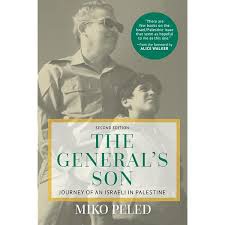
Peled’s son, Miko, reckons now that this was probably the decisive moment in his father’s life that transformed him from soldier to committed peace activist, something he remained for the rest of his life, a mantle taken up, in spite of incredible suffering, by both Miko and his sister, Nurit.
But perhaps Matti Peled should not have wasted his breathe with his warning to the Israeli government. Because as Israeli historian Ilan Pappe explains in depressing detail in his book, The Ethnic Cleansing of Palestine, atrocities of the sort Matti Peled uncovered in Gaza – atrocities of the sort that Israel continues to perpetrate year in, year out, including in its genocidal post October 7th operations in Gaza – were part of the DNA of Zionism from when Israel was but a glimmer in David Ben Gurion’s eye.
Prior to the founding of the state of Israel Ben Gurion and the cadre of Zionists that he gathered around him to be his closest political and military advisors, drew up detailed plans for the expulsions of the indigenous people of Palestine so they could realise their sectarian dreams of a Jewish state. They recognized from the outset that mass murder and terrorism would be intrinsic to this project.

With the UN vote to partition Palestine they put their plans into bloody action. Deir Yassin was the pattern, not an aberration.
On visiting the aftermath of one ethnic cleansing operation by the Haganah, the forerunner of the IDF, Golda Meir was reminded of the Eastern European pogroms that had terrorized her own family from their home. But, aside from this momentary lapse, she otherwise remained comfortable with her role as a war criminal. But Pappe wonders how a mere three years after the Holocaust its survivors could inflict such barbarity on fellow human beings.
Pappe’s forensic analysis of the war crimes of Israel and the fundamental racism of Zionism has, of course, drawn criticism from other Israelis – the sort who benefit from apartheid in Israel and the West Bank and who celebrate the genocide in Gaza.
But, like Miko Peled, Pappe is on the right side of history. As the world increasingly sees Israel for the rogue terrorist state that it is, Peled and Pappe explain why it is as it is, and plot a path towards the inevitable end to apartheid there.
Both Pappe and Peled represent the enduring voice of conscience in the midst of atrocity. They are advocates of a common humanity in the face of prejudice and sectarianism. In the end it is this humanity that will always triumph over apartheid.
 aidanjmcquade
Glad you are writing about Palestine. See my newsletter HERE
Pingback: My best reads of 2024 | aidanjmcquade