
Summary: more Paddington 2 than Jaws 2
Sequels are a tricky thing. Some, like Margaret Atwood’s The Testaments add something to an earlier classic. More ill-judged ones, like Pat Barker’s The Women of Troy, can dent the lustre of their more accomplished predecessor, seeming to aim to cash in on a successful formula rather than say anything compelling or new.
So it was with some trepidation that I picked up the Ghosts of Rome, Joseph O’Connor’s follow up to his superb novel of European Resistance to Nazism, My Father’s House.
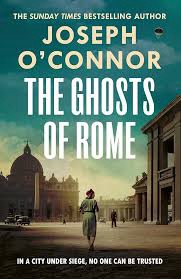
Time has moved on a few months from the first novel, the German occupation has become more brutal, and the pressure on the Choir – the escape line for Allied prisoners of war and Jews established by Monsignor Hugh O’Flaherty – more extreme.
The pattern that O’Connor uses for this book is similar to its prequel: It focuses on one operation, and one individual in the midst of the otherwise present and correct ensemble of the Choir, in this instance Contessa Giovanna Landini – Jo.
O’Connor admits that all of the novel, including the purported transcripts of BBC interviews, is his own invention. But many of the people involved including Jo and her Irish pals, Delia and her daughter Blon, were real. This accentuates the sense of awe regarding what these ordinary people endured and achieved in such extraordinary circumstances. And, even if we know they survived the war this does not diminish the tension.
The Ghosts of Rome is a gripping thriller. But like the best thrillers it is more than that. It explores and asserts the importance of morality and friendship in the face of monstrousness. These remain important ideals in a world in which the genocide of vulnerable people is again high on the agendas of many of the supposed liberal democracies of the West.
 aidanjmcquade