
Summary: where streets are mean, but gumshoes are meaner
I had read good things about Robert Crais and, always having a soft spot for a decent bit of American hard-boiled, picked up The Monkey’s Raincoat, the first of Crais’s novels about Elvis Cole and Joe Pike, two Los Angeles-based private investigators.
In it, our heroes are hired to find a missing child, apparently abducted by his father. Matters quickly become bloodier and more convoluted as organised crime, narcotics and murder enter the picture.
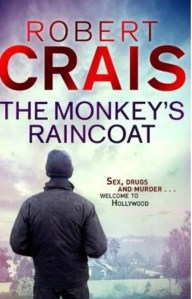
It is an entertaining tale, but I have certainly read better. The Monkey’s Raincoat sometimes feels almost like a parody of Chandler, with much cracking wise, willing women and violent but honourable men dispensing rough justice on the mean streets. It certainly did not, in my opinion, explain the considerable reverence with which Crais is now regarded as a crime writer.
A bit of additional research suggested that his reputation went into another gear with L.A. Requiem, the eighth Cole/Pike novel. So I decided to give that a go.
The difference is clear from the first chapter. By this stage Crais has gone a long way towards finding his own voice, and the story is considerably more melancholic. Cole and Pike are brought into the investigation of the murder of a young woman who was once Pike’s lover. The story moves across several timelines and, in particular, explores Pike’s past, which proves intimately connected with both the murder investigation and the danger now facing him.
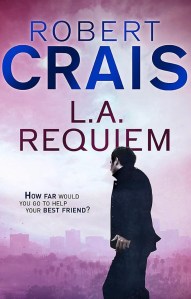
L.A. Requiem is a work of considerably greater literary merit than The Monkey’s Raincoat. The characters have acquired depth; violence has consequences; friendship, loyalty and loss matter as much as the mechanics of the mystery. Contemporary reviewers were right to see it as a considerable leap forward for Crais.
But it is not without flaws. Both Cole and Pike appear remarkably resistant not only to post-traumatic stress disorder but also to hollow-point bullets, each finding the strength to keep going after being shot and suffering considerable blood loss, because they’re just so goddamned all-American tough. And, as a certain species of American remains keen to believe, violence can solve most problems if administered vigorously enough by the right sort of man.
So I can now see why Crais has earned his crime-writing reputation. His is a world I may return to. But unlike, say, Mick Herron’s Slough House – or Chandler himself – I am unlikely to be in a rush.

