On the one road? Thoughts on achieving Irish reunification

Summary: Irish reunification will require difficult compromises for nationalists if there is to be any hope of accommodating unionism

The Good Friday Agreement was built on the foundations of the common memberships of Ireland and the UK in the European Union. Given Brexit the foundations of that agreement have been dealt a grievous blow. Hence it is necessary to contemplate whether new constitutional arrangements can be forged to secure peace in an agreed Ireland. This must include contemplation of the possibility of Irish unity.

In the North of Ireland, the Democratic Unionist Party have already delivered two of the greatest contributions towards a United Ireland of any political organisation since the Good Friday Agreement. First their sweaty, fevered dreams of Brexit backfired spectacularly when, in significant part as result of their ham-fisted triumphalism, Boris Johnson, as should have been expected, betrayed every promise he ever made to them. So instead of the renewed Protestant Supremacy of their dreams the DUP have got a customs border in the Irish Sea between Northern Ireland and Britain.

Second, and more fundamentally, the DUP’s botched Brexit shenanigans have demonstrated to their electoral base the depth of English contempt for them, their culture and the sacrifices that they have made for the Crown over the past decades and centuries. 

Paradoxically, this may not have been a total surprise. Culturally, both the unionist and nationalist communities in the North of Ireland have more in common with Scotland than with the English or Welsh. So, after Scotland’s departure from the UK, Northern Ireland will be in even greater cultural isolation than it currently is, perpetually subject to the disdain of a patronising Little Englander elite.

The greatest barrier to Irish reunification remains the factions of extreme Irish nationalism. These ultras have, since the 20th Century, hijacked the Irish flag as a partisan symbol all the while undermining its national meaning with their fratricidal campaigns. 

The Irish tricolour asserts that the nation is composed of two traditions: the Irish nationalist green, and the British loyalist orange, and that the nation is only complete when these traditions are united together by the white of peace. 

Nevertheless, some of the most vehement flag wavers of the past decades have not been prepared to follow the logic of what Irish nationhood must mean given the different cultures and heritages of the peoples of the island. Rather they want all vestiges of the unionist tradition expunged from the island of Ireland and all to accept their uncompromising visions of their utopian ideals. 

Of course, it is the very nature of utopian ideals that no one can ever live up to them. But this does not stop a few self-appointed guardians of the flame from deciding that that any shortfalls in their ideals of perfection should be dealt with by abuse, and sometimes violence. 

But there can be no single Irish cultural identity. By the first half of the 21st Century there are not just the Orange and Green traditions in Irish society. There are also important mainland European ones, most notably perhaps the Polish-Irish, and there have long been important African-Irish and Asian-Irish communities, enriching every county of the country with their presence. 

But perhaps the most urgent priority in Irish reunification must be in better accommodating the unionist tradition. And there are some obvious and immediate steps that Ireland could take towards this end. 

For a start Ireland could re-join the Commonwealth. This is a proposal that will certainly bring forth frothing fury from many of the flag wavers as a betrayal of the most fundamental ideals of their particular and personal notions of Irish nationhood. Indeed, when the unimpeachably Republican Fianna Fail TD Eamon O’Cuiv suggested this in 1994 that is exactly the sort of response he received. 

However, building a nation requires more than fundamentalist worship of an imagined past. We have seen the Brexity chaos and destruction that such idiocy brings.

Instead the Irish nation as a whole needs to recognise that if we are ever to be truly united then the unionist tradition must feel respected and at home within the New Ireland. That is not something that will ever be achieved by singing “Up the ‘Ra”, and by implication celebrating the wounds inflicted on that community by IRA violence. But it might be brought a small step closer by measures that demonstrate the respect for the symbols and traditions of the unionist community. It is also notable that states as varied as India, Tanzania and South Africa see no compromise in their national ideals by membership of the Commonwealth. Neither will an independent Scotland. Surely Ireland can show similar self-confidence.

Second Ireland could establish a mechanism for proper representation of the North in the Seanad. Over the past decades Taoisigh have on occasion appointed individual Northerners to the Senate. But it has hardly been a consistent practice. It must surely be within the bounds of possibility to do better than this. For example, it should be a straightforward matter to empower individual councils or all the collective councillors in the North of Ireland to elect a panel of representatives to the Seanad. Put simply, a united Ireland means some sort of elected representation of the North in the Oireachtas. Steps can be taken to move in that direction immediately.

Of course, before there is a united Ireland there will need to be much more talking and agreement on constitutional structures with which people can live. Consequently, the SDLP’s idea of a forum for discussion of this is a positive initiative. One must hope that the Irish government will also lead on this, perhaps through the establishment of a citizens’ assembly on the subject composed of people from all 32 counties. 

Perhaps a new Ireland will need a new flag to represent all traditions of the nation, old and new. Perhaps not. But one thing is certain. It is tough decisions and compromise which will bring about a United Ireland if it happens, not flag waving. 

A Thousand Ships, by Natalie Haynes

Summary: a gripping, exquisitely written retelling of the tales of Troy and the aftermaths of war

Conceptually A Thousand Ships is similar to Pat Barker’s stunning retelling of the Iliad, The Silence of the Girls. Both focus on the Trojan war from female points of view and consequently give radical new perspectives on these ancient tales and on the pity of war itself. But whereas Barker focuses on one woman, Briseis, Natalie Haynes ranges much more widely across time and dramatis personae.

Parts of the book are very funny – notably Penelope’s letters to the absent Odysseus, and the shenanigans of the gods for whom, like contemporary geo-political strategists, humans are mere playthings. Parts of the book, such as the stories of Iphigenia and Polyxena, are particularly bleak. But in giving voice to Hecuba, Andromache, Cassandra, and the others Haynes reminds the readers of how war reverberates across geographies and generations, and that its casualties are not confined to the battlefields.

Haynes describes the book as a novel and it certainly has the unity of purpose and vision that one would expect of a novel. But the shifting focus and tone as it moves between the various narrators and protagonists also put me in mind of Tim O’Brien’s superb collection of inter-related short stories of the war in Vietnam, The Things They Carried

However one wishes to classify the book’s structure, the result is extraordinary. It may not carry the same ultimate emotional punch as The Silence of the Girls, which comes from spending so long with one person, but the tragedies of Polyxena, Cassandra, Andromache, Iphigenia and the rest are still hauntingly portrayed. And at the bottom of the carnage some hope glimmers still.

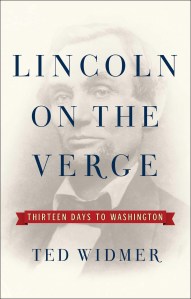
Lincoln on the Verge, by Ted Widmer

Summary: One for the specialists… particularly if you like trains

If you like Great Railway Journeys of the World, you will probably like this account of the 13-day journey Abraham Lincoln took as President Elect from his home in Springfield Illinois to Washington DC. Indeed Michael “Choo-choo” Portillo is probably already in the process of pitching it to the BBC as a new series idea.

It has much interesting material, including a social portrait of the United States, or at least those states that Lincoln visited on this journey, on the eve of Civil War, and details of the “Baltimore Plot” to assassinate Lincoln as he passed through Maryland before he even took up the burden of the presidency. 

Lincoln was one of the greatest public speakers of the 19th Century, indeed of world history, So I find it reassuring that even he could occasionally deliver a poor speech, as he did on this journey. But then he had to deliver hundreds of speeches during these 13 days. In these he strove to articulate his vision for a country where all are equal before the law just as the racists of the Confederacy were seeking to create a new country founded on the “principle” of inequality to allow them to continue inflicting dehumanising violence on millions of human beings through the system of slavery.

It’s an elegantly written and illustrated book, but I am not sure I would describe it as compelling. It is probably one for more specialist readers rather than for someone looking for a general introduction to Lincoln or to the Civil War… but it would make a great Great Railway journey.

Shadow State, by Luke Harding

Summary: Treason doth never prosper. What’s the reason? When it prosper none dare call it treason.

Since 2010, Russia under Vladimir Putin has launched a stunningly successful and sustained assault on liberal democracy. Timothy Synder’s book The Road to Unfreedom chartered the roots of this offensive including its initial forays into Ukraine, up to 2016. In Shadow State Luke Harding continues the story into 2020, detailing the depth of Russia’s penetration into the ruling cliques of both the UK and the US, identifying those involved and explaining how Russian espionage helped deliver both Trump’s election and Brexit.

Harding recounts that on returning home, Alexander Yakovenko, Russia’s ambassador to the UK from 2011 to 2019 was made a member of the Order of Alexander Nevsky and president of the Diplomatic Academy by Putin as a reward for “smashing the Brits to the ground. ‘It will be a long time before they rise again.’” 

The depth of contempt that Russia now holds for the UK was shown in 2018 when Putin launched a lethal chemical weapons attack in Salisbury in an attempt to kill the former Russian military officer Sergei Skripal. In doing this Putin aimed not only to deter other Russian intelligence officers from defecting, but he wanted to say to the UK, ”Fuck you”, as Harding notes. With his boy Trump in Washington and with the UK, at Moscow’s behest, isolating itself from its European allies with Brexit, Putin knew that there was little that the UK could do to hurt him in retaliation. Indeed, he could have killed half a dozen more British citizens in Salisbury and Boris Johnson would still think nothing of going hobnobbing with Russian intelligence officers and assets.

Johnson and Trump can afford to be sanguine about Russian assaults on their national democracies: they have been the beneficiaries of it. And even if they are in knowing collusion with the Russians, as opposed to mere useful idiots, their respective parties appear much too pusillanimous to do anything about it. Both know that they can count on future Russia support for any electoral contests and, particularly in the case of the US, considerable hacking and corruption of the electoral system. It is indeed a golden time to be a Quisling.

Shadow State is a fine, elegantly written work of investigative journalism. While it may be in the traditions of All the President’s Men, there is, at least at the moment, no justice in sight.

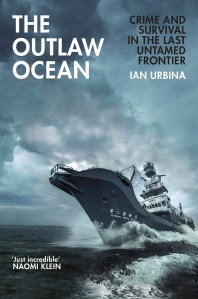
The Outlaw Ocean, by Ian Urbina

Summary: an impressive work of investigative journalism detailing the vast scale of human rights abuses and environmental damage in the world’s oceans.

The Outlaw Ocean is based on a celebrated series of articles that Ian Urbina wrote for the New York Times on the struggles for human rights and environmental standards in the vast lawless expanses of the world’s seas.

It is an impressive achievement, but also a deeply depressing one. As well as the continuing butchery of the planet’s whales, Urbina catalogues the environmental devastation of bottom trawling, the damage caused by the oil and gas industries, the risks arising from the destruction, “bleaching”, of the world’s corals, and the routine and brutal enslavement of seafarers, particularly fishermen, on the world’s ships and boats.

There are some heartening descriptions of the work of activists, such as those of Stella Maris or Sea Shepherd, who strive to bring some measure of humanity to this brutal realm, and there are exciting descriptions of some of their operations. But, appositely enough, all these seem like drops in the ocean such is the scale of the both environmental and human rights challenges.

Urbina shows how the abuses at sea are perhaps the most extreme example in history of the “tragedy of the commons” – the idea that when, in effect, everyone is responsible for something then no one actually takes responsibility. International maritime law, such as it exists, empowers states with its enforcement. This means that on the high seas – beyond territorial waters – a vessel flagged to a particular country can only be boarded by a war ship of that country. So the vast majority of the ships are simply never inspected at all. A land locked country like Mongolia, to which many ships are registered under flags of convenience, does not even have a navy.

Much maritime law, such as the 2006 international convention, does not apply to fishing vessels anyway which can do so much environmental damage through overfishing and other devastating fishing practices. Consequently slavery is also endemic on these vessels, most notoriously on the high seas of South East Asia. But I have also encountered it in the territorial waters of Myanmar and Ireland due to poor regulation and inadequate inspection.

Those who are enslaved are generally migrants, so desperately poor that they are driven to seek work from unscrupulous labour brokers. Urbina describes how sharp practices amongst labour brokers lead to seafarers becoming debt bonded, a form of slavery recognised in international law. Once this has happened the boat captains who receive them as crew routinely use physical violence, including murder, to keep discipline.

Urbina’s impressive work shows how the roots of enslavement on the sea lie on land in the indebtedness of the families and communities from which seafarers originate. This is something I also found in 2019 when researching the enslavement of raft fishermen in Myanmar’s Gulf of Motama. Hence it is a logical extension of Urbina’s research that prevention of slavery requires focussed attention on eliminating the debt that is the key mechanism for so much contemporary slavery.

Such is the scale of “modern” slavery, currently estimated as affecting over 40 million people globally, that meaningful action to reduce these numbers would require a response of comparable imaginative and actual scale to the Marshall Plan. Such a plan should focus on creation in slavery vulnerable communities of decent work, and direct cash transfers to secure early child development and school attendance. A crackdown on usurious money lenders and unscrupulous labour brokers would also be a welcome thing.

Until that happens Urbina’s work will stand as an appalling indictment of the human rights and environmental carnage at sea that the world is collectively turning a blind eye to.

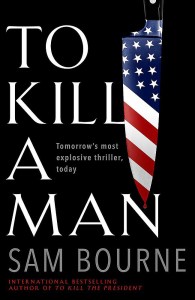
To Kill a Man, by Sam Bourne

Summary: a meditation on the debasement of justice disguised as a pageturing thriller

Natasha Winthrop is a big deal. A high-profile Washington human rights lawyer who has just gained national attention as Democratic counsel in televised Congressional hearings.

Then a man breaks into her apartment intent on rape. This is the man’s last big mistake as Natasha manages to kill him in the course of the attack. The cops though… the bleeding cops! They never liked Natasha. It’s getting like they can’t murder black people in broad daylight any more without some bleeding-heart lawyer like her taking a law suit against them. So, if there are a few discrepancies in Natasha’s story, well then there’s no doubt that she’s going to get the benefit of. 

Natasha though, she’s a smart enough cookie to know when she needs reinforcements. So she picks up the phone to Maggie Costello, sometime international peace mediator and counsellor to presidents, but full-time Dublin street fighter who’s never seen a trouble she couldn’t shoot. 

Sam Bourne’s (Jonathan Freedland) Maggie Costello series is set, for the most part, in Washington DC politics. This is a subject that Freedland knows well as a former Guardian correspondent. The series specialises in plots that resonate with major contemporary issues. These have included having a megalomaniac imbecile in the White House, and the undermining of the factual framework for public discourse. It also should be said that, while not the main issue, a not inconsiderable achievement of these books is that Freedland captures the cadences of Dublin speech so well. Maggie’s exchanges with her sister are a particular pleasure, note perfect in the rhythms of Irish sibling banter.

This episode of Maggie’s adventures focusses on the disturbing fact that in the US, similar to many other places, less that 1% of perpetrators of rape or sexual assault ever see the inside of a prison cell.  Given this, the book ponders, is society saying sexual violence is actually now as acceptable as speeding or doing weed?

To Kill a Man is a deeply satisfying, thought-provoking thriller and meditation on the state of the Brexity, Trumpton world in which we live. It is, paradoxically, a perfect summer distraction from the insanity of that world which, nevertheless, reminds the reader of just how insane it remains.

The Dutch House, by Ann Patchett

Summary: “Happy families are all alike; every unhappy family is unhappy in its own way.”

When reviewing for the first time the play, “Waiting for Godot”, the theatre critic Vivian Mercier, writing in the Irish Times, famously described it as a play in which ‘nothing happens, twice’.

I had a similar thought when reading Ann Patchett’s “The Dutch House.” Nothing happens a lot in it.

Its narrator, Danny Conroy, describes his generally unremarkable life in an account that hops back and forth in time, much like an unreliable memory. Son of a wealthy property developer father in Philadelphia, Danny is really brought up by his older sister Maeve. She takes on maternal responsibilities after their mother’s departure from the family home – the Dutch House of the title. Maeve’s burdens are added to when their father acquiesces to marry Andrea. While the two step-sisters this brings them may not be ugly, Andrea certainly carries a measure of evil with her.

Danny, aware enough to know that he is self-absorbed, gets to go to medical school through Maeve’s efforts and wiles. But he never really practices as a doctor opting instead to become a property developer like his father. Maeve becomes the finance manager of a food company. Danny marries and has a family. Unfortunately, Maeve and his wife, Celeste, do not really get on. 

Around them America is changing, with the Vietnam war, and the demands for civil rights. But these barely encroach upon Danny’s consciousness. Maeve is, we learn in passing, socially engaged.But Danny is never really interested enough in what she is doing to tell the reader more.

So, that’s about it. 

But I don’t want to sell this short. “The Dutch House” is, perhaps, the literary equivalent of a still life of a fruit bowl: an exquisitely crafted rendering of ordinary life, or rather of life of unfulfilled potential. Selfless, wise-cracking Maeve, one feels throughout the book, should be the heroine of golden era Hollywood, a sort of Rosalind Russell figure from “His Girl Friday”, working on front page exposes of graft and corruption instead of being stuck, happily she claims, with balance sheets. By the end of the book one feels that her niece and namesake Mae is on the verge of the sort of life that Maeve should have lived.

“The Dutch House” is shot through with this sort of melancholia, and moments of unambiguous grief. It is a beautifully written and haunting book.

Lincoln in the Bardo, by George Saunders

Summary: the restless dead, and their thoughts on the mid-19th century state of the union

In certain schools of Buddhism the “Bardo” is an intermediate place between death and rebirth or heaven. It is into this Purgatory that William Wallace Lincoln, third son of Abraham, arrives in 1862.

Unlike the other children who arrive there Willie lingers, longing to see his father again. Some of the older ghosts – a young man regretful of his suicide, a middle-aged man pining for his young wife, a elderly minister fearful of what lies beyond – worry about what will befall Willie if he stays too long. So they take it upon themselves to help the young fellow move on. As a result they encounter the devastated president, come to visit the grave of his beloved son.

Lincoln in the Bardo is a strange book. Literary critics call it “experimental”. Portions of it, those providing the historical context, are edited from the vast literature of Lincoln and the Civil War. Into this context George Saunders creates a sort of American “Cré na Cille”, populating his narrative with the ghostly denizens of the graveyard where Willie lies.

A cross-section of American society from independence until 1862 is here: white supremacists dwelling alongside the slaves dumped in a common pit; wealthy misers rubbing ectoplasm with alcoholic down-and-outs. They reflect the nation at the moment of crisis that Lincoln confronts. Their stories, their memories of their past lives and their gossip on the current scandals of the graveyard society, are by turns hilarious and shocking, always entertaining and ultimately gripping.

At first President Lincoln’s presence in the midst of this cacophony of voices seems almost incidental. But it is not. Rather his presence is catalytic, provoking profound changes to the social order of the Bardo just as he is about to lead profound changes to the order of the Union.

Lincoln may sometimes be thought of as one of the last fatalities of the Civil War. But he wasn’t that. George Floyd may hold that dreadful distinction at the time of writing, but of course that won’t last for long. But Lincoln, alongside the likes of Martin Luther King, offers a glimpse of how much better America can be when it confronts its own original sins of slavery and genocide. That idealism echoes in this book.

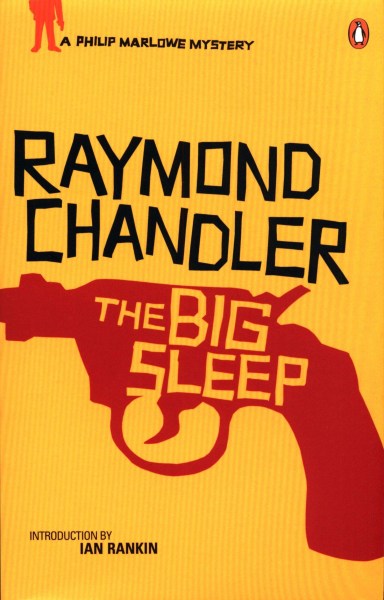
The Big Sleep, by Raymond Chandler

Summary: A routine blackmail case opens a whole nother can of worms for Marlowe

img_1848If Rusty Regan had still been around General Sternwood would never have had to call Marlowe. But Rusty took off weeks ago and Sternwood needs someone discrete to handle this Geiger fellow’s blackmailing grift.
It seems like a straightforward gig to Marlowe. Then Geiger turns up dead. And everyone starts getting real interested in the whereabouts of former IRA commandant Terrance Regan.

Four things you can always count on Chandler for: twisty plots, strong atmosphere, femmes fatales, and prejudice. Just as I was feeling that The Big Sleep was remarkably free of the sort of bigotries that mar his other books, such as The Long Goodbye, Chandler decides The Big Sleep needs a discourse on gay men. Unsurprisingly Chandler’s thoughts on the subject are of the sort that probably render the reader just a little stupider in their reading.

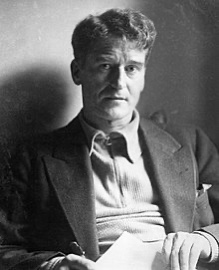
There are bona fide loose ends in The Big Sleep: it’s never quite clear who killed everyone or why. But a thing that has always intrigued me about The Big Sleep is whether Chandler based the character of Regan on Ernie O’Malley.

Regan?

O’Malley, a former IRA commander and writer, spent a chunk of the late Twenties and Thirties in the US hanging out amidst artistic and literary circles. I can’t find any indication that Chandler and O’Malley ever met. But Chandler’s description of Regan does sound very like O’Malley: “a face that is sad rather than merry, more reserved than brash… a forehead broad rather than high, a mat of dark, clustering hair… the face of a man who would move fast and play for keeps.”

Admittedly this question is probably only of minority interest. What is more important is that if you can stomach Chandler’s horrible prejudices for a bit, this is a classic piece of hard-boiled detective fiction, beautifully written with moments of poetry, and gripping from start to finish.

Blood and Sugar, by Laura Shepherd-Robinson

Summary: A gripping historical detective story, probing the dark heart of the system of slavery that made Britain rich.

The origins of Britain as a leading commercial and industrial nation lie in two comparably genocidal events: the trans-Atlantic slave trade, and the conquest of India.

These are atrocities that the majority of British people know little about. Insofar as they may be aware of the slave trade they probably only know of William Wilberforce’s parliamentary campaign to end it. The painstaking and arguably more important work by Clarkson, Sharpe, Equiano and the Quakers, that made parliamentary action possible by shifting the tide of public opinion against this industrialised trafficking of human beings, is much less well known.

Well, if British people remain ignorant of this for much longer, it will not be for Laura Shepherd-Robinson’s want of trying.

Blood and Sugar starts with the gruesome murder of an abolitionist lawyer in the slave port of Deptford. But, horrific as this event is, as veteran of the American war, Harry Corsham, discovers when he begins to probe into the death of his erstwhile friend, this is not the worst thing that those responsible for the slave trade have done.

Blood and Sugar is a gripping and richly detailed historical detective thriller that probes unflinchingly into the savagery of the trans-Atlantic slave trade. Its power is magnified by its verisimilitude: while the foreground figures may be fictitious there is nothing made up about Shepherd-Robinson’s descriptions of the horrors of the Middle Passage and the tortures routinely inflicted upon enslaved Africans.

Shepherd-Robinson has already gained deserved praise from other exemplars of the historical detective story. But even if comparably entertaining to the best of this genre Blood and Sugar is something altogether more important. It is an act of remembering, bringing to, potentially, a whole new audience one of the foundational events of modern Britain. If readers are also stirred to remember that slavery still afflicts some 40 million people across the globe, many of them still in conditions akin to those described in this book, then all the better.

Blood and Sugar is a mighty accomplishment.