Summary – an evolving list, because sometimes there are not enough words
A lawrencefox – any man who uses the occasion of a toxic divorce to show the whole world how lucky his ex-wife was to flee. Usage: “Afterwards Anne reflected that she had a narrow escape from Henry, who, it turned out, was something of a pox-ridden laurencefox.”
A mcgregor – an idiom similar to a “paper tiger”, derived from the idea of a braggadocio individual who finds it more difficult to fight trained men than to rape the defenceless. Usage: “Contemplating the impasse at the Strait of Hormuz, Netanyahu realised that Israel was now exposed as a mcgregor amongst the nations of the world.”
Musky – a quality that means, no matter how much money, a person will always be too weird and repulsive. Usage: “After everything about him came out in public, Jeffrey was just too musky even for the DUP.”
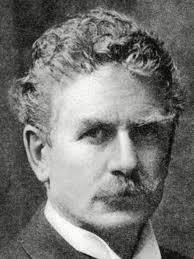
Ambrose Bierce defined politics in his Devil’s Dictionary as “A strife of interests masquerading as a contest of principles. The conduct of public affairs for private advantage”.
As Trump, Netanyahu and Putin continue to use this as their platonic ideal, here are a few more commonly used terms to better understand this brand of politics in the 21st Century.
Absence – The hardest thing to hide.
Accountability — A principle once thought central to democracy, now regarded as the bad manners of social inferiors.
Austerity — A political philosophy that insists that the poor must pay for the yachts on which the rich snort their cocaine from the bum cracks of supermodels … which the poor must also pay for.
Betrayal — The dispatch of Caesar by his own signature methods.
Caste — Real discrimination based on imaginary distinctions.
Children — Small humans, cynically manufactured by the enemy in an attempt to taint wholly justifiable collateral damage.
Mikaeil Mirdoraghi on his way to be killed
Climate change — A process that doesn’t exist by which plutocrats manufacture migrants.
Coincidence — Why money, power and the privilege to indulge in any vice remain in the same families for generations.
Collateral damage — The price paid by others so that Caesar can be Caesar.
Colonialism — A system that profoundly shaped the history and geography of the modern world but whose continuing influence is, apparently, not worth talking about.
Complex situation — The choice between doing the right thing and upsetting a rich sex trafficker.
Conscience — Why you can’t keep your fucking gob shut.
Consolation — The knowledge that nits become lice.
Conspiracy — No … nothing to see here … move along.
Context — The reason a “tragic mistake” was all the enemy’s fault. Not to be confused with history, which can lead to a complex situation.
Cooking — How grumpy humans show kindness.
Craic — From the outside, a moment of apparent forgetting; from the inside, the recharging of the pen.
Decency — An elusive quality discovered in Caesar only after the knives have safely done their work.
Democracy — An ancient Athenian idea that important questions of war and peace should be decided by privileged men; two and a half millennia of refinement have preserved this essential character.
Doubt — The most dependable motivation for doing better.
Economic realism — A touching belief in the stories told by plutocrats.
Empathy — An existential threat to plutocrats arising from the dastardly impulses of fellow feeling and compassion.
Enemies — People who may not share your values but recognise your worth.
Entitlements — The upside of austerity.
Exceptionalism — The conviction that accountability and responsibility are admirable principles, provided they don’t apply to us.
Expatriate — An entitledmigrant.
Forgetting — What plutocrats and genocidaires depend on most.
Free speech — A universal right, provided it doesn’t upset plutocrats or certain genocidaires.
Friends — The ones that tell you to get back up.
Genocidaires — Human beings who act on the proposition that not all human beings are human beings.
Genocide — Perhaps not a Western invention, but certainly a Western tradition; a realpolitik solution to geopolitical complexities arising from colonialism.
Geography — A branch of moral philosophy that explains why inhabitants of one part of the earth are entitled to more than inhabitants of another.
Geopolitics – A way to blame geography whenever realpolitik is really troubling your conscience.
Great power — Living the Nietzschean dream, far above the morality of loser human beings.
Great power ally — We’re special!
“Hardest week of my life” — For multi-millionaires, a couple of days in which their privilege is threatened.
Heroes — Not necessarily saints.
History — An explanation of the present best avoided lest it threaten the privileges to which one has become accustomed.
Home — To some, a place of warmth in which to raise children and nurture adult love; to others, real estate of variable geopolitical value.
Human moment — A politician’s self-pity.
Human rights — Rights universally acknowledged until someone inconvenient claims them.
Human trafficking — The squalid and evil trade in human beings as if livestock … unless it is found necessary to cut costs in international supply chains or to supply billionaires’ sex parties with children.
Hypocrisy — The art of applying opposite principles with identical conviction.
Impunity — A reasonable privilege accorded to the exceptional.
Inconceivable — A word frequently applied to stuff that’s right bleeding there.
Independent investigation — A process for discovering that a “tragic mistake” was unavoidable.
Kindness — A tendency to be on the lookout to remove thorns from lions’ paws.
Lessons learned — The process by which wisdom is obtained if you cannot afford impunity.
Literally — If you ever use this word to mean “figuratively”, you are actively contributing to the downfall of human civilisation.
Love — For plutocrats, something that property deserves but humans don’t. For everyone else, it’s reason enough.
Lovers – People you empower to hurt you.
Migrants — Eternally plausible scapegoats for austerity.
Moderation — Appropriate deference to the feelings of plutocrats.
Moral cowardice — Losers being squeamish about genocide and the other essentials of realpolitik.
Pen — Can be a keyboard, so long as you use it like a sword.
Plutocrats – the best humans … even though they don’t really like other humans.
Political realism — An absolute conviction that plutocrats and genocidaires have a point of view worthy of respect.
Pragmatism – An unshakeable basis upon which inconvenient moral principles must founder.
Privilege — Entitlements bestowed by wealth and history, therefore considerably more important than those rights ordinary humans keep bleating on about.
Racism — The colour grading of human beings by idiots, even when no colour is apparent.
Racists— Idiots sufficiently selective in their empathy to serve as useful ones for plutocrats
Realpolitik — A posh name for complicity in atrocities
Responsibility — An elusive quality, once thought central to professionalism, now applied only to those without sufficient privilege.
Rule of Law — An antiquated idea, dating back to Aristotle and Sophocles’ play about that loser Oedipus, that even the privileged should be accountable.
Self-defence — Violence committed by ourselves.
Silence — The promised price of the yacht in trickle-down economics.
Smugness — The quiet satisfaction of knowing your power guarantees impunity.
Special relationship — How vassals describe their vassalage.
Spouse / Partner — The one that puts up with your dirty underwear and still lifts you up.
Stupidity — Telling truths that the smug find unsettling.
Terrorism — Violence committed by the enemy.
Tough choices — Caesar’s difficulty in deciding which of the vulnerable to smite first.
Tragic mistake — Violence committed by ourselves against civilians after we got caught.
Trickle-down economics — A fairy tale told by plutocrats in which you too can one day own a yacht.
Untouchability — The art of declaring other human beings filthy so they can clean up after you, thereby exposing the state of your own soul.
Villains — Often think themselves saints.
Vulnerability — Not just an opportunity to exploit losers, but also the way humans make other humans fall in love with them when they are not rich.
War — A magical term that transforms our perpetrators of atrocities into the real victims here.
War criminal — A genocidaire without geopolitical value.
Wealth — The safest substitute for wisdom and expertise in policy discussions.
Whataboutery — A system of morality for those with no morals.
Wisdom — The consolation losers derive from losing; rendered obsolete by wealth.
Worst — Never the absolute you might hope it to be.
Emery gets a job with an exciting new tech-condiment-start-up, Yes We Mustard, a company whose business model and CEO bear ABSOLUTELY NO RESEMBLENCE to Facebook or Mark Zuckerberg. Soon, her desire to be loved for saving the world and become an inspirational GIRL BOSS, leads her to investigate the mysterious “addictive fructose powder” that is being put into the company’s exciting condiment products.
Ginny Hogan’s satire is a glorious affair. With a joke rate comparable to a great Marx Brothers’ movie, she lampoons everything that crosses her path, from corporate culture (“now you can listen to your great and heroic CEO”), to faux-feminism (“when a man fires someone it’s mean, but when a woman fires someone it’s empowering”), to the eternal shallowness of men (“men don’t like her because she’s a good person. Men like her because she’s insanely hot”). Her real targets though are ignorance and selfishness – things that the ENLIGHTENED leaders of Facebook and their ilk are in no way responsible for just because their entire business models are based on their promotion.
Ginny Hogan has been an impressive stand-up for a number of years now. Based on Yes We Mustard she is also a gifted playwright. I look forward to more of both from her in the years to come.