
Summary: an evolving list
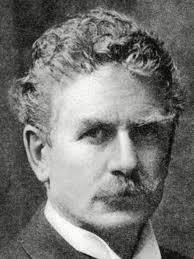
Ambrose Bierce defined politics in his Devil’s Dictionary as “A strife of interests masquerading as a contest of principles. The conduct of public affairs for private advantage”.
As Trump, Netanyahu and Putin continue to use this as their platonic ideal, here are a few more commonly used terms to better understand this brand of politics in the 21st Century.
Absence – The hardest thing to hide.
Accountability — A principle once thought central to democracy, now regarded as the bad manners of social inferiors.
Austerity — A political philosophy that insists that the poor must pay for the yachts on which the rich snort their cocaine from the bum cracks of supermodels … which the poor must also pay for.
Betrayal — The dispatch of Caesar by his own signature methods.
Caste — Real discrimination based on imaginary distinctions.
Children — Small humans, cynically manufactured by the enemy in an attempt to taint wholly justifiable collateral damage.

Climate change — A process that doesn’t exist by which plutocrats manufacture migrants.
Coincidence — Why money, power and the privilege to indulge in any vice remain in the same families for generations.
Collateral damage — The price paid by others so that Caesar can be Caesar.
Colonialism — A system that profoundly shaped the history and geography of the modern world but whose continuing influence is, apparently, not worth talking about.
Complex situation — The choice between doing the right thing and upsetting a rich sex trafficker.
Conscience — Why you can’t keep your fucking gob shut.
Consolation — The knowledge that nits become lice.
Conspiracy — No … nothing to see here … move along.
Context — The reason a “tragic mistake” was all the enemy’s fault. Not to be confused with history, which can lead to a complex situation.
Cooking — How grumpy humans show kindness.
Craic — From the outside, a moment of apparent forgetting; from the inside, the recharging of the pen.
Decency — An elusive quality discovered in Caesar only after the knives have safely done their work.
Democracy — An ancient Athenian idea that important questions of war and peace should be decided by privileged men; two and a half millennia of refinement have preserved this essential character.
Doubt — The most dependable motivation for doing better.
Economic realism — A touching belief in the stories told by plutocrats.
Empathy — An existential threat to plutocrats arising from the dastardly impulses of fellow feeling and compassion.
Enemies — People who may not share your values but recognise your worth.
Entitlements — The upside of austerity.
Exceptionalism — The conviction that accountability and responsibility are admirable principles, provided they don’t apply to us.
Expatriate — An entitled migrant.
Forgetting — What plutocrats and genocidaires depend on most.
Free speech — A universal right, provided it doesn’t upset plutocrats or certain genocidaires.
Friends — The ones that tell you to get back up.
Genocidaires — Human beings who act on the proposition that not all human beings are human beings.
Genocide — Perhaps not a Western invention, but certainly a Western tradition; a realpolitik solution to geopolitical complexities arising from colonialism.
Geography — A branch of moral philosophy that explains why inhabitants of one part of the earth are entitled to more than inhabitants of another.
Geopolitics – A way to blame geography whenever realpolitik is really troubling your conscience.
Great power — Living the Nietzschean dream, far above the morality of loser human beings.
Great power ally — We’re special!
“Hardest week of my life” — For multi-millionaires, a couple of days in which their privilege is threatened.
Heroes — Not necessarily saints.
History — An explanation of the present best avoided lest it threaten the privileges to which one has become accustomed.
Home — To some, a place of warmth in which to raise children and nurture adult love; to others, real estate of variable geopolitical value.
Human moment — A politician’s self-pity.
Human rights — Rights universally acknowledged until someone inconvenient claims them.
Human trafficking — The squalid and evil trade in human beings as if livestock … unless it is found necessary to cut costs in international supply chains or to supply billionaires’ sex parties with children.
Hypocrisy — The art of applying opposite principles with identical conviction.
Impunity — A reasonable privilege accorded to the exceptional.
Inconceivable — A word frequently applied to stuff that’s right bleeding there.
Independent investigation — A process for discovering that a “tragic mistake” was unavoidable.
Kindness — A tendency to be on the lookout to remove thorns from lions’ paws.
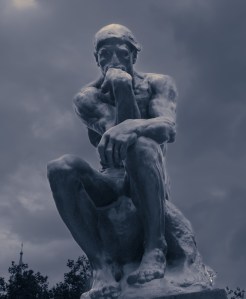
Lessons learned — The process by which wisdom is obtained if you cannot afford impunity.
Literally — If you ever use this word to mean “figuratively”, you are actively contributing to the downfall of human civilisation.
Love — For plutocrats, something that property deserves but humans don’t. For everyone else, it’s reason enough.
Lovers – People you empower to hurt you.
Migrants — Eternally plausible scapegoats for austerity.
Moderation — Appropriate deference to the feelings of plutocrats.
Moral cowardice — Losers being squeamish about genocide and the other essentials of realpolitik.
Pen — Can be a keyboard, so long as you use it like a sword.
Plutocrats – the best humans … even though they don’t really like other humans.
Political realism — An absolute conviction that plutocrats and genocidaires have a point of view worthy of respect.
Pragmatism – An unshakeable basis upon which inconvenient moral principles must founder.
Privilege — Entitlements bestowed by wealth and history, therefore considerably more important than those rights ordinary humans keep bleating on about.
Racism — The colour grading of human beings by idiots, even when no colour is apparent.
Racists— Idiots sufficiently selective in their empathy to serve as useful ones for plutocrats
Realpolitik — A posh name for complicity in atrocities
Responsibility — An elusive quality, once thought central to professionalism, now applied only to those without sufficient privilege.
Rule of Law — An antiquated idea, dating back to Aristotle and Sophocles’ play about that loser Oedipus, that even the privileged should be accountable.

Self-defence — Violence committed by ourselves.
Silence — The promised price of the yacht in trickle-down economics.
Smugness — The quiet satisfaction of knowing your power guarantees impunity.
Special relationship — How vassals describe their vassalage.
Spouse / Partner — The one that puts up with your dirty underwear and still lifts you up.
Stupidity — Telling truths that the smug find unsettling.
Terrorism — Violence committed by the enemy.
Tough choices — Caesar’s difficulty in deciding which of the vulnerable to smite first.
Tragic mistake — Violence committed by ourselves against civilians after we got caught.
Trickle-down economics — A fairy tale told by plutocrats in which you too can one day own a yacht.
Untouchability — The art of declaring other human beings filthy so they can clean up after you, thereby exposing the state of your own soul.
Villains — Often think themselves saints.
Vulnerability — Not just an opportunity to exploit losers, but also the way humans make other humans fall in love with them when they are not rich.
War — A magical term that transforms our perpetrators of atrocities into the real victims here.
War criminal — A genocidaire without geopolitical value.
Wealth — The safest substitute for wisdom and expertise in policy discussions.
Whataboutery — A system of morality for those with no morals.
Wisdom — The consolation losers derive from losing; rendered obsolete by wealth.
Worst — Never the absolute you might hope it to be.

