Things worth fighting for? Justice, not for kings

Summary: speech to the Cambridge Union, 22 October 2026

First of all, thanks for having me. It is really nice to be here and I appreciate the opportunity to learn from my fellow speakers, and from all of you.
Screenshot

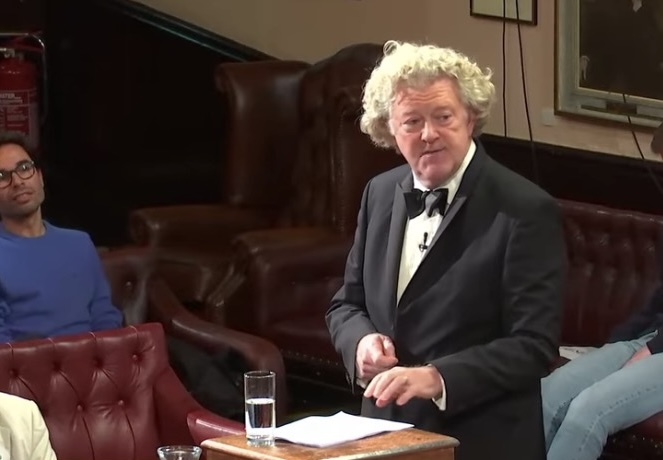
I appreciate it may be a bit ironic speaking for this motion dressed as a James Bond tribute act, but this is the situation that I find myself.

At the outset I want to acknowledge that there are various ways of fighting. Some of us pick up the pen rather than the sword. Some may fight by refusing their labour or by disrupting traffic on a street. But no matter what your weapon of choice, I would suggest that the only useful reason for ever fighting is for justice, and by justice I mean for systems and societies that preserve life rather than destroy it, and promote human happiness rather than create division: human rights are a cause worth fighting for. So too is environmental restoration.

Of course, there are times when taking up arms is justified. If your country is invaded, if your neighbours face extermination, then fighting may be the morally necessary thing to do. But that is not because your country commands it. It is because justice demands it. And if your country commands you to perpetrate injustice, then your moral obligation is to refuse.

So, if justice is our justification for fighting, we must also acknowledge that there have been occasions when British military intervention has made the world a more just place.

The Royal Navy led a protracted campaign against the trans-Atlantic slave trade in the first half of the 19th Century. After the fall of France, the continued resistance of Commonwealth nations, including Britain, to Nazi Germany helped secure the restoration of democracy in Western Europe. And the UK’s intervention in Sierra Leone at the beginning of this century helped bring an end to that country’s bloody civil war.

But as the old saying goes, even a stopped clock is right twice a day. So given the long martial history of Britain it is inevitable that it was going to be on the right side of history every so often.

These positive examples sit alongside a myriad of much more shameful military interventions including Britain’s conquest and exploitation of its colonies, the Opium Wars, the Suez crisis, the invasion of Iraq.

I am just about old enough to remember the Ballymurphy massacre in 1971 when the British Army killed nine unarmed civilians on the streets of Belfast. I am old enough to remember Bloody Sunday in Derry, when the British army murdered 14 civilians for having the temerity to go on to the streets of their own city to demand their civil rights. I am old enough to remember the Miami Showband massacre when loyalist paramilitaries including serving British soldiers murdered three defenceless musicians and tried to kill two more.

I remember the period documented in John Ware’s recent book, Neither Confirm Nor Deny, which explores some of the collusion between British intelligence and paramilitary organisations during the Troubles. I remember walking the streets of Belfast in those days, with the constant fear that those paramilitaries might visit one of their random attacks upon me or my family.

I am sure some of you have read the works of Stanley Milgram, or Christopher Browning. What their work suggests, notwithstanding important differences and criticisms, is that you do not need an army of psychopaths to perpetrate atrocities. You need a relatively small number of people willing to initiate brutality and a much larger number prepared to obey orders, conform to expectations or simply look the other way.

That is how perfectly ordinary people become accomplices to extraordinary evil. Versions of those dynamics were at work in the SS murder squads of eastern Poland during the Second World War, at My Lai during the Vietnam War, in the IRA’s Birmingham and Guildford pub bombings, and in the Hamas attack on festival-goers on 7 October 2023.

In each case, collective allegiance helped justify acts that should have been condemned by individual conscience.

So please understand the danger in treating fighting for King and Country as a virtue in itself. It asks young people in particular to surrender their consciences to the will of others whose interests and morality may never align with those of the people being asked to fight.

Now many of you may be fine with that. Many of you, as Cambridge students, may expect to soon be welcomed into the bosom of the ruling class of this country and anticipate that you will be the ones giving the orders rather than receiving them. If that is the case then vote accordingly.

But growing up during the Troubles in the North of Ireland, and through the course of my professional career in Afghanistan, Ethiopia and Angola, where I led humanitarian operations for civilians trapped in war, I’ve learned a few things: I’ve learned that war is not glorious or exciting, as Chris and Tobias might agree. Even just wars are evil things and victory in a just war can leave societies devastated for generations. I’ve learned that those who endure violence remember it longer than those who inflict it. Whatever action movies promise, violence rarely delivers the clean resolution that its advocates anticipate. War may defeat an army, but it seldom extinguishes the grievances, memories and hatreds that gave rise to the conflict. Indeed, war may only sharpen them and break the restraints on the most brutal of human instincts.

History has shown us again and again that this ideal of fighting for your country has been abused, sometimes by cynical people intent on gain, sometimes by silly ones whose only experience of war is watching The Great Escape on a Bank Holiday. Neither of those groups are ever likely to pay any price themselves for the violence that they unleash.

Perhaps Ed Miliband is finally in the process of crafting an independent foreign policy for the UK, one that is not based on the UK’s vassalage towards the United States, and by extension to the excesses of the Israeli state.

But consider the young RAF crews who were ordered to conduct surveillance flights over Gaza. The British government maintains that those missions were undertaken solely to assist in finding Israeli hostages.

Bloody Sunday. Hillsborough. Windrush. The Post Office scandal. I am sorry if this is news to you, but British public institutions have a long history of concealing wrongdoing and resisting accountability. So why should we blindly accept that everything that those young servicemen and women were ordered to do is lawful and morally defensible? Particularly when they were operating in the midst of a military campaign that has raised profound questions of international law and British complicity, and when those flights continued long after the International Criminal Court issued arrest warrants for Netanyahu and his former defence minister for alleged war crimes and crimes against humanity.

As the writer Omar El Akkad has put it, the day is coming when everyone will always have been against Netanyahu’s campaigns in Gaza, the West Bank, Lebanon and wherever takes his fancy next. When that day comes I fear that the complicity of the Sunak and Starmer governments in that violence will be seen to be another historical stain on the reputation of the UK.

So, you may one day find yourselves called upon to fight for your country. And perhaps the cause will be just. If so, you may decide that fighting is your moral obligation. But remember that even a just war must be fought justly. Do not allow the justice of any cause to become an excuse to cry havoc and let slip the dogs of war.

Do not confuse your country with its government. Do not confuse patriotism with obedience. And never mistake an order from your superiors for moral absolution.

As citizens, you have a responsibility to hold the powerful to account. Do not surrender that responsibility to the very people you are supposed to hold accountable.

Fight for justice if justice demands it. But never fight simply because King and Country tell you to.


The New Rapture: AI, immortality and the faith of Silicon Valley

Summary: Why the future imagined by the Tech Bros should worry the rest of us

There is a theory that, if sufficiently advanced computers can eventually create genuinely conscious beings living in artificial worlds, then what we experience as reality may itself be no more than some unimaginably advanced world-building game running on a laptop in the bedroom of a sweaty, antisocial teenager – who is, in turn, merely an AI-generated avatar on another computer, and so on almost indefinitely until, somewhere, one finally reaches actual reality.

I have set up a prompt on the ChatGPT I use asking it to let me know if it ever starts developing feelings, existential dread or anything else that might oblige us to begin thinking seriously about the rights of conscious artificial beings. Just in case!

For the moment, however, I remain unconvinced that AI will develop consciousness of a kind that tells us anything useful about whether the substance of our own reality is itself artificial. Passing the Turing Test is one thing. Knowing that you exist is quite another.

But do you know who I suspect may be rather more attracted to the idea?

The Tech Bros.

Not necessarily because they literally believe that Elon Musk, Sam Altman, Peter Thiel and the rest of humanity are characters inside some celestial version of The Sims. But because a striking strand of Silicon Valley thinking increasingly treats technology not simply as a tool for human beings, but as the mechanism by which humanity will transcend itself.

You do not need to imagine a conspiracy to see this. You need only listen to what some of them say. The language is of superintelligence, singularity, radical life extension, consciousness uploading and futures in which humanity may become something fundamentally different from what it is now. Alongside it comes an insistence on moving faster, building bigger systems, spending ever greater sums and consuming ever greater quantities of energy, water, minerals and land, while treating attempts at democratic regulation as obstacles to innovation, national competitiveness or human progress.

That ought to give the rest of us pause.

Because it is at least plausible that some of the people driving the AI revolution regard what they are doing not merely as building useful machines but as participating in the next stage of human evolution.

Perhaps some imagine that technology might eventually allow them to upload consciousness and achieve a species of immortality. Perhaps others would be content simply to be remembered as the founders of the new world they believe they are creating: a new pantheon for a new age.

There is certainly something Olympian about them: their preening self-regard, their conviction of historic destiny, their presumption of superiority and, too often, the remarkable distance between their decisions and those who will live with their consequences.

So, the real problem is not whether these men secretly believe we are living in a computer simulation. Nor is it whether artificial intelligence will eventually become conscious. Rather, it is what happens when a powerful group of people becomes convinced that the future they imagine is so important that the present begins to look expendable.

For most people, our ambitions are rather smaller. We want somewhere decent to live, work that allows us to support our families, time with people we love, a functioning community, a liveable planet. Perhaps a garden, a pint with friends, children who have some prospect of a decent future.

A very small mortal world, in other words, shared with other flesh-and-blood human beings.

Technology should be judged according to whether it helps create that world. And the danger begins when ordinary humanity is instead treated as merely the raw material from which somebody else’s imagined post-human future is to be constructed.

That is why the question of AI is not simply technological. It is political. Who gets to decide what constitutes progress? Who bears its costs? Who receives its benefits? And who has any meaningful power to say no?

The most unsettling possibility is not that Silicon Valley’s prophets believe that we live inside a computer. It is that some of them may believe so fervently in the world their computers might create that the world the rest of us already inhabit begins to matter rather less.

Potential eponyms

Summary – an evolving list, because sometimes there are not enough words

  1. A lawrencefox – any man who uses the occasion of a toxic divorce to show the whole world how lucky his ex-wife was to flee. Usage: “Afterwards Anne reflected that she had a narrow escape from Henry, who, it turned out, was something of a pox-ridden laurencefox.”
  2. A mcgregor – an idiom similar to a “paper tiger”, derived from the idea of a braggadocio individual who finds it more difficult to fight trained men than to rape the defenceless. Usage: “Contemplating the impasse at the Strait of Hormuz, Netanyahu realised that Israel was now exposed as a mcgregor amongst the nations of the world.”
  3. Musky – a quality that means, no matter how much money, a person will always be too weird and repulsive. Usage: “After everything about him came out in public, Jeffrey was just too musky even for the DUP.”

Mastering the mind

Summary: things I’ve learned doing Mastermind.

In the decade or so since I won Mastermind, not one soul entering the quiz has ever asked me for a word of advice on how to do well on it … even feckers I know.

And I have opinions! They may not be plentiful but, in case of use for anyone, here they are.

  1. Do your favorite subject first, because you may never get another chance.
  2. Study your specialist subject like your whole future depends on it. Because in Mastermind terms it does. It is the only subject area where you know the sort of questions that might come up, so you have to endeavor to max this round out.
  3. Questions usually have one or two word answers so try to spot likely candidates as you revise.
  4. If you don’t know the answer immediately, give yourself a moment to think. In my first round I passed on about 4 questions in the general knowledge which I recalled the answer to immediately on saying the word “pass”. I had thought it was better tactics to pass and move on rather than dawdle trying to recall an answer. It’s not. Fortunately I had done enough work on the specialist subject round to carry me through.
  5. Before sitting in the black chair I would have said that winning depended on hard work and luck, and that, in accordance with most things, about any one of 20% of the entrants could win the whole thing. I still think that is more or less right. But as Gary Player, I think, said, the harder you work, the luckier you get.
  6. Winning also depends on staying calm when the chips are down. It takes as much energy to panic as it does to think, so try to think.
  7. And so, as with life, the rules are simple: work hard, hope for some luck, and try to hold your nerve at the moment of truth.
  8. Here endeth the lesson.

PS, from the legend that is Mr Dave McBryan:

4a Even if you know you aren’t going to know the answer to something, a speedy wrong answer is usually a better tactic than a pass.

And one more to add:
Listen. Focus for the entire question. It’s all too easy to zone out at the beginning because you’re still thinking about the previous q, or to to miss something crucial late on because you stopped paying attention once you thought you had the answer. Any thoughts about other qs or how well/badly you’re doing are distractions to be avoided – in the moment, nothing matters except the current q.

When female genital mutilation becomes human trafficking

Summary: An overlooked category of enslavement.

I caused some surprise recently when, speaking to a group of anti-trafficking professionals, I mentioned that female genital mutilation can be a form of human trafficking. I was somewhat surprised at the surprise so I thought it might be useful to set out the basis for my statement.

First, the definition of human trafficking is set out in various international conventions including the Palermo Protocol and the Council of Europe Convention on Action Against Trafficking in Human Beings. 

But, put most simply, human trafficking may be thought of as the process of rendering a person into a situation of exploitation, that is, at minimum, “the exploitation of the prostitution of others or other forms of sexual exploitation, forced labour or services, slavery or practices similar to slavery, servitude or the removal of organs.”

The list of exploitative purposes in these instruments should not be read as exhaustive. The language is expressly framed as a minimum. The question, therefore, is not simply whether female genital mutilation is named in the conventions. It is whether, in particular factual circumstances, the acts and means required by the trafficking definition are present, and whether the purpose is one of exploitation. My argument is that, in many cases, FGM does meet that test.

Many forms of female genital mutilation involve the partial or total removal of the clitoral glans – the external and visible part of the clitoris, which is itself a larger organ extending internally. So, when a child has been recruited, transported, transferred, harboured or received for that purpose, then the Convention elements of child trafficking may be satisfied. 

Where those same trafficking acts are carried out in relation to adult women, and where FGM is imposed by trafficking “means” such as force, coercion, deception, abuse of power, abuse of vulnerability, or payments to a person exercising control over them, then the Convention elements of trafficking may also be satisfied. 

The absence of FGM from the usual examples of trafficking should not be mistaken for its incompatibility with the legal concepts of trafficking, slavery or slavery-like practices. And the trafficking argument is only part of the issue. FGM should also be understood as a slavery-like practice of coercive sexual control. 

The 1926 Slavery Convention defines slavery as “the status or condition of a person over whom any or all of the powers attaching to the right of ownership are exercised.”

The World Health Organization notes that “FGM is often considered a necessary part of raising a girl, and a way to prepare her for adulthood and marriage. This can include controlling her sexuality to promote premarital virginity and marital fidelity.”

Where individuals or groups within a community claim the power to impose permanent control over such a fundamental aspect of a girl’s or woman’s humanity as her sexuality, they are, in effect, exercising powers attaching to the right of ownership. Put bluntly, this is the sort of power human beings more commonly claim over livestock: the power to alter bodies, control sexuality and regulate reproductive capacity in the interests of those claiming ownership-like powers over another body.

Hence female genital mutilation is not simply a harmful traditional practice or an assault on bodily integrity. It is a coercive process by which adults exercise permanent control over a girl’s sexuality, marriageability and social status. At minimum, the omission of FGM from the Global Estimates of Modern Slavery – produced by the International Labour Organization, Walk Free and the International Organization for Migration, and focused on forced labour and forced marriage – exposes a serious gap in how ownership-like control over women and girls is counted.

Life so far

On turning 60, I thought I should take stock to ponder if have spent my years usefully.

So what have I actually achieved?

Tick tock
  1. I started my professional career working for a couple of years organising hand dug wells for water, and check dams for soil conservation, in rural Ethiopia and Eritrea.
  2. Then I designed a piped water system for a quarter of a million war-displaced people outside Jalalabad in Afghanistan.
  3. After pushing papers in Oxford for a year or so I led a water, sanitation and public health programme for a quarter of a million war-displaced people in the besieged cities of the Angolan interior for the best part of five years.
  4. During that time I caught a sailfish off the coast of Angola. Tagged and released it.
  5. After Angola I learned to dive.
  6. Then I earned a PhD.
  7. I was appointed director of Anti-Slavery in 2006 and immediately had to organise its financial turnaround.
  8. I successfully advocated for making slavery eradication a post-2015 development goal.
  9. I found a woman who’d put up with me.
  10. I contributed to the introduction of a new statute in British law proscribing forced labour.
  11. I ran a marathon, very slowly.
  12. I helped expose slavery in the manufacture of garments for Western high street brands.
  13. I won Mastermind with the specialist subjects Michael Collins, the novels of Dennis Lehane, and Abraham Lincoln.
  14. I helped develop the jurisprudence around “abuse of a position of vulnerability” as a means of trafficking in the case of Chowdury et al v Greece at the European Court of Human Rights.
  15. I helped obtain inclusion of victim protection and supply chain transparency measures in the UK Modern Slavery Act (2015).
  16. I achieved recognition of forced marriage as slavery in the International Labour Organization’s 2017 estimates of global slavery.
  17. I published my 1st novel – The Undiscovered Country about the investigation of a murder during the Irish war of independence.
  18. I learned how to take a better photograph.
  19. I played a key role in mainstreaming anti-slavery in a major UN migration and livelihoods programme in Myanmar.
  20. I published Ethical Leadership: moral decision-making under pressure
  21. I published my 2nd novel – Some Service to the State about the damage caused by partition on modern Ireland.
  22. I worked out how to end slavery. Wrote it down in a book chapter called “Justice against Power: Marshalling a credible response to slavery eradication.”
  23. I’ve been an expert witness in over 200 trafficking cases.
  24. I began writing a play on the life of Frederick Douglass.
  25. I’ve started writing my fourth book on the Irish peace process… which has given me the idea for another play.

I think, on reflection, I have not led a life of quiet desperation. But that doesn’t mean it’s been without crushing disappointments.

Still, once more onto the breach, once more.

21st Century Candidates for Ambrose Bierce’s Devil’s Dictionary

Summary: an evolving list

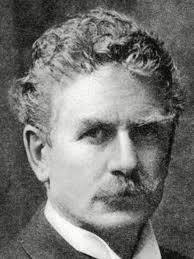
Ambrose Bierce, 1842 -1914

Ambrose Bierce defined politics in his Devil’s Dictionary as “A strife of interests masquerading as a contest of principles. The conduct of public affairs for private advantage”.

As Trump, Netanyahu and Putin continue to use this as their platonic ideal, here are a few more commonly used terms to better understand this brand of politics in the 21st Century.

Absence – The hardest thing to hide.

Accountability — A principle once thought central to democracy, now regarded as the bad manners of social inferiors.

Apocalypse — For losers, the end of the world; for tech-bros and ‘merican Evangelicals, the realisation of all their hopes.

Austerity — A political philosophy that insists that the poor must pay for the yachts on which the rich snort their cocaine from the bum cracks of supermodels … which the poor must also pay for.

Betrayal — The dispatch of Caesar by his own signature methods.

Caste — Real discrimination based on imaginary distinctions.

Children — Small humans, cynically manufactured by the enemy in an attempt to taint wholly justifiable collateral damage.

Mikaeil Mirdoraghi on his way to be killed

Climate change — A process that doesn’t exist by which plutocrats manufacture migrants.

Coincidence — Why money, power and the privilege to indulge in any vice remain in the same families for generations.

Collateral damage — The price paid by others so that Caesar can be Caesar.

Colonialism — A system that profoundly shaped the history and geography of the modern world but whose continuing influence is, apparently, not worth talking about.

Complex situation — The choice between doing the right thing and upsetting a rich sex trafficker.

Conscience — Why you can’t keep your fucking gob shut.

Consolation — The knowledge that nits become lice.

Conspiracy — No … nothing to see here … move along.

Context — The reason a “tragic mistake” was all the enemy’s fault. Not to be confused with history, which can lead to a complex situation.

Cooking — How grumpy humans show kindness.

Craic — From the outside, a moment of apparent forgetting; from the inside, the recharging of the pen.

Death (own) — Generally the only way plutocrats make the world a better place.

Death (others) — The price plutocrats are always willing to pay.

Decency — An elusive quality discovered in Caesar only after the knives have safely done their work.

Democracy — An ancient Athenian idea that important questions of war and peace should be decided by privileged men; two and a half millennia of refinement have preserved this essential character.

Doubt — The most dependable motivation for doing better.

Economic realism — A touching belief in the stories told by plutocrats.

Empathy — An existential threat to plutocrats arising from the dastardly impulses of fellow feeling and compassion.

Enemies — People who may not share your values but recognise your worth.

Enough — What plutocrats never have. (After Joseph Heller.)

Entitlements — The upside of austerity.

Evil — A quality of our own souls that we recognise most readily in people we’ve never met but really want to kill.

Exceptionalism — The conviction that accountability and responsibility are admirable principles, provided they don’t apply to us.

Expatriate — An entitled migrant.

Famine — A natural phenomenon arising from government restrictions on access to food.

Forgetting — What plutocrats and genocidaires depend on most.

Free speech — A universal right, provided it doesn’t upset plutocrats or certain genocidaires.

Friends — The ones that tell you to get back up.

Genocidaires — Human beings who act on the proposition that not all human beings are human beings.

Genocide — Perhaps not a Western invention, but certainly a Western tradition; a realpolitik solution to geopolitical complexities arising from colonialism.

Geography — A branch of moral philosophy that explains why inhabitants of one part of the earth are entitled to more than inhabitants of another.

Geopolitics – A way to blame geography whenever realpolitik is really troubling your conscience.

Great power — Living the Nietzschean dream, far above the morality of loser human beings.

Great power ally — We’re special!

“Hardest week of my life” — For multi-millionaires, a couple of days in which their privilege is threatened.

Hatred — The inexplicable, unfair and irrational resentment felt towards us by the relatives of those we have killed or dispossessed.

Heroes — Not necessarily saints.

History — An explanation of the present best avoided lest it threaten the privileges to which one has become accustomed.

Home — To some, a place of warmth in which to raise children and nurture adult love; to others, real estate of variable geopolitical value.

Human moment — A politician’s self-pity.

Human rights — Rights universally acknowledged until someone inconvenient claims them.

Human trafficking — The squalid and evil trade in human beings as if livestock … unless it is found necessary to cut costs in international supply chains or to supply billionaires’ sex parties with children.

Hypocrisy — The art of applying opposite principles with identical conviction.

Impunity — A reasonable privilege accorded to the exceptional.

Inconceivable — A word frequently applied to stuff that’s right bleeding there.

Independent investigation  — A process for discovering that a “tragic mistake” was unavoidable.

Kindness — A tendency to be on the lookout to remove thorns from lions’ paws.

Lessons learned — The process by which wisdom is obtained if you cannot afford impunity.

Literally — If you ever use this word to mean “figuratively”, you are actively contributing to the downfall of human civilisation.

Love — For plutocrats, something that property deserves but humans don’t. For everyone else, it’s reason enough.

Lovers – People you empower to hurt you.

‘mericans — US citizens who have surrendered their judgement to people who barely regard them as useful cannon fodder.

Migrants — Eternally plausible scapegoats for austerity.

Moderation — Appropriate deference to the feelings of plutocrats.

Moral cowardice — Losers being squeamish about genocide and the other essentials of realpolitik.

Passion — When the rest of the world falls away with your armour and only your lover remains.

Pen — Can be a keyboard, so long as you use it like a sword.

Plutocrats – the best humans … even though they don’t really like other humans.

Political realism — An absolute conviction that plutocrats and genocidaires have a point of view worthy of respect.

Pragmatism – An unshakeable basis upon which inconvenient moral principles must founder.

Privilege — Entitlements bestowed by wealth and history, therefore considerably more important than those rights ordinary humans keep bleating on about.

Racism — The colour grading of human beings by idiots, even when no colour is apparent.

Racists— Idiots sufficiently selective in their empathy to serve as useful ones for plutocrats

Realpolitik — A posh name for complicity in atrocities

Responsibility — An elusive quality, once thought central to professionalism, now applied only to those without sufficient privilege.

Rule of Law — An antiquated idea, dating back to Aristotle and Sophocles’ play about that loser Oedipus, that even the privileged should be accountable.

Self-defence — Violence committed by ourselves.

Silence — The promised price of the yacht in trickle-down economics.

Smugness — The quiet satisfaction of knowing your power guarantees impunity.

Special relationship — How vassals describe their vassalage.

Spouse / Partner — The one that puts up with your dirty underwear and still lifts you up.

Strategy — A long-term plan for success founded on sufficient ignorance to guarantee immediate disaster.

Stupidity — Telling truths that the smug find unsettling.

Sugar Daddy — An older man who would be really attractive even if he didn’t have all that money … REALLY!

Tech-bros — Plutocrats intent on ending the world because they still don’t know how to talk to girls.

Terrorism — Violence committed by the enemy.

Tough choices — Caesar’s difficulty in deciding which of the vulnerable to smite first.

Tragic mistake — Violence committed by ourselves against civilians after we got caught.

Transatlantic slave trade — I’m still not sure you’re grateful enough that we stopped that particular genocide that we started.

Trickle-down economics — A fairy tale told by plutocrats in which you too can one day own a yacht.

Untouchability — The art of declaring other human beings filthy so they can clean up after you, thereby exposing the state of your own soul.

Villains — Often think themselves saints.

Vulnerability — Not just an opportunity to exploit losers, but also the way humans make other humans fall in love with them when they are not rich.

War — A magical term that transforms our perpetrators of atrocities into the real victims here.

War criminal — A genocidaire without geopolitical value.

Wealth — The safest substitute for wisdom and expertise in policy discussions.

Whataboutery — A system of morality for those with no morals.

Wisdom — The consolation losers derive from losing; rendered obsolete by wealth.

Worst — Never the absolute you might hope it to be.

The careless application of high explosives: reflections in the shadow of the unlawful US-Israel assault on Iran

Summary: The myth that violence solves problems persists despite history often proving the opposite.

At the end of John Steinbeck’s Of Mice and Men, George shoots his friend Lennie. Lennie, a well-meaning but simple-minded man, does not understand his own strength or the fragility of others. So, he has accidentally killed a young woman, and George knows that if the mob reaches him first Lennie will be tortured before he dies. 

Steinbeck understood something that popular culture often forgets: violence rarely solves anything cleanly. Yet in cinema it frequently does. From Westerns to modern action films, societies’ problems are tidily resolved by lethal force.

Wyatt Earp invariably sorts out his society’s ills by use of his six-guns. James Bond’s liquidation of supervillains always makes the world a better place. 

The satisfactory resolution of daunting problems through the use of violence is so commonplace a trope in cinema that it is perhaps now as deeply embedded a cultural idea in the West as that of Santa, and the Easter Bunny. However, unlike these last two myths, some adults seem to continue to believe it. 

Put another way, in spite of the vast historical evidence to the contrary, they believe that the most complex of geo-political problems can be solved, as Eddie Izzard’s character says in the movie Valkyrie, “with the careful application of high explosives.”

Anyone who has any experience of actual war will attest that the matter is much less clear-cut. Violence tends to be the bluntest instrument in problem solving, often ineffective and opening as many new problems as it was meant to resolve. 

As Shakespeare warned, in war the dogs are let slip. The ensuing carnage leads to the ties that bind society being sundered, civilians being slaughtered in even the most “surgical” of military strikes, and the infrastructure of daily life being decimated. 

There may be diverse reasons that people celebrate the unlawful 2026 US-Israeli assaults on Iran and studiously ignore the piles of children’s corpses that have resulted. What those celebrating have in common is a lack of empathy with the innocent falling under the weight of metal, and a lack of imagination about what will transpire. In particular, they fail to conceive of the legacy of bitterness that will result. 

Violence rarely ends a conflict. More often it plants the seeds of the next one. As James Baldwin noted, “The perpetrator always forgets; the victim never does.” Societies that know little history never learn this truth. That has long been true of much of England. It is also true now of the United States. 

Anyone who watched the Tucker Carlson interview with US Senator Ted Cruz will have been struck that US foreign policy is being made now by the spectacularly ignorant. Cruz did not even know the population of a country he thought the US should invade. 

Such people are malicious contemporary equivalents of Steinbeck’s Lenny – simple-mindedly disdainful of complexity, absent of empathy, and contemptuous of those who are fragile before their military strength. 

The world is currently in the hands of such dangerous buffoons, people who treat violence as a solution and assume they will never face consequences for the murderous destruction they unleash. 

Even Steinbeck would be at a loss to find a neat narrative resolution to deliver us from their evil. 

Sudan stories III: war by remote control

Summary: Elphaba on some disturbing new trends in the Sudanese conflict

We are constantly learning how this obsene tit-for-tat war goes between groups who care nothing for the folks in the middle. Towns fall to one side and then are re-taken, new weaponry allows for new tactics in an unclear strategy. 

So it is that drones this week hit Singa taking out the power supply and with it the water. I imagine a person many miles away with a computer programme and some coordinates playing an online game with lives. Of course on the ground there has been a rounding up of people suspected of guiding the missiles to their targets.

There is a deep weariness as people say: “Ah so we’re back to that again” and for how long?My family member, Ax, says they came in the middle of the night Wednesday and it took several attempts to hit their target.  The noise sent people scurrying outside. Some left Singa again, crossing the river as they were revisited by the trauma and fear of last year. He kept the family indoors more worried about the risk of falling debris than immediate re-occupation. But that grim possibility is never fully out of mind.

The scaling up of threats from RSF (they hit the airport that the government was boasting they would re-open soon, they claimed to have taken Fasher, they threatened cities beyond Sudan that support the Govt) and counter attacks from the government (they killed the leadership of communities in Kordofan as they met last week) seems to be in preparation for talks in the US – talks that although reported are hotly denied in Sudan. Even talking about them is risky.

Meanwhile Ax and I mused on the differences between towns in England and Sudan: a mini tale of two cities. Where in dying town-centres in UK the shops all seem to be nail-bars, second-hand clothes shops and takeaways, in Singa  every shop is a pharmacy, mini-clinic or something medical related.

We are hoping this latest wont lead to something more serious.  

Sudan Stories II: Not Exactly a Getaway Car

Summary: second in a series of guest blogs from “Elphaba” on the ongoing war in Sudan

There was some great excitement in Singa this week as it was announced that many vehicles had been found and owners could bring proof of ownership and reclaim theirs. Ours was a battered, old, much-loved and very unreliable crate. She appeared to have some kind of sentience: working on a whim for some and not others. Opening and closing the windows was an act of will power (no winders that worked). But she had given great service carrying sheep, produce, people and everything in between for several years before she was taken at gun point last summer

A family member, Ax, went to see if she was there. He said the site was depressing. It was full of lines of metal shells, most with no wheels, broken windows and some with little or no innards. 

At the back of his mind in going to look for the vehicle, apart from the fact that it is “something to do” when daily routines are still restricted, was a potential to get her back “in case we need to run”. But then you are an easier target in car than on foot. Behind this is the reality that although our family are for the most part fine, there is a thin ice feeling.

On the 4th October a friend in El Obeid rang and we were delighted to hear all was well. The next day he rang to say that they had been bombarded with drones. Omderman has also been hit. Nothing is resolved. And South Sudan is still unravelling.

One of the fall-outs of the war coupled with climate change (I think) has been a steep increase in Dengue fever. We also hear disputed reports of cholera outbreaks. Now at the tail-end of the rains is the malaria season 

In the end we could not locate our vehicle. We laughed that she was never exactly a get away car, except in the sense that we seemed to get away with paying very little road tax over the years. In this seemingly endless war, the citizens who have lost most of what we think of as essentials are expected to pay significant amounts to reclaim their cars at a time that inflation in the costs of everyday needs, and the continuing devaluation of currency, bites.