November updates to Bierce’s Devil’s Dictionary

Summary: some new additions to the longer list

Death (own) — Generally the only way plutocrats make the world a better place.

Death (others) — The price plutocrats are always willing to pay.

Famine — A natural phenomenon arising from government restrictions on access to food.

Free Stater — One who would sell their siblings for cold hard cash or some more obscure advantage.

“Only Democracy in the Middle East” — Apartheid.

Spartan — A term for a tough guy, generally used by homophobes unaware of irony.

Sudan stories IV – hungering for peace

Summary: Elphaba on the bleak situation in Sudan at the end of 2026

As the weather is now shifting and after townwide aerial spraying, the devastating dengue and malaria season appears to have moved on.

Dengue is a new illness while malaria is an old enemy that shortfalls in funding and political will have failed to get rid of over decades. This year, the intense combination of the two left an already weakened community yet more battered –  physically and financially. No medicine is free.

While the reprieve from widespread illness has been welcomed, the stupid and well-funded fighting (imagine what else you could do with the money!) with its base in Ethiopia is pressing northwards and fresh waves of displaced people. Reports say that many however are staying put. They simply no longer have the funds to move.

The value of the currency is in free fall. 35% changes in prices of flour for instance overnight and no one knows if they can afford bread.

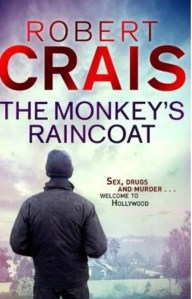
The Monkey’s Raincoat, and L.A. Requiem, by Robert Crais

Summary: where streets are mean, but gumshoes are meaner

I had read good things about Robert Crais and, always having a soft spot for a decent bit of American hard-boiled, picked up The Monkey’s Raincoat, the first of Crais’s novels about Elvis Cole and Joe Pike, two Los Angeles-based private investigators.

In it, our heroes are hired to find a missing child, apparently abducted by his father. Matters quickly become bloodier and more convoluted as organised crime, narcotics and murder enter the picture.

It is an entertaining tale, but I have certainly read better. The Monkey’s Raincoat sometimes feels almost like a parody of Chandler, with much cracking wise, willing women and violent but honourable men dispensing rough justice on the mean streets. It certainly did not, in my opinion, explain the considerable reverence with which Crais is now regarded as a crime writer.

A bit of additional research suggested that his reputation went into another gear with L.A. Requiem, the eighth Cole/Pike novel. So I decided to give that a go.

The difference is clear from the first chapter. By this stage Crais has gone a long way towards finding his own voice, and the story is considerably more melancholic. Cole and Pike are brought into the investigation of the murder of a young woman who was once Pike’s lover. The story moves across several timelines and, in particular, explores Pike’s past, which proves intimately connected with both the murder investigation and the danger now facing him.

L.A. Requiem is a work of considerably greater literary merit than The Monkey’s Raincoat. The characters have acquired depth; violence has consequences; friendship, loyalty and loss matter as much as the mechanics of the mystery. Contemporary reviewers were right to see it as a considerable leap forward for Crais.

But it is not without flaws. Both Cole and Pike appear remarkably resistant not only to post-traumatic stress disorder but also to hollow-point bullets, each finding the strength to keep going after being shot and suffering considerable blood loss, because they’re just so goddamned all-American tough. And, as a certain species of American remains keen to believe, violence can solve most problems if administered vigorously enough by the right sort of man.

So I can now see why Crais has earned his crime-writing reputation. His is a world I may return to. But unlike, say, Mick Herron’s Slough House – or Chandler himself – I am unlikely to be in a rush.

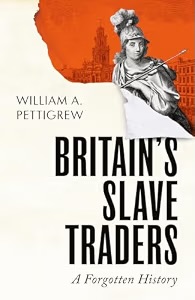
Britain’s Slave Traders by William A. Pettigrew

Summary: a vital work of British history that does much to explain why one protracted crime against humanity reverberates into the present.

Britain’s Slave Traders is an elegantly written and deeply researched work of history, chronicling Britain’s role in one of the most shameful episodes in human history: the Trans-Atlantic Slave Trade.

It is also a deeply unsettling book. For Pettigrew identifies slave trading not merely as an important contributor to British economic development, but as deeply implicated in the development of the British civil society that subsequently came to regard itself as fundamentally opposed to such barbarities.

A statue of Edward Colston, for example, was not erected to celebrate the inhumanities he inflicted as a trafficker of enslaved Africans. It was erected to celebrate his philanthropy: the wealth he distributed through schools, hospitals, almshouses and other charitable causes. The origins of that wealth were progressively displaced from the civic memory that celebrated its benefits.

Colston was far from alone. London, Edinburgh, Glasgow and Liverpool all have their counterparts. Slave-trading wealth flowed into institutions, infrastructure and philanthropy across Britain.

The trade also helped generate and entrench racial ideologies that rationalised the enslavement of Africans. Racism was not some unfortunate phenomenon that happened elsewhere while Britain innocently engaged in commerce. It became intertwined with a system from which British traders, institutions and the state derived enormous advantage.

Paradoxically, many of those who eventually campaigned successfully against the slave trade were themselves beneficiaries of educational and charitable institutions established with slave-trading wealth. Pettigrew argues that abolitionists made a deliberate strategic choice not to dwell upon how thoroughly the traffic had been embedded in British society. To build a mass movement, they instead presented the slave trade as fundamentally un-British and its practitioners as monstrous aberrations from traditions of British liberty, Christianity and decency.

In doing so they – and, given that I used to be Director of Anti-Slavery International, perhaps I should say we – helped enable a sort of national amnesia. Consequently, many people in contemporary Britain know little of the role slave trading played in the development of British institutions, social cohesion and economic power in the seventeenth and eighteenth centuries. More importantly, they frequently do not know that they do not know.

Pettigrew shows how thoroughly Britain’s slave-trading project became entangled with the development of the state itself. It contributed to the growth of British naval and commercial power. After the civil wars of the 17thCentury it offered common economic interests across old political divisions. After the Act of Union it provided commercial opportunities through which Scottish merchants participated in an expanding British imperial economy. Slave traders helped finance wars, develop ports and canals and provide some of the capital from which industrialisation grew.

This is therefore a particularly timely book, appearing amid renewed Commonwealth demands for reparatory justice and following severe British cuts to international aid.

One familiar objection to reparations is that the people who perpetrated slavery and the slave trade are long dead. But Pettigrew demonstrates why that cannot dispose of the argument. Individuals die; states, institutions, accumulated capital and infrastructure persist. The advantages that Britain derived from slave trading did not vanish with the slave traders themselves. They became incorporated into the economic, political and institutional development of the country.

That does not, by itself, settle what reparations should mean, who should receive them or who should pay. Those are difficult political and moral questions. But it does make historical ignorance a poor basis upon which to answer them.

So, from this day forth, anyone wishing to utter a credible word on the reparations debate should first read this book.