Just because you’re paranoid doesn’t mean they’re not out to get you – Shutter Island, by Dennis Lehane

Two US marshals, Teddy Daniels and Chuck Aule, arrive at Ashcliffe hospital for the Criminally Insane on Shutter Island in Boston Harbour to search for an escaped child murderess, Rachel Solando. Teddy has a personal reason for wanting to be on the island: He knows this is where the man who killed his wife, Andrew Laedis, is imprisoned.

In Shutter Island Lehane uses a similar device to one he previously used in Gone Baby, Gone: the first three quarters of the book are a procedural as Chuck and Teddy conduct their hunt for the missing Rachel. In the final quarter the true nature of what has been going on is revealed.

There is some debt to Sophicles’ Oedipus Rex in this novel as Teddy finds his investigation coming closer to home than he could possibly have imagined. The result is a compelling novel with the final twists elegantly delivered.

A story from behind the statistics – Midnight in Peking: The Murder That Haunted the Last Days of Old China, by Paul French

In 1937 the body of a young western woman, Pamela Werner, was found brutally murdered in Peking. An investigation was launched by Chinese police with British support but the murderer was never arrested and the crime was soon forgotten in the midst of the cataclysm of the second world war that engulfed China and the world thereafter.

Paul French, the author of this book, in the course of researching the case found that after the police investigation wound up, having been obstructed throughout by a combination of bureaucratic corruption, racism, sexual hypocrisy and imperial pretensions, Pamela’s father conducted his own enquiries. These uncovered significant new evidence including, almost certainly, the identity of the murderer and the circumstances of Pamela’s death. The resulting book is a gripping non-fiction procedural which gives fascinating insight into Peking, and particularly its foreign community and foreign underclass of white Russian emigres and multinational adventurers and criminals, in the last days before the Japanese take-over.

Pamela’s death was, of course, just one of millions that would occur between the invasion of Manchuria and the bombing of Nagasaki. But the author is right to single it out: in focusing on the life and horrific death of one fiesty young woman we are reminded that her story is a dreadfully ordinary one and representative of tens of thousands of others who in peacetime fall victim the way Pamela did.

To say more would be to give too much away. Suffice to say that Paul French has produced a fine narrative of a single criminal case of the sort that remains horrifically commonplace over 70 years since Pamela’s awful death on a cold Peking night.

The Finish: The Killing of Osama Bin Laden, by Mark Bowden

Summary: An account of the hunt for, and assassination of. Osama Bin Laden by the United States.

The Finish focuses on a number of individuals who had pivotal roles in this effort including Barack Obama as well as various special forces and intelligence figures.

It is a decent work of journalism detailing the evolution of American war making since the 11 Sept attack on the Twin Towers, particularly in relation to the integration of intelligence gathering and information management with special forces operations. However it is not the best work by Mark Bowden that I have read and it is not without controversy.

In Roadwork, an earlier collection of his journalism, Mark Bowden has written thoughtfully and highly critically on the issue of torture. Here he argues, with some discomfort, that a key lead in the hunt for Bin Laden emerged from a number of interrogations of different people under torture during the Bush administration. However the information gleaned from these interrogations was not recognised as important until advances in US information systems allowed for the effective analysis of the multitudinous quantities of intelligence that the US had gathered.

A practical (as opposed to moral) argument against torture has always been that the person being tortured will say anything to get the torture to stop. Hence the information they give cannot generally be relied upon. In her book Audacity to Believe Shelia Cassidy describes this very phenomenon in her account of her torture in Pinochet’s Chile. She also describes how her torturers had time to check every detail that she gave and so with repeated visits to the torture chamber were able to break her utterly. In this book Bowden suggests that advances in information systems which allow for cross checking of all sorts of information has automated the torture verification process that Cassidy’s interrogators undertook at such leisure. So such systems could become used in the future for continued justification for the use of torture.

Bowden acknowledges that his sources did not reveal to him how they actually turned the vague indication from torture interrogations into a solid lead on a real person. However Kevin Toolis, a filmmaker and writer who has made a movie, Complicit, about the use of torture in the “war on terror” argues that in the end the location of Bin Laden resulted from simply bribing a senior member of Pakistani Inter Service Intelligence to help reveal his hiding place. This corresponds with the Obama administration’s official position that torture was not used to locate Bin Laden.

This controversy over torture and a rather superficial treatment of the criticisms of the use of drones aside this is a gripping narrative and still provides a useful and thought-provoking insight into evolution of counter-insurgency and some of the moral questions associated with it.

A Man Without Breath, by Phillip Kerr

Bernie Gunther reckons that his life should be marginally easier now that Czech and Slovak patriots have done him, and humanity, the great favour of assassinating his erstwhile boss, Reinhard Heydrich, a recurrent source of his prior misadventures.

However in the forests of Katyn on the Eastern Front the German Army has stumbled upon a set of mass graves. Remarkably these don’t appear to be the work of the Nazis, but rather might answer the vexing question of what has become of all the Polish officers captured by the Nazi’s former Soviet allies when they dismembered Poland between them in 1939.

So Goebbels, intent on pinning these murders on Stalin and showing the world that it is not just Germany that has the programme of war crimes and genocide, needs a detective to help sort out the evidence and make sure that the bodies they are digging up are indeed the right ones. Hence Bernie is shipped out to the German army halted for winter in Belarus while it awaits an oncoming Soviet offensive in springtime.

Things are complicated further by Bernie stumbling into the machination of some anti-Nazi officers in the German Army trying to put an end to Hitler, and person or persons unknown trying to put an end to Bernie.

Gunther would be a compelling character in any novel but the effect is considerably enhanced in the context of the German State and Army in the midst of the Second World War: much as Bernie would like to be a decent man it becomes increasingly difficult in the bloody lunacy of war and the evil bureaucracy of the state. The series reinforces the point, chillingly detailed by Timothy Synder in his history of the Bloodlands where this story occurs, that atrocities, then as now, are committed by ordinary human beings abandoning their consciences, the constraints of law, and ordinary human decency, to supposed higher ideals. This philosophical seriousness combined with the nightmarish setting, a twisty plot and the wry observations of Bernie make the book a delight from start to finish.

Twentieth Century European anti-Semitism in miniature – The Hare with the Amber Eyes, by Edmund de Waal

I know I am in a minority in not being bowled over by this book which comes trailing praise and prizes by the bucketload.

20140727-212029-76829746.jpgIt is unquestionably a beautifully written work based on what seems like an awesome research effort. The conceit of the book is very clever: following the lives of the, mostly Jewish, owners of a collection of Japanese netsuke from their arrival in France in the nineteenth century through the author’s family until they end up in his possession. The form of the book is then influenced by the form of the netsuke – minature portraits of the author’s relatives in relation to each other and to some aspects of key events of the late nineteenth and twentieth century including the Dreyfuss affair, Japanese reconstruction post-Second World War, and, of course, the Holocaust.

20140727-211827-76707029.jpgI must say I struggled with the early parts of the book which related to the netsuke’s first owner, Charles, who the author discovers was an inspiration for Proust’s Swann. The author insists he came to like this character, but I am not sure he found him as engaging as some of his other relatives. I felt the book became considerably more alive when the scene shifted to Vienna, particularly his great grandmother Emmy, legendary in Vienna even today for her vast array of lovers, and his grandmother, the extraordinary, Elizabeth, who became the first woman to obtain a doctorate of law from Vienna university and, at some considerable risk to herself, returned to Austria after Anschluss, in an attempt to save her family from the Nazis.

20140727-211712-76632801.jpgThe section dealing with Anschluss and its consequences is the most powerful section of the book, but the parts dealing with the author’s beloved uncle Iggy are also deeply moving.

Aside from the difficulties I had with the Paris section I think one of the frustrations I had with the book was wanting to know more. This is probably a churlish expectation given, as the author notes, he was writing about a period where the Nazis tried to erase or “overwrite” his family from European history and some of his own relatives wished their secrets to go to the grave with them, destroying correspondence to this end.

A book that leaves one hungering for more is usually the measure of a fine work. Its a deeply impressive piece of work even if it is not everyone’s dish of tea.


The Boy in the River: A shocking true story of ritual murder and sacrifice in the heart of London, by Richard Hoskins

The Boy in the River is Richard Hoskins fine account of his involvement in the investigation of the murder of baby “Adam” – a child whose headless torso was found in the Thames, the victim of a ritual sacrifice. Hoskins knowledge of African religions provided particular insight into this case illuminating a particularly vile and little known aspect of human trafficking: that for human sacrifice.

His knowledge, honed through academic research, originated from his work as a missionary in Congo, and his memoir of this time and the tragedy he and his family suffered there is compelling. Towards the end of the book Hoskins leaves, perhaps deliberately, several loose ends in relation to this tragedy. But this is probably fair enough: the book must have been a particularly difficult one to write. As it stands it is an accessible and brave work on one of the darkest aspects of modern society.

A henchman’s eye view: Prague Fatale, by Philip Kerr

pragueAfter the sprawling odyssey of Field Gray, the previous novel in this series, this book takes on the more intimate template of an Agatha Christie “country house murder” – except this country house is owned by a mass murderer, filled with mass murderers and the victim himself is a mass murderer.

The country house is Heydrich’s and he is hosting a weekend party for a group of senior SS officers. Into this mix he draws the narrator, Bernie Gunther, a Berlin detective of Social Democratic and anti-Nazi sympathies, who has managed to keep (relatively) clean hands despite his time in the killing fields of the East. Heydrich wants Gunther to join his bodyguard when the murder occurs, and, as Gunther acknowledges, he is not really a man you can refuse. Hence, as well as investigating a murder amongst murderers, Gunther becomes witness to the beginnings of Heydrich’s reign of terror in the Czech lands (before his just dispatch by the Czechoslovak patriots Kubis and Gabcik, as detailed so brilliantly in Laurent Binet’s stunning novel HHhH). prague night

Gunther is an attractive narrator – wryly witty and historically knowledgeable, though morally questionable, as he himself painfully recognises. Hence as well as being a compelling thriller this book (as does Field Grey) offers some detailed insights into the Nazi regime and Germany’s prosecution of the Second World War. Its a fine, exciting and, at times, poignant novel that, importantly, tries to show the human face and nature of some history’s monsters.

Hard boiled all the way through: Where The Dead Lay (Frank Behr series No. 2), by David Levien

indy-downtownFrank Behr, Indianapolis private investigator and protagonist of David Levien’s previous novel “City of the Sun”, investigates the murder of one of his few friends, Aurelio, a jiu jitsu trainer and former mixed martial arts champion. The investigation leads him into contact with a local family of criminals with ambitions to establish themselves, through ferocious violence, in the big leagues.

Behr has many attractive features as a character – courage, loyalty and intelligence to start with, but he is also morose, humourless, angry, emotionally distant and rather inarticulate on any subject other than armed or unarmed combat. These are believable and understandable characteristics for a person with his life history, but they do not make him the most enjoyable protagonist to spend a novel with.

The plot is some consolation, and there is a significant compulsion for the reader to see how all the pieces fit together. However there isn’t that much else: one learns little of the city (Indianapolis) in which the novel is set, or contemplate few moral dilemmas that may be associated with the investigation of violent crime perpetrated by professional criminals. Still its an entertaining, though violent, crime novel, good for a bleak holiday. But it leaves me with no desire to ever cross paths with Frank Behr again.

All Hell Let Loose: The World at War 1939-1945, by Max Hastings

Max Hastings presents the world with two personae. There is the curmudgeonly right-wing journalist, scion of the Establishment and apologist for the British military. Then there is the historian, who comes across as a wholly different sort of beast, his historical work pervaded with a great sense of humanity and of the pity of war. 

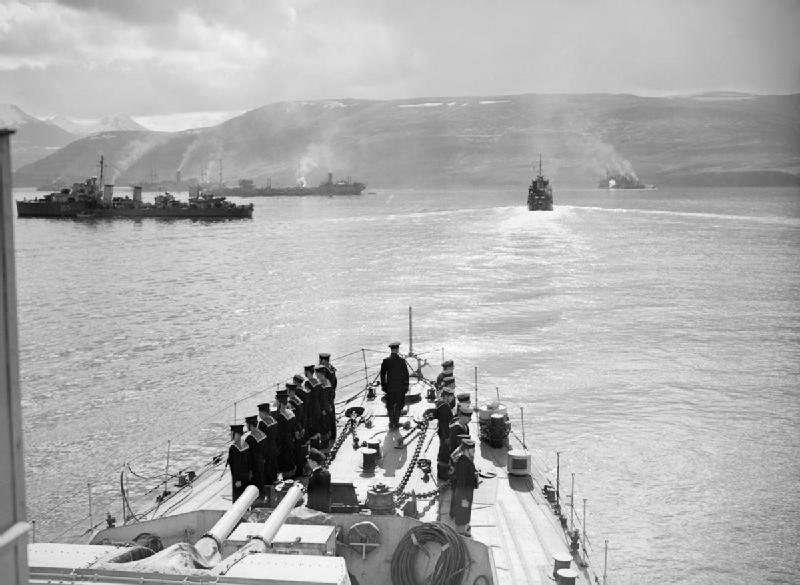
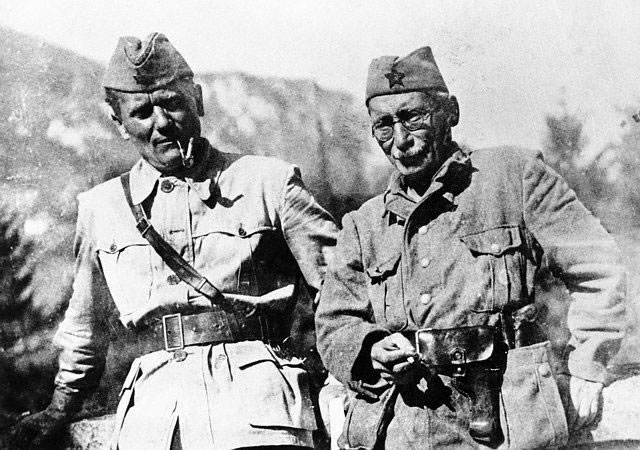
Warsaw_1939_Polish_POWsWith this book, Max Hastings the historian has completed a body of work on the Second World War comparable to Shelby Foote’s magisterial history of the American Civil War. This book fills some of the gaps in the history of the war not covered by his more detailed studies (Overlord on the battle for Normandy; Armageddon on the last year of the war in Europe; Nemesis on the last year of the war in the Pacific; Warlord, his study of Churchill’s war leadership; and Bomber Command). So there is greater consideration here of, for example, the invasion of Poland, the war in the Mediterranean, the major naval campaigns such as the Battle of the Atlantic and the Arctic Convoysartic convoys, and amongst the most chilling chapters, a discussion on the war in the Balkans. Naturally, however the discussion of the war’s final campaigns are more cursory here given Hastings’ other writings.

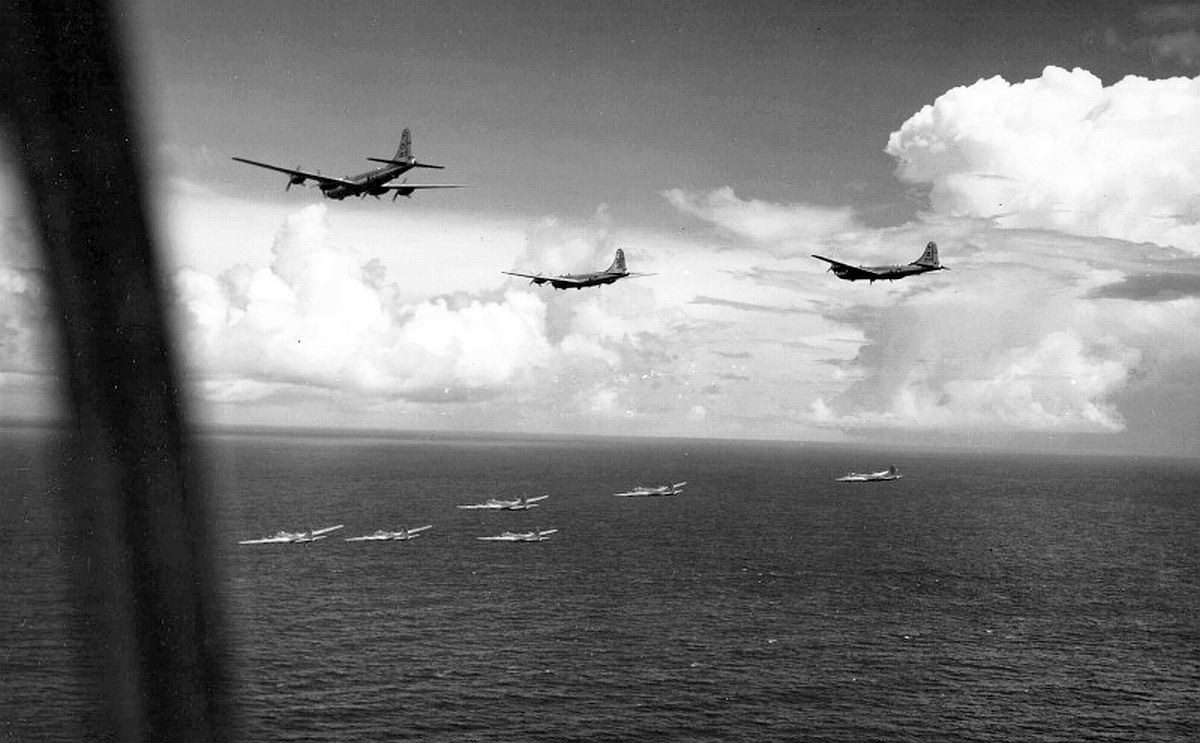
One of the things about Hastings’ historical work that is so delightful is that even if one is familiar with much of the narrative of the events he will often bring new detail or insight to the discussion. This book does not disappoint in this regard: the retreat from Stalingrad, for example, is told principally from an Italian perspective; and the bombing of Hiroshima and Nagasaki is discussed through the idea of “technological determinism” which Hastings sees as shaping key aspects of the Allied campaign, particularly the B29B-29s-Pacific bomber offensive on Japan. By this he means that when a military capacity exists there can become an overwhelming motivation to use it irrespective of the strategic value: it is an idea that also helps illuminates the dynamics behind some questionable dashes into war, such as the 2003 invasion of Iraq.josip-broz-tito-and-mosa-pijade-moshe-piade

There is also a great fair-mindedness to Hastings’ historical writing, acknowledging, given the comparable horror of both Soviet and Nazi tyrannies (something that Timothy Synder explores in greater detail in his exceptional book Bloodlands), that for many eastern Europeans the war never could appear the clear cut battle between good and evil it has become in Anglo-American mythology. Hastings also points out how that Anglo-American myth must take some tarnishing given Britain’s role in the Indian wartime famine, the Anglo-American betrayal of Poland, and some of the needless blood shed by the Allies in the Pacific.

Overall a great work of narrative history, elegantly written with a seeming effortlessness that belies the great learning it contains.

The Speed of Light, by Javier Cercas

The Speed of Light uses the same author-in-search-of-a-story device as Javier Cercas’s previous superb novel of the Spanish Civil War, Soldiers of Salamis. At its core the book is a meditation on how war breeds atrocity and the consequences of atrocity on the perpetrators – the murdered are barely mentioned and only fleetingly considered.my lai

However while a gripping read it ultimately is significantly less satisfying a book than the author’s earlier one about the Spanish Civil War. As one of the characters says to the narrator in The Speed of Light – “you can’t understand because you haven’t killed”. And because the author – presumably not a killer either – does not understand he cannot explain. Instead he describes, recounts and tries to empathise. This is an honourable exercise, but it provides little insight to this subject. Furthermore the author’s blurring of the distinction between himself and his protagonist leads, I found, to great difficulty in trusting the account itself and hence the insight the author offers.

Nevertheless the book is elegantly written and translated, and it is thought-provoking. Perhaps it will lead some to revisit actual histories of the Vietnam war, particularly Four Hours at My Lai, which deals much more directly and insightfully with the realities of war-crimes.