Fairly Smooth Operator, by Caroline Walsh

Summary: a thoughtful rumination on leadership from the experience of, on occasion, being badly led

Caroline Walsh’s book, Fairly Smooth Operator, is something of a memoir, recounting her experiences, first as a member of the US Coast Guard, and later as an analyst with the CIA.

Her theme is not, however, derring do, military morality or historical scandals. Rather Walsh’s focus tends towards the more mundane aspects of life in these organisations and particularly the “chickenshit” of military life. With humour and considerable generosity of spirit she explores the petty abuses of power meted out on weaker or more junior colleagues, because the abuser is a bully or an idiot. She reflects on the damage this does to both individuals and the organisations of which they are parts, because bad leadership invariably results in the injury and loss of good people.

So, Fairly Smooth Operator is a useful book for anyone concerned with the world of work in general and, in particular, with the challenges of management and leadership in teams and in big, bureaucratic organisations.

Walsh is now studying for a PhD in the area of ethical leadership. Judging on this book, she will doubtless have many more useful and important things to say on this subject in years to come.

The Kidnapping: A hostage, a desperate manhunt and a bloody rescue that shocked Ireland, by Tommy Conlon and Ronan McGreevy

Summary: a lucid and gripping account of an important aspect of the Troubles.

On 24 November 1983, Don Tidey, a supermarket executive, was kidnapped from outside his home by a unit of the Provisional IRA. Twenty-three days later, on 16 December, he was rescued in Derrida Wood, County Leitrim, by a joint operation of the Irish Army and the Garda. In the course of the rescue the IRA unit killed two people: 23 year-old Garda recruit Gary Sheehan, and Private Patrick Kelly of the Irish Army.

The authors trace the origins of this tragedy to the early 1980s when the IRA came up with a new fundraising strategy: kidnapping for ransom. It began with the legendary racehorse, Shergar. Seemingly temperamental stallions do not submit to the same sort of intimidation techniques that the IRA found worked so well on innocent German factory managers and single mothers from Divis Flats. So, unable to keep the horse placid, they killed and disappeared the beast before moving on to vulnerable human targets. Conlon and McGreevy recount the series of kidnapping and extortion operations that followed before the abduction of Tidey.

It is sometimes easy for a Northerner like myself to forget the dreadful impact that the Troubles had upon the South. With this book the authors seek to redress this historical amnesia. Both Leitrim men, they also expose the prejudices that other parts of Ireland, with their crass ignorance of what it means to have a significant paramilitary presence in one’s community, developed against their county.

There is a palpable and justifiable thread of disgust at the paramilitaries’ attitudes and actions running through this book. At one point the authors quote John Hume who observed that many Provos seemed to regard Irish citizens who did not support their bloody campaign as lesser beings.That may well have eased their qualms about pressing triggers on people like Gary Sheehan and Paddy Kelly who were doing nothing more than trying to protect the innocent. Conlon and McGreevy also trace the devastation wreaked by the trauma of those deaths on their surviving families. Meanwhile the probable killers continue to be feted in Sinn Fein circles, and those they killed ignored.

The Kidnapping is a superb book that helps strip away any romantic hue forming around the Troubles and helps all Ireland face up to another vital piece in the totality of our history.

My top ten reads for 2023

Summary: in case anyone is looking for reading or gift ideas

In chronological order of reading:

  1. Hitler, by Ian Kershaw: an exceptional work of historical biography and the definitive work on the pathetic monster who brought cataclysm to Europe.
  2. My Father’s House, by Joseph O’Connor: an outstanding historical thriller of Hugh O’Flaherty – “the Irish Schindler” – and Europeans united against the Nazis
  3. The Restless Republic, by Anna Keays: an elegantly written, though overwhelmingly Anglo-centric and bizarrely affectionate account of “Oliver’s” genocidal dictatorship
  4. Sword of Honour, by Evelyn Waugh (Men at Arms; Officers and Gentlemen; Unconditional Surrender): Waugh’s war, told with his trademark combination of high comedy and profound melancholy: classics for a reason.
  5. Empireland, by Sathnam Sanghera: a gripping and elegantly written survey of the bloody British empire and its echoes in the present day
  6. The Secret Hours, by Mick Herron: An superb prequel to the Slough House series: 1990s Spook Straße, Berlin, Moscow Rules very much apply
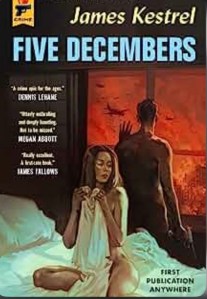
  7. Five Decembers, by James Kestrel:  a surprising and compelling crime story, with a strong echo of Vonnegut’s Slaughterhouse Five, to the backdrop of WW2 in the Pacific.
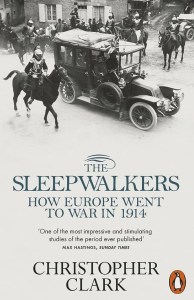
  8. The Sleepwalkers: how Europe went to war in 1914, by Christopher Clark: an extraordinarily adept and compelling elucidation of the complexities of European politics and alliances that led to the outbreak of World War 1. Basically, it was everyone’s fault… but mostly Serbia.
  9. A History of Water, by Edward Wilson-Lee:  a fascinating exploration of an aspect of Portuguese history and attitudes at the outset of Europe’s colonial plunder of the global South
  10. Killing Thatcher: the IRA, the manhunt, and the long war on the Crown, by Rory Carroll: insight on the Troubles through the prism of a gripping account of one bloody incident

Killing Thatcher: the IRA, the manhunt, and the long war on the Crown, by Rory Carroll

Summary: insight on the Troubles through the prism of a gripping account of one bloody incident

Patrick Magee did not kill Thatcher when the bomb he planted in the Grand Hotel, Brighton exploded. She emerged from the wreckage with her reputation burnished by an extraordinary display of courage and self-possession for one who had just survived an assassination attempt.

Magee did kill Jeanne Shattock, Anthony Berry, Eric Taylor, Muriel Maclean and Roberta Wakeham. Most were sleeping when the bomb exploded but were not killed instantly. Instead they suffocated, terrified and alone, in the rubble that scythed through the hotel, unleashed by the explosion. Others were grievously injured, including former nurse, Margaret Tebbitt, who was left quadriplegic. More would probably have died were it not for the startling courage of the firefighters who attended the scene and broke protocol by insisting on searching for survivors before the building was declared free of explosives.

Killing Thatcher is Rory Carroll’s gripping narrative of the events leading up to this 1984 bombing and the subsequent hunt for the bombers. Its principal focus is on Magee, but it is also an account of the others, from Magee’s victims to the bomb disposal experts and cops who he came into interaction with during the course of his involvement in the IRA’s often vicious campaign in England.

Magee is in many respects a hugely impressive individual. After release from prison, in which he earned a PhD, he showed considerable moral courage in meeting and subsequently working with Anthony Berry’s amazing daughter, Jo. This initial meeting, he admitted, was the first time he realised that he had been responsible for the death of a fine person. But in spite of his apparently genuine regrets, he continues to insist that the Brighton bombing was a legitimate act of war.

Following her callous handling of the 1981 hunger strikes, Thatcher was a hate figure in much of Ireland. So, the Brighton bombing was principally an act of revenge rather than a strategic move coolly calculated to advance war aims. Justice in Ireland was instead advanced by the diplomacy of Taoiseach Garret Fitzgerald, who convinced Thatcher to sign the Anglo-Irish agreement the year after the bombing. This laid the foundations for the Good Friday Agreement of 1998.

Reading this book as thousands of women, children and men are suffocating to death in the bombed out rubble of Gaza, I imagine that, like Magee before he met Jo Berry, Netanyahu, Hamas and their cheerleaders in the British parliament and American Congress do not trouble themselves to think of the dying as fine human beings. But I doubt that any of them would have the integrity of the likes of Patrick Magee to face their victims, or of Thatcher to put in the groundwork for a political solution, in spite of personal feelings.

So, for all that is repellent about British and IRA policy and actions during the Troubles, Magee and Thatcher appear now as moral paragons by comparison with many contemporary political figures with their weasel words in defence of war crimes.

A History of Water, by Edward Wilson-Lee

Summary: a fine exploration of attitudes at the outset of Europe’s colonial plunder of the global South

In A History of Water, Edward Wilson-Lee notes how towards the end of his life, Leonardo da Vinci continued to find excuses for not painting by researching the shifting patterns of cascading water. By the thinking of the day, this represented the ultimate waste of time as received wisdom was that the Platonic ideal of the fixed and unchanging metaphysical world was the only thing that was knowable.

But human society is itself as fluid and tumultuous as water. And, with A History of Water, Wilson-Lee offers accounts of two people who tried to understand the different patterns of its flux.

The people in question are Damião de Góis, a cosmopolitan Portuguese envoy and latterly chief archivist of Lisbon’s Torre do Tombo (Tower of Records), and the much more proletarian Luís de Camões, Portugal’s greatest poet, author of the Lusiads, a romanticised account of Portuguese exploration.

Both men were travellers around the same time, when Portugal began Europe’s imperial pillage of the global South. De Gois’ journeys around Europe made him witness to the stirrings of the religious wars that disfigured Europe in 16th and 17th Centuries. De Camoes travelled much further afield, into Asia, and so was a more direct witness of Europe’s disfiguring of the rest of the world.

However, the two mens’ reactions to their experiences and encounters are tellingly different. De Gois, recognising the humanity of others, sought to build understanding and diminish conflict where he could. Of course, this brought him to the menacing attention of the Inquisition which, in truth, did not approve of Jesus’ admonition to love and not judge others.

De Camoes’ on the other hand, drawing on his experiences in South and East Asia, made Vasco de Gama the hero of the Lusiads.

Just one thing about Vasco de Gama: On his second voyage to India he captured a ship called the Meri bearing some 400 Muslims pilgrims to Mecca. This he set alight and kept burning for four days, deaf to all pleas for pity, until every man and woman aboard was dead. Twenty children were spared and forcibly converted to Christianity, according to some accounts, due to ransoms offered by their desperate mothers.

In this, de Camoes is perhaps the prototype of hundreds of other imperial propagandists who spent the colonial era elevating thieves, rapists and war criminals to the level of national archetypes. It happens still.

A History of Water is a fascinating book that offers a novel aspect of early modern European history and the origins of colonial conquest.

But the book also has contemporary resonances.

All societies have a sort of duality between imperial and democratic tendencies, between the Establishments and the dispossessed, between the chums of the elites on one hand and the human rights protesters on the other.

Edward Wilson-Lee’s exploration of an earlier manifestation of this duality is a stark warning of what can happen when recognition of our common humanity is suppressed by chauvinistic myths of superiority. 

It is an outstanding book and rightly acclaimed as one of the best works of history of recent years.   

The Sleepwalkers: how Europe went to war in 1914, by Christopher Clark

Summary: So… it was everyone’s fault… but mostly Serbia.

The historian AJP Taylor in his celebrated BBC lectures, How Wars Begin, stated that everyone knows why the Second World War began, but not when, and everyone knows when the First World War began, but not why.

The Sleepwalkers, Christopher Clark’s detailed examination of the origins of the First World War clears up some of that “why” question, but not in any simple way. He describes an interconnected system of “great” European powers – and Serbia – who all took for granted their right to interfere in the affairs of other nations and which developed enormously complex systems of alliances and interests to allow them to do so.

Bizarre imperial attitudes to other countries were not the only strange notions to infest the chancelleries of Europe pre-1914. Many of the denizens of these corridors of power talked seriously of the idea of “preventative war”, which remains, to put it crudely, as much a contradiction in terms as the idea of fucking for virginity.

Hence at the outset of the 20th Century, Europe represented not so much a house of cards destined to collapse sooner rather than later, but a tangle of explosive devices being randomly hit with hammers by supercilious poshos with Napoleonic delusions.

The spark that finally triggered to conflagration was, of course, the assassination of Archduke Franz Ferdinand and his wife, Sophie, in Sarajevo, by the young Serbian nationalist Gavrilo Principe. This was done at the behest of elements in the Serbian government which feared Franz Ferdinand’s intent to increase Slavic representation in the Austro-Hungarian empire. This, Belgrade felt, threatened their dream of a greater Serbia. Franz Ferdinand’s assassination also removed one of the most pacific members of the Austro-Hungarian government and made their impetus towards a war of vengeance all the more assured. From the rubble, of course, Yugoslavia was fashioned, so maybe some Serbs felt the price was worth paying. And didn’t that turn out well.

Some of the dangerously fanciful notions that sparked the cataclysm may have dissipated from Europe, particularly since the rise of the European Union, which was fashioned to make war “not only unthinkable but materially impossible.” However, Clark notes that other dangerous impulses are still at play. Referencing the Euro crisis of 2009/10, Clark describes how, just as in 1914, some countries were prepared in negotiations to use the risk of catastrophic failure for all to advance local interests for some. Similar short-term, selfish interests threaten progress on the climate crisis, which may yet dwarf the carnage of the First World War.

So, a bleak book, but an engaging and thought provoking one, snappily written and frequently gripping.

In search of the Dark Ages, by Michael Wood

Summary: a fine introduction to pre-Norman English history

Over the past 40 years Michael Wood has become known for his highly engaging television documentaries. Some of the books that this has prompted, such as The Story of India, are essentially travel books. Others, such as In Search of Shakespeare, are much more substantial affairs.

Fortunately, In Search of the Dark Ages falls into the latter category. It is a fine history of England from the departure of the Roman Legions to the Norman conquest. Along the way Wood throws out a range of interesting observations and asides, including a judgement that, based on what he wrote in his Confessions, St Patrick was probably from Carlisle.

In the latest edition of this book, Wood has added material on hitherto neglected figures and issues, including Aethelflaed (Millie Brady’s character in the Last Kingdom), who Wood judges to be comparable to her father Alfred in the making of a country called England, and Theodore of Tarsus and Hadrian the African who together established a school teaching the classics in Canterbury during the 7th Century. Just as is the case today, women and immigrants have contributed more to English society than many would like to acknowledge.

Overall then, a fine and entertaining work of English history before William the Bastard showed up in 1066 and helped make stealing other people’s countries the defining trait of the country he stole himself.

Five Decembers, by James Kestrel

Summary: a surprising and compelling crime story to the backdrop of WW2 in the Pacific.

The gloriously lurid, pulp-fiction style cover of Five Decembers suggests it’s going to be one thing: American hard-boiled crime a la Mickey Spillane. There is an element of this: Detective Joe McGrady of the Honolulu Police gets a call to investigate a particularly sadistic double murder in November 1941.

McGrady, however, is something a bit different from your typical Shamus. An ex-Army officer, with a romantic streak, and a history of personal tragedy, who remains intellectually curious having taken the time to learn a bit of Mandarin and appreciate Asian culture in the course of his career. So, by the time we meet him sipping whiskey in a late night bar, it turns out he is markedly nicer than one might have expected on picking up this book. Indeed, most of the characters are a lot nicer than you might expect, generally treating each other with at least professional courtesy, if not genuine affection.

This is important as McGrady is among a small group of characters in the book whose fate the reader can actually care about as his protracted investigation, and personal travails, stretch across the wretched years of war.

The book takes more than one unexpected turn. Not the least of these is its echo of Slaughterhouse Five with a description of the murderous firebombing of Tokyo – something that one of its planners, future Defence Secretary Robert McNamara, even acknowledged was a war crime – and its chilling aftermath.

So, Five Decembers is a surprising novel: not only a fine procedural, but also a thoughtful rumination on the pity of war. It is all the more remarkable and satisfying as a result.

The Secret Hours, by Mick Herron

Summary: 1990s Spook Straße, Berlin: Moscow Rules very much apply

While not quite a Slough House book as readers have come to know them, The Secret Hours is something of a prequel. It tells the story of a questionable British operation in 90s Berlin undertaken by an experienced British intelligence officer known as “Myles”. Readers of the Slough House series will understand the importance of the detail that this particular officer is known to fart a lot.

The story of this operation is told in flashback to an enquiry into malpractices by the intelligence services. Naturally, of course, the ancient history related to this operation has its repercussions in the present. Just because some people are dead, does not mean the past is. As the story evolves, it becomes plain, as Faulkner well understood, that it is not even past.

To say too much more risks exposing some of the deeply satisfying plot twists and narrative sleights of hands that Herron employs in this book. Suffice to say, it is a glorious addition to the Slough House universe and one of the best, to date, in the series.

Empireland, by Sathnam Sanghera

Summary: a gripping and elegantly written survey of the bloody British empire and its echoes in the present day

Between 1845 and 1854 the population of Ireland was halved through starvation – over a million people died – and forced emigration. The English like to refer to this horrendous period as the “Irish Potato Famine”. This suggests the blame for the cataclysm lies with Irish people’s bizarre and somewhat comical taste for spuds, rather than upon callous government policy that thought the death of hundreds of thousands of Irish people a price worth paying for British profits in the agricultural free market.

Paradoxically Sathnam Sanghera sticks with this nomenclature in his exceptional book Empireland. This book both elucidates many of the other atrocities upon which the British Empire was built, and explores the imprint that sustained bloody exercise in pillage still leaves upon contemporary British society. The term “potato famine” is part of that imprint.

There is an echo in this book of Tom Holland’s Dominion, which explores how Christian thought – such as the ideas of human rights and secularism – has so fundamentally shaped European civilisation that the origins are now generally unknown and almost unnoticed.

The British empire brought nothing so positive as human rights to the UK let alone the rest of the world. Rather it became, for much of the world a byword for bloodshed and impoverishment. But the British – in marked contrast to those societies that were on the receiving end of their colonial project – are startlingly ignorant of what Empire entailed or of its repercussions through time. Few British people now have heard of the murderous British suppression of the Sepoy rebellion of 1857, let alone of the sacking of Tibet in 1903 – even though some of the extremely valuable loot once showed up the BBC’s Flog It while Sanghera was writing this book.

And yet the consequences of all that bloodshed is with us at every turn. The British Museum is stuffed with art treasures, such as the Benin bronzes, stolen in the name of Empire. London’s position as a major financial centre is a consequence of the preferential trade terms and punitive tax regimes that the Empire imposed on subject peoples. British xenophobia towards migrants is a contemporary manifestation of the racism of Empire. The presumption of the British ruling class that the rules – whether relating to human rights, trade or public health lockdowns – that apply to others should not apply to them are also echoes of the political economy of the Empire.

Indeed, Brexit may be regarded as the inevitable consequence of the racist logic that underpinned the British Empire: having no more colonies to pillage, the British Establishment instead decided to loot the UK.

Sanghera’s book is a superb and important introduction to this inglorious period of British history and its reverberations into the present. It is elegantly written, accessible, and vital for anyone who wants to understand better why Britain finds itself in its current morass.

I just which he would quit it with his talk of “potato famines”.