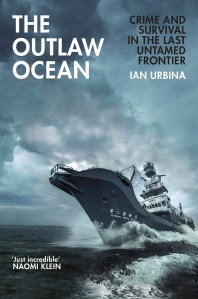
The Outlaw Ocean, by Ian Urbina

Summary: an impressive work of investigative journalism detailing the vast scale of human rights abuses and environmental damage in the world’s oceans.

The Outlaw Ocean is based on a celebrated series of articles that Ian Urbina wrote for the New York Times on the struggles for human rights and environmental standards in the vast lawless expanses of the world’s seas.

It is an impressive achievement, but also a deeply depressing one. As well as the continuing butchery of the planet’s whales, Urbina catalogues the environmental devastation of bottom trawling, the damage caused by the oil and gas industries, the risks arising from the destruction, “bleaching”, of the world’s corals, and the routine and brutal enslavement of seafarers, particularly fishermen, on the world’s ships and boats.

There are some heartening descriptions of the work of activists, such as those of Stella Maris or Sea Shepherd, who strive to bring some measure of humanity to this brutal realm, and there are exciting descriptions of some of their operations. But, appositely enough, all these seem like drops in the ocean such is the scale of the both environmental and human rights challenges.

Urbina shows how the abuses at sea are perhaps the most extreme example in history of the “tragedy of the commons” – the idea that when, in effect, everyone is responsible for something then no one actually takes responsibility. International maritime law, such as it exists, empowers states with its enforcement. This means that on the high seas – beyond territorial waters – a vessel flagged to a particular country can only be boarded by a war ship of that country. So the vast majority of the ships are simply never inspected at all. A land locked country like Mongolia, to which many ships are registered under flags of convenience, does not even have a navy.

Much maritime law, such as the 2006 international convention, does not apply to fishing vessels anyway which can do so much environmental damage through overfishing and other devastating fishing practices. Consequently slavery is also endemic on these vessels, most notoriously on the high seas of South East Asia. But I have also encountered it in the territorial waters of Myanmar and Ireland due to poor regulation and inadequate inspection.

Those who are enslaved are generally migrants, so desperately poor that they are driven to seek work from unscrupulous labour brokers. Urbina describes how sharp practices amongst labour brokers lead to seafarers becoming debt bonded, a form of slavery recognised in international law. Once this has happened the boat captains who receive them as crew routinely use physical violence, including murder, to keep discipline.

Urbina’s impressive work shows how the roots of enslavement on the sea lie on land in the indebtedness of the families and communities from which seafarers originate. This is something I also found in 2019 when researching the enslavement of raft fishermen in Myanmar’s Gulf of Motama. Hence it is a logical extension of Urbina’s research that prevention of slavery requires focussed attention on eliminating the debt that is the key mechanism for so much contemporary slavery.

Such is the scale of “modern” slavery, currently estimated as affecting over 40 million people globally, that meaningful action to reduce these numbers would require a response of comparable imaginative and actual scale to the Marshall Plan. Such a plan should focus on creation in slavery vulnerable communities of decent work, and direct cash transfers to secure early child development and school attendance. A crackdown on usurious money lenders and unscrupulous labour brokers would also be a welcome thing.

Until that happens Urbina’s work will stand as an appalling indictment of the human rights and environmental carnage at sea that the world is collectively turning a blind eye to.

Responding to child labour in Nespresso’s supply chain

Originally published by Thomson Reuters Foundation News

No one who has ever dealt with the challenges of agricultural livelihoods in the global South should ever be surprised that child labour remains an issue. However a report that Channel 4’s Despatches programme has filmed children picking coffee beans and hauling sacks on six Guatemalan farms believed to supply Nespressogives a shocking glimpse of the cynicism with which some businesses seem to treat this issue.

In responding to the reports Guillaume Le Cunff, Nespresso’s CEO, stated that “Nespresso
has a zero tolerance of child labour”, and the company noted over the past four years only 15 child labour cases had been identified by third-party auditors in Nespresso’s supply chains. All had been “effectively resolved” according to the business.

However, Mr Le Cunff also mentioned that coffee suppliers are given “a day or two days”
advanced notice before spot checks take place. With practices like that, one can only
imagine  Mr Le Cunff’s shock – SHOCK! – to discover there is child labour in his supply chain.

To be fair, audits are used by many big companies to give a façade of transparency rather than actually putting in the hard work that is necessary to more effectively tackle the issue. However, even with the best will in the world, audits are a poor instrument for resolution of child labour.

Unlike child slavery, which is the trafficking of children to a third party for the purposes of exploitation, child labour tends to occur within the family context. In other words, those who practice child labour are often the child’s own parents who are often trying to do their best for their kids in horrendously difficult circumstances.

That their best intentions for their child result in child labour is a consequence of poverty. It is a consequence of the poverty of families who put their children into the fields because they may not have enough money to eat let alone send their kids to school. It is a consequence of the poverty of communities which may not even have schools or, where there are buildings, may not have qualified teachers to staff them.

Audits by their very nature do not address these underlying causes of child labour. As
Nespresso appears to practice them they just make sure that labouring children are not
there to be seen when the inspectors show up with their note pads for fear it puts
consumers off their coffee.

Even where businesses pay premiums to suppliers for the commodities that they purchase, as Nespresso appears to do, this is often insufficient to end child labour in communities: landless labourers will never benefit from premiums; and families with only small parcels of land still may not earn enough from such payments to obtain a living income.

Hence, it would, paradoxically, be a pity if these reports of Nespresso’s failings put people
off buying their coffee. If businesses stop trading with poor communities they will be
impoverished further. Instead of boycotting Nespresso consumers should demand better of it and, as George Clooney, Nespresso’s public face for many years, said “hold everyone’s promise to account.”

So what does “doing better” look like? First it requires that businesses recognise that, like
any human rights or poverty challenge, child labour is a political issue. That is, it relates to the allocations of power and resources within communities and within wider societies. So if businesses want to address child labour in a meaningful way then they must engage with those issues.

Specifically, they need to act to advance gender equity, economic diversification, and child rights within the communities from which they source ensuring that the distinctive
challenges of the landless and, in particular, girls are directly addressed. Current models of trade and audits simply do not tackle these aspects of poverty. Instead there must be
specific focus on women’s political and economic empowerment in communities, establishing effective cultures of child protection, and ensuring that the landless have a
proper stake in the local economy.

Businesses must also work to ensure good governance, both nationally and locally in the
countries with which they do business. For example, businesses pay significant amounts in tax to the countries from which they source their commodities. It is reasonable for them to ask if national governments are using that revenue to effectively reduce poverty in the communities from which they source: Are they providing student grants for needy children? Or do all the schools have enough books and desks?

In spite of the complexities progress is being made. The number of children in child labour fell by 16 million from 168 million to 152 million between 2012 and 2016. Further progress depends on businesses like Nespresso properly engaging with the issue and its underlying causes.

As such Dispatches provides a moment of truth for the business. We all await to see if they rise to the challenge or merely tinker with their public relations.

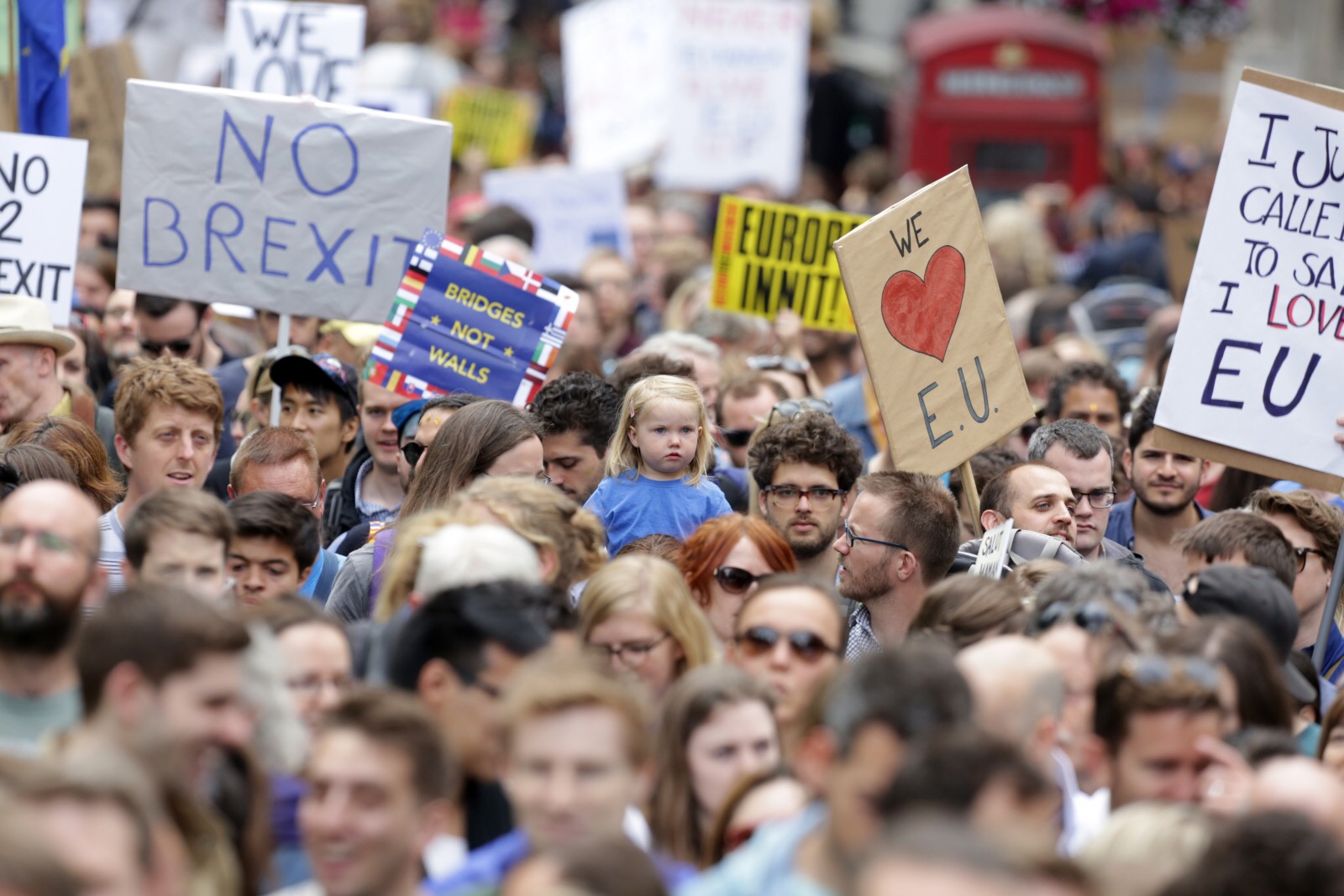
We shall always overcome: speech to Rally For Our Rights, London, 12 Oct 2019

A couple of weeks ago I was back in Ireland visiting my family in the very place that Boris Johnson wants to reimpose a hard border.

It was a time for remembering and we remembered the dead: the dozens of people, British and Irish, who had died violently mere hundreds of metres from where we met.

There is peace now. It’s a peace that was forged by peaceful protest, by force of argument, by the spilling of sweat not blood. It’s a peace that has European foundations. Britain and Ireland’s common EU membership allowed different identities to be accommodated and old quarrels to be recast. From that new alliances and friendships have formed: before the 2016 referendum Ireland and Britain were the closest allies in the EU.

How things have changed. Now the uppity Irish are the bogey men and women of Brexit, disgracing ourselves in Brexiter eyes by our insistence that our peace is more important than their fantasies of reclaimed imperial glory.

But Boris Johnson and the imbecilic charlatans that form his government have forgotten something. They have forgotten that Britain is not just a land of Empire nostalgists and currency speculators. Like every country it may have a few racists and Blackshirts.

But Britain is also the land of the anti-slavery movement and the first trades unions. It is the land of the suffragettes and campaigns to make poverty history. In other words, this is a country filled with uppity citizens, people who believe in justice and fair play no matter what they are told by those who seek to profit from lies.

Following the corrupted referendum of 2016 the political leaderships of this country, Left and Right, wanted us to go quietly into the darkness. They wanted us to surrender to a far-Right clique the progress that had been made in peace, democracy, human rights, and environmental protections as a result of the UK’s membership of the EU. And they gave us comforting myths to help us on our way: garbage about a “jobs first” Brexit from the Left; nonsense about the Dunkirk spirit from the Right.

But we have not gone quietly. Instead a movement was born of ordinary people showing what Bobby Kennedy called numberless diverse acts of courage and belief and so reshaping the history of these times.

This movement is an expression of that collective sense of outrage that drove the anti-slavery movement and the suffragettes, and that drives still the demands for justice for Grenfell, the Windrush generation and Nazanin Zaghari-Ratcliffe. It is the same sense of outrage that drives every struggle for social justice and human rights across the world.

Each of us here today is saying with our presence that we are not prepared to silently accept the stripping away of the rights of young people to live and study and work and love across Europe.

Each of us is saying with our presence that we are not prepared to silently allow the denial of the rights of our friends and neighbours to contribute to the flourishing of this society simply because they come from a different part of Europe.

Each of us is saying with our presence that we are not prepared to allow the peace forged at great effort in Ireland to be jeopardised through the racist blundering of the buffoons who currently occupy Downing Street: people who for all their crass talk of world wars have never seen the effect of a bullet or a bomb on a human body, or the devastation that a battle can inflict upon a community or a war upon a society.

The spirit of British decency is alive on these streets today. It has forced the political leadership of this country to accept that Brexit is not a done deal. We have shown them all, from Boris Johnson to Jeremy Corbyn, something they should never have forgotten. That when citizens are outraged, united by our common humanity and repudiating the hatred and racism of the bigots around us, then no matter what injustice we may be confronted with, we will always overcome.

The Problem of Jefferson: political inaction and the continuation of slavery in the world

My remarks to the Slavery Panel during the Women’s Forum in the Commonwealth Heads of Government Meeting

It’s highly appropriate that slavery is on the agenda of the Commonwealth Heads of Government Meeting this week. Because while London is sometimes thought of as the cradle of the anti-slavery movement, the anti-slavery movement truly started years before the meeting in 1787 that set up the Committee to Abolish the trans-Atlantic Slave Trade. It started the first time west African men and women rose up to fight with their bare hands for their freedom from the slave ships, and whose actions disrupted the slave trade to such an extent as to save hundreds of thousands of others from such trafficking.

That is a tradition that has continued across the centuries and across what is now the Commonwealth. From Caribbean leaders such as Mary Prince, to African leaders like Equiano and Cugano, to Asian leaders such as Dr Ambedkar, to contemporary organisations like Piler in Pakistan, OKUP in Bangladesh, Centre for Education and Communication in India, and the Global Alliance against Trafficking in Women. All these have asserted and continue to assert the principles of human rights in opposition to the way the world dehumanises and enslaves others.

So after these centuries of struggle why are we still discussing how to end slavery. Well it is because we, as a human society, still permit slavery to exist.

While I have rarely met anyone who is in favour of slavery in principle, I have met many people who are in favour of slavery in practice. Slavery provides benefits to the powerful, in terms of cheap commodities, cheap construction workers, vulnerable domestic workers, advantages in terms of trade, opportunities to sexually abuse women and children, or simply to indulge prejudice.

So while we all bear a moral responsibility for this continued existence of slavery, the greatest responsibilities must be borne by those with the greatest power to end the power.

A recurrent problem through history is what I have come to think of as the problem of Jefferson. Jefferson was possibly the most brilliant man to hold the US presidency and a vocal opponent of slavery. But all he used that brilliance for was developing excuses why he couldn’t do anything about slavery.

Today politicians and business leaders across the world, including within the Commonwealth, find, in the name of convenience and prejudice, all sorts of reasons not to stand up for the children of their nations and citizens everywhere to end slavery and its causes. Migrants are vilified and exploited in the countries where they live and work and are too often ignored by the governments of the countries from which they originate. Governments make inadequate provision for education, particularly of girls, and both women and girls are denied their most basic rights. Civil society activists and trade unionists who lead the struggle against slavery and for decent work are isolated and persecuted. Police corruption is tolerated. Rule of law is undermined.

The struggle to end slavery is a political one. And yet it is not a coherent political priority for any of the governments of the Commonwealth, even those most voluble in their antipathy towards slavery. So long as this remains the case, it is ordinary Commonwealth citizens who will pay the price with their lives and liberty.

Chimes at Midnight: Brexit and the demise of rule of law in the UK

Summary: the increased threat of terror brought by the UK’s decision to withdraw from European security cooperation mechanisms actually plays into the central purpose of the Brexit project: erosion of rule of law

The idea of rule of law is not a new one. It is frequently dated as far back as Aristotle, who said “It is better for the law to rule than one of the citizens.”  But the idea is at least a hundred years older. Sophocles dramatized it in his play, Oedipus the King, in which, as a result of his own investigation, the King finds himself responsible for the plague on Thebes and realises that he must be held accountable, just as anyone else would be, to his prior judgement.

daily-mail

The Daily Mail reminds readers of its long-standing association with fascism

Rule of law then is the idea that it is the law, independently administered, that governs a people not the whims of any monarch or minister or mob, and that no one is above the law. So, when the mob gathers with flaming torches and pitchforks outside the “witch’s” hovel, or the minister wants rid of his mistress’ husband, the law should protect the basic human rights of the wise-woman and the cuckold, and restrain human excesses, or punish them when they transgress the law.

It is this concept, one that in British law can be traced back as far as Magna Carta, that is most fundamentally under attack with Brexit. It began with press and political denunciations of the independence of the judiciary. It has continued with British government proposals to use the excuse of Brexit and the “will of the people” to grant sweeping Henry VIII powers to ministers. If these powers are granted they will permit ministers to make law without reference to parliament.

img_0940

Tom Bingham, Baron Bingham of Cornhill, who served as Master of the Rolls, Lord Chief Justice, and Senior Law Lord

In his magisterial book on the subject, Tom Bingham sets out the fundamental principles of rule of law, noting that these include a requirement for compliance of the state with its obligations in international as well as national law. Bingham quotes Professor William Bishop as describing the international rule of law as including, “the realization that law can and should be used as an instrumentality for the cooperative international furtherance of social aims in such a fashion as to preserve and promote the values of freedom and dignity for individuals.”

But this ideal has long been anathema to powerful sections of the Conservative party. In 2015 David Cameron removed from the ministerial code the requirement for ministers to adhere to international law. Theresa May has never been shy about her wish to remove the UK from the jurisdiction of the European Court of Human Rights, an entity separate to the EU.

Brexit furthers this ambition to remove the constraints of international law from the UK government. As part of the Brexit process, the Government intends to remove the UK from the jurisdiction of the Court of Justice of the European Union. This, if it happens, will further remove constraints on ministerial power. A side effect of this will be to put in jeopardy the UK’s continued law enforcement and intelligence cooperation in Europe. But while this would undoubtedly increase the risks of terrorism for ordinary UK citizens, there is little that the pathetic foot soldiers of Islamic State can do that will pose an existential threat to the nation. However, the cynical might comment that, as in the past, an upsurge of terrorist attacks on the civilian population would provide a convenient excuse for a further concentration of power in the hands of ministers and further erosion of the civil rights of the British people.

Since the Brexit vote in 2016, the British Government have sought to find common ground with some of the most unsavoury governments and anti-democratic leaders on the planet. As well as Theresa May’s supplication to Donald Trump and the leaders of the bloodthirsty Saudi Arabian government, she has also proven herself a ready apologist for the governments of Poland and Hungary as they also strike at the foundations of human rights and rule of law in their own countries. Disgraced former Defence Secretary Liam Fox, gave more away than he intended with his declaration of “shared values” with Rodrigo Duterte, the Philippines leader whose repudiation of rule of law is so absolute that he promotes indiscriminate murder as a central tenet of his so-called “war on drugs”.

But all this should not be surprising. Because, for the empire-dreaming elite whose money and lies obtained the soiled “mandate” for Brexit, the diminution of rule of law is their central purpose. It will facilitate an environment in which ecological and safety standards, workers’ and consumers’ rights are negated. Capital will once more be given pre-eminence over labour, as newly empowered ministers ensure that the wealthiest are permanently put above the law, at least as far as their tax affairs are concerned. No matter what fantasies are spun by the leadership of the British Labour party about the possibilities of a “People’s Brexit”, they will not alter, one iota, the vital essence of this project, irrespective of who is in government.

So, the prospects of Brexit for the UK are not simply of economic decline, international isolation and irrelevance. British democratic standards and human rights, a tradition that can be traced back to Runnymede, are themselves under threat as the UK continues to seek its future alliances with new dictatorships and old autocracies.

As Shakespeare’s Falstaff reflects while Prince Hal prepares to repudiate their friendship and put him back into his lowly place, these are the “chimes at midnight”. They ring again today for any British subject not wealthy enough to indulge in tax avoidance. The lower orders have had their day. Now they must know their place.

Another fine mess: politics since the Brexit vote

Also published in Left Foot Forward 

When I worked in Angola in the late 1990s, towards the end of the Civil War, I discovered an important truth: just when you think things can’t get any worse, they can. So has it proven with British politics since the 23 June 2016 when the UK narrowly voted to leave the European Union.

Before the 2017 UK General Election I had thought that a hung parliament was probably the best possible outcome, to force some sanity and compromise into the UK’s intent to exit the European Union. Instead, Theresa May has sought a de-facto coalition with the Irish Democratic Unionist Party, a group so extreme that for them the witch burning scene in Monty Python and the Holy Grail is not so much comedy, but a utopian ideal.

For many observers the UK’s attitude to the EU in general and to its putative departure from the Union seems profoundly irrational. The government’s stated intention to leave both the Single Market and the Customs Union, ignores the vast economic cost of such moves. Instead Brexiteers fall back on the slogan “take back control”, dreams of a British Empire 2.0, and cooked-up alternative numbers that have little basis in reality. This is a position that has gone broadly unchallenged by the opposition Labour Party who promise the fairytale of a “People’s Brexit” if the electorate were only to entrust them with the levers of government.

To “take back control” of what the government has never really been clear. Certainly immigration, in spite of the UK’s need for immigrants, in order to satisfy the xenophobic amongst the government and its voters.

The government is also intent to “take back control” from the jurisdiction of the Court of Justice of the European Union, in spite of the threat that this poses to security and justice cooperation in Europe at a time of rising tensions and increasing violence across the continent. This perhaps gets to the nub of the matter. Because it suggests that rather than the government’s approach to Brexit being only economically incompetent and politically delusional it rather suggests that the government’s intent is profoundly ideological.

Taken alongside the antipathy of Theresa May to the European Court of Human Rights, and the former Prime Minister David Cameron’s decision to remove from the Ministerial Code an obligation for ministers to comply with international law, the UK’s intent to quit the European Union indicates an enduring colonialist instinct in the government that still bristles at the idea of international rule of law. They seem to regard it as an affront to the primacy of the UK parliament, which some seem to believe still should rule the waves.

But, of course, the supremacy of the UK parliament has already taken a kicking in the Brexit process as dozens of MPs, contrary to their judgment as to what is best for their country, voted to uphold the notional “will of the people” as expressed through a blood-stained and, it now increasingly appears, a corrupted referendum.

But this is as nothing to the intent of the Great Repeal Bill, to invest ministers with Henry VIII powers that will enable them to make vast swathes of law for years to come without reference to parliament. In other words the intent of the Great Repeal Bill appear less to do with withdrawal from the EU and more to do with a significant repeal of democracy itself.

The UK may appear to be blundering towards the exit of the EU like a drunk staggering towards the door of a bar. But all citizens must beware that the pantomime shenanigans of Davis, Johnson and Fox, the three Brexit Stooges, mask a much more sinister domestic agenda. And Labour needs to stop being the government’s poodle on Brexit.


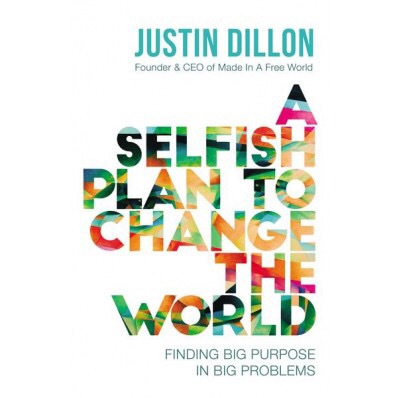
A Selfish Plan to Change the World: Finding Big Purpose in Big Problems, by Justin Dillon

img_1203Summary: a self-help book like no other I have read, concerned with identification of personal purpose, and giving some important insight into contemporary slavery

I must begin with a declaration of interest: Justin Dillon is a pal, someone I got to know and like over beers and years in the margins of conferences and meetings in different parts of the world.

Justin’s warmth, enthusiasms and likeablity come through strongly in this book, which is part memoir, part reportage, part philosophical treatise.

The book begins, rather disconcertingly, with an account of a performance by the Clash in Dublin. This inspired U2 to become who they are, who in turn inspired Justin, an accomplished musician, to change direction to become the filmmaker and anti-slavery activist that he is today. I think Joe Strummer would be pleased by that.

It is an important book in a number of respects. First of all at a time when much of the global discourse on slavery focuses simplistically on the minority of cases that relate to organised crime, Justin shows with illustrative cases from Haiti to Ghana to India that slavery is a complex issue of power, poverty, human rights and international development, not simply one of law enforcement.

Given this, a further theme of the book is even more apposite. This is the importance of purpose. Even before I got to the section in which Justin discusses Victor Frankl I was reflecting that the book could be considered as an application in the field of activism of Frankl’s remarkable work on humans’ search for meaning. Justin discusses how the lack of resources and power that impoverish so many across the world, their “poverty of means”, is echoed in the “poverty of meaning” in the lives of so many who in other respects seem wealthy. His “selfish plan to change the world” then relates to addressing this poverty of meaning by engaging those who lack purpose with the challenge of empowering those who lack means. In honour of Joe Strummer he exhorts his readers to find their “riot,” the struggle for justice that they they wish to be part of.

Justin describes the book as a “self-help manual”, but I doubt there are many other self help manuals like this, because it is one with a profoundly social purpose. Justin recognises that in order to change the world we may first have to change ourselves, and he shows the desperate needs that still exist across the world that demand we all look beyond ourselves.

Reflections on St Patrick

For many, if they think of him as anything other than an excuse for a party, St Patrick, a Fifth Century priest, may seem a remote figure. But his life still has some powerful contemporary resonances.

Patrick was not born Irish. He was a Briton. Different parts of Britain claim him, but he came from a Romanised family somewhere on the west coast. As a young man he was kidnapped by an Irish raiding party and trafficked across the Irish Sea into slavery. After six years he escaped and returned to his family, and his studies, in Britain. Eventually, after study in other parts of Europe, he became a priest.  His story would probably not be one that is remembered by history but for the fact that after this, in a remarkable display of personal magnanimity, he decided to return to Ireland, the land that had enslaved him, as a missionary.

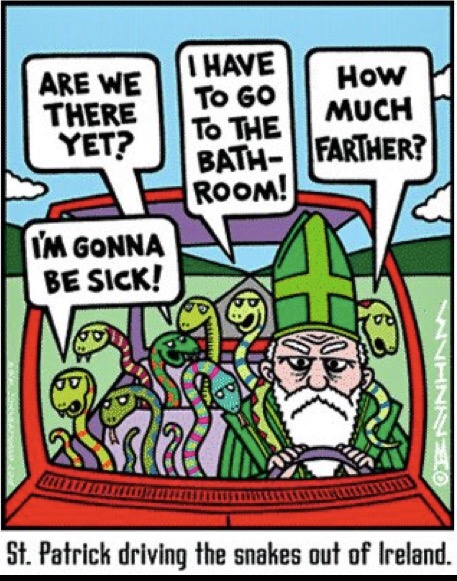
Are you all right in the back there lads?

There are many fanciful legends associated with Patrick, including how he rid the country of snakes. But he left two written documents: his Confessions, a spiritual auto-biography from which many of the details of his life are known; and his Letter to the Soldiers of Coroticus, a furious protest against the murder and enslavement of members of Patrick’s congregation by a raiding party of pirates, probably composed of Patrick’s fellow Britons. The anger of this protest was doubtless further sharpened by Patrick’s own bitter memory of the violence of slavery.

There are many powerful echoes from Patrick’s life with the contemporary world: For example, in a world where poisonous xenophobia seems to have taken hold in so many places the story of Patrick’s transformation from immigrant to an emblem of the country he adopted as his own stands in counterpoint. And in his protest against the war crimes of Coroticus and his men Patrick, the former slave, gave nascent voice to the ideals of human rights and anti-slavery in Western Europe.

Across the world today other immigrants work to make their adopted countries better places, other slaves and former slaves resist the systems of slavery that still persist. St Patrick’s Day is a good time to remember them, and remember that after the day’s parties a long struggle lies ahead of us to fulfil some of the ideals that they, and Patrick, represent.

Jefferson, Hamilton and moral courage in the struggle against slavery.

Excerpt from a lecture to Gresham College, London, 23 Feb 2017

To this day political figures across the globe covet the title “the new Wilberforce”, in recognition of the towering role that he played in efforts to bring the trans-Atlantic slave trade to an end. This, perhaps, shouldn’t be too surprising. In any given age there are no shortage of people who feel that slavery is wrong.

But, as Batman teaches us, it is not what we feel, but what we do, that defines us. So, anyone who dips their toe into the slavery debate today with dreams of future glory should be aware, that if they lack the necessary moral and political courage, they may become merely “a new Jefferson” rather than a “new Wilberforce”.

thomas-jefferson-9353715-1-402

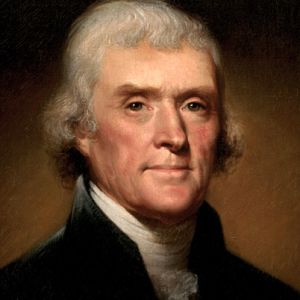
Thomas Jefferson

Thomas Jefferson was one of the great geniuses of his age and a declared opponent of slavery. Some of his writings on the subject were described by contemporaries such as John Adams, the United States’ second president, as being more valuable than diamonds in the anti-slavery cause. And yet the vision of the American Republic that he offered was impossible without slavery, and as President he did nothing to end slavery save for a mealy mouthed assertion that it was a task for later generations.

That argument may have comforted him as he sat in his study on his Monticello plantation in Virginia overseeing his own enslaved children. But it was not an argument which impressed Jefferson’s contemporary Alexander Hamilton, who sought, as the United States’ first treasury secretary, to put his anti-slavery convictions into practice by establishing an economic system that would reward free labour over slavery in the hope that that would erode the slave economy and hence end the brutal system.

alexander-hamilton-9326481-1-401

Alexander Hamilton

While that did not directly bring an end to slavery in the United States the economic system Hamilton put in place did ultimately provide the North, under Lincoln, with the economic capacity to crush the South and obtain the legal abolition of slavery half a century after Hamilton’s own death: So if Lincoln is the Father of Emancipation in the United States, I would argue that Hamilton is its Grandfather.

And in spite of his incredible gifts Jefferson did not confront the fundamental systems and institutions of slavery when he had the most power to do so. And across the world we see that still.

It will perhaps be a matter for comment by some future historians that at this shameful period of European history some of the most vocal European leaders on the issue of slavery have been noticeably negative with regard to the formulation of an effective pan-European response to the refugee crisis.  It is the absence of this, more than anything else, which has contributed so much to increasing the risks of human trafficking to Europe from the wars of the Middle East. Furthermore the xenophobia and prejudice that have been allowed to poison the political environment against migrants have further betrayed the struggle against slavery by increasing the opportunities for violence and exploitation.

It is a hard lesson of history, that when the moral courage of political leaders fails in the face of prejudice and vested interests, it is almost always the vulnerable who are the ones to pay in the bloody routine of violence that ensues. And, as was true in the days of Jefferson, it is not rhetoric but moral courage that defines leadership and shapes the history of the times.

The violence of slavery: how businesses can respond to forced and child labour in their supply chains

Remarks to conflict minerals supply chain compliance and transparency conference, Berlin, 30 Nov 2016

Investigations into conflict minerals, such as diamonds and oil, over the past twenty years have shown how international markets and northern hemisphere business executives have wittingly and unwittingly contributed to the financing of war affecting poor people in the global South.

There has been some notable progress of course. But recent investigations, such as into cobalt mining in central Africa, shows that much still needs to be done.

Conflict, particularly if it affects places which supply scarce commodities, poses a considerable challenge for businesses wishing to operate ethically. Many of the most basic protections that we take for granted are absent and rule of law, if it ever existed, can become a distant memory. Over 2,000 years ago Cicero noted that, “In times of war, the laws are silent,” because of the damage that war does to the institutions of state, and because war breaks the bonds of human restraint, as Shakespeare recognised, letting slip the dogs.

Consequently conflict creates the conditions in which exploitation and enslavement can be perpetrated to extract minerals for international markets that finance the conflict that in turn perpetuates the conditions in which exploitation and enslavement can continue. It is a vicious circle that I came to loathe during the long and bloody war in Angola, where I worked for five years, trying to ensure basic provision of water and sanitation in the midst of the devastation created by the oil and diamond financed war machines of the antagonists.

Slavery has long been part of war. Caesar enriched himself by the trafficking of millions of prisoners captured in his conquest of Gaul. Islamic State and Boko Haram, drawing on the jurisprudence of Saudi Arabia, seem to have a similar attitude towards those they conquer and subjugate. But the risks of trafficking and enslavement do not end at the edges of the theatres of war. Those who successfully flee the killing fields can find themselves subject to renewed risks if the seeking of refuge leaves them impoverished and without permission to seek decent work legitimately.
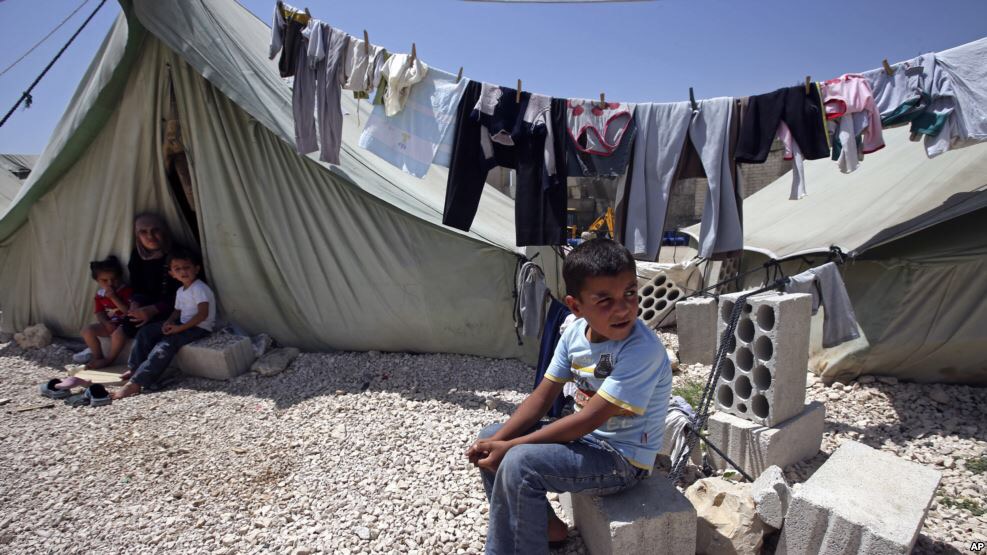
I have spoken to humanitarian workers who have found in the refugee camps of the Middle East increased trafficking of children for forced marriage and other forms of sexual exploitation, and of trafficking for forced child labour in agriculture and other forms of production. We may feel shocked when we understand how parents are involved in handing their children over for exploitation, but for many the trafficking of their children into slavery now may seem like a lesser evil than allowing them to starve. Those refugees who have been fortunate enough to make it into Europe may find their troubles are not ended if they also do not have permission to seek work legitimately. They also may find themselves at increased risk of exploitation and enslavement if they seek work in the informal or grey economy.

Put another way, Europe’s political response to the refugee crisis in the Mediterranean has been a direct contributor not only to the carnage at sea, but to increased risks of trafficking on land. For businesses this means that supply chains that had been hitherto thought safe from human rights violations are now considerably less so.

Considering all of this I think it is perhaps more useful at this point in time to take a much broader perspective of the risks that conflict poses to supply chains more generally, rather than those associated only with scarce minerals or other commodities. Because one of the commodities that war and conflict produce in such abundance is forced labour, and that can get into all sorts of places. And even where conflicts are less overt or where societies are ostensibly at peace, human trafficking cannot occur without violence.

For example the enslavement of Dalits and Adavasi across south Asia is one manifestation of the violence that emerges from the discrimination that prevails against them across that sub-continent due to the failure to establish effective rule of law that protects the rights of all citizens equally. A consequence of that are endemic levels of slavery in agriculture, quarrying, including mica, brick kilns, and many other manufacturing sectors including garments.

Consider also, for a moment, North Korea. North Korean exports in 2013 were estimated as being in the region of USD 7 billion. In 2015 the UN special rapporteur on human rights in North Korea estimated that the trafficking by the state of its own citizens for forced labour in other countries, including the building sites of Qatar and farms and factories in Poland and Malta, was worth in excess of USD 2 billion. In other words the repressive apparatus of the North Korean dictatorship and the threat to international peace that its nuclear weapons programme poses is sustained insignificant part by international complicity in the trafficking of North Korean citizens.

Some of this may seem daunting, and business leaders may feel powerless in the face of the social and political systems that underpin contemporary forms of slavery and child labour. It one be foolish for anyone to expect any business to be able to solve all such problems, even only in their own supply chains. The United Nations Guiding Principles on Business and Human Rights recognise this, stating that it is the responsibility of businesses to respect the human rights of workers, and it is the responsibility of governments to protect those rights. And within this framework I believe that businesses can do more.

The first thing that businesses can and should do is to commit to use whatever power is at their disposal to end the problems that they can end. This will not be everything, but by ensuring transparency in supply chains businesses will not only be able to identify what are the risks of human rights abuses that they face in these supply chains, but understand why these risks exist. In Malaysia, for example, the forced labour of migrants is a particular problem in part because of the tied visa regulations that give employers considerable powers over workers. Ensuring that workers have all the necessary paperwork from day one of their employment to ensure they can leave that employment of their own volition if they so wish would reduce the risks of exploitation. Similarly businesses should refuse to work with labour providers who charge workers fees, often of such exorbitance that they effectively render the workers in bondage.

Second businesses must recognise that the challenges of human rights in supply chains are pre-competitive. No business should be seeking a competitive advantage based on lowering their labour costs to close to zero by effectively enslaving workers. I say no business should do this but of course many do. But likewise no business should be seeking commercial advantage based on simply ensuring that the workers in their supply chain are treated as human beings. That should be the common starting point for all. But in the absence of this there is considerable risk that those who see a commercial advantage in an ethical reputation may be tempted to cover up information about abuses in the supply chains rather than confront and rectify the abuses.

Third businesses should be prepared to recognise when a problem is beyond their power and speak publicly about that. The slavery that exists within the Thai and Irish fishing fleets is in part due to poor regulation and inspection of these sectors. Those are governmental responsibilities. Similarly the child labour that is so endemic in the West African agricultural sector is in part due to the fact that there are too few schools and often these schools are of a poor quality. Again this is a matter that governments should rectify.

Which brings me to my fourth point. Businesses must not be coy about their political voice. Politicians tend to pay more attention to business leaders than to those of non-governmental organisation such as myself. And I get the impression that business leaders are not shy about speaking on a range of what might be called traditional business- political matters, such as tax or trade policy.

But with the globalisation of the international political economy it is important to recognise that human rights and development policy can also have commercial and legal implications for businesses, The US Trade Enforcement and Facilitation Act empowers the US Customs Service to exclude from US markets goods tainted with forced or child labour. The UK’s Modern Slavery Act requires businesses to state what they are doing to eliminate slavery from their supply chains. As I said businesses should commit to doing what is in their power to end slavery in their supply chains, and sometimes the most important power that they should exercise is that of demanding appropriate action from governments.

In the final analysis slavery is a human institution. It can be changed by human action. The great strides that we have seen in against slavery in the course of human history have occurred when businesses have joined with governments, trades unions and civil society to reject this form of violence against vulnerable human beings. You know this yourselves. When we act together, we can overcome.