Ourselves Alone: How the Leave Campaigns repudiated rule of international law

Also published in Left Foot Forward http://leftfootforward.org/2016/07/ourselves-alone-how-brexiters-shrugged-off-international-law/

The late Tom Bingham, perhaps the most distinguished English jurist of his generation, noted that legal scholars trace the concept of rule of law back to Aristotle. However the concept is apparent, at least in nascent form, in Sophocles’ Oedipus the King written a century earlier. In this the king realises as his own investigation finds himself responsible for the plague on Thebes that he must be subject to his own earlier ruling on how the culprit should be held accountable.

img_0940

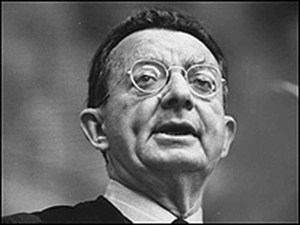
Tom Bingham

Bingham built on prior formulations of rule of law to argue that the idea had eight principles that were fundamental to it. These included that the law must afford adequate protection of fundamental human rights, and that the state must comply with its obligations in international law as in national law.

For hard Right ideologues, such as Michael Gove, Nigel Farage and Boris Johnson, such ideals of rule of law sit at odds with their own conception of the supremacy of Parliament as a fundamental of the unwritten British Constitution.

But generations of parliamentarians have never seen any conflict between rule of law and rule of parliament. So they have, over the past 40 years, set constraints on the unfettered power of parliament, notably in the form of the Human Rights Act, which is administered by the UK’s Supreme Court with appeal to the European Court of Human Rights, and the treaties that the UK freely entered into to obtain its membership of the European Union, which are overseen by the European Court of Justice.

So, when Gove, Johnson and Farage talked about taking back control during their poisonous and bloodstained campaign to take the UK out of the EU, what they were talking about was removing the constraints that derive from the treaty obligations which have provided the manifold benefits that arise from EU membership. Doubtless they were also thinking about national law, specifically the protections from government excesses afforded to citizens by the Human Rights Act.

It is axiomatic that a partnership like the European Union, indeed any international treaty with other nations, must introduce mutual responsibilities and ideally should have some independent body to oversee that the parties to the treaty comply. Otherwise the already fragile concepts of international rule of law become meaningless.

British experience of international rule of law during its colonial period was rather different to such contemporary expectations. It had little consideration of mutual benefits but rather had an altogether more lopsided aspect, with no recourse to independent arbitration or appeals to human rights for the colonial subjects whose exploitation enriched the UK to such an extraordinary extent.

This colonial perspective contributed greatly to the ludicrous myth of Britain standing alone during the Second World War. This myth insultingly overlooks the vital contributions made by Africans, Australians, Canadians, Indians, and Kiwis to the struggles against Nazism and Japanese militarism. This myth also gravely overlooks the horrendous cost that this entailed, most infamously in the Bengal famine of 1943.

But a theme running through the depressing debates relating to the UK’s EU membership in the run up to the referendum of 23 June 2016 was that the UK can still “stand alone”. This was underpinned by that weird continuing sense of colonial entitlement: that the UK should be allowed to cherry-pick what its relationship with the EU should be without any appreciation that UK membership should bring responsibilities not just privileges.

This attitude was copper-fastened by a careful cultivation of xenophobia by the Leave campaigns, and by a startling disregard for mere facts, from the true cost of EU membership to the actual provisions of EU treaties and the rights and obligations of member states under those treaties.

This wilful ignorance and misinformation to the UK electorate continues past the result of the referendum. On the morning of 27 June Boris Johnson declared, “The only change – and it will not come in any great rush – is that the UK will extricate itself from the EU’s extraordinary and opaque system of legislation: the vast and growing corpus of law enacted by a European Court of Justice from which there can be no appeal”.

Perhaps Johnson rarely lets facts get in the way of an opportunity to stoke the prejudices of his listeners. Perhaps he is merely supremely uninterested in facts. The European Court of Justice enacts nothing. It administers the body of law agreed by the European Parliament and the Council of Ministers, of which, to date, the UK has been an equal party.

It is too early to see what will be all the consequences of the UK’s repudiation of the EU. Perhaps this will sate the appetite of the ideologues of the Right for unfettered power if what comes to pass is a recession-hit Little England as Scotland prepares to steer its own course as a full and independent member of the EU.

image

A blind Oedipus led by his daughter Antigone

But it is unlikely. And the Human Rights Act remains for a while longer, another affront to the Tea Party-ist fantasies of a resurgent and exclusivist English nationalism. Gove or Johnson may like to eruditely comment, after Milton, that they prefer to rule in hell than serve in heaven as they seek to translate their peculiar Cromwellian version of Ourselves Alone into a new English polity.

Oedipus could not bear to look upon the devastation that he had wrought on his family and city so he tore out his own eyes. Today Gove, Farage, and Johnson look upon the wasteland that they have created of young people’s hopes for modest opportunities to study, work and fall in love amongst their fellow European neighbours, and they judge that it is good.
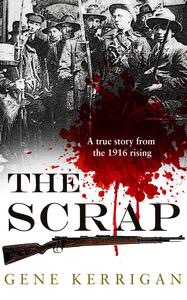
The Scrap, by Gene Kerrigan

Summary: a volunteers’-eye perspective on the 1916 battle


The Scrap is an account of the 1916 Rebellion. Like many other fine accounts, such as Charles Townshend’s, it draws heavily on the archives of the Irish Bureau of Military History, which years after the Irish War of Independence gathered the oral testimony of the survivors. But where other accounts seek to tell the story of the overall battle, Kerrigan’s focus is on a relatively small group of participants, principally the members of F Company of the Irish Volunteers.

This perspective reminded me of Cornelius Ryan’s frontline account of D-Day, The Longest Day. The result is a hugely rich work, which offers, at least to me, a whole array of new detail and insights on the fighting. For example I never knew that Oscar Traynor, a future commander of the Dublin Brigade of the IRA, had been professional goalkeeper for Belfast Celtic. Or that Arthur Shields, the actor who was a regular member of John Ford’s company perhaps most famously playing the Church of Ireland vicar in The Quiet Man, was a veteran of the 1916 Rising. Or that the rebels had made radio broadcasts from O’Connell “Sacksville” Street to announce the Irish Republic to the world.

John Wayne, John Ford, and Arthur Shields on the set of The Quiet Man

In the midst of this there is further important detail on aspects of the fighting including initial clashes in the north of the city around Fairview, at the City Hall, and a worm’s eye view of the desperate fighting around Henry Street in the final hours of the Rebellion. The book also throws interesting light on the actions and decisions of the leaders during the Rising, particular Pearse, Connolly and McDermott.

Kerrigan does not shy away from the horrors of the battle either. In one disturbing passage a medic examines the head of an injured child in the darkness, accidentally running his fingers across her mouth and feeling her teeth. When a light is brought he finds that he has actually run his hand across a gaping wound in the dying child’s head.

Gene Kerrigan is a legendary journalist and makes no attempt to dress this book up as academic history: there are no footnotes, for example. He is also an exceptionally gifted writer and this is a remarkable and arresting contribution to the literature on the1916 Rebellion, giving a strong sense not just of what happened, but what it was like to be there.

Barbarians at the Gate: reflections on the UK and European Union at the abyss

Many years ago I watched a documentary about the life and work of the campaigning American journalist I F Stone. Stone was for his whole life a fighter for justice and a fierce critic of the excesses of his own government, such as its encroachment on civil liberties, its systemic racism, and its illegal invasion of Vietnam.

And yet, when asked towards the end of the film what his overall judgement of his country was, Stone said something I found striking: he said, in effect, that he regarded the American Republic as one of the great flowerings of civilisation, comparable to Athens in the Golden Age.

I F Stone

It was a carefully chosen analogy: Stone was also a classical scholar and author of The Death of Socrates. The Athens he contemplated would have been a warts-and-all one, constructed on the injustice of slavery and the subjugation of women, and party, on much too frequent occasion, to war crimes and mob-rule.

And yet in the midst of all this there were new ideas emerging in philosophy, science and the arts, and new politics, in one of the first human stirrings of democracy.

The United States’s bears similar scars to ancient Athens, it’s history marked by slavery and appalling racial prejudice, and by illegal war from Mexico and Nicaragua, to Vietnam and Iraq. But it is also the nation of Abraham Lincoln and Bobby Kennedy, of Harriet Tubman, Martin King and Dorothy Day. It was the country which in the 19th Century showed that democracy was a robust and viable system even in the face of dreadful civil war, and which has produced, like Athens, some of the greatest achievements of the age in science and art.

If it has a rival in the 21st century then I would argue it is the much younger European Union. Like the United States and Athens before it, and every human institution or undertaking before or since, Europe is a flawed, human project. In recent years we have seen one of its most abject failings in its fragmented and often craven efforts to establish a coherent and effective humanitarian policy in response to the refugee crisis in the Mediterranean.

And yet: the European Union represents as vital a political project as the United States. It too represents one of the great flowerings of human civilisation. It has brought enduring peace to a continent that has hitherto been scarred over the centuries by fratricidal war. It is an effort by democratic nations to work together on matters of common interest underpinned by the the principles of human rights, democracy and rule of law. That is a project that is rare in human history and rare in the contemporary world. It is also something that is essential to face the political, environmental, humanitarian and human rights challenges of this fragile and interconnected world. So, for all its flaws, this is a project that is worth fighting for, not running away from in search of some mythic past.

image

Jo Cox

As Jo Cox noted in her maiden speech to Parliament, migration, including the free movement of EU citizens amongst our member states, has immeasurably enhanced the communities and societies that have benefited from it, through a vibrant diversity in food, music and arts as well as business and commerce.

But this cosmopolitan vision of Europe is anathema to some who instead cling to the same nasty rhetoric that was once used to justify colonialism, but which now is put in the service of a poisonous xenophobic populism. This seeks to convince the electorate that the EU and migrants are to blame for social ills that have been the result of domestic policies and failures in government, sometimes perpetrated by the very people scapegoating others

History shows us that such rhetoric can open an abyss, which the UK descended into on the streets of Birstall on 16th June 2016. The assertions which followed rapidly from those pedalling intolerance, that the brutal assassination of Jo Cox had nothing to do with them, still ring hollow.

Jo Cox understood that the European Union, with all its human flaws and imperfections as well as its enormous potential and aspiration, was worth fighting for. And in the months and years following the awful, bloody UK referendum campaign the fate of the UK and the EU itself still seems to hang in the balance as incompetents and charlatans such as Boris Johnson and Jacob Rees-Mogg are treated like perspicacious philosopher-princes by the BBC and other pusillanimous media.

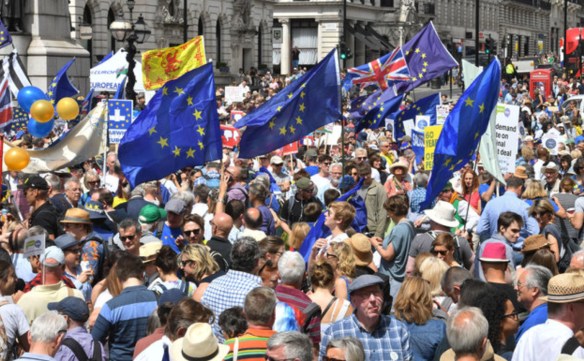
The decency that Jo Cox embodied has not been crushed by the narrow victory in the Brexit referendum of a coalition of racists, delusional imperial nostalgists, disaster capitalists, useful idiots of the Left, and a misled section of the populace. It continues to reassert itself, notably on the streets of London and Belfast on 20th Oct 2018.

Both the UK government, and their tame opposition under Jeremy Corbyn, seem intent on ignoring this demonstration of disgust for their policies by so many people. Instead they seem committed to their process that will eliminate the human and citizens’ rights of tens of millions of people and reek economic devastation in the name of their delusional dreams of Brexit. But they should be careful.

The people of India under Gandhi and Nehru, the African American community of the United States under Martin King, the nationalists of the North of Ireland under Hume and Mallon, showed that ultimately a determined people will, through non-violence, shape the political agenda. And when pan-European progressives achieve that in the UK, as they will, May, Corbyn, their acolytes and their clowns, will all be consigned to the dustbin of history.

178D02E0-0E07-4796-B85E-A0741D10C8B2.jpeg

People’s Vote March, London, 20th Oct 2018


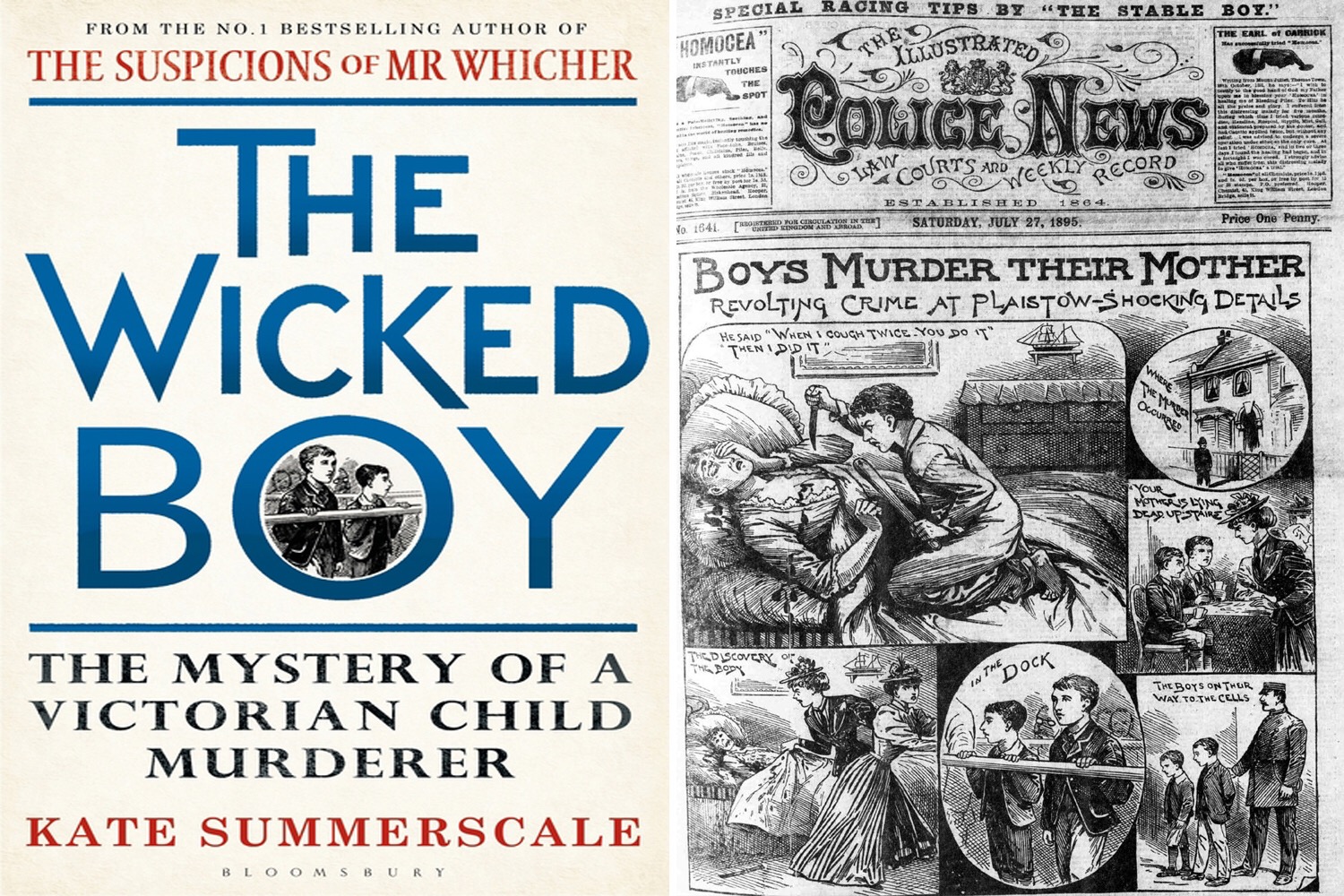
The Wicked Boy: The Mystery of a Victorian Child Murderer, by Kate Summerscale

Sometime during the weekend of 6/7 June 1895 Robert Coombes killed his mother with a hunting knife he had purchased a few days earlier. His mother’s body was not discovered for another 10 days. When it was finally found it was still in the bed where she had died and in an advanced state of decomposition. During that time Robert and his younger brother Nattie had stayed in the same house and amused themselves by, among other things, excursions to the cricket in the Oval.

The case was a sensation of the day and provided an opportunity for all sorts to give vent to the moral decline of society and the delinquency of youth.

There was no doubt about Robert’s guilt, but the jury baulked at sending a child to the gallows, so found him instead guilty but insane. He was sent to Broadmoor for the criminally insane and spent 14 years there, in, perhaps surprisingly, a progressive and rehabilitative environment. Robert was finally released into a Salvation Army community where he worked as a tailor, a skill he had learned in Broadmoor.

Eventually he emigrated to Australia and with the outbreak of the First World War, he joined the Australian Army and served with distinction throughout the war, in particular as a stretcher-bearer in the bloody fighting of Gallipoli.

Kate Summerscale’s book is a remarkable thing: it is part biography of Robert, part social and military history. At its heart though it is a story of redemption, of how a disturbed boy became a quietly extraordinary man. It is a compelling and moving story, elegantly written by a writer with a genuine feeling for her story and her subject.

Muhammed Ali

When We Were Kings, by Leon Gast
The Ghosts of Manila: The Fateful Blood Feud Between Muhammad Ali and Joe Frazier, by Mark Kram
The Tao of Muhammed Ali, by Davis Miller 

img_0912My first proper memory of Muhammed Ali was waking up to the news of his victory over George Foreman in Kinshasa in 1974. I watched the BBC Sports film of the fight the next evening. It was  awe-inspiring.
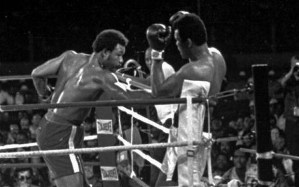
This fight is the principle subject of Leon Gast’s electrifying documentary When We Were Kings. The bloody, thieving, murderous dictator of Zaire, Mobuto, had decided that the world heavyweight title fight would help put Zaire on the world stage. Gast’s movie is an account of the extraordinary circus that resulted. It intercuts documentary and news footage from the time with illuminating interviews with, among others,  George Plimpton and Norman Mailer, on the bizarre circumstances surrounding the fight, and on the phenomenal fight itself.

When We Were Kings is a great introduction to Ali, both as a cultural and political figure and as a boxer. His victory is beautifully explained as one not just of his technical fighting skills, but of his strategic thinking skills.

image

Rope-a-dope

Years later George Foreman described the devastation of having been beaten by someone so “braggadocio”. This is but a hint of the darkness that is frequently ignored in discussions of Ali. This comes much more to the fore in the Ghosts of Manila, an account of the rivalry between Ali and the great Joe Frazier. Frazier had been a supporter of Ali in the wilderness years when Ali had been stripped of his licence to box because of his courageous refusal to fight in Vietnam: “I ain’t got not quarrel with the Viet Cong. No Vietnamese ever called me nigger!” he said by way of explanation.

However this was no protection to Frazier from Ali’s often cruel and lacerating invective. Frazier came to detest Ali and their brutal fight in Manila in 1975 has become a thing of legend.

image

Manila

Both fighters inflicted incredible damage on each other in dreadful heat, displaying incredible levels of endurance and courage just to keep up with each other. However by Kram’s account Frazier had effectively won the fight by rendering Ali unable to take the ring for the 15th and final round. All Frazier needed to do was to stand up. Then his manager, without consulting Frazier, threw in the towel, appalled at the damage that Frazier himself had already sustained in the fight. Frazier never forgave his manager and this extraordinary stroke of luck for Ali became a fundamental element in his legend.

But brutal fights such as Manila and the necessity to fight on almost to middle age that resulted from the loss of his license in his peak years, took their toll on Ali’s body and resulted in the Parkinson’s Disease that afflicted his final years. Davis Miller had met Ali at the peak of his career but became friends with him in these years. The Tao of Mohammed Ali is about a number of things including this friendship, writing, boxing, and perhaps most poignantly about Miller’s relationship with his own father. It is a fine and moving book that describes beautifully what Ali meant to ordinary fans, millions of who are today bereft at the news of his death.

The world is a duller, smaller place with Ali gone. But in many ways it is a better one in part because of what he did and what he stood up for. We will never see his like again.

image

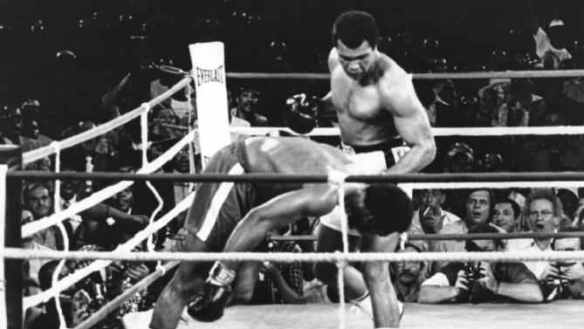
Ali delivers the coup de grace on Foreman (Plimpton and Mailer look on – bottom right)


To Realise Modest Dreams: Law, policy and decent work

Remarks to Committee on Decent Work in Global Supply Chains, International Labour Conference, Geneva, 30 May 2016 

Many thanks for the opportunity of speaking here today.

This is a timely discussion. It occurs, of course, in the context of the Sustainable Development Goals, in particular Goal 8 to, “Promote sustained, inclusive and sustainable economic growth, full and productive employment and decent work for all”. This includes a clear target for an end to slavery and child labour.

The deliberations of this Committee are therefore the first substantive international consideration of what practical measures may be put in place to help achieve the ideals of that particular goal.

I believe that the UN Guiding Principles on Business and Human Rights, give us the clearest guidance on how these deliberations should proceed. They state that businesses have the responsibility to respect workers’ human rights while governments have the responsibility to protect those rights. Of course it is desperately difficult for businesses to uphold their responsibilities when states are failing so abjectly in theirs.

That is a reality of the contemporary global political economy. Certain countries have sought to establish competitive advantage by scrapping the most basic of human rights protections for those who quite legitimately seek work in those countries.

This cannot go on. And this Committee now has an opportunity to lead on how it should end.

Decent work in international supply chains requires a number of quite basic protections in law and policy. It requires freedom of association. It requires an end to discrimination. It requires an end to tied visas and recruitment fees. It requires honest and sufficient systems of labour inspections to ensure that unscrupulous employers are not exploiting or enslaving vulnerable workers. It requires honest and sufficient systems of health and safety inspections so that poor people do not have to live with the threat that their working days may end by being burned to death, or crushed by collapsing concrete, as they toil to satisfy Northern hemisphere demands for cheap goods.

As a board member of the Ethical Trading Initiative in the UK I know that many business leaders, like all people of conscience, crave governments to put in place measures such as these to level the playing field by compelling unscrupulous employers to act with a modicum of decency.

So I respectfully but strongly suggest that this Committee must act to advance Sustainable Development Goal 8 by entering into a standard setting process on decent work in global supply chains to establish an international framework within which systemic risks and abuses can be addressed.

If it fails to do so then we will have failed at the first on the promise of a better world that these Development Goals make. And vulnerable workers will, for years to come, pay for that failure with the destruction of their hopes and loss of their lives.

Aspiration and Reality: How caste-blindness undermines UK anti-slavery efforts

Speech to All-Party Group for Dalits, and Parliamentary Human Rights Group, Westminster, 24 May 2016

As director of Anti-Slavery International it is, from time to time, heartening to hear from senior members of the U.K. Government their intent that the UK should be a world leader against slavery.

Unfortunately these fine sentiments are hampered, possibly fatally, from the outset by some fundamental failures in domestic and international policy, most notably the failure to recognise the issue of caste as fundamental to both poverty and slavery for hundreds of millions of people in South Asia.

There is a lazy trope that is sometimes wheeled out in discussions of slavery, that anybody can be enslaved. Technically this is true, particularly if people are caught up in the cataclysm of war. But this disguises a much more fundamental truth: that generally those who are enslaved are from discriminated against groups: indigenous people in South America; migrants and refugees in Western Europe; Dalits and Adavasi in South Asia.

We have already heard in this meeting of the failure in British Government to confront the issue of caste in the UK itself. This is also a failure in UK’s development policy as exemplified by the Department for International Development’s withdrawal of aid from India on the presumption that the evolution of the Indian economy will lead to a it lifting all out of poverty.

img_0902-1

Dr B R Ambedkar

This is a forlorn expectation in a society that Dr Ambedkar recognised was one where “Caste restricts opportunities. Restricted opportunity constricts ability. Constricted ability further restricts opportunity. Where caste prevails, opportunity and ability are restricted to ever narrowing circles of people”. In other words caste is not a recipe for economic justice let alone an end to slavery, in a region where the largest number of enslaved people reside.

The American historian, David Blight noted how in the pre-Civil War South of the United States even poor whites opposed the abolition of slavery because of the aristocratic privilege that it gave them. Dr Ambedkar identified that same aristocratic privilege in India when he recognised that the “caste system is not merely as division of labour, but a division of labourers”. And the sense of “aristocratic privilege” which emerges from this division of labourers facilitates the denial of rights to millions of Dalits.

In general slavery, poverty and injustice are systemic, not individual issues. This is never more true than when they are underpinned by caste. And this goes to the heart of the matter of slavery: Its elimination is a profoundly political issue. It is about power and exclusion from power. Those who are enslaved are excluded from power in part so they can be enslaved.

The attainment of civil rights and social justice that lead to an end to slavery are not inevitable achievements of economic development. They are often not even economically rational issues, particularly when those excluded from justice are from marginalised and discriminated-against groups.

Hatred and prejudice are irrational and visceral but they are not unconquerable. Proper law and policy can counteract them over time if properly implemented. But of course caste prejudice limits the implementation and the impact of decent law and policy.

We see this in India, for example, where there is much decent anti-poverty and anti-slavery law. Yet, corrupt police forces and overburdened court systems mean that such law is meaningless for those, such as Dalits and Adavasi, most vulnerable to slavery.

image

Child slaves in an Indian brick kiln, 2014

Prime Minister Modi’s stated intent to encourage inward investment by reducing factory inspections and permitting child labour, amongst other so-called labour market reforms, will of course reinforce the caste system and increase the risks of forced and child labour across India. This will, in turn, increase the likelihood that any goods or commodities produced there are tainted by slavery-like practices.

A short while ago Sir Simon McDonald, Permanent Secretary at the Foreign Office, said that human rights is no longer a priority in the Foreign Office, and instead was supplanted by the”prosperity” agenda.

We see that reflected in the warm embrace the British government has given to Prime Minister Modi and the prospect of trade deals with an India whose supply chains are rife with forced and child labour.

In the 1930s Franklin Roosevelt effectively ended child labour in the United States by banning it in interstate commerce. To introduce comparable measures into international trade, as President Obama has just done in the United States, would give pause to those who currently profit across South Asia from the exploitation and enslavement of others that is enabled by the caste system.

If the UK truly wanted to be a world leader against slavery could begin by following President Obama’s suit and leading the European Union to similarly empower public officials to exclude the products of slavery from our markets.

Today there are many politicians and a few philanthropists who crave the title “the new Wilberforce”. But few demonstrate the most fundamental qualifications for that title: That is the moral courage and clarity of thought to challenge the vested interests and the national and international political-economic structures, such as caste, that enable so much contemporary injustice.

Until that happens the struggle to end slavery will remain unfinished, and that to end poverty will be a piecemeal affair, scarred by inequality and discrimination.

Early Autumn, by Robert B Parker

Spenser is hired to find a kid who has become a bit of a ping-pong ball in a bitter divorce. What starts as a routine case is complicated by Spenser’s realisation that neither parent actually cares about their son. Always a bit of a softy, Spenser decides to take the kid under his wing to teach him to build, box, cook and the rudiments of feminism.

Early Autumn is a similarly themed book to Sixkill, the last Spenser novel written by Robert B Parker. It is about mentoring, perhaps even fatherhood, and how boys learn to become men. This leads to much of Spenser’s trade-mark philosophising and wry observations on life.

This being Spenser, of course, his chivalrous act upsets some nasty Boston hoodlums and so Spenser and his buddy Hawk are compelled to show these gangsters the errors of their ways.

In other words this is another fine chapter in the chronicles of Spenser – an efficient and thoughtful thriller without a word wasted.

Burial Rites, by Hannah Kent

imageAgnes Magnusdottir has been condemned to death for her involvement in the murder of two men, one of them her lover. As she awaits confirmation of her sentence she recounts the events leading up to these deaths to a young priest, appointed as her spiritual advisor, and the members of the family she has been billeted with.

Burial Rites is a sort of a Nordic “Crime and Punishment”. It is beautifully written and desperately sad, a story of both the physical violence that destroys lives, and the violence of poverty that destroys hope as well.

It is a very rich book – a portrait of a poor rural community on the edge of the world in northern Iceland at the beginning of the 19th Century; a whodunnit; a book about the redemptive power of decency.

At the heart of the story is Agnes – a fiercely intelligent woman cursed by the bad luck of her birth – finally finding a place in a family and a community as a sword of Damocles, in this case an executioner’s axe, hangs over her.

It is a fine work, extraordinary also that it is Hannah Kent’s first novel.

An Evil Eye, by Jason Goodwin

 An Evil Eye is the fourth book in Jason Goodwin’s series about Yashim, an official in the Ottoman Court of the 19th Century with a particular penchant for investigation. A eunuch, butchered as a teenager by the enemies of his father, his status means he is privileged access to the harem as well as the city and so is frequently entrusted with some of the Court’s more sensitive enquiries.

In this book a body is found in the water tank of an Orthodox monastery outside of Istanbul bringing with it the suspicion that perfidious Christians have murdered a Muslim. Yashim is sent to investigate and hopefully stave off an ugly incident. Of course the body is merely the tip of a much more dangerous and labyrinthine plot that threatens the entire stability of the Ottoman State.

Jason Goodwin is an historian. He has written an earlier history of the Ottoman Empire, and so knows his stuff. This is one of the greatest pleasures of his books – he transports the reader to bustle of 19th Century Istanbul and Yashim is an elegant and erudite guide through its diversity. Yashim is not only a man of action but also a polyglot and cook – I was inspired, with modest success, to attempt three of his culinary efforts over the course of reading this book.

 In his investigations Yashim is assisted by his close friend Palewski, the Polish Ambassador to the Ottoman Empire. Of course at the time in which the book is set Poland doesn’t exist, subsumed by the empires of the “Great Powers”. But the Ottoman Empire insists on maintaining the embassy of its old enemy. At the very least it annoys the Russians. Palewski also has one of the best lines I’ve come across in while: “If you go on saying and believing the same things for long enough, the world will eventually come around.” That should be a motto for anyone who has ever strived for a more humane world.

I must confess that for the fourth time reading one of Yashim’s adventures I am still not very clear on what happened. I think this, to an extent, is a result of quite complex plots with a myriad of characters and various strands running from the harems to the Court, to the international embassies and their spies and diplomats, to the back streets and waterfronts of Istanbul. Perhaps I should simply be paying closer attention to the final pages of the book.

In spite of these reservations I will be picking up the next instalment of the adventures of Yashim and Palewski. They are tales of escapism like few others.