Letter to UK Ambassador to Saudi Arabia

Help free Raif Badawi

UK Ambassador to Saudi Arabia
British Embassy, PO Box 94351
11693
Riyadh
Saudi Arabia

Dear Ambassador,

Welcome to your new role and congratulations on your appointment.

raifbadawifamily-banners-1200-627I am sure you are aware of the case of Raif Badawi who was sentenced in Saudi Arabia to 10 years and 1,000 lashes for running an online forum. Amnesty International believes Raif is a Prisoner of Conscience. He has done nothing criminal, yet he is facing this barbaric punishment simply for exercising his right to freedom of expression.

Over 100,000 people in the UK have signed Amnesty International’s petition calling on the Saudi Arabian authorities to stop the lashing of Raif Badawi and release him immediately.

I urge the UK Government to use its influence and raise concerns with the Saudi Arabian authorities about Raif Badawi’s situation.

I call on you specifically to:

• Prioritise Raif’s case in all meetings with the Saudi Authorities

• Meet with the minister responsible in the Saudi Arabian government and request permission to visit Raif in prison.

I look forward to your response.

Yours sincerely,

Aidan McQuade

Letter to the Saudi Ambassador to London regarding Raif Badawi

Emailed to ukemb@mofa.gov.sa

Your Excellency

Raif-Badawi-blogger-saudi-arabia

Raif Badawi

I am writing to express my dismay at the protracted torture and imprisonment of Raif Badawi by the Royal Kingdom of Saudi Arabia.

At a time when the world has been appalled by the massacres in Paris the world sees that violence echoed by the Saudi state in its treatment of Raif Badawi.

That Raif Badawi is being tortured and imprisoned by the Saudi state in such a brutal and medieval fashion for attempting to exercise free speech shocks the world. Further it undermines the Royal Kingdom of Saudi Arabia’s claims as a bulwark against “Islamic State”, as the world begins to see little distinction between the violence of the two.

The immediate ending of Raif Badawi’s flogging and his release back to his family will begin to repair some of the damage that has been done to the international reputation of the Kingdom of Saudi Arabia.

I respectfully request that you convey to your government this request, in the name of human rights, for the ending of the torture of Raif Badawi and his release.

Yours faithfully

Dr Aidan McQuade

The struggle goes on: marking 175 years of Anti-Slavery International

Tonight we are marking the end of our 175th year in existence. I don’t want to spend this evening telling you of boring stories of our glory days, but rather to reflect for a moment, not so much on what we have achieved over these years as why it has been achieved.

Last time I was in the outstanding museum of slavery in Liverpool I saw a poster there: it said remember not that we were enslaved, but that we fought.

That remains the truth today as it did in the past. From the brick kilns of northern India, to the agricultural fields of west Africa and North America, to the servants quarters of every major city of Europe, ordinary people are struggling for decent work, for dignity, for freedom for themselves and their families.

Change when it comes arises from that insistence from ordinary women and men that the powerful cannot ultimately ignore.

It was the courage and belief of a disparate coalition people of conscience and courage across the globe from the Quakers and the trades unions in Britain who founded Anti-Slavery International, to the Maroons, and Sam Sharpe and Toussaint in the Americas that forced the British Government to end first the slave trade and then abolish slavery itself in the British Empire.

That same dynamic was something that Lincoln recognised when he saw that the action and sacrifice of, among others, the black troops of the Union army would not let him reconstitute a slave-holding union.
It’s something that this British government recognised when people of conscience and courage in businesses, trades unions and civil society, many who are here this evening, put their names to a demand to the British Government for more robust anti-slavery action on supply chains.

Much work remains to be done to ensure that the modern slavery bill going through the UK parliament is truly world leading, providing proper statutory protections for victims of forced labour, and ending the de facto legalisation of trafficking for domestic servitude.

Yet more work is required internationally to ensure that slavery eradication is recognised as fundamental to poverty reduction and advancing human development, and to ensure that those who are struggling for freedom across the globe are offered solidarity and meaningful support and not merely warm words and empty sentiment.

Martin King once said that the moral arc of the universe ultimately bends towards justice. It does because human beings twist it in that direction. Everyone here tonight, through numberless acts of courage and belief have been writing the anti-slavery history of our times. Let’s keep going for as long as that takes until finally, we have overcome.

’Where you weren’t known and far from what you knew’: vulnerability, migration and bureaucratic prejudice in trafficking

Speech to conference “Common Action to Fight Trafficking in Human Beings”, organized by COMECE (Commission of Catholic Bishops’ Conferences of the European Community), along with BEPA (Bureau of European Policy Advisors) European Commission, and CEC (Conference of European Churches)
27 Nov 2014, Brussels

I took the title of this presentation from a poem by Seamus Heaney, about the consequences of bigotry and prejudice. And of course Heaney’s phrase echoes one in the Book of Exodus “I have been a stranger in a strange land”.

That is apposite because the first denunciation of trafficking in Western Christianity came from a migrant and former slave, St Patrick , echoing a more visceral strain of European anti-slavery demonstrated by Spartacus and Crixus in their desperate struggles for freedom. It is also apposite because the contemporary exodus of poor migrants in search of decent work can, too often end with their enslavement rather than their liberation. Because contemporary slavery is another consequence of bigotry and prejudice.

Let me try to illustrate this with a case that we encountered recently:
A group of Polish construction workers came to a police station in England to complain about not being paid and about their working conditions. They did not speak much English and were swiftly turned away as the police deemed this not to be their matter. Another group of Polish workers who worked for the same construction project complained to another police station and were met with the same response.
The workers then decided to ask their families back in Poland for the money to return home.
Upon their return home, they complained to the Polish authorities about their treatment in the UK and about the inaction of the UK authorities. The Polish authorities took the matter up with the UK embassy.

Eventually, following the complaints from the Polish authorities, the UK police investigated the case and ended up prosecuting the recruiter that trafficked the Polish workers in the UK.

Now there are a number of important lessons from this case

The first key lesson, I think, is that in order to properly identify survivors of forced labour and to detect trafficking it is important that those charged with upholding the law actually know what the law is and what their responsibilities under the law are. If the police in this case had bothered to pick up a phone to obtain a translator and to explore the accounts of the workers against the indicators of forced labour they would have found that they were being presented with an enormous opportunity to deal with something that is explicitly recognised as a major crime in British, let alone European and international, law.

But in being ignorant of the law they are not alone. This ignorance is widespread even amongst many who should know better. I’ve been at more than one meeting, some of them organised by the Churches, which have had keynote speakers seriously asking “Is trafficking slavery?” and failing to come to any convincing conclusion after half an hour’s deliberation.

The struggle against slavery is one of the oldest human rights struggles in the world, so if someone is new to this field, as some important actors are, it is important to remember that we do not have to reinvent the wheel. This path has been trodden by giants before us and we are building on the work that they have done. Indeed without proper consideration of the learning of anti-slavery activists from history and from the world beyond Europe and, indeed, beyond Christendom, there are considerable risks that efforts towards ending trafficking will result in little more than well meaning slogans.
it is vital to note that this question of, “What is slavery?” is not a matter for social scientific contention of the sort so beloved by academics. It is something that has been established in international law as a result of considerable effort over the past 100 years to provide a robust framework for the continuing struggle against slavery.

Part of the reason for the breadth of law in the international conventions is that contemporary slavery reflects a diversity of human experience: a life lived in bonded labour in Indian brick kilns is different in important respects from that of a Nepalese domestic worker in Lebanon, or somebody in chattel slavery in West Africa, or a “restavek” child slave in Haiti, or a forced labourer in European agriculture. This can complicate identification. It also means that the responses to these diverse manifestations of slavery must be nuanced and adjusted to the realities of those particular abuses in the time and circumstances in which they occur.

But in spite of the advances of national, European and international law on forced labour over the past few years there clearly is not yet a general law enforcement culture across Europe and the rest of the world that appreciates adequately the nature of forced labour and trafficking in a way that they would for other crimes of violence. So there there needs to be greater professional police and other criminal justice training to understand their diverse roles and responsibilities towards this crime. And there will remain a need for specialist units to support local efforts and to help lead and develop police and criminal justice policy and practice through example.

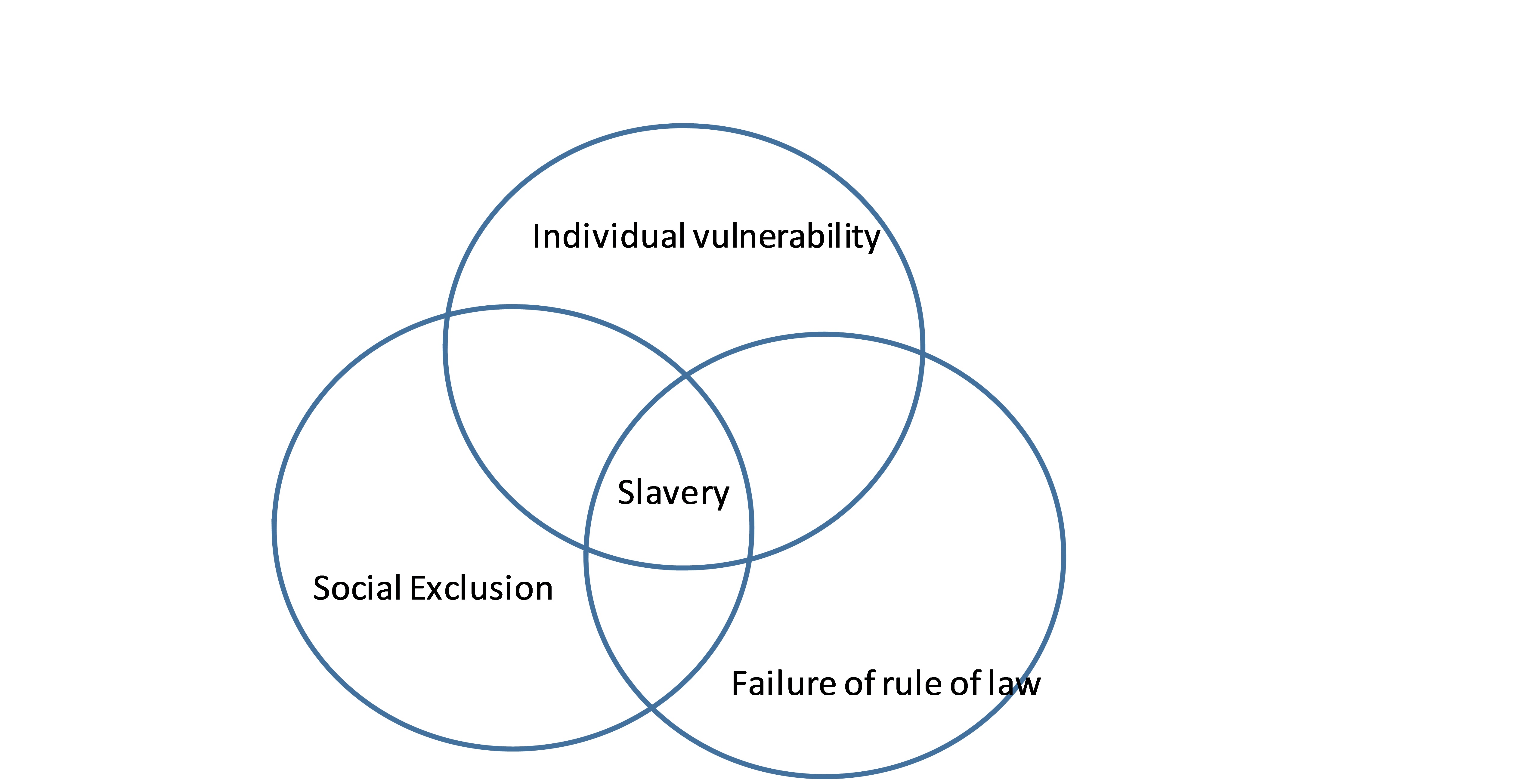
A second important matter that this case illustrates is that while there are a diversity of manifestations of slavery there are underlying all such cases, three common factors: individual vulnerability, social exclusion, and failure in rule of law. Slavery emerges at the conjunction of these three factors.

Slavery tri

In Europe those who end up in forced labour tend to be poor women and men who are generally subject to wider social prejudice because of their migratory status, ethnicity, sexuality or indeed because of their particular personal vulnerabilities in the case of substance dependant or mentally challenged individuals.

The issue of social exclusion and discrimination is a fundamental one in slavery: when we look at historical slavery in the Americas we see that racism was both a cause and a consequence of that slavery. This remains the case today. In Latin America today many in forced labour are indigenous people. In South Asia most people in slavery are Dalits or from other scheduled castes or minority groups. And in Europe most people in slavery are migrant workers.

This is important for a variety of reasons. Most immediately it hinders the identification of survivors to trafficking and slavery.

It is wholly without credibility to presume that any individuals charged with identification of survivors of trafficking are going to be immune from the prejudices of the wider society from which they are drawn and to whose elite they report. It is not fanciful to suggest that the police who encountered these Polish workers may have regarded them with some disdain and some may even have felt that their responsibilities towards foreigners in exploitative employment were lesser than those towards locally born citizens.

Indeed this point is emphasised when one considers the broader figures relating to identification of survivors of trafficking in the UK. There, if a person from the European Union presents themselves to the authorities as a potential survivor of trafficking then there is a greater than 80% chance they will be recognised as such. If they come from outside the European Union then there is less than a 20% chance they will be recognised as such. That sort of imbalance in decision making can only be the result of institutionalised discrimination, something fed by the media and political elites who should instead be sanctioning those who disgrace their offices by privileging their petty bigotries over their responsibilities under the law.

It is beholden upon leaders across Europe and the world to take active steps to eradicate these sort of prejudices, sanctioning public officials who disgrace their offices by pandering to their bigotries rather than upholding rule of law.

But often political leaders themselves privilege their prejudices and exclude the groups they dislike from the basic protection of rule of law.

In India, for example, a system of caste-based apartheid excludes Dalits and other minority groups from the effective protection of rule of law. Indeed even Pope John Paul II noted that within the Catholic Church in India discrimination against Dalits was rife and a matter that the Church had failed to respond adequately to. Such acquiescence in discrimination allows almost 300 million Indian citizens to be enslaved by more powerful members of society in a range of industries from brick kilns to garment manufacture.

This benefits us too. Probably each one of us in this room is wearing at least one garment tainted by being manufactured using slavery.

Just to give one illustration of what that means in human terms: in the course of a piece of research into trafficking in garment manufacture in India Anti-Slavery spoke to the mother of one young 20 year old woman who worked in a cotton spinning mill there. She described visiting her daughter:

“I spoke to her in a room provided for visitors”, she said, “because visitors are not allowed to go inside the mill or hostel. My daughter told me that she was suffering with fever and vomiting often. …I met with the manager and requested him to give leave to my daughter because she was unwell. I told him that I would send my daughter back once she was better. But the manager refused saying that there was a shortage of workers therefore they cannot grant leave. He also assured me that they would take care of my daughter and asked me not to worry.”

A week later she received a call to say now she could collect her daughter. She was dead.

Now when we present evidence of forced labour in their supply chains to businesses their defence tends to be “But we audit our supply chains!” Such ethical auditing has been going on for years now. Its reasonable to come to some assessment of its effectiveness. And one of the things that is completely clear is that it has been wholly ineffectual in identification and protection of vulnerable workers, and wholly inadequate in bringing about any reform in the systems of production where forced labour and trafficking are so rife.

That should not be news to anyone because the purpose of “ethical auditing” is to find nothing. And should some diligent journalist or non-governmental organisation ever expose the sort of exploitation that is routine for the supply of cheap garments to our high streets, there is no consequence for those businesses or the business executives who have made the decisions to source from slavery. Their goods are not excluded from European markets. The executives are not held criminally liable.

In Qatar and across the Gulf there has recently been attention paid to the systematic use of forced labour of tens of thousands of migrant South Asia labourers in the preparation of the infrastructure for the 2022 World Cup. This forced labour is underpinned by what is called the “kafalah” system. This is a so-called sponsorship system that ties workers to their employers to such an extent that even in the most abusive employment relationships, up to and including forced labour, the workers cannot change jobs or even go home.

It is a cynical system to facilitate medieval levels of exploitation up to and including slavery.
It is also essentially the same system that the United Kingdom government has in place for migrant domestic workers, which de facto legalises trafficking for forced domestic servitude.

Here again the issue of discrimination comes into play in facilitating slavery. By refusing to recognise the realities and risks to migrant domestic workers lives because of the simple fact that they are migrants the powerful in society refuse to recognise, to identify, their enslavement and hence singularly fail to protect them.

Now I don’t know what the Churches are saying privately to the UK government about this, but publicly some church leaders are acting as little more than cheer-leaders for the British Government’s hype that it is becoming a world leader in the struggle against slavery. Frankly the only people who would see what the British government is doing is world leading are those who know nothing about what world leading action dealing with the fundamentals of contemporary slavery actually looks like.

When we consider cases such as these it is clear while organised crime is an important element in contemporary slavery it is in a considerable minority. The vast majority of slavery in the world today is disorganised, perpetrated by ordinary people provided with the considerable opportunity for exploitation and indulging of their prejudices and racism by the failures in rule of law across the world.

This case of Polish workers in the UK illustrates another important point and that is the value of governments acting on behalf of their migrant citizens. It was the intervention of the Polish government here that compelled the British authorities to action. I would argue that there is a universality to this lesson. The remittances of migrant workers across the world are vital for poverty reduction and human development in their home countries. The contribution that migrant workers are making to the countries of their birth indicts their home governments failures to fulfil their international responsibilities towards their citizens. Aside from the moral and legal responsibilities of governments towards their citizens their failure to do more to protect migrants is short-sighted economically as it could help them obtain decent work and hence higher remittances.

This is as true for Asia and Africa as it is for Europe. And, looking a bit beyond our own European borders it would be an important European initiative against trafficking and towards poverty reduction if we were to support financially and professionally the establishment of a more comprehensive system of labour attaches for those migrants who we are seeing most exploited in the countries where there is most exploitation.

Across the Gulf migrant workers speak with envy of their Filipino colleagues whose government attaches some importance to this sort of support for their migrant citizens. That government’s position and that of the migrant workers of other countries would be strengthened if more governments were to act in this way. Perhaps European support to such measures could stem somewhat the bloodshed of vulnerable workers unleashed by FIFA’s decision to award the 2022 World Cup to Qatar.
Tom Bingham, one of the outstanding British jurists of the past 50 years argued that human rights, including, of course, an absolute prohibition on slavery, must be at the heart of any credible system of rule of law.

But, as we have seen, sometimes societies and nations refuse to apply these basic protections to particular social groups.

Political leaders are able to get away with this because the prejudice against the enslaved and their communities prevent slavery from becoming a political issue: if slavery is being inflicted upon groups and individuals who the wider society simply does not like, then that wider community is more likely to tolerate the abuses if they see them and not raise their voice to demand that governments do their jobs to stop the problem.

This strikes at the very principles which Europe is meant to represent: equality before the law, rule of law and human rights.

Slavery is a crime but its effective eradication requires more than a narrow criminal justice approach. It requires a rethinking of aid, trade and diplomacy as well as criminal justice.
Within our own common European homeland it requires a repudiation of the causes, in particular anti-migrant bigotry, as well as its consequences.

Countries which are establishing their competitive advantage in whole or in part based on their toleration or facilitation of forced labour should not be granted unimpeded access to European markets.
Business executives who knowingly use forced labour in their supply chains should be held criminally liable and Europe should advocate for and implement extraterritorial law on this matter.

When we discuss the issue of identification and protection of victims of trafficking we normally think of law enforcement being responsible for this. As I have alluded business also has such responsibilities, moving away from the discredited systems of auditing towards more effective ones of investigation. Aid agencies also have responsibilities for identification and protection. The European Commission, Caritas, Christian Aid, Oxfam and others work across the world in countries where slavery is prevalent and were options for decent work for socially discriminated against groups are limited. So slavery eradication should be mainstreamed into all European funded development and humanitarian projects. This can start relatively simply by asking of each project what is it doing to address the issues of slavery and ensure that those who are vulnerable to discrimination and social exclusion are incorporated into the programmes. The answer “nothing” may be reasonable – some projects will legitimately have other priorities. But introducing this question to development and humanitarian response would at least engage the scores of professionals working in these sectors and harness some of their energies and abilities toward the purpose of ending slavery.

Europe should assert that the eradication of slavery and child labour should be made stand alone post-2015 sustainable development goals and should act as if it is so in the development of its aid strategy.

One critical area with which Europe could make a vital contribution through aid and diplomacy is on strengthening rule of law, in particular anti-slavery law, in states like India, which have decent law but fail to protect its citizens because of inadequacy of labour inspections, corruption in police, insufficient judicial capacity and engrained caste-based apartheid. Given that so many of India’s Christians come from the Dalit and scheduled castes the Christian churches should at least have a selfish interest in ensuring that the rights of our co-religionists, as all human beings deserve, are robustly asserted.

Harry Truman once said “Its amazing what can be achieved when you are not bothered who gets the credit!” Indeed that is because, as Bobby Kennedy pointed out it is from numberless diverse acts of courage and belief that the history of our times are written.

Slavery is a human institution but like all human institutions it can be changed by human action. So the immediate challenge is: how do we, professionally, as individual citizens and collectively, use our power to fashion a political economy that repudiates slavery in all its forms and all its evolutions. That is a challenge which has no easy answer and which requires a dynamic process in response.

But while we don’t know how this struggle will end we do know how it should begin.

Jesus said “I bring not peace but the sword”. Europe and Christianity should pick up that sword now, and stand alongside the other Christians, Buddhists, Muslims, Hindus, non-believers who have been labouring for decades in isolation to challenge those vested interests who maintain, for their own selfish ends, the political economic systems that enslave people the world over.

Debt to the Choctaw Nation

I remember once being asked by a journalist during the war in Angola, what had brought me there.

I said it was an effort to pay off the Irish debt to the Choctaw nation.

She thought I was joking, so I explained.

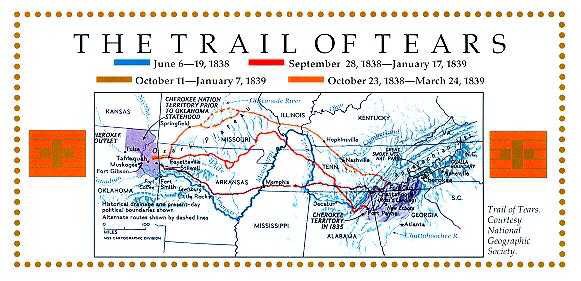
In 1831 the Choctaw Nation were forced from their ancestral lands as a result of President Andrew Jackson’s Indian removal policy, something that today we would refer to as an act of “ethnic cleansing”. The forced march of the first group from the Deep South, to Indian Territory in present day Oklahoma began on 1 November. It was described by their chief as “a trail of tears and death”: at least 2,500 children, women and men died along the way.

IMG_0049.JPG

Jackson, the seventh US president, was Irish, from Carrickfergus in County Antrim. The Choctaw Nation may or may not have been aware of this fact by 1847 when they heard news of the mass starvation of millions of Irish people brought about by a combination of racist and inept policy on the part of the British government who directly ruled Ireland at the time. They did however have a strong memory of their own recent experience of starvation and displacement as a consequence of racist and inept US government policy. Hence their reaction to the reports from Ireland was empathy and, in spite of their continued impoverishment, they gathered what cash there was amongst them to make a donation of $170 for famine relief in Ireland.

Swedish-Choctaw artist America Meredith's work on Choctaw aid to the Irish

Swedish-Choctaw artist America Meredith’s work on Choctaw aid to the Irish

Mass emigration became a feature of Irish society during and after the famine. Many of those who the Choctaw tried to save, fled to the United States in search of a better life. Some, including I have recently discovered some of my emigrant cousins, ended up as troopers in the Union army. After the Civil War many of these troopers participated in the genocidal campaigns against the Native Americans of the Plains. Few Irish, it seems, demonstrated the fraternity with oppressed Native Americans that oppressed Native Americans had shown us.

So the debt to the Choctaw nation remains. It’s a debt that, I think, requires solidarity with the oppressed where ever they may be and an effort towards practical help where possible. Frankly it’s a debt that can never be repaid. But anyone with a sense of common humanity should feel honour bound to keep trying.

Learning from History and the Present: citizens and the struggle to end slavery

Keynote speech to the 15th Annual UNESCO Chair & Institute of Comparative Human Rights International Conference, University of Connecticut

I was asked to speak a little about the broad overview of contemporary slavery and provide some historical background on the struggle So I will try to do that.

I think an important place to start relates to the question of what do we mean by slavery. I am frequently dismayed at meetings of both academics and activists when some pose questions such as “What is modern slavery?” or “Is trafficking slavery?”

The struggle against slavery is one of the oldest human rights struggles in the world, so if someone is new to this field, as some important actors are, it is important to remember that we do not have to reinvent the wheel. This path has been trodden by giants before us and we are building on the work that they have done.

So what is contemporary slavery? When we in Anti-Slavery International talk about “slavery” we use that word as an overarching term for the human rights abuses defined in international law, principally by the 1926 Slavery Convention, by the 1930 Forced Labour Convention, the 1956 Supplementary Convention on Slavery, the 2000 Palermo Protocol on trafficking, and the 2014 Forced Labour Protocol.

A good working definition of contemporary slavery comes from the 1930 Forced Labour Convention, which defines forced labour as all work or service extracted under menace of penalty, for little or no pay, for which the person in question has not offered themselves voluntarily. Trafficking is the technical process of moving people into situations of forced labour – so trafficking is indeed, by definition, slavery.
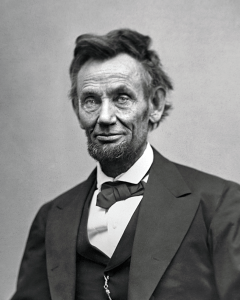
Lincoln sought a legal basis to end slavery in the United States

Lincoln sought a legal basis to end slavery in the United States

There are other important international laws related to this field, in particular on child labour and decent work, and there are important nuances within the slavery conventions I mentioned. But it is vital to note that this question of, “What is slavery?” is not a matter for social scientific contention of the sort so beloved by academics. It is something that has been established in international law as a result of considerable effort over the past 100 years to provide a robust framework for the continuing struggle against slavery. Remember how Lincoln had to struggle for a legal basis to end slavery in the United States. It is important to realise that we do not have to go back to that situation.

An Indian brick kiln

An Indian brick kiln

Part of the reason for this breadth of law in the international conventions is that contemporary slavery reflects a diversity of human experience: a life lived in bonded labour in Indian brick kilns is different in important respects from that of a Nepalese domestic worker in Lebanon, or somebody in chattel slavery in West Africa, or a “restavek” child slave in Haiti, or a forced labourer in American agriculture. Hence the responses to these problems must be nuanced and adjusted to the realities of those particular abuses in the time which they occur. The 2014 Forced Labour Protocol was adopted in recognition that the realities of forced labour have changed since the original Convention was adopted in 1930, and there will doubtless be other areas where there is a need for further extension and development of the international law, for example around the issue of child marriage.

But in spite of the spectrum of experiences of contemporary and historical slavery empirical studies conducted by Anti-Slavery International and others indicate that slavery emerges at the conjunction of three common factors: individual vulnerability, usually, but not exclusively as a result of poverty; social exclusion; and failure of rule of law.

The issue of social exclusion and discrimination is a fundamental one in slavery: when we look at historical slavery in the Americas we see that racism was both a cause and a consequence of that slavery.

Thus has it been, thus will it always be.

In Latin America today many in forced labour are indigenous people. In Western Europe most people in slavery are migrant workers. In South Asia most people in slavery are Dalits or from other scheduled castes or minority groups.

This is important for a variety of reasons, not least that it inhibits the issue from becoming a political one: if slavery is being inflicted upon groups and individuals who the wider society simply does not like, then that wider community is more likely to tolerate the abuses if they see them and not raise their voice to demand that governments do their jobs to stop the problem.

And slavery is very much a failure of governments’ most fundamental responsibility: establishing rule of law. Tom Bingham, one of the outstanding British jurists of the past 50 years argued that human rights, including, of course, an absolute prohibition on slavery, must be at the heart of any credible system of rule of law. But in a recent study we conducted of child labourers enslaved in the garment workshops of Delhi they told us how, despite plenty of good Indian law against slavery and child labour, when the workshop owners fail to pay bribes to the police, the police come, arrest the children and hold them hostage, stopping work, until the bribes are paid. In other parts of India Dalits enslaved in brick kilns or agricultural labour find it next to impossible to obtain legal remedy for the situations in which they find themselves.

In other parts of the world rule of law is much more explicitly undermined. In Qatar there is the “kafalah” system. This is a so-called sponsorship system that ties workers to their employers to such an extent that even in the most abusive employment relationships, up to and including forced labour, the workers cannot change jobs or even go home. It is this system that underpins the trafficking for forced labour of thousands of South Asian labourers for work on the infrastructure and venues for the soccer world cup in Qatar 2022.

Kafalah is a cynical system to facilitate medieval levels of exploitation up to and including slavery across the Gulf states.

It is also essentially the same system that the United Kingdom government has in place for migrant domestic workers. The UK system for domestic workers’ visas de facto legalises trafficking for forced domestic servitude. It does this by explicitly saying to migrant domestic workers that if they leave the employment of the person to whom their visa is tied, no matter how abusive that employer may be, they will be deported. That places in the hands of unscrupulous employers an enormously powerful threat to hold over the head of any vulnerable worker hoping to improve their own life and that of their family through hard work.

The refusal to apply basic protections of rule of law to some within a society is sometimes deliberate in order to obtain some aristocratic privilege over a group of people, such as was the case with the 19th Century US system of slavery, even when free labour and emancipation were more attractive economically. This remains the case with India’s caste-based apartheid today.

Sometimes the failure to provide basic rule of law protections are as a result of a mistake or oversight. Sometimes, as we are presently seeing with the British Government, it is as a result of ineptitude born of ignorance, ideology and xenophobia. In the UK, for example, if a person from the European Union presents themselves to the authorities as a potential survivor of trafficking then there is a greater than 80% chance they will be recognised as such. If they come from outside the European Union then there is less than a 20% chance they will be recognised as such. That sort of imbalance in decision making can only be the result of institutionalised discrimination, something fed by the media and political elites who should instead be sanctioning those who disgrace their offices by privileging their petty bigotries over their responsibilities under the law.

In the 21st century the issue of government response to slavery becomes much more vital as the political economy becomes increasingly globalised. With globalisation the capacity of states to regulate business, as envisioned by classical economics is increasingly limited because too few states recognise that this responsibility now requires extraterritorial legislation to ensure the legal accountability of trans-national corporations, and of individual business executives who are running those corporations. Such legislation is also a central requirement in the struggle against contemporary slavery, particularly as businesses extend their operations into countries with limited rule of law and high levels of corruption.

The history of the struggle against slavery, as with the rest of the struggle for human rights, and the rest of history, is sometimes a messy and fraught affair, filled with petty rivalries, personal jealousies and self-serving accounts. And because, given the nature of slavery, its history is quite a personal story. People are not enslaved by poverty or drugs or some impersonal force: human beings do this to other human beings.

The diversity of personal perspectives means that there is inevitably a diversity of historical narratives. This is accentuated in the history of the struggle against slavery by the fact that there is a plurality of historical slavery experiences just as there are a plurality of contemporary experiences: from the trans-Atlantic slave trade and that of the Americas, to the trafficking from East Africa to Asia, to the indigenous forms of slavery and slavery-like practices, such as serfdom, that were present in Europe and the rest of the world.

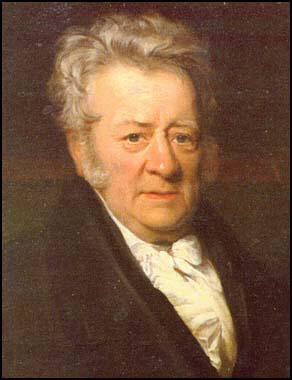
Thomas Clarkson

Thomas Clarkson

Memory can be a self-serving thing as can the official versions of history. So surveying the history of this struggle can be confusing. Alongside the immense, and immensely troubling, accounts of the experiences of people in slavery, there are also propagandistic accounts of the benefits of slavery for enslaved people. And, just considering the anti-slavery struggle, there were also inevitable clashes between the leading anti-slavery figures. This resulted in such unedifying spectacles as the efforts by the sons of William Wilberforce to try to write the monumental figures of Clarkson and Equiano out of history, or the efforts of Salmon Chase to organise a coup d’etat against Lincoln. Some historian’s even discern a dispute between Spartacus and Crixis at the height of the Gladiator War.

But, nevertheless, history and society critically interrogated can be a source of understanding and learning.

The former French Prime Minister Georges Clemenceau was once asked if anything could ever be said with certainty about the First World War given all the vast and bloody confusion that entailed. Yes, he said. “No one can ever say Belgium invaded Germany.”

Such hard facts may be rare enough in history, and indeed in any aspect of life, but it is important to try to find them because from them we can discern what worked, what didn’t work and why.

And, at least as importantly, the process of thinking critically about history, and of refusing to accept unthinkingly the propaganda of the powerful or the official versions of the winners, of considering carefully life and society, can provide a basis for developing our own citizenship and our capacity for action for justice.

I think there are a number of hard truths that than can be discerned from contemplation of the historical and contemporary struggles against slavery.

The first thing that emerges for me from consideration of the diversity of contemporary anti-slavery struggles is that there is not a single anti-slavery movement.

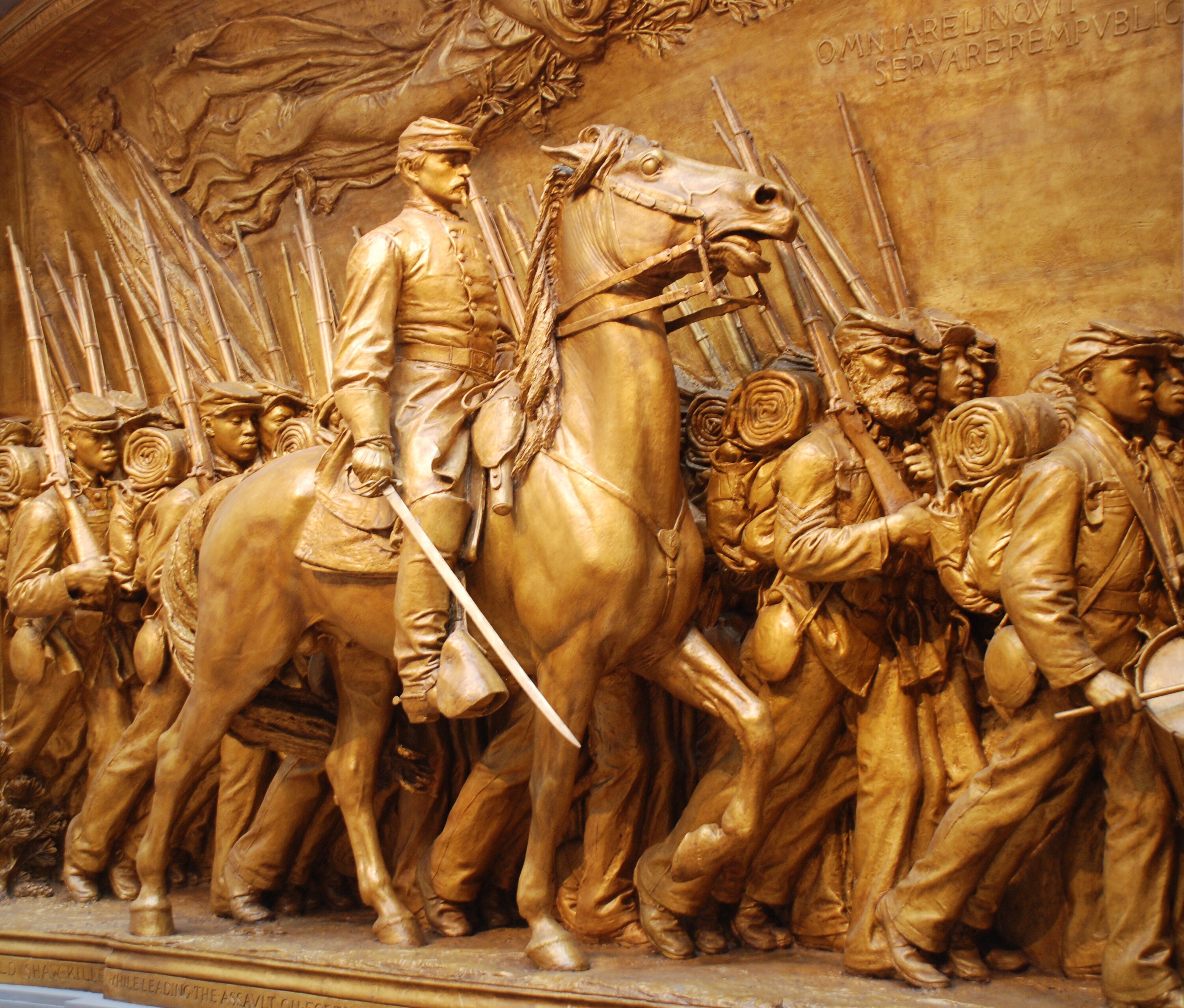
The memorial to Shaw and the 54th

The memorial to Shaw and the 54th

I was at the International Slavery Museum in Liverpool a while ago and I saw a poster there commemorating the struggle against slavery and the transatlantic slave trade: it said “Remember not that we were enslaved, but that we fought“. It’s a truth stunningly emphasised in the memorial to Robert Gould Shaw and the Massachusetts 54th on Boston Common.

And it remains the case today. However the activists who risk life and limb to end contemporary slavery across the globe know that few today beyond their own directly affected communities are remotely interested in trying to end these modern forms of slavery.

Unlike previous struggles against aspects of slavery or more recent struggles to end, for example, apartheid in South Africa, or to advance the peace process in the North of Ireland, the contemporary efforts of indigenous campaigners against slavery are very poorly supported by international efforts.

There is very limited discussion on how policy on migration, international aid, trade, or diplomacy should be shaped to support local anti-slavery activists. There is little discussion on how to reshape the international political economy away from one where unscrupulous political and business leaders are allowed to develop competitive advantage through their facilitation of, or use of, forced labour and slavery. The international silence is deafening on caste discrimination in South Asia, which imposes a system of apartheid on over 300 million people. This system not only undermines the very concepts of rule of law and democracy in South Asia but also provides the social exclusion vital to establish a population who can be enslaved with impunity.

This provides huge benefits to powerful vested interests across South Asia. But we in the Northern hemisphere also benefit. Slavery provides us cheap shrimp for the dinner plates of Europe and North America. So extensive still is the use of the forced labour of girls and young women in garment manufacture in southern India, not to mention the forced labour, including forced child labour, in cotton production in Uzbekistan and other parts of central Asia, that the probability is that every one of us in this room is wearing at least one garment that is tainted with contemporary slavery.

Just to give one illustration of what that means in human terms: In the course of a piece of research Anti-Slavery International, funded by Humanity United, conducted into the forced labour of girls and young women in the garment sector of the state of Tamil Nadu in Southern India we spoke to the mother of one young woman, 20 years old, about the same age as many of you, who worked in a cotton spinning mill there. She described visiting her daughter:

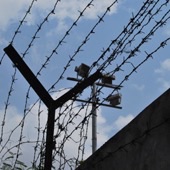
Barbed wire around the compound of a South Indian spinning mill

Barbed wire around the compound of a South Indian spinning mill

“I spoke to her in a room provided for visitors”, she said, “because visitors are not allowed to go inside the mill or hostel. My daughter told me that she was suffering with fever and vomiting often. …I met with the manager and requested him to give leave to my daughter because she was unwell. I told him that I would send my daughter back once she was better. But the manager refused saying that there was a shortage of workers therefore they cannot grant leave. He also assured me that they would take care of my daughter and asked me not to worry.”

A week later she received a call to say now she could collect her daughter. She was dead: a life over before it had barely been allowed to begin.

Just as enslaved people were worked to death on the plantations of the US South in the 19th Century so too are they today worked to death in the garment factories of Southern India, the fishing boats of Thailand, on the World Cup building sites of Qatar and the rest of the Gulf, in agricultural fields from West Africa to North America, and in the servants quarters of every major city of the world.

Thus has it always been.

A further point that emerges from consideration of historical and contemporary slavery is that there is no silver bullet to end slavery.

I think this is one of the key lessons of the history of the anti-slavery movement. When Anti-Slavery International’s antecedents in the Committee for the Abolition of the Trans-Atlantic Slave Trade was established in 1787 they believed that the ending of the slave trade would inevitably lead to the ending of slavery. It was certainly an important milestone but additional effort was necessary until chattel slavery was abolished in the British Empire. But even then slavery transmuted into different forms: bonded labour was still tolerated in British India and now in independent India and Pakistan. Indentured labour became a feature of British colonialism post-1839.

In the United States there was a similar approach to the eradication of slavery. Some believed that confining of slavery to the US South would ultimately lead to it naturally dying out there. But in the end a devastating war was necessary. And again slavery transmuted first into exploitation and then into a variety of new forms affecting vulnerable workers in the unpoliced parts of the economy.

In the present day in spite of slavery being illegal in most countries of the world there are a minimum of 21 million people in slavery and forced labour. Whatever magic bullets have been fired at the problem they have failed to stop it.

Instead we need to conceive of a much broader based approach to dealing with contemporary slavery: complex problems generally require sophisticated solutions. This is the case with slavery. It is a crime, but it needs more than a criminal justice approach to counteract. As I mentioned earlier the anti-slavery struggle, if it is to be successful, must become a centrepiece of diplomacy, and policy and practice related to migration, international aid and trade.

Such an approach must include a comprehensive programme of human, civil and economic rights for those most discriminated against and most vulnerable to slavery. This would offer a chance of peace and prosperity for them, their families and their countries rather than the continued violence of forced labour and poverty that describes their present, not to mention the risks to their futures.

The beginning of such a programme should be marked by a clear declaration by the United Nations that the eradication of slavery and child labour should be made stand-alone post-2015 sustainable development goals. This would help focus the minds of the thousands of anti-poverty and humanitarian professionals on considering how their particular expertise and professional responsibilities may contribute to the elimination of slavery. For those of you who take practical action against slavery perhaps consider writing to your president and to the Secretary General of the United Nations with this demand.

Leading on from this the struggle to end slavery should be a central feature of governmental aid programmes such as those of USAID and the other major multilateral and bilateral agencies across the world. This means establishing specific anti-slavery budget lines for countries and regions with the greatest prevalence of slavery, and mainstreaming consideration of slavery into other anti-poverty and humanitarian work. Without such consideration there is a significant risk that anti-poverty interventions either relatively or absolutely exacerbate the position of the most vulnerable groups in those communities.

For example in 2005 our colleagues in the Niger anti-slavery organisation TImidria identified that slaves were being used in some of the food for work programmes which had been set up in response to the West African famine of the time. The way this worked was that slave masters would send those they had enslaved to toil all day on the programmes and on their return they would confiscate the ration cards they had been given in payment for their work.

Now I don’t want to be glib about this. I worked in humanitarian response for many years and appreciate deeply what a difficult and vital role it is. Without exposure to the institutions of contemporary slavery I am sure I would have made a similar mistake, and indeed probably did in other parts of the world. My point is that a basic question that development and humanitarian professionals should ask is, “How can my work impact upon slavery and non-gender based discrimination in the area in which I am working?” Asking such questions can help mainstream anti-slavery practice to development and humanitarian work and lead to the sort of qualitative improvement in practice that gender mainstreaming brought two decades ago.

An appropriate international struggle against slavery should also include attention to the need for safe migration: we should not tolerate the establishment of rules on migration that facilitate the trafficking of vulnerable people. Countries that establish such rules, like Qatar, like the UK, should be treated as pariahs and the terms with which they trade with the rest of the world should be altered. There is an hypocrisy in how migrant workers are treated internationally. On one hand we, as an international community, tolerate circumstance of injustice and poverty which compel them to migrate. We will then go so far sometimes to recognise the importance of remittances from these workers towards the development of their countries and reducing the poverty of their families. But the world still fails to ensure safe migration. At the moment in Europe we are witnessing carnage off our southern shores because of a wholesale failure of political courage in addressing this issue.

Perhaps it is another hard lesson of history that when the moral courage of political leaders fails in the face of prejudice and vested interests it is the vulnerable who are usually the ones to pay in the bloody routine of violence that ensues.

200 years ago people like Equiano and Clarkson in Europe, and in the Americas, Sam Sharpe, Nat Turner, Touissant, the Maroons decided, for diverse reasons, to try to end slavery, so morally repugnant did they find it. In doing so they took on a system that the writer Adam Hochschild has compared in the equivalence of its power to the oil industry today. In ending the slave trade through force of arms and force of argument in a mere 20 years they showed what could be achieved when there is the collective will and the audacity of ambition to do so.

Olaudah Equiano

Olaudah Equiano

Clarkson, Equiano, Turner and Sharpe, the Maroons, the Quakers, and the nascent trades unions have been substantially written out of the history of that struggle, first by Wilberforce’s sons, and largely forgotten subsequently. That historiographical injustice contributes not just to the misremembering of what happened, but the misunderstanding of why it happened. The achievements of 200 years ago were a classic example, in Bobby Kennedy’s phrase, of numberless diverse acts of courage and belief shaping the history of the time. Thus has it been, thus will it always be.

Whatever our differences one thing that unites us is that we are all citizens in this world. And that brings with it not just rights but responsibilities. We have the responsibility to remember properly. We have the responsibility to think and to understand. We have the responsibility to act. “Do to others what you want them to do to you.” And remember that when we act with common purpose, in spite of all our flaws and diverse motives, that still, together, we can overcome.


Manhunt: The 12 day chase for Abraham Lincoln’s killer, by James L. Swanson

Sympathy for the Devil

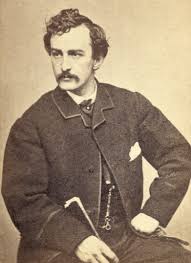
John Wilkes Booth

John Wilkes Booth

Manhunt, as the subtitle indicates, is an account of the hunt for John Wilkes Booth and the cabal of bitter, reactionary racists who murdered the United States’ greatest president, Lincoln, and tried to kill his Vice President, Andrew Johnson, and his Secretary of State, William Seward.

Swanson succeeds well in his apparent objective of writing a non-fiction thriller based on the hunt for these assassins, and appears to have developed some sympathy for his subjects, presenting in detail their considerable bravery and endurance in the aftermath of the murder. Among the conspirators was Dr Samuel Mudd, who treated Booth when he was on the run. Mudd was imprisoned as a conspirator but he and his family subsequently worked for his exoneration, saying he was only doing his duty as a doctor and had no knowledge of Booth or the conspiracy. John Ford, a Lincolnphile, even immortalised this story in one of his films, The Prisoner of Shark Island.

His name is still ...

His name is still …

Swanson argues however that Mudd was indeed part of the conspiracy and Booth’s encounter with him was no accident, but rather a rendezvous with a known sympathiser. The moral of this part of the story is that you can still say “his name is Mudd” with a clear conscience.

The book illuminates this aspect of the Civil War, often passed over or obscured in other texts by the monumental tragedy of Lincoln’s assassination. Amongst the startling details that Swanson reveals is that Booth obtained access to Lincoln’s presence merely by presenting his card: his brother was a friend of Lincoln and strong supporter of the Union so Booth was also welcomed as a friend.

Overall the book is a sobering reminder to the contemporary world that courage is not the highest of virtues but rather often facilitates some of the worst of human behaviour and can lead to some of the greatest pain and loss.

Lincoln and his Generals, by T. Harry Williams

Lincoln and his commandersThis is a fine and concise introduction to Lincoln and the course of the American Civil war. The focus, as the title indicates clearly, is on one of the major themes of the war – Lincoln’s efforts to obtain an effective commander for the Union armies, and Lincoln’s own role as chief Union strategist and Commander in Chief.

In the course of this there is some notable insight into the necessary qualities of good generals, and generalship and war-making in the context of a democratic state. Many of the wider issues of the war including the experience of slaves, emancipation, and the actual experiences of the the fighting for the ordinary soldiers are only lightly touched upon. Nevertheless this remains a fine overview of the war and a good introduction to some of its key controversies.