An overview of slavery in Nigeria from CNN
Reply


 A forthcoming article in the
Irish Yearbook of International Law
by Josh Curtis provides an excellent human rights based analysis of natural resource management in Ireland. The essay comes at a time of increased focus in Ireland on the ‘ownership’ of oil and gas reserves (see Eddie Hobbs’
Our Own Oil
for example), as well as the possibility of the introduction of fracking for the extraction of shale gas. In his article, Josh argues that human rights must be taken into consideration to ensure that natural resources are managed in a way that provides benefits for all. Here is the abstract:
A forthcoming article in the
Irish Yearbook of International Law
by Josh Curtis provides an excellent human rights based analysis of natural resource management in Ireland. The essay comes at a time of increased focus in Ireland on the ‘ownership’ of oil and gas reserves (see Eddie Hobbs’
Our Own Oil
for example), as well as the possibility of the introduction of fracking for the extraction of shale gas. In his article, Josh argues that human rights must be taken into consideration to ensure that natural resources are managed in a way that provides benefits for all. Here is the abstract:
This paper proceeds from the premise that international human rights law provides both an important counterpoint to mainstream economic theory and a paradigmatic context that can enlighten the proper place of foreign direct investment (FDI) in national development. The people’s rights to self-determination and permanent sovereignty over their natural resources…
View original post 172 more words
Some reflections at the Management and Leadership Network (MLN) conference in Belfast on the role of moral courage in leadership, drawing on the examples of Lincoln, Collins and Hugh Thompson Jr.
A short interview by the CSR company Twenty50 with me on Abraham Lincoln and the struggle against contemporary slavery.
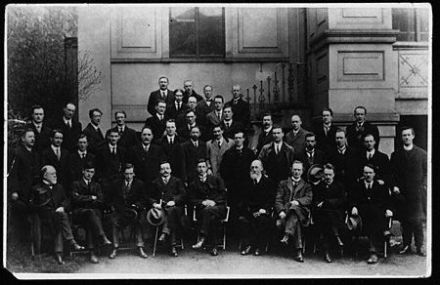
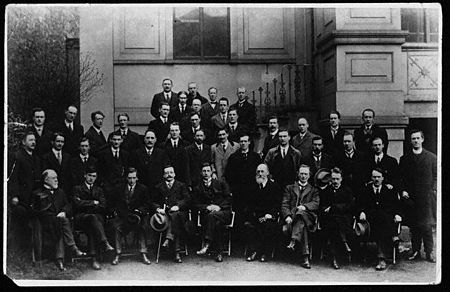
Members of the first Dail Eireann
The Republic, something of a sequel to Townshend’s earlier book on the 1916 rebellion, is a fine history of the Irish independence struggle from 1917 to 1923. It was a novel take on the period, for me, because of its close consideration of the political as well as the military aspects of the struggle.
By Townshend’s account the political aspects of the struggle were decisive in ensuring its success. By this account the refusal of Sinn Fein to take up seats in Westminster and instead establish an Irish parliament in Dublin was no mere empty gesture. Rather it was a political gambit to obtain Irish self-rule after efforts towards this end over the previous 75 years had been sabotaged by British and Unionist interests.
The efforts of Collins in particular, Cosgrave and Stack to establish the “shadow state’s” finances, local government and courts gave even more concrete expression to the idea of a republic espoused by the first Dail, particularly in those areas where Irish military activity had destroyed British institutions and so carved out considerable space for nascent Irish political institutions to function.
Mulcahy, in spite of his brutal decisions during the post-Independence Civil War, which included his support for the reprisal murder of prisoners of war, many of them former comrades from the struggle against the British, comes out of the account relatively positively as a man committed to civil authority and the establishment of democratic control of the army. Indeed, in the light of these principles those brutal decisions become much more understandable, though still repellant: at a certain level Mulcahy must have felt he was dealing with traitors to those democratic principles.
The book reminds the reader of how history repeats itself, first as tragedy, second as farce. The Provisional IRA and post 1969 Sinn Fein aped many of the initiatives of the first Dail revolutionaries but with none of the substance: their political wing were “absentionist”, refusing like the first Dail members, to take their seats in Westminster if elected, without having the popular support or intellectual capacity to establish a “Shadow State” to replace the institutions which made British rule a reality. Most farcical they continued to claim legitimacy from the second Dail, all subsequent elections being “illegitimate” because of partition. In latter years, Adams and McGuinness made regular pilgrimages to the home of Tom Maguire, the last survivor of the 2nd Dail Executive, and hence in their eyes the “legitimate” government, to receive his imprimatur on political decisions and military initiatives. In a very real sense the Provisionals claimed divine right to wage war while the first Dail strove for democratic rights.
I have a few quibbles with the book: Townshend persists with the hackneyed view that Collins had the option to run the ambush at Beal na mBlath rather than “fight into it”. Hence he concludes, unfairly I think, that Collins brought his own death on himself. (For more on this, if you’re interested, see my earlier blog, “Stop and we’ll fight them”) Elsewhere, perhaps more justifiably, he refuses to come to conclusions on key controversies of the period such as the circumstances of the final massacre at Kilmichael, or how many innocents were caught up in the killings of intelligence officers on Bloody Sunday morning. In both these instances he notes the controversies but does not come to a particular conclusion. Paradoxically though, while he is certainly familiar with it, he does not explicitly consider the material from the Bureau of Military History on the Intelligence war that underpinned Coogan’s, Dwyer’s and Foy’s assessments Bloody Sunday.
Nevertheless the book is a fine account of the period combining narrative and thematic discussions to provide a compelling account of the period.
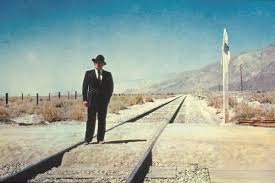
McCready (Tracy) arrives to Blackrock
There is a story that the head of the studio that made this film wanted to pull the plug on it because he thought it subversive.
He was right. It subverts a number of genres: it is a western without any horses; a Second World War story set thousands of miles from the front line; a thriller like a ghost story; a film noir set in the desert. But most subversive of all, at the core of the film it is about the consequences of racism, most specifically anti-Japanese racism, and how racism is often dressed up as patriotism.

Spencer Tracy and Robert Ryan
The film takes the form, popular in US and Japanese cinema, of the stranger arriving into town as a catalyst for the unfolding story. Spencer Tracy is the one-armed stranger, McCready, who shows up in remote Blackrock to deliver a medal to the father of the Japanese-American soldier who died saving his life. The father is elusive and the townsfolk seem dangerously unsettled by McCready’s questions.
Spencer Tracy delivers one of his most iconic performances in this role. McCready is a brave man, but one who has seen too much violence already not to appreciate that, when faced with insurmountable odds, discretion is the better part of valour. Robert Ryan is brilliantly terrifying as the charming thug who dominates the town. Walter Brennan provides some light relief as the town undertaker and vet in the midst of a spare and nightmarish story.

Tracy and Ernest Borgnine
For the lovers of trivia: Bad Day at Black Rock is said to be the first American film to portray the use of eastern martial arts when Tracy’s character comes to a point at which he is driven to fight in self-defence, and displays a surprising propensity for karate, the Japanese martial art.
The film must still be regarded as deeply subversive to those “heartland” Americans for whom ignorance and provincialism are regarded as virtues. The outsider played by Tracy asserts a different sort of Americanism, a cosmopolitan, progressive and principled one, and is hated and feared as a result. Perhaps one day the film will be remade, set in the early 21st century, about an injured US veteran looking for the father of the Muslim-American soldier who saved his life.
This book marks Eoin Colfer’s move from children’s to adult fiction with the introduction of another serial character: Daniel McEvoy – ex Irish army sergeant, now working as a doorman in a sleasy New Jersey nightclub, worrying about losing his hair and trying to stay out of trouble.
McEvoy is an attractive character and his reflections on life and death, as he tries to extricate himself from increasingly complex and life-treatening situations, are very entertaining and often insightful. However in spite of the violence the book is more of a comedy than a thriller: except for a few scenes there is little sense of menace, and the wise-cracking, though generally entertaining, on a number of occasions simply does not ring true, disrupting any tension that had begun to accumulate. Hugh Laurie managed the combining of comedy and thriller better in his novel “The Gun Seller” in no small part by cutting the wise-cracks from the action scenes. (Paradoxically real life can produce unbelievable dialogue: George McDonald Fraser notes in his memoir of the war in Burma, “Quartered Safe Out Here”, that he once heard a comrade shout, after having been shot, “They got me the dirty rats!”, something, he says, that despite being true was so unbelieveable he would never have used it in a work of fiction.)
These points aside, the plot is compelling and satisfyingly twisty, drawing upon the roots of modern crime fiction: Dan carries with him an echo of Chandler’s Marlowe as a fundamentally honourable man, a contemporary knight errant, in a corrupt metropolis. The jokes are generally very good indeed. And many of the characters, particularly, I thought, Zeb and Simon, well drawn. It also highlights the courage and experiences of UN peace-keeping forces (Dan is a veteran of the operation in Lebanon), something rarely touched upon in popular culture, and something that deserves greater attention.
And the book kept me up at night so I could finish it and find out how the various strands resolve: one should never quibble too much about a book that can do that.
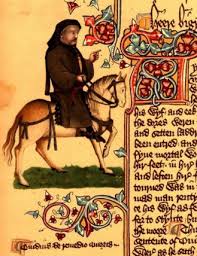
The authors admit at the outset that they are not even sure if Chaucer was murdered. But they use the question to probe the political and cultural milieu of the late 14th century. In the process they convincingly destroy the myth of Henry Bollingbroke’s popular and bloodless coup against Richard II and instead show it up for the illegal, sanguinary and repressive affair that it was. In this context the authors show that it is at least plausible that Chaucer, the court poet and political follower of Richard, did not die peacefully, particularly given the emnity that he earned from his lambasting IN ENGLISH of the corruption in the Church in Canterbury Tales. They also construct a compelling circumstantial case against the likely culprit.
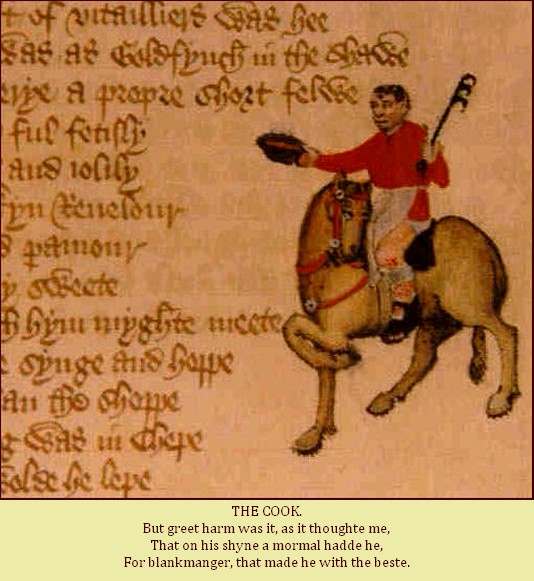 Along the way the authors provide a useful introduction to the Canterbury Tales themselves and the importance of Chaucer as both a poet and a proponent of the English language.
One slightly irritating feature of the book is its peppering with Jones’ jokes. No doubt someone thought that this would be expected by readers. However this is ill judged. The book can stand on its own as a piece of historical and literary research and it doesn’t need the jokes to carry the reader forward: The argument does this on its own… And the jokes are not very good.
This quibble aside it is a fine book and a worthy companion piece to Terry Jones’ Chaucer’s Knight.
After 20 years its good to catch up again with some of the key characters of Presumed Innocent who have, since that book’s publication, been hovering at the edges of Turow’s novels – almost all based in the fictional metropolis of Kindle County – a stand-in, one presumes, for contemporary Chicago.
Rusty Sabich, the protagonist of Presumed Innocent, is now a senior judge. Tommy Molto, his former prosecutor, is in Rusty’s old job, in charge of the County’s Prosecuting Attorney’s office. The plot of this book revolves around the mysterious death of Rusty’s wife, Barbara, as Tommy is reluctantly drawn into investigating him again.
While the plot and mystery are compelling the true joy of the book arises from the exploration of the messy lives and loves of the characters. Turow uses the device of first person, present tense narrative for three of his principal protagonists. Hence we come to know them intimitately while they remain in crucial ways mysteries to each other and to Tommy. There is an echo in this book of vintage Graham Greene in the compassion and understanding with which Turow treats the characters and their mistakes. However, unlike much of Greene’s work, in this book it is the Catholic character, Tommy, who’s moral compass is steadiest in the midst of all, his prosecutorial zeal mellowed with love and age to a more humane commitment to justice and rule of law.
This book may lack the twists and surprises of Presumed Innocent, but it makes up for it in many other ways, not least the beauty of its writing, and is pretty much an unalloyed joy from start to finish.
Summary: gripping private’s eye view of the war against the Japanese in Burma, by the man behind Flashman
Towards the end of his life George McDonald Fraser wrote this memoir of his experiences as a very young man fighting in the last battles of the Burma campaign. He acknowledges the unreliability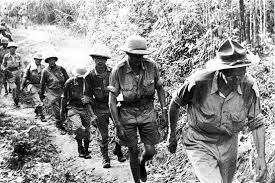 of his memory – the result not of age but of being a young private (later a lance corporal) in the chaos of war. His memory of contacts with the enemy in battle is very clear, he writes, but he needed to refer to regimental histories in order to make sense of these memories in the broader narrative of the campaign – something to which he would never have been privy at the time.
The result is a remarkable book – funny, exciting and moving by turns as he recounts his life in Nine Section, a Scot in the midst of Cumbrians. He remained to the end of his life, he notes, a man of his times, a product of imperial Britain, unforgiving of the Japanese (the repeated use of the term “Jap” drives home this point) and unapologetic of these facts. His honesty about this and about how the war was fought is an important aspect of the book, fundamental to presenting a clear sighted but affectionate portrait of the sort of men who served. Paradoxically this also leads to points where he rails against aspects of the modern world – European Union, and a perceived “softness” on criminals for example – perhaps honest about what he felt but, unlike the rest of the book, little to do with considered experience.
These quibbles aside this is an exceptional book, beautifully written and a fine tribute to the men Fraser served with and the generation who defeated European fascism and Japanese militarism.
 aidanjmcquade