The Cut Throat Trial, by the Secret Barrister

Summary: One of these suspects is not like the others …

As aficionados of Rumpole will know, a “cut-throat” trial is one in which co-defendants turn on each other. That is the heart of this novel about three boys accused of murder — a case that also involves a victim nearly decapitated, so there is that sort of throat-cutting too.

This is the first foray into fiction by the Secret Barrister. It is told from multiple perspectives: a defense and the prosecution barrister, the judge, and two of the defendants. Each voice feels distinct, a technical feat that lends the narrative both texture and credibility.

As in their non-fiction, the Secret Barrister’s abiding concerns with the state of the law, society, and the criminal justice system in England and Wales permeate every chapter. Like Wendy Joseph’s Unlawful Killings, it exposes the squalid tragedies of murder committed by children.

Yet for all its artistic achievement and political undercurrent, this is first and foremost a courtroom thriller — and it is a cracking one. It takes a staple of English literature, the red-herring-strewn cosy murder mystery, and serves it up American-hard-boiled. Gone are the familiar comforts of Agatha Christie and the nostalgia-fests of Richard Osman. Instead, we are in a world where the streets are mean, knives wound horrifically, killing is messy, dying is sore, cops and lawyers are flawed, defendants are pathetic, and justice is too often elusive.

By refusing to flinch from the grotesque realities of murder, the Secret Barrister has produced a novel several cuts above much contemporary English crime fiction, and one that, like the best of literature, illuminates the human condition while laying bare some of the failings of our world.

Hacks and Leadership

Summary: a not very funny rumination on a very funny tv show

Who wants to read about what the tv series Hacks has to say about leadership? Probably no one. But it has lessons on that subject area as important as those that Buffy and Angel teach on philosophy and morality. So here are a few thoughts.

If you haven’t seen Hacks yet, you are lucky. There are four seasons awaiting your delectation. However, like much writing about humour the following is not all that. Still, this is free to read. So tough.

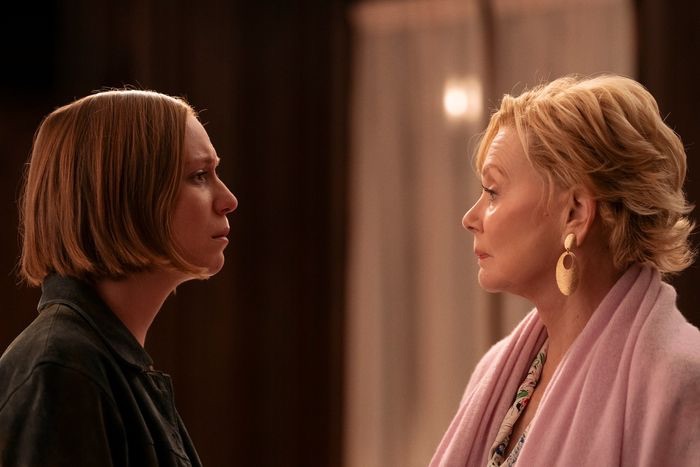
Hacks is about the borderline unhealthy relationship between a legendary comedian, Deborah Vance (played by the legendary Jean Smart) and her new writer, Ava Daniels (the very funny and genuinely admirable Hannah Einbinder). 

While the setting may be the glamourous world of showbusiness, fundamentally it is a workplace comedy. In the workplace that Deborah and Ava find themselves in by season 4 they represent archetypes of bad leadership: Deborah is imperious and ridiculously demanding, with no sense of workers’ rights and frequently forgetting that she has a duty to teach not just perform. Ava is well-meaning but so young she does not know what she does not know. In particular she has not quite grasped that her brilliance as a writer does not necessarily provide her with the knowledge and experience to be a professional leader. 

If you are in any way like me, this will immediately remind you of Lavina Greacen’s book, Chink, her biography of the Irish Second World War general Eric Dorman-Smith.

Just me?

Well, a central theme of that book was that leadership is a collective task, requiring at least two people to have any chance of working. 

This is something that the writers of Hacks also instinctively seem to understand. Neither Ava nor Deborah are necessarily people you would like to know in real life. But together they make each other better as people and as leaders. Of course, they have difficulty admitting this to each other – too much ego getting in the way. And they have even more difficulty realizing that there are others central to what success they have achieved, not least Jimmy, their self-effacing and under-appreciated manager (perhaps the real hero of the show?)

Maybe if they had read a few of Louise Penny’s Inspector Gamache novels they would know that they need to use more the four sentences that achieve wisdom: “I was wrong,” “I’m sorry,” “I don’t know,” and “I need help”. 

But they haven’t. Indeed, not enough people have. That is one of the reasons why there is so little wisdom and empathy among those responsible for leading in today’s world. It is also one of the reasons that moral leadership increasingly falls to the protests of artists like Hannah Einbinder and Kneecap, while so many more respectable pillars of society are silent as gravestones. 

All that aside, Hacks is one of the best portrayals of workplace politics since The Wire. And it’s bleeding funny.  Try it. 

A roundup of Unusual Suspects: Isolation Island, by Louise Minchin; The Trials of Lila Dalton, by L J Shepherd; Long Time Dead, by T M Payne; A Limited Justice, by Catriona King.

Summary: books that it would be criminal to overlook!

I once met a woman who had given her newborn daughter the second name of “Danger” just so when she was older she would be able to say, like the heroine of a 1930s movie, “Danger is my middle name!”,

There is a strong hint of such movie heroines in Lauren, the investigative journalist protagonist of Louise Minchin’s Isolation Island

Minchin uses her experience of journalism and having been a contestant on the storm ravaged set of “I’m a Celebrity, get me out of here!” to craft a fun, Agatha Christie inspired, tale of murder amongst game show contestants. 

Minchin brings a lovely devilment to her tale, fattening up the despicable before despatching them while Lauren desperately tries to unearth the evil genius behind the mayhem.  

Minchin has described her heroine as being braver than herself. That may or may not be true – Minchin is also a triathlete and having done one myself I can attest that those are daunting things. But, perhaps as importantly Lauren is driven by a sense of journalistic ethics and a conviction of the importance of truth, which must be Minchin’s own. 

In a time of in which even genocide is being made undiscussable, it is important to be reminded that some truths, no matter how inconvenient, must be spoken. 

On the opening page of The Trials of Lila Dalton, the titular Lila, a barrister it seems, stands up in court with no knowledge of how she got there, but with a client to defend. LJ Shepherd, the author, a barrister herself, describes her book as an “ontological mystery”. That is, not only does her protagonist have to get to the bottom of the facts of her case – the defence of a man accused of a bombing atrocity – but also work out who the hell she is and what she is doing there. 

Shepherd’s is an entertaining and intriguing story. I am not sure that it really required the reality questioning elements as the issues she deals with – the importance of the right to a defence in a criminal trial no matter how seemingly heinous the accused, and the question of how democratic societies protect themselves from violent assaults by those who do not share their values – are important enough.

These quibbles aside, the quality of Shepherd’s writing is exceptional, particularly when describing the treating of casualties in the aftermath of an explosion: these recalled for me some of the accounts of the survivors of the Rana Plaza collapse in Bangladesh. In this Shepherd does that most difficult of things: she forces the reader to empathise with victims that they may prefer not to think of.

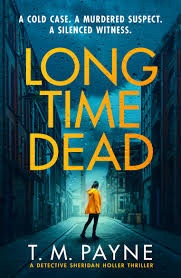
In Long Time Dead, an extra body shows up in a grave and it is identified as a man suspected of murdering a cop and grievously injuring a bystander seven years earlier. The investigation eventually falls to Detective Inspector Sheridan Holler. 

It was Chandler, I think, who conceived of his tales of gumshoes as updated versions of the stories of Knights Errant from Arthurian legend. So, whatever else was unclear in his mysteries, no matter how corrupt the world in which they ventured, one thing you could count on was that his shamus would endeavour to do the right thing, protecting the innocent and unmasking the guilty. 

TM Payne’s peeler protagonist in Long Time Dead is an inheritor of that tradition. While she may find the sort of defence barrister of which LJ Shepherd writes somewhat distasteful, she is still fundamentally decent and committed to the finding the truth. 

There is an echo of Payne’s book in Catriona King’s A Limited Justice. Like it, it is a police procedural – a type of crime novel for which I have a particular affection. 

Both have the bonus of being written by writers who know what they are talking about: Payne is a former cop; King has worked as a police forensic medical examiner. Both eschew the brooding detective for sympathetic professionals – the sort of people who you might actually like to work with. 

A Limited Justice begins with King’s investigator, Marco Craig, opening a probe into a particularly grisly killing on a Belfast garage forecourt. As with many of the Sherlock Holmes stories, as the investigation unfolds the story of the perpetrator and their motivation becomes as important as that of the investigators. Consequently, King is able to use her story to explore not just the crime itself, but contemporary Northern Ireland. As is typical of Northern Ireland the story is replete with black humour. 

Both King and Payne have founded book series based on their protagonists. It is easy to see why: both are appealing companions on the mean streets of the imagination, and King and Payne, like Minchin and Shepherd, are both very gifted writers. 

The Voyage Home, by Pat Barker

Summary: a fine novel of Cassandra that suffers in comparison with Barker’s initial foray into the stories of Troy

The Voyage Home continues Pat Barker’s feminist retelling of the tales of Troy, following the return of Agamemnon to Mycenae with the enslaved Cassandra in tow. This guarantees that the reunion with his wife Clytemnestra is going to be awkward. Just how awkward Agamemnon, even if he was a cleverer man, could not imagine.

But Cassandra, gifted with prophesy, but cursed that no one ever believes her, knows. In the bloodshed that she foresees she also discerns some measure of justice for the genocide that the Greeks have inflicted on her homeland. 

For this story, Barker replaces Briseis, the narrator of her previous Trojan books, with Ritsa, Cassandra’s maid: slave to a slave, or, as she describes her lowest of the low status, a “catch-fart.” 

The Voyage Home dealing with the beginning of the Oresteia, is, I think, a considerably better book than its predecessor, The Women of Troy. But neither of these books say much additional thematically to the stunning originator of this series, The Silence of the Girls.

Still, it is elegantly written, and Barker’s continuing focus on how war affects civilians and the sexual violence endured by women is important. In addition, Cassandra is always a compelling figure, and Ritsa is a fine creation. 

The Handmaid’s Tale, and The Testaments, by Margaret Atwood

Summary: “You tried to bury us, but we were seeds.”

When Margaret Atwood published The Handmaid’s Tale in 1985 it was quickly recognized as a classic. An all too believable dystopian thriller, it is set in a United States that has been transformed into a theocratic dictatorship of the sort imagined in the fevered dreams of the legions of Trump’s incel supporters. 

It is told in the first-person, recounting the experiences of a young woman enslaved under the name Offred as the mistress of a leader of that state, Gilead. Such mistresses are prized because environmental devastation has rendered so much of the population sterile and it is a chance for the elite to reproduce. 

The compelling world that Atwood created in this book, and the open-ended nature of its ending could have seduced a lesser writer into a commercially successful career with spin-offs and sequels galore. However, Atwood waited over 30 years before returning to this fictional universe. That is, she waited until she finally had something new to say about it. 

The Testaments has stylistic similarities to The Handmaid’s Tale, but this time with three first-person narrators, including Lydia, a former judge now an “Aunt” – an older woman tasked with helping Gilead oversee and control its young women. In her deepest conscience however, Lydia is part of the Resistance, and The Testaments tells the story of how she plots to strike a blow to the heart of the dictatorship. 

Both books are gripping, building considerable tension as the protagonists strive to assert some aspects of freedom and free will in the cause of a more moral future, and hence place their fates in the balance. Both books are also deeply satisfying complements to each other, with Offred’s grim struggle for survival given context by Lydia’s more strategic overview of the battlefield. 

Lydia doesn’t have a cat. But she is doubtless the stuff of JD Vance’s nightmares. Such a brilliant character was well worth the 30 year wait. 

Spent Light, by Lara Pawson

Summary: “It’s quite hard to describe really. To begin with, it’s about a toaster, but it ends up being about everything,” the Kirkdale Bookshop on Spent Light.

When, about 20 years ago, I first introduced my father to the televisual masterpiece that is The Wire, his stunned reaction to the first episode was, “I have never seen anything like that before.”

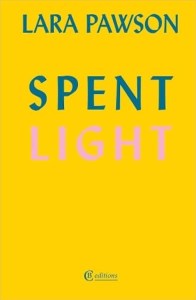
This memory came back to me, more than once, reading Lara Pawson’s extraordinary book, Spent Light, because I quite simply have never read anything like this before. 

From time to time it seemed to me almost like some other  things: Maybe the notebooks portions of Bruce Chatwin’s The Songlines? Or some of the (allegedly) imaginative passages in Anje Krog’s Country of My Skull? But in the end it is very much its own thing – intimate, funny, at times uncomfortable, occasionally horrific, wholly original. 

It is writing that has the intensity of poetry. And so perhaps the best way to describe Spent Light is as a series of linked autobiographical prose poems, starting with a toaster but in the end being about the whole world, as the Kirkdale Bookshop put it with such brilliant concision. Along the way, Lara touches upon love, war, squirrels, atrocities, and the joys of a good broom. 

I’ve known Lara since Angola where she was a journalist during that country’s brutal civil war. So, perhaps the only unsurprising thing about this book is that it is unsurprising that she wrote it. It is a work of genius. It should become recognised as a modern classic.