Sudan Stories II: Not Exactly a Getaway Car

Summary: second in a series of guest blogs from “Elphaba” on the ongoing war in Sudan

There was some great excitement in Singa this week as it was announced that many vehicles had been found and owners could bring proof of ownership and reclaim theirs. Ours was a battered, old, much-loved and very unreliable crate. She appeared to have some kind of sentience: working on a whim for some and not others. Opening and closing the windows was an act of will power (no winders that worked). But she had given great service carrying sheep, produce, people and everything in between for several years before she was taken at gun point last summer

A family member, Ax, went to see if she was there. He said the site was depressing. It was full of lines of metal shells, most with no wheels, broken windows and some with little or no innards. 

At the back of his mind in going to look for the vehicle, apart from the fact that it is “something to do” when daily routines are still restricted, was a potential to get her back “in case we need to run”. But then you are an easier target in car than on foot. Behind this is the reality that although our family are for the most part fine, there is a thin ice feeling.

On the 4th October a friend in El Obeid rang and we were delighted to hear all was well. The next day he rang to say that they had been bombarded with drones. Omderman has also been hit. Nothing is resolved. And South Sudan is still unravelling.

One of the fall-outs of the war coupled with climate change (I think) has been a steep increase in Dengue fever. We also hear disputed reports of cholera outbreaks. Now at the tail-end of the rains is the malaria season 

In the end we could not locate our vehicle. We laughed that she was never exactly a get away car, except in the sense that we seemed to get away with paying very little road tax over the years. In this seemingly endless war, the citizens who have lost most of what we think of as essentials are expected to pay significant amounts to reclaim their cars at a time that inflation in the costs of everyday needs, and the continuing devaluation of currency, bites. 
Hacks and Leadership

Summary: a not very funny rumination on a very funny tv show

Who wants to read about what the tv series Hacks has to say about leadership? Probably no one. But it has lessons on that subject area as important as those that Buffy and Angel teach on philosophy and morality. So here are a few thoughts.

If you haven’t seen Hacks yet, you are lucky. There are four seasons awaiting your delectation. However, like much writing about humour the following is not all that. Still, this is free to read. So tough.

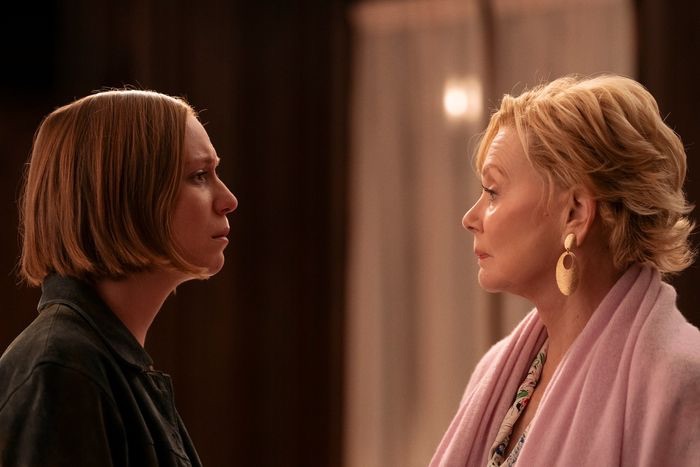
Hacks is about the borderline unhealthy relationship between a legendary comedian, Deborah Vance (played by the legendary Jean Smart) and her new writer, Ava Daniels (the very funny and genuinely admirable Hannah Einbinder). 

While the setting may be the glamourous world of showbusiness, fundamentally it is a workplace comedy. In the workplace that Deborah and Ava find themselves in by season 4 they represent archetypes of bad leadership: Deborah is imperious and ridiculously demanding, with no sense of workers’ rights and frequently forgetting that she has a duty to teach not just perform. Ava is well-meaning but so young she does not know what she does not know. In particular she has not quite grasped that her brilliance as a writer does not necessarily provide her with the knowledge and experience to be a professional leader. 

If you are in any way like me, this will immediately remind you of Lavina Greacen’s book, Chink, her biography of the Irish Second World War general Eric Dorman-Smith.

Just me?

Well, a central theme of that book was that leadership is a collective task, requiring at least two people to have any chance of working. 

This is something that the writers of Hacks also instinctively seem to understand. Neither Ava nor Deborah are necessarily people you would like to know in real life. But together they make each other better as people and as leaders. Of course, they have difficulty admitting this to each other – too much ego getting in the way. And they have even more difficulty realizing that there are others central to what success they have achieved, not least Jimmy, their self-effacing and under-appreciated manager (perhaps the real hero of the show?)

Maybe if they had read a few of Louise Penny’s Inspector Gamache novels they would know that they need to use more the four sentences that achieve wisdom: “I was wrong,” “I’m sorry,” “I don’t know,” and “I need help”. 

But they haven’t. Indeed, not enough people have. That is one of the reasons why there is so little wisdom and empathy among those responsible for leading in today’s world. It is also one of the reasons that moral leadership increasingly falls to the protests of artists like Hannah Einbinder and Kneecap, while so many more respectable pillars of society are silent as gravestones. 

All that aside, Hacks is one of the best portrayals of workplace politics since The Wire. And it’s bleeding funny.  Try it. 

Gerry McQuade

In memorium – February 2024

When we were discussing the funeral arrangements the other night, our Brian said to me, “You need to say something … something from Seamus Heaney.”

So, I suppose for my Da there can only be one Heaney poem, and that is “Whatever you say, say nothing.”

It’s not just that, as our Geraldine and Eilis will tell you, his mantra through life was “tell them nothing”, a habit developed, no doubt, growing up in mid-Armagh during some of the vilest years of this statelet, “besieged within the siege,” as Heaney put it. 

And, it’s not just because that poem is about the Troubles which overshadowed so many of our lives and shaped his politics. 

It is more that, I think, my father’s philosophy was to let your deeds, your life, speak for itself. 

We’ve gotten all sorts of very kind messages over the past couple of days from people my Da taught, telling us how much he affected their lives, how he gave them the confidence to become the people they are today. 

That was his politics: it was practical non-violence. In the face of state and paramilitary atrocities his response was not to meet like with like, but to teach kids to work hard, to do their sums and become in themselves the new Ireland for which we all hope and strive. 

Our father could barely speak English towards the end there. As the poem says, that voice of sanity really had grown hoarse. But it doesn’t matter now. Because we still have his life. 

His deeds live on in the kids he taught and in others who teach children to read even in these bleakest of days. 

And, no matter how little he would ever say about himself, or could say towards the end, those are things that truly do speak for themselves.