Anti-Slavery International remains a voice of moral courage in the world

Speech to Annual General Meeting of Anti-Slavery International, 2015

It is an honour and a pleasure to be here once again at Anti-Slavery’s Annual General Meeting, which I think must be our 176th.

imageThis past year in the UK much of the focus of our work has been on on the Modern Slavery Act, and the repercussions of that still occupy us. But it is worth remembering that when the government first published its draft bill it was straightforward criminal justice measure, and an underwhelming one at that. There was no mention of forced labour in business supply chains and nothing on victim protection, both ideas which the government was vocally contemptuous of at the outset. As a result of diligent work by Anti-Slavery staff with our allies in civil society and in parliament this was changed. But the positive measures that we and our allies pressed the government into including in that Act were but a portion of our achievements last year.

For example:

• we helped establish a new organisation exposing slavery and forced labour in Thailand, something for which Anti-Slavery has been very warmly recognised in the region;

• we were instrumental in the development of a law in Senegal providing the basis for State regulation of Qur’anic schools and prohibition of forced child begging;

• we expanded our Migrant Domestic Work Programme both to Bangladesh and India; and

• we published guidance for practitioners on trafficking for forced criminality.

This is a considerable breadth of achievement and the breadth of our work and ambition continues,

• ranging from our transparency in supply chains work emerging not only from our work on the Modern Slavery Act, but also from our continuing work to end child labour in cocoa supply chains in West Africa and from the light we helped shine on the slavery abuses in the Thai fishing industry; to

• our continuing work to help end bonded labour in India’s brick kilns, to

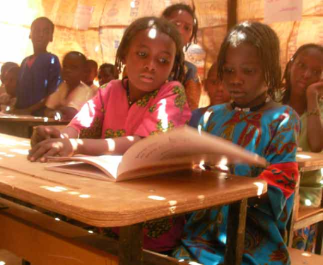
• our ongoing demonstrations in West Africa and Nepal of the importance of education as a means of breaking the transmission of slavery across generations.

These add to a body of achievements over the past five years that have included decisive contributions to changing national and international law, exposure of slavery across the world and empowerment of slavery affected communities.

I think it is worth reflecting upon this body of achievements, taken together, for a moment. First of all none of this would have been possible without the steadfast backing of the organisation by members and supporters over these years, and I would like to take the opportunity to convey my heartfelt thanks for this.

Second, as you will all be aware, these past five years have not been the easiest in Anti-Slavery’s history. Among other things this is because of the difficulties in the external environment, and because we have looked at a world in which millions of children, women and men are enslaved, we have found that unacceptable. So, rather than rest on our laurels, we have chosen to strive to do more to end it, something that brings with it more work, and increased struggle.

As our strategy makes plain, Anti-Slavery was founded to end slavery and we remain the vital organisation that is instrumental in doing that.

I recall when I was being interviewed for this job I mentioned how important I thought it was for poverty reduction that slavery should be eradicated. And this is an issue on which Anti-Slavery has been publicly campaigning since 2007. That it is now recognised as such in the Sustainable Development Goals is, I believe, a singular achievement and not one that would have been obtained without Anti-Slavery’s pressure through long years when we were a lone voice on the issue. As late as November 2013 I was being told by senior figures in some of the newer anti-slavery organisations that such a thing was unachievable.

And yet we achieved it.

Earlier this year I had the honour of being invited to speak at the annual gathering at Westminster Abbey in commemoration of Thomas Clarkson. It was a memorable occasion for me in that it brought together not just Clarkson’s relatives but also Buxtons and descendants of Wilberforce, with myself, and Reggie Norton and Klara Skrivankova representing Anti-Slavery.

It led me to reflect on the reasons we remember with warmth and admiration Clarkson, and Wilberforce, and Buxton, and Equiano, and Lincoln, and Morell, and Casement.

For example in the film The Ladykillers the filmmakers called the little old lady “Mrs Wilberforce” because they wanted the audience to understand that she represented the very best of British society.

But this belovedness was not always the case. The leaders in the struggle against slavery were hated by many in their day because of the choices they made to try to obtain a more just society: Clarkson’s life was threatened, Lincoln was assassinated; Morrell’s health was broken doing hard labour in prison; Casement was the last knight of the realm to be executed for high treason.

But the reason why we remember them still, the reason they were on the right side of history, is that they displayed that very rare quality of moral courage: they were prepared to stand alone in the face of the received political and economic wisdom and the prevailing social attitudes and pressures and put their names to the assertion that, “The world is unjust because humans have made it so. And if we make different moral and political choices, as we must do, that we can change that.”

Anti-Slavery continues to be that voice of moral courage in the contemporary world. That doesn’t always make us popular. It often demands hard choices and difficult decisions. But it is that moral courage that has led to the achievements that we have spoken of this evening and the ones that we will speak of in years to come.

Many of the vested interests who benefit from slavery across the world would love us to go away, or to acquiesce in the comforting myth that the only thing that is now needed to end slavery is for decent cops to lock up evil criminals.

But we cannot go away, we will not go away so long as slavery remains a blight on our human society because of the way humans with power have structured law and policy, nationally and internationally. We will continue to add our voice to those of our comrades across the world struggling to end slavery in their own countries and communities.

At the close of 2015 we can say we have forced the issue of slavery back onto the international development agenda. Now comes the hard part: turning that line in a UN document into a programme of international action.

So long as we endure our supporters and members can be confident that this is what we will be working for, no matter what obstacles are thrown in our path.

Torture, mass surveillance, and Dr Sheila Cassidy


Audacity to Believe, is Sheila Cassidy’s fine and moving memoir of her time as a young doctor working in Chile. During that time the US organised a bloody coup against the democratically elected president, Salvador Allende, which brought to power the despotism of Margaret Thatcher’s close friend, General Augusto Pinochet.

Cassidy was herself caught up in the terror that Pinochet unleashed upon his own country. After having treated a wounded rebel she was betrayed, arrested and tortured.

Cassidy is forensic in detailing what happened next, and her descriptions are chilling. She describes two sessions of electric shock torture to the most sensitive areas of her body. In the first session she made up a story about who put her in contact with the rebel she treated. Having wrung this story from her she was dressed and put in a car with the secret police who took her to check out her story. Having found it a farrago of lies they brought her back, stripped her naked again and resumed the torture. This time she broke and told her torturers everything they wanted to know.

There is a common practical, as opposed to moral, objection to torture, which is that, as Cassidy attested, a person being tortured will tell their torturer anything to get the torture to stop. So it is difficult to know what is true, and what is false. However as Pinochet was under no existential threat after he seized power the cowards and rapists of his secret police had plenty of time to check the stories of their thousands of victims and bring them back to the torture chambers if the original stories proved false.

In war, or under the proverbial ticking bomb situation where time is of the essence, it is considerably less likely that torturers would have the luxury to test the accounts of each of their victims. At least until now.

In his book The Finish, about the assassination of Osama Bin Laden, Mark Bowden provides some detail of how the information technology of US defence and intelligence services has advanced in the years since the slaughter of the 11th September attacks on the Twin Towers. The result of this is increased capacity for rapid analysis of data from mass surveillance and cross-checking of interrogations, including those obtained under torture. In other words we are moving into a world in which the intelligence and defence communities of the US, and much of NATO presumably, can render obsolete the practical objections to mass surveillance and torture.

 This is a distressing prospect for a number of reasons. As Mark Bowden has shown elsewhere, in his book Roadwork, the permitting of even limited provision for torture can lead to much wider acquiescence in it as a routine practice. This inevitably comes to ensnare the manifold innocent along with the fewer guilty, and can become a deep source of alienation from and resentment of the perpetrators. As the lessons of Abu Ghraib prison showed the violence of torture will inevitably give rise to the violence of insurrection, as torture not only corrodes the souls of the perpetrators and erodes any of their claims to moral superiority, but instills in its victims a burning desire for revenge.

We seem to be moving into a time when Orwell’s prediction of a permanent state of war is becoming true. In part this has arisen from a glib attitude amongst Western leaders towards war, an ignorance of the political contexts in which they have meddled and an abject failure to understand the political implications of the violence they have unleashed, which has included the incarceration, mistreatment and torture of thousands who have been swept up in these wars.

The erosion of practical constraints on torture increases the risk that in some future conflagration military and political leaders will be enticed by the promise of it delivering some easy tactical advantage. It is vital that they remember that one of the political implications of this form of violence is that it will sow dragon’s teeth that may blossom as armed men in years to come.

Dictator, by Robert Harris

 Dictator is the final volume in Robert Harris’ fictionalised three-volume biography of Cicero, covering the years up to his death and with it that of the Roman Republic.

Cicero did have a biography written by his secretary Tiro, the inventor of one of the first systems of short-hand which still echoes into contemporary English, for example, e.g. Fortunately for Harris, that biography has been lost to history, so he has constructed his own trilogy as if it were Tiro’s biography of Cicero, with Tiro as narrator.

As with the previous two volumes of the trilogy, Imperium and Lustrum dealing with earlier phases in Cicero’s career, Dictator is a gripping political thriller, covering the period from Cicero’s exile to the downfall of the Republic with the establishment of the second triumvirate of Antony, Lepidus and Octavian.

 Contrary to Goldsworthy’s Caesar, or Massie’s fictionalised accounts of the period, with Harris Cicero is presented as a hero, albeit a flawed one, a proponent of rule of law against arbitrary and tyrannical rule in spite of personal threats and the moral cowardice of his contemporaries.

Unlike Goldsworthy who typically tries to explain his subjects in the contexts of their own time, Harris deliberately seeks parallels with the present. Here he presents a warning for a polity that disdains basic principles of rule of law.

But, Harris does not allow the vital political-philosophical points to interrupt the narrative, which is gripping, as Cicero with only logic and argument in the face of shocking violence seeks to maintain constitutional principles in the face of the vanity of warlords.

The result is a fine political thriller, with much to recommend it for the student of the ancient world.

The UK Modern Slavery Act and the continuing constraints on forced labour eradication

The first thing to say is that the Modern Slavery Act is a decent law with some very important provisions: the measures on victim protection, particularly of children, and the transparency in supply chain clause both represent significant steps forward in government understanding of and action on combating the realities of contemporary slavery.

Of course, as with any law or policy, particularly anti-slavery measures across the world, the challenge is in implementation. And this is where it gets difficult, because, of course, this law does not exist in isolation but in the wider context of national and international law and policy.

Slavery occurs at the conjunction of three factors: individual vulnerability, usually, but not exclusively as a result of poverty; social exclusion; and failure of rule of law. So it is a truism to say that anyone can be enslaved. Generally speaking those who are enslaved are poor people who come from communities that the wider society does not particularly like: Dalits and Adavasi in South Asia, for example, or migrants in Europe.

Understanding that, we see that the cataclysm of war that the West has exported to the Middle East has rendered millions more people, both in the camps and those who have made it to the shores of Europe, vulnerable to slavery. It matters not that the government has spent much of the summer disingenuously describing the phenomenon of refugee flight as trafficking. It is the failure of Europe to establish safe migration routes in the context of a coherent humanitarian and security policy that renders these people vulnerable to slavery, not those in Libya or Turkey who cynically rent or sell those refugees dangerous boats. And let me remind everyone, safe legal migration routes are strategies to prevent trafficking. It is lack of safe migration routes to the gulf states that presents us with the prospect of seeing the 2022 World Cup in Qatar brought to us by the enslavement of tens of thousands of South Asian migrant workers and the manslaughter of thousands more. Qatar front page

The risks are of course exacerbated by the rising tide of xenophobic rhetoric that is being bandied about in this country and in other parts of Europe. I may be idealistic but I still believe it is the duty of politicians to demonstrate moral courage in leadership, not to pander to the prejudices of the ignorant. That path leads only to rising tides of hatred which, in turn, make it easier for traffickers to enslave and exploit vulnerable migrant workers, secure in the knowledge that national political leaders in the countries in which traffickers operate have told their compatriots to resent and fear migrants as sources of all their woes.

And these are not the only obstacles that the effective national anti-slavery strategy in the UK faces.

domestic worker protestThere is of course the Overseas Domestic Worker visa which in remains a government-issued license for trafficking for domestic servitude to the UK.

Then there is limited labour inspection in the UK with the remit of the Gangmasters’ Licensing Authority restricted to food and agriculture, with other risky industries such as construction, catering, cleaning, hospitality, care and, of course, and perhaps most seriously, domestic work, uninspected. Even with the guidance of the Modern Slavery Act it is difficult to see how the police can compensate for this lack of inspection, when, apart from a few outstanding specialist units, they lack a culture of slavery awareness.

And, even if they had one, it is difficult to see how they will fulfil all the anti-slavery expectations of the government given the prospect of eye-watering cuts to the police that we are being warned about.

The conflation of labour inspection and immigration patrols that is being mooted around the new UK Immigration bill threatens to worsen the situation even further. Such an arrangement would effectively break trust between potential victims of crime and the inspectors who, if the history of the UK Borders Agency involvement in anti-trafficking work is anything to go by, would prioritise the deportation of trafficking victims, who would also, by the way be witnesses to crime, over their recognition, protection and rehabilitation.

It is in this context that we should also understand the government’s antipathy to the Human Rights Act and the European Court of Human Rights. Nothing upsets the PR bandwagon like a judgement against a country for failure in its human rights obligations. In the past the UK has been held to account in the Court over its failures in anti-slavery law and policy, notably the case of CN versus the United Kingdom in 2012. Given some of the wrong-headedness of UK policy relating to slavery, even with the Modern Slavery Act on the statue books, I would anticipate it will be held to account again if it remains subject to its jurisdiction.

But while it may feel politically expedient to evade this possibility the UK pulling out of the Court will be a signal to other countries, with less robust institutions and shallower human rights traditions, that the UK, one of the moving forces behind the Council of Europe, itself a legacy of Winston Churchill’s vision, now regards key ideals of international rule of law as optional. In such a future mistaken, ill-advised, racist or just plain stupid government behaviour across Europe on the issue of slavery in particular, and human rights in general, could go unchecked if other countries follow the UK’s example.

The government will of course counter that a British Bill of Rights will provide proper protections, at least to people living here. But cuts to legal aid will make into a forlorn hope any recourse to the courts for remedy in the face of bureaucratic incompetence or official indifference.

The UN Guiding Principles on Business and Human Rights argue that businesses have the responsibility to respect human rights and that governments have the responsibility to protect them. It is of course difficult for business to respect the rights of workers if governments are not doing their job of protecting them. This was a matter that compelled UK businesses to seek the transparency in supply chain clause in the Act. I hope that the reports of businesses will not limit themselves to accounts of the management measures they have introduced in order to counter risks of trafficking in their supply chains. I hope the reports will also, as I have attempted to do here, enumerate the law and policy failings in the states in which they are working that increase risks of human trafficking. Because it is a fundamental truth of contemporary politics that the voice of business carries greater weight than that of conscience. With that great power comes a responsibility for business to use its voice to help set out the laws, policies and practices that are necessary to eliminate slavery in their supply chains and, ultimately, in the world.

This goes to the heart of the matter. The elimination of slavery is a political issue. It is not a simple criminal justice challenge or a matter that can be resolved by giving material things, like mosquito nets or vaccines, to people who don’t have things. Those who are enslaved are excluded from power in part so they can be enslaved. So in addition to the national and European issues of government policy and law that I have set out that are essential to effective anti-slavery practice domestically, there are a range of measures in diplomacy and international education, aid and trade policy that are necessary if the UK is to truly provide a leading voice in the struggle against slavery in the world today.

The Modern Slavery Act is an important measure and let me it is a tribute to the good work of Karen Bradley, the minister responsible for bringing this law into existence. I hope people of conscience in the government, in parliament and beyond will recognise this and work to build a more comprehensive anti-slavery system rather than dismantle the foundations that have barely been laid.

Which side are you on? Ending caste-based apartheid in South Asia to end poverty

Manual scavengers in South Asia are Dalits enslaved to clean up other people's shit Manual scavengers in South Asia are Dalits enslaved to clean up other people’s shit

The issue of caste based discrimination is fundamental to the wider question of slavery eradication: it is technically true that anyone can be enslaved, particularly if they are caught up in the cataclysms of war. But that truism masks a more fundamental truth: that the weak who are subject to the prejudices of others are the ones who are vastly more at risk of enslavement: migrants in Western Europe and the Americas; women and children everywhere; Dalits and Adavasi in South Asia.

South Asian apartheid based on caste has provoked surprisingly little international fury over decades in comparison to the more infamous South African version. Both systems confer economic advantage to some based on the human rights abuses of millions of other human beings. But, in comparison to South African apartheid, the South Asian variety is considerably less renowned in significant part because it is less well understood. The ignorance of the rest of the world insulates it from the anger that it should provoke. And we in the North are rewarded for that ignorance with lucrative trade deals many involving forced labour using industries providing cheap goods and commodities to our high streets. For example it is still probable that everyone reading this in the global North is wearing at least one garment that has been tainted with the forced labour of Dalit and Adavasi girls and young women.

So it may be understandable why the bulk of citizens are ignorant of these issues and so have not raised their voices in protest at caste based apartheid in South Asia. But it is not excusable that development and anti-poverty organisations remain so circumspect. There are honourable exceptions of course such as Christian Aid and Action Aid, but the disinterest of the wider community is striking.

Brick kilns across northern India, Pakistan and Nepal enslave Dalit men, women and children to work in them Brick kilns across northern India, Pakistan and Nepal enslave Dalit men, women and children to work in them

I would contend that the blissful ignorance of this issue that many anti-poverty and development organisations affect will prove less tolerable over the coming years. The Sustainable Development Goals, while not explicit on the issue of caste, are explicit in their recognition of the importance of inclusivity to achieve effective development and the need for slavery-eradication in order to obtain poverty reduction and a sustainable economy. National and international NGOs alike must recognise that both these Goals imply that poverty reduction is a political issue requiring fundamental changes in the contemporary status quo. As such they bump up against the prejudices and pretensions of the privileged, most significant the caste based prejudices of the elites of South Asia with the resultant consequences for hundreds of millions of the world’s poorest people.

Unless we recognise these political dynamics at play in our contemporary world we will never grasp the sort of political pressures and processes that will be necessary to change the laws, policies and customs that are still used to subjugate others.

The Kafala system of the Arabian peninsula, which provides employers there the right to unilaterally change terms and conditions of employees, and prevents employees from changing employers or even returning home, is used to provide the legal basis for the enslavement of South Asian migrants. It positively rewards political elites who indulge their prejudices against South Asian migrant workers by enslaving them, including for the World Cup construction in Qatar. In South Asia itself the rule of law does not extend to hundreds of millions of Dalits and Adivasi and hence the powerful are able to enslave them with impunity.

Different political economic models are unappealing to the elites in these situations because they would involve treating those they disdain with decency and recognition of our common humanity.

So changing these political economies requires national and international political pressure. And yet Qatar and Dubai remain valued trading partners with Europe. And the United Kingdom so values its relationship with Saudi Arabia that it doesn’t allow its enthusiasm for the enslavement of migrant workers, its creation and sponsorship of DAESH, the Islamic State, its addiction to the decapitation of human beings, or its intent to crucify a child who protested in favour of democracy, to prevent it from supporting Saudi Arabia’s membership of the UN Human Rights Council. Though to be fair that is perhaps only the second most damaging thing the UK has done to the ideals of human rights and the principles of rule of law in recent years. Its declared intent to repudiate the Human Rights Act and the European Court of Human Rights brings an even more existential threat to the concept of international rule of law.

Furthermore the discussions of India’s permanent membership of the UN Security Council seems untroubled by that country’s high toleration of caste-based violence, its shortcomings in relation to rule of law, and its paltry efforts to end slavery within its own borders or for its citizens overseas.

Dr Ambedkar Dr Ambedkar

Dr Ambedkar noted that “History shows us that where ethics and economics come in conflict, victory is always with economics. Vested interests have never been known to have willingly divested themselves unless there was sufficient force to compel them.
International repudiation was fundamental in bringing political change in South Africa. And yet when the present-day counterparts of Verweod and Voster attend the assemblies of the international institutions that were founded to uphold the principles of human rights and rule of law they are greeted with a warm embrace rather than a cold shoulder.

Since the days of Sparta the privileged have conspired to keep power out of the hands of the helots. That process continues to this day.

But it won’t continue forever. The Irish playwright Brian Friel noted the inevitability of the mounting tide of resistance in his play Freedom of the City. In it a civil rights activist describes the process when ordinary people, the oppressed of a given society, decide enough is enough: “you know your children are caught in the same morass.[But] for the first time in your life you grumbled, and someone else grumbled, and someone else, and you heard each other, and became aware that there were hundreds, thousands, millions of us, all over the world, and in a vague groping way you were outraged.”

That process of outrage has already begun. The development community needs to decide which side it is on. Political leaders need to decide which side they are on. Technocratic responses to poverty, the attempt to transfer things to people who do not have things can never succeed if the reasons that people don’t have things in the first place is because they are prevented from having them by political systems constructed by the elites of their societies.

Instead hard political work is needed to confront the edifices of injustice that are meant to keep those on the bottom where those on top deign the should be. There is a need for a renewed focus on developing partnerships with civil society to empower alienated communities, conducting research and investigation to expose injustice and confront those responsible, begining dialogue and collaborations with trades unions, businesses as well as civil society that are necessary to shift power into the hands of those who have been excluded from power.

The struggle of the helots, the Dalits, the migrants, the outcasts continues. And, unless we properly understand that, irrespective of what we try to do or how we try to do it, we are fated to become part of that most accursed community in human history and society – the well-meaning.

The prospects and perils of quantification: Global Forced Labour Estimates and the Sustainable Development Goals

Symposium on Forced Labour Research, Sheffield University

8 Oct 2015

I don’t think it will be a surprise to anyone that since I was asked to speak here I’ve been thinking a lot about the number 42.

42 is, as Douglas Adams reminded us, the answer to the ultimate question of life, the universe and everything.

It is an absurd notion, but Adams was getting at an important point with his tales of Deep Thought in the Hitchhikers’ Guide to the Galaxy. He was getting at that belief in large parts of the modern world that the only things that matter are the quantifiable ones. It’s part of the discourse that poverty reduction in general, and slavery eradication in particular, are technocratic challenges which merely require the rational thought of the clever and the largesse of the rich to fix.

But, of course most of the things that matter in life, the universe and everything cannot be quantified, or are things for which numbers are merely crude metaphors. How do you quantify love? Or the experience of watching a sunrise in the Ethiopian highlands or dolphins dancing off the coast of Angola? Or the pleasure of a fine wine and cake?

Or the level of contempt that one person can have for another human being that allows them to calmly contemplate working them to death?

Non-quantifiable questions about non-rational issues, are at the heart of the practice of slavery. In particular the questions of discrimination and the dehumanisation of other people are fundamental to slavery.

It is technically true that anyone can be enslaved, particularly if they are caught up in the cataclysms of war. But that truism masks a more fundamental truth: that the weak who are subject to the prejudices of others are the ones who are vastly more at risk of enslavement: Dalits and Adavasi in South Asia; migrants in Western Europe and the Americas; women and children everywhere.

So given the topic of this roundtable, my question is: how can one obtain insight into any of these issues with quantitative methods?

Of course there is a need to quantify the scale of slavery in the world, to help plan responses and assess progress. But knowing the numbers does not allow one to understand the reasons why people are enslaved nor how their enslavement may be ended.

Anyone who has done any reading in the social sciences will be aware of the sort of profound insight that quantitative methods can provide. But it needs particularly skilled and focused researchers gifted with exceptional acuity in the framing of questions. I suspect we may be some way off a sufficiently widespread understanding of the generalities of contemporary slavery and the specifics of its national and cultural manifestations before such research practice can come into its own.

So, as a general rule I would argue that, even though quantity has its own quality, increased qualitative research is more vitally required for the understanding of the root causes of slavery and the political and social remedies to the problems.

Qualitative and historical studies have shown us that effective anti-slavery action still requires the elimination of underlying discrimination practices and empowerment of those vulnerable to slavery. It has shown us the importance of provision of high quality and appropriate education to children vulnerable to slavery. It has shown us the importance of unionisation as a means to rebalance the power between exploited workers and employers. It has shown us how combinations of governmental cynicism and ineptitude contribute to the endangering of vulnerable workers both in their home countries and when they travel in search of decent work.

That is not to say the qualitative research is a silver bullet. In spite of much qualitative research, including that conducted by the Anti-Trafficking Monitoring Group which Anti-Slavery leads, the British Conservative Government remains thoroughly convinced that the principle cause of slavery in the UK is evil organised criminal masterminds, and have proven remarkably resistant to the notions that their Overseas Domestic Worker visa, their lack of labour inspection within risky industries such as construction, and their police cuts have anything to do with the problem.

This brings me to another point. The ending of slavery is a political challenge. Or rather it is a bundle of national and international political challenges. And these political challenges bump up against the prejudices and pretensions of the privileged,, who since the days of Sparta have conspired to keep power out of the hands of the helots. Thus it is. Thus has it always been.

And, as with the British government’s notions of why there is slavery in the UK, these prejudices are deeply resistant to erosion by mere facts. Economic agency theory suggests that humans will always act to maximise their material benefit. But when Hamilton tried to establish a slavery-free economy in the US in the 1790s and when Lincoln tried compensated emancipation at the outset of his presidency, both failed to end slavery in spite of the economic benefits they promised to slave holders. The American Plantocracy were so wedded to their aristocratic privilege that their status gave them, they found it something that mere economic wealth could not compensate them for.

We see similar issues today when we carefully consider slavery across the world. In the Arabian peninsula the Kafala system provides the legal basis by which the elites can obtain economic benefit by indulging their prejudices against South Asian migrant workers by enslaving them. In South Asia the rule of law does not extend to the hundreds of millions of Dalits and Adivasi who live there and hence the powerful are able to enslave them with impunity. Different political economic models are unappealing to the elites in these situations because they would involve treating those they disdain with decency and recognition of our common humanity.

The increased complexity of the Sustainable Development Goals over the Millennium Goals, and their rooting in human rights standards hopefully will help us move on from that limited technocratic discourse.

This technocratic approach to slavery seems to me at the moment to be leading to a fixation upon a search for a menu of technical options which only require money to be plugged into in order to achieve change. Such an approach is chimeric. It can never replace the hard political work, the partnerships and community development, the research and investigations, the exposes and confrontations, the dialogue and collaborations, that is necessary to shift power into the hands of those who have been excluded from power.

In the end, I would suggest, that the visceral is as important as the rational: which side are you on? The struggle of the helots, the Dalits, the migrants, the outcasts continues. And, unless we properly understand that, irrespective of what we try to do or how we try to do it, we are fated to become part of that most accursed community in human history and society – the well-meaning.

The Cold Dish, by Craig Johnston (Walt Longmire #1)

Walt Longmire is a mess. Three years widowed, he lives out of cardboard boxes in the house he half-completed with his wife. And he is marking time until his term finishes in his job, sheriff of Absaroka County in Wyoming, Cheyenne Country.  

Fortunately for Walt, his friend Henry Standing Bear decides to take him in hand and help him get his life back together. This happens just as the body of a kid, Cody Pritchard, shows up dead, killed by a gunshot that could, maybe, have been the result of a hunting accident. But when the death is recognised as no hunting accident a further problem arises: the abundance of folk who had a motive to kill the wastrel, a convicted and unrepentant rapist of a young Cheyenne girl, who got away without serving much time because of his youth. Furthermore, as the Cheyenne girl in question is Henry’s niece, and the gunshot in question was one that only maybe half a dozen folk in Absaroka County, including Henry, could manage, Walt has to start considering, reluctantly, just how well he knows his friend.

The Cold Dish is about a lot of things, not just murder and investigation. It is about depression and ageing. It’s about the relationships between the Native American and settler communities in the West. It’s about friendship and spirituality. It’s about the legacies of the conquest of the Cheyenne and their dogged resistance. And its about revenge, the dish best served cold, or not served at all maybe.

Along with Walt and Henry the cast of characters in the book are particularly well drawn and there is great warmth and humour in the midst of the bitter winter vistas in which much of the action takes place. It is a potent combination of narrative, reflection and character that has made the Longmire series such a success. Once visited, it is difficult to imagine not wanting to return to Absaroka County.

How to end slavery, forced and child labour as part of the Sustainable Development Goals: Remarks to “Alliance 8.7” consultation meeting

imageIt’s a considerable achievement that the Sustainable Development Goals now contain an explicit reference to slavery, forced and child labour.

The absence of this issue from the Millennium Development Goals was a travesty, and the consequences of that are highlighted by the number 5.5 million. 5.5 million is the ILO’s most recent estimate, made in 2012, of the number of children in slavery. It is the same as the ILO’s estimate of the number of children in slavery in 2005

In other words, in spite of all the real progress on poverty reduction and development, including a huge fall in the overall numbers of child labourers, during this period international development has completely passed by the millions of children and, for that matter, the tens of millions more adults in slavery across the world.

So the inclusion of slavery eradication in the Sustainable Development Goals is therefore highly significant. It is a recognition by the international community that it has until now comprehensively ignored some of the people in greatest poverty across the globe. But for this recognition to have practical meaning, it must be translated from a sentence in a United Nations pronouncement to a strategy that puts power into the hands of the excluded.

Because one thing that the struggle against slavery puts into the sharpest of focus is that poverty is not merely about a lack of things, but more fundamentally about a lack of power. This remains true in spite of some of the more recent philanthropic discourses on poverty which treat it not even as an economic issue but a technocratic one.

Slavery is one of the most political of development and poverty issues. Those who are enslaved are drawn from communities which are systematically excluded from power to enable their control by those who are more privileged. They include Dalits and Adivasi in South Asia, migrants in Europe, the Middle East, the Americas, South East Asia and West Africa, and children everywhere, .

Prejudice and discrimination against certain groups on arbitrary bases such as caste, ethnicity, gender and religion is still frequently used as a basis upon which the more powerful exclude the more vulnerable from the processes of development. By doing so those same mechanisms of social exclusion also render those discriminated against more vulnerable to slavery.

Development and humanitarian practitioners have barely even been aware of these dynamics and so have failed to address them. If those who call ourselves anti-slavery activists also ignore the fundamentally political nature of these challenges then we too will fail in the imperatives placed upon us by our mandates.

So this is where it gets difficult.

The majority of the underlying causes of slavery are profoundly political and fraught with contention by vested interests which are quite happy with the way the world currently is. Many new entrants to the struggle against slavery are content to see this struggle as merely a matter of locking up evil people by decent police. They are unconcerned with the altogether more contentious questions that underpin the reality of contemporary slavery, such as state-acquiescence in caste-based discrimination, the toleration of child marriage, undermining of rule of national and international law, the failure to establish safe migration routes for vulnerable workers seeking decent work, or the decriminalised international trade in slavery produced goods and services.

For example if the international community is serious in its efforts against slavery how can we continue to acquiesce in the ready access to international markets and warm inclusion to the international polity of Uzbekistan and Qatar, to name but two states, which, with differing degrees of cynicism, have effectively legalised slavery in within their borders.

Or, in spite of its recent casting of itself as a global leader against slavery it is unlikely that the UK has for a moment considered the potential impact that its naked disdain for the European Court of Human Rights will have on the rule of international law in general and as it relates to slavery in particular: that court has been vital since 2000 in forcing governments across Europe, including the UK, to properly respect the rights of victims of slavery. Any credible international struggle against slavery must therefore confront the British government on this, one of their most cherished political prejudices.

And, another political issue: should India be made a permanent member of the UN Security Council while its toleration of caste-based violence is so high, and its efforts to end slavery are so paltry?

So to advance Target 8.7 requires a new concentration of effort that draws in not only traditional ILO partners but also the entire development and humanitarian sector on this issue, recognising that tackling slavery is a fundamental political and development issue and one that is not solely the preserve of law enforcement professionals. Frequently, such as in the brick kilns and quarries of South Asia, it is openly practiced. Therefore there should be a requirement of every credible development and humanitarian agency to consider if they could contribute towards the reduction of slavery and child labour within every community with which they work. This may not always be possible. But asking the question, and considering carefully the dynamics of power and discrimination could lead to empowerment of some who would previously have been overlooked.

Second, there should be much more conscious focus by in development and humanitarian programmes on diminishing the vulnerability to slavery of those communities. For example, ensuring that the children, particularly the daughters, of brick kiln workers and manual scavengers in South Asia have access to proper education, could help break the transmission of slavery across generations. And ensuring that the curriculum promotes human rights, in particular those of girls, and toleration for all would help erode the prejudices that permit human beings to enslave and exploit others.

Aid programmes must work to advance the rule of law by building the capacity of the courts and law enforcement agencies, so that anti-slavery laws can be upheld rather than regarded as mere suggestions to the elites who continue to be able to exploit people with impunity.

Beyond the development and humanitarian sectors the issue of slavery must become a centrepiece of diplomacy, trade and migration policy. In particular there is a need for a clear recognition of the brutal reality that tied visas are de facto licences for trafficking across the world.

This Alliance is vital if we are to obtain progress on Target 8.7. But to do so we must tackle this issue directly, holding each other to account and not merely tinker at the edges with approaches which never confront many of the most powerful who maintain the systems of slavery.

Jack Kennedy: Elusive Hero, by Chris Matthews

 Jack Kennedy said the reason that people read biography is to answer the question, “What was he like?” With this fine biography Chris Matthews tries to answer this basic question about JFK himself.

The result is an affectionate, though clear-sighted, biography of Kennedy charting his path from sickly second son of Joseph Kennedy Senior, to President of the United States. It is a short book, only 400 pages or so with equal weight to each chapter of his life, from his childhood to his presidency.

There are many bad things one can say about JFK, from his almost pathological womanising and frequently callous treatment of his wife, Jackie, to his stupid decision to support an invasion of Cuba at the Bay of Pigs, to his escalation of the US involvement in Vietnam and his acquiescence in the coup against, and assassination of, South Vietnamese President Diem.

 And yet… even when all this is considered there is a greatness about Kennedy which even the most damning assessments of him cannot deny. From his earliest days he displayed an extraordinary indomitability of spirit:  when his life was threatened by ill-health; when his PT boat was sunk by a Japanese ship and he displayed enormous fortitude in saving his crew; in his post war efforts in politics; and finally to his election to the Presidency. As President he showed himself on the right side of history and progress more often than not, introducing an economic stimulus to reduce unemployment, bringing the weight of the Presidency to bear in support of civil rights, and in a sustained focus on a nuclear test ban treaty as a first step in de-escalation of the arms race.

But Jack Kennedy’s historical greatness would be guaranteed by one thing: his comportment during the Cuban Missiles Crisis. As Bobby Kennedy noted, “if any one of half a dozen [others] were President the world would have been very likely plunged into catastrophic war,” a war that would have ended humanity.

 During this crisis, Kennedy faced down the hawks amongst his own advisers, rejecting their advice to immediately attack Cuba in favour of a more cautious naval blockade of the island. It has subsequently emerged that had he followed that advice it would have precipitated a nuclear war. As a result Jack Kennedy, the junior naval officer from the Pacific theatre of the Second World War, proved Clemenceau’s dictum, “War is too important to be left to the generals.”

Jack Kennedy saved the world. Shortly after the forces of reaction had him killed and then conspired to assassinate his character and historical achievements. But still there is this, as Chris Matthews puts it, “In the time of our greatest peril, at the moment of ultimate judgement, an American president kept us from the brink, saved us really, kept the smile from being stricken from the planet. He did that. He, Jack Kennedy.”

David Cameron and the Refugee Crisis: lousy humanitarian policy and a dearth of moral courage

 I spent five years during the Angolan Civil War working with colleagues to keep a quarter of a million war displaced people alive across the central highlands of that country.

Our work had no impact whatsoever on the underlying causes of those people’s displacement. The cause was the war which arose from a complex mix of a legacy of the trans-Atlantic slave trade, Cold War geo-politics, regional rivalries, and local personalities, not least the extraordinary psychosis of Jonas Savimbi, the leader of the Angolan rebels. But while we could never have claimed to have contributed to bringing peace what we did ensured that more people survived the violence into its messy and corrupt aftermath in one of Africa’s most beautiful countries.

This is true for every war-related humanitarian emergency. The refugee crisis in the Mediterranean arises from similarly complex causes including the geo-politics of oil, a stupid and illegal invasion of Iraq, regional rivalries between Shia and Sunni, and the bitter lunacy of the DAESH partisans.

The resolution of this violence may take decades. Those involved in humanitarian response will merely try to stanch the bleeding, literally and figuratively, until some settlement can be reached which will end the civilian population displacements.

That is the truth of it in my experience: that effective responses to humanitarian crises must have immediate, medium and long term aspects addressing both the symptoms and causes of the crisis. It is also something that David Cameron should understand from the UK’s engagement with diverse emergency responses during his premiership.

And yet his statement on the 2 Sept did not put me in mind of a statesman wrestling with the complexities of a multi-national humanitarian disaster. Rather I was reminded of an observation, I think by Milan Kundera, that novelists tell the truth with lies and politicians tell lies with the truth. Cameron’s glib comment that, “I don’t think there is an answer that can be achieved simply by taking more and more refugees,” struck me as a stark example of Kundera’s insight.

Of course taking in refugees would no more solve the crisis in the Mediterranean than digging latrines in the displaced camps of Angola brought peace to that country. Giving refuge to desperate human beings has never and could never solve any underlying problem that has caused any war that has forced any population displacement anywhere in the world. That is not its purpose.

The purpose of giving asylum is to preserve people’s lives until the protracted process of ending war can be achieved and some measure of security established to allow civilians to return home. That should be something we understand as Europeans with our collective memory of the convulsions of the Second World War. Without such basic humanitarian measures the death toll of war and humanitarian crises would be much higher.

That is something that David Cameron should also know from that historical perspective as well as the humanitarian one. If he does not know this by now he should not be Prime Minister.

The proximity of the bloodshed of the Mediterranean to Europe imposes different responsibilities on the nations of Europe that are unlike our responsibilities in crises in other parts of the world. No amount of disingeniuity on the part of David Cameron or his fellow travellers changes that. The immediate challenges of this crisis require establishment of safe migration routes into Europe, a fair sharing of the responsibility for resettlement of refugees across the nations of Europe, and, as Germany has already done, suspension of the Dublin Agreement.

If Cameron and the UK government do not face up to the immediate term necessities of this refugee crisis then he may continue to congratulate himself on his clever manipulation of the facts and smooth media obfuscations. But history will be much more clear sighted. Its verdict, on his failure of moral courage at this moment of truth, will be damning.