A Thread of Violence, by Mark O’Connell

Summary: I would be more forgiving of this book if there had been more about Bridie and Donal in it.

I worked with a lot of Irish nurses in Ethiopia and Angola. They were a tough, sexy bunch, ruthlessly professional and deeply committed to social justice. (The character of Sophia in my novels The Undiscovered Country and Some Service to the State was modeled in no small part on some of them.)

As a professional group, certainly as an Irish professional group, they have probably done more than any others to make the world a better place. 

I imagine Bridie Gargan must have been quite like them. A 27 year old in 1982 she was already making the world a better place working as a nurse. Having just finished a long shift one day she decided to reward herself on her way home with a spot of sunbathing in Dublin’s Phoenix Park. It was there she had the misfortune of encountering Malcolm Macarthur, who proceeded to beat her to death with a hammer. 

After Bridie, Macarthur went on to kill Donal Dunne, a farmer, with his own shotgun. It seems that these killings were part of a half-baked plan that he had to commit an armed robbery to replenish his finances after he had squandered an inheritance. Macarthur was such a wastrel that he simply could not contemplate working for a living. 

Having finished it, I am left with very mixed feelings about A Thread of Violence, Mark O’Connell’s account of a protracted series of meetings that he had with Macarthur following his release on licence for the murders of Bridie and Donal. O’Connell had set himself the task of trying to get to the bottom of what motivated Macarthur to such grotesque violence. 

It is a beautifully written book, and it is important, I believe, to try to understand violence to better prevent it. But in the end O’Connell adds little illumination to these dreadful events and he admits that he never did get to the bottom of the question of motivation. 

So, what justifies this literary treatment of Macarthur, a worthless man who has led a worse than worthless life? I am left feeling not much, particularly as O’Connell writes so little about Bridie and Donal who barely feature in this book other than as victims. O’Connell missed the opportunity, in my view, to show how these much more consequential people deserve more attention than their self-important killer.

I can understand how O’Connell, as a working writer doubtless with a contract to fulfil, must have felt he had to write something in spite of his admitted failure to achieve his aim. But I am sad to say that I do not think this book adds much to human understanding. 

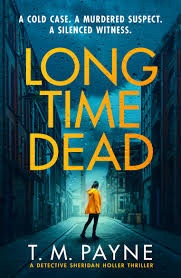
A roundup of Unusual Suspects: Isolation Island, by Louise Minchin; The Trials of Lila Dalton, by L J Shepherd; Long Time Dead, by T M Payne; A Limited Justice, by Catriona King.

Summary: books that it would be criminal to overlook!

I once met a woman who had given her newborn daughter the second name of “Danger” just so when she was older she would be able to say, like the heroine of a 1930s movie, “Danger is my middle name!”,

There is a strong hint of such movie heroines in Lauren, the investigative journalist protagonist of Louise Minchin’s Isolation Island

Minchin uses her experience of journalism and having been a contestant on the storm ravaged set of “I’m a Celebrity, get me out of here!” to craft a fun, Agatha Christie inspired, tale of murder amongst game show contestants. 

Minchin brings a lovely devilment to her tale, fattening up the despicable before despatching them while Lauren desperately tries to unearth the evil genius behind the mayhem.  

Minchin has described her heroine as being braver than herself. That may or may not be true – Minchin is also a triathlete and having done one myself I can attest that those are daunting things. But, perhaps as importantly Lauren is driven by a sense of journalistic ethics and a conviction of the importance of truth, which must be Minchin’s own. 

In a time of in which even genocide is being made undiscussable, it is important to be reminded that some truths, no matter how inconvenient, must be spoken. 

On the opening page of The Trials of Lila Dalton, the titular Lila, a barrister it seems, stands up in court with no knowledge of how she got there, but with a client to defend. LJ Shepherd, the author, a barrister herself, describes her book as an “ontological mystery”. That is, not only does her protagonist have to get to the bottom of the facts of her case – the defence of a man accused of a bombing atrocity – but also work out who the hell she is and what she is doing there. 

Shepherd’s is an entertaining and intriguing story. I am not sure that it really required the reality questioning elements as the issues she deals with – the importance of the right to a defence in a criminal trial no matter how seemingly heinous the accused, and the question of how democratic societies protect themselves from violent assaults by those who do not share their values – are important enough.

These quibbles aside, the quality of Shepherd’s writing is exceptional, particularly when describing the treating of casualties in the aftermath of an explosion: these recalled for me some of the accounts of the survivors of the Rana Plaza collapse in Bangladesh. In this Shepherd does that most difficult of things: she forces the reader to empathise with victims that they may prefer not to think of.

In Long Time Dead, an extra body shows up in a grave and it is identified as a man suspected of murdering a cop and grievously injuring a bystander seven years earlier. The investigation eventually falls to Detective Inspector Sheridan Holler. 

It was Chandler, I think, who conceived of his tales of gumshoes as updated versions of the stories of Knights Errant from Arthurian legend. So, whatever else was unclear in his mysteries, no matter how corrupt the world in which they ventured, one thing you could count on was that his shamus would endeavour to do the right thing, protecting the innocent and unmasking the guilty. 

TM Payne’s peeler protagonist in Long Time Dead is an inheritor of that tradition. While she may find the sort of defence barrister of which LJ Shepherd writes somewhat distasteful, she is still fundamentally decent and committed to the finding the truth. 

There is an echo of Payne’s book in Catriona King’s A Limited Justice. Like it, it is a police procedural – a type of crime novel for which I have a particular affection. 

Both have the bonus of being written by writers who know what they are talking about: Payne is a former cop; King has worked as a police forensic medical examiner. Both eschew the brooding detective for sympathetic professionals – the sort of people who you might actually like to work with. 

A Limited Justice begins with King’s investigator, Marco Craig, opening a probe into a particularly grisly killing on a Belfast garage forecourt. As with many of the Sherlock Holmes stories, as the investigation unfolds the story of the perpetrator and their motivation becomes as important as that of the investigators. Consequently, King is able to use her story to explore not just the crime itself, but contemporary Northern Ireland. As is typical of Northern Ireland the story is replete with black humour. 

Both King and Payne have founded book series based on their protagonists. It is easy to see why: both are appealing companions on the mean streets of the imagination, and King and Payne, like Minchin and Shepherd, are both very gifted writers. 

Israel’s Offensive: A Case Study in Racism and Human Rights

Summary: Netanyhu’s war is racism and should be condemned as such

Perhaps I have missed it, but I have not seen many anti-slavery organisations condemning the mounting slaughter of civilians in Gaza, and now Lebanon, over the past year.

I wonder about anti-slavery organizations more than other specialist NGOs or human rights issues because, for the past 20 years this has been my principal area of professional practice and so is a sector with which I have some familiarity.

Perhaps some anti-slavery organization feel that something like Gaza is not part of their mandate and so would be inappropriate for them to raise their voices. Perhaps others are afraid of upsetting donors by raising question about another specialist area – human rights in war – and losing funding for other important work. Maybe others are afraid of annoying the governments of the US, UK and Germany, or certain parts of the EU Commission, who may be complicit with the policies of Netanyahu’s cabal and so losing precious access and the occasional invitation to convivial cocktail parties. 

The thing is this: if we survey the realities of slavery through history right up to the present day we see very clearly that it is rooted in racism and the dehumanisation of others. Hence, anti-slavery organisations must be anti-racist if they are at all serious about tackling the causes and consequences of enslavement. If they fail in that fundamental then they are not truly anti-slavery. They are merely performative distractions. 

Consider now Benjamin Netanyahu’s reference at the start of the assault on Gaza to the Amalek, a nation that, according to the Bible, King Saul was commanded by God to kill every member of. Consider the Israeli blockades of aid to Gaza to deploy famine as a weapon of war, and Israel’s vote on 28 October 2024 to, in effect, ban the largest provider of humanitarian assistance to Palestinians, the UN relief and works agency (UNRWA). Consider how IDF soldiers can  cheerfully make videos for TikTok of their demolition of homes, schools, universities, hospitals and every other vestige of civilian infrastructure that makes Gaza habitable. Consider now Israeli Defence Minister Yoav Gallant’s description of Palestinians as “human animals” as he called for a “complete siege” on Gaza, an imposition of collective punishment that is illegal in international law. 

Gaza, after Israel has “defended itself”

Each of these examples, and there are many more, is a naked expression of racism against a whole people. Racism is at the root of every atrocity that is committed by Netanyahu and his cronies.

The continued acquiescence of US, UK and Germany in this, up to and including the provision of money, material and intelligence to sustain the Israeli offensives, in spite of overwhelming concerns regarding both their morality and legality, has dealt a grievous blow to international rule of law. It has also done something that would have seemed unbelievable a mere 18 months ago. It has established a credible case that there is no moral difference between the foreign policies of Biden’s America, and Putin’s Russia. Both appear ready to shred law and the most basic principles of human rights when it is convenient for them.

It is upon meaningful rule of law and a common adherence to the fundamental principles of human rights that the cause of anti-racism, and anti-slavery, have been advanced. Now, however, if campaigners challenge transgressing governments that their policies are in breach of human rights many will laugh and point to Gaza and Ukraine and say that the US and the UK, Germany, Israel, and Russia have demonstrated that the only right is might.

So, every anti-racist organisation on this planet, and that includes all anti-slavery organisations that are worthy of the name, and every organisation that derives its mandate from the Universal Declaration of Human Rights, must add their voices to the international condemnation of the Netanyahu government’s racist wars. If they do not then they will seem as hypocritical as the western governments who facilitate these wars in spite of the mounting evidence that the bloodshed that Israel perpetrates is foul murder.

As the Irish anti-slavery campaigner Roger Casement put it, “we all on earth have a commission and a right to defend the weak against the strong and to protest brutality in every shape and form.” 

That commission was never more urgent than it is today as we daily bear witness to Netanyhu’s unfolding policy of genocide.

Not ethical leadership: a rocky start to Starmer’s first days in government

Summary: things can sometimes only get worse.

Keir Starmer’s government prides itself in not being idealistic. “We are not a party of protest!” they declare.

The smug, self-satisfaction that this statement implies might be better sustained if the party were conducting itself with unimpeachable professionalism now that it is in government. But its first 100 days in office have been notably rocky. A survey of this period by the Guardian was headlined, “We all hope it’s teething troubles – but worry it’s something worse.”

Well, I suspect it is something worse.

This thought will likely have occurred to many students of organisations. It will be a particular worry to those concerned, as I have been, with what is required to lead ethically: that is, the struggle to make organisational decisions that optimise life-affirming choices by seeking to protect human rights and advance environmental restoration. 

For me, there seems to be three inter-related structural problems with Starmer’s Labour party that are the root of the Labour government’s shaky start and shady future. The first of these is that Starmer’s Labour party is strikingly authoritarian. 

Everyone who has ever effectively led people in organisations will be aware that sometimes a directive approach is needed. For example, if it is necessary to evacuate a building due to an emergency, it is not appropriate to ask everyone how they feel about that first. It is necessary to point folk to the fire exits and tell them to get out. 

However, Starmer seems to privilege such an approach over more collaborative ones even when there is no compelling need. Indeed, his leadership seems to have a problem with any independence of thought and voice.

The run up to the 2024 general election was marked by accusations of a purge of left wing and pro-human rights candidates, and the parachuting into various constituencies of Starmer loyalists, some of them morally repugnant.

Starmer and his acolytes present this as “discipline” and “strong leadership”. It is a peculiar notion of strong leadership when a leader is afraid to countenance a bit of criticism or consider different perspectives on issues. 

From the longer-term view of organisational health this approach is even more problematic. Because if organisations exclude dissent, they reduce their capacity to think critically, to test ideas and winnow out the stupid or counter-productive ones. 

All leadership teams, no matter how smart, will come up with poor ideas from time to time. But truly smart leaders understand that they need processes in place to guard against such things. The restriction of dissension in Labour undermines the necessary processes.

This leads to a second structural problem which will increasingly emerge for Labour as this government proceeds. The purging of intellectual and philosophical diversity, and the fear of being seen as disloyal that is bred by leadership authoritarianism, will reduce Labour’s capacity to generate new ideas as time and events evolve. This will make it more difficult for the government, and the party as a whole, to right recent wrongs and to respond to the new challenges that will inevitably emerge. 

Both these problems, of authoritarianism and lack of intellectual diversity, are dwarfed by the most fundamental of Labour’s current structural problems: that is its moral bankruptcy. 

This was most starkly on display in the infamous interview that Starmer gave to LBC in which he endorsed collective punishment on the people of Gaza for the attacks on Israeli civilians on 7 October 2023, something that he should know as a lawyer, is a war crime under international law. Later assertions that Starmer misspoke or was taken out of context are undermined by the fact that in the weeks following this Labour front-benchers, including the crassly cynical Emily Thornberry and the craven Peter Kyle also publicly endorsed their Dear Leader’s position.

There was a softening of Labour’s Gaza position in the run up to the 2024 election, when it looked as if such an inhumane policy might cost it seats as Israel’s apparent genocidal intent became ever more explicit. However, on attaining power, it has, with a few cosmetic changes, returned to its substantially uncritical support of Netanyahu’s far-Right government. Hence Starmer is notably more reticent on the carnage inflicted on Palestinian civilians in comparison with his public anguish over Israeli casualties.

It is in the context of these three structural failures that we should consider the votes in the first 100 days of this government on maintaining the two-child limit on child benefits and cutting winter fuel payments for pensioners

Not to put too fine a point on it, these votes look more like a process for the breaking of the human spirit of backbench members of parliament rather than any cool consideration of regrettable financial necessity. 

In bringing these matters to a vote when they did, the Labour leadership sought to purge any residual dissent by demanding that, in the name of loyalty, backbenchers should betray their constituents and their consciences on the issue of the poverty of English people, until now a residual Labour moral value.

Having done this, the thoroughly compromised backbenchers have been truly initiated into the moral bankruptcy that is at the core of the British Labour party. So, all will have diminished credibility if they are ever tempted to mount a future principled challenge to the leadership’s proposals, no matter how stupid or morally repellent those proposals might be. 

Starmer’s Labour may be better than the Tories that they replaced. But there seems to me to be a rot at their heart, the stench of which may soon become overwhelming. 

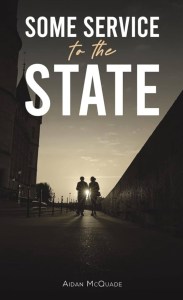
Some Service to the State

Summary: why partition in Ireland has been such an injustice.

“… sometimes it is absence itself which is the hardest thing to hide.”

I grew up in South Armagh, just a mile or so from the British-imposed border in Ireland. That border is a thing that, in many ways, has cast a long shadow over my life. It was, I sincerely believe, at the root cause of many of the problems for both parts of Ireland during the Twentieth Century, not least the squalid little war known as the Troubles during which I grew up.

With partition, the British sought, successfully, to create two sectarian states in Ireland rather than one plural one. My novel, Some Service to the State, is at heart an exploration of some of the human rights abuses that Irish people had to endure as a result of this.

Hence it is an indictment of the injustice of partition’s continuation. As the impetus takes hold for an end to partition and the establishment of a new Ireland, I hope that this book will resonate with an audience that wants to understand better why the status quo has been such a poisonous thing for ordinary people living on the island of Ireland.

But Some Service to the State is also a gripping detective story, about the repercussions of an enquiry into the fate of a girl who seems to have gone missing in that politically divided island.

Here is what other authors said about it: 
Ronan McGreevy, author of Great Hatred: the assassination of Field Marshal Sir Henry Wilson, has said of Some Service to the State that it is “a superb book with dialogue that would not be out of place on the stage of the Abbey Theatre. … [in Mick McAlinden} McQuade has created a character whose travails highlight the thwarted dreams and the tragedy of partition for so many people in post-revolutionary Ireland.” 

Rosemary Jenkinson a multi-award winning playwright and author of Marching Season, has said that the book shows a “prodigious skill in shining a spotlight on the scandal of the mother-and-baby homes and in brilliantly imbuing the past with … [a] potent blend of heart, soul and wit”

If you would like to get a copy, the book is available in the UK from Bookshop.org and in the US from Barnes and Noble. It is also available on Amazon.

I hope you will read it, and if you do, I would love to hear what you think in the comments below.

Keep safe and many thanks.

Old habits, new protests: on the politics of Israel’s allies

Summary: those who have lost their moral compass will never understand that protest is leadership

Rule of international double standards

Today, it appears that many Western political leaders apply multiple caveats to the principle of the universality of human rights. The result is that rather than rule of international law we seem increasingly to have rule of international double standards. 

This is particularly plain in relation to British, American and German policy towards Gaza. In comparison with their supportive policy towards Ukraine and their outrage at Putin’s war crimes there, in relation to Gaza there is a lack of condemnation for ceaseless attacks upon civilians. On the contrary, the British, Americans and Germans remain publicly and materially supportive of Israeli policy.

The moral black hole at the heart of Western policy towards Israel

British, American and German policy on Gaza appears to be underpinned by a view that Palestinian lives are not equal to Israeli lives and so unworthy of comparable protection. Hence those three governments seem to have decided that it is better to arm and provide diplomatic cover for the far-Right Netanyahu government rather than to uphold the most basic principles of human rights and international humanitarian law.

In the face of the considerable evidence of genocide these governments are deaf to the international protests of conscience, and to the demands of Palestinian and Israeli voices for peace. Instead, they work to maintain the murderous Israeli Defence Forces supply lines at all costs. 

I have heard some try to justify this human rights double standard in relation to Israel by responding to protests with patronising reference to the need for realism, for a “realpolitik” approach to the conflict. This is, perhaps, a notion they may imagine that the protesters do not have the sophistication to properly understand. However, many will know that “realpolitik” is a term that has considerable previous, notably in the hands of Henry Kissinger, as a euphemism for moral vacuity and acquiescence in crimes against humanity. 

Given this many will remain unconvinced that “realpolitik” really is a sufficient justification for the mounting horrors in Gaza and the West Bank. So, why are the US, the UK and Germany so steadfast in their support of a far-Right Israeli government pursuing such a horrendous campaign of violence?

It is worth remembering that Germany was genocidal in Namibia well before the Nazis ever came to power. While relatively democratic, Britain and the United States were also genocidal in the 19th and 20th centuries in relation to, amongst others, Native Americans, Ireland and South Asia. It was democratically elected governments in the US that launched the invasion of Vietnam and the destruction of Cambodia. It was democratically elected governments in the US and UK that unlawfully invaded Iraq. Today it is democratically elected governments in the US, UK and Germany that have facilitated the far-Right in Israel in their indiscriminate slaughter of Gazan civilians

So, if we take even a medium-term historical view on these countries, it seems that there is a strain of thinking in those nations’ political cultures stretching from Left to Right that still view war crimes and genocide not as appalling and even unforgivable aberrations, but as legitimate policy options when it is convenient for them or those, however unsavoury, that they deem allies. 

Protest as leadership

It is in this context that the leaderships of the US, the UK and Germany display such an extraordinary arrogance toward those protesting their disgust at their policies. In the UK, along with their gleeful grasping at graft, their contempt towards protesters is a measure of government ministers’ extraordinary sense of entitlement.

But it is the protests of which they are so contemptuous that so often change cultures and countries in the ways in which corrupt politicians can only dream. This is because protest is moral leadership that seeks to make the world a better place by demanding that it become so. 

It is because of protesters that women have the vote, that apartheid has been ended in South Africa, that civil rights have been advanced in the US and the North of Ireland. When many governments have sought to merely manage the status quo – the “realpolitik” – protesters have asserted that this is not good enough and demanded better.

Today protesters understand, as the Irish patriot and human rights activist Roger Casement once put it, that “… we all on earth have a commission and a right to defend the weak against the strong, and to protest against brutality in any shape or form”.

So, at the end of the day, as Israel’s allies become ever more deeply mired in the murder of children, it is the protesters they disdain who will perhaps contribute most substantially to an end to apartheid in Israel/Palestine and thereby save the souls of their own countries.

Sweet Home, by Wendy Erskine

Summary: a wonderful collection of short stories of contemporary Belfast

The first recorded ventriloquists in history were the Oracle at Delphi. These priestesses, who divined the future for fearful supplicants that sought their counsel, would take on the voices of the dead, and the gods, to add gravitas to their prophesies.

I was put in mind of these sorceresses reading Wendy Erskine’s wonderful collection of short stories, Sweet Home, because Erskine displays a similar witchcraft in the way in which she so convincingly evokes the diverse lives, and the diverse voices of the inhabitants of her stories. 

Like the blasted heath on which Macbeth encounters his witches, the contemporary Belfast in which these stories are set bears the scars of war and the gangsterism that flourished in the margins of that conflict. 

And yet even the most unpleasant of her wholly believable characters are treated with an extraordinary empathy by Erskine. With the brilliance of her writing, she forces the reader to understand that even the extortionist, or the disagreeable schoolteacher, whose stories she tells are still human beings with their own hopes, their own tragedies which have shaped who they have become. 

There may be few unambiguous happy endings in these stories. But they are filled with tenderness, lashings of pitch-black Belfast humour, and enough optimism to hope that some of these characters may yet see better days, even if that is only the quiet needed to read, the friendship of a new neighbour, or the chance of promotion for a shop worker. 

In a world of tawdry illusions and cheap tricksterism, Erskine’s stories are the real deal: the rarest of enchantments that the Irish call great short stories, and the rest of the world calls enduring literature. 

Magic.

The General’s Son, by Miko Peled; and The Ethnic Cleansing of Palestine, by Ilan Pappe

Summary: on the original sins of Zionism

 In 1967 General Mattityahu Peled, who, as head of logistics of the Israeli Defense Forces, was one of the architects of the Israeli victory in the Six Day War, investigated an atrocity.

Peled had heard from a Palestinian prisoner how IDF soldiers in Gaza had massacred over 30 unarmed civilians, including a 13 year old boy and an 86 year old man. After they were shot the IDF drove a bulldozer back and forth over the bodies until they were unrecognizable. 

Peled, an Arabic speaker, went personally to Gaza to find out what happened and met the families of the victims. Afterwards he wrote a report to the Israeli government warning them about the moral degradation that the illegal occupation of Palestinian territories would bring and how atrocity would become a commonplace if it was allowed to continue. 

Peled’s son, Miko, reckons now that this was probably the decisive moment in his father’s life that transformed him from soldier to committed peace activist, something he remained for the rest of his life, a mantle taken up, in spite of incredible suffering, by both Miko and his sister, Nurit. 

But perhaps Matti Peled should not have wasted his breathe with his warning to the Israeli government. Because as Israeli historian Ilan Pappe explains in depressing detail in his book, The Ethnic Cleansing of Palestine, atrocities of the sort Matti Peled uncovered in Gaza – atrocities of the sort that Israel continues to perpetrate year in, year out, including in its genocidal post October 7th operations in Gaza – were part of the DNA of Zionism from when Israel was but a glimmer in David Ben Gurion’s eye. 

Prior to the founding of the state of Israel Ben Gurion and the cadre of Zionists that he gathered around him to be his closest political and military advisors, drew up detailed plans for the expulsions of the indigenous people of Palestine so they could realise their sectarian dreams of a Jewish state. They recognized from the outset that mass murder and terrorism would be intrinsic to this project. 

With the UN vote to partition Palestine they put their plans into bloody action. Deir Yassin was the pattern, not an aberration. 

On visiting the aftermath of one ethnic cleansing operation by the Haganah, the forerunner of the IDF, Golda Meir was reminded of the Eastern European pogroms that had terrorized her own family from their home. But, aside from this momentary lapse, she otherwise remained comfortable with her role as a war criminal.  But Pappe wonders how a mere three years after the Holocaust its survivors could inflict such barbarity on fellow human beings.

Pappe’s forensic analysis of the war crimes of Israel and the fundamental racism of Zionism has, of course, drawn criticism from other Israelis – the sort who benefit from apartheid in Israel and the West Bank and who celebrate the genocide in Gaza.

But, like Miko Peled, Pappe is on the right side of history. As the world increasingly sees Israel for the rogue terrorist state that it is, Peled and Pappe explain why it is as it is, and plot a path towards the inevitable end to apartheid there.

Both Pappe and Peled represent the enduring voice of conscience in the midst of atrocity. They are advocates of a common humanity in the face of prejudice and sectarianism. In the end it is this humanity that will always triumph over apartheid.

Paris ’44, by Patrick Bishop

Summary: a gripping narrative of the liberation of Paris

Paris ’44 covers similar ground to the bestselling book, Is Paris Burning? by Larry Collins and Dominique Lapierre, focusing on the liberation of Paris from the Germans in 1944.

Bishop finds some novel perspectives on the story through recounting the experiences of JD Salinger and Ernest Hemmingway in the fighting in France. Bishop is also much less generous to the German commander of the Paris garrison, von Choltitz, than were Collins and Lapierre:  That von Cholititz did not set Paris ablaze had little to do with his moral qualms and much more to do with the logistical difficulties of such an act of terrorism. Bishop is also rightly caustic about how the grossly collaborationist French police switched sides when they discerned how the tide of the war was turning.

The Paris uprising in 1944 was possibly the luckiest such insurrection in occupied Europe. Elsewhere resisters were encouraged with considerable cynicism by the Allied high command to give battle to the Germans to draw off forces from the main allied armies. But Paris was one of the few places where the allied armies moved to support the uprisings before the Germans had time to massacre them. The relief of Paris by a Free French armored division was something of which the Home Army in Warsaw, or the Maquis on the French Vercors massif could only dream.

It is a compelling story no matter how it is served up, and Bishop does this with quite some style.