
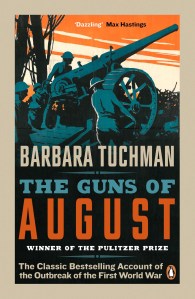
 Summary: exquisitely written and utterly gripping account of the first weeks of the First World War
My friend Caitlin, a state-level chess champion in her US high school days, once gave me the best tip ever for playing the game: “Remember,” she said, “it’s not just about what you are planning to do, but what your opponent is planning to do as well.”
As with so many things about chess, Caitlin’s tip is important more generally in life. And Barbara Tuchman in The Guns of August shows how it is, perhaps, most vital of all in war.
In the decades before the outbreak of the First World War many brilliant generals across Europe developed many different plans that would grant them decisive victory. Unfortunately these plans tended to rely on opponents behaving in a way that would conform most helpfully with planners’ ambitions.
For example, the German High Command did not anticipate that King Albert of Belgium would actively resist Germany’s brutal invasion of his country. Nor did they expect Tsar Nicholas to uphold his treaty obligations to his Western Allies by mobilising Russian forces. And, as the fighting of the first weeks of the war unfolded, they did not expect the garrison of Paris to sally from the city to attack their flanks and initiate battle on the Marne.
As these things happened, quite contrary to the expectations of the shinny Schlieffen plan that had for so long promised swift victory to Germany over France, the Western offensive of the Germans crumpled into the muddy, bloody stalemate of the trenches.
Much of the focus of The Guns of August is on the machinations of the various high commands as their hopes collide with the realities of European politics on the battlefield. But Tuchman also gives human faces to the warlords who led their countries.
The book has its heroes, notably King Albert who, of all his royal contemporaries, was the only one, Tuchman notes, who achieved personal greatness. Of the other generals it is perhaps Sir John French, commander of the British Expeditionary Force, who comes out of Tuchman’s account worst, as a remarkably hesitant and ineffectual commander.
When they finally met in London in 1922 Michael Collins found French, who he had once tried to kill, a charming and engaging man. It is a sobering thought that it may well be humans’ finest qualities that render them of least utility in war. In other words, as Chaucer realised, the myth of the “perfect, gentle knight” is just that: a myth.
The Guns of August quickly established itself as a modern classic shortly after its publication in 1962. It is a deserved reputation. The book is an elegantly written, gripping, and enormously erudite account of the first weeks of the First World War, ending abruptly, in an echo of Thucydides, on the eve of the critical Battle of the Marne.
Perhaps it is also a book that helped to save the world. Jack Kennedy read it shortly after its publication and, himself a veteran of confused battles and command bungling, was impressed by a key theme of the book – the miscalculations and errors that led to war and battlefield disaster. So, a few months later, during the desperate days of the Cuban Missiles Crisis, Kennedy made very sure to constantly wonder about what his opponents – in Washington, Moscow and Havana – were planning to do.
 Summary: a devastatingly powerful account of the impact of murder on its victims and perpetrators. One of the finest books ever about the Troubles in the North of Ireland.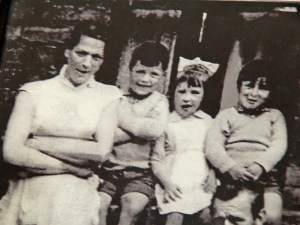
 Biography is a common enough form in political and military history often, when used well, providing telling insight into pivotal events. It is certainly a much less common approach in social history. But this is the approach that Hallie Rubenhold adopts in The Five. The result is stunning.
 Summary: a vast and sprawling account of the vast and sprawling realities of human life and debt
 Summary: a fine novel of ordinary people at war and the horrendous consequences of violence
  It would be unfair to say this book is not entertaining. But then it would be hard to write a dull book about Churchill so packed with incident was his life. However it’s hardly a book that offers any profound, or even shallow, insights on its subject or his times.
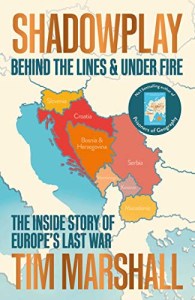 The war correspondent is something of a non-fiction counterpart to crime novels’ gumshoe: a guide through the dark and bloody places that most of us would never dream of personally approaching but still are fascinated by from a few steps removed. Journalistic accounts of war also provide even the most venial of hacks the opportunity to present themselves as heroes of their narratives.
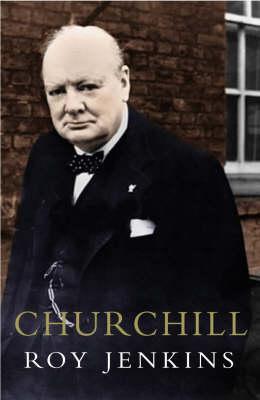 In Brexit Britain one’s attitude towards Churchill is something of a faux-patriotic touchstone. Recently shadow chancellor John McDonnell caused frothing indignation amongst the perpetually offended right-wing of British society when in response to a silly question, “Churchill: hero or villain?” he responded,
  aidanjmcquade