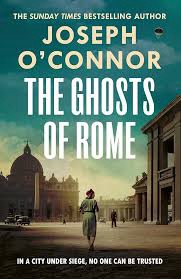
The Ghosts of Rome, by Joseph O’Connor

Summary: more Paddington 2 than Jaws 2

Sequels are a tricky thing. Some, like Margaret Atwood’s The Testaments add something to an earlier classic. More ill-judged ones, like Pat Barker’s The Women of Troy, can dent the lustre of their more accomplished predecessor, seeming to aim to cash in on a successful formula rather than say anything compelling or new.

So it was with some trepidation that I picked up the Ghosts of Rome, Joseph O’Connor’s follow up to his superb novel of European Resistance to Nazism, My Father’s House.

Time has moved on a few months from the first novel, the German occupation has become more brutal, and the pressure on the Choir – the escape line for Allied prisoners of war and Jews established by Monsignor Hugh O’Flaherty – more extreme.

The pattern that O’Connor uses for this book is similar to its prequel: It focuses on one operation, and one individual in the midst of the otherwise present and correct ensemble of the Choir, in this instance Contessa Giovanna Landini – Jo.

O’Connor admits that all of the novel, including the purported transcripts of BBC interviews, is his own invention. But many of the people involved including Jo and her Irish pals, Delia and her daughter Blon, were real. This accentuates the sense of awe regarding what these ordinary people endured and achieved in such extraordinary circumstances. And, even if we know they survived the war this does not diminish the tension.

The Ghosts of Rome is a gripping thriller. But like the best thrillers it is more than that. It explores and asserts the importance of morality and friendship in the face of monstrousness. These remain important ideals in a world in which the genocide of vulnerable people is again high on the agendas of many of the supposed liberal democracies of the West.

Standing Tall: living with motor neuron disease, by Samantha Whittaker

Summary: a poetry of courage

“Silence – like a Quaker meeting.”

And like a Quaker meeting, Samantha Whittaker breaks this silence with her deeply considered words. Standing Tall is her first book, a collection of her poetry. As she explains in the introduction poetry is something that she returned to writing after her diagnosis with motor neurone disease. “At 56 I was struck with this terrible disease… Nobody can understand me now… I used to chat and laugh so much… Standing tall is where you’ll find me/ When I die.”

Because of its subject matter, this is a desperately sad book. But it is also an awe-inspiring one. I have only been in the presence of true courage a couple of times in my life. This book reminded me of those times. Because in this book Whittaker unflinchingly confronts her disease and her life with it: “Reason, slobber, alive, decline/ Words that sum up…”

Standing Tall is an extraordinary book by an extraordinary woman.

My best reads of 2024

Summary: some humanitarian assistance for book shopping this Christmas

As Christmas approaches some of you may be pondering books for yourselves or the bibliophiles in your life.

So here, in (more or less) chronological order are my best books of the year. Four entries are Irish; three about aspects of the British empire and one is about an aspect of the American empire; two trace the roots of Israel’s genocide in Palestine; two are feminist dystopian thrillers and one is a bit of feminist literary criticism; and there is one that is about pretty much everything. And there is some stuff about the Roman Empire, because there sorta has to be.

Each item has a link to a longer review if you want to know more. Hopefully some will supply some of you with some inspiration. 

  1. The Kidnapping: A hostage, a desperate manhunt and a bloody rescue that shocked Ireland, by Tommy Conlon and Ronan McGreevy – a lucid and gripping account of an incident in the Troubles that illustrates just what an all-Ireland affair they were.
  2. Empireworld, by Sathnam Sanghera – an elegantly written exploration of the contemporary impact of the British Empire on the world.
  3. Brotherhood: when West Point rugby went to war, by Martin Pengelly – an important insight through the prism of rugby into American war-making amongst the post-9/11 generation of American officers.
  4. Dirty Linen: The Troubles in my home place, by Martin Doyle – An outstanding portrait of the pity of war in the North of Ireland, that also builds a picture of the pervasiveness of collusion between British state forces and loyalist paramilitaries.
  5. Resting places: On Wounds, War and the Irish Revolution, by Ellen McWilliams – an exceptional book in which the interplay of the most personal of histories with the political helps illuminate some of the most shameful aspects of Ireland’s past.
  6. Spent Light, by Lara Pawson – “It’s quite hard to describe really. To begin with, it’s about a toaster, but it ends up being about everything,” the Kirkdale Bookshop on Spent Light.
  7. Ghosts of the British Museum, by Noah Angell – a fascinating exploration of the dark side of British history and culture through the spooky stories of one museum
  8. Sweet Home, by Wendy Erskine  – a wonderful collection of short stories of contemporary Belfast
  9. (A twofer) The General’s Son, by Miko Peled; and The Ethnic Cleansing of Palestine, by Ilan Pappe – two outstanding works of personal and national history that amount to a searing protest against genocide and apartheid by two Israelis of conscience and exceptional moral courage.
  10. Another twofer: The Handmaid’s Tale, and the Testaments, by Margaret Atwood – two all too believable dystopian thrillers, set in a United States that has been transformed into a theocratic dictatorship of the sort imagined in the fevered dreams of the legions of Trump’s incel supporters
  11. The Flashman Papers, by George McDonald Fraser – not sure if this is a thoughtful rumination on Empire masquerading as a scurrilous romp or vice versa. A sort of Carry on British Colonialism with all the casual racism that entails.
  12. Of course, you may still be thinking about the Roman Empire – some of us are men after all. So there are these: Palatine, by Peter Stothard; Emperor of Rome, by Mary Beard; Pax: War and Peace in Rome’s Golden Age, by Tom Holland
  13. Finally there is Monsters: what do we do with great art by bad people? by Clare Dederer – a fascinating exploration of the relationship between the audience and the monstrous artist, included, not least, for having the chutzpah in recognising that Stephen Fry can be an awful eejit sometimes.

That makes 13. A lucky number.

A Thread of Violence, by Mark O’Connell

Summary: I would be more forgiving of this book if there had been more about Bridie and Donal in it.

I worked with a lot of Irish nurses in Ethiopia and Angola. They were a tough, sexy bunch, ruthlessly professional and deeply committed to social justice. (The character of Sophia in my novels The Undiscovered Country and Some Service to the State was modeled in no small part on some of them.)

As a professional group, certainly as an Irish professional group, they have probably done more than any others to make the world a better place. 

I imagine Bridie Gargan must have been quite like them. A 27 year old in 1982 she was already making the world a better place working as a nurse. Having just finished a long shift one day she decided to reward herself on her way home with a spot of sunbathing in Dublin’s Phoenix Park. It was there she had the misfortune of encountering Malcolm Macarthur, who proceeded to beat her to death with a hammer. 

After Bridie, Macarthur went on to kill Donal Dunne, a farmer, with his own shotgun. It seems that these killings were part of a half-baked plan that he had to commit an armed robbery to replenish his finances after he had squandered an inheritance. Macarthur was such a wastrel that he simply could not contemplate working for a living. 

Having finished it, I am left with very mixed feelings about A Thread of Violence, Mark O’Connell’s account of a protracted series of meetings that he had with Macarthur following his release on licence for the murders of Bridie and Donal. O’Connell had set himself the task of trying to get to the bottom of what motivated Macarthur to such grotesque violence. 

It is a beautifully written book, and it is important, I believe, to try to understand violence to better prevent it. But in the end O’Connell adds little illumination to these dreadful events and he admits that he never did get to the bottom of the question of motivation. 

So, what justifies this literary treatment of Macarthur, a worthless man who has led a worse than worthless life? I am left feeling not much, particularly as O’Connell writes so little about Bridie and Donal who barely feature in this book other than as victims. O’Connell missed the opportunity, in my view, to show how these much more consequential people deserve more attention than their self-important killer.

I can understand how O’Connell, as a working writer doubtless with a contract to fulfil, must have felt he had to write something in spite of his admitted failure to achieve his aim. But I am sad to say that I do not think this book adds much to human understanding. 

A roundup of Unusual Suspects: Isolation Island, by Louise Minchin; The Trials of Lila Dalton, by L J Shepherd; Long Time Dead, by T M Payne; A Limited Justice, by Catriona King.

Summary: books that it would be criminal to overlook!

I once met a woman who had given her newborn daughter the second name of “Danger” just so when she was older she would be able to say, like the heroine of a 1930s movie, “Danger is my middle name!”,

There is a strong hint of such movie heroines in Lauren, the investigative journalist protagonist of Louise Minchin’s Isolation Island

Minchin uses her experience of journalism and having been a contestant on the storm ravaged set of “I’m a Celebrity, get me out of here!” to craft a fun, Agatha Christie inspired, tale of murder amongst game show contestants. 

Minchin brings a lovely devilment to her tale, fattening up the despicable before despatching them while Lauren desperately tries to unearth the evil genius behind the mayhem.  

Minchin has described her heroine as being braver than herself. That may or may not be true – Minchin is also a triathlete and having done one myself I can attest that those are daunting things. But, perhaps as importantly Lauren is driven by a sense of journalistic ethics and a conviction of the importance of truth, which must be Minchin’s own. 

In a time of in which even genocide is being made undiscussable, it is important to be reminded that some truths, no matter how inconvenient, must be spoken. 

On the opening page of The Trials of Lila Dalton, the titular Lila, a barrister it seems, stands up in court with no knowledge of how she got there, but with a client to defend. LJ Shepherd, the author, a barrister herself, describes her book as an “ontological mystery”. That is, not only does her protagonist have to get to the bottom of the facts of her case – the defence of a man accused of a bombing atrocity – but also work out who the hell she is and what she is doing there. 

Shepherd’s is an entertaining and intriguing story. I am not sure that it really required the reality questioning elements as the issues she deals with – the importance of the right to a defence in a criminal trial no matter how seemingly heinous the accused, and the question of how democratic societies protect themselves from violent assaults by those who do not share their values – are important enough.

These quibbles aside, the quality of Shepherd’s writing is exceptional, particularly when describing the treating of casualties in the aftermath of an explosion: these recalled for me some of the accounts of the survivors of the Rana Plaza collapse in Bangladesh. In this Shepherd does that most difficult of things: she forces the reader to empathise with victims that they may prefer not to think of.

In Long Time Dead, an extra body shows up in a grave and it is identified as a man suspected of murdering a cop and grievously injuring a bystander seven years earlier. The investigation eventually falls to Detective Inspector Sheridan Holler. 

It was Chandler, I think, who conceived of his tales of gumshoes as updated versions of the stories of Knights Errant from Arthurian legend. So, whatever else was unclear in his mysteries, no matter how corrupt the world in which they ventured, one thing you could count on was that his shamus would endeavour to do the right thing, protecting the innocent and unmasking the guilty. 

TM Payne’s peeler protagonist in Long Time Dead is an inheritor of that tradition. While she may find the sort of defence barrister of which LJ Shepherd writes somewhat distasteful, she is still fundamentally decent and committed to the finding the truth. 

There is an echo of Payne’s book in Catriona King’s A Limited Justice. Like it, it is a police procedural – a type of crime novel for which I have a particular affection. 

Both have the bonus of being written by writers who know what they are talking about: Payne is a former cop; King has worked as a police forensic medical examiner. Both eschew the brooding detective for sympathetic professionals – the sort of people who you might actually like to work with. 

A Limited Justice begins with King’s investigator, Marco Craig, opening a probe into a particularly grisly killing on a Belfast garage forecourt. As with many of the Sherlock Holmes stories, as the investigation unfolds the story of the perpetrator and their motivation becomes as important as that of the investigators. Consequently, King is able to use her story to explore not just the crime itself, but contemporary Northern Ireland. As is typical of Northern Ireland the story is replete with black humour. 

Both King and Payne have founded book series based on their protagonists. It is easy to see why: both are appealing companions on the mean streets of the imagination, and King and Payne, like Minchin and Shepherd, are both very gifted writers. 

Sweet Home, by Wendy Erskine

Summary: a wonderful collection of short stories of contemporary Belfast

The first recorded ventriloquists in history were the Oracle at Delphi. These priestesses, who divined the future for fearful supplicants that sought their counsel, would take on the voices of the dead, and the gods, to add gravitas to their prophesies.

I was put in mind of these sorceresses reading Wendy Erskine’s wonderful collection of short stories, Sweet Home, because Erskine displays a similar witchcraft in the way in which she so convincingly evokes the diverse lives, and the diverse voices of the inhabitants of her stories. 

Like the blasted heath on which Macbeth encounters his witches, the contemporary Belfast in which these stories are set bears the scars of war and the gangsterism that flourished in the margins of that conflict. 

And yet even the most unpleasant of her wholly believable characters are treated with an extraordinary empathy by Erskine. With the brilliance of her writing, she forces the reader to understand that even the extortionist, or the disagreeable schoolteacher, whose stories she tells are still human beings with their own hopes, their own tragedies which have shaped who they have become. 

There may be few unambiguous happy endings in these stories. But they are filled with tenderness, lashings of pitch-black Belfast humour, and enough optimism to hope that some of these characters may yet see better days, even if that is only the quiet needed to read, the friendship of a new neighbour, or the chance of promotion for a shop worker. 

In a world of tawdry illusions and cheap tricksterism, Erskine’s stories are the real deal: the rarest of enchantments that the Irish call great short stories, and the rest of the world calls enduring literature. 

Magic.

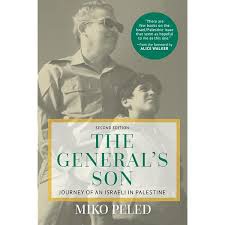
The General’s Son, by Miko Peled; and The Ethnic Cleansing of Palestine, by Ilan Pappe

Summary: on the original sins of Zionism

 In 1967 General Mattityahu Peled, who, as head of logistics of the Israeli Defense Forces, was one of the architects of the Israeli victory in the Six Day War, investigated an atrocity.

Peled had heard from a Palestinian prisoner how IDF soldiers in Gaza had massacred over 30 unarmed civilians, including a 13 year old boy and an 86 year old man. After they were shot the IDF drove a bulldozer back and forth over the bodies until they were unrecognizable. 

Peled, an Arabic speaker, went personally to Gaza to find out what happened and met the families of the victims. Afterwards he wrote a report to the Israeli government warning them about the moral degradation that the illegal occupation of Palestinian territories would bring and how atrocity would become a commonplace if it was allowed to continue. 

Peled’s son, Miko, reckons now that this was probably the decisive moment in his father’s life that transformed him from soldier to committed peace activist, something he remained for the rest of his life, a mantle taken up, in spite of incredible suffering, by both Miko and his sister, Nurit. 

But perhaps Matti Peled should not have wasted his breathe with his warning to the Israeli government. Because as Israeli historian Ilan Pappe explains in depressing detail in his book, The Ethnic Cleansing of Palestine, atrocities of the sort Matti Peled uncovered in Gaza – atrocities of the sort that Israel continues to perpetrate year in, year out, including in its genocidal post October 7th operations in Gaza – were part of the DNA of Zionism from when Israel was but a glimmer in David Ben Gurion’s eye. 

Prior to the founding of the state of Israel Ben Gurion and the cadre of Zionists that he gathered around him to be his closest political and military advisors, drew up detailed plans for the expulsions of the indigenous people of Palestine so they could realise their sectarian dreams of a Jewish state. They recognized from the outset that mass murder and terrorism would be intrinsic to this project. 

With the UN vote to partition Palestine they put their plans into bloody action. Deir Yassin was the pattern, not an aberration. 

On visiting the aftermath of one ethnic cleansing operation by the Haganah, the forerunner of the IDF, Golda Meir was reminded of the Eastern European pogroms that had terrorized her own family from their home. But, aside from this momentary lapse, she otherwise remained comfortable with her role as a war criminal.  But Pappe wonders how a mere three years after the Holocaust its survivors could inflict such barbarity on fellow human beings.

Pappe’s forensic analysis of the war crimes of Israel and the fundamental racism of Zionism has, of course, drawn criticism from other Israelis – the sort who benefit from apartheid in Israel and the West Bank and who celebrate the genocide in Gaza.

But, like Miko Peled, Pappe is on the right side of history. As the world increasingly sees Israel for the rogue terrorist state that it is, Peled and Pappe explain why it is as it is, and plot a path towards the inevitable end to apartheid there.

Both Pappe and Peled represent the enduring voice of conscience in the midst of atrocity. They are advocates of a common humanity in the face of prejudice and sectarianism. In the end it is this humanity that will always triumph over apartheid.

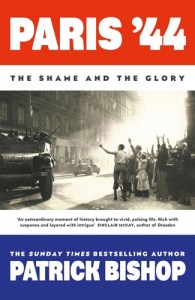
Paris ’44, by Patrick Bishop

Summary: a gripping narrative of the liberation of Paris

Paris ’44 covers similar ground to the bestselling book, Is Paris Burning? by Larry Collins and Dominique Lapierre, focusing on the liberation of Paris from the Germans in 1944.

Bishop finds some novel perspectives on the story through recounting the experiences of JD Salinger and Ernest Hemmingway in the fighting in France. Bishop is also much less generous to the German commander of the Paris garrison, von Choltitz, than were Collins and Lapierre:  That von Cholititz did not set Paris ablaze had little to do with his moral qualms and much more to do with the logistical difficulties of such an act of terrorism. Bishop is also rightly caustic about how the grossly collaborationist French police switched sides when they discerned how the tide of the war was turning.

The Paris uprising in 1944 was possibly the luckiest such insurrection in occupied Europe. Elsewhere resisters were encouraged with considerable cynicism by the Allied high command to give battle to the Germans to draw off forces from the main allied armies. But Paris was one of the few places where the allied armies moved to support the uprisings before the Germans had time to massacre them. The relief of Paris by a Free French armored division was something of which the Home Army in Warsaw, or the Maquis on the French Vercors massif could only dream.

It is a compelling story no matter how it is served up, and Bishop does this with quite some style. 

The Voyage Home, by Pat Barker

Summary: a fine novel of Cassandra that suffers in comparison with Barker’s initial foray into the stories of Troy

The Voyage Home continues Pat Barker’s feminist retelling of the tales of Troy, following the return of Agamemnon to Mycenae with the enslaved Cassandra in tow. This guarantees that the reunion with his wife Clytemnestra is going to be awkward. Just how awkward Agamemnon, even if he was a cleverer man, could not imagine.

But Cassandra, gifted with prophesy, but cursed that no one ever believes her, knows. In the bloodshed that she foresees she also discerns some measure of justice for the genocide that the Greeks have inflicted on her homeland. 

For this story, Barker replaces Briseis, the narrator of her previous Trojan books, with Ritsa, Cassandra’s maid: slave to a slave, or, as she describes her lowest of the low status, a “catch-fart.” 

The Voyage Home dealing with the beginning of the Oresteia, is, I think, a considerably better book than its predecessor, The Women of Troy. But neither of these books say much additional thematically to the stunning originator of this series, The Silence of the Girls.

Still, it is elegantly written, and Barker’s continuing focus on how war affects civilians and the sexual violence endured by women is important. In addition, Cassandra is always a compelling figure, and Ritsa is a fine creation. 

The Handmaid’s Tale, and The Testaments, by Margaret Atwood

Summary: “You tried to bury us, but we were seeds.”

When Margaret Atwood published The Handmaid’s Tale in 1985 it was quickly recognized as a classic. An all too believable dystopian thriller, it is set in a United States that has been transformed into a theocratic dictatorship of the sort imagined in the fevered dreams of the legions of Trump’s incel supporters. 

It is told in the first-person, recounting the experiences of a young woman enslaved under the name Offred as the mistress of a leader of that state, Gilead. Such mistresses are prized because environmental devastation has rendered so much of the population sterile and it is a chance for the elite to reproduce. 

The compelling world that Atwood created in this book, and the open-ended nature of its ending could have seduced a lesser writer into a commercially successful career with spin-offs and sequels galore. However, Atwood waited over 30 years before returning to this fictional universe. That is, she waited until she finally had something new to say about it. 

The Testaments has stylistic similarities to The Handmaid’s Tale, but this time with three first-person narrators, including Lydia, a former judge now an “Aunt” – an older woman tasked with helping Gilead oversee and control its young women. In her deepest conscience however, Lydia is part of the Resistance, and The Testaments tells the story of how she plots to strike a blow to the heart of the dictatorship. 

Both books are gripping, building considerable tension as the protagonists strive to assert some aspects of freedom and free will in the cause of a more moral future, and hence place their fates in the balance. Both books are also deeply satisfying complements to each other, with Offred’s grim struggle for survival given context by Lydia’s more strategic overview of the battlefield. 

Lydia doesn’t have a cat. But she is doubtless the stuff of JD Vance’s nightmares. Such a brilliant character was well worth the 30 year wait.