The American Civil War, by John Keegan

AbeIf you do not have access to Ken Burn’s outstanding documentary on the US Civil War this is an okay introduction to the subject. It is a straightforward and relatively concise narrative of the war, started by the Southern States as a repudiation of a democratic election, the result of which offered a glimmer of a threat to their brutal slavery practices.

But there are better introductions to the subject, and there are certainly better books by John Keegan: This displays little of the novelty of Keegan’s “Six Armies in Normandy” or the insight of “Mask of Command”. Rather it seems to me to have been published to capitalise on Keegan’s reputation and little else.

African American soldierIt lacks editing with much repetition. Some of his judgements seem bizarre – the drawing of a lineal relationship between Sherman’s practice of total war, brutal as that was, and Hitler’s campaigns of the twentieth century is strange and certainly under-argued. But this is as nothing to his apparent endorsement (contradicting himself from a few pages earlier) of Bedford Forest’s judgement of the inferiority of black troops: citing a probable war criminal and subsequent Imperial Wizard of the Ku Klux Klan on this issue is both dubious and offensive irrespective Bedford Forest’s genius as a cavalry commander.
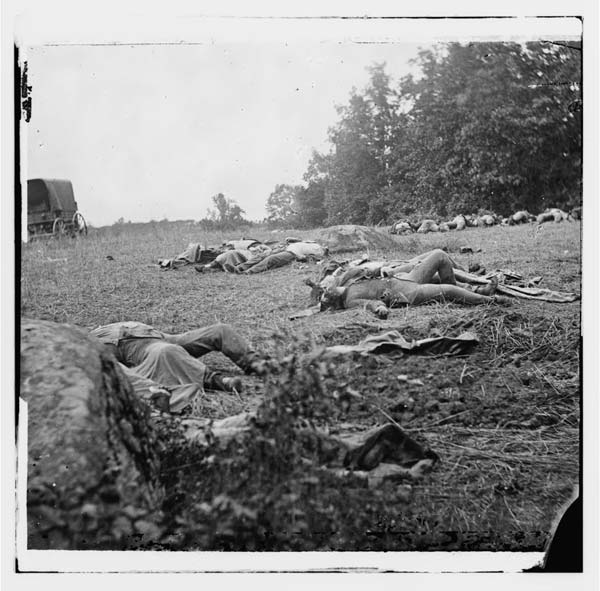
American-Civil-War-casualtiesTowards the end of the book brief discussions of Walt Whitman and the impact of the Civil War on development of American revolutionary socialism redeem the book somewhat. It is a pity that Keegan did not explore the war from perspectives such as these rather than the more conventional approach that he adopted.

Overall a book to file under the “could do better” category for John Keegan. A reader looking for insights to the American Civil War could also certainly do better – time spent on Shelby Foote’s 3000 page magisterial work on the war, or Doris Kearns-Goodwin’s exquisite biography of Lincoln, Team of Rivals, would never be wasted.

If Harry Potter were a deranged psychopath forced into a book with a lousy plot – Perfume: The Story of a Murderer, by Patrick Suskind

I know a lot of people love this book. I can imagine even that some literary types, the same sort that would get sniffy about Harry Potter, might sing its praises and allude to some brilliantly evoked passage or other. 

This is strange because this is also a book about a magician. It is set in a world a lot like this one a few hundred years ago where magic resides in smells – these can conjure, love, invisibility and all sorts in between. But where other books about magicians, such as JK Rowling’s, Jonathan Stroud’s, or Ursula LeGuin’s, use magic as metaphor or more incidentally to explore other ideas, this book has no other purpose. It demands that the reader accept the fundamental power of the magic of smell and to engage with a repellent magician in his quest for the most magical perfumes.

God above did I detest the whole sorry thing for the pointlessly silly exercise in silliness that it is. There are some vaguely interesting descriptions of perfume making but these are not enough to justify the effort. The characters are cyphers. It says nothing about the human condition. 

cow pat footSo despite being a short book it gives a strong sense of being about 200 pages too long.

At least the advent of e-books mean that trees need never again die to bring this sort of ill-judged cow-pat of a book into print. 

A book to avoid like pestilence unless you are a masochist or doing penance for some terrible deed.

Commandos’ war in a small corner of Croatia: Island of Terrible Friends, by Bill Strutton

KomisaOn holidays on the island of Vis a few years ago I came across a memorial to British commandos in the harbour of Komisa. I found this book after I got home, a non-fiction novel told from the perspective of the real British doctors who worked on the island, in and around Komisa, when it was one of the few bits of Croatia unoccupied by the Germans.

Komiza CommandosThe author, himself a veteran of the war in the Eastern Mediterranean, had clearly taken the time to visit the island as the accounts he gathered are precisely rooted in the geography of the island – its possible to find and follow the roads described in the story and find the locations of many of the incidents. And, while the story is told from the perspectives of the allies and based on the accounts of allied combatants, particularly the doctors on the island, it does not shy away from the nastier aspects of the war: the beautiful island I could see from the window of my holiday apartment, for example, is identified as the place that the Partisans took both German prisoners and their own people judged guilty of infractions to execute them.

Overall a facinating and engagingly written story of deeply likeable people in a bloody but forgotten corner of the bloodiest of wars.

Genius is no excuse: Bobby Fischer Goes to War, by David Edmonds

bobby-fischer-exhumedBobby Fischer Goes to War is a compelling account of the 1972 world chess championship, accessible to non-chess players and of interest to students of the Cold War: the account of this match is well contextualised in the politics and culture of the time and in the biographies of the two protagonists.

At the centre of the account, as repulsive as ever, is the American Bobby Fischer the challenger, one of the greatest chess players who ever lived and a venial, spoilt, perpetually petulant overgrown adolescent, unforgivably indulged by the championship organisers in his whims and tantrums. The Russian, Boris Spassky, the reigning champion, by contrast is a more sympathetic figure, contributing to his own ultimate undoing by acquiescing too easily with the pusillanimous and cowardly behaviour of the organisers.borisspassky

Those who do not appreciate chess may regard this story as “much ado about nothing”. Those who love the game will enjoy the account and lament how an event that could have been a marvel of sportsmanship, courage and analytical thinking degenerated into such a farce.

The Resistance: The French Fight Against the Nazis, by Matthew Cobb

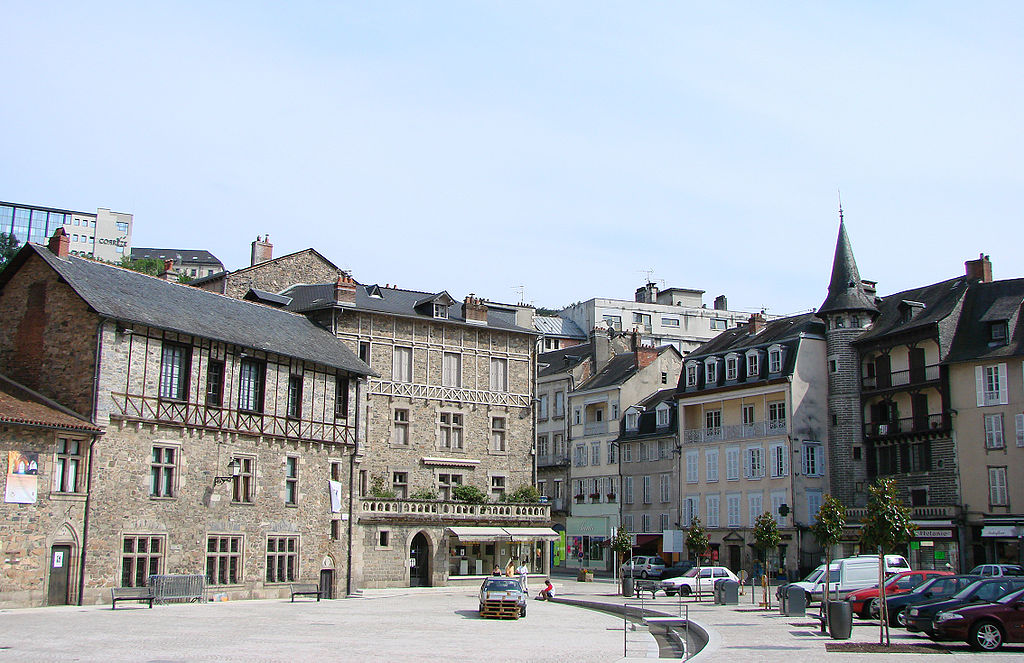
Tulle_2207In June 1944 in the French industrial town of Tulle the Germans declared they were going to execute 120 people in a reprisal for a defeat by the resistance. They began hanging them from the balconies and lamp posts of their own town. Having murdered 99 innocent men aged between 17 and 42 they stopped, possibly because they simply ran out of rope.

This sort of chilling anecdote regularly illuminates this fine narrative history of the French Resistance. The book strives to outline the breadth and depth of the French resistance, in the process remembering key figures such as Moulin in their full human complexity and capturing the excitement, horror, heroism and tragedy of this aspect of the struggle against the Nazis.Jean Moulin

A central theme of the books is how the heroism of the Resistants was taken advantage of by De Gaulle, who derived the political benefits of the struggle while barely acknowleging the sacrifice of the resistants. Nevertheless, while always clear in his sympathies to the Resistants of both Left and Right, the author does not shirk from addressing some of the atrocities and excesses of those same people.

The climax of the book is, perhaps inevitably, the liberation of Paris, in many ways an aberration in the Second World War. Elsewhere, including parts of France, there was an almost total failure of the Allies to support the national insurrections against the Nazis, with terrible consequences from Prague to Warsaw.

Overall an excellent introduction to this period of history in all its bloodshed and confusion.

Is Paris Burning? by Larry Collins and Dominique LaPierre

Summary: a fine account of the liberation of Paris

A detailed account, in the mould of Cornelius Ryan’s great second world war trilogy, of the 1944 Paris insurrection. The story of its initiation and its relief is drawn from the personal reminisences of participants and witnesses, French, American and German.

This leads to a gripping and at times very moving book. Though the vastness of the cast occassionally makes it difficult to keep track of characters this never detracts from the coherence of the sprawling narrative.

The account is broadly pro-de Gaulle in its sympathies, but otherwise the authors keep to themselves their views of the wider controversies associated with the relief of Paris, such as the decision by the resistance to stage an insurrection in the first place and the relationships between the resistance in France and de Gaulle’s government in exile. The arguments of various participants are outlined and examples of the tensions are recounted but the authors don’t exercise much their own judgements rather letting many of the real people speak for themselves and the readers decide.(For more on these controversies see Mathew Cobb’s The Resistance)

An exemplary work of journalism rather than history, and none the worse for it.

Homicide in the Navajo Nation – Skinwalkers, by Tony Hillerman

Navajo 2In the middle of the night someone tries unsuccessfully to kill Navajo police officer Jim Chee by putting three shotgun blasts through the wall of his trailer. Meanwhile Lt Joe Leaphorn is investigating three apparently unrelated homicides in different parts of the reservation. As Leaphorn’s enquiries proceed he senses a link with the attack on Chee and so recruits his help to the investigation.

The contrasting personalities of traditional Jim Chee and more sceptical Joe Leaphorn are finely drawn – both deeply attractive characters, not perfect but complementary to each other in their professional skills and with imperfect but believable private lives as well. The detail and care of the characterisation enriches an absorbing plot and a beautifully plain style of writing.Navajo 1

Much of what I have written above could be said about many fine thrillers. But it is the rooting of this story in Navajo history and culture that makes it something truly out of the ordinary. This provides not just absorbing background to the plot but a context that is fundamental to understanding the motivations of the characters.

Having finished it, it is great to know there is more in this series, but sad to find out that Tony Hillerman died a few years ago – its like meeting a new friend only for them to disappear immediately.

War by Sebastian Junger

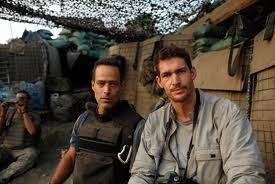
War is a book derived from the author’s time spent with an American combat unit in Afghanistan. It is is an exceptionally honest and thoughtful meditation on battle, what it does to combatants and the nature of courage.

RestrepoJunger frequently allows himself into the story but by and large avoids the “journalist as hero” cliche, using his presence as a surrogate for the reader, trying to make sense, with occasional reflection on social science and history, on what he is seeing and experiencing.

The book generally eschews context, both geo-politcal as well as local, with the voices of Afghans barely heard, and the politics of the region largely undiscussed. Junger argues, not unreasonably, that this is beyond the scope of his research focus. Nevertheless the book remains vital for understanding the risks inherent in waging this type of war. If the reader bothers to contemplate this book beyond the fine writing and gripping descriptions of battle, death and survival, they will find an unsettling moral: if courage is love, as Junger argues convincingly that it is, then the loyalty that breeds may also provide, at least sometimes, the basis for individual participation in atrocity and cover up.

The Reckoning: The Murder of Christopher Marlowe by Charles Nicholl

Summary: an intriguing investigation into the squalid end of a dubious man, but brilliant writer

The death of the playwright Christopher Marlow, supposedly in a pub brawl over a bill (“the reckoning”) has long been a source of speculation. Marlowe, after all, had a reputation as a spy and blasphemer that could have made him powerful enemies. Also, the death blow, a dagger wound to the eye penetrating the brain, suggested execution rather that a scrap: such wounds were often the way the coup de grace was delivered to fallen enemy, particularly if armoured, such as at Agincourt.

Taking the murder of Christopher Marlowe as its starting point this book delves into the evil world of the Elizabethan police state. For me the revelation of the book was not so much the explanation of the killing of Marlowe, convincing as that was. Rather it related to the nature of the totalitarian system that Elizabeth and her ministers sought to impose, so much so that they themselves originated many of the plots that they claimed to have uncovered, their purpose entrapment of real, or more often imagined, enemies. The book would be a fine companion to Alice Hodge’s excellent study of the Jesuit mission to England “God’s Secret Agents”, which explores the same milieu from the perspective of the hunted.

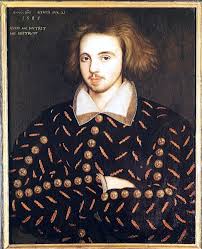
Christopher MarloweMarlowe emerges from the investigation an ambiguous character – probably a nasty manipulator and betrayer of some close to him, but, something that the author does not seem to have considered, perhaps someone ultimately sympathetic to the Catholic cause and caught up like so many others in the brutal machinations of the nascent police state.

Overall an exemplary demonstration of rigorous archival research and analysis to produce a highly coherent and readable account of a complex and confusing mystery.

Finest Years: Churchill as Warlord 1940-45 by Max Hastings

Max Hastings’ Finest Years: Churchill as Warlord 1940-45 is an elegantly written, consistently gripping account of Churchill’s tenure as wartime prime minister.churchill

The author’s central purpose in the book is to demonstrate Churchill’s historical greatness. However, paradoxically, it is the clarity of this purpose that is the book’s central flaw. Mr Hastings’ effort to show the giant that was Churchill is such a dominant theme in the book that it tends to submerge some rather uncomfortable facts. For example: Churchill’s deeply ingrained racism and the degree of his culpability for the wartime Indian famine are only lightly touched upon; Hastings deals very superficially, and wholly in Churchill’s favour, with the persistent historical controversy regarding Churchill’s sacking of Auchinleck in North Africa in the immediate aftermath of the general’s successful reorganisation of the British Army into battle groups and his defeat of Rommel; he barely mentions Bill Slim and the fact that Britain’s greatest wartime general was relegated to the theatre that Churchill thought least of; and he excuses the prime minister’s flights of fancy and disasterous choices later in the war as the result, in large measure, of old age and stress.

This is not to deny the importance of Churchill as war leader: his insistence on continuing to fight after the fall of France was a demonstration of enormous moral courage; his understanding of the importance of drawing the USA into the war to have any hope of victory was more clear sighted than most of his contemporaries; his decision to sink the French fleet at Mers-el-Kebir displayed the sort of ruthlessness that was essential to winning the war; his unsucccessful efforts at establishing a democratic Poland at the end of the war show a sense of decency and honour that contrast favourably with Stalin’s monstrousness and Roosevelt’s disinterest on this issue.

Mr Hastings book would have been even more interesting if he had allowed his portrait of Churchill to emerge from this sort of evidence rather than seeking to impose such an overwhelmingly heroic impression on much more complex material.

Nevertheless, it should be said that few readers could ever feel short-changed by Hastings’ historical writing, which is as ever humane and lucid, and the breadth and depth of his research is, as always, awesome.