Follicly challenged Paddy as knight errant: Plugged by Eoin Colfer

This book marks Eoin Colfer’s move from children’s to adult fiction with the introduction of another serial character: Daniel McEvoy – ex Irish army sergeant, now working as a doorman in a sleasy New Jersey nightclub, worrying about losing his hair and trying to stay out of trouble.

McEvoy is an attractive character and his reflections on life and death, as he tries to extricate himself from increasingly complex and life-treatening situations, are very entertaining and often insightful. However in spite of the violence the book is more of a comedy than a thriller: except for a few scenes there is little sense of menace, and the wise-cracking, though generally entertaining, on a number of occasions simply does not ring true, disrupting any tension that had begun to accumulate. Hugh Laurie managed the combining of comedy and thriller better in his novel “The Gun Seller” in no small part by cutting the wise-cracks from the action scenes. (Paradoxically real life can produce unbelievable dialogue: George McDonald Fraser notes in his memoir of the war in Burma, “Quartered Safe Out Here”, that he once heard a comrade shout, after having been shot, “They got me the dirty rats!”, something, he says, that despite being true was so unbelieveable he would never have used it in a work of fiction.)

These points aside, the plot is compelling and satisfyingly twisty, drawing upon the roots of modern crime fiction: Dan carries with him an echo of Chandler’s Marlowe as a fundamentally honourable man, a contemporary knight errant, in a corrupt metropolis. The jokes are generally very good indeed. And many of the characters, particularly, I thought, Zeb and Simon, well drawn. It also highlights the courage and experiences of UN peace-keeping forces (Dan is a veteran of the operation in Lebanon), something rarely touched upon in popular culture, and something that deserves greater attention.

And the book kept me up at night so I could finish it and find out how the various strands resolve: one should never quibble too much about a book that can do that.
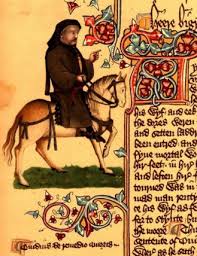
Unpeeling the layers of a cover up: Who murdered Chaucer? by Terry Jones

Chaucer1

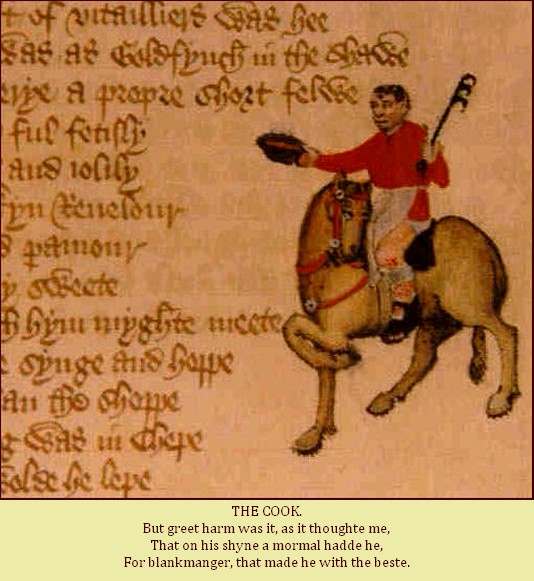
The authors admit at the outset that they are not even sure if Chaucer was murdered. But they use the question to probe the political and cultural milieu of the late 14th century. In the process they convincingly destroy the myth of Henry Bollingbroke’s popular and bloodless coup against Richard II and instead show it up for the illegal, sanguinary and repressive affair that it was. In this context the authors show that it is at least plausible that Chaucer, the court poet and political follower of Richard, did not die peacefully, particularly given the emnity that he earned from his lambasting IN ENGLISH of the corruption in the Church in Canterbury Tales. They also construct a compelling circumstantial case against the likely culprit.

Chaucer-04-CookAlong the way the authors provide a useful introduction to the Canterbury Tales themselves and the importance of Chaucer as both a poet and a proponent of the English language.

One slightly irritating feature of the book is its peppering with Jones’ jokes. No doubt someone thought that this would be expected by readers. However this is ill judged. The book can stand on its own as a piece of historical and literary research and it doesn’t need the jokes to carry the reader forward: The argument does this on its own… And the jokes are not very good.

This quibble aside it is a fine book and a worthy companion piece to Terry Jones’ Chaucer’s Knight.

20 years on: Innocent by Scott Turow

After 20 years its good to catch up again with some of the key characters of Presumed Innocent who have, since that book’s publication, been hovering at the edges of Turow’s novels – almost all based in the fictional metropolis of Kindle County – a stand-in, one presumes, for contemporary Chicago.

Rusty Sabich, the protagonist of Presumed Innocent, is now a senior judge. Tommy Molto, his former prosecutor, is in Rusty’s old job, in charge of the County’s Prosecuting Attorney’s office. The plot of this book revolves around the mysterious death of Rusty’s wife, Barbara, as Tommy is reluctantly drawn into investigating him again.

While the plot and mystery are compelling the true joy of the book arises from the exploration of the messy lives and loves of the characters. Turow uses the device of first person, present tense narrative for three of his principal protagonists. Hence we come to know them intimitately while they remain in crucial ways mysteries to each other and to Tommy. There is an echo in this book of vintage Graham Greene in the compassion and understanding with which Turow treats the characters and their mistakes. However, unlike much of Greene’s work, in this book it is the Catholic character, Tommy, who’s moral compass is steadiest in the midst of all, his prosecutorial zeal mellowed with love and age to a more humane commitment to justice and rule of law.

This book may lack the twists and surprises of Presumed Innocent, but it makes up for it in many other ways, not least the beauty of its writing, and is pretty much an unalloyed joy from start to finish.

Quartered Safe Out Here by George MacDonald Fraser

Summary: gripping private’s eye view of the war against the Japanese in Burma, by the man behind Flashman

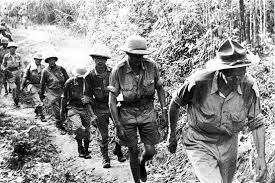
Towards the end of his life George McDonald Fraser wrote this memoir of his experiences as a very young man fighting in the last battles of the Burma campaign. He acknowledges the unreliabilityBurma of his memory – the result not of age but of being a young private (later a lance corporal) in the chaos of war. His memory of contacts with the enemy in battle is very clear, he writes, but he needed to refer to regimental histories in order to make sense of these memories in the broader narrative of the campaign – something to which he would never have been privy at the time.

The result is a remarkable book – funny, exciting and moving by turns as he recounts his life in Nine Section, a Scot in the midst of Cumbrians. He remained to the end of his life, he notes, a man of his times, a product of imperial Britain, unforgiving of the Japanese (the repeated use of the term “Jap” drives home this point) and unapologetic of these facts. His honesty about this and about how the war was fought is an important aspect of the book, fundamental to presenting a clear sighted but affectionate portrait of the sort of men who served. Paradoxically this also leads to points where he rails against aspects of the modern world – European Union, and a perceived “softness” on criminals for example – perhaps honest about what he felt but, unlike the rest of the book, little to do with considered experience.

These quibbles aside this is an exceptional book, beautifully written and a fine tribute to the men Fraser served with and the generation who defeated European fascism and Japanese militarism.

Prologue to the cataclysm: Anthony Beevor’s The Battle for Spain

robert_capa_civil_war_3

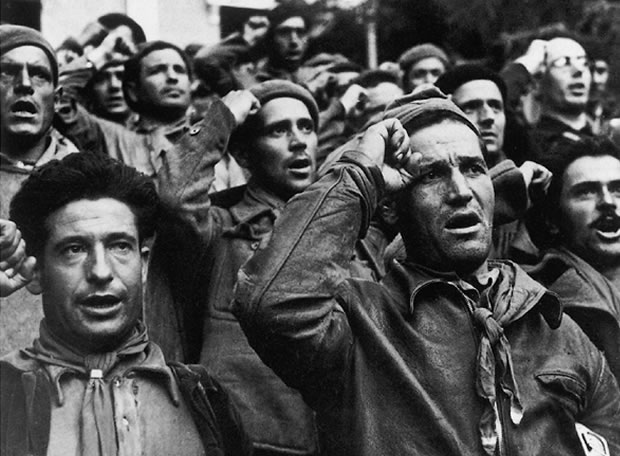
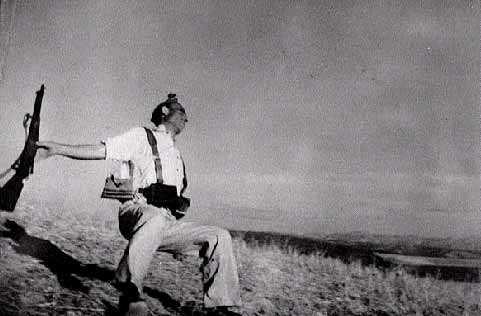
Antony Beevor has written fine accounts of the battles of Stalingrad, Berlin and Normandy. However this book must rank as his masterpiece. It is a gripping narrative history of the Spanish Civil War, updated from an earlier account he wrote, with new material from former Soviet and other sources. At just over 450 pages (excluding references and notes) it is a substantial volume, but still only half the length of the Spanish language version of the work.

The author is clearly sympathetic to the cause of the Spanish Republic, but this does not stop him from being scathing about its failings, particularly its military ones. He is clear-sighted also about the atrocities of the Republicans but these pale in comparison with those of the Francoists, which were systematic and often chilling in their brutality. In one instance an American journalist was present when a fascist officer handed over to his troops two young girls. The officer “told him calmly that they would not survive more than four hours” (p. 92).capa_essay_01

The Spanish Civil War prefigured the cataclysmic struggle of the Second World War, both in terms of the ideological conflicts and as well as the pitiless violence. Yet it is also a conflict which is important to understand in its own terms and for its influence on contemporary Spain and Europe. This is something that Beevor manages seemingly effortlessly. It is a great work of narrative history.

Making the Borgias boring: Christopher Hibbert’s The Borgias

Lucrezia Borgia

Lucrezia Borgia

This is a startlingly dull biography of one of history’s most infamous families, its limitations perhaps a product of the fact that Christopher Hibbert was working on this towards the end of his life.

There is a welcome focus in the book on the unfairly maligned Lucrezia, and the author illustrates how she was a pawn in the power-plays of her pope father, Rodrigo, and brother, Cesare. The book details her many horrific experiences, including the murder of her husband, probably by her brother Cesare, and effectively refutes the myth of her monstrousness

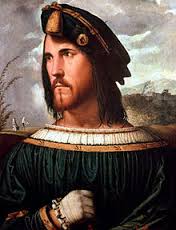
Cesare was no more dastardly than his contemporaries, and in many ways more effective, as Machevelli’s account indicates. But he was still a pretty nasty character. He was a murderer and a rapist, keeping, for example, Caterina Sforza-Riario, ruler of Imola and Forli, as a sexual slave for weeks after sacking her cities. Tiring of her after a while he consigned her to the dungeons. Hibbert treats the coarse humoured contemporary accounts of the “willingness” of Caterina at face value, rather than consider in any great depth the invidious nature of Caterina’s position, and what this says about Cesare.

Casere Borgia

Casere Borgia

Time and again Hibbert seems more interested the clothes that the Borgias wore rather than the psychology of the family and the politics, papal and secular, that drove them. On the positive side it is a short book and does provide a relatively concise overview of the careers of this family. Still considering the potential of the source material it is a disappointing book, and probably unrepresentative of the author.

Once upon time Britons were also wholehearted Europeans! Simon Armitage’s The Death of King Arthur

img_1078Simon Armitage follows up his exquisite translation of Sir Gawain and the Green Knight with this translation of the Alliterative Morte d’Arthur. Again, as Heaney also did so brilliantly with Beowulf, he manages to render into contemporary language the poem while remaining true to the original’s spirit and content. The almost monotonous relentlessness of the violence in this poem however makes it a somewhat less satifying work that those other two, but it is still an entertaining excursion to the Dark Ages.
The story begins with envoys of the Roman Emperor showing up in Arthur’s court demanding tribute. Arthur responds by declaring war on Rome and setting off on a campaign to assert his own rights in Europe. Behind him, in Britain, he leaves his nephew Mordred as regent… a bad mistake.

Much blood and internal organs are graphically shed as Arthur fights his way across Europe, with Gawain, the greatest of his champions, in the thick of the fighting. Armitage notes in the book’s introduction, that this is an older, more seasoned Gawain than the one we encountered in the Green Knight, but he remains, in his chivilrous concerns, recognisably the same character even in the midst of some very sanguinary battles.

One other thing that struck me about this poem: in it Britain is very much a nation at the heart of Europe, a Celtic kingdom that extends from southern Scotland to central France. Arthur is explicitly represented amongst the Nine Worthies as pre-figuring the unmistakeably pan-European Charlemange and Godfrey of Bouillon, a leader of the First Crusade. Hence he is more entitled to the throne of the Roman empire than the man who has demanded tribute of him. It is Ireland and the Scottish Highlands that are the place apart, the uncivilised Atlantic fringes beyond the European mainstream. How times change.

Overall this is a fine, compelling piece of work by one of the most interesting and entertaining of English poets, one who is also currently working at the top of his game

Important insights marred by irritating writing style: Paul Collier’s The Bottom Billion

A street in Roque Santeiro market, Luanda, Angola

A street in Roque Santeiro market, Luanda, Angola

The Bottom Billion is well worth reading for presenting some very powerful insights into the causes of conflict and poverty from some imaginative economic analysis. However Prof Collier does rather overegg his argument with the tiresome use of straw men: assigning to his imagined opponents views which almost no one holds. For example how many leftist political scientists would regard the Lord’s Resistance Army as anything other than a manifestation of murderous craziness? Prof Collier suggests at one point that there is some latent sympathy for them in vast swathes of academia.

He also asserts support for his analysis from some dubious historical examples: for example he argues that UNITA’s welcome demise in Angola arose from the imposition of effective measures against blood diamonds, which reduced UNITA’s natural resource wealth.

I worked in Angola when some of these measures were put in place and certainly was a vocal supporter of such sanctions as a means of reducing UNITA’s capacity to kill. But I think most people who know a little of the Angolan conflict would feel that the provision of American intelligence to the Angolan Armed Forces had more of an impact on the destruction of UNITA’s armed insurrection, leading ultimately to the killing of their psychotic leader Jonas Savimbi.

So overall a book worth reading for the important insights drawn from fine research, but requiring of something of a strong stomach to get over Prof Collier’s irritating tendency in this book to suggest that he is the only wise thinker on conflict in the world.

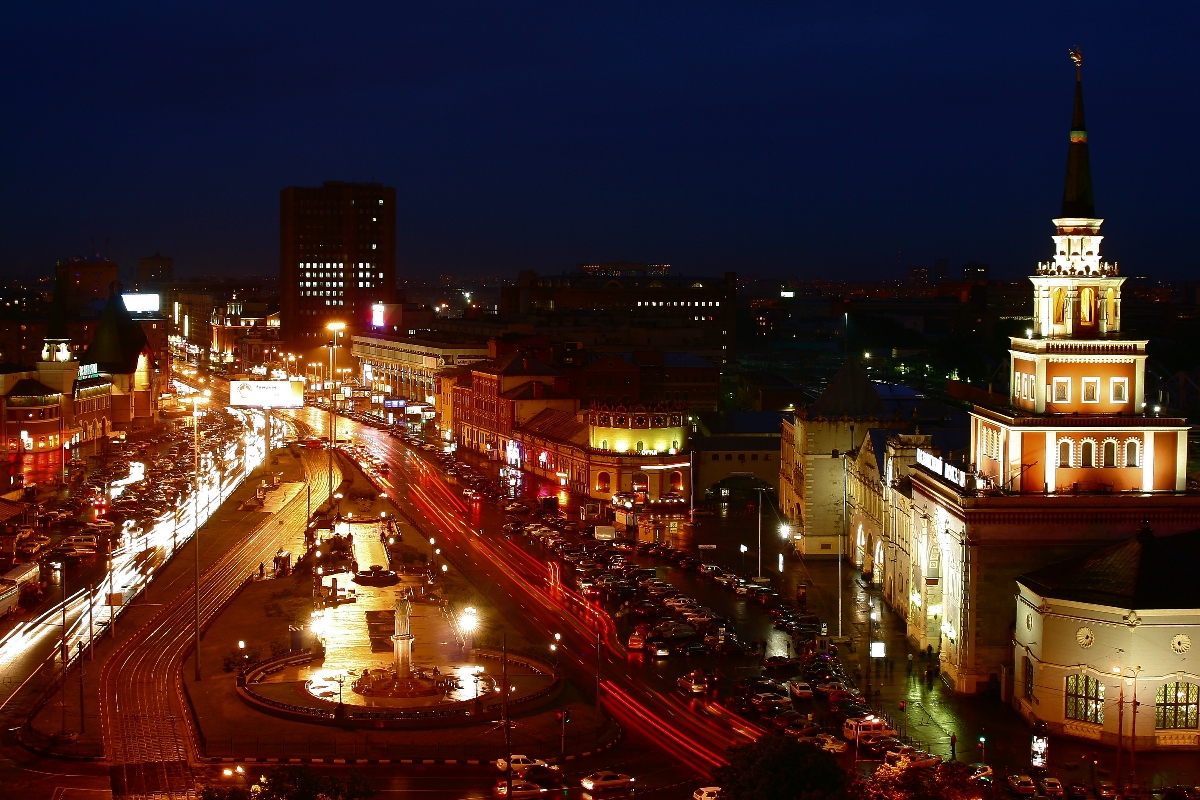
Renko returns to the mean streets of Moscow: Martin Cruz Smith’s Three Stations

Komsomolskaya (Three Stations) Square

Komsomolskaya (Three Stations) Square

In the years since Investigator Arkady Renko’s first appearance in Gorky Park his fortunes have waxed and waned with the politics of Russia. This has brought him threat of execution, exile on a factory ship as a political undesirable, and rehabilitation in Yeltsin’s Russia.

In Three Stations Renko is once more out of favour with the powers that be. In spite of this he begins to ask awkward questions relating to the dead body of a young woman found with no obvious injuries. Elsewhere Renko’s young friend Zhenya takes it upon himself to try to help a young girl who’s baby has been stolen, also in Three Stations. Their investigations bring them into contact with the excesses of Russia’s contemporary oligarchs and the desperation of the abandoned children who live at the margins of Moscow society.

Renko must rate as one of the nicest detectives in modern crime fiction: the tragedies of his life, his deeply regretted, but very useful, capacity for violence and the mundane horrors of his work never undermines his inate decency, wry humour, and unfailing politeness. In many ways he’s like Inspector Morse but without the grumpiness in a bloodier Russian milieu.

While there is little of the shock of the new that came with Gorky Park’s exploration of Soviet bureaucracy this book is still a cracking thriller, and a return to form of a great series that has lagged somewhat of late. As always Renko is like the most dependable of old friends, a compelling guide and knight errant in the midst of a brutal labyrinth.

Imagining Gettysburg: The Killer Angels by Michael Shaara

Gettysburg

The Killer Angels is a fine account of the Battle of Gettysburg, the turning point of the American Civil War. Shelby Foote’s magisterial history of that war credits the Union victory at Gettysburg principally to Generals Reynolds and Hancock. However, with the exception of the Confederate General Robert Lee, who is a major protagonist in this novel, for the most part The Killer Angels focuses upon key second and third rank leaders, in particular Longsteet amongst the Confederates and Buford and Chamberlain in the Union army: Buford fought decisively on his own initiative on the first day of the battle to deny the Conferates the high ground, and Chamberlain, along with others such as Paddy O’Rorke and the New York 140th, conducted a brilliant defense of a hill called Little Round Top on the second day to stop the Union forces from being flanked. Both these incidents had been overshadowed in other accounts of the battle, including Foote’s. Here the defence of Little Round Top is the centrepiece of the book, vividly described and for me the novel’s highlight. In emphasising the Little Round Top fight Shaara ensures that Chamberlain, one of the Civil War’s most outstanding figures, is properly remembered (though, perhaps unfairly, to the exclusion of some others who fought on Little Round Top that day).

Joshua Lawrence Chamberlain

Joshua Lawrence Chamberlain

The book advances the thesis that aside from fine Union leadership Confederate disaster at Gettysbury arose from an overwhelming hubris on the part of Lee who seemed incapable of believing, after so many victories up to that point, that defeat could any longer be a possibility for him. However while there is probably considerable truth to this thesis it is sustained in this novel by the sleight of ignoring Lee’s efforts, stopped by the Union cavalry including a young General Custer, to get behind the Union lines with Stuart’s cavalry in support of Pickett’s charge. Pickett’s charge was a desperate gamble, but maybe not quite the sacrificial affair portrayed here. Indeed Custer and the other cavalry who fought that day should perhaps stand alongside Chamberlain and Buford for the importance of their actions on the third day of the battle in ensuring Union victory.

Foote’s Civil War has been called an American Iliad, and it certainly must rank amongst the outstanding American literature, as well as history, of the twentieth century. In the Killer Angels the Homeric echoes are also poignantly present, most notably in the character of Longstreet, doomed like Cassandra to foresee in the minutest detail the coming disaster, but like her unable to make anyone believe him. The image of Longstreet weeping as he passes on the order for what he knows will be a slaughter of his troops on the last day of the battle is a powerful one.

Overall a fine novel that seeks to honour the courage of all, even those who fought for the vile cause of the Confederacy.