Don’t mention the apartheid: Caste-discrimination and poverty in South Asia

Speech to 2014 Annual General Meeting of Dalit Solidarity Network

I started my professional career as a water engineer and spent years in Ethiopia, Eritrea, Afghanistan and Angola focused on how water and sanitation interventions could help reduce poverty or mitigate the consequence of war.

There are millions of people alive today across the world because of the work of water and sanitation engineers and this work remains a vital, under-resourced and often under-appreciated strategy in long term poverty reduction and humanitarian response.
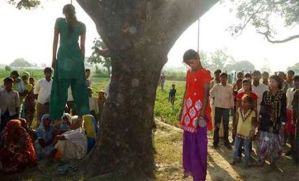
girls-hanging

Badaun sisters’ rape-murders: ‘They could have been saved if police acted’, says family

But it’s not a panacea. And I was appalled last week to read an article on the BBC website, which presented seriously the idea that a new latrines programme in the Indian village of the two young girls found hanged in a tree in May, after they had gone to defecate in the open, was a sufficient response to their rape and murder.

The founder of the charity that put the new latrines into the village declared that “I believe no woman must lose her life just because she has to go out to defecate”, echoing Prime Minister Modi’s Independence Day speech on 15 August when he vowed to end open defecation.

We are in the 21st Century and yet there is still no dignity for women as they have to go out in the open to defecate and they have to wait for darkness to fall,” he said. “Can you imagine the number of problems they have to face because of this?” he asked.

Open defecation was a problem in Angola, Ethiopia and Afghanistan when I worked there but while poor sanitation is a constraint particularly on girls education and renders millions of women vulnerable to all forms of sexual harassment and assault, it does not inevitably lead to an epidemic of rape and lynchings. Other factors are necessary for that to occur.

Anybody brought up with the Rockford Files knows that all crimes, particularly murders, have three fundamental elements: motive, means and opportunity. But starting with an article in the Guardian by the director of Wateraid shortly after these atrocities there has been a tendency amongst some leaders to substitute the motive for these rape-murders with the opportunity for them.

I would like to discuss why this has been happening because I feel it touches upon an important and troubling issue.

The American business theorist Chris Argyris identified the issue of “undiscussability” as a key factor in reducing the capacity of organizations and businesses to perform effectively. Organizations, he found, were unable to discuss risky or threatening issues especially if these issues question the underlying assumptions and policies of the organization.

That idea applies to states and communities as well as organizations. And so responses to the deaths of these two girls have avoided perhaps the most undiscussable issue in human history: that of the intrinsic violence of caste-based apartheid.

Arundhati Roy points out in The Doctor and the Saint that, “Poverty … is not just a question of having no money or no possessions, Poverty is about having no power”.  Caste-based apartheid maintains that exclusion from power of hundreds of millions of citizens in a way that is vitally important politically and economically for powerful elements of society’s elites.

It is increasingly clear for example that the maintenance of this social system provides competitive advantage to South Asia, particularly India, in the globalising political economy. Caste-based apartheid underpins the “camp coolie” and “Sumangali” systems allowing the powerful to enslave with impunity vulnerable workers, often young Dalit women and girls, and hence to derive considerable profits from their enslavement. Each of us in this room is also benefiting from that enslavement as it allows, amongst other things, the provision of cheap clothes to our high streets and so, each of us is probably clad in at least one garment that has been produced in some part through the labour of enslaved people.

Making the issue of caste-based apartheid undiscussable insulates it politically and allows the elite greater security in their feudal level of aristocratic privilege: how can something become a political issue if one cannot even give voice to the question?

So I suppose I should not be shocked that a response to the rape-murder of two young Dalits is a sanitation programme. It comes from the same philosophical tradition as a compulsory education law to address child labour or a rural employment guarantee scheme to respond to bonded adult labour.

Each of these programmes hopes to treat a serious symptom of poverty, and indeed they do hold potential to do so. But they scrupulously avoid mentioning the cause of the problems. That is because the cause of the problems is caste-based apartheid and the child labour and slavery that this facilitates and there are too many vested interests who benefit from that for it to be a politically safe topic of conversation.

The failure to engage with the undiscussable issue of caste in South Asian society is a failure in the most basic principles of good development practice. There has been over the past decade a growing discourse of development as a technocratic project. That is an idea that poverty reduction is principally about the transfer of things to people who do not have things. Bill Gates has been a particularly powerful advocate of this approach and we see it reflected in, for example, Fairtrade’s fixation on prices paid to producers as the holy grail of poverty alleviation, to the exclusion of almost all other development issues.

But effective democratic development is not primarily a technocratic, or even an economic, challenge. It is a political one. Democratic community development should be about empowerment of vulnerable and at risk people. Sometimes the constraints on empowerment are material things. But much more often they are social systems which aim to exclude certain people from inclusion in society and in poverty reduction measures, and if these are unaddressed by development processes then the development project itself is constructed on foundations of sand. Dr Ambedkar’s words in relation to just revolution also pertain to just development: “What is required is a profound and thorough conviction of the justice, necessity and importance of political and social rights”.

But the challenge of caste-based apartheid and its undiscussability shows something more profound. Development is also a philosophical project: it is about finding the cause of injustice and calling it by its true name. Without this the system retains its power to warp and undermine even the most well-meaning efforts towards justice.

When I was thinking about what I was going to say here Seamus Heaney’s words from his poem “Whatever you say, say nothing” kept coming back to me:

O land of password, handgrip, wink and nod,

Of open minds as open as a trap,

The outside world does not well understand the South Asian codes for caste discrimination allowing the perpetrators greater leeway to continue with what they are doing guarded by silence, and by this incomprehension, from criticism by the international community. And the enforced silence around caste-based apartheid now extends as far as the UK with this British government’s pusillanimous acquiescence to Brahminist lobbying by refusing fundamental protections of British law to British citizens who happen to be Dalits.

And so the trap of caste-based apartheid that has ensnared millions of people across the world still grips, and its grip threatens fundamentally the democracy of those states that tolerate it, not least the world’s largest democracy.

Heaney went on to describe the explosive potential that injustice stoked in oppressed communities. That explosive potential must also exist in contemporary India and the rest of South Asia so long as the violence of caste-based apartheid is unaddressed. There remains time to prevent conflagration by acting with justice.  As Ambedkar pointed out “Law and order are the medicine of the body politic and when the body politic gets sick medicine must be administered“. Specifically  effective rule of law across South Asia must be extended by expansion of the judiciary, rooting out of corruption in the police, criminalisation of caste discrimination and making sure that laws like the Indian rural employment guarantee scheme and compulsory education act are fully and effectively implemented.

But time is running out. And if the rest of us remain silent on this issue of caste-based apartheid then we will also have to accept some measure of responsibility next time we hear of other crucified Dalits hanging from trees.

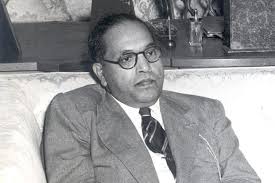
The Doctor and the Saint: Arundhati Roy’s introduction to B R Ambedkar’s Annihilation of Caste

Arundathi RoyArundhati Roy’s introduction to this new edition of BR Ambedkar’s classic work has not been without controversy. For one thing it has meant that this new edition has been rendered unaffordable to most Dalits (previously called “Untouchables”) across India. Gandhi had already called it overpriced at 8 rupees when it was first published. But then Roy doesn’t have too much good to say about Gandhi either, and her analysis of his life and politics is likely to upset many particularly those who have bought into his deification. Of course Gandhi was human and as flawed as the rest of us, and Roy’s focus with this essay is on an area where Gandhi’s record is least defensible: his attitude to caste.

Roy’s stature as one of India’s finest contemporary writers has meant that her introduction to the Annihilation of Caste has brought, Ambedkar, his disputes with Gandhi, and the still bleeding wound of caste-based apartheid in India to much wider attention across the world: I have even seen the great American actor John Cusack enthusing about this introduction on twitter!

Roy is a stunningly gifted writer and a justly furious citizen. Both these traits come together brilliantly in this essay, which combines an excoriating critique of caste-based apartheid in India with biographical sketches of Ambedkar and Gandhi and a careful discussion of the contention between the two men in the struggle for Indian independence and social justice.Ambedkar

Gandhi may have had much to recommend him as a giant of the 20th Century but he does not come out of this comparison well. Roy makes a compelling case that Gandhi maintained deeply racist attitudes towards Dalits and Africans all his life: once, for example, he compared the teaching of the Christian Gospel to Dalits as like preaching to a cow. Hence Gandhi consistently sided with vested Bramhinist interests in entrenching caste prejudice in the Indian independence movement and hence in the emergent state. One contemptible tactic that Congress used that demonstrated the prevailing racist attitudes towards “low” castes was to nominate “Untouchable” candidates to the 1930 provincial elections. They did this not to promote Dalit rights but to destroy the British-sponsored elections. They knew that the nomination of “Untouchable” candidates would make sure that no “respectable” Hindus would run as independent candidates for bodies polluted by the presence of “Untouchables”. When the constitutional arrangements for the new Indian state were under discussion Congress ensured that Dalits were substantially excluded from representation by refusing to allow a separate electorate for them as had been established for the less numerous Sikhs. Gandhi had even threatened to starve himself to death at one point to ensure that no separate “Untouchable” electorate was ever established.

The attitude to caste of India’s founding generation is not an issue of mere historical curiosity. Dalits and other low caste and minority groups in India are still routinely subject to enslavement, rape, torture and murder with de facto impunity. And the impunity for these contemporary injustices was written into the modern Indian state by the errors and prejudices of those who founded the state.

Roy does not let her evident admiration of Ambedkar prevent her from giving a clear sighted portrait of him: she notes that as Gandhi was startlingly unempathetic towards Dalit liberation and empowerment so too Ambedkar had a dreadful blindspot towards the treatment of the Adivasi community of India. Roy recognises that the rationalist spirit that Ambedkar espoused demands that he is not deified but treated as the brilliant but flawed human that he was.

The Doctor and the Saint is remarkable work of advocacy, a passionate effort by a person of conscience to force the issue of caste onto India’s, and the world’s, political agenda. Given the violence and misogyny in large parts of Indian society and the looming election to the premiership of Narendra Modi, a member of the ultra-right RSS of whom she is scathing, at the time of writing, it also marks Roy out as a startlingly brave woman and an exemplary citizen.

Annihilation of Caste is a book of historical importance. Roy’s introduction does it, the cause Ambedkar espoused, and by extension all humanity, proud.

Boycotts in the history of human rights struggles

The growing calls for boycotts of Israel and Israeli goods led me to reflect over the past couple of days on the role of boycotts in the struggle for human rights. 

I reckon Anti-Slavery International can (just about) claim credit for the idea of the boycott: in the 1790s: our predecessors in the Committee for the Abolition of the Trans-Atlantic Slave Trade advocated boycotting slave-produced sugar as part of the campaign to end slavery.

image

The boycott was later introduced to Ireland by one of the greatest of all Irish leaders, Charles Stewart Parnell, in the midst of the agitation for land reform in the late 19th Century. He was desperate to obtain an effective means of non-violent resistance that would harness the energies of his movement and head off potential for violence as the conflict intensified. Shortly after proposing the idea it was put into impressive effect against the eponymous Captain Boycott in Mayo and his name has stuck to the tactic.


Charles Stewart Parnell

Charles Stewart Parnell

When delivered effectively boycotts can still be potent weapons. But they are also often blunt instruments: They can and do cause hurt to those they are launched in sympathy with as well as their oppressors. During the struggle against apartheid in South Africa activists were clear that boycotts of South African goods would also harm black South Africans alongside the racist clique running the country. However they judged that the level of harm would be marginal compared to what they were already suffering and the damage to white economic interests would be disproportionately higher.

Given the risks of harm to intended beneficiaries the boycott, as a weapon in the struggle for human rights, must be one of last resort. Anti-Slavery, in consultation with colleagues in Uzbekistan, judges that the state-sponsored child slavery practices in the cotton sector there warrant a boycott. There have also been suggestions of a boycott of the Qatar 2022 World Cup because of the routine use of forced labour by that country in the construction of the venues and infrastructure for that event. However the ideal would be that international pressure on the Qatari authorities would lead to increased opportunities for decent work for the tens of thousands of South Asian workers who have sought employment there as a potential route out of poverty.

image

The conflict in Israel/Palestine arguably dwarfs these examples in terms of complexity. But if Israeli policy in the Occupied Territories continues to convince the world that that government has chosen the path of apartheid rather than peace, as former US President Jimmy Carter feared, then many may feel that the conditions necessary to justify a boycott have been met. Perhaps this prospect may eventually open the minds of the Israeli government to alternative policy responses to their illegal occupation of Palestinian lands and their siege of Gaza, imageaway from their current predominantly narrow, military ones. As the Palestinians pose little military threat to Israel there is little chance of a just peace deal being formed to resolve the military conflict. But the moral revulsion that Israel’s disproportionate assault on Gaza has provoked in much of the world, and their continued flouting of international law, may ultimately bring about a comprehensive boycott of the country and with that an increasing economic threat. Ultimately that may demand more just resolution of the conflict with the Palestinian people before international opprobrium becomes intolerable.

The Finish: The Killing of Osama Bin Laden, by Mark Bowden

Summary: An account of the hunt for, and assassination of. Osama Bin Laden by the United States.

The Finish focuses on a number of individuals who had pivotal roles in this effort including Barack Obama as well as various special forces and intelligence figures.

It is a decent work of journalism detailing the evolution of American war making since the 11 Sept attack on the Twin Towers, particularly in relation to the integration of intelligence gathering and information management with special forces operations. However it is not the best work by Mark Bowden that I have read and it is not without controversy.

In Roadwork, an earlier collection of his journalism, Mark Bowden has written thoughtfully and highly critically on the issue of torture. Here he argues, with some discomfort, that a key lead in the hunt for Bin Laden emerged from a number of interrogations of different people under torture during the Bush administration. However the information gleaned from these interrogations was not recognised as important until advances in US information systems allowed for the effective analysis of the multitudinous quantities of intelligence that the US had gathered.

A practical (as opposed to moral) argument against torture has always been that the person being tortured will say anything to get the torture to stop. Hence the information they give cannot generally be relied upon. In her book Audacity to Believe Shelia Cassidy describes this very phenomenon in her account of her torture in Pinochet’s Chile. She also describes how her torturers had time to check every detail that she gave and so with repeated visits to the torture chamber were able to break her utterly. In this book Bowden suggests that advances in information systems which allow for cross checking of all sorts of information has automated the torture verification process that Cassidy’s interrogators undertook at such leisure. So such systems could become used in the future for continued justification for the use of torture.

Bowden acknowledges that his sources did not reveal to him how they actually turned the vague indication from torture interrogations into a solid lead on a real person. However Kevin Toolis, a filmmaker and writer who has made a movie, Complicit, about the use of torture in the “war on terror” argues that in the end the location of Bin Laden resulted from simply bribing a senior member of Pakistani Inter Service Intelligence to help reveal his hiding place. This corresponds with the Obama administration’s official position that torture was not used to locate Bin Laden.

This controversy over torture and a rather superficial treatment of the criticisms of the use of drones aside this is a gripping narrative and still provides a useful and thought-provoking insight into evolution of counter-insurgency and some of the moral questions associated with it.

Giving journalists a good name: Asking for Trouble by Donald Woods

Donald Woods bannedDonald Woods was that very rare sort of journalist who gives journalists a good name: a brave and principled man who fought apartheid and, following the assassination of Steve Biko, which he did much to expose to the world, was “banned”, that is put under house arrest, by the South African government for his troubles.

He wasn’t always this though and his autobiography is an honest account of his education from a prejudiced youth to freedom fighter and prisoner of conscience, though he would probably never have described himself this way: his autobiography suggests he was a man who had a lovely sense of humour about himself and the world. This, and his passionate rage against injustice illuminates his account of his life reporting apartheid South Africa, which is told in the snappy prose style of a gifted newspaperman.

My speech to 103rd International Labour Conference, 28 May 2014

I would like to thank this Conference for the opportunity to speak on behalf of Anti-Slavery International and the Global Alliance Against Traffic in Women.

Everyone here is aware of the ILO estimates of a minimum of 21 million children and adults in forced labour and that the profits from this exploitation are estimated to be $150 billion per annum.

That is a dreadful indictment of how we conduct our business today.
We are no longer living in a 1930’s world. Today the expansion of globalisation means that the international law governing the contemporary realities of trade has become vital. Hence this Conference is the essential forum where the dark side of these new realities must be confronted, not with fine words and voluntary approaches, but with robust international law.

Unless robust action is taken to extend the rule of international law against forced labour the routine enslavement of marginalised workers will continue to be at worst facilitated and at best tolerated in the global political economy.

So, as the UN Special Rapporteurs on Slavery, Trafficking and Migration have recognised, a binding Protocol is required to ensure coherent international action. This is necessary to prevent a minority of unscrupulous businesses and corrupt political elites from systematically using forced labour to derive competitive advantage over the vast majority of honourable business executives and politicians who are striving against all odds to make a better world for their employees and their citizens.

We therefore appeal to this Conference to seek a binding Protocol with a strong Recommendation to the Convention that will require states to ensure law and practice that effectively identifies and protects victims of forced labour, giving special consideration to the particular risks faced by migrants, women and children and to ensure that the perpetrators of forced labour compensate their victims; that require states ensure their courts and law enforcement have sufficient capacity to ensure effective rule of law against forced labour so that states create a level playing field for ethical business, declaring also their expectations of business action to eradicate forced labour from their supply chains and how businesses should disclose their efforts towards these ends; that requires states and employers to promote freedom of association and collective bargaining for all workers; and that encourages states to incorporate into their aid, trade and diplomacy measures to reduce the risk of forced labour.

I am sure that everyone in this room is abhorred by the idea of forced labour and slavery. However that is not enough. This Conference has the power to do something directly about its realities. It is the duty of everyone here to demonstrate that they are as opposed to the idea of slavery in practice as they are in principle. That means a binding protocol and strong recommendation are necessary. If this Conference fails in that task then the judgement of history and of conscience will be harsh.

The political economy of forced labour and slavery

The meaning of the term “political economy” has changed somewhat through history and today its meaning is still somewhat contentious. But being something of a moral philosopher by academic interest I was somewhat surprised to learn that the concept of political economy originated in moral philosophy. The term was originally used “for studying production and trade, and their relations with law, custom, and government, as well as with the distribution of national income and wealth.”

With the evolution of political economy into economics we seem to have established a dominant morality for our contemporary age cut free from the Aristotlean and Judaeo-Christian archetypes of earlier years. Perhaps this new dominant Western morality is most infamously encapsulated by Milton Friedman with his assertion that the only moral responsibility of business executives was to maximise profits for shareholders within the law.

This new morality becomes increasingly problematic because the loss of the term “political” from the term is not just a terminological shift, or a philosophical one that places the sphere of economics in the realm of quantitative science rather than in that much more slippery and realistically human sphere of moral philosophy. It also reflects another important political reality: many politicians now seem to believe that their responsibility in regulating business is restricted to asking business how it wishes to be regulated.

You can see this borne out if you look at the chapter on supply chains in the recent report in the UK of the Joint Committee of the Lords and Commons on the “modern slavery bill”: some people, myself included, argued to the committee that a law on forced labour in supply chains should be modelled on the UK Bribery Act making individual business executives legally accountable for forced labour in their supply chains. This idea was dismissed out of hand. Others argued for, perhaps a lower standard, a law modelled on the Californian Transparency in Supply Chains Act. There was a parade of evidence from business opposing this. What was acceptable to business was a slight modification of the Companies Act to require them to mention slavery in their annual reports. This of course became the committee’s recommendation.

The practice of business and trade substantially divorced from politics would be problematic if we were still living in an 18th or 19th Century political economy where most businesses were more confined and defined by national borders. In the contemporary globalising economy it is particularly devastating for millions of vulnerable workers, particularly those in poor and corrupt countries where rule of law is slight or where the law is cynically manipulated by the powerful to allow the exploitation of the vulnerable. In this contemporary globalised political economy those who do much of the production of goods and services are separated by great distances from those who commission the production and from those who consume. The scale of these distances means that it is now considerably easier to ignore the death or suffering of those workers than in the past when they were being produced in the same city or country as the consumers and bosses.

The expansion of globalisation means that the international law governing this new approach to doing business becomes increasingly vital. Unfortunately, as Tom Bingham notes in his book Rule of Law, international law has never been the most robust area of law, and that is probably putting the matter very mildly where international business is concerned: Indeed the question of how trans-national business can be held to legal account is a matter that Bingham, one of the most distinguished British jurists of the past 50 years, never even considered in his otherwise exceptionally fine book.

These risks are compounded because, to use a legal metaphor, there is a prima facie case, I believe, that a number of businesses, countries and regions of the world are basing their competitive advantage on the use of forced labour in their supply chains. Anti-Slavery investigations in India have shown how the routinised used of the forced labour of girls and young women is now a central feature of garment production for northern hemisphere markets. Further investigations in Thailand have shown how forced labour is a significant feature of production for export markets, most notoriously perhaps in the fisheries that supply prawns to our supermarket shelves.

In both these countries the failure of international rule of law is compounded by a failure of national rule of law. For Dalits in India, for Lao, Burmese and Cambodian migrants in Thailand, the notion of equal protection before the law would be a laughable notion if the consequences of its absence were not so tragic. In India the the courts are so overworked that it would take hundreds of years to clear the back log of cases in Delhi alone meaning that factories that use forced labour of vulnerable workers, such as those producing cotton garments in the southern Indian state of Tamil Nadu, can act with virtual impunity. In Thailand, police describe migrant workers as walking ATMs, people to be harassed and extorted from not to be protected.

Countries such as India and Thailand are, however considerably more advanced in terms of rule of law than those such as United Arab Emirates and the Gulf states which have fashioned the law, most glaringly with their use of the kafalah system, in order to facilitate the forced labour of vulnerable migrant workers. The 2022 World Cup is already being prepared using the forced labour of thousands of south Asian migrants to Qatar. Again the western companies who trade with and profit from this forced labour system and, most craven of all, FIFA who facilitated one of the greatest forced labour opportunities since the end of the Cold War, are able to do so with impunity.

The kafalah system, which is also practiced in the UK in relation to domestic workers, is only the most glaring example of how national and international law ratchets up the risks for migrant workers seeking decent work by failing to provide sufficient opportunities for safe migration. There is an hypocrisy at the core of this attitude to migration: on one hand governments will decry contemporary slavery and praise those migrant workers whose remittances are often more important contributions to their countries development than international aid. On the other hand those same governments will refuse, lest they upset business interests to back measures in international law that have some prospect of making the world a little safer for them to seek decent work in.

So, if we are considering the contemporary political economy, how human beings arrange their law, custom and government to facilitate production and trade it is clear that large portions of the political economy are crafted to facilitate the exploitation and enslavement of vulnerable workers and that the economic and geographic separation between those who craft they system and the screams of those who serve it allows complacency to build the inertia that allows for the lack of change.

I went to see Chiwetel Ejiofor as Lumumba in A Season in the Congo a few months ago. There is one notorious scene in that play where back in Europe the Western business interests are shown in conference discussing how much they had to give up in Congo without affecting their principle interests. How to ensure not so much that the new boss becomes the old boss, so much as how to ensure that the old bosses remain the bosses under a facade of some form of change.

I think we see a lot of that still with some of the recent political posturing regarding contemporary slavery. In the UK there is a strong emphasis in the “modern slavery bill” on a criminal justice response to slavery, and a refusal to contemplate a migrants’ rights perspective on the issue, a perspective that might contribute more usefully to the majority of people enslaved by disorganised crime as well as the minority in the hands of organised crime.

I don’t wish to be too churlish about the US and UK military/intelligence responses to the kidnapping of Nigerian schoolgirls, because I believe such a response is necessary, but there are already hundreds of thousands of child slaves in Nigeria, carried off and raped in ones and twos rather than hundreds, under the thinest of veils of respectability that is provided by forced child marriage and the fifth wife form of enslavement. We still await a systematic response for these numberless, nameless victims of slavery across Nigeria and the rest of West Africa. A minimum that should include a commitment to obtaining universal children’s education in the region on a curriculum that has a strong emphasis on girls’ and women’s rights.

Most people who have the power to shape law, government or custom in a fashion that would undermine aspects of slavery are against slavery in principle. Few of them are, however against slavery in practice. When they do engage with the issue they do so in a manner that is reminiscent of the political economy of the old Soviet Union, statist, inflexible and oblivious to the functioning of the market economy, when one of the things we do know about slavery is that it is highly entrepreneurial and constantly evolving: an exemplar of unfettered capitalism in fact. Now a lesson we should have learned from the Cold War is that when a statist bureaucracy confronts a free market system the free market approach will triumph. And that is what is happening at the moment.

What I believe we need is a much more social democratic approach to this challenge: one that recognises the human face of the problem and ceases to treat the economic and business aspects as somehow sacrosanct or inevitable. This implies a strong emphasis on regulation of international business, putting forced labour abuses on the same legal basis as bribery is currently treated in the UK, empowerment of those vulnerable to slavery and a co-option of the diverse institutions of society from aid agencies to the courts into the struggle. Slavery eradication must be put at the heart of anti-poverty efforts; the authority and capacity of national and international courts must be extended to allow them to effectively hold to account businesses that may otherwise transgress the basic ideals of the universal declaration of human rights. This should also imply increased attention to safe migration and a holding to account of those states that tolerate slavery within their borders.

There’s a lot of folk at the moment want to be the new Wilberforce, the shinning hero who delivers a great leap in moral progress. I don’t have a lot of time for that. Harry Truman once said “Its amazing what can be achieved when you are not bothered who gets the credit!” Indeed that is because, as the song says, it is “we” who “will overcome” not me.

So that is an immediate question: how do we, professionally, as citizens and collectively fashion a political economy that repudiates slavery in all its forms and all its evolutions – and to hell with who gets the credit for that.