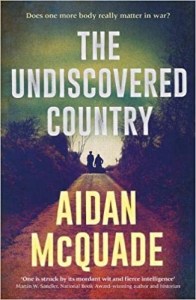
The Undiscovered Country

The tree was in the river and the kid was in the tree… The kid couldn’t have been more than ten or eleven. He looked like a ragdoll caught in the branches.”

So begins my novel, The Undiscovered Country, which, after a long road to publication, is finally out in time for Second Lockdown/ Christmas. The Irish Times has called it, “‘A smart and pacy debut that details a historical period that deserves further exploration.”

For Hamlet, the “undiscovered country” was death. That lurks within these pages alongside reflections on Dutch people’s relationship with beer and cheese, the origins of the idea of the rule of law, and the true meaning of red-headed women in Renaissance paintings. These ruminations are my protagonists’ equivalent of whistling in the dark as they try to get to the truth about a murder that they stumble upon in the midst of a war for another “undiscovered country”, the emergent Irish republic in 1920.

Try it, you might like it. 🙏

It’s available on Hive https://www.hive.co.uk/Product/Aidan-McQuade/The-Undiscovered-Country/24931562

and on Amazon, https://www.amazon.co.uk/dp/1783528079/ref=cm_sw_r_cp_api_i_rSTAFbSQ8WKS0

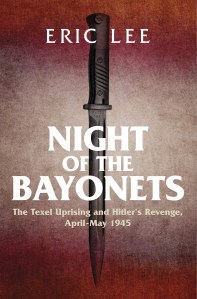
Night of the Bayonets, by Eric Lee

Summary: Georgian-Soviet tensions coming to a bloody reckoning in the last European battle of the Second World War

In their various books both Timothy Synder and Max Hastings have endeavoured to demonstrate how the good versus evil myth so beloved of British Second World War nostalgists, rings very hollow for the peoples of central and eastern Europe. For countries like Poland and Ukraine, for example, the experience was rather to be caught between the monstrous regimes of two of the Twentieth century’s greatest murderers: Stalin and Hitler.

With Night of the Bayonets, Eric Lee focuses in on one small but hugely illuminating example of this bleak reality. 

In the early hours of 5 April 1945, Georgian soldiers serving with the Wehrmacht on the Dutch island of Texel rose up against their German comrades, butchering many of them with knives and bayonets as they slept. 

As Eric Lee explains, the Georgians may not have been enthusiastic Soviets, Georgian independence and democracy having been strangled in the cradle by the Bolsheviks. However, they were unlikely to have been enthusiastic Nazis either. Politics was probably less a factor in them turning their coats than survival. Having been captured by the Germans earlier in the war, donning the German uniform seemed one of their few chances of survival, the alternative being death by a swift bullet or by starvation and disease in a prison camp. 

With the approaching end of war however, the Georgians were pitched onto the horns of another dilemma: how would they be received back in Stalin’s USSR having served in German uniforms. Stalin had already declared surrendering Red Army solders to be traitors. The Georgians must have been aware that if they returned to the Soviet Union they would likely end up liquidated or in a Gulag. 

So, insurrection must have seemed a reasonable gamble, demonstrating their continued loyalty to the Allied cause, and by allying themselves with Dutch communists, with the cause of the Soviet Union. 

It was only after battle was joined that the Georgians found out what other resistance fighters, from Warsaw to Prague to rural France, also discovered: that they were expendable as far as the Allied high commands were concerned. As in Warsaw the Germans also realised this, and so they decided to take their time in exacting revenge on Georgian fighters and Dutch civilians alike. It was not until late May, long after VE day, that Canadian forces landed on Texel, ending the battle.

Other books – most famously Cornelius Ryan’s description of the fall of Berlin, or Stephen Harding’s account of the extraordinary action at the Schloss Itter in Austria – have claimed to be accounts of the “last” battle of the Second World War in Europe. However, Lee’s account of this “last battle” is important not as a historical curiosity, but because it also illuminates so much of contemporary Europe, not least in explaining something of the origins of the ongoing tensions between Georgia and Russia.

Night of the Bayonets is an elegantly written and important work of history, In providing a non-Anglo-American perspective on the Second World War in Europe, it may usefully punctures some of the contemporary myths of the Second World War that still pervade attitudes in the UK. For this, and for much else, it deserves a wide readership.

The Dutch House, by Ann Patchett

Summary: “Happy families are all alike; every unhappy family is unhappy in its own way.”

When reviewing for the first time the play, “Waiting for Godot”, the theatre critic Vivian Mercier, writing in the Irish Times, famously described it as a play in which ‘nothing happens, twice’.

I had a similar thought when reading Ann Patchett’s “The Dutch House.” Nothing happens a lot in it.

Its narrator, Danny Conroy, describes his generally unremarkable life in an account that hops back and forth in time, much like an unreliable memory. Son of a wealthy property developer father in Philadelphia, Danny is really brought up by his older sister Maeve. She takes on maternal responsibilities after their mother’s departure from the family home – the Dutch House of the title. Maeve’s burdens are added to when their father acquiesces to marry Andrea. While the two step-sisters this brings them may not be ugly, Andrea certainly carries a measure of evil with her.

Danny, aware enough to know that he is self-absorbed, gets to go to medical school through Maeve’s efforts and wiles. But he never really practices as a doctor opting instead to become a property developer like his father. Maeve becomes the finance manager of a food company. Danny marries and has a family. Unfortunately, Maeve and his wife, Celeste, do not really get on. 

Around them America is changing, with the Vietnam war, and the demands for civil rights. But these barely encroach upon Danny’s consciousness. Maeve is, we learn in passing, socially engaged.But Danny is never really interested enough in what she is doing to tell the reader more.

So, that’s about it. 

But I don’t want to sell this short. “The Dutch House” is, perhaps, the literary equivalent of a still life of a fruit bowl: an exquisitely crafted rendering of ordinary life, or rather of life of unfulfilled potential. Selfless, wise-cracking Maeve, one feels throughout the book, should be the heroine of golden era Hollywood, a sort of Rosalind Russell figure from “His Girl Friday”, working on front page exposes of graft and corruption instead of being stuck, happily she claims, with balance sheets. By the end of the book one feels that her niece and namesake Mae is on the verge of the sort of life that Maeve should have lived.

“The Dutch House” is shot through with this sort of melancholia, and moments of unambiguous grief. It is a beautifully written and haunting book.

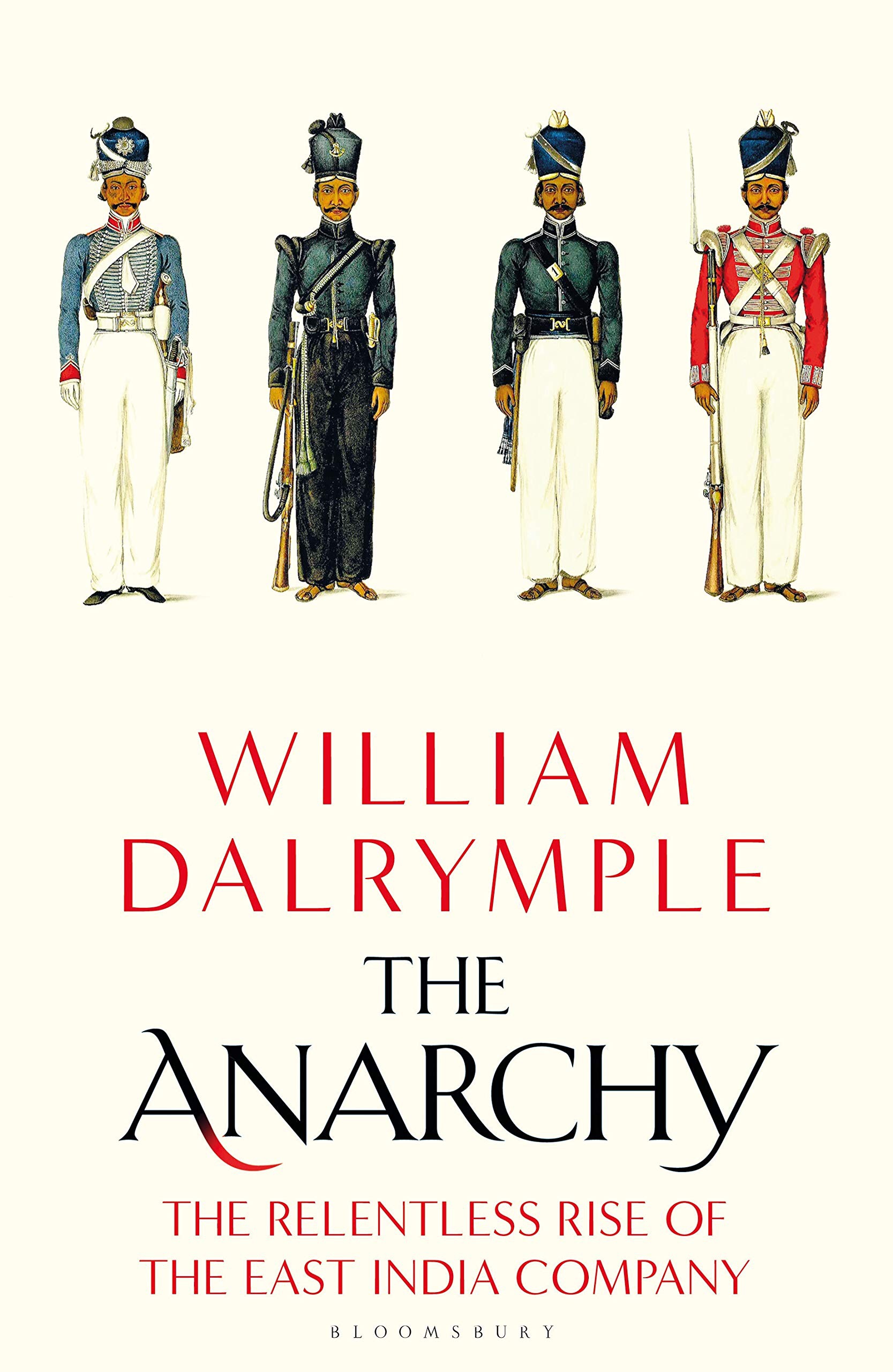
The Anarchy: the relentless rise of the East India Company, by William Dalrymple

Summary: a gripping account of the most hostile corporate takeover in history – the East India Company’s bloody seizure of the Mughal Empire

The East India Company was established in 1600 to facilitate trade between England and South Asia. New markets were desperately needed, then as now, following England’s hubristic decision to politically separate itself from its natural economic hinterland in mainland Europe.

The East India Company eventually established trading posts in the Mughal empire, at the time probably the wealthiest state in the world. By the mid-18th Century however cracks began to show in that empire as it lost territory to the south and came under attack from other powerful states in the north: Persia even sacked Delhi in the late 1730s.

By this stage the East India Company was already in possession of an army from earlier conflicts with the French in the region so it soon became drawn into these wars, first as a king-maker allying itself to different south Asian factions, then seizing the opportunity to take the whole state for itself. In other words the British subjugation of India began, literally, as the most hostile of corporate takeovers.

The cataclysm that British rule represented for ordinary south Asians, something still substantially under appreciated in Britain itself, was the subject of Shashi Tharoor’s excoriating Inglorious Empire. Dalrymple traces the origins of this to the general lack of concern by the English for their newly acquired subjects. Rather they viewed their new conquests as “a pirate views a galleon”, and plundered with murderous abandon.

Even the onset of famine in Bengal as a consequence of East India Company depredations did nothing to blunt their extraordinary rapaciousness. The state continued to be looted to provide riches for the Company officers and dividends to English shareholders with no thought of humanitarian relief for their victims. In the end it is estimated that up to 10 million people were starved to death.

In The Anarchy Dalrymple provides a fine narrative account of the establishment of the East India Company and its conquest of India. He draws not only on European sources for this but also Asian ones. Hence he provides a fine and nuanced portrait of an Indian society before, during and after its destruction by the mercenaries of the East India Company, notably Clive.

Dalrymple seems to have something of a soft spot for Warren Hastings, a successor to Clive, who in spite of his complicity with this larcenous enterprise, was something of an Indiaphile. He also brings to new audiences the careers of major India figures such as Tipu Sultan, and casts new light on the careers of figures whose infamy is now largely forgotten, such as Richard Wellesley, brother of the more famous Arthur, Duke of Wellington.

It is said that the curse of the Irish is we remember everything, while the curse of the English is they remember nothing. As England prepares to cut itself loose again from Europe, this is a portion of their history which they should learn urgently. It will help them understand better why India will likely seek to eat them raw in future trade negations.

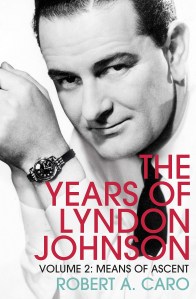
Lyndon Johnson: The Path to Power, by Robert Caro

Summary: the extraordinary first volume of Caro’s planned five volume biography of LBJ

The Path to Power is volume one of Robert Caro’s celebrated, multi-volume biography of

Lyndon Johnson – four volumes have already been published with a fifth planned. This one covers Johnson’s career from birth to the outbreak of the Second World War, including his election to Congress and his first, failed, Senate run.

Nevertheless in spite of its mammoth size this is not a book that I would ever describe as “sprawling”. For all its numerous, fascinating, digressions – into Texas social history or politics, for example, or concise biographies of Sam Johnson, Lyndon’s father, or Sam Rayburn, the powerful Speaker of the US House of Representatives and sometime patron of Lyndon – Caro never once loses sight of the central purpose of his work, which is to try to explain Lyndon Johnson. Hence any digressions that he makes are provided to establish a context from which better understanding can be derived.

Johnson was not a very nice man. But he was a fascinating one with an extraordinary impulse for power, an awesome appetite for hard work, and a fundamental grasp of political campaigning, both for himself and, as described in this book, as a leader of Democratic national election campaigning. (It’s a pity that some of the clowns leading Labour’s disastrous December 2019 election campaign did not spend some time studying this book to learn some of the basics of winning elections.)

In the course of his career he did much good and some extraordinary evil. But he never for a moment seems to have been motivated by anything other than a desire for self promotion. Despite coming from a Texas Liberal tradition – both his father and Rayburn were unequivocal men of the Left, Johnson was not by any means wedded to these ideals. Over the course of his career he shifted from Left to Right and back again depending on the prevailing political winds and which alliances he felt would most probably advance his self interest.

Such calculation was not restricted to his professional life. His marriage to Lady Bird seemed to have been wholly functional, its purpose to obtain for him a rich wife whose family might help bankroll his political campaigns. All of his relationships, with one exception, seem to have been developed with the sole consideration of how they would advance his political career.

The sole exception was his affair with Alice Glass, the wife of one of his most important political backers. Johnson simply could not resist Alice in spite of the damage that it would have caused him had Alice’s husband discovered the true nature of their relationship. Lady Bird had, of course, to live with the humiliating knowledge of the affair, conducted with no concern whatsoever for her feelings.

Alice, in fact, seems to have been the only woman Johnson ever loved. So there is a sort of Karmic justice that towards the end of her life Alice had wanted to destroy all her correspondence with Johnson. She was afraid that her children would discover not that she had an affair, but that she had one with the man most responsible for the US’s murderous involvement in Vietnam.

The Path to Power is a gripping book, elegantly written and displaying an extraordinary depth of research. It is a matter of unspeakable pleasure to know that I have at least three more volumes of this work to read.

UN Committee on the Elimination of Racial Discrimination concerned by Irish business involvement in rights violations

Shane Darcy's avatarBusiness & Human Rights in Ireland

Ireland appeared before the UN’s Committee on the Elimination of Racial Discrimination in early December in Geneva. The Committee was considering the consolidated fifth to ninth reports submitted by Ireland. As previously mentioned on the blog, several civil society submissions to the Committee had raised the issue of the potential involvement of Irish businesses in violations of human rights, including those entailing racial discrimination.

During the session, members of the Committee asked the Irish government delegation about measures being taken to address business and human rights issues, including most prominently the connections between Irish companies and the Cerrejón coal mine in Colombia:

The Irish delegation was given the opportunity to respond to the Committee on this issue, as live-tweeted by my colleagues at the Irish Centre for Human Rights:

The Concluding Observations of the Committee have now been published (in advance form). They include strong recommendations on a range…

View original post 304 more words

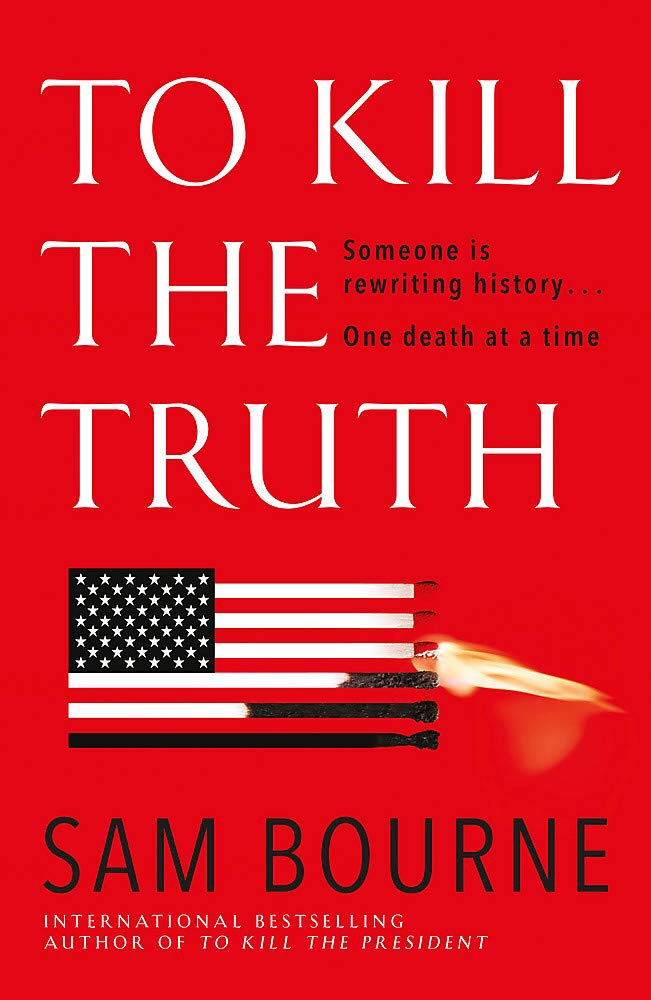
To Kill the Truth, by Sam Bourne

Summary: a twisty Washington thriller for our troubled times

Maggie Costello, Sam Bourne’s recurrent trouble-shooting hero, is taking some time out as a student following the events of her previous outing in To Kill The President. But she is called back into political service by a friend – the new governor of Virginia, concerned now about the murder of a Civil War historian coinciding with a trial initiated by a charlatan intent on denying that slavery ever actually existed in the United States.

It quickly transpires that these events are just the tip of a conspiratorial iceberg as a shadowy Right-Wing organisation begins attacking the great libraries of the world, intent on destroying the pesky facts that tend to undermine their Brexit-level crazy views of the world.

Bourne, otherwise known as the Guardian’s former Washington correspondent Jonathan Freedland, is highly adept at crafting a satisfying, twisty thriller. But To Kill the Truth is more than that. It is an engaging meditation on the uses and abuses of history, the tension in conflicted societies between justice and peace, and how facts no longer “mark out the public square for honest debate” but are themselves the subject of partisan dispute. These are timely topics given how buffoons like Boris Johnson and Donald Trump wear their contempt for the truth as a badge of pride.

With Maggie Costello, Bourne has created an engaging hero for these troubled times – not just a woman of action, but a woman of principle too and an intellectual who thinks her way through problems when others are in thrall to emotion. She’s a reminder of what the world could be, if passions were more often tamed by reason, and humanity prized more than prejudice.

“Broadsword calling Danny Boy”: on Where Eagles Dare, by Geoff Dyer

This is a book that is so silly in its concept that it’s actually brilliant. It is a scene by scene discussion of the movie Where Eagles Dare, a movie that has somehow come to occupy a “unique place in the consciousness” of the author.

The book reminded me in a strange way of another film, The Grand Budapest Hotel. That film pretended to be a whimsical farce, but ended up touching quite profoundly upon life and history. In this book, Where Eagles Dare allows the author to entertainingly digress on all manner of subjects, from Richard Burton’s drinking, to Mary Ure’s pioneering work as action heroine – a proto-Buffy, if you will – to Clint Eastwood character’s disturbingly sadistic preference for killing with a knife when in possession of a perfectly good silencer. In the course of this the author also touches upon youthful hope, life, and war.

I’m never going to be 15 again watching this for the first time with my family at Christmas. But this book brought back the memory of that pleasure, if only for a fleeting moment.

The Pigeon Tunnel, by John Le Carre

Summary: just what he wants you to know

The Pigeon Tunnel is a memoir presented in the form of short stories and vignettes from the Irish author’s life. Some are extremely funny. Some, such as his brief appreciation of his friendship with the late ITN newsreader Reggie Bosinquat, or his disclosure of how he came upon the character of Issa in A Most Wanted Man, are very moving. Some shine an unexpected light on aspects of world affairs in forlorn and forgotten places over the past 40 years. All are exquisitely written.

I cannot recall enjoying many books as much in recent years. And yet I am not sure I know David Cornwell, John le Carre’s alter ego, any better having just finished this book. Le Carre tells us much about the things he has done and seen, including, towards the end, a beautifully written chapter on his relationships with his parents, in particular his con-man father, Reggie.

Irish writer John le Carre, aka David Cornwell

But there is always a sense that le Carre is only prepared to disclose so much and is wholly in control of those portions of his biography that he is prepared to be known. He is substantially silent, of course, on much of his work as an MI6 officer. But he is also very silent on his love and family life: siblings and offspring are referred to with much affection but little information; the ending of his first marriage is referred to only obliquely, as is his finding love with his second wife, Jane.

In truth Le Carre’s subject in The Pigeon Tunnel, is not David Cornwell, but the books that Cornwell wrote under this nom de plume – their points of origin, the research undertaken to bring them to publication, and, occasionally the adventures involved in transposing them to film, including getting to know Richard Burton during the filming of The Spy who came in from the Cold.

It’s a lovely and frequently fascinating excursion with one of the finest writers of English. Treat yourself and read it!

Muhammed Ali

When We Were Kings, by Leon Gast
The Ghosts of Manila: The Fateful Blood Feud Between Muhammad Ali and Joe Frazier, by Mark Kram
The Tao of Muhammed Ali, by Davis Miller 

img_0912My first proper memory of Muhammed Ali was waking up to the news of his victory over George Foreman in Kinshasa in 1974. I watched the BBC Sports film of the fight the next evening. It was  awe-inspiring.

This fight is the principle subject of Leon Gast’s electrifying documentary When We Were Kings. The bloody, thieving, murderous dictator of Zaire, Mobuto, had decided that the world heavyweight title fight would help put Zaire on the world stage. Gast’s movie is an account of the extraordinary circus that resulted. It intercuts documentary and news footage from the time with illuminating interviews with, among others,  George Plimpton and Norman Mailer, on the bizarre circumstances surrounding the fight, and on the phenomenal fight itself.

When We Were Kings is a great introduction to Ali, both as a cultural and political figure and as a boxer. His victory is beautifully explained as one not just of his technical fighting skills, but of his strategic thinking skills.

image

Rope-a-dope

Years later George Foreman described the devastation of having been beaten by someone so “braggadocio”. This is but a hint of the darkness that is frequently ignored in discussions of Ali. This comes much more to the fore in the Ghosts of Manila, an account of the rivalry between Ali and the great Joe Frazier. Frazier had been a supporter of Ali in the wilderness years when Ali had been stripped of his licence to box because of his courageous refusal to fight in Vietnam: “I ain’t got not quarrel with the Viet Cong. No Vietnamese ever called me nigger!” he said by way of explanation.

However this was no protection to Frazier from Ali’s often cruel and lacerating invective. Frazier came to detest Ali and their brutal fight in Manila in 1975 has become a thing of legend.

image

Manila

Both fighters inflicted incredible damage on each other in dreadful heat, displaying incredible levels of endurance and courage just to keep up with each other. However by Kram’s account Frazier had effectively won the fight by rendering Ali unable to take the ring for the 15th and final round. All Frazier needed to do was to stand up. Then his manager, without consulting Frazier, threw in the towel, appalled at the damage that Frazier himself had already sustained in the fight. Frazier never forgave his manager and this extraordinary stroke of luck for Ali became a fundamental element in his legend.

But brutal fights such as Manila and the necessity to fight on almost to middle age that resulted from the loss of his license in his peak years, took their toll on Ali’s body and resulted in the Parkinson’s Disease that afflicted his final years. Davis Miller had met Ali at the peak of his career but became friends with him in these years. The Tao of Mohammed Ali is about a number of things including this friendship, writing, boxing, and perhaps most poignantly about Miller’s relationship with his own father. It is a fine and moving book that describes beautifully what Ali meant to ordinary fans, millions of who are today bereft at the news of his death.

The world is a duller, smaller place with Ali gone. But in many ways it is a better one in part because of what he did and what he stood up for. We will never see his like again.

image

Ali delivers the coup de grace on Foreman (Plimpton and Mailer look on – bottom right)