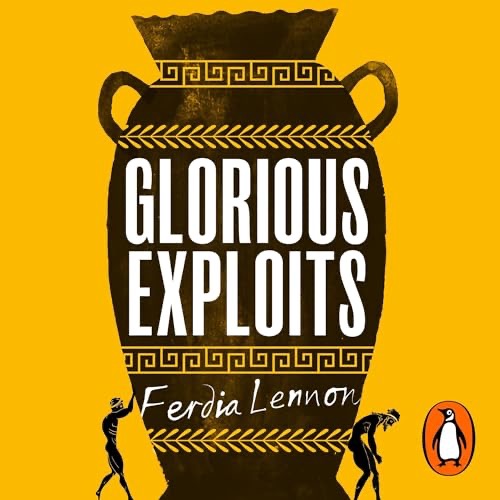
The August Uprising, 1924: The Georgian Anti-Soviet Revolt and the Birth of Democratic Socialism, by Eric Lee

Summary: an account of how an abortive insurrection in Georgia irrevocably split the Left

There is an anecdote in Cyril Cusack’s short book, The Humour is on Me, about a TV cameraman filming pro-British, loyalist, rioting in Belfast during the 1970s. The unfortunate journalist was set upon by a woman armed with an umbrella, offended by the fact that he was “filming things that were not actually happening.”

Similar attitudes have surfaced in other wars and conflicts before and since, including the Bolshevik onslaught on Georgia, the subject of Eric Lee’s The August Uprising. This fine book recounts the doomed 1924 revolt against Soviet rule and the moral choices it exposed, which ultimately divided the socialist movement itself.

Lee shows how those habits of denial, later seen on the streets of Belfast, flourished among Stalin’s defenders. He records some particularly shameful examples of propaganda from apologists for whom partisan loyalty mattered more than facts, decency, or human life.

Lee’s book follows the chronology of Georgian history, roughly from the outset of the Bolshevik revolution in Russia, through the overthrow of the government of Georgia in 1921 to the bloody crushing of Georgian independence efforts in 1924. In describing the machinations of the Bolsheviks, Lee shows that the brute force used by Stalin and his associates in suppressing Georgian independence prefigured later atrocities, including Stalin’s murderous assault on the Russian people, the Holodomor in Ukraine, and the massacre of Polish officers at Katyn.

What makes Lee’s account compelling is not simply its chronicling of another crushed national movement, but its portrayal of a deeper struggle, between democratic socialism and the totalitarian impulses that would consume it.

While the facts on the ground created by battles, torture chambers and execution grounds may have been decisive in establishing the nature of many Eastern European societies, the ideas that diverse leaders used to justify such violence were also of vital importance to many. 

Trotsky, writing an introduction to one such work, noted it was composed “in the car of a military train and amid the flames of civil war.” One suspects that, as commander of the Red Army, he might have had more urgent matters than writing a work of political philosophy. But perhaps reassuring himself of his righteousness helped him sleep at night.

Stalin, of course, needed no such soporifics, and his own writing may have amounted to little more than execution lists. Yet, even as the corpses mounted he still had enough useful idiots, including on one occasion a delegation from the British TUC, to obey and reassert the Party’s final, most essential command, as Orwell put it, to “reject the evidence of your eyes and ears.” 

Such fantasy-island politics can endure only so long in the face of atrocity. Eventually there must be a reckoning. In Lee’s telling, the suppression of Georgia and its social democratic movement became an object lesson for the entire European Left, showing that there could be no meaningful alliance between democratic socialists and the “red fascists”, as the German communist Otto Ruhle branded the Bolsheviks. 

That lesson has lost none of its relevance. The temptation to mistake ideology for truth, and moral certainty for moral rightness, remains as potent as ever

Sudan stories III: war by remote control

Summary: Elphaba on some disturbing new trends in the Sudanese conflict

We are constantly learning how this obsene tit-for-tat war goes between groups who care nothing for the folks in the middle. Towns fall to one side and then are re-taken, new weaponry allows for new tactics in an unclear strategy. 

So it is that drones this week hit Singa taking out the power supply and with it the water. I imagine a person many miles away with a computer programme and some coordinates playing an online game with lives. Of course on the ground there has been a rounding up of people suspected of guiding the missiles to their targets.

There is a deep weariness as people say: “Ah so we’re back to that again” and for how long?My family member, Ax, says they came in the middle of the night Wednesday and it took several attempts to hit their target.  The noise sent people scurrying outside. Some left Singa again, crossing the river as they were revisited by the trauma and fear of last year. He kept the family indoors more worried about the risk of falling debris than immediate re-occupation. But that grim possibility is never fully out of mind.

The scaling up of threats from RSF (they hit the airport that the government was boasting they would re-open soon, they claimed to have taken Fasher, they threatened cities beyond Sudan that support the Govt) and counter attacks from the government (they killed the leadership of communities in Kordofan as they met last week) seems to be in preparation for talks in the US – talks that although reported are hotly denied in Sudan. Even talking about them is risky.

Meanwhile Ax and I mused on the differences between towns in England and Sudan: a mini tale of two cities. Where in dying town-centres in UK the shops all seem to be nail-bars, second-hand clothes shops and takeaways, in Singa  every shop is a pharmacy, mini-clinic or something medical related.

We are hoping this latest wont lead to something more serious.  

Sudan Stories II: Not Exactly a Getaway Car

Summary: second in a series of guest blogs from “Elphaba” on the ongoing war in Sudan

There was some great excitement in Singa this week as it was announced that many vehicles had been found and owners could bring proof of ownership and reclaim theirs. Ours was a battered, old, much-loved and very unreliable crate. She appeared to have some kind of sentience: working on a whim for some and not others. Opening and closing the windows was an act of will power (no winders that worked). But she had given great service carrying sheep, produce, people and everything in between for several years before she was taken at gun point last summer

A family member, Ax, went to see if she was there. He said the site was depressing. It was full of lines of metal shells, most with no wheels, broken windows and some with little or no innards. 

At the back of his mind in going to look for the vehicle, apart from the fact that it is “something to do” when daily routines are still restricted, was a potential to get her back “in case we need to run”. But then you are an easier target in car than on foot. Behind this is the reality that although our family are for the most part fine, there is a thin ice feeling.

On the 4th October a friend in El Obeid rang and we were delighted to hear all was well. The next day he rang to say that they had been bombarded with drones. Omderman has also been hit. Nothing is resolved. And South Sudan is still unravelling.

One of the fall-outs of the war coupled with climate change (I think) has been a steep increase in Dengue fever. We also hear disputed reports of cholera outbreaks. Now at the tail-end of the rains is the malaria season 

In the end we could not locate our vehicle. We laughed that she was never exactly a get away car, except in the sense that we seemed to get away with paying very little road tax over the years. In this seemingly endless war, the citizens who have lost most of what we think of as essentials are expected to pay significant amounts to reclaim their cars at a time that inflation in the costs of everyday needs, and the continuing devaluation of currency, bites. 

Arbitrary Power and the Rule of Law: The UK’s Criminalisation of Protest

Summary: The UK government’s shenanigans around Palestine Action undermines fundamental principles of rule of law

In 2010, Tom Bingham — former Master of the Rolls, Lord Chief Justice, and Law Lord — demonstrated in his book The Rule of Law that the concept is fundamental to any tolerably functioning democracy. He set out eight principles, including that:
• legal rights and liabilities must be determined by law, not the arbitrary discretion of, for example, ministers;
• the law must provide effective protection for fundamental human rights; and
• the rule of law requires states to comply with their obligations under international law as seriously as domestic ones.

The British government appears to violate all three of these particular principles in its decision to ban Palestine Action and criminalise anti-genocide demonstrators.

To begin at the beginning: there is no agreed definition of terrorism in international law and little academic consensus. The terrorism scholar Alex Schmid once suggested that terrorism might be considered “peacetime equivalents of war crimes.” That deliberately omits atrocities such as Hiroshima, Dresden or Gaza, but it is easy to see why governments responsible for mass civilian killings might resist such a definition that makes them seem at least terrorism adjacent.

In the absence of international agreement, terrorism becomes whatever individual governments decide it is. In the UK, the government has defined it broadly as violence against people and damage to property in pursuit of a political cause. Yet even by that standard, its application is arbitrary. The killing of close to 100,000 civilians by a UK ally is treated as legally too complex for ministers to judge, but the throwing of paint on a weapons system is not. To brand the latter vandalism as “terrorism” is to reduce the definition to a tool of political convenience — a textbook example of arbitrary discretion, and thus a breach of the rule of law.

This arbitrariness also undermines basic human rights protections, most clearly in the assault on the right to peaceful protest. On 6 September 2025, Steve Masters, a British military veteran, was arrested while sitting in his wheelchair in Parliament Square holding a poster. He was one of 890 people detained that day. Their “crime” was not violence, but conscience: holding placards in solidarity with Palestine Action. Farcically, many will be charged with terrorism offences.

What their protest reveals is the UK’s deeper breach: the failure to honour its obligations under international law, including its duty to prevent genocide under the Genocide Convention. Training officers of a military engaged in mass civilian killings, and rolling out the red carpet for those officers’ political masters, cannot plausibly be described as discouragement of genocide.

Protesters hold up a mirror to the British government, and the government recoils from its reflection. Yet it is only the protesters who offer any hope that the UK might one day be able to face itself with any self-respect, once the atrocities with which it has been complicit have passed.

From Siege to Safety: A Sudanese Family’s Journey

Summary: First in a series of guest blogs on the war in Sudan, by “Elphaba”

I have been writing family bulletins for myself and anyone ready to read them since the start of the war in Sudan in April 2023. Kind readers have followed events that have driven my family from their homes at gun point from areas around Umderman to Gedarif and Singa. Then again from Singa as they went under siege there.

Before the war, meeting of the Blue and White Niles at Khartoum: many of the buildings in this photo have now been burnt down

In an attempt to spread the burden of too many mouths to feed under one roof and much heart searching they scattered further. Some made the treacherous route to the north only later to face long electricity blackouts in April and May in the hottest time of the year. Others fled Singa on foot eastwards to Gedarif. From there one or two made it to Saudi Arabia where they have safety but at the cost of visa renewals and a deep sense of loss.

Now since the start of this year with relative peace in the Eastern areas of Sudan. For our family, at last, the kids are mostly back at school, the offices working and the economy working on some level. The banks work intermittently and cash is in very short supply. Some can use online banking with an app but for all everyday trading for basic goods, it is only cash. Adding to this, at some point in the year someone thought it a good idea to introduce a new currency and a new layer of potential confusion and corruption. In most of the East only the new currency works, while in the West only the old. In Khartoum and Wad Medani both get used.

With no immediate drama, I worry that we run the risk of joining the world in forgetting that the war and instability is far from over and accepting a new normal that is anything but. Now with the rains falling heavily there is very little seed to plant to benefit because infrastructure is decimated and only very few have any spare funds. And there is drama. For our friends in El Obeid and our once-home Dilling, siege, counter siege and fear have outlasted anything seen in the East and Darfur continues to be another story again. We last heard from close family friends there about a year ago.

As in Israel/Palestine there are huge profits and plans for still greater ones being made by those who would seize power and (ab)use weakness. In Port Sudan there are huge agricultural schemes under discussion not to mention rebuilding contracts and deals with the Gulf. It is mind-numbingly depressing in its logic of winner – eventually- takes all at whatever cost.

Meanwhile, for our family there is the on-going need to claw back dignity and rebuild with the resources we have.  The young men – nephews and sons – working for low wages as labourers, drivers and other sorts of fixers send back what they can. They are themselves stranded in nearby countries away from their families and they know that whatever they send it is never enough. We are aware we have more than many and less than others.

I challenge anyone to fault the determination. My elderly sisters-in-law (elderly = 10 years older than me and in their 70s) have returned to their suburb in Umderman. There is no power. They returned to homes totally stripped bare “not even a teaspoon”. The first job for Nxxx was to buy a front gate as that too had been taken. Bottled gas costs 5 times what it did a year ago and anyway the cooker is gone. The widespread gossip that her neighbour’s son – now gone – whom Nxxx had known since childhood orchestrated the theft of her property and many others. And yet after a few days Nxxx at least is back in her house. As Rxxx explained to me from Saudi Arabia, her homesickness palpable: “of course all the family have been amazing. We are lucky. So much luckier than many. But you ache for what is yours, where you are you and where you’re not thought of a ‘a displaced’”

The violence has gone from these neighbourhoods for now and the young men returning have great plans to fix the power. Knowing the place well, I have no idea how they are getting by. I know it will be a profoundly communal endeavour. My 24year old nephew, his own life plans long since on hold returned from Port Sudan to help his father. He says they live on ful and ta’amia because that is made at a local shop where they have fuel. I imagine them all together much of the day to support, chat about possibilities, find workarounds to issues, talk prices and a future. I hope this will help them recover for now from the trauma of recent months/years. 

The profound divide emerging in Sudan and the discrimination and racism that underlies the political stories is a worrying strategic trend that most Sudanese don’t have the luxury of considering. Maybe in that there are some universal trends.

The UK’s relationship with Israel: a study in sophistry

Summary: Is high office worth the price of a soul?

In the Guardian profile of David Lammy on Saturday 2 August 2025 I was struck by one sentence: “On Radio 4’s Today, he [Lammy] energetically rebutts the suggestion that he hasn’t blocked all arms exports to Israel.

This led me to check again what Lammy had said when announcing the suspension of some arms licences to Israel in September 2024. Then he said, “There are a number of export licences that we have assessed are not for military use in the current conflict and therefore do not require suspension. They include items that are not being used by the Israel Defence Forces in the current conflict, such as trainer aircraft or other naval equipment. They also include export licences for civilian use, covering a range of products such as food-testing chemicals, telecoms, and data equipment.

That passage begs many questions. For example, is it possible to train pilots to drop 2,000 pound bombs on defenceless women and children without the use of British supplied trainer aircraft? Or how would the Israeli policy of banning Gazans from fishing in the Mediterranean be impeded if it did not have British supplied naval equipment? Those who have paid any attention to advances in the use of information systems in intelligence analysis for military operations will also wonder what role British supplied telecoms and data equipment have played in the Israeli identification and assassination of journalists, health and aid workers across Gaza. 

Sophistry – the use of clever sounding arguments to deceive – is, of course, stock in trade of politicians. There is the stench of such sophistry in Lammy’s pronouncements on Israel, which remains a valued ally of the UK in spite of the extraordinary genocide that it has wrought on Gaza in plain view of the world.


In September 2024 Lammy asserted that, “There is no equivalence between Hamas terrorists… and Israel’s democratic Government”.  To which one can only conclude that Lammy, desperate for high office, has, in the words of Orwell, submitted to the Party’s final most essential command: that he reject the evidence of his own eyes and ears. 

On 2 August, the Guardian reported that Lammy “calls shooting civilians waiting for aid ‘grotesque’, ‘sick’; demands ‘accountability’ from the Israeli side. He says things are ‘desperate for people on the ground, desperate for the hostages in Gaza’, that the world is ‘desperate for a ceasefire, for the suffering to come to an end’”.

And yet, Lammy participates in a government that has continued the Tory’s policy of providing direct military support to Israel. As late as August 2025 the Jerusalem Post reported that the UK flies surveillance over Gaza to “locate hostages”. It should be remembered that that on encountering Israeli hostages, stripped to their underpants and begging for help in Hebrew, the Israeli Defence Forces shot them. So it seems unlikely that the Israeli government  is interested in hostages as anything other than an excuse for more violence. In this context the UK’s “search for hostages” is likely a mere pretext for more general intelligence sharing.

It is possible that Lammy and the rest of the British government may finally be becoming squeamish at the level of killing in Gaza. But that does not absolve them of past complicity. Netanyahu and the rest of those that they have allied with have not changed. As a lawyer Lammy “ought to have known” that his allies were just going to do exactly what they said they were going to do at the start of the butchery

Given the weakness of international institutions that the British and other Western Governments have contributed to through their complicity in Israel’s war crimes, Lammy and his colleagues in policy may yet avoid a criminal reckoning. But they will always have to answer to their consciences on whether the perks of high office were actually worth the price of their souls. 

The Tainted, by Cauvery Madhavan

Summary: an elegant exploration of Hiberno-Indian relations over the decades

While anti-colonialism is now deeply culturally embedded in contemporary Ireland, our history on the matter, as Cauvery Madhavan gently reminds us with this book, is rather more complicated. 

The Tainted takes as its starting point a fictionalized story of a 1920 mutiny by Irish troops in India. (In the book the “Kildare” rather than the Connaught Rangers are the mutineers).

Because, superficially, the British and Irish are white, the British expect the Irish to collaborate with them in treating the Indians in the way that the British treat the Irish at home.

By and large the Irish are happy to comply. But when news of the depredations of the Black and Tans percolates through to the Irish barracks the centre cannot hold, and the colonial authorities are murderously provoked when Irish soldiers down arms in protest.

The second two-thirds of the book explore the repercussions from this incident down the years, not least for Rose, a young “Anglo-Indian” woman – daughter of an Irish father and an Indian mother. 

Cleverly Madhavan does not allow her narrative to rest with any single character for too long.  Instead she shifts the psychological perspective of the novel across a range of characters into the first decades of Indian independence. By doing this she gives insight into the attitudes and prejudices of different communities, and shows how these pose needless challenges to the appreciation of each other’s common humanity. 

Madhavan’s novel is an engaging and illuminating exploration of identity, cultures and history, elegantly written and ultimately hopeful. After all, whatever our skin, our blood is the same colour. 

Four Shots in the Night, by Henry Hemming; and Stakeknife’s Dirty War, by Richard O’Rawe

Summary: two books plumbing the depths of the intelligence war during the Troubles

The morally vile, but tactically brilliant, American Confederate general, Nathan Bedford Forrest had a philosophy when giving battle: Get there first with the most.

This philosophy seems to have been taken up with some degree of alacrity by a raft of English politicians and writers who want to capture the history books to rewrite the Irish peace process as a benevolent English achievement. 

Central amongst these has been Peter Taylor whose focus for some years has been on the role of British intelligence in the peace process, particularly the “Back Channel” between MI6 and the IRA. This, as far as he seems to be concerned, was the only strand of the peace process that mattered. Forget the Hume-Adams talks; forget Irish diplomacy and the Downing Street Declaration; forget George Mitchell; forget the European Union; forget Mo Mowlem. Instead, the peace process was something gifted to the quarrelsome Irish by perspicacious spooks, selflessly concerned with Paddy well-being. 

Hemmings’ book gives a nod to diplomacy with mention of the Anglo-Irish Agreement of 1985 – also portrayed as a British initiative. But, like Taylor he is also principally interested in intelligence operations, albeit with a broader perspective. At its core his book explores three parallel but occasionally overlapping British intelligence operations: In addition to MI6 and the Back Channel, Hemmings describes MI5’s efforts to boost Sinn Fein’s electoral fortunes with a view to weaning them away from violence, and the army’s efforts to disrupt the IRA’s military operations through the activities of, in particular, Freddie Scappaticci – Stakeknife. 

Scappaticci was the army’s most important agent in the IRA. A senior figure he was the head of the IRA’s internal security – the Nutting Squad. He was personally involved in the interrogation, torture and murder of dozens of suspected IRA informers. Many of these were, of course, also British agents, like Scappaticci himself. 

The term “British agent” can be a misleading one. It can lead one to think of James Bond, who was an intelligence officer NOT an agent. The agents are the vulnerable people who through blackmail and bribery are recruited by officers to turn traitor on former friends and neighbours. 

The pathetic plight of these desperate people is a central concern of Richard O’Rawe.  O’Rawe, a former IRA man himself, knew Scappaticci. But given the sociopathology that he documents, he records that he is thankful that he did not know him well. 

Scappaticci was an army intelligence operation. But O’Rawe shows, there was an essential unity between the IRA’s Nutting Squad and the “Tasking and Co-ordinating Group”, the senior officials from all British intelligence agencies who oversaw their diverse operations. So much so that it was they, ultimately, who decided who would live and who would die, and gave orders accordingly for favoured British agents like Scappaticci to kill other less valued ones. 

O’Rawe’s past IRA involvement gives him access to other IRA volunteers and his interviews with them provides a broader perspective on the Troubles to Hemmings whose book is more dominated by British sources. O’Rawe also has an altogether more morally clear-sighted view of that squalid war than Hemmings. He is not afraid to use the term “war crime” in his assessment of the savagery of both IRA and British actions. 

Aside from the desperately sad human stories that these books recount, and the important ethical questions relating to the conduct of insurgency and counter-insurgency that they raise, these books also offer valuable insights into some broader historical questions. 

First, the whispered accusation that Martin McGuinness was a tout is effectively discounted. Given the efforts that MI5 was putting in over decades to coaxing the republican movement onto a more constitutional path, compromising McGuinness like that would have risked wholly undermining their efforts. But while he may never have been a tout, the callousness which McGuinness showed towards human life, particularly in diverse killings of suspected informers, means that while he may be an important figure in Ireland’s history, he should never be thought of as a hero. 

Second, the idea that the IRA was beaten is disabused. Even though British intelligence had compromised major parts of the IRA, its rural organization in South Armagh, Tyrone and Fermanagh were still capable of sustaining the killing, even if there was never any hope of military victory. 

This leads us to the third point, that of the importance of the political processes that were running parallel to these intelligence ones. Without those, offering a constitutional framework that, if not giving the IRA all that they wanted, at least gave them some, there would have been nowhere for the Back Channel to go. The British might like to now remember the peace process as a British led affair, one of the great achievements of New Labour as that morally bankrupt party likes to chauvinistically put it. However, without the thread of Irish leadership showing the way, they would still be entangled in the labyrinth of killing typified by their Stakeknife operation.

Both O’Rawe and Hemmings describe with some admiration the efforts of Jon Boutcher’s Kenova enquiry to get to the bottom of the moral morass of the Troubles intelligence operations. Boutcher, who was involved in the police killing of Jean Charles de Menezes may have been expected to do the decent thing by the British Establishment and cover up embarrassing information. Instead, he recommended prosecutions in 28 cases involving both former IRA and senior British personnel. 

The Public Prosecution Service declined to undertake these prosecutions, which seems a travesty. But in that it is hardly surprising. The Stakeknife operation is but one among many war crimes that the British state was involved in: Aside from Ballymurphy and Bloody Sunday there was also extensive collusion with Loyalist death squads across the North. So, this makes it more understandable why past British governments have scrambled to introduce blanket amnesties for all Troubles era killings. It also gives insight into why the current British government of “human rights lawyer” Keir Starmer still strives to prevent a public inquiry into the killing of Sean Brown

Both Hemmings’ and O’Rawe’s books may require some revision – in the details but most probably not in the substance – in the light of Boutcher’s final Kenova report. But they are still fine work, grappling with difficult subjects. O’Rawe’s in particular, while more narrowly focussed than Hemmings, is an elegantly written work, marked by a burning sense of indignation at the scale of the depravity that he describes

Goodbye to All That, by Robert Graves;  The Great War, by Peter Hart; Catastrophe: Europe goes to war 1914, by Max Hastings;  and The Peacemakers, by Margaret Macmillan

Summary: Diverse, highly readable perspectives on the First World War

Like many of my generation, my introduction to the First World War was at school, studying the sublime poetry of Wilfred Owen. Owen’s writings along with others such as Siegfried Sassoon and Robert Graves, did much to promote the “lions led by donkeys” view of that war. 

This is a perspective on the war that Peter Hart takes considerable exception to. A key theme of his fine narrative history of that war, similar to Hew Strachan, is that the allied generals have been unfairly maligned, made scapegoats by civilian leaders who bore more responsibility for the carnage.

The generals of the Western Front were, he argues, by and large, diligent soldiers, trying to learn the best way to fight an industrial war. This is something that their prior experiences, helping their colonial empires steal other people’s countries and butchering anyone who objected, had not properly prepared them for. 

Better than Strachan, Hart illustrates well the impact of the generals’ decisions on the front line troops of all armies. He quotes extensively from the letters and diaries of the combatants to give a truer sense of their experiences, including of the vicious fighting. This makes it hard to sympathise with Hart’s  broader argument that the generals were doing their best. 

The industrialised trench warfare of the First World War was not quite unprecedented: the Union’s final campaign against Richmond under Grant previewed the sort of warfare that would come to define the Western Front. Grant had realised that an attritional campaign would bleed the South to such an extent that even if he lost every battle the Union would win the war. 

With no extant tactics to breach the fortified lines in a way that would have meaningful strategic impact on the course of the war, the opposing sides settled into a similar war of attrition. This led to regular battles that hoped to inflict such a butcher’s bill on the other side as to make it difficult for them to continue.

Other pressures, not least that of coalition warfare, also demanded action, irrespective of how inadvisable. That is how the British came to attack fortified German positions on the Somme in 1916 – to provide some “relief” to the French under German attack at Verdun. On the first day of the Battle of the Somme the British Army suffered 57,470 casualties, including 19,240 deaths. That still does not seem to me a reasonable price for generals learning on-the-job or offering moral support to an ally. 

By way of contrast, during the Second World War Matthew Ridgeway, an American Airborne general risked his entire career by refusing to lead his troops on what he believed would be a suicidal assault on Rome. This would have entailed dropping his lightly armed forces in the midst of two German heavy divisions.

I suspect most of the allied troops on the frontline of the First World War, such as Owen, Sassoon and Graves, would have happily swapped their “diligent” generals for a few with a fraction of Ridgeway’s moral courage. 

Graves was almost killed in a later stage of the Somme battle. It is striking that in Goodbye to All That, his engaging account of his wartime experiences, he never describes killing anyone, though he hints that he did. The closest he comes is describing a sniping opportunity to kill a bathing German. Graves writes that he could not bring himself to press the trigger on the naked man, so he assigned the task to a subordinate instead.

Graves clearly carried the war with him for decades after. The guilt and trauma of it infuses his account of the Greek Myths, for example.

Given the horror of the war, it is understandable that we all should look for who to blame. This is among the tasks that Max Hastings undertakes in his typically gripping account of the outbreak of the war. Hastings is at pains to point out that Germany more than any other nation was the one that could have put a stop to the descent into cataclysm. Hence in Hastings’ view this is the country that should bear most of the blame. Hart has a similar perspective, noting that Germany believed that as war was inevitable the sooner it began the better it suited them. 

In this Hastings and Hart offer somewhat different perspectives to Christopher Clark’s exceptional book on the same subject, The Sleepwalkers. This lays considerably more of the blame on Serbia, Britain and France’s ally. Margaret Macmillan, whose book, The War that Ended Peace, also explored the dangerous, dizzying array of alliances and egos that shepherded Europe to war. Both these accounts suggest there is plenty more blame to go around all combatant nations. 

With The Peacemakers Macmillan explores the end of the war, specifically the Paris Peace conference that led to the Versailles Settlement. This established much of the contemporary political shape of Europe. Alongside the “Great Power” politics of the Conference, Macmillen’s book is also the story of how the peoples of, in particular, central and eastern Europe shook off the rule of the Great Powers whose blundering had dragged them into catastrophic war. 

But the Versailles settlement also sowed the seeds of future war in Europe, by assigning all the guilt for the war to Germany. This ignored the role of, in particular, Serbia in starting things. It also ignored the fact that the Germany that came to Paris was a different country to the one at the start of the war. Not fundamentally different, of course: as German history since 1919 has shown it a country that has never quite lost its relish for atrocity. But by 1919 it had been through a democratic revolution that was economically crippled by the demand for reparations from the victorious powers. This created the political conditions for the Nazis to emerge. 

In granting to Britain the Palestine mandate the Versailles Settlement also paved the way for a new settler-colonial entity there, and for the Zionist genocide of the indigenous people that, with shameless US, German and British support, continues to this day. 

The First World War remains an example of, as William Faulkner once wrote, the past not even being past. Its dark legacy is a bloody one in the present for millions of defenceless human beings.

So, perhaps Wilfred Owen remains still the most vital voice on the First World War, understanding from that one war the pity of all war, and encouraging a level of empathy for the victims of war that no discussions of causality, strategy or blame ever can.