The violence of slavery: how businesses can respond to forced and child labour in their supply chains

Remarks to conflict minerals supply chain compliance and transparency conference, Berlin, 30 Nov 2016

Investigations into conflict minerals, such as diamonds and oil, over the past twenty years have shown how international markets and northern hemisphere business executives have wittingly and unwittingly contributed to the financing of war affecting poor people in the global South.

There has been some notable progress of course. But recent investigations, such as into cobalt mining in central Africa, shows that much still needs to be done.

Conflict, particularly if it affects places which supply scarce commodities, poses a considerable challenge for businesses wishing to operate ethically. Many of the most basic protections that we take for granted are absent and rule of law, if it ever existed, can become a distant memory. Over 2,000 years ago Cicero noted that, “In times of war, the laws are silent,” because of the damage that war does to the institutions of state, and because war breaks the bonds of human restraint, as Shakespeare recognised, letting slip the dogs.

Consequently conflict creates the conditions in which exploitation and enslavement can be perpetrated to extract minerals for international markets that finance the conflict that in turn perpetuates the conditions in which exploitation and enslavement can continue. It is a vicious circle that I came to loathe during the long and bloody war in Angola, where I worked for five years, trying to ensure basic provision of water and sanitation in the midst of the devastation created by the oil and diamond financed war machines of the antagonists.

Slavery has long been part of war. Caesar enriched himself by the trafficking of millions of prisoners captured in his conquest of Gaul. Islamic State and Boko Haram, drawing on the jurisprudence of Saudi Arabia, seem to have a similar attitude towards those they conquer and subjugate. But the risks of trafficking and enslavement do not end at the edges of the theatres of war. Those who successfully flee the killing fields can find themselves subject to renewed risks if the seeking of refuge leaves them impoverished and without permission to seek decent work legitimately.

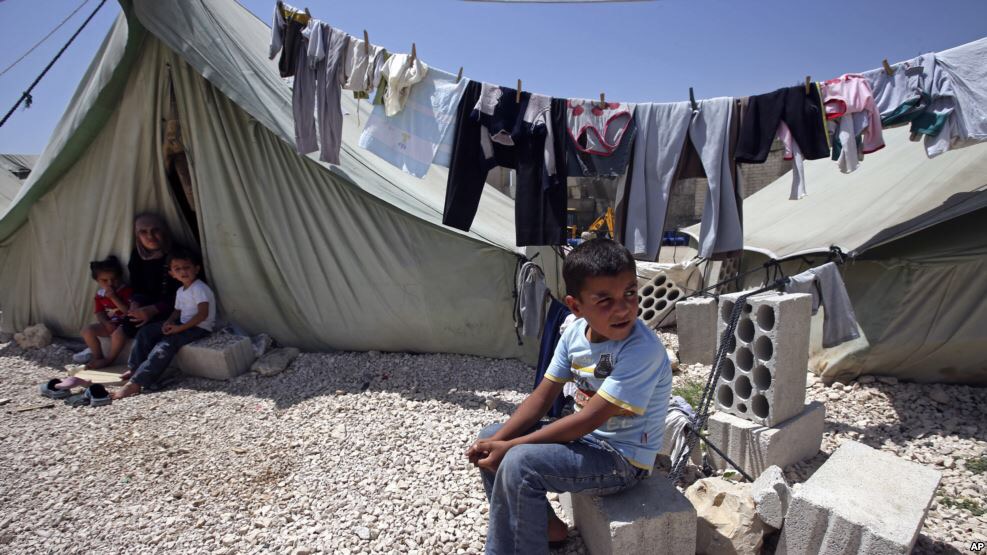
I have spoken to humanitarian workers who have found in the refugee camps of the Middle East increased trafficking of children for forced marriage and other forms of sexual exploitation, and of trafficking for forced child labour in agriculture and other forms of production. We may feel shocked when we understand how parents are involved in handing their children over for exploitation, but for many the trafficking of their children into slavery now may seem like a lesser evil than allowing them to starve. Those refugees who have been fortunate enough to make it into Europe may find their troubles are not ended if they also do not have permission to seek work legitimately. They also may find themselves at increased risk of exploitation and enslavement if they seek work in the informal or grey economy.

Put another way, Europe’s political response to the refugee crisis in the Mediterranean has been a direct contributor not only to the carnage at sea, but to increased risks of trafficking on land. For businesses this means that supply chains that had been hitherto thought safe from human rights violations are now considerably less so.

Considering all of this I think it is perhaps more useful at this point in time to take a much broader perspective of the risks that conflict poses to supply chains more generally, rather than those associated only with scarce minerals or other commodities. Because one of the commodities that war and conflict produce in such abundance is forced labour, and that can get into all sorts of places. And even where conflicts are less overt or where societies are ostensibly at peace, human trafficking cannot occur without violence.

For example the enslavement of Dalits and Adavasi across south Asia is one manifestation of the violence that emerges from the discrimination that prevails against them across that sub-continent due to the failure to establish effective rule of law that protects the rights of all citizens equally. A consequence of that are endemic levels of slavery in agriculture, quarrying, including mica, brick kilns, and many other manufacturing sectors including garments.

Consider also, for a moment, North Korea. North Korean exports in 2013 were estimated as being in the region of USD 7 billion. In 2015 the UN special rapporteur on human rights in North Korea estimated that the trafficking by the state of its own citizens for forced labour in other countries, including the building sites of Qatar and farms and factories in Poland and Malta, was worth in excess of USD 2 billion. In other words the repressive apparatus of the North Korean dictatorship and the threat to international peace that its nuclear weapons programme poses is sustained insignificant part by international complicity in the trafficking of North Korean citizens.

Some of this may seem daunting, and business leaders may feel powerless in the face of the social and political systems that underpin contemporary forms of slavery and child labour. It one be foolish for anyone to expect any business to be able to solve all such problems, even only in their own supply chains. The United Nations Guiding Principles on Business and Human Rights recognise this, stating that it is the responsibility of businesses to respect the human rights of workers, and it is the responsibility of governments to protect those rights. And within this framework I believe that businesses can do more.

The first thing that businesses can and should do is to commit to use whatever power is at their disposal to end the problems that they can end. This will not be everything, but by ensuring transparency in supply chains businesses will not only be able to identify what are the risks of human rights abuses that they face in these supply chains, but understand why these risks exist. In Malaysia, for example, the forced labour of migrants is a particular problem in part because of the tied visa regulations that give employers considerable powers over workers. Ensuring that workers have all the necessary paperwork from day one of their employment to ensure they can leave that employment of their own volition if they so wish would reduce the risks of exploitation. Similarly businesses should refuse to work with labour providers who charge workers fees, often of such exorbitance that they effectively render the workers in bondage.

Second businesses must recognise that the challenges of human rights in supply chains are pre-competitive. No business should be seeking a competitive advantage based on lowering their labour costs to close to zero by effectively enslaving workers. I say no business should do this but of course many do. But likewise no business should be seeking commercial advantage based on simply ensuring that the workers in their supply chain are treated as human beings. That should be the common starting point for all. But in the absence of this there is considerable risk that those who see a commercial advantage in an ethical reputation may be tempted to cover up information about abuses in the supply chains rather than confront and rectify the abuses.

Third businesses should be prepared to recognise when a problem is beyond their power and speak publicly about that. The slavery that exists within the Thai and Irish fishing fleets is in part due to poor regulation and inspection of these sectors. Those are governmental responsibilities. Similarly the child labour that is so endemic in the West African agricultural sector is in part due to the fact that there are too few schools and often these schools are of a poor quality. Again this is a matter that governments should rectify.

Which brings me to my fourth point. Businesses must not be coy about their political voice. Politicians tend to pay more attention to business leaders than to those of non-governmental organisation such as myself. And I get the impression that business leaders are not shy about speaking on a range of what might be called traditional business- political matters, such as tax or trade policy.

But with the globalisation of the international political economy it is important to recognise that human rights and development policy can also have commercial and legal implications for businesses, The US Trade Enforcement and Facilitation Act empowers the US Customs Service to exclude from US markets goods tainted with forced or child labour. The UK’s Modern Slavery Act requires businesses to state what they are doing to eliminate slavery from their supply chains. As I said businesses should commit to doing what is in their power to end slavery in their supply chains, and sometimes the most important power that they should exercise is that of demanding appropriate action from governments.

In the final analysis slavery is a human institution. It can be changed by human action. The great strides that we have seen in against slavery in the course of human history have occurred when businesses have joined with governments, trades unions and civil society to reject this form of violence against vulnerable human beings. You know this yourselves. When we act together, we can overcome.

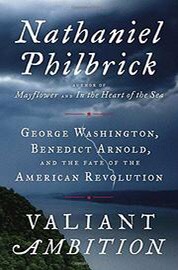
Valiant Ambition – George Washington, Benedict Arnold and the fate of the American Revolution, by Nathaniel Philbrick

Valiant Ambition is a sequel to Philbrick’s Bunker Hill. That prior book dealt with the origins of the American War of Independence in Boston, and covered key events including the Boston Massacre, the Tea Party, the initial clash of arms at Lexington and Concord, Bunker Hill, where the American’s didn’t shoot until they could see “the whites of their eyes”, and Washington assuming command on the death of General Warren and finally driving the British from the city.

This book takes up the story with Washington’s incompetent defence of New York, his retreat into New Jersey and crossing of the Delaware in a desperate attempt to maintain some cohesion to his army, before his extraordinarily courageous counter attack, re-crossing the Delaware in mid-winter.

img_1012

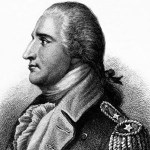
Benedict Arnold

In parallel with Washington misadventures Philbrick describes the altogether more effective military exploits of Benedict Arnold, whose extraordinary courage and aggressive instincts time and time again thwarted British stratagems to snuff out the rebellion.

Arnold’s name has become a byword for perfidy in the United States. But Philbrick reminds us just how vital his role was in securing American independence. Philbrick notes how it was American victory in the Saratoga campaign which convinced France to enter the war on the side of the United States, and that it was Arnold’s actions at those battles that, more than anyone else, secured the victory.

But Arnold was a particularly thin skinned soul, and his shoddy treatment by the Continental Congress stoked his alienation eventually leading him to explore the possibility not only of defecting to the British, but inflicting a devastating blow to American independence by surrendering the fortress at West Point.

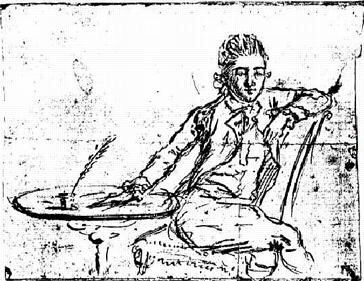
Self portrait of John Andre

Towards this end he established a line of communication with Major John Andre, a young British officer who had risen to the role of adjudant to Sir Henry Clinton, the British commander in New York. By Philbrick’s account Andre is not the honourable officer of legend, brought low also by Arnold’s treachery. Rather Philbrick notes that he was a hugely charming and erudite officer but a thoroughly ambitious one with a ruthless streak, previously demonstrated by is involvement in actions that verged on being war crimes.

Philbrick argues that it was Arnold’s treason that was decisive in uniting the nation behind the cause of independence: one could get only so far with the inspiration of the heroic Washington, he argues. What the young nation really needed was a villain and Arnold, previously the most effective battlefield general in the American army, filled that role to perfection.

It is an intriguing tale. Doubtless Philbrick is already working on a follow-up.

A New Europe Forum? Plotting a path to peace in a time of war

Also published in Left Foot Forward http://leftfootforward.org/2016/07/a-new-europe-forum-could-help-tackle-islamist-terrorism/ 

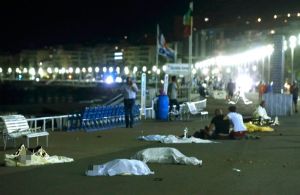
It is plain now that we are in the midst of a civil war in Europe. It has been going on for some time with Europeans butchering fellow Europeans in London, Paris, Brussels and most recently Nice.

Nice-Attack-1

Aftermath of the 14 July 2016 Nice attack

It is difficult for those of us who lack the murderous impulse of the deluded and inadequate perpetrators of such recent horrors to obtain any empathetic understanding of them. But perhaps one obvious but important truth is that those who aspire to mutilate their fellow human beings are alienated from the communities that they live among, and from the values of the societies that they seek to terrorise.

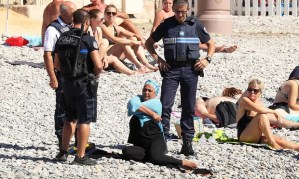
If this is indeed the case then the necessary security measures which the governments of Europe are scrambling to put in place will be inadequate in addressing the underlying causes of this alienation. Furthermore if clumsily managed, security measures can exacerbate the situation, accentuating the sense of alienation of some who come to the attention of the security services and driving them into the ranks of the fratricidists who live amongst us.

image

Not winning hearts and minds: French police force a burkini clad woman to strip

So what is needed, in addition to more police and intelligence operations to thwart aspiring killers, is a political response to the situation. It is difficult for an outsider to say specifically what measures would be necessary to counter the alienation of the communities from which the killers spring. But Europe could take a lesson from Irish history here.

In the dark days of the 1980s when the violence in the North of Ireland was taking on a permanent complexion in the absence of any credible political initiatives, the leader of the Social Democratic and Labour Party, John Hume, suggested the establishment of the New Ireland Forum as a means by which Irish leaders committed to non-violence could begin to plot a new political path towards a peaceful future. From these modest beginnings a new political process emerged which led, ultimately, to the Good Friday Agreement, and the first durable peace Ireland has seen in hundreds of years – at least until it has come under threat from the delusional aspirations of English nationalists to hack apart the European basis of this peace.

Following this lead the European Parliament should establish an inquiry into the causes of European jihadism and to propose political, economic and social responses to the alienation of the European communities from which this murderous jihadism springs. The inquiry should seek to take evidence not only from fellow politicians and academics, religious and community leaders, but also from ordinary people from all parts of Europe.

The evidence, as well as the analysis and conclusions from this inquiry should be published and European governments should be required to report on how they have responded to the recommendations.

Some measures to blunt the threat may be straightforward: people tend to be less likely to seek to destroy their society if they see plainly that the society is providing them with decent jobs and housing. Some measures may relate to addressing some of the chaos which certain European nations have helped create in the Middle East, such as establishing peace in Syria, Iraq, Palestine and Israel: Geography dictates that Europe simply cannot be at peace when the Middle East is in conflagration. Other initiatives may be more novel and unexpected.

The threat of violence that is posed is not yet an existential one for Europe. But it is a challenge to European values of pluralism, democracy, human rights and rule of law. If we cannot plot a political response to this violence that springs from and honours these values, then the arguments of the ideologues of bloodshed will be made a little stronger.

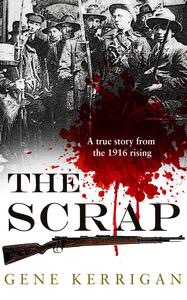
The Scrap, by Gene Kerrigan

Summary: a volunteers’-eye perspective on the 1916 battle


The Scrap is an account of the 1916 Rebellion. Like many other fine accounts, such as Charles Townshend’s, it draws heavily on the archives of the Irish Bureau of Military History, which years after the Irish War of Independence gathered the oral testimony of the survivors. But where other accounts seek to tell the story of the overall battle, Kerrigan’s focus is on a relatively small group of participants, principally the members of F Company of the Irish Volunteers.

This perspective reminded me of Cornelius Ryan’s frontline account of D-Day, The Longest Day. The result is a hugely rich work, which offers, at least to me, a whole array of new detail and insights on the fighting. For example I never knew that Oscar Traynor, a future commander of the Dublin Brigade of the IRA, had been professional goalkeeper for Belfast Celtic. Or that Arthur Shields, the actor who was a regular member of John Ford’s company perhaps most famously playing the Church of Ireland vicar in The Quiet Man, was a veteran of the 1916 Rising. Or that the rebels had made radio broadcasts from O’Connell “Sacksville” Street to announce the Irish Republic to the world.

John Wayne, John Ford, and Arthur Shields on the set of The Quiet Man

In the midst of this there is further important detail on aspects of the fighting including initial clashes in the north of the city around Fairview, at the City Hall, and a worm’s eye view of the desperate fighting around Henry Street in the final hours of the Rebellion. The book also throws interesting light on the actions and decisions of the leaders during the Rising, particular Pearse, Connolly and McDermott.

Kerrigan does not shy away from the horrors of the battle either. In one disturbing passage a medic examines the head of an injured child in the darkness, accidentally running his fingers across her mouth and feeling her teeth. When a light is brought he finds that he has actually run his hand across a gaping wound in the dying child’s head.

Gene Kerrigan is a legendary journalist and makes no attempt to dress this book up as academic history: there are no footnotes, for example. He is also an exceptionally gifted writer and this is a remarkable and arresting contribution to the literature on the1916 Rebellion, giving a strong sense not just of what happened, but what it was like to be there.

Easter 1916: The Irish Rebellion, by Charles Townshend


Summary: “The rebels who went out to do battle on Easter Monday morning may have been marching into the unknown, but they shared one expectation: that the British military response would be rapid and hard.”

imageOn Easter Monday, 24th April, 1916, a group of armed Irish rebels occupied the General Post Office (GPO) and other major buildings across the city of Dublin. It was the beginning of the Irish War of Independence that would last with varying degrees of political and military intensity until 1921.

image

The O’Rahilly

The troops who occupied these strongpoints were members of the Irish Volunteers, a force assembled to defend the Home Rule promised Ireland by the British Government, and the Irish Citizen Army, a force organised by the trade union movement to protect workers from the police. But it was neither an Irish Volunteer nor Citizen Army rebellion so much as an Irish Republican Brotherhood one. The IRB was a highly secretive revolutionary organisation, and with the rebellion they were in fact trying to organise a coup on the leadership of the Volunteers including Eoin MacNeill, the Chief of Staff, and Michael “The” O’Rahilly, Director of Arms.

When MacNeill learned of the IRB plan, to use proposed training exercises on Easter Sunday 1916 to stage a rebellion, he countermanded the order. Consequently instead of tens of thousands rising up all over Ireland, less that two thousand mobilized in Dublin alone.

The remote chances of success were further dented by a considerable quantity of bad luck. The great Irish anti-slavery activist and revolutionary Roger Casement was captured with the huge quantity of German arms he was trying to smuggle into Ireland for the rebellion.

Added to this, from the start there were gaping flaws in the plan. The strong points taken by the rebels were disconnected and hence unable to provide mutual support. They failed to take Dublin Castle, which was virtually undefended because of the Easter holidays. They could have made better use of guerrilla tactics. Where they did, at Mount Street Bridge, a handful of intensely brave Irish soldiers inflicted tragic and devastating losses on the young Sherwood Foresters they fought there.

imageAfter six days it was over, crushed by the might of the British Empire that overwhelmed them with troops and heavy guns. The O’Rahilly, despite his opposition to the rebellion, ultimately felt duty bound to participate, and was killed towards the end leading an attack on a British machine gun position to give cover to the withdrawal from the GPO. As The O’Rahilly himself had put it in a phrase later taken up by Yeats, the man who had helped wind the clock came to hear it strike.

Charles Townshend, a distinguished English historian of Ireland, published this exceptionally fine account of the origins, course and consequences of the 1916 Easter rebellion in 2005. It is, therefore, the product of a life of scholarship rather than a rush for centenary sales. It is both an accessible starting point for those who wish to learn more as well as a valuable contribution to the ongoing conversations about and considerations of the Rising.

It has been argued that the 1916 Rebellion could never be classified as a just war, given the hopelessness of the cause and that the use of violence could not have been viewed as a last resort. The Easter Rising also casts something of a shadow between unionist and nationalist communities to this day: unionists regard it as a stab in the back of those who were serving and dying in the British Army in the defence of “small nations”.

imageBy the standards of the First World War this was a trifling affair. In the blood bath of the Somme that would begin a few weeks later thousands of Irishmen, nationalist and unionist alike, were pointlessly butchered alongside English, Scots, and Welsh, in the name of Empire.
But one cannot deny the extraordinary courage and idealism of those who went out to fight: Grace and Malone at Mount Street Bridge; The O’Rahilly in the retreat from the GPO; Ned Daly in the Four Courts. These were people who displayed enormous grace under pressure in the face of overwhelming odds, in the name of an unquestionably just cause, if, perhaps, not in a just war.

Yeats was perhaps never more prescient, both politically and historically, than when he finally published his view of the Rising: “A terrible beauty is born”.

Watching the Door: Cheating Death in 1970s Belfast, by Kevin Myers

 Summary: The Troubles through the prism of Kevin Myers’ favourite subject – himself

Kevin Myers is one of the finest writers of his generation. An exquisite prose stylist, he is the author of some of the most compelling and elegantly written journalism of the past 40 years.

He is also an arsehole of the first order: If the Oxford English Dictionary is considering a pictorial edition they would probably include a picture of Myers to illustrate the term “West Brit”. Since the events covered in this book Myers has transformed himself into a smart-arsed apologist of the establishment, frequently economical with the facts where they may conflict with his opinions. Indeed, if there is an entry for “Smart-Arsed Apologist of the Establishment” in the Oxford Pictionary, Myers photo would probably be there too.

Given all the aforementioned, I deliberately bought this book in a charity shop in the hope that this would deny Myers any financial benefit from my purchase. As Myers is a voluble opponent of international aid this purchase therefore represented something of a double-whammy.

Watching the Door is a memoir of Myers time as a young journalist in Belfast in the early 1970s. It displays a considerably higher degree of self-awareness than I expected. Myers, it seems, has always known he was an arsehole, and a foolhardy one at that.

A former housemate of mine once almost got himself very badly hurt by a frankly stupid disregard for the dangers posed by a Belfast city centre car bomb. This prompted a house meeting with one item only on the agenda: whether we should kick his shite out for being such a stupid fecker. (We didn’t… even though he was.)

Myers does not appear to have had any housemates to slap him around for his reckless behaviour. Even had he not been so reckless the daily grind of reporting one of the most brutal periods of the Troubles would have resulted in profound post-traumatic stress.

Myers now appears repelled by his youthful self, and the portrait he presents of himself as a youth is repellent. The 180 degree transformation that he has fashioned of himself is also repellent. So in that at least he is consistent.

But he is still an exquisite writer and this is an important subject as the horrors of the 1970s begin to be overlaid by romantic hues and preposterous myths: one article I read recently by an American journalist seriously reported the inspiration that Gerry Adams claimed to take from Martin Luther King, the same Adams whose first appearance in these pages relates to his instruction to an IRA minion on how to deal with a local thug: “Shoot him.” On another occasion, when questioned by a journalist about the disappearance and murder by the IRA of Jean McConville, a single mother, on the trumped up charge of informing, Adams glibly asserted “These things happen in wars.” Indeed they do. They are called war crimes.

Sean O’Callaghan, an Irish Police informer in the IRA, also alleges that Adams contemplated at one stage assassinating John Hume, the most passionate of King’s disciples ever to walk the island of Ireland. John Hume only makes a fleeting appearance in this book. The Peace People are mentioned a couple of times. Seamus Mallon not at all. It may be that they rarely encroached upon Myers consciousness in the midst of his alcoholic stupor from the considerable time spent in late night drinking dens with murderous Loyalist and so-called “Republican” paramilitaries. However their exclusion may be simply to bolster a dubious thesis in this book: that no matter how horrific the paramilitary actions became, and to his credit Myers details many atrocities the former paramilitaries would like to forget, they were never condemned or repudiated by their communities. Hume and Mallon became hoarse in their condemnations of the atrocities of all sides, including the British who Myers, to my mind, soft pedals on, and the SDLP consistently outpolled Sinn Fein by a ratio of 2 to 1 during the period that the Provos waged their illegal war.

The repudiation of sectarianism and violence by many ordinary people in the North was also illustrated in two of the most horrific incidents of the Troubles, which Myers choses to skate over in this book: the Miami Showband and the Kingsmills Massacres. To be fair after the litany of bloodshed which he has already recounted he may have felt exhausted at having to confront these atrocities as well. But there are important details.

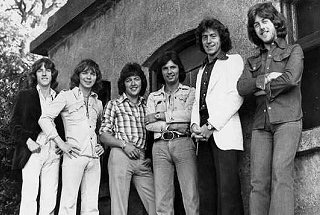
The Miami Showband, in one of their last publicity images

The Miami Showband was non-sectarian and religiously mixed. According to Stephen Travers, the band’s bassist and one of the survivors, his best friend in the band, trumpeter Brian McCoy, a Protestant from a Unionist background in County Tyrone, understood the rest of the band’s concern at having been stopped by the Ulster Defence Regiment (UDR). McCoy whispered to Travers that he could stop worrying when a British officer showed up. That did not protect them unfortunately when the bomb the UDR was trying to plant in the band’s bus went off and killed two of these British armed and directed terrorists. The UDR soldiers, whose dual membership in the paramilitary Ulster Volunteer Force had not been a barrier to their entry into the British Army, then started butchering this group of defenceless musicians who represented the best of society of the whole island of Ireland.

kingsmillThe Protestant victims of the IRA’s Kingsmill massacre also showed a impressive anti-sectarian heroism as they tried to protect their Catholic colleagues from what they initially thought was a similar UDR/UVF attack, before the horrendous realisation that the war criminals in question on this occasion had come to butcher them.
So in spite of the author’s arseholeism, and the exaggerations, evasions and distortions that pepper this account of war and his, sometimes quite bizarre, sexual adventures, this book is an important one. As many of those who directed war crimes in the course of this illegal war attain high office in both parts of Ireland it reminds us just how horrendous and shameful the Troubles actually were.

For this reason I can only hope many more charity bookshops will benefit from the sale of this book in the years to come.

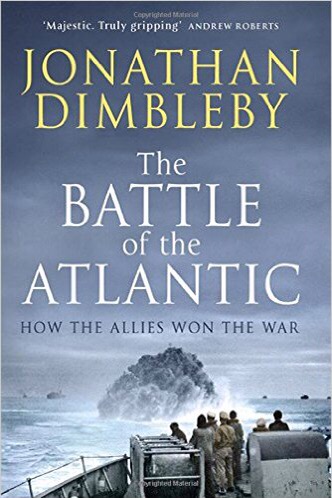
The Battle of the Atlantic, by Jonathan Dimbleby

 There was no “phony war” at sea. The Battle of the Atlantic started on the first day of the Second World War, 3 Sept 1939, with the sinking of SS Athenia by a German U-boat. It continued until the last day of the war and so was the longest campaign of the Second World War and the most destructive naval conflict in history.
Dimbleby’s account of this campaign is an elegantly written horror story, alternating between accounts of the ghastly fighting at sea, and the operational and strategic planning of the Allies and the Axis that guided the slaughter.

Churchill famously said that the U-boat menace was the one thing that gave him sleepless nights during the war. However it would be fair to say he brought many of the nightmares that afflicted him on himself. Most damningly Churchill prioritised the militarily pointless and morally indefensible bombing of German cities by the psychopathic head of Bomber Command, Arthur Harris, over the vital defence of the convoys across the North Atlantic. Hence Coastal Command was denied the relatively few aircraft that could have turned the tide of the battle months earlier.

Dimbleby asserts that Churchill was possessed of a great strategic vision. But this seems rather at odds with the account presented which suggests a certain strategic fickleness on Churchill’s part. It is true he did have a vast and complex set of problems on his mind. But one does get the impression of a man easily given to temporary military enthusiasms to little useful purpose but to the detriment of some truly vital endeavours. Dimbleby puts this into sharpest focus on some of Churchill’s choices around the Battle of the Atlantic. But one sees this in many other places such as his failure to finish the defeat of the Italians in North Africa before, wholly ineffectually, attempting to arrest the invasion of Greece.

Rather than military strategy Churchill’s genius was of the political variety. His forging of the trans-Atlantic alliance with Roosevelt was perhaps his finest hour. This resulted ultimately in the Allied victory, not least by bringing the true strategic genius of the US General George Marshall to bear on the situation. This inexorably refashioned Allied strategy away from Churchill’s fanciful Mediterranean focus – which arose more from his desire to keep some semblance of unity on the British Empire rather than to pose a lethal threat to the Axis – and towards an altogether more effective intent to mount an invasion of France to swiftly strike at the heart of Nazi Germany.

In spite of these strategic failings a combination of increasing effectiveness of convoy tactics, and improved technology ultimately, and with dramatic suddenness in May 1943, turned the tide of the Battle in the Allies’ favour. Thereafter, with victory in the North Atlantic, victory in the overall war was assured. Convincingly Dimbleby argues that the code-breaking of Bletchley Park was only marginally a factor in this victory, not least because the Germans had also cracked the Royal Navy code and the advantages that Bletchley provided were somewhat cancelled out in the war at sea.

The Battle of the Atlantic was to any imagining horrendous and Dimbleby conveys this well – from the account of Italian prisoners weeping in terror as they drowned imprisoned in the holds of the torpedoed Laconia, to the massacre of the Arctic Convoy PQ 17, condemned to its doom by incompetence in the Admiralty for which, of course, no one was ever held to account: That the lives and heroism of merchant seamen were held cheap by the Establishment is a recurring theme in this book.

The Battle of the Atlantic is a gripping and generous-spirited book, drawing on the accounts of German as well as Allied participants recognising the courage and humanity of all the participants in the Battle, while also recognising the horrendous things that many of these ordinary human beings did to each other.

Abducting a General: The Kreipe Operation and SOE in Crete, by Patrick Leigh Fermor

 Patrick Leigh Fermor, legendary travel writer and Special Operations Executive officer, never published during his own lifetime this, his full account of the kidnap of General Kreipe in Crete in 1944. His junior SOE colleague Billy Moss did, with Leigh Fermor’s help. Ill Met by Moonlight was published in 1950 and made into a famous movie with Dirk Bogarde as Leigh Fermor.

However as Roderick Bailey points out in his foreword to this book, Billy Moss did not speak Greek and the Kriepe kidnapping was his first clandestine operation. So his account lacked understanding and appreciation of the Greek partisans with whom he fought.

Leigh Fermor’s account is therefore something of an apologia to pay proper tribute to the people upon whom he depended for his life during his years undercover in Crete. He notes towards the end of his account that, “There has been more than a hint in these pages of [the kindness and generosity of the Cretan people] and of that aspect of Cretan life which suddenly gives the phrase ‘Brotherhood in arms’ such meaning”.

It is this, rather than a desire to convey a “boy’s-own” adventure, which seems at the heart of this account. It is an account that is marked by a remarkable joie de vivre in spite of the harsh circumstances he describes, and the constant threat of death under which he lived. As such it contrasts interestingly with Eric Newby’s similarly themed, but altogether more melancholic, account of his time being sheltered by an impoverished Italian rural population while on the run from the Germans: Love and War in the Appenines.

Leigh-Fermor conceived of the kidnapping of the German commander in Crete as a bloodless operation, to prevent German reprisals against Cretan civilians. Originally he aimed to kidnap the brutal General Muller, but this plan was thwarted with Muller’s transfer and replacement with General Kreipe.

Leigh-Fermor went ahead with the plan anyway as a morale boosting exercise for the Cretan resistance, and to keep them distracted from shedding German blood and hence provoking fierce reprisals.

He almost achieved his bloodless coup, though his Cretan comrades were at one point compelled to leave the poor driver who had been captured with the General in an unmarked grave. And some months after the operation the Germans conducted a series of brutal reprisals anyway, which may, or may not have been linked to the kidnapping.

Given this, and the undertaking of the operation late in the war when Germany’s fate was all but decided the strategic value of the operation is open to question. But the courage and fortitude that it entailed is not, as Leigh Fermor’s account amply demonstrates. Abducting a General gives a fine insight into a little-known corner of the Second World War, prosecuted, in the main, by ordinary people at terrible cost.

Fighting Slavery in the Midst of War

Remarks to Expert Group Meeting on the impact of armed conflict on people’s vulnerability to trafficking in persons, including sexual and labour exploitation
Amman, Jordan

IMG_0669The repeated reports of Islamic State’s (DAESH) use of sexual slavery to entice foreign fighters and terrorise women and girls, and of Boko Haram’s kidnap of young girls in Nigeria and enslavement through forced marriage, has raised public awareness, and horror, regarding the issue of slavery and war.

Historically war has frequently been about slavery. Caesar made his wealth from the trafficking  of millions of Gauls. The trans-Atlantic slave trade was fed by the prisoners captured during wars provoked in Africa by the European powers. In Darfur and South Sudan slavery was used as a weapon to terrorise. Such violence remains a disgraceful aspect of war.

Over 2000 years ago Cicero noted that, “In times of war, the laws are silent,” because of the damage that war does to the institutions of state, and because it breaks the bonds of human restraint, as Shakespeare recognised, letting slip the dogs.

But it is useful to add a degree of gradation to Cicero’s observation, because not all times of war, or times of peace, are equal in their lawlessness.

First there is almost the absolute lawlessness that we see in the realm of active battlefronts and the rule of warlords.

Second there are those areas where war has severely damaged the capacity of the state and rule of law itself.

Third there are the armies of the democracies, which, even in war, should be bound by basic principles of law, even when in battle.

Then there is a further case, when the philosophy of law itself is intrinsically violent, misogynistic and anti-pathetic to human rights.

Under each of these circumstances there are differently constrained possibilities of action against trafficking and sexual violence. Certainly for there to be the greatest possibility for the elimination of such abuses there needs to be peace. But as we see surveying the world from Qatar to Western Europe peace alone is not enough, particularly if that peace is underpinned by brutal jurisprudence.

Sexual violence, like slavery, has always been an aspect of war. Sometimes rape has been raised to a level of policy, as was the case with, for example, the Russian conquest of eastern Germany in 1945, and is also the case in the realms of Islamic State (Daesh) today. This latter case should not be surprising given so much of the authoritarian culture and philosophy of violence of Daesh emanate from Saudi Arabia, a state in which rape victims are prosecuted and, in which, forced child marriage is widely tolerated. Such law and culture asserts that some sorts of violence, enslavement and trafficking, particularly of women and girls, are virtuous. It is from this jurisprudence that the slave markets of Boko Haram and Islamic State spring.

To put it bluntly, reducing violence against women and girls, particularly in the current wars waged by the proxies of Saudi Arabia, requires that their jurisprudence is explicitly and loudly repudiated, particularly as a priority for international diplomacy.

Until now neither the humanitarian nor development communities have in any significant way grasped the issues of slavery, trafficking or child labour. So they fail consistently to address them. There is a need for these sectors to recognise this, and to develop and implement training on slavery and trafficking for policy makers, including donors, and practitioners in these sectors.

Humanitarian assessments and peace-keeping planning should include components relating to trafficking analysis. And that should in turn lead to the enacting of measures to reduce the risks of trafficking for all, in particular women and girls. Furthermore all peace-keeping and humanitarian operations should have significant police or military police presence, with a mandate to investigate human trafficking and sexual violence, and with gender parity amongst such officers.

It should then be a requirement of every humanitarian response that it considers if it can contribute in any way towards the reduction of trafficking and violence in general and against women and girls in particular. This may not always be possible. But considering carefully the question could lead to the empowerment of some who would otherwise be overlooked.

The UK and California now require that companies report on what they are doing to end slavery in their supply chains. Development and humanitarian organisations should be required to follow suite, reporting on how they are seeking to combat this issue through their operations and supply chains. It should not be acceptable that, for example, the use of slavery-produced bricks should pass unconsidered and.unquestioned in humanitarian operations, when awareness of the issues and minor changes in humanitarian programming could establish much more ethical supply chains.

Elimination of slavery, trafficking and child labour is an explicit target in the Sustainable Development Goals. A long term solution to this is universal education, composed not only of reading, writing and arithmetic, but also human rights education, in particular in relation to  girls’ rights. Good vocational and entrepreneurial education is also needed so that greater options for decent work emerge from education. This would consequently reduce the level of attraction to nihilistic and misogynistic death cults, and will be an important path to recovery for children emerging from conflict.

But the immediate imperatives of trafficking and violence against women and girls in war demand urgent action. Humanitarian and development donors, policy-makers and practitioners must engage with these challenges.  Addressing the issue of trafficking in conflict, one of the most complex issues in the realm of anti-slavery, would help advance the overall struggle to end these human rights abuses. With that it would also help to reduce the poverty of people hitherto overlooked in the midst of war.

Midnight’s Furies: The Deadly Legacy of India’s Partition, by Nisid Hajari

IMG_0420Famously the Indian sub-continent freed itself from British rule through a non-violent struggle led by Gandhi. However rather than this being a great triumph for passive resistance, the efforts by Congress, the Muslim League, and the Sikh leadership to carve up the spoils more than made up for it in terms of bloodshed: the Partition of India saw one of the most horrendous blood baths of the 20th Century, and the largest forced migration in human history. Sometimes these two things coincided with trains of refugees pulling into their destination stations dripping with the blood of the women, children and men passengers who had been hacked to death in ambushes.

In Midnight’s Furies, Nishid Hajari details how the political calculations, petty jealousies, posturings, misjudgements and misunderstandings of the sub-continent’s political leaderships, in particular Jinnah and Nehru, led to the sectarian carnage that engulfed the creation of the modern states of India and Pakistan.

Nehru

Nehru

Hajari provides a much less sympathetic portrait of Nehru than Alex Von Tunzelman’s fine account of the same period, Indian Summer. For Hajari, Nehru failed in his responsibility as a statesman of obtaining some sort of rapprochement with Jinnah and the Muslim League, and hence undermined his vision of a secular India for all Indians. Hajari also portrays Nehru, at least in the early days of his premiership, as a man in office but not in control. His dream of a secular India uniting Hindu, Muslim and Sikh under a common citizenship bloodily undermined by the extraordinary violence of the period, which his administration seemed powerless to prevent.

Doubtless some of this was spontaneous communal violence drawing on obscure but profound local animosities and feuds. But much of it was not. Each community produced paramilitary forces, many of them highly professional as a result of the large numbers of former soldiers in their midst. These set to the butchery of their neighbours with a relish and ruthlessness that would not have been out of place in the Bloodlands of Eastern Europe a few years earlier.

This killing was frequently facilitated by the failures of Indian and Pakistani police and military to properly intervene to uphold the law. Sometimes the police and army stood idly by. Sometimes they became active participants in the slaughter.

In this regard they were echoing the equivocal leaderships of the two states: Jinnah appears to have missed the logical contradiction of wanting a secular republic for Muslims only. In India Hindus and Sikhs seemed to take their lead less from Nehru and more from Sadar Patel, the States minister in the Indian Union government. Patel regarded the ethnic cleansing of the Muslim population as a good thing, purging the state of potential fifth columnists. He also regarded the neo-fascist RSSS with considerable warmth despite their butchery of tens of thousands ordinary Indians.

Patel

Patel

With such equivocal leadership at the heart of government it is unsurprising that so many police and troops turned a blind eye to the atrocities. To his credit, when able to do little else, Nehru time and again sought out and faced down Hindu murder squads, striving to personally halt the killing which so much of his own administration was acquiescing in. Order only finally began to be restored by the intervention of Nepalese Gurkha and Southern Indian troops, who were less given to the sectarian passions of the northerners. The assassination of Gandhi by a right wing Hindu also caused some pause to the likes of Patel and the rest of the nation who perhaps only then began to glimpse the lunacy that their sectarianism was bringing.

Hajari is particularly interested in the origins of Pakistan’s current disfunction and sponsorship of terrorism, something which he shows very well. However the book also casts significant light on the current disfunctionalities of the Indian state.

Shortly before the victory for Prime Minister Modi’s BJP in the Indian general election I spoke to an Indian friend about the anticipated result. He argued that there were three strands in the Indian independence movement: the Nehruist/Ambedkarist republican tradition which has been dominant for much of Indian history; a communist/socialist strand which has enjoyed power in some of the Indian states; and finally the Hindu Nationalist tradition which Modi was now bringing to power.

However from Hajari’s account this Hindu Nationalist tradition was a very dominant one in the first Indian government, constantly undermining the visions of Nehru and Ambedkar. The caste-based apartheid, the rapes and murders of girls and young women, the enslavement of vulnerable workers that disfigure contemporary India, the world’s largest democracy, may, at least in part, be seen to derive directly from the Hindu-nationalist vision that so bloodily asserted itself in 1947 and asserts itself still to the present day.

Gandhi and Jinnah in happier days

Gandhi and Jinnah in happier days

Midnight’s Furies is a beautifully written but harrowing account of the origins of India and Pakistan. It is an important book about the origins of a contemporary Cold War, about human beings’ inhumanity to other human beings, about how magnaminty and empathy are so vital to diplomacy, and how their absence can lead to carnage.