The Funeral: an excerpt from my novel, The Undiscovered Country

I am currently working with the crowdsourcing publisher Unbound to publish my first novel, The Undiscovered Country, a book about the hunt for the murderer of a young boy in the West of Ireland, during the War of Independence in 1920. Below is an excerpt. If you like it please consider supporting. Amongst other rewards the names of all supporters will be included in the book.

***

graveyard-black-and-white-100535782-primary.idgeIt was a cold clear morning the next day when the village gathered to bury Liam Finnegan.

The church was full and spilling out into the surrounding graveyard. Eamon and I had got there a quarter of an hour before the start of the requiem Mass, but had still only managed to get standing room at the back of the church. Peter had gotten there earlier and had hence managed to get himself a seat in a pew in the middle of the church.

“Okay”, whispered Eamon to me, “so who do you know here?

“Dr Hennessy, fourth row back”. She was standing briefly in order to let some people past her into the pew in which she was seated.

“In the short time I have known you Mick I have come to admire and respect your capacity for prioritisation. Mind you, she does look good in black, it must be said. Grand arse.”

“Jesus Eamon, we’re at a funeral”.

“A man is most alive when closest to death. You’ll find that out in time Mick. So who else do you know”.

“Commandant O’Riordain”.

O’Riordain was in the aisle halfway up the church, trying to create more space amongst the mourners and directing newcomers into the pews.

“There’s a man born to lead. Can’t even help himself any more.”

“And there’s Dick Bruton.” Bruton was fat man with a purple nose in a plaid suit. He was bald, which Eamon had noted was a blessing for him seeing as he used to be ginger. I had felt a bit guilty at laughing at that as he had always been civil to me on the odd occasion I dropped into his shop.

“And there, as you should know,” said Eamon, “is our local neighbourhood cattle baron, Francie Quinn”. Eamon nodded in the direction of a dark haired man in a dark suit just entering the church with a pleasant looking, chubby woman. He ushered her onto a pew and then found himself standing space against the wall close to her. Quinn I did know slightly. He was one of the local worthies that Peter had convinced to join him in constituting the parish court. So I had seen him from a couple of times when the court was in session but I had barely ever spoken to him.

Our whispered conversation was halted as the appearance of Paddy Toner, walking backwards up the aisle so he could keep an eye on the pall-bearers and make sure nothing untoward happened to the coffin, announced the arrival of the funeral party.

Normally, in my experience, the deceased would have been carried to the church the night before the burial and lain in vigil before the altar. But the family couldn’t bear the thought of leaving Liam alone there. So his body had stayed with them at home until this morning when they would say their final goodbyes.

Liam’s father and three uncles followed Toner up the church carrying the tiny coffin. In their wake came the rest of the family. Liam’s mother and sister seemed barely able to stand, leaning against each other in an A-frame as they walked up the aisle. Tears were pouring down their faces, though they were considerably quieter now than they had been when we had broken the news to them about the death of their son. Immediately behind them another woman, I presumed an aunt of Liam’s though I suppose she might have been a neighbour, carried the baby, who was being remarkably quiet, helped I presumed by a bottle of milk stuck in his gob.

When they got to the front of the church Toner ushered the family into the front rows that had been reserved for them, and Fr Martin Crosby came onto the alter with four altar boys in white soutanes.

Crosby was suitably sombre in his conduct of the Mass and proceeded in this measured way until he came to his sermon which he opened with, what I felt were pretty boilerplate remarks about death and young lives cut short that he would have learned in his “how to conduct a funeral” classes in the seminary. And then his remarks changed and became rather more personal:

“I knew Liam a little from the times he served Mass for me. He was a great young man. A credit to his family. I know he wanted to be a doctor. He was a great reader and used to tell me about what he was reading. The last morning I saw him he was telling me about the adventures of David Balfour after Kidnapped. He never lived to find out how it ended with Catriona. He never lived to find his own Catriona or have his own adventures in his own or other lands.

“The world is a lesser place without Liam, without the person he was and without the person he would have become. That truth will never be felt more than by his own family.”

His mother let out the most mournful yelp I’ve ever heard at that, and her muffled keening started again.

Crosby continued with the standard funereal hopes that one day all pain would be washed away when they were reunited in heaven. He was trying his best but it was plain that his sermon was doing little to comfort Mrs Finnegan, whose keening died down but whose shoulders continued to shudder in grief until the end of Mass.

***

It was a relief to get back out into the fresh air. The church had grown stultifying with so many people in it and I was relieved that, being at the back of the church, we were among the first out after the family and the pall bearers who carried Liam the final few yards to a hole that had been dug for him in the graveyard that surrounded the church.

O’Riordain had organised a guard of honour of Liam’s school friends to walk with the coffin to the gravesite, where Crosby concluded the service with prayers over the coffin and a decade of the rosary as they lowered Liam into the hole.

The normal routine of friends and neighbours lining up to pay their respects to the family was curtailed as Liam’s father led his still weeping wife from the yard. Packy O’Reilly had brought a pony and trap along. As he ushered the sadly depleted Finnegan family on board for the mile or so back to the farm, the grave diggers began filling in the hole. The earth and stones they shovelled echoed off the coffin.

“He’s not a bad oul skin, Packy,” said Eamon, watching as the trap set off out the road as the mass of mourners began to drift out of the grave yard. We lent against the church yard wall and lit cigarettes as we watched folk disperse. Dr Hennessy nodded to us as she passed and began threading her way through the crowd the short distance towards her surgery.

We contemplated the graveyard as we smoked, Eamon nodding greetings to friends and neighbours as they passed. Peter joined us after a few minutes.

“Cigarette, Peter?” I asked.

“Thanks Mick,’ he said and drew one from the packet I was offering him. Eamon struck a match to light him up.

“Sad funeral,” I said.

“Indeed it was,” said Peter. “No parent should every have to bury their child, let alone one so young.”

I could see how this funeral must be dragging up memories of Peter’s own son, obliterated by a shell in some rat-infested trench in France.

“Have you spoken to his parents?” asked Eamon.

“I have,” said Peter, “but its not like there is much comfort I could give them. I told them I know how they feel. I didn’t tell them the pain never goes away or that it can destroy everything you have ever valued in your entire life.”

I remembered how Peter’s wife had died shortly after they received news of their son and I had no idea how to respond. I was pretty sure that Eamon was at a loss too. But Peter wasn’t looking for a response or for sympathy. He was just telling us the truth, as he knew it, of how an untimely and violent death could devastate a family and the lives of all those left behind. Knowing Peter, he was also probably still wracking his brain for some fragment of his own experience that could help alleviate the grief and pain of the Finnegans.

We stood in silence for a while smoking, watching the crowd. Francie Quinn hailed Peter as he left the church gate with his wife. Peter waved back. “He can be a grumpy fucker, can Francie, but he’s got a decent soul,” Peter muttered to us as we watched him walking up the street with his wife’s hand hooked into his elbow. Then we heard the scrunching of hob nailed boots behind us and Jack O’Riordain joined us, having come out of the lower gate of the church yard.

“How’s it going, Peter?” he asked, hale fellow, well met, even in the grim circumstances we found ourselves.

“Not so bad Jack. And yourself?”

“Can’t complain. Sure no one would listen to me. Are these two behaving themselves?” he asked, referring to me and Eamon.

I expected Peter to make some casual joke, about not being able to get good help these days. But he didn’t. He took a final drag on his cigarette, then dropped it on the ground and ground it out with his foot and looked Jack straight in the eye. “They are exemplary,” he said.

“Good to hear it,” said Jack. “I wouldn’t want the good name of the battalion damaged by less than their best.”

The children who had attended the funeral were dispersing now too. “That was a nice idea, the guard of honour,” said Peter.

“I wanted to make sure the children were involved in the funeral, and I thought it was a way we could show Liam’s family the regard the whole school held him in.”

“Aye. It was a nice gesture,” said Peter. “Did you give the kids the day off school as well?”

“I did,” said Jack. “You can imagine that they are all still very upset. But kids get over such things fast, I’ve found.”

“You’ve seen much of this sort of thing, Commandant,” I asked. “The deaths of children, I mean.”

“Regrettably yes,” he said. “Particularly when I was teaching in Dublin. The carnage from tuberculosis was dreadful. The conditions in the tenements there are a breeding ground for disease, and the malnourishment of the children makes them easy prey for it.”

“So, you’re at a loose end yourself then today as well?” Peter asked.

“If only that were so. I have a host of battalion matters to be dealing with, as well as some school administration I’ve been falling behind on.”

Eamon had been quiet up to that point, but I knew he couldn’t help himself. “Some more unarmed peelers to be shot, Jack?” he asked.

I saw anger darken O’Riordain’s face and the muscles in his jaw clench.

“For fuck sake, Eamon,” said Peter.

“No,” said Jack, his voice low and controlled, irrespective of how angry he was. “It’s sticking in his gut, let him get it out. I imagine that Eamon’s military record is unblemished and earns him the right to judge. Isn’t that the case, Eamon?”

Eamon said nothing.

“That’s right,” said O’Riordain, “your hands are not clean either. I remember you telling me about that, didn’t you Eamon? About young Germans crying for their mothers before you and your British pals put bullets in them and left them in mud.”

“I wasn’t the officer giving orders,” said Eamon.

“No,” said Jack, “I was. But you can take a little credit for what we did at the barracks.”

“What do you mean?” asked Eamon. “I refused to participate.”

“You did,” said Jack, “and loudly too. I never knew you had studied the Geneva Conventions so assiduously. That was the point at which I knew you were no use to the battalion any more as a fighting man. But that is not what I meant.”

“What then?”

“The tales you have told me of the Crown Forces have left me with little doubt as to their ruthless efficiency. It confirmed what we learned when they shelled the civilian population of Dublin and left the second city of their empire in flames, let alone the savagery they showed at Amritsar. Now look at our lot. Weekend soldiers. In the past year these fellows have had less training than the greenest Tommy. And it is with them that I am meant to confront an empire. Those police in that barracks were traitors to their country. And their treason cost the lives of James Flynn, John McKenna and Paddy McCaul, remember? It was harsh what I did. But it was necessary. It was necessary to get the rest of the boys used to killing. It was necessary because I thought that it might save their lives in the months to come when next in the presence of the enemy. So when they are in action again they are inoculated to the revulsion of killing, and to not hesitate at the moment of truth. Remember Eamon?”

He paused and looked at Eamon with something close to contempt.

“I didn’t enjoy what I did that night,” said O’Riordain. “I will have to live with the sound of their pleading every day until I die. But I would do it again, for the good of the men under my command and for the chance of a country of our own.”

We were all quiet. “Anything else to say, Volunteer Gleason?”

“No, Commandant,” said Eamon.

“Okay so,” said O’Riordain. “I’ll be on my way then. And you’ve work to do to, so don’t let Mr McLaughlin down the way you did me.” He turned to Peter. “Take care of yourself, Peter,” he said and shook his hand. Then to us, “Volunteers,” and he turned up the street.

“Commandant,” I said by way of farewell. Eamon said nothing.

We watched O’Riordian go. Then Peter turned to Eamon, “For fuck sake Eamon,” he said. “Do you always have to antagonise him.” Peter was more exasperated than angry, but only just.

Eamon was uncharacteristically quiet, and looked a bit shame-faced. “We have a bit of history, I suppose,” said Eamon, eventually.

“Well it’s not fucking helpful at the moment, so can you get it under control?”

“I can,” said Eamon.

“Look boys,” said Peter, “I meant it when I said you’ve been exemplary in your duties to the Parish Court. So don’t make a liar of me at this stage in my life.”

“We won’t Peter. Sorry if I’ve embarrassed you,” said Eamon.

“That’s enough of that oul shite,” said Peter. “Now I’ve given ye an enquiry to conduct, which, I shouldn’t need need to remind you, is of the most sensitive nature imaginable, so tread lightly from here on will ye?”

“We will,” said Eamon.

“Good. Now I need to be getting back to the office, so can I leave ye to be getting on with it without fucking something up?”

“You can,” said Eamon.

“Good. I’ll leave ye to it, so, and I’ll see ye later.”

“Right Peter,” said Eamon.

“Take care,” I said.

He said nothing and turned and walked up the street towards his office. We watched him as he went, his shoulders hunched in the way of the worried, carrying the burdens of the world.

There were a a few remaining knots of people still chatting or smoking in the graveyard or on the street, but most had gone back to the normal routine of their lives. Myself and Eamon remained smoking by the church yard wall until everyone had left, Eamon brooding over the scene..

“That was kind of Peter, speaking up for us with O’Riordain,” I said.

“’Twas,” said Eamon. “He’s like that, is Peter. Always championing the underdog. It’s why he loses so much money on the horses.”

In spite of the lambasting he had just taken I could sense that Eamon’s spirit was returning. “Did you hear that fucker, O’Riordain?” he asked, “’Can’t complain, sure no one would listen.’ Anyone not paying attention to O’Riordain’s little gripes would run a serious risk of getting plugged in the nut.”

I grunted a laugh. I might have laughed more but the thought that O’Riordain had been contemplating, however vaguely, that very thing, putting a bullet at the base of my skull, rendered the image disturbingly real and took some of the humour out of it.

***

If you would like to support the publication of my novel, please visit my page at Unbound 
https://unbound.com/books/the-undiscovered-country/

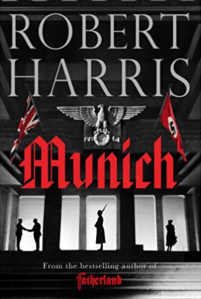
Munich, by Robert Harris

Summary: a tense journey to the heart of banal darkness
As Hitler masses his troops on the border with Czechoslovakia, threatening an invasion that will draw Britain and France into a general European conflagration, Chamberlain, the British Prime Minister contemplates how to avoid war. Surely the sacrifice of a small nation to a tyranny is a reasonable price to pay?

As the leaders of Germany and Britain circle each other two relatively low level civil servants on either side, Hugh Legat and Paul Hartmann, one-time friends at Oxford, begin to renew contact in a bid to avert what is coming.

Harris’ latest thriller is based around the infamous 1938 international conference in Munich. But its most powerful theme for me was the empathetic exploration of the nascent German Resistance. Hartmann, a character who bears a striking resemblance, physically and biographically, to the real Resistance leader Adam von Trott, seems a little mad to his old friend Legat. But Hartmann has seen the true face of Nazism and understands the “power of unreason” that has gripped Germany. So he does not share the British delusions that Hitler is just another politician who reasonable men can do reasonable business with.

Harris has written “counter factual” thrillers, such as “Fatherland” set in a 1960s Germany in which Hitler has won the war, as well as ones more scrupulously rooted in fact, such as the superb “An Officer and a Spy” about the Dreyfus Affair. Consequently one isn’t too sure exactly how this particular story is going to turn out.

The result is a fine and tense exploration of this historical moment, and how even the best of motives can result in the most catastrophic of consequences.

On the value of conspiracy theories: the Kennedy assassinations and “official versions”

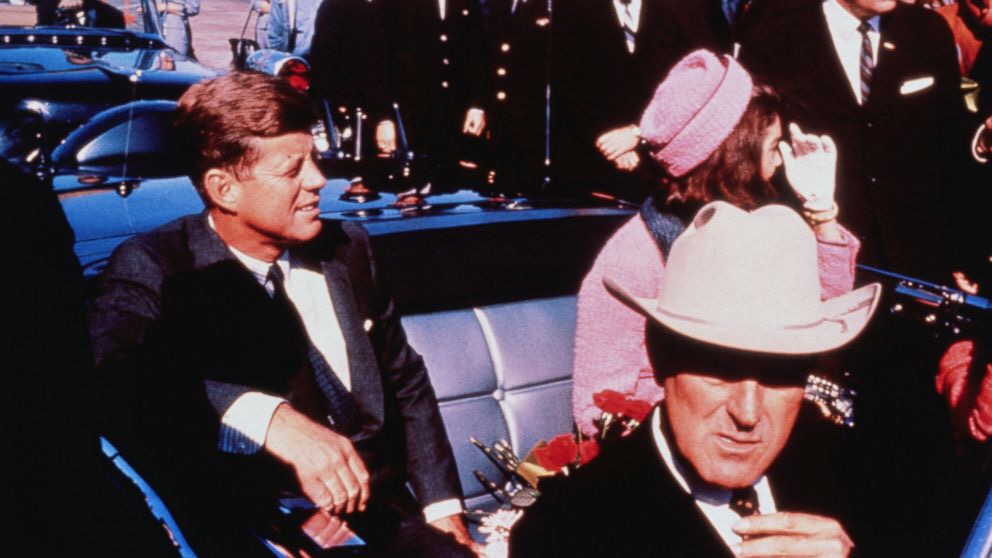
For many Gerald Posner’s book, Case Closed, is the definitive word on Jack Kennedy’s assassination. Posner concludes that Lee Harvey Oswald acting alone shot Kennedy on 22 Nov 1963 in Dallas Texas. It is a widely shared conclusion. Vincent Bugliosi, a distinguished prosecutor who put Charles Manson in jail, concluded the same in his own consideration of the case. And this is of course the official verdict of the Warren Commission established by Lyndon Johnson to investigate the assassination.

And yet as the US gets ready to publish another trove of documents relating to the Kennedy assassination, a clear majority of Americans – in 2013 the Economist reported 61% – still believe that Jack Kennedy was killed in a multi-person ambush organised by high officials in the US government.

David Talbot’s 2007 book Brothers, goes some way to explaining why so many still think this way. Talbot recounts how two of Kennedy’s closest advisers, Dave Power and Kenny O’Donnell, both veterans of World War 2, both travelling in the same car behind Kennedy when they saw him killed, were both under the clear impression that their convoy was under fire from multiple directions, including the infamous Grassy Knoll ahead of them, as well as the Book Depository behind them where Oswald was located.

Furthermore the subsequent killing on live television of Oswald by Jack Ruby, a mob-connected Dallas night-club owner, reeks of cover-up: Ruby’s story, that he wanted to protect Jackie Kennedy from the trauma of a protracted trial, is as fantastical as any Brexit bus slogan.

Talbot alleges that a pivotal figure behind the assassination of Jack Kennedy was Howard Hunt, someone who became infamous in the Seventies for his part in the break-in to the Democratic National Headquarters in the Watergate Building in Washington and the subsequent Nixon administration cover-up.

Talbot notes that in a memoir, American Spy, that Hunt wrote shortly before his death in 2007, Hunt included a “speculative” section on how the CIA would have gone about the killing IF it had been involved. In connection with the publication of that book Rolling Stone interviewed Hunt’s son who claims that, when he thought he was dying, Hunt described to him in some explicit detail the architecture of the conspiracy, which allegedly involved both Lyndon Johnson and senior CIA officials.

Talbot also claims that in spite of public statements that he believed Oswald was the lone assassin, Bobby Kennedy had been privately investigating Jack’s killing for years. Indeed, Talbot believes that, with the help of an FBI investigator, Bobby Kennedy had actually cracked the case, and it was his intention to have it officially reopened if elected president. That dream, of course, came to a bloody end in the Ambassador Hotel, Los Angeles, California in June 1968 when Bobby was himself assassinated.

Robert Vaughn, the scholar and actor, was with Bobby that night, and Vaughn has noted that there were more bullets fired than Sirhan Sirhan, the convicted killer, had in his gun. So, he concludes, there must also have been a conspiracy to kill Bobby. Perhaps this was a further measure to ensure that the truth of Jack’s death never emerged?

Perhaps it is far-fetched to believe in a conspiracy behind the killings of Jack and Bobby Kennedy. And it is improbable that whatever the contents of the papers to be released this week that they will shed much new or definitive light on those awful days. But at a moment in history when it appears that Donald Trump won the White House as a consequence of a Russian backed coup, and when a cynical campaign of lies has been used to strike at the foundations of a strong and united Europe, then perhaps the Kennedy assassinations still have important lessons for us. Not least they show that, whatever the official versions of events, that power and the powerful must be constantly questioned by the citizenry because it is only upon a foundation of doubt and skepticism that democracy, human rights and the rule of law can safely rest.

Saladin: the life, the legend, and the Islamic Empire, by John Man

Summary: An entertaining biography of the great Kurdish leader who, in the midst of war, introduced chivalry to the West

When a European army took Jerusalem in 1099 at the climax of the First Crusade, the slaughter of Muslim combatants and of Muslim and Jewish non-combatants, women, children and men, was so great that it was said the conquerors’ horses waded up to their bridles in blood. A century later when Saladin retook the city for Islam there was no such carnage. Instead Saladin allowed most of the city’s Christian population to depart in peace after paying a ransom.

Of course, as a man of his times, Saladin was not always so merciful. After inflicting a crushing defeat on Crusader forces at the battle of Hattin, Saladin had the Hospitaller and Templar survivors executed by inexperienced swordsmen whose clumsy hacking to death of the prisoners provided much sanguinary amusement for his more experienced troops.

John Man’s fast-paced, entertaining and informative biography of the great Muslim leader recounts the life and times of this legendary Kurd from relatively humble origins to enormous military and political power in spite of the the efforts of an obscure Islamic sect, the Assassins, to kill him. Over time Saladin managed to unite much of the hitherto squabbling Sunni Islamic world, welding them into a sufficient force to be able to confront the disparate Crusader states.

The peak of Saladin’s career, the battle of Hattin, opened the way to Jerusalem for him, but did not deliver him the prize. One of the few Crusader survivors of the battle was the knight Balian of Ibelin, who afterwards sought refuge in the city of Tyre while Saladin began his moves towards Jerusalem. This is where Balian’s wife resided.

Man recounts the story of how Balian sought a parole from Saladin to go and retrieve his wife, which Saladin granted. On entering Jerusalem the citizens begged Balian to remain and lead the defence of the city. Given their desperate state – most of Jerusalem’s garrison had been killed at Hattin – Balian sent a message to Saladin asking to be released from his parole, a request which Saladin again granted.

This story is one of many – alongside, for example, the one of how Saladin, in the midst of battle, sent two horses to King Richard to replace the one that had been just killed beneath him – that are frequently presented to demonstrate Saladin’s enormous chivalry. However it has always struck me as evidence of something perhaps more intriguing.

Man notes how Crusader and Muslim populations lived so close to each other that trade and even friendship often grew up. This story seems to suggest to me that what actually happened may have been less to do with abstract chivalry and more to do with a politically astute commitment to mercy. Perhaps what was really going on was an arrangement between Saladin and his friend Balian to mount a defence of Jerusalem that, after a decent show, could lead to a negotiated surrender of the city to the Muslim forces without the necessity of storm and the inevitable massacre that would result.

Whatever the underlying truth this is what ultimately happened. And the contrast between the atrocities of the Crusaders and the vastly more moderate approach of Saladin has helped to rightfully make the Muslim leader such an enduring legend in the hundreds of years since his death.

Gerry Adams: An Unauthorised Life, by Malachi O’Doherty

Summary: An impressive attempt to cut through Adam’s lies, obfuscations  and pseudo-intellectualism to understand more properly his role in war and peace-making
In her book, Every Secret Thing, Gillian Slovo’s magisterial memoir of her parents, Ruth First and Joe Slovo, she reflects on the nature of clandestine life, how deceit becomes an all pervasive thing, a way of existence and a habit of living rather than something that can be easily compartmentalised.

This phenomenon may go some way towards explaining the inscrutability of Gerry Adams, a man who has lived much of his life clandestinely: while he has always denied even membership of the organisation most observers of the North of Ireland, myself included, believe him to have been a long-time leader in the IRA, including a period up to the atrocious La Mon bombing as Chief of Staff.

Malachi O’Doherty makes a serious effort with this book to understand what makes Gerry Adams tick. While he follows a straightforward biographical narrative the book is also something of a philosophical and psychological reflection upon the man and his choices to make war and to make peace.

Throughout his entire career there seems to be one constant with Adams: his belief in the IRA as a moral absolute. Any individual who had committed themselves to this is therefore entitled to unquestioning respect irrespective of what they have done, whether it is murdering a young woman teacher like Mary Travers, or a single mother like Jean McConville, or burning civilians alive, such as at the La Mon Hotel. Anyone who criticises the perpetrators and their actions renders themselves politically suspect and morally indefensible in Adams’ eyes. It is as if Pope Urban’s promise of forgiveness of all sins for those who went on Crusade in the Eleventh Century has been purloined wholesale by Adams in his perspective on those who waged his armed struggle.

Other leaders and generals, Adams’ own description of himself, have similar perspectives on their troops. Theresa May’s stated intent to remove the British military from the scrutiny of the European Convention of Human Rights suggests a similar attitude to another group of professional killers.  Perhaps they share the understanding that, as Sherman pointed out, “war is cruelty”. So, having asked men and women to wage it, it is perhaps hypocritical to demand limits on their cruelty once it has been unleashed in what one regards as noble purpose.

I don’t agree that war should ever be unconstrained and believe that those who make war criminals of themselves should be held accountable. But this book does remind us how many of those who were caricatured as evil villains during the Troubles were enormously courageous and self-sacrificing. But courage is not the highest of human virtues – I would say compassion is. And a further thing that this book reminds us is that the dark side of courage is how it can facilitate atrocity.

I was never an admirer of Adams during the Troubles. I found his thinking at best shallow and at worst cock-eyed. I found his justifications for war glib. Adams never seems to have recognised that having claimed for his army a quasi-divine right to wage war that this may give rise to a culture in which individual members regarded their personal right to use violence as a logical continuation of that mystical claim. Nor yet does he seem to have recognised that such a culture might have some relationship to the “unauthorised” operations – murdering civilians and covering up those murders – and the sexual violence that some members indulged in, and in which the leadership seems to have acquiesced.

img_1326

John Hume and Gerry Adams

I know that Adams has the reputation of being an intellectual amongst the IRA. But true intellectualism resides in rigorous engagement and testing of your ideas with alternative concepts and perspectives. Adams never had this until he began to sit down with John Hume in a protracted dialogue that gave rise to the peace process.

O’Doherty shows that Adams was indispensable in making the peace. So in spite of all his sins and flaws he does indeed deserve the gratitude of the peoples of Ireland and Britain. Certainly when history judges him, it should be more favourable to him than to those self serving clowns in the British Establishment who, at time of publication of this gripping and elegantly written book, have put the peace at risk with their thoughtless blundering.

Finally: The Benefits of Brexit

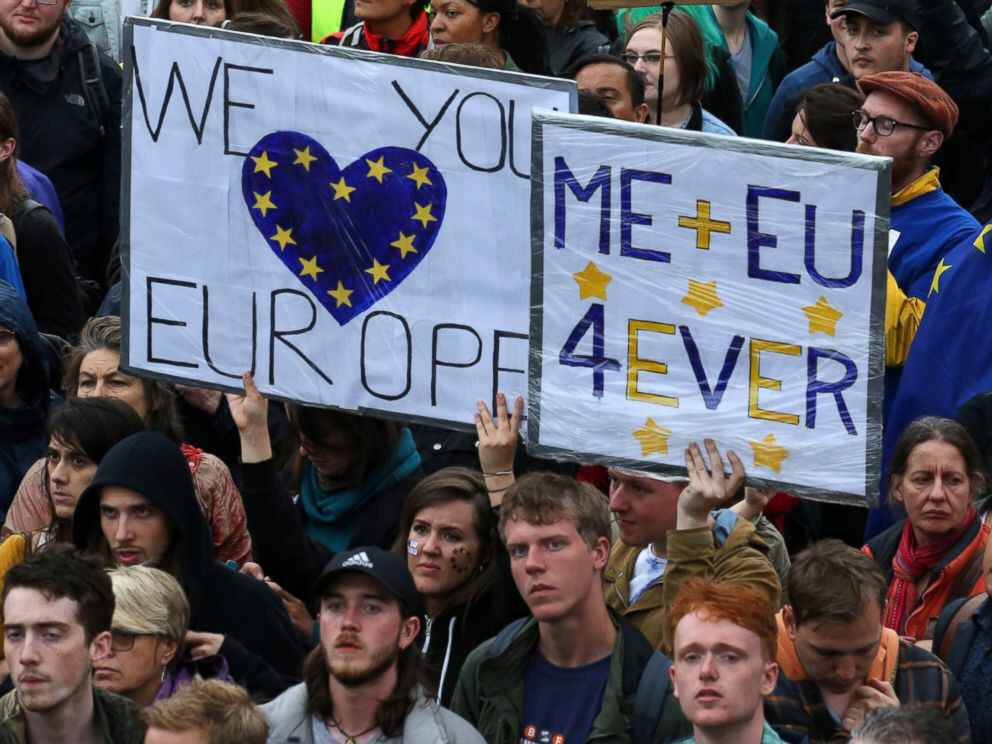
Over the past months I have noticed a recurrent question on social media asking users to name a single benefit of Brexit.

I have managed to think of a few. In future there will be access to duty free in Dublin Airport for the flights to London. And, when the UK government inevitably betrays the DUP and sets the border between UK and Ireland down the middle of the Irish Sea, as the desperate price they must pay to get a trade deal with the EU, that will be a significant step towards the reunification of Ireland. Though, of course, given that the path towards a reconciliation amongst the Irish people was already set by the Good Friday Agreement this particular benefit could probably have been happily forgone.

But aside from these the search for Brexit benefits has been a forlorn quest. Brexiters have long been flummoxed when challenged to name which particular European laws they objected to. And even the dimmest seem finally to have realised that the stories of bendy bananas were preposterous myths and the promises of £350 million a week for the UK’s National Health Service were cynical lies.

But of course there are enormous benefits of Brexit for some, though not of course the vast majority of those deceived into voting for it, or even the racists and xenophobes for whom economic concerns are secondary to ones of hatred.

No, those who will benefit are an entirely different stripe of ideologue. They are a political and social elite who campaigned against the EU to concentrate power more firmly into their hands, irrespective of the social and economic cost to the majority.

For all their talk of the sovereignty of parliament the first fruits of their labours will be obtained if the Repeal bills currently before parliament are enacted into law and they are granted the sweeping Henry VIII powers those bills request. Such powers will enable ministers, for years to come, to make law without recourse to parliament.

And these powers are then likely to be used to enable the political elite to reward some of their most cynical backers: those who have chaffed against the regulations from the EU that have protected workers’ rights, environmental standards and food safety. They will get the regulatory bonfire they have long craved and that leading Brexiters have been promising.

As the proportions and specific horrors of the catastrophe that will be Brexit become clearer by the day, it seems beyond rationality that the UK government still seems intent on embracing the disaster. But for some at the most senior levels of government this seems a price worth paying for supreme power in the devastated aftermath.

That the opposition Labour Party, wrapped up in its fantasies of some post-Trotskyist “People’s Brexit”, is so pusillanimously facilitating this careening towards disaster is even more bizarre. But then the careers of those, Left and Right, who are facilitating this mess, will naturally have come to an end as the reality bites, and they will be in comfortable retirement as the next generation scrambles to pick up the pieces.

To Kill the President, by Sam Bourne

img_1289Summary: Dreams of a better world

To Kill the President starts with Donald Trump coming within 7 seconds of ending the world by trying to launch a nuclear attack on North Korea and China. Things get tense after that.

Former Washington Guardian correspondent, Jonathan Freedland, writing under the pseudonym of Sam Bourne, here crafts a disturbingly plausible depiction of the Trump presidency as a krypto-Nazi one presided over by a petulant and bullying overgrown child. Of course the name of the president is never uttered, but his turn of speech, Twitter addiction, disinterest in facts, narcissism, inattention to detail and penchant for sexual assault all have Trump writ larger than his tiny, tiny hands.

Faced with this grotesque threat to human civilisation a small group of patriotic Americans decide they have no choice but to remove him from office, by whatever means necessary. Their efforts are stumbled upon by a White House Counsel, Maggie Costello, an appointee of the previous administration who is nevertheless kept on by the new regime who want a least a few competent professionals to remain.

Maggie is an outsider in every way in the new dispensation: a woman in a misogynistic administration, foreign (Irish), leftist and cosmopolitan amongst the xenophobic Fascists. She is an intriguing protagonist: flawed, almost fatally, but smart and tenacious too, by way of compensation.

To Kill the President is a compelling thriller, perfect escapism for those who want a brief respite from the horrors of contemporary reality.

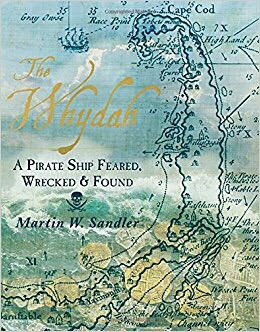
The Whydah: A Pirate Ship Feared, Wrecked and Found, by Martin W. Sandler

Summary: A fine young adult account of the heyday of piracy in the Americas, with plenty of interesting detail for the more jaded.
On the night of 26 April 1717 the pirate ship, the Whydah foundered off the coast of Cape Cod, Massachusetts, bringing to an end the short but spectacular career of Black Sam Bellemy and over 130 of his crew. They had spent the previous year raiding and looting with impressive efficiency honest merchant shipping from the Caribbean to Maine.

Of course the thing was that much of this legitimate commerce that Bellamy and his crew were so dangerously disrupting was based on the “triangular trade”, the genocidal system that captured, tortured and enslaved Africans to enrich the Western world.

The Whydah, is a narrative history for young adults focussing on the story of the ship from its launch to the discovery of its wreck. By way of full disclosure: the author, Marty Sandler, is one of my best friends in the entire world, so I was positively disposed to like this book even before I picked it up.

Having said that this is an important book. Because in focussing on this sliver of history, Marty illuminates a much wider society in a way that many, even today, would rather not contemplate.

Marty presents evidence to show pirate society, violent and avaricious as it was, to be in many ways vastly more admirable than the system of Western “civilisation” against which it rebelled and fought. For example the pirate ships were democracies, electing their officers, and amongst the very few places in the 18th Century where Blacks and Whites lived and worked as equals. Some of the pirate captains even had ethical objections to the slave trade.

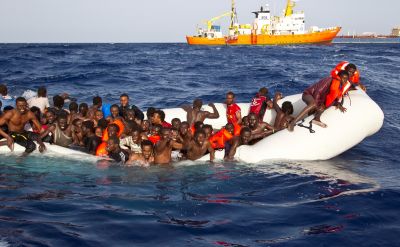
IMG_1266The Whydah is a book that will encourage young people to think and question the myths and fables their more powerful elders tell them. And for those of us who occasionally like to look out to sea, it reminds us how the horizon was once speckled with wooden boats, filled with desperate men and women, prepared to try to steal a better life from those who denied such a thing to them.
Somethings have changed since then.  Today the desperate have plastic boats.

PT 109: An American Epic of War, Survival, and the Destiny of John F Kennedy, by William Doyle

Summary: A gripping war story that gets to the heart of important truths about both war and Jack Kennedy

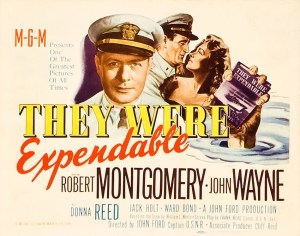
In 1945 John Ford made a cracking war movie called “They Were Expendable” about the exploits of a motor torpedo (PT) boat unit, including, of course, John Wayne, defending the Philippines against the Japanese onslaught.

The thing about the movie though, was that the capabilities of the PT boat therein portrayed were horseshit. The PT boat was a lousy weapon. Its torpedoes were close to useless as, due to technical flaws in their design, they rarely hit their targets let alone detonated. Few of the PT boats were equipped with radar though they were expected to fight in the darkest of nights. And these mahogany constructions were sent into conflict against much more heavily armed and steel armoured destroyers. This was only slightly more hopeful, in military terms, than sending a mime troupe to attack a panzer division, to borrow from Milan Kundera. Indeed in this book William Doyle notes that of the three confirmed sinkings of major ships by PT boats during the Second World War, one of them was American.

This was the branch of the Navy that Jack Kennedy, millionaire son of the former US ambassador to the Court of St James’s and best selling author of Why England Slept, joined in the Solomon Islands in 1943. It made him president.

Dave Powers, a friend and aide to Jack, once commented that, “Without PT 109 there would never have been a President John F Kennedy.” The legend of Jack’s fortitude and leadership following the sinking of his boat during a small battle in which 15 ill-equipped PT boats were sent to ineffectually attack a convoy of Japanese destroyers, was the foundation upon which Jack’s political career was built. But the story of this relatively brief episode in Jack’s relatively brief life is more important for a number of reasons, not least, after over half a century of muck raking and character assassination, it has proven pretty close to impossible to tarnish this truth of his heroism during those days.

Certainly it has been tried. Doyle notes the simmering accusation that it was Jack’s incompetence as a boat skipper that led to his boat being sunk, the only PT boat to have been sunk by ramming during the course of the war. However Doyle’s account of the ill-conceived battle in which the sinking occurs offers evidence that this is an unfair charge and that it was ill-luck on Jack’s part exploited by an imaginatively aggressive Japanese commander, Kohei Hanami, that led to the sinking. Later Kennedy, in a comment that gains enormous retrospective poignancy, noted his thoughts just before the moment of impact: “This is how it feels to be killed.”

He didn’t die then and went on to play a decisive role in saving the lives of his surviving crew. Doyle notes: “The longest Olympic swimming event staged before then, the men’s 4,000 metre freestyle race, was held only once, in 1900. Fourteen of the twenty-eight competitors… “did not finish” and the distance was promptly retired. On the afternoon of August 2, 1943, John F. Kennedy covered the same distance, plus a mile more, over open water, behind enemy lines in broad daylight…All the while he bit on a strap and towed a badly burned sailor along with him. Simultaneously … leading nine other men.. towards safety… it was an astonishing feat his crewmen never forgot.”

Once rescued with the crucial help of courageous Solomon Island scouts and an Australian Coastwatcher, he refused the option to return to the States but remained in the combat zone for months more. During that time he helped save the lives of 10 more Americans before ill-health forced him home.

For all his other flaws, these events, and those of the Cuban Missiles Crisis, more starkly than any others, show the greatness at the heart of Jack Kennedy. Indeed, it was almost certainly his experience of the chaos of warfare in the Solomons that stiffened Kennedy’s moral courage to face down the hawks in his administration and save the world from nuclear annihilation during that Crisis.

PT 109 is a gripping book about war, endurance and a young man leading in the most horrendous of circumstances.

Small Vices, by Robert B Parker

Summary: Spenser on sparkling form

Spenser’s pal, the high-flying lawyer Rita Fiore, hires him to look into the conviction of a black man, Ellis Alves. Alves, a petty criminal with a history of sexual violence, has been sent to prison for the apparent sexual murder of a young student. The thing is, Alves, unpleasant a human being as ever there was, might not have actually done it.

Spenser starts poking about in the case with his usual mixture of insight and irreverence and finds the cases against Alves to be a bit on the fishy side. All the more so when folk start showing up threatening to do him violence for asking questions in the wrong places. In this instance, however, the violence that they are threatening may, for once, be more than Spenser can handle, even with the capable assistance of his buddy, Hawk.

Parker’s Spenser is a great creation – smart, kind and tough in equal measures, in the mould of the classic knight errant of American gumshoe literature, dwelling amidst a great community of characters, cops and crooks alike. This is a particularly satisfying episode in his literary career, when he finds himself faced with an opponent who may be his martial superior. All in all, a  great episode in the Spenser canon.