The prospects and perils of quantification: Global Forced Labour Estimates and the Sustainable Development Goals

Symposium on Forced Labour Research, Sheffield University

8 Oct 2015

I don’t think it will be a surprise to anyone that since I was asked to speak here I’ve been thinking a lot about the number 42.

42 is, as Douglas Adams reminded us, the answer to the ultimate question of life, the universe and everything.

It is an absurd notion, but Adams was getting at an important point with his tales of Deep Thought in the Hitchhikers’ Guide to the Galaxy. He was getting at that belief in large parts of the modern world that the only things that matter are the quantifiable ones. It’s part of the discourse that poverty reduction in general, and slavery eradication in particular, are technocratic challenges which merely require the rational thought of the clever and the largesse of the rich to fix.

But, of course most of the things that matter in life, the universe and everything cannot be quantified, or are things for which numbers are merely crude metaphors. How do you quantify love? Or the experience of watching a sunrise in the Ethiopian highlands or dolphins dancing off the coast of Angola? Or the pleasure of a fine wine and cake?

Or the level of contempt that one person can have for another human being that allows them to calmly contemplate working them to death?

Non-quantifiable questions about non-rational issues, are at the heart of the practice of slavery. In particular the questions of discrimination and the dehumanisation of other people are fundamental to slavery.

It is technically true that anyone can be enslaved, particularly if they are caught up in the cataclysms of war. But that truism masks a more fundamental truth: that the weak who are subject to the prejudices of others are the ones who are vastly more at risk of enslavement: Dalits and Adavasi in South Asia; migrants in Western Europe and the Americas; women and children everywhere.

So given the topic of this roundtable, my question is: how can one obtain insight into any of these issues with quantitative methods?

Of course there is a need to quantify the scale of slavery in the world, to help plan responses and assess progress. But knowing the numbers does not allow one to understand the reasons why people are enslaved nor how their enslavement may be ended.

Anyone who has done any reading in the social sciences will be aware of the sort of profound insight that quantitative methods can provide. But it needs particularly skilled and focused researchers gifted with exceptional acuity in the framing of questions. I suspect we may be some way off a sufficiently widespread understanding of the generalities of contemporary slavery and the specifics of its national and cultural manifestations before such research practice can come into its own.

So, as a general rule I would argue that, even though quantity has its own quality, increased qualitative research is more vitally required for the understanding of the root causes of slavery and the political and social remedies to the problems.

Qualitative and historical studies have shown us that effective anti-slavery action still requires the elimination of underlying discrimination practices and empowerment of those vulnerable to slavery. It has shown us the importance of provision of high quality and appropriate education to children vulnerable to slavery. It has shown us the importance of unionisation as a means to rebalance the power between exploited workers and employers. It has shown us how combinations of governmental cynicism and ineptitude contribute to the endangering of vulnerable workers both in their home countries and when they travel in search of decent work.

That is not to say the qualitative research is a silver bullet. In spite of much qualitative research, including that conducted by the Anti-Trafficking Monitoring Group which Anti-Slavery leads, the British Conservative Government remains thoroughly convinced that the principle cause of slavery in the UK is evil organised criminal masterminds, and have proven remarkably resistant to the notions that their Overseas Domestic Worker visa, their lack of labour inspection within risky industries such as construction, and their police cuts have anything to do with the problem.

This brings me to another point. The ending of slavery is a political challenge. Or rather it is a bundle of national and international political challenges. And these political challenges bump up against the prejudices and pretensions of the privileged,, who since the days of Sparta have conspired to keep power out of the hands of the helots. Thus it is. Thus has it always been.

And, as with the British government’s notions of why there is slavery in the UK, these prejudices are deeply resistant to erosion by mere facts. Economic agency theory suggests that humans will always act to maximise their material benefit. But when Hamilton tried to establish a slavery-free economy in the US in the 1790s and when Lincoln tried compensated emancipation at the outset of his presidency, both failed to end slavery in spite of the economic benefits they promised to slave holders. The American Plantocracy were so wedded to their aristocratic privilege that their status gave them, they found it something that mere economic wealth could not compensate them for.

We see similar issues today when we carefully consider slavery across the world. In the Arabian peninsula the Kafala system provides the legal basis by which the elites can obtain economic benefit by indulging their prejudices against South Asian migrant workers by enslaving them. In South Asia the rule of law does not extend to the hundreds of millions of Dalits and Adivasi who live there and hence the powerful are able to enslave them with impunity. Different political economic models are unappealing to the elites in these situations because they would involve treating those they disdain with decency and recognition of our common humanity.

The increased complexity of the Sustainable Development Goals over the Millennium Goals, and their rooting in human rights standards hopefully will help us move on from that limited technocratic discourse.

This technocratic approach to slavery seems to me at the moment to be leading to a fixation upon a search for a menu of technical options which only require money to be plugged into in order to achieve change. Such an approach is chimeric. It can never replace the hard political work, the partnerships and community development, the research and investigations, the exposes and confrontations, the dialogue and collaborations, that is necessary to shift power into the hands of those who have been excluded from power.

In the end, I would suggest, that the visceral is as important as the rational: which side are you on? The struggle of the helots, the Dalits, the migrants, the outcasts continues. And, unless we properly understand that, irrespective of what we try to do or how we try to do it, we are fated to become part of that most accursed community in human history and society – the well-meaning.
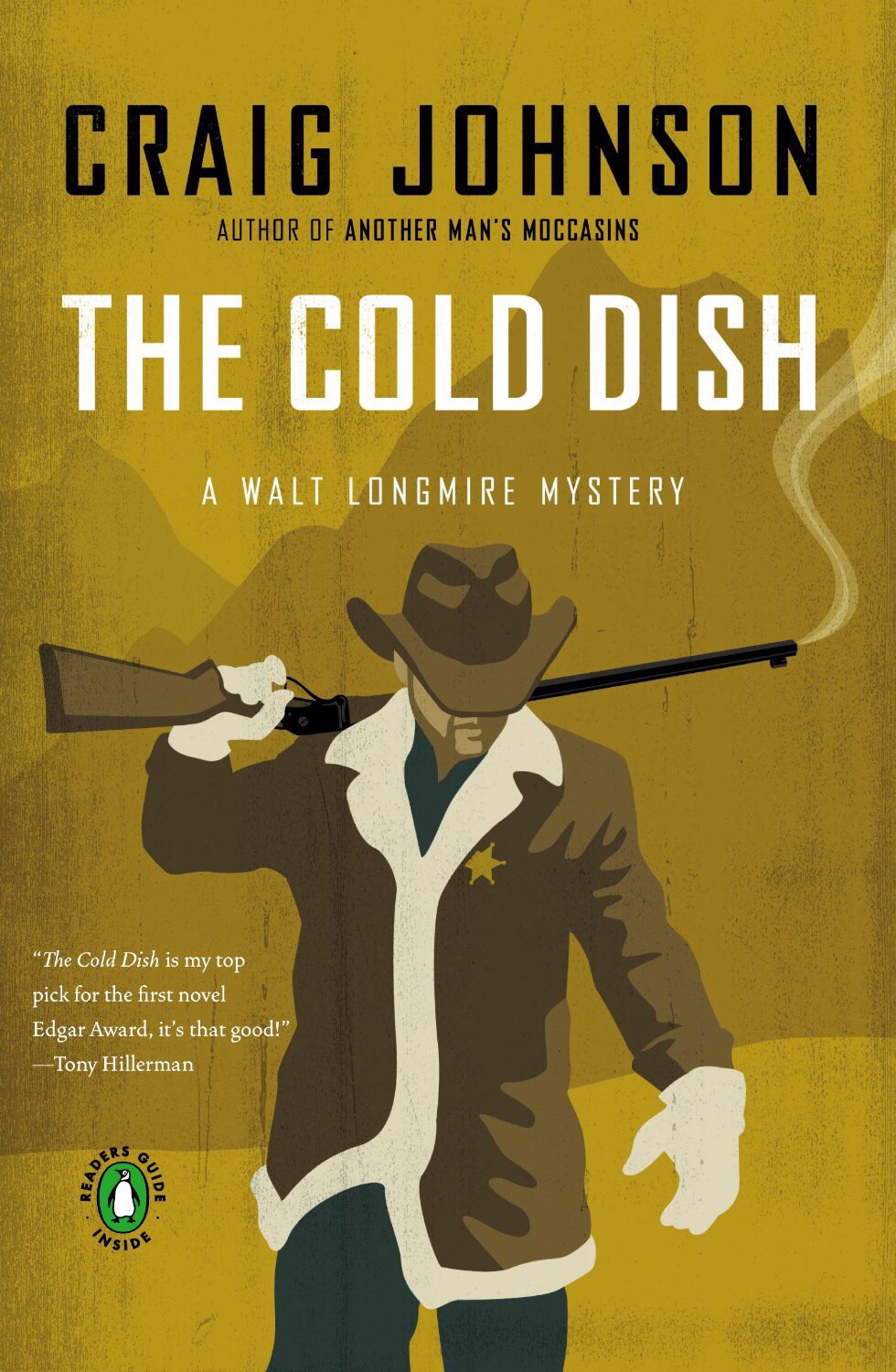
The Cold Dish, by Craig Johnston (Walt Longmire #1)

Walt Longmire is a mess. Three years widowed, he lives out of cardboard boxes in the house he half-completed with his wife. And he is marking time until his term finishes in his job, sheriff of Absaroka County in Wyoming, Cheyenne Country.  

Fortunately for Walt, his friend Henry Standing Bear decides to take him in hand and help him get his life back together. This happens just as the body of a kid, Cody Pritchard, shows up dead, killed by a gunshot that could, maybe, have been the result of a hunting accident. But when the death is recognised as no hunting accident a further problem arises: the abundance of folk who had a motive to kill the wastrel, a convicted and unrepentant rapist of a young Cheyenne girl, who got away without serving much time because of his youth. Furthermore, as the Cheyenne girl in question is Henry’s niece, and the gunshot in question was one that only maybe half a dozen folk in Absaroka County, including Henry, could manage, Walt has to start considering, reluctantly, just how well he knows his friend.

The Cold Dish is about a lot of things, not just murder and investigation. It is about depression and ageing. It’s about the relationships between the Native American and settler communities in the West. It’s about friendship and spirituality. It’s about the legacies of the conquest of the Cheyenne and their dogged resistance. And its about revenge, the dish best served cold, or not served at all maybe.

Along with Walt and Henry the cast of characters in the book are particularly well drawn and there is great warmth and humour in the midst of the bitter winter vistas in which much of the action takes place. It is a potent combination of narrative, reflection and character that has made the Longmire series such a success. Once visited, it is difficult to imagine not wanting to return to Absaroka County.

How to end slavery, forced and child labour as part of the Sustainable Development Goals: Remarks to “Alliance 8.7” consultation meeting

imageIt’s a considerable achievement that the Sustainable Development Goals now contain an explicit reference to slavery, forced and child labour.

The absence of this issue from the Millennium Development Goals was a travesty, and the consequences of that are highlighted by the number 5.5 million. 5.5 million is the ILO’s most recent estimate, made in 2012, of the number of children in slavery. It is the same as the ILO’s estimate of the number of children in slavery in 2005

In other words, in spite of all the real progress on poverty reduction and development, including a huge fall in the overall numbers of child labourers, during this period international development has completely passed by the millions of children and, for that matter, the tens of millions more adults in slavery across the world.

So the inclusion of slavery eradication in the Sustainable Development Goals is therefore highly significant. It is a recognition by the international community that it has until now comprehensively ignored some of the people in greatest poverty across the globe. But for this recognition to have practical meaning, it must be translated from a sentence in a United Nations pronouncement to a strategy that puts power into the hands of the excluded.

Because one thing that the struggle against slavery puts into the sharpest of focus is that poverty is not merely about a lack of things, but more fundamentally about a lack of power. This remains true in spite of some of the more recent philanthropic discourses on poverty which treat it not even as an economic issue but a technocratic one.

Slavery is one of the most political of development and poverty issues. Those who are enslaved are drawn from communities which are systematically excluded from power to enable their control by those who are more privileged. They include Dalits and Adivasi in South Asia, migrants in Europe, the Middle East, the Americas, South East Asia and West Africa, and children everywhere, .

Prejudice and discrimination against certain groups on arbitrary bases such as caste, ethnicity, gender and religion is still frequently used as a basis upon which the more powerful exclude the more vulnerable from the processes of development. By doing so those same mechanisms of social exclusion also render those discriminated against more vulnerable to slavery.

Development and humanitarian practitioners have barely even been aware of these dynamics and so have failed to address them. If those who call ourselves anti-slavery activists also ignore the fundamentally political nature of these challenges then we too will fail in the imperatives placed upon us by our mandates.

So this is where it gets difficult.

The majority of the underlying causes of slavery are profoundly political and fraught with contention by vested interests which are quite happy with the way the world currently is. Many new entrants to the struggle against slavery are content to see this struggle as merely a matter of locking up evil people by decent police. They are unconcerned with the altogether more contentious questions that underpin the reality of contemporary slavery, such as state-acquiescence in caste-based discrimination, the toleration of child marriage, undermining of rule of national and international law, the failure to establish safe migration routes for vulnerable workers seeking decent work, or the decriminalised international trade in slavery produced goods and services.

For example if the international community is serious in its efforts against slavery how can we continue to acquiesce in the ready access to international markets and warm inclusion to the international polity of Uzbekistan and Qatar, to name but two states, which, with differing degrees of cynicism, have effectively legalised slavery in within their borders.

Or, in spite of its recent casting of itself as a global leader against slavery it is unlikely that the UK has for a moment considered the potential impact that its naked disdain for the European Court of Human Rights will have on the rule of international law in general and as it relates to slavery in particular: that court has been vital since 2000 in forcing governments across Europe, including the UK, to properly respect the rights of victims of slavery. Any credible international struggle against slavery must therefore confront the British government on this, one of their most cherished political prejudices.

And, another political issue: should India be made a permanent member of the UN Security Council while its toleration of caste-based violence is so high, and its efforts to end slavery are so paltry?

So to advance Target 8.7 requires a new concentration of effort that draws in not only traditional ILO partners but also the entire development and humanitarian sector on this issue, recognising that tackling slavery is a fundamental political and development issue and one that is not solely the preserve of law enforcement professionals. Frequently, such as in the brick kilns and quarries of South Asia, it is openly practiced. Therefore there should be a requirement of every credible development and humanitarian agency to consider if they could contribute towards the reduction of slavery and child labour within every community with which they work. This may not always be possible. But asking the question, and considering carefully the dynamics of power and discrimination could lead to empowerment of some who would previously have been overlooked.

Second, there should be much more conscious focus by in development and humanitarian programmes on diminishing the vulnerability to slavery of those communities. For example, ensuring that the children, particularly the daughters, of brick kiln workers and manual scavengers in South Asia have access to proper education, could help break the transmission of slavery across generations. And ensuring that the curriculum promotes human rights, in particular those of girls, and toleration for all would help erode the prejudices that permit human beings to enslave and exploit others.

Aid programmes must work to advance the rule of law by building the capacity of the courts and law enforcement agencies, so that anti-slavery laws can be upheld rather than regarded as mere suggestions to the elites who continue to be able to exploit people with impunity.

Beyond the development and humanitarian sectors the issue of slavery must become a centrepiece of diplomacy, trade and migration policy. In particular there is a need for a clear recognition of the brutal reality that tied visas are de facto licences for trafficking across the world.

This Alliance is vital if we are to obtain progress on Target 8.7. But to do so we must tackle this issue directly, holding each other to account and not merely tinker at the edges with approaches which never confront many of the most powerful who maintain the systems of slavery.

Jack Kennedy: Elusive Hero, by Chris Matthews

 Jack Kennedy said the reason that people read biography is to answer the question, “What was he like?” With this fine biography Chris Matthews tries to answer this basic question about JFK himself.

The result is an affectionate, though clear-sighted, biography of Kennedy charting his path from sickly second son of Joseph Kennedy Senior, to President of the United States. It is a short book, only 400 pages or so with equal weight to each chapter of his life, from his childhood to his presidency.

There are many bad things one can say about JFK, from his almost pathological womanising and frequently callous treatment of his wife, Jackie, to his stupid decision to support an invasion of Cuba at the Bay of Pigs, to his escalation of the US involvement in Vietnam and his acquiescence in the coup against, and assassination of, South Vietnamese President Diem.

 And yet… even when all this is considered there is a greatness about Kennedy which even the most damning assessments of him cannot deny. From his earliest days he displayed an extraordinary indomitability of spirit:  when his life was threatened by ill-health; when his PT boat was sunk by a Japanese ship and he displayed enormous fortitude in saving his crew; in his post war efforts in politics; and finally to his election to the Presidency. As President he showed himself on the right side of history and progress more often than not, introducing an economic stimulus to reduce unemployment, bringing the weight of the Presidency to bear in support of civil rights, and in a sustained focus on a nuclear test ban treaty as a first step in de-escalation of the arms race.

But Jack Kennedy’s historical greatness would be guaranteed by one thing: his comportment during the Cuban Missiles Crisis. As Bobby Kennedy noted, “if any one of half a dozen [others] were President the world would have been very likely plunged into catastrophic war,” a war that would have ended humanity.

 During this crisis, Kennedy faced down the hawks amongst his own advisers, rejecting their advice to immediately attack Cuba in favour of a more cautious naval blockade of the island. It has subsequently emerged that had he followed that advice it would have precipitated a nuclear war. As a result Jack Kennedy, the junior naval officer from the Pacific theatre of the Second World War, proved Clemenceau’s dictum, “War is too important to be left to the generals.”

Jack Kennedy saved the world. Shortly after the forces of reaction had him killed and then conspired to assassinate his character and historical achievements. But still there is this, as Chris Matthews puts it, “In the time of our greatest peril, at the moment of ultimate judgement, an American president kept us from the brink, saved us really, kept the smile from being stricken from the planet. He did that. He, Jack Kennedy.”

David Cameron and the Refugee Crisis: lousy humanitarian policy and a dearth of moral courage

 I spent five years during the Angolan Civil War working with colleagues to keep a quarter of a million war displaced people alive across the central highlands of that country.

Our work had no impact whatsoever on the underlying causes of those people’s displacement. The cause was the war which arose from a complex mix of a legacy of the trans-Atlantic slave trade, Cold War geo-politics, regional rivalries, and local personalities, not least the extraordinary psychosis of Jonas Savimbi, the leader of the Angolan rebels. But while we could never have claimed to have contributed to bringing peace what we did ensured that more people survived the violence into its messy and corrupt aftermath in one of Africa’s most beautiful countries.

This is true for every war-related humanitarian emergency. The refugee crisis in the Mediterranean arises from similarly complex causes including the geo-politics of oil, a stupid and illegal invasion of Iraq, regional rivalries between Shia and Sunni, and the bitter lunacy of the DAESH partisans.

The resolution of this violence may take decades. Those involved in humanitarian response will merely try to stanch the bleeding, literally and figuratively, until some settlement can be reached which will end the civilian population displacements.

That is the truth of it in my experience: that effective responses to humanitarian crises must have immediate, medium and long term aspects addressing both the symptoms and causes of the crisis. It is also something that David Cameron should understand from the UK’s engagement with diverse emergency responses during his premiership.

And yet his statement on the 2 Sept did not put me in mind of a statesman wrestling with the complexities of a multi-national humanitarian disaster. Rather I was reminded of an observation, I think by Milan Kundera, that novelists tell the truth with lies and politicians tell lies with the truth. Cameron’s glib comment that, “I don’t think there is an answer that can be achieved simply by taking more and more refugees,” struck me as a stark example of Kundera’s insight.

Of course taking in refugees would no more solve the crisis in the Mediterranean than digging latrines in the displaced camps of Angola brought peace to that country. Giving refuge to desperate human beings has never and could never solve any underlying problem that has caused any war that has forced any population displacement anywhere in the world. That is not its purpose.

The purpose of giving asylum is to preserve people’s lives until the protracted process of ending war can be achieved and some measure of security established to allow civilians to return home. That should be something we understand as Europeans with our collective memory of the convulsions of the Second World War. Without such basic humanitarian measures the death toll of war and humanitarian crises would be much higher.

That is something that David Cameron should also know from that historical perspective as well as the humanitarian one. If he does not know this by now he should not be Prime Minister.

The proximity of the bloodshed of the Mediterranean to Europe imposes different responsibilities on the nations of Europe that are unlike our responsibilities in crises in other parts of the world. No amount of disingeniuity on the part of David Cameron or his fellow travellers changes that. The immediate challenges of this crisis require establishment of safe migration routes into Europe, a fair sharing of the responsibility for resettlement of refugees across the nations of Europe, and, as Germany has already done, suspension of the Dublin Agreement.

If Cameron and the UK government do not face up to the immediate term necessities of this refugee crisis then he may continue to congratulate himself on his clever manipulation of the facts and smooth media obfuscations. But history will be much more clear sighted. Its verdict, on his failure of moral courage at this moment of truth, will be damning.

Sixkill, by Robert B Parker

IMG_0424 Ah Spenser! We have been too long apart!

This time he is corralled by his police captain buddy, Martin Quirk, to investigate a suspected rape-murder by a Hollywood actor, Jumbo Wilson. Quirk is worried that Jumbo is being unfairly railroaded for the killing, and constrained by police politics from investigating more properly he asks Spenser to have a look. In spite of the fact that Jumbo is an A-list arsehole, Quirk baulks at the thought to imprisoning an innocent man.

Okay! So the premise for this Spenser story is a mite implausible. But that is not why you pick up a Spenser novel. No: Spenser is one of that long tradition of gumshoes who owe more to La Morte d’Arthur than Serpico. He is an honourable man of violence fighting for justice in spite of the cost even though no one else particularly cares. And the ensuing events prompted by Spenser’s investigation provide a violently entertaining excursion through a nexus of Hollywood and criminal underworlds.

In this novel Hawk is off in Central Asia for no apparent reason (I presume his own series?) so Spenser picks up another side kick, Zebulon Sixkill of the title (“Call me Z!”), a young Cree at rock bottom in his life but looking to be better. The warmth of the ensuing friendship and their humorous philosophising are a particular pleasure: when warning about the risks associated with a confrontation with a notably homicidal gangster Spenser tells Sixkill “he may bring others.”

“So did Custer”.

Sixkill is another great chapter in the Spenser pantheon, one of the most addictive detective series I have ever come across.

Midnight’s Furies: The Deadly Legacy of India’s Partition, by Nisid Hajari

IMG_0420Famously the Indian sub-continent freed itself from British rule through a non-violent struggle led by Gandhi. However rather than this being a great triumph for passive resistance, the efforts by Congress, the Muslim League, and the Sikh leadership to carve up the spoils more than made up for it in terms of bloodshed: the Partition of India saw one of the most horrendous blood baths of the 20th Century, and the largest forced migration in human history. Sometimes these two things coincided with trains of refugees pulling into their destination stations dripping with the blood of the women, children and men passengers who had been hacked to death in ambushes.

In Midnight’s Furies, Nishid Hajari details how the political calculations, petty jealousies, posturings, misjudgements and misunderstandings of the sub-continent’s political leaderships, in particular Jinnah and Nehru, led to the sectarian carnage that engulfed the creation of the modern states of India and Pakistan.

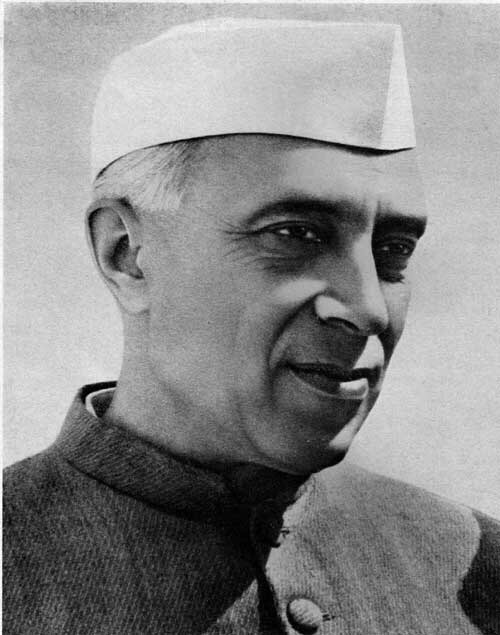
Nehru

Nehru

Hajari provides a much less sympathetic portrait of Nehru than Alex Von Tunzelman’s fine account of the same period, Indian Summer. For Hajari, Nehru failed in his responsibility as a statesman of obtaining some sort of rapprochement with Jinnah and the Muslim League, and hence undermined his vision of a secular India for all Indians. Hajari also portrays Nehru, at least in the early days of his premiership, as a man in office but not in control. His dream of a secular India uniting Hindu, Muslim and Sikh under a common citizenship bloodily undermined by the extraordinary violence of the period, which his administration seemed powerless to prevent.

Doubtless some of this was spontaneous communal violence drawing on obscure but profound local animosities and feuds. But much of it was not. Each community produced paramilitary forces, many of them highly professional as a result of the large numbers of former soldiers in their midst. These set to the butchery of their neighbours with a relish and ruthlessness that would not have been out of place in the Bloodlands of Eastern Europe a few years earlier.

This killing was frequently facilitated by the failures of Indian and Pakistani police and military to properly intervene to uphold the law. Sometimes the police and army stood idly by. Sometimes they became active participants in the slaughter.

In this regard they were echoing the equivocal leaderships of the two states: Jinnah appears to have missed the logical contradiction of wanting a secular republic for Muslims only. In India Hindus and Sikhs seemed to take their lead less from Nehru and more from Sadar Patel, the States minister in the Indian Union government. Patel regarded the ethnic cleansing of the Muslim population as a good thing, purging the state of potential fifth columnists. He also regarded the neo-fascist RSSS with considerable warmth despite their butchery of tens of thousands ordinary Indians.

Patel

Patel

With such equivocal leadership at the heart of government it is unsurprising that so many police and troops turned a blind eye to the atrocities. To his credit, when able to do little else, Nehru time and again sought out and faced down Hindu murder squads, striving to personally halt the killing which so much of his own administration was acquiescing in. Order only finally began to be restored by the intervention of Nepalese Gurkha and Southern Indian troops, who were less given to the sectarian passions of the northerners. The assassination of Gandhi by a right wing Hindu also caused some pause to the likes of Patel and the rest of the nation who perhaps only then began to glimpse the lunacy that their sectarianism was bringing.

Hajari is particularly interested in the origins of Pakistan’s current disfunction and sponsorship of terrorism, something which he shows very well. However the book also casts significant light on the current disfunctionalities of the Indian state.

Shortly before the victory for Prime Minister Modi’s BJP in the Indian general election I spoke to an Indian friend about the anticipated result. He argued that there were three strands in the Indian independence movement: the Nehruist/Ambedkarist republican tradition which has been dominant for much of Indian history; a communist/socialist strand which has enjoyed power in some of the Indian states; and finally the Hindu Nationalist tradition which Modi was now bringing to power.

However from Hajari’s account this Hindu Nationalist tradition was a very dominant one in the first Indian government, constantly undermining the visions of Nehru and Ambedkar. The caste-based apartheid, the rapes and murders of girls and young women, the enslavement of vulnerable workers that disfigure contemporary India, the world’s largest democracy, may, at least in part, be seen to derive directly from the Hindu-nationalist vision that so bloodily asserted itself in 1947 and asserts itself still to the present day.

Gandhi and Jinnah in happier days

Gandhi and Jinnah in happier days

Midnight’s Furies is a beautifully written but harrowing account of the origins of India and Pakistan. It is an important book about the origins of a contemporary Cold War, about human beings’ inhumanity to other human beings, about how magnaminty and empathy are so vital to diplomacy, and how their absence can lead to carnage.

Dark Fire, by C J Sansom

In the course of an apparently hopeless effort to defend a young woman on a charge of murdering her cousin, the lawyer Matthew Shardlake receives some unexpected help from Thomas Cromwell, King Henry VIII’s chief minister: a 12 day postponement on the case to allow him time to marshal a proper defence. In return Cromwell, requires Shardlake to undertake an investigation on his behalf: to locate the formula and means of making Greek Fire, the legendary incendiary weapon of the Byzantine empire. This is rumoured to have been discovered in the library of a monastery that Cromwell’s philistine policies have had vandalised in the course of the Dissolutions.

C J Sansom, the author, is both a historian and a lawyer, as well as a novelist. So this book, the second in his series about Shardlake, is rich in detail both of the political and religious controversies and the legal practices of the time. Shardlake, and so presumably Sansom himself, considers Cromwell as the lesser of evils that could befall the English state, but doesn’t skip over the atrocities the man was capable of: Shardlake’s memory of how Cromwell had a Catholic priest slow-roasted to death is a particularly chilling passage in the book.

In spite of the careful attention to historical detail Shardlake is the very model of a modern Londoner: humane and rational, his best friend, Guy, a Catholic physician and apothecary of Moorish origin, his side kick, Barak, a secular Jew. As such he is a companionable guide to the mad slaughterhouse that was Henry VIII’s London, a place more like a European Saudi Arabia, or Islamic State (DAESH), than the place we are familiar with in the 21st Century.

The result is a gripping and unusual crime novel, as Shardlake and Barak grapple with the parallel mysteries of a child murder and Greek Fire. I look forward to the rest of the series.

The Sisters Brothers, by Patrick de Witt

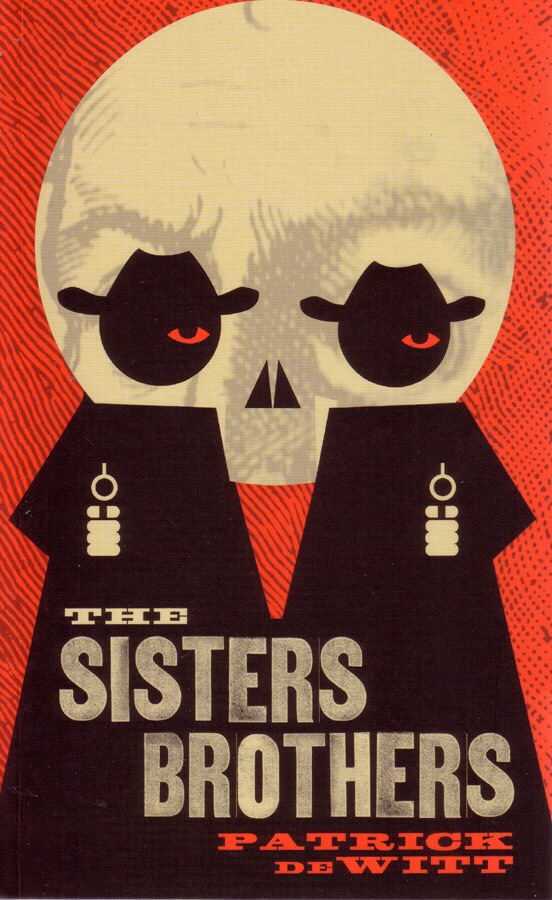
imageIn Oregon City, in the era of the California gold rush, Charlie and Eli Sisters are professional killers, though to be fair Charlie would be an enthusiastic amateur even if he wasn’t paid.

Their employer, known as the Commodore, instructs the brothers to head to San Francisco to kill a man called Hermann Kermit Warm, for unspecified infractions against the person of the Commodore.

The novel traces Charlie and Eli’s bloody odyssey in search of Warm, in the course of which they encounter a motley bunch of inhabitants of the Pacific North West. It is beautifully written and unsettling. But for the bloody violence this would be a novel of an amiable road trip.Eli, the narrator, gives the impression of wishing to be a decent man, but he is still ruthlessly violent when angry, or when he sees the logic of the situation demands it.

I am not sure there is a deeper message to the book, in spite of the entertaining philosophising that runs through the narrative. But it is still diverting ride through the old West.

The Last Battle, by Stephen Harding

imageOn 5 May 1945 arguably the last ground battle of World War 2 took place. It was a relatively small and very brief affair by the horrendous standards of that war, but it made up for that in terms of strangeness.

In the early hours of the morning of 5 May a force of Waffen SS attacked a castle in Austria, Schloss Itter, intent on massacring the prisoners there. The attack was resisted by a tiny ad hoc force of US tankers, Austrian resistants, anti-Nazi Wehrmacht and the prisoners themselves, who were a veritable who’s who of the French political and military elite, including Gamelin, Daladier, Reynaud, Weygand and the labour leaders Leon Jouhaux and Augusta Bruchelen.

It is the only known time in the war when Wehrmacht and Allied troops fought side by side.

imageimageThe Last Battle is a short but highly entertaining book, and very informative regarding the divisions and dissensions in French politics both before and after the fall of France. It is also a warm tribute to the American and German commanders during the battle, Jack Lee and Josef Gangl, both of whom could have ignored the threat to the prisoners in the castle but who instead risked their lives with the Austrian resistance to stop a blood bath.