Splendid Isolation? North Korean slavery – not as distant as you might think

There is much international human rights law in the world, and in its midst there is a significant body of law on slavery.

But in spite of all this slavery is still widespread across the world. This is so for a number of reasons. First slavery is still in many places legal.

It is effectively legal in Saudi Arabia. In Qatar and United Arab Emirates the Kafalah system provides a legal underpinning for the enslavement by migrant workers by private individuals. In Uzbekistan and Tajikistan state-sponsored forced labour, particular in the cotton harvest, is used for the enrichment of the elites. In the United Kingdom trafficking of overseas domestic workers has de facto been legalised.

Slavery is also deeply institutionalised in North Korea, and as with Uzbekistan and img_0794Tajikistan, it is used to sustain the privilege and power of that country’s elite.
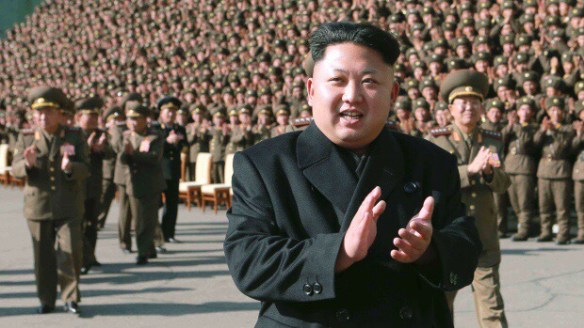
But, while the world often sees North Korea as an isolated place, consideration of the issue of North Korean slavery shows that it is not nearly so much an isolated thing.

The 2015 United States Trafficking in Persons report notes that, “Chinese authorities continued to forcibly repatriate some North Korean refugees by treating them as illegal economic migrants, despite reports some North Korean female refugees in China were trafficking victims. The government detained and deported such refugees to North Korea, where they may face severe punishment, even death, including in North Korean forced labor camps. The Chinese government did not provide North Korean trafficking victims with legal alternatives to repatriation. The government continued to bar [United Nations High Commissioner for Refugees] access to North Koreans in northeast China; the lack of access to UNHCR assistance and forced repatriation by Chinese authorities left North Koreans vulnerable to traffickers. Chinese authorities sometimes detained and prosecuted citizens who assisted North Korean refugees and trafficking victims, as well as those who facilitated illegal border crossings”.

All of this is contrary to China’s obligations to protect victims of trafficking under the Palermo Protocol of which they are a signatory. China’s failure provides means for Chinese traffickers to coerce their victims with the threat of denunciation to the Chinese authorities. It further sustains the institutional practices of slavery in which North Korea indulges, by effectively enforcing North Korea’s policies beyond its borders.

I would caution the rest of the world from getting too judgemental about this too quickly though. Here we see China indulging in something that the rest of the world also does: erasing an inconvenient slavery problem by the simple assertion, made with great conviction, that it is not actually a problem of slavery. Suggest to any Home Office minister or official that the UK’s overseas domestic worker visa is a license to traffick, and you will see this process in action here.

And of course the complicity with North Korean slavery is not restricted to China. In November 2014 the journalist Pete Pattisson exposed in the Guardian how North Korea trafficked construction workers to Qatar for work on the diverse building projects there.

As I noted at the outset Qatar has legal mechanisms in place to facilitate the enslavement of vulnerable workers by private individuals. One of the consequences of this is that the 2022 World Cup is likely to be the bloodiest sporting event since Julius Caesar’s funeral games. That fact has not caused the repudiation of Qatar in any international forums.

What Pete’s journalism exposed however is one of the sources of hard currency that props up the North Korean dictatorship is from North Korea’s sale of its people internationally. And that again has not caused any sort of repudiation of Qatar or those countries which also avail of the cheap labour of trafficked North Koreans. In October 2015 the UN Special Rapportuer on Human Rights in North Korea estimates that 50,000 North Korean workers are employed in foreign countries, mainly in the mining, logging, textile and construction industries and that the number is rising.

The UN Special Rapporteur estimated that the vast majority are working in China and Russia but others are reportedly employed in countries including Algeria, Angola, Cambodia, Equatorial Guinea, Ethiopia, Kuwait, Libya, Malaysia, Mongolia, Myanmar, Nigeria, Oman, Poland, United Arab Emirates and, of course, Qatar. If North Korea obtains only $10,000 per worker per annum this traffick in human beings would be worth half a billion annually to the dictatorship.

A fundamental issue that we see in many slavery cases, and exemplified in relation to North Korea, is that it is an international issue and needs therefore to be tackled internationally. The importance of international law, and international rule of law is exemplified in relation to North Korea. I suspect that like the UK China’s equivalent of the ministerial code has no mention of international law and so ministers considering their policy in relation to North Korean refugees and victims of trafficking are able to lightly dismiss their human rights obligations and those under the Palermo protocol.

The case of North Korea also shows that slavery must become a central issue of diplomacy. The easy acquiescence that the international community has in the slavery practices of other countries, aside from its moral bankruptcy, is also now a security risk. If the North Korean elite were not obtaining hard currency from the international trafficking of its citizens it would be that much more difficult for the dictatorship to cling to power.

I wonder do many consumers consider the risk of North Korean forced labour in garments that they purchase from China. Whether they do or not again the issue of the enslavement of North Korean exposes the need for new international law. Franklin Roosevelt effectively ended child labour in the United States by banning its use in inter-state commerce. President Obama has taken a leaf from Roosevelt’s book in introducing powers to exclude slavery tainted sea-food from the US.

The European Union should follow suite and establish similar general powers that could be used against the import or any goods manufactured with the use of forced labour, including that for trafficked North Koreans. Such a measure would have repercussions through the entire global political economy by causing real economic threat to those countries that have come to routinely use forced labour of vulnerable workers.

We see much that is horrible and distressing when we look at the institutions of slavery in North Korea, including our own reflection: that of the rest of the world at best standing idly by, at worst benefiting.

That needs to come to an end, not merely with fine words, but with robust and clear sighted international action. I hope the UK, for as long as it is part of Europe, will begin to provide proper leadership on this and bring the authority of the world’s largest single market to bear on this vital human rights issue.

Watching the Door: Cheating Death in 1970s Belfast, by Kevin Myers

 Summary: The Troubles through the prism of Kevin Myers’ favourite subject – himself

Kevin Myers is one of the finest writers of his generation. An exquisite prose stylist, he is the author of some of the most compelling and elegantly written journalism of the past 40 years.

He is also an arsehole of the first order: If the Oxford English Dictionary is considering a pictorial edition they would probably include a picture of Myers to illustrate the term “West Brit”. Since the events covered in this book Myers has transformed himself into a smart-arsed apologist of the establishment, frequently economical with the facts where they may conflict with his opinions. Indeed, if there is an entry for “Smart-Arsed Apologist of the Establishment” in the Oxford Pictionary, Myers photo would probably be there too.

Given all the aforementioned, I deliberately bought this book in a charity shop in the hope that this would deny Myers any financial benefit from my purchase. As Myers is a voluble opponent of international aid this purchase therefore represented something of a double-whammy.

Watching the Door is a memoir of Myers time as a young journalist in Belfast in the early 1970s. It displays a considerably higher degree of self-awareness than I expected. Myers, it seems, has always known he was an arsehole, and a foolhardy one at that.

A former housemate of mine once almost got himself very badly hurt by a frankly stupid disregard for the dangers posed by a Belfast city centre car bomb. This prompted a house meeting with one item only on the agenda: whether we should kick his shite out for being such a stupid fecker. (We didn’t… even though he was.)

Myers does not appear to have had any housemates to slap him around for his reckless behaviour. Even had he not been so reckless the daily grind of reporting one of the most brutal periods of the Troubles would have resulted in profound post-traumatic stress.

Myers now appears repelled by his youthful self, and the portrait he presents of himself as a youth is repellent. The 180 degree transformation that he has fashioned of himself is also repellent. So in that at least he is consistent.

But he is still an exquisite writer and this is an important subject as the horrors of the 1970s begin to be overlaid by romantic hues and preposterous myths: one article I read recently by an American journalist seriously reported the inspiration that Gerry Adams claimed to take from Martin Luther King, the same Adams whose first appearance in these pages relates to his instruction to an IRA minion on how to deal with a local thug: “Shoot him.” On another occasion, when questioned by a journalist about the disappearance and murder by the IRA of Jean McConville, a single mother, on the trumped up charge of informing, Adams glibly asserted “These things happen in wars.” Indeed they do. They are called war crimes.

Sean O’Callaghan, an Irish Police informer in the IRA, also alleges that Adams contemplated at one stage assassinating John Hume, the most passionate of King’s disciples ever to walk the island of Ireland. John Hume only makes a fleeting appearance in this book. The Peace People are mentioned a couple of times. Seamus Mallon not at all. It may be that they rarely encroached upon Myers consciousness in the midst of his alcoholic stupor from the considerable time spent in late night drinking dens with murderous Loyalist and so-called “Republican” paramilitaries. However their exclusion may be simply to bolster a dubious thesis in this book: that no matter how horrific the paramilitary actions became, and to his credit Myers details many atrocities the former paramilitaries would like to forget, they were never condemned or repudiated by their communities. Hume and Mallon became hoarse in their condemnations of the atrocities of all sides, including the British who Myers, to my mind, soft pedals on, and the SDLP consistently outpolled Sinn Fein by a ratio of 2 to 1 during the period that the Provos waged their illegal war.

The repudiation of sectarianism and violence by many ordinary people in the North was also illustrated in two of the most horrific incidents of the Troubles, which Myers choses to skate over in this book: the Miami Showband and the Kingsmills Massacres. To be fair after the litany of bloodshed which he has already recounted he may have felt exhausted at having to confront these atrocities as well. But there are important details.

The Miami Showband, in one of their last publicity images

The Miami Showband was non-sectarian and religiously mixed. According to Stephen Travers, the band’s bassist and one of the survivors, his best friend in the band, trumpeter Brian McCoy, a Protestant from a Unionist background in County Tyrone, understood the rest of the band’s concern at having been stopped by the Ulster Defence Regiment (UDR). McCoy whispered to Travers that he could stop worrying when a British officer showed up. That did not protect them unfortunately when the bomb the UDR was trying to plant in the band’s bus went off and killed two of these British armed and directed terrorists. The UDR soldiers, whose dual membership in the paramilitary Ulster Volunteer Force had not been a barrier to their entry into the British Army, then started butchering this group of defenceless musicians who represented the best of society of the whole island of Ireland.

kingsmillThe Protestant victims of the IRA’s Kingsmill massacre also showed a impressive anti-sectarian heroism as they tried to protect their Catholic colleagues from what they initially thought was a similar UDR/UVF attack, before the horrendous realisation that the war criminals in question on this occasion had come to butcher them.

So in spite of the author’s arseholeism, and the exaggerations, evasions and distortions that pepper this account of war and his, sometimes quite bizarre, sexual adventures, this book is an important one. As many of those who directed war crimes in the course of this illegal war attain high office in both parts of Ireland it reminds us just how horrendous and shameful the Troubles actually were.

For this reason I can only hope many more charity bookshops will benefit from the sale of this book in the years to come.

Less certain than death: corporation tax in the modern world

Originally published in Business Fights Poverty:

http://community.businessfightspoverty.org/profiles/blogs/dr-aidan-mcquade-less-certain-than-death-corporation-tax-in-the-m

In the wake of the recent controversies that have been sparked since the announcement of Google’s US $ 130 million settlement with Her Majesty’s Revenue and Customs, it is worth contemplating, of all things, a few interrelated issues of political and moral philosophy; I find they can often help cut through the bluster.

Milton Friedman once declared that the only moral responsibility of business executives was to maximise profits for shareholders within the law.

Friedman was many things, including a brilliant and accessible writer, although many, myself included, would argue, a deeply simplistic one. Even Ronald Reagan was able to grasp the central tenets of his political economics.

We still live in a world crafted by the economic beliefs of Reagan and, in particular, of Margaret Thatcher, which drew deeply on many of Friedman’s core ideas. One consequence was that his view of the ethical responsibilities of business executives has become the dominant moral code amongst business executives across the world.

A further consequence is that many corporate executives see it as a moral responsibility to minimise the tax that their company pays. It is important to understand this as politicians fulminate ineffectually about the “unethical” nature of legal company tax avoidance: that there is a counter-narrative amongst many business people, which asserts that they are doing the right thing, the moral thing, for their shareholders by minimising, or even avoiding, tax.

scrooge mcducI don’t agree with this perspective but my opinion will make little difference when weighed against the vast piles of loot that wholly legal tax avoidance could deliver. In any event that shouldn’t matter. The potential for tension and conflicts between competing moral philosophies was something which Adam Smith already anticipated in The Wealth of Nations (1776) when he argued that it was the state’s responsibility to regulate businesses: how companies can be made to make fair tax contributions is among the most pressing issues of business regulation today.

Certainly this is now a far more complicated issue than it was in Smith’s day as trade is significantly more international. But it is a challenge that must be confronted through extraterritorial law and, perhaps, new tax collection mechanisms, such as those mooted by Nigel Lawson, and the long overdue Robin Hood tax.  New approaches are vital if there is to be any significant progress towards tax justice, greater economic fairness amongst small, medium and large businesses and a balancing of public finances.

This is an issue where the European Union could demonstrate its worth by offering the prize of continued access to EU markets across the entire member states only to those corporations that agree to abide by more transparent and just rules of taxation.

Paradoxically, to get to a position where politicians would be prepared to move on such a project will probably require quite a few more businesses, particularly those who are arguably disadvantaged by not being able to take such a flexible view of where they should be taxed as their giant competitors, demanding such action. Today, very few politicians are prepared to contemplate any significant changes to the globalising political economy without the imprimatur of at least some parts of the business community.

The problem with inequality

Previously published in Business Fights Poverty:

http://community.businessfightspoverty.org/profiles/blogs/dr-aidan-mcquade-inequality

top-1-percentThis week, Oxfam reported that the wealthiest 1% of the world’s population own more than the rest of us combined. Or, put another way that “… runaway inequality has created a world where 62 people own as much as the poorest half of the world’s population.

In his book, How to Speak Money, John Lanchester argues that such inequality emerges from a general consensus amongst policy makers, borne out by significant progress in the real world,  that permitting such inequality is the best way to reduce poverty due to the economic activity which it stimulates.

Which would be fine if inequality itself were not a considerable problem. A number of business theorists and economists have argued that to obtain sustainability, it is essential to seek growth “at the base of the pyramid”, ensuring that the most abjectly poor have a stake in the global economy. But there may be even more worrying threats emerging from inequality.

In 2014, a study funded by NASA found that the competition for resources and the stratification of society into “elites” and “masses” were key factors in the collapse of civilisations. Essentially, by the time the existential threat to a civilisation began to encroach upon the day-to-day lives of the “elites” to such an extent that they were inclined to do something about it, it was already too late.

Such is the existential threat that today’s mind-boggling level of inequality poses to the world. And the challenge for ending this is not merely a rational political or economic one. The realities of contemporary slavery show us that those privileged by unequal power relationships in society become profoundly attached to them in ways that are often quite irrational. For example, a considerable constraint on obtaining growth at the “base of the pyramid” is that of prejudice; many Indian shop keepers would benefit if abjectly poor Dalits and Adavasi had more disposable income to spend. However, many of the same shop keepers would be aghast at such ritually “unclean” people coming into their premises, no matter how much money they possessed.

Similarly, the prejudice against South Asian migrants to the Gulf States makes it next to impossible for the prejudiced to contemplate how such migrants might contribute to society if they were given decent work instead of being part of the Kafala system which enables their enslavement with impunity.

There are solutions to such prejudices: extension of the rule of law, outlawing discrimination, and educating children for mutual understanding and respect. Such steps will require considerable moral courage by our political leaders. And given that many of the global elite are probably in thrall to such prejudices and utterly unaffected by their consequences, it is rather unlikely that too many proposals to tackle inequality and prejudice will emerge from Davos this week. We can only hope that the voices of citizens from civil society and business alike protesting the threats that inequality poses for us all, will eventually pressure the political and economic elites of the world to finally, perhaps at some future Davos, take concerted action to create a fairer world.

The Battle of the Atlantic, by Jonathan Dimbleby

 There was no “phony war” at sea. The Battle of the Atlantic started on the first day of the Second World War, 3 Sept 1939, with the sinking of SS Athenia by a German U-boat. It continued until the last day of the war and so was the longest campaign of the Second World War and the most destructive naval conflict in history.
Dimbleby’s account of this campaign is an elegantly written horror story, alternating between accounts of the ghastly fighting at sea, and the operational and strategic planning of the Allies and the Axis that guided the slaughter.

Churchill famously said that the U-boat menace was the one thing that gave him sleepless nights during the war. However it would be fair to say he brought many of the nightmares that afflicted him on himself. Most damningly Churchill prioritised the militarily pointless and morally indefensible bombing of German cities by the psychopathic head of Bomber Command, Arthur Harris, over the vital defence of the convoys across the North Atlantic. Hence Coastal Command was denied the relatively few aircraft that could have turned the tide of the battle months earlier.

Dimbleby asserts that Churchill was possessed of a great strategic vision. But this seems rather at odds with the account presented which suggests a certain strategic fickleness on Churchill’s part. It is true he did have a vast and complex set of problems on his mind. But one does get the impression of a man easily given to temporary military enthusiasms to little useful purpose but to the detriment of some truly vital endeavours. Dimbleby puts this into sharpest focus on some of Churchill’s choices around the Battle of the Atlantic. But one sees this in many other places such as his failure to finish the defeat of the Italians in North Africa before, wholly ineffectually, attempting to arrest the invasion of Greece.

Rather than military strategy Churchill’s genius was of the political variety. His forging of the trans-Atlantic alliance with Roosevelt was perhaps his finest hour. This resulted ultimately in the Allied victory, not least by bringing the true strategic genius of the US General George Marshall to bear on the situation. This inexorably refashioned Allied strategy away from Churchill’s fanciful Mediterranean focus – which arose more from his desire to keep some semblance of unity on the British Empire rather than to pose a lethal threat to the Axis – and towards an altogether more effective intent to mount an invasion of France to swiftly strike at the heart of Nazi Germany.

In spite of these strategic failings a combination of increasing effectiveness of convoy tactics, and improved technology ultimately, and with dramatic suddenness in May 1943, turned the tide of the Battle in the Allies’ favour. Thereafter, with victory in the North Atlantic, victory in the overall war was assured. Convincingly Dimbleby argues that the code-breaking of Bletchley Park was only marginally a factor in this victory, not least because the Germans had also cracked the Royal Navy code and the advantages that Bletchley provided were somewhat cancelled out in the war at sea.

The Battle of the Atlantic was to any imagining horrendous and Dimbleby conveys this well – from the account of Italian prisoners weeping in terror as they drowned imprisoned in the holds of the torpedoed Laconia, to the massacre of the Arctic Convoy PQ 17, condemned to its doom by incompetence in the Admiralty for which, of course, no one was ever held to account: That the lives and heroism of merchant seamen were held cheap by the Establishment is a recurring theme in this book.

The Battle of the Atlantic is a gripping and generous-spirited book, drawing on the accounts of German as well as Allied participants recognising the courage and humanity of all the participants in the Battle, while also recognising the horrendous things that many of these ordinary human beings did to each other.

The Dark Side of the Force: Human agency and human belief

 Much of the Star Wars universe is brilliantly executed fantasy. Some of it – think ewoks and bleeding Jar Jar fecking Binks – is execrable. But in the midst of all of this there is at least one important philosophical point: Obi Wan and Vader follow the same religion. The only difference is that Vader’s path is on the “Dark Side”.

Many belief systems have similar “Dark” and “Light” sides. An atheist, for example, can follow the “Light Side” by viewing life as something she had better do right because she will only get one shot at this. Or she can decide that she can do what she likes, given that there are no immortal consequences for even the worst of actions.

Similarly a Christian could follow the “Light” by seeing each of us a human beings in the image of God in spite of our flaws and differences. Or he could take to judging how poorly everyone else appears against his subjective standards and inflicting his notion of righteous vengeance at every opportunity.

Martha Nussbaum, in The Fragility of Goodness, argues that humans often do evil not because they transgress a moral system, but because they privilege one moral system, or perhaps a particular interpretation of a moral system, over another. Christopher Browning demonstrates the depth of depravity that can emerge from such thinking when one group of “Ordinary Men” in Eastern Poland during the Second World War decided to uphold their perceived duties to their Furher over their more fundamental human duties not to butcher unarmed children, women and men in cold blood.

But, in spite of the power of well demonstrated social pressures in such circumstances, human agency, the choices we make based on our beliefs and values, is still at the core of human action. A person can still choose to be a decent person in spite of the social pressures to the contrary. Or, indeed in spite of their underlying belief system: two of the great “rescuers” of the Second World War, Oskar Schindler and John Rabe, were both card-carrying Nazis. So decency, even heroism, does not depend simply on the belief system that we choose. It also depends on how we choose to interpret it.

I have known great and humane atheists. I have known great and humane Christians, Hindus, Muslims, Jews and Buddists. I have also known one person who used their noisy public commitment to vital human rights issues as a cloak to disguise the immense depth of their moral cowardice and venality. And then there are the murderous Crusaders of history, the Nazis, the Maoists and Stalinists, the Klan and their ideological cousins in Islamic State – those who use their beliefs as excuses to choose the darkest and bloodiest paths through life.

the light side

The “Light Side”

Richard Dawkins and his fellow travellers like to blame religion for so many of the world’s ills. But the sprawling silliness of Star Wars, and the mythical universe that it has created, has hit upon a much wiser understanding of human nature. As Shakespeare, the great chronicler of human folly and human evil, also understood: the faults are in ourselves.

Memo to Mr Zuckerberg: changing the world through girls’ education

image

Girl students in a school established by Anti-Slavery International in Niger

I’m not waiting with bated breath for Mark Zuckerberg to call me, seeking wise counsel on how to spend the billions he has admirably committed, in honour of his daughter, to change the world.

But if he was I would say two words to him: girls’ education.

Two thirds of the world’s uneducated children are girls. Two thirds of the world’s illiterate adults are women. An estimated 31 million girls of primary school age and 32 million girls of lower secondary school age were out of school in 2013. Sub-Saharan Africa has the lowest proportion of countries with gender parity: only two out of 35 countries. And South and West Asia has the widest gender gap in its out-of-school population – 80 per cent of its out-of-school girls are unlikely to ever start school compared to 16 per cent of its out-of-school boys.

Aside from being a basic right girls’ education is frequently identified as a means to achieving key development and poverty reduction goals, such as reducing early and forced child marriage, reducing maternal and child mortality, and breaking the transmission of poverty across generations.

Education is also an effective protection against child labour: A few weeks ago I was in Ghana visiting agricultural communities there. The high level of child labour in such communities is enabled in significant part by the shortage of schools.

But education is not a panacea. For example, keeping girls in school would certainly reduce child marriage. But a significant reason why girls are removed from school is so that they can be married off. Furthermore Lisa Rende Taylor’s research in Thailand has shown that increased educational attainment for girls can increase risks of trafficking into hazardous work as families seek a return on their investment into their daughters’ education. I have heard reports of similar outcomes for poor boys and girls in Ghana who, on leaving school go on the hazardous search for decent work.

And too often education policy, much like the rest of development policy, fails to confront the challenges of social exclusion and discrimination in the struggle against poverty. These are most starkly illuminated in considering the realities of slavery in the world.

It is true, particularly if individuals are caught up in the cataclysm of war, that anyone can be enslaved. But this general truth conceals a more fundamental one. That is, that it is the weak who are subject to the prejudices of others who are vastly more at risk of enslavement: migrants in Western Europe and the Americas; women and girls everywhere; Dalits and Adavasi in South Asia.  Frequently those prejudices are sufficiently widespread to allow slavery to be openly practiced, such as in the brick kilns of South Asia, or the enslavement of Dalits to clean up the shite of upper caste Indians

Denial to socially excluded groups of empowering educational opportunities allows for the maintenance of a population across the world who can be more easily enslaved.

Given this, there is an urgent need in education policy for a much more concentrated focus on ensuring the inclusion of the children, particularly the daughters, of the enslaved as a means of breaking not only poverty but the transmission of slavery across generations.

Private investment to break the bonds of discrimination and slavery by providing quality education to the socially excluded in states that continue to ignore the needs of the most vulnerable in their society would be an important measure against engrained prejudices.

There are some donors and philanthropists who are doing this and other decent work on education. But the sheer vastness of Zuckerberg’s loot would allow him to engage with this issue not merely at the level of a funder of a few more schools: Such an approach would be great for the relatively few beneficiaries of those schools. But, no matter how brilliant those schools were, it would not,  by itself, change the world. What would be transformative would be if Zuckerberg sought to engage governments and other key actors at the level of policy formulation and strategy implementation.

To guard against potential negative outcomes there must be greater attention given not only to ensuring genuine universality in provision, but also to the quality and content of the education.

There is a need for greater investment in teacher training, and guaranteeing the status, pay and conditions of teachers, particularly in remote locations where need will be highest.

Curriculums should include not just reading, writing and arithmetic, but also a strong focus on human rights, in particular girls rights, to help erode the prejudices that permit human beings to devalue, exploit and  enslave others.

Furthermore health education, in particular sexual health,  should be a core subject.  And high quality vocational and entrepreneurial education should be part of the curriculum, so that kids can conceive of realistic strategies to work themselves out of poverty, beyond hazardous migration in search of scarce decent work.

image

Learning to read in Niger

Zuckerberg would be taken particularly seriously in these conversations if he could offer matched funding or low interest loans to governments which produce credible plans for provision of this sort of primary and secondary education, including the key elements of human rights, and vocational and entrepreneurial skills, for all boys and girls of their countries.

Undoubtedly all of this poses a vast challenge. But hopefully Zuckerberg will not be afflicted by a dearth of ambition at this stage in his career. Certainly there could be few finer ways to honour his own daughter than by endeavouring to end the waste, exploitation and enslavement of other girls through the provision of effective and empowering education for all.

Abducting a General: The Kreipe Operation and SOE in Crete, by Patrick Leigh Fermor

 Patrick Leigh Fermor, legendary travel writer and Special Operations Executive officer, never published during his own lifetime this, his full account of the kidnap of General Kreipe in Crete in 1944. His junior SOE colleague Billy Moss did, with Leigh Fermor’s help. Ill Met by Moonlight was published in 1950 and made into a famous movie with Dirk Bogarde as Leigh Fermor.

However as Roderick Bailey points out in his foreword to this book, Billy Moss did not speak Greek and the Kriepe kidnapping was his first clandestine operation. So his account lacked understanding and appreciation of the Greek partisans with whom he fought.

Leigh Fermor’s account is therefore something of an apologia to pay proper tribute to the people upon whom he depended for his life during his years undercover in Crete. He notes towards the end of his account that, “There has been more than a hint in these pages of [the kindness and generosity of the Cretan people] and of that aspect of Cretan life which suddenly gives the phrase ‘Brotherhood in arms’ such meaning”.

It is this, rather than a desire to convey a “boy’s-own” adventure, which seems at the heart of this account. It is an account that is marked by a remarkable joie de vivre in spite of the harsh circumstances he describes, and the constant threat of death under which he lived. As such it contrasts interestingly with Eric Newby’s similarly themed, but altogether more melancholic, account of his time being sheltered by an impoverished Italian rural population while on the run from the Germans: Love and War in the Appenines.

Leigh-Fermor conceived of the kidnapping of the German commander in Crete as a bloodless operation, to prevent German reprisals against Cretan civilians. Originally he aimed to kidnap the brutal General Muller, but this plan was thwarted with Muller’s transfer and replacement with General Kreipe.

Leigh-Fermor went ahead with the plan anyway as a morale boosting exercise for the Cretan resistance, and to keep them distracted from shedding German blood and hence provoking fierce reprisals.

He almost achieved his bloodless coup, though his Cretan comrades were at one point compelled to leave the poor driver who had been captured with the General in an unmarked grave. And some months after the operation the Germans conducted a series of brutal reprisals anyway, which may, or may not have been linked to the kidnapping.

Given this, and the undertaking of the operation late in the war when Germany’s fate was all but decided the strategic value of the operation is open to question. But the courage and fortitude that it entailed is not, as Leigh Fermor’s account amply demonstrates. Abducting a General gives a fine insight into a little-known corner of the Second World War, prosecuted, in the main, by ordinary people at terrible cost.

The Grand Slave Emporium: Cape Coast Castle and the British Slave Trade, by William St Clair

Summary: an elegant and distressing exploration of a storehouse for a genocide 

A few months ago I visited Elmina Castle, a centre of Dutch slave trade on Ghana’s Atlantic coast. The tour of the castle started in the women slaves’ dungeons, overlooked by a balcony of the castle governor’s apartment, from which he would periodically select women to rape as they were paraded below.

From the stifling heat of the dungeons the tour eventually proceeds up to the wonderfully airy governor’s apartment and the officers’s quarters at the top of the castle, with spectacular views of the sea and the surrounding coast. The thought of such horrors in the midst of such beauty is profoundly unsettling.

The narrative journey that William St Clair follows in his book The Grand Slave Emporium goes in the opposite direction to the path tourists, pilgrims and penitents tread touring such castles. Starting with a consideration of the establishment of Cape Coast Castle, the centre of the British slave trade on the Ghana coast a few miles from Elmina, he proceeds to describe the lives of the various denizens of the slave castles, from the governors, through the officers to the soldiers and the women – wives, “wenches” and the Castle’s sexual slaves – to the human beings – the slaves for export – who provided the entire rationale for the existence of the hundreds of such castles along the African coast.

The picture he describes is one of banal evil as the pretentious functionaries of the Castle, dreaming of lives like that of that idealised slave trader, Robinson Crusoe, dehumanise and process their human livestock through the Door of No Return and onto the waiting slave ships.

The Door of No Return, Elmina Castle, Ghana

Over hundreds of years slavery devastated the African interior as wars and raids encouraged by the European powers kidnapped millions of people, many of them children, to feed the demand from the Americas for human beings who could and would be worked to death to produce cash crops, mostly for European markets.

It is one of the bleakest episodes in human history, echoing the holocausts of the 20th Century in the level of industialized organisation that was brought to bear on such an atrocity.

In spite of this compassionless bureaucracy of enslavement, moments of humanity and heroism do shine through: one person who had been enslaved through Cape Coast Castle, Quobna Ottobah Cogoano, eventually escaped and became a major anti-slavery campaigner at the end of the 18th Century. And David Richardson, an economic historian, estimated that the extra costs that slave ship owners incurred in order to discourage or defeat insurrections on the slave ships saved many hundreds of thousands of other Africans from having been enslaved.

The Grand Slave Emporium is an elegantly written, but profoundly bleak book. Nevertheless it is a necessary one. It shows humanity in its squalid complexity, and reminds us of how easily societies can, wholesale, descend into savagery while believing themselves to be the epitomes of refinement.

Fighting Slavery in the Midst of War

Remarks to Expert Group Meeting on the impact of armed conflict on people’s vulnerability to trafficking in persons, including sexual and labour exploitation
Amman, Jordan

IMG_0669The repeated reports of Islamic State’s (DAESH) use of sexual slavery to entice foreign fighters and terrorise women and girls, and of Boko Haram’s kidnap of young girls in Nigeria and enslavement through forced marriage, has raised public awareness, and horror, regarding the issue of slavery and war.

Historically war has frequently been about slavery. Caesar made his wealth from the trafficking  of millions of Gauls. The trans-Atlantic slave trade was fed by the prisoners captured during wars provoked in Africa by the European powers. In Darfur and South Sudan slavery was used as a weapon to terrorise. Such violence remains a disgraceful aspect of war.

Over 2000 years ago Cicero noted that, “In times of war, the laws are silent,” because of the damage that war does to the institutions of state, and because it breaks the bonds of human restraint, as Shakespeare recognised, letting slip the dogs.

But it is useful to add a degree of gradation to Cicero’s observation, because not all times of war, or times of peace, are equal in their lawlessness.

First there is almost the absolute lawlessness that we see in the realm of active battlefronts and the rule of warlords.

Second there are those areas where war has severely damaged the capacity of the state and rule of law itself.

Third there are the armies of the democracies, which, even in war, should be bound by basic principles of law, even when in battle.

Then there is a further case, when the philosophy of law itself is intrinsically violent, misogynistic and anti-pathetic to human rights.

Under each of these circumstances there are differently constrained possibilities of action against trafficking and sexual violence. Certainly for there to be the greatest possibility for the elimination of such abuses there needs to be peace. But as we see surveying the world from Qatar to Western Europe peace alone is not enough, particularly if that peace is underpinned by brutal jurisprudence.

Sexual violence, like slavery, has always been an aspect of war. Sometimes rape has been raised to a level of policy, as was the case with, for example, the Russian conquest of eastern Germany in 1945, and is also the case in the realms of Islamic State (Daesh) today. This latter case should not be surprising given so much of the authoritarian culture and philosophy of violence of Daesh emanate from Saudi Arabia, a state in which rape victims are prosecuted and, in which, forced child marriage is widely tolerated. Such law and culture asserts that some sorts of violence, enslavement and trafficking, particularly of women and girls, are virtuous. It is from this jurisprudence that the slave markets of Boko Haram and Islamic State spring.

To put it bluntly, reducing violence against women and girls, particularly in the current wars waged by the proxies of Saudi Arabia, requires that their jurisprudence is explicitly and loudly repudiated, particularly as a priority for international diplomacy.

Until now neither the humanitarian nor development communities have in any significant way grasped the issues of slavery, trafficking or child labour. So they fail consistently to address them. There is a need for these sectors to recognise this, and to develop and implement training on slavery and trafficking for policy makers, including donors, and practitioners in these sectors.

Humanitarian assessments and peace-keeping planning should include components relating to trafficking analysis. And that should in turn lead to the enacting of measures to reduce the risks of trafficking for all, in particular women and girls. Furthermore all peace-keeping and humanitarian operations should have significant police or military police presence, with a mandate to investigate human trafficking and sexual violence, and with gender parity amongst such officers.

It should then be a requirement of every humanitarian response that it considers if it can contribute in any way towards the reduction of trafficking and violence in general and against women and girls in particular. This may not always be possible. But considering carefully the question could lead to the empowerment of some who would otherwise be overlooked.

The UK and California now require that companies report on what they are doing to end slavery in their supply chains. Development and humanitarian organisations should be required to follow suite, reporting on how they are seeking to combat this issue through their operations and supply chains. It should not be acceptable that, for example, the use of slavery-produced bricks should pass unconsidered and.unquestioned in humanitarian operations, when awareness of the issues and minor changes in humanitarian programming could establish much more ethical supply chains.

Elimination of slavery, trafficking and child labour is an explicit target in the Sustainable Development Goals. A long term solution to this is universal education, composed not only of reading, writing and arithmetic, but also human rights education, in particular in relation to  girls’ rights. Good vocational and entrepreneurial education is also needed so that greater options for decent work emerge from education. This would consequently reduce the level of attraction to nihilistic and misogynistic death cults, and will be an important path to recovery for children emerging from conflict.

But the immediate imperatives of trafficking and violence against women and girls in war demand urgent action. Humanitarian and development donors, policy-makers and practitioners must engage with these challenges.  Addressing the issue of trafficking in conflict, one of the most complex issues in the realm of anti-slavery, would help advance the overall struggle to end these human rights abuses. With that it would also help to reduce the poverty of people hitherto overlooked in the midst of war.