
Summary: Theatre in a theatre of brutal war.
Glorious Exploits is something of a literary first cousin to Michael Hughes’ superb Country, a retelling of the Iliad transposed to the mountains of South Armagh during the Troubles.
Like Hughes, Lennon tells his story of the ancient world in an Irish vernacular – Dublish, in this instance – and the result is a comparable dark magic that brings to unsettling life a barbarous moment from humanity’s bleak history.
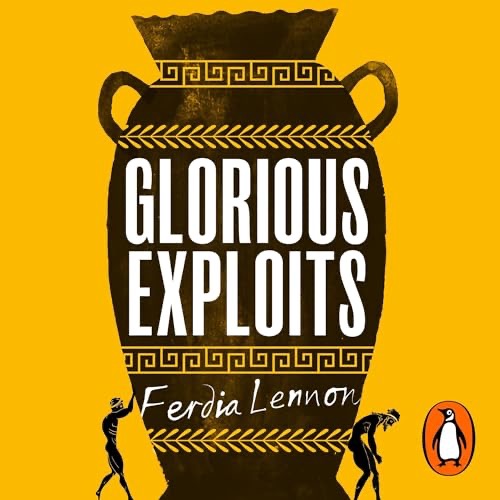
In the aftermath of the collapse of the Athenian invasion of Sicily two literature loving Syracuse potters, Lampo, the narrator, and his childhood pal, Gelon, take to visiting the prisoners, exchanging food for snatches of Euripides. After a while Gelon has the idea of staging a full production of Euripides’ masterpieces Medea, and his new play, The Trojan Women, with the doomed Athenian prisoners in the quarry where they are quartered.
Though his motives are never fully explained, one gets the sense that Gelon hopes to provoke an empathy for the prisoners similar to that Euripides encourages his audiences to feel for his tragic protagonists. This, perhaps, might save both some prisoners and a threatened portion of Syracuse’s soul as it hovers on the edge of a monumental war crime.
The story is based on a true episode in the ghastly Peloponnesian War, and Lennon’s imaginative exploration of it in turn seeks to provoke in the reader an empathy for the long-dead, and help understanding that war’s pities are a constant in human history.
Glorious Exploits is a wonderful book.























 aidanjmcquade