From Siege to Safety: A Sudanese Family’s Journey

Summary: First in a series of guest blogs on the war in Sudan, by “Elphaba”

I have been writing family bulletins for myself and anyone ready to read them since the start of the war in Sudan in April 2023. Kind readers have followed events that have driven my family from their homes at gun point from areas around Umderman to Gedarif and Singa. Then again from Singa as they went under siege there.

Before the war, meeting of the Blue and White Niles at Khartoum: many of the buildings in this photo have now been burnt down

In an attempt to spread the burden of too many mouths to feed under one roof and much heart searching they scattered further. Some made the treacherous route to the north only later to face long electricity blackouts in April and May in the hottest time of the year. Others fled Singa on foot eastwards to Gedarif. From there one or two made it to Saudi Arabia where they have safety but at the cost of visa renewals and a deep sense of loss.

Now since the start of this year with relative peace in the Eastern areas of Sudan. For our family, at last, the kids are mostly back at school, the offices working and the economy working on some level. The banks work intermittently and cash is in very short supply. Some can use online banking with an app but for all everyday trading for basic goods, it is only cash. Adding to this, at some point in the year someone thought it a good idea to introduce a new currency and a new layer of potential confusion and corruption. In most of the East only the new currency works, while in the West only the old. In Khartoum and Wad Medani both get used.

With no immediate drama, I worry that we run the risk of joining the world in forgetting that the war and instability is far from over and accepting a new normal that is anything but. Now with the rains falling heavily there is very little seed to plant to benefit because infrastructure is decimated and only very few have any spare funds. And there is drama. For our friends in El Obeid and our once-home Dilling, siege, counter siege and fear have outlasted anything seen in the East and Darfur continues to be another story again. We last heard from close family friends there about a year ago.

As in Israel/Palestine there are huge profits and plans for still greater ones being made by those who would seize power and (ab)use weakness. In Port Sudan there are huge agricultural schemes under discussion not to mention rebuilding contracts and deals with the Gulf. It is mind-numbingly depressing in its logic of winner – eventually- takes all at whatever cost.

Meanwhile, for our family there is the on-going need to claw back dignity and rebuild with the resources we have.  The young men – nephews and sons – working for low wages as labourers, drivers and other sorts of fixers send back what they can. They are themselves stranded in nearby countries away from their families and they know that whatever they send it is never enough. We are aware we have more than many and less than others.

I challenge anyone to fault the determination. My elderly sisters-in-law (elderly = 10 years older than me and in their 70s) have returned to their suburb in Umderman. There is no power. They returned to homes totally stripped bare “not even a teaspoon”. The first job for Nxxx was to buy a front gate as that too had been taken. Bottled gas costs 5 times what it did a year ago and anyway the cooker is gone. The widespread gossip that her neighbour’s son – now gone – whom Nxxx had known since childhood orchestrated the theft of her property and many others. And yet after a few days Nxxx at least is back in her house. As Rxxx explained to me from Saudi Arabia, her homesickness palpable: “of course all the family have been amazing. We are lucky. So much luckier than many. But you ache for what is yours, where you are you and where you’re not thought of a ‘a displaced’”

The violence has gone from these neighbourhoods for now and the young men returning have great plans to fix the power. Knowing the place well, I have no idea how they are getting by. I know it will be a profoundly communal endeavour. My 24year old nephew, his own life plans long since on hold returned from Port Sudan to help his father. He says they live on ful and ta’amia because that is made at a local shop where they have fuel. I imagine them all together much of the day to support, chat about possibilities, find workarounds to issues, talk prices and a future. I hope this will help them recover for now from the trauma of recent months/years. 

The profound divide emerging in Sudan and the discrimination and racism that underlies the political stories is a worrying strategic trend that most Sudanese don’t have the luxury of considering. Maybe in that there are some universal trends.

Original Sin: President Biden’s decline, its cover-up, and his disastrous choice to run again, by Jake Tapper and Alex Thompson

Summary: American Hastings Banda

On a human level, this book is a very sad one. Across it, informants repeatedly refer to how their encounters with Joe Biden in the later stages of his presidency reminded them of their own impaired elderly relatives. Indeed, the descriptions of Biden’s deterioration within this book reminded me more than once of my father’s decline.

Of course, devastating as that was, I can be confident that no matter how afflicted my father became, unlike Biden, he would never have added his support to a genocide. 

I counted four references to the violence in Palestine across this book, starting with a brief mention of the Hamas atrocity on 7 October 2023, and ending with another brief mention that Biden’s Gaza policy was the area of most substantial disagreement, in private, between Biden and his Vice President Kamala Harris. 

This lack of discussion of one of the great moral issues of our day is, perhaps, unsurprising. Tapper and Thompson’s interests, like those of most Americans, are wholly US-centric. For them American preoccupations are paramount. And so they focus on the threat to American democracy posed by Biden’s cogitative decline and the opportunities that this gave to a resurgent Trump. They are uninterested in consequences of the moral collapse in international affairs of Biden and the swathes of the US political establishment that were their sources for this book. That doesn’t directly affect Americans.

This is somewhat disingenuous. There are occasional references through the book to Biden’s loss of support amongst young people. This is attributed solely to Biden’s age. Tapper and Thompson do not consider the possibility that abject disgust at Biden’s support for a racist and genocidal government in Israel could have deprived Harris of the small margins she needed in key battleground states to keep the presidency out of Trump’s hands.

In many respects Original Sin is a fine work of investigative reporting, and it does give important insight into the nature of power in the United States: Biden’s presidency gave power to a small cadre of advisers around him known, behind their backs at least, as the Politbureau. It was in this group’s selfish interest to deny to the world the fact that Biden was no longer physically or mentally fit to be president. To have done otherwise would have been a surrender of the power that they craved.

But the authors’ disinterest in the most murderous of Biden’s policies is reflective of one of the two original sins of the United States: that it was built on genocide and that many in the highest echelons of government still seem to regard this as a legitimate policy option. As a republic it has never quite grasped that human rights are meant to be universal. 

Given this, it is difficult sometimes not to feel that in some grand Karmic way the United States deserves Trump: they reap now for themselves what they sowed so long for others.

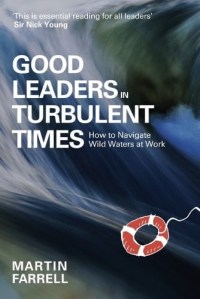
Good Leaders in Turbulent Times: How to Navigate Wild Waters at Work, by Martin Farrell

Summary: “Ever try. Ever fail. No matter. Try again. Fail again. Fail better.”

As a means to educate, stories are as old as humanity. And the best ones endure. That is why, for example, the wisdom of the parables of Jesus still resonates. 

Philip Gourevitch, in his book “A Cold” Case, explored the importance of stories in mentorships, as a way in which leaders share their experience with the next generation of “apprentices”. That is a tradition that Martin Farrell enters with his book, “Good Leaders in Turbulent Times: How to Navigate Wild Waters at Work”. 

As well as having led organisations himself, Farrell has a long background mentoring leaders: he was a particular help to me during one nightmarish phase of my career. So, he has deep understanding that even the best leaders often have to endure reversals and “the slings and arrows” of those who have never experienced the grinding responsibilities of choice-making that leadership entails. 

In other words, he has heard, if not all the stories, a great many of them. He recounts these here in the intertwined stories of a group of fictional not-for-profit CEOs at various stages of their careers each enduring their own professional crises. As resources for learning they are a reminder to other leaders going through their own trials that they are not alone. Others have passed this way and endured… or at least survived. Here are some of the ways they managed to cope.

Farrell understands that beneath the latest fads and fashions, which come and go and come back again, leadership is a human process and it takes a human toll. That is a truth that is often underappreciated by new leaders when they take up their roles. More unforgivably it is too often forgotten by board members who blunder in their organizational stewardship as a result, often in ways that they are never held accountable for. 

Because of this, Farrell’s book is a vital one and should be required reading for CEOs. It should also be required reading for board members, particularly those who have never been CEOs. It is book that the for-profit as well as the not-for-profit sectors can usefully learn from.

Good Leaders in Turbulent Times is an accessible, humane book, imaginatively designed and wonderfully illustrated by Steve Appleby. It is an important contribution to leadership literature.  

My best reads of 2024

Summary: some humanitarian assistance for book shopping this Christmas

As Christmas approaches some of you may be pondering books for yourselves or the bibliophiles in your life.

So here, in (more or less) chronological order are my best books of the year. Four entries are Irish; three about aspects of the British empire and one is about an aspect of the American empire; two trace the roots of Israel’s genocide in Palestine; two are feminist dystopian thrillers and one is a bit of feminist literary criticism; and there is one that is about pretty much everything. And there is some stuff about the Roman Empire, because there sorta has to be.

Each item has a link to a longer review if you want to know more. Hopefully some will supply some of you with some inspiration. 

  1. The Kidnapping: A hostage, a desperate manhunt and a bloody rescue that shocked Ireland, by Tommy Conlon and Ronan McGreevy – a lucid and gripping account of an incident in the Troubles that illustrates just what an all-Ireland affair they were.
  2. Empireworld, by Sathnam Sanghera – an elegantly written exploration of the contemporary impact of the British Empire on the world.
  3. Brotherhood: when West Point rugby went to war, by Martin Pengelly – an important insight through the prism of rugby into American war-making amongst the post-9/11 generation of American officers.
  4. Dirty Linen: The Troubles in my home place, by Martin Doyle – An outstanding portrait of the pity of war in the North of Ireland, that also builds a picture of the pervasiveness of collusion between British state forces and loyalist paramilitaries.
  5. Resting places: On Wounds, War and the Irish Revolution, by Ellen McWilliams – an exceptional book in which the interplay of the most personal of histories with the political helps illuminate some of the most shameful aspects of Ireland’s past.
  6. Spent Light, by Lara Pawson – “It’s quite hard to describe really. To begin with, it’s about a toaster, but it ends up being about everything,” the Kirkdale Bookshop on Spent Light.
  7. Ghosts of the British Museum, by Noah Angell – a fascinating exploration of the dark side of British history and culture through the spooky stories of one museum
  8. Sweet Home, by Wendy Erskine  – a wonderful collection of short stories of contemporary Belfast
  9. (A twofer) The General’s Son, by Miko Peled; and The Ethnic Cleansing of Palestine, by Ilan Pappe – two outstanding works of personal and national history that amount to a searing protest against genocide and apartheid by two Israelis of conscience and exceptional moral courage.
  10. Another twofer: The Handmaid’s Tale, and the Testaments, by Margaret Atwood – two all too believable dystopian thrillers, set in a United States that has been transformed into a theocratic dictatorship of the sort imagined in the fevered dreams of the legions of Trump’s incel supporters
  11. The Flashman Papers, by George McDonald Fraser – not sure if this is a thoughtful rumination on Empire masquerading as a scurrilous romp or vice versa. A sort of Carry on British Colonialism with all the casual racism that entails.
  12. Of course, you may still be thinking about the Roman Empire – some of us are men after all. So there are these: Palatine, by Peter Stothard; Emperor of Rome, by Mary Beard; Pax: War and Peace in Rome’s Golden Age, by Tom Holland
  13. Finally there is Monsters: what do we do with great art by bad people? by Clare Dederer – a fascinating exploration of the relationship between the audience and the monstrous artist, included, not least, for having the chutzpah in recognising that Stephen Fry can be an awful eejit sometimes.

That makes 13. A lucky number.

Not ethical leadership: a rocky start to Starmer’s first days in government

Summary: things can sometimes only get worse.

Keir Starmer’s government prides itself in not being idealistic. “We are not a party of protest!” they declare.

The smug, self-satisfaction that this statement implies might be better sustained if the party were conducting itself with unimpeachable professionalism now that it is in government. But its first 100 days in office have been notably rocky. A survey of this period by the Guardian was headlined, “We all hope it’s teething troubles – but worry it’s something worse.”

Well, I suspect it is something worse.

This thought will likely have occurred to many students of organisations. It will be a particular worry to those concerned, as I have been, with what is required to lead ethically: that is, the struggle to make organisational decisions that optimise life-affirming choices by seeking to protect human rights and advance environmental restoration. 

For me, there seems to be three inter-related structural problems with Starmer’s Labour party that are the root of the Labour government’s shaky start and shady future. The first of these is that Starmer’s Labour party is strikingly authoritarian. 

Everyone who has ever effectively led people in organisations will be aware that sometimes a directive approach is needed. For example, if it is necessary to evacuate a building due to an emergency, it is not appropriate to ask everyone how they feel about that first. It is necessary to point folk to the fire exits and tell them to get out. 

However, Starmer seems to privilege such an approach over more collaborative ones even when there is no compelling need. Indeed, his leadership seems to have a problem with any independence of thought and voice.

The run up to the 2024 general election was marked by accusations of a purge of left wing and pro-human rights candidates, and the parachuting into various constituencies of Starmer loyalists, some of them morally repugnant.

Starmer and his acolytes present this as “discipline” and “strong leadership”. It is a peculiar notion of strong leadership when a leader is afraid to countenance a bit of criticism or consider different perspectives on issues. 

From the longer-term view of organisational health this approach is even more problematic. Because if organisations exclude dissent, they reduce their capacity to think critically, to test ideas and winnow out the stupid or counter-productive ones. 

All leadership teams, no matter how smart, will come up with poor ideas from time to time. But truly smart leaders understand that they need processes in place to guard against such things. The restriction of dissension in Labour undermines the necessary processes.

This leads to a second structural problem which will increasingly emerge for Labour as this government proceeds. The purging of intellectual and philosophical diversity, and the fear of being seen as disloyal that is bred by leadership authoritarianism, will reduce Labour’s capacity to generate new ideas as time and events evolve. This will make it more difficult for the government, and the party as a whole, to right recent wrongs and to respond to the new challenges that will inevitably emerge. 

Both these problems, of authoritarianism and lack of intellectual diversity, are dwarfed by the most fundamental of Labour’s current structural problems: that is its moral bankruptcy. 

This was most starkly on display in the infamous interview that Starmer gave to LBC in which he endorsed collective punishment on the people of Gaza for the attacks on Israeli civilians on 7 October 2023, something that he should know as a lawyer, is a war crime under international law. Later assertions that Starmer misspoke or was taken out of context are undermined by the fact that in the weeks following this Labour front-benchers, including the crassly cynical Emily Thornberry and the craven Peter Kyle also publicly endorsed their Dear Leader’s position.

There was a softening of Labour’s Gaza position in the run up to the 2024 election, when it looked as if such an inhumane policy might cost it seats as Israel’s apparent genocidal intent became ever more explicit. However, on attaining power, it has, with a few cosmetic changes, returned to its substantially uncritical support of Netanyahu’s far-Right government. Hence Starmer is notably more reticent on the carnage inflicted on Palestinian civilians in comparison with his public anguish over Israeli casualties.

It is in the context of these three structural failures that we should consider the votes in the first 100 days of this government on maintaining the two-child limit on child benefits and cutting winter fuel payments for pensioners

Not to put too fine a point on it, these votes look more like a process for the breaking of the human spirit of backbench members of parliament rather than any cool consideration of regrettable financial necessity. 

In bringing these matters to a vote when they did, the Labour leadership sought to purge any residual dissent by demanding that, in the name of loyalty, backbenchers should betray their constituents and their consciences on the issue of the poverty of English people, until now a residual Labour moral value.

Having done this, the thoroughly compromised backbenchers have been truly initiated into the moral bankruptcy that is at the core of the British Labour party. So, all will have diminished credibility if they are ever tempted to mount a future principled challenge to the leadership’s proposals, no matter how stupid or morally repellent those proposals might be. 

Starmer’s Labour may be better than the Tories that they replaced. But there seems to me to be a rot at their heart, the stench of which may soon become overwhelming. 

Ghosts of the British Museum, by Noah Angell

Summary: a fascinating exploration of the dark side of British history and culture through the spooky stories of one museum

When I was a student in Belfast in the 1980s I used to feel a cold chill every time I walked past one spot, particularly at night-time. I mentioned this to a friend. “You would,” he said. “There was a young fella murdered there earlier in the Troubles.”

Noah Angell gets similar feelings in almost every gallery in the British Museum. But then, the whole place is essentially a crime scene. 

So much of the stuff there, from the Parthenon Marbles to the Benin Bronzes to much of the Egyptian collection was stolen in the course of Britain’s bloody colonial plunder of the planet. Angell wonders in this book if the murders that accompanied that pillage still echo in the trophies of conquest that the British Museum now houses. 

This fascinating book grew out of Angell, an American in London, noticing at a social gathering that former employees of the British Museum had a lot of freaky stories to tell. So, he began gathering them: diverse tales of the uneasy ghosts that still seem to lurk in every corner of the Museum. These include the moving mummies in some of the, frankly creepy, Egyptian galleries; the hauntings of the old reading room by the shades of forlorn former employees; the ongoing religious wars between the ghosts of Christian and Islamic warriors around rooms containing the Sutton Hoo hoard; the feelings of Museum staff that certain American and Asian artefacts emanate a sense of demonic possession. 

As Angell notes, the British Museum likes to present itself as one of the key places on the planet which protects and preserves world heritage for all humanity. However, only about 1 per cent of the Museum’s collection is ever on display. So, it really is a place in which much world heritage is disappeared rather than displayed.

Not that that makes these artifacts in any way safer: the British Museum did irreparable damage to the Parthenon Marbles in ignorant efforts at maintenance; in 2023 it emerged that thousands of artefacts, particularly from the Greek and Roman collections, had been pilfered, many sold on ebay.

At least the thieves were acting in the spirit of the Museum itself, which is fundamentally a repository of stolen goods. Angell wonders if the key lesson that hordes of schoolkids draw from their visits to the Museum is that stealing is really okay if you can just get away with it… which is, if truth be told, a very British idea.

In its refusal to return stolen artefacts to their rightful owners the UK, and hence the British Museum, stands at odds with most enlightened thinking about the ethical curation of world heritage. Angell does report that George Osbourne, chair of the Museum’s trustee board, proposed transferring the Parthenon Marbles back to Athens as a loan. This, understandably, the Greek government has rejected: how can you take a loan of something that is rightfully yours? But this did make me feel rather more sympathetic to Osbourne: British law forbids the British Museum from returning much of their stolen loot. So Osbourne, it seems, was trying to come up with some path towards resolving this historical injustice.

As anyone who has visited the British Museum will know, it can do fascinating work exploring and explaining aspects of history. But, even if you don’t believe in ghosts, this absorbing book provides a compelling insight into the dark side of the institution’s own history, a microcosm of the country in which it is based. It is a shameful past that the British Museum, and all of British society, must squarely face if they are ever going to rehabilitate themselves.