The August Uprising, 1924: The Georgian Anti-Soviet Revolt and the Birth of Democratic Socialism, by Eric Lee

Summary: an account of how an abortive insurrection in Georgia irrevocably split the Left

There is an anecdote in Cyril Cusack’s short book, The Humour is on Me, about a TV cameraman filming pro-British, loyalist, rioting in Belfast during the 1970s. The unfortunate journalist was set upon by a woman armed with an umbrella, offended by the fact that he was “filming things that were not actually happening.”

Similar attitudes have surfaced in other wars and conflicts before and since, including the Bolshevik onslaught on Georgia, the subject of Eric Lee’s The August Uprising. This fine book recounts the doomed 1924 revolt against Soviet rule and the moral choices it exposed, which ultimately divided the socialist movement itself.

Lee shows how those habits of denial, later seen on the streets of Belfast, flourished among Stalin’s defenders. He records some particularly shameful examples of propaganda from apologists for whom partisan loyalty mattered more than facts, decency, or human life.

Lee’s book follows the chronology of Georgian history, roughly from the outset of the Bolshevik revolution in Russia, through the overthrow of the government of Georgia in 1921 to the bloody crushing of Georgian independence efforts in 1924. In describing the machinations of the Bolsheviks, Lee shows that the brute force used by Stalin and his associates in suppressing Georgian independence prefigured later atrocities, including Stalin’s murderous assault on the Russian people, the Holodomor in Ukraine, and the massacre of Polish officers at Katyn.

What makes Lee’s account compelling is not simply its chronicling of another crushed national movement, but its portrayal of a deeper struggle, between democratic socialism and the totalitarian impulses that would consume it.

While the facts on the ground created by battles, torture chambers and execution grounds may have been decisive in establishing the nature of many Eastern European societies, the ideas that diverse leaders used to justify such violence were also of vital importance to many. 

Trotsky, writing an introduction to one such work, noted it was composed “in the car of a military train and amid the flames of civil war.” One suspects that, as commander of the Red Army, he might have had more urgent matters than writing a work of political philosophy. But perhaps reassuring himself of his righteousness helped him sleep at night.

Stalin, of course, needed no such soporifics, and his own writing may have amounted to little more than execution lists. Yet, even as the corpses mounted he still had enough useful idiots, including on one occasion a delegation from the British TUC, to obey and reassert the Party’s final, most essential command, as Orwell put it, to “reject the evidence of your eyes and ears.” 

Such fantasy-island politics can endure only so long in the face of atrocity. Eventually there must be a reckoning. In Lee’s telling, the suppression of Georgia and its social democratic movement became an object lesson for the entire European Left, showing that there could be no meaningful alliance between democratic socialists and the “red fascists”, as the German communist Otto Ruhle branded the Bolsheviks. 

That lesson has lost none of its relevance. The temptation to mistake ideology for truth, and moral certainty for moral rightness, remains as potent as ever

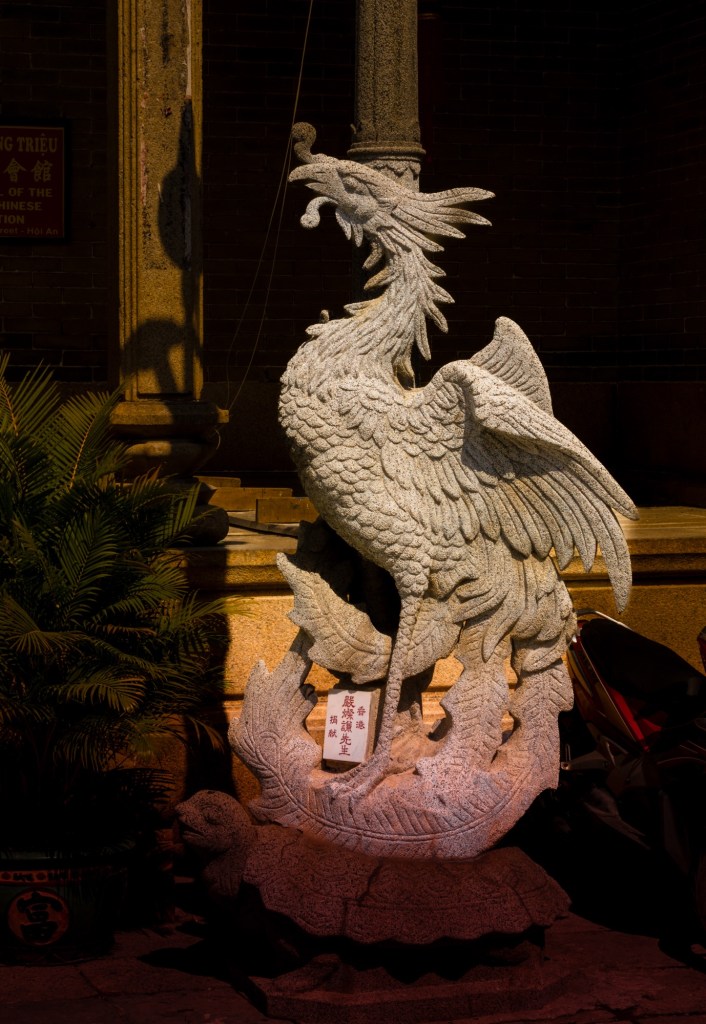
Public Art

Summary: an evolving collection of images of pieces about movements -in the broadest sense of the word – that have, by and large, stirred the conscience of the world, if only a little

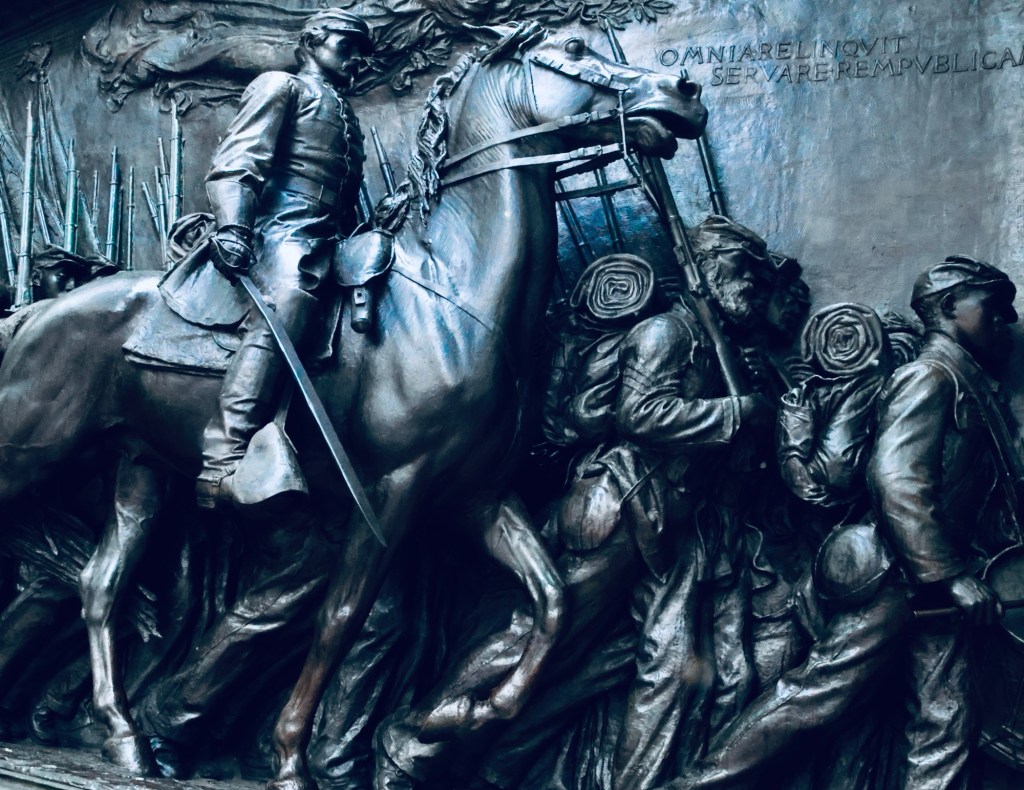
Massachusetts 54th, Boston
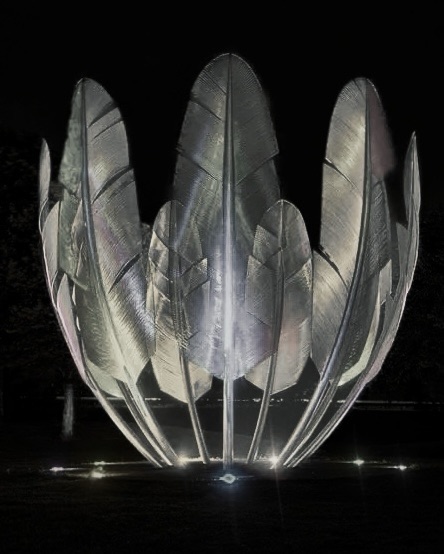
Kindred Spirits (the Choctaw memorial), Middleton, Co.Cork
Broken Chair (landmines memorial), Geneva
Velvet Revolution, Prague
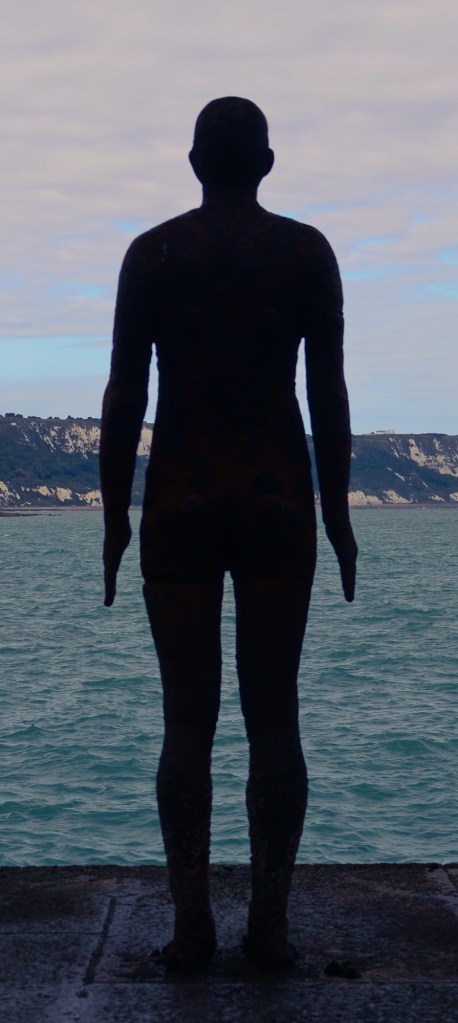
Gormley in Folkestone
Free Derry Corner
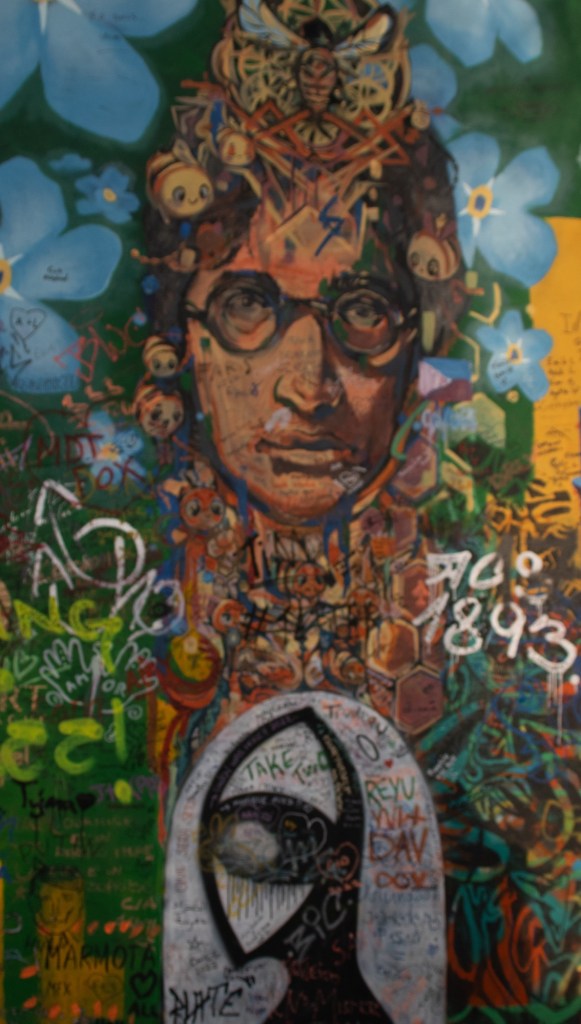
Mr John in Prague

Sudan stories III: war by remote control

Summary: Elphaba on some disturbing new trends in the Sudanese conflict

We are constantly learning how this obsene tit-for-tat war goes between groups who care nothing for the folks in the middle. Towns fall to one side and then are re-taken, new weaponry allows for new tactics in an unclear strategy. 

So it is that drones this week hit Singa taking out the power supply and with it the water. I imagine a person many miles away with a computer programme and some coordinates playing an online game with lives. Of course on the ground there has been a rounding up of people suspected of guiding the missiles to their targets.

There is a deep weariness as people say: “Ah so we’re back to that again” and for how long?My family member, Ax, says they came in the middle of the night Wednesday and it took several attempts to hit their target.  The noise sent people scurrying outside. Some left Singa again, crossing the river as they were revisited by the trauma and fear of last year. He kept the family indoors more worried about the risk of falling debris than immediate re-occupation. But that grim possibility is never fully out of mind.
The scaling up of threats from RSF (they hit the airport that the government was boasting they would re-open soon, they claimed to have taken Fasher, they threatened cities beyond Sudan that support the Govt) and counter attacks from the government (they killed the leadership of communities in Kordofan as they met last week) seems to be in preparation for talks in the US – talks that although reported are hotly denied in Sudan. Even talking about them is risky.

Meanwhile Ax and I mused on the differences between towns in England and Sudan: a mini tale of two cities. Where in dying town-centres in UK the shops all seem to be nail-bars, second-hand clothes shops and takeaways, in Singa  every shop is a pharmacy, mini-clinic or something medical related.

We are hoping this latest wont lead to something more serious.  

Sudan Stories II: Not Exactly a Getaway Car

Summary: second in a series of guest blogs from “Elphaba” on the ongoing war in Sudan

There was some great excitement in Singa this week as it was announced that many vehicles had been found and owners could bring proof of ownership and reclaim theirs. Ours was a battered, old, much-loved and very unreliable crate. She appeared to have some kind of sentience: working on a whim for some and not others. Opening and closing the windows was an act of will power (no winders that worked). But she had given great service carrying sheep, produce, people and everything in between for several years before she was taken at gun point last summer

A family member, Ax, went to see if she was there. He said the site was depressing. It was full of lines of metal shells, most with no wheels, broken windows and some with little or no innards. 

At the back of his mind in going to look for the vehicle, apart from the fact that it is “something to do” when daily routines are still restricted, was a potential to get her back “in case we need to run”. But then you are an easier target in car than on foot. Behind this is the reality that although our family are for the most part fine, there is a thin ice feeling.

On the 4th October a friend in El Obeid rang and we were delighted to hear all was well. The next day he rang to say that they had been bombarded with drones. Omderman has also been hit. Nothing is resolved. And South Sudan is still unravelling.

One of the fall-outs of the war coupled with climate change (I think) has been a steep increase in Dengue fever. We also hear disputed reports of cholera outbreaks. Now at the tail-end of the rains is the malaria season 

In the end we could not locate our vehicle. We laughed that she was never exactly a get away car, except in the sense that we seemed to get away with paying very little road tax over the years. In this seemingly endless war, the citizens who have lost most of what we think of as essentials are expected to pay significant amounts to reclaim their cars at a time that inflation in the costs of everyday needs, and the continuing devaluation of currency, bites. 
The Cut Throat Trial, by the Secret Barrister

Summary: One of these suspects is not like the others …

As aficionados of Rumpole will know, a “cut-throat” trial is one in which co-defendants turn on each other. That is the heart of this novel about three boys accused of murder — a case that also involves a victim nearly decapitated, so there is that sort of throat-cutting too.

This is the first foray into fiction by the Secret Barrister. It is told from multiple perspectives: a defense and the prosecution barrister, the judge, and two of the defendants. Each voice feels distinct, a technical feat that lends the narrative both texture and credibility.

As in their non-fiction, the Secret Barrister’s abiding concerns with the state of the law, society, and the criminal justice system in England and Wales permeate every chapter. Like Wendy Joseph’s Unlawful Killings, it exposes the squalid tragedies of murder committed by children.

Yet for all its artistic achievement and political undercurrent, this is first and foremost a courtroom thriller — and it is a cracking one. It takes a staple of English literature, the red-herring-strewn cosy murder mystery, and serves it up American-hard-boiled. Gone are the familiar comforts of Agatha Christie and the nostalgia-fests of Richard Osman. Instead, we are in a world where the streets are mean, knives wound horrifically, killing is messy, dying is sore, cops and lawyers are flawed, defendants are pathetic, and justice is too often elusive.

By refusing to flinch from the grotesque realities of murder, the Secret Barrister has produced a novel several cuts above much contemporary English crime fiction, and one that, like the best of literature, illuminates the human condition while laying bare some of the failings of our world.

Arbitrary Power and the Rule of Law: The UK’s Criminalisation of Protest

Summary: The UK government’s shenanigans around Palestine Action undermines fundamental principles of rule of law

In 2010, Tom Bingham — former Master of the Rolls, Lord Chief Justice, and Law Lord — demonstrated in his book The Rule of Law that the concept is fundamental to any tolerably functioning democracy. He set out eight principles, including that:
• legal rights and liabilities must be determined by law, not the arbitrary discretion of, for example, ministers;
• the law must provide effective protection for fundamental human rights; and
• the rule of law requires states to comply with their obligations under international law as seriously as domestic ones.

The British government appears to violate all three of these particular principles in its decision to ban Palestine Action and criminalise anti-genocide demonstrators.

To begin at the beginning: there is no agreed definition of terrorism in international law and little academic consensus. The terrorism scholar Alex Schmid once suggested that terrorism might be considered “peacetime equivalents of war crimes.” That deliberately omits atrocities such as Hiroshima, Dresden or Gaza, but it is easy to see why governments responsible for mass civilian killings might resist such a definition that makes them seem at least terrorism adjacent.

In the absence of international agreement, terrorism becomes whatever individual governments decide it is. In the UK, the government has defined it broadly as violence against people and damage to property in pursuit of a political cause. Yet even by that standard, its application is arbitrary. The killing of close to 100,000 civilians by a UK ally is treated as legally too complex for ministers to judge, but the throwing of paint on a weapons system is not. To brand the latter vandalism as “terrorism” is to reduce the definition to a tool of political convenience — a textbook example of arbitrary discretion, and thus a breach of the rule of law.

This arbitrariness also undermines basic human rights protections, most clearly in the assault on the right to peaceful protest. On 6 September 2025, Steve Masters, a British military veteran, was arrested while sitting in his wheelchair in Parliament Square holding a poster. He was one of 890 people detained that day. Their “crime” was not violence, but conscience: holding placards in solidarity with Palestine Action. Farcically, many will be charged with terrorism offences.

What their protest reveals is the UK’s deeper breach: the failure to honour its obligations under international law, including its duty to prevent genocide under the Genocide Convention. Training officers of a military engaged in mass civilian killings, and rolling out the red carpet for those officers’ political masters, cannot plausibly be described as discouragement of genocide.

Protesters hold up a mirror to the British government, and the government recoils from its reflection. Yet it is only the protesters who offer any hope that the UK might one day be able to face itself with any self-respect, once the atrocities with which it has been complicit have passed.

From Siege to Safety: A Sudanese Family’s Journey

Summary: First in a series of guest blogs on the war in Sudan, by “Elphaba”

I have been writing family bulletins for myself and anyone ready to read them since the start of the war in Sudan in April 2023. Kind readers have followed events that have driven my family from their homes at gun point from areas around Umderman to Gedarif and Singa. Then again from Singa as they went under siege there.

Before the war, meeting of the Blue and White Niles at Khartoum: many of the buildings in this photo have now been burnt down

In an attempt to spread the burden of too many mouths to feed under one roof and much heart searching they scattered further. Some made the treacherous route to the north only later to face long electricity blackouts in April and May in the hottest time of the year. Others fled Singa on foot eastwards to Gedarif. From there one or two made it to Saudi Arabia where they have safety but at the cost of visa renewals and a deep sense of loss.

Now since the start of this year with relative peace in the Eastern areas of Sudan. For our family, at last, the kids are mostly back at school, the offices working and the economy working on some level. The banks work intermittently and cash is in very short supply. Some can use online banking with an app but for all everyday trading for basic goods, it is only cash. Adding to this, at some point in the year someone thought it a good idea to introduce a new currency and a new layer of potential confusion and corruption. In most of the East only the new currency works, while in the West only the old. In Khartoum and Wad Medani both get used.

With no immediate drama, I worry that we run the risk of joining the world in forgetting that the war and instability is far from over and accepting a new normal that is anything but. Now with the rains falling heavily there is very little seed to plant to benefit because infrastructure is decimated and only very few have any spare funds. And there is drama. For our friends in El Obeid and our once-home Dilling, siege, counter siege and fear have outlasted anything seen in the East and Darfur continues to be another story again. We last heard from close family friends there about a year ago.

As in Israel/Palestine there are huge profits and plans for still greater ones being made by those who would seize power and (ab)use weakness. In Port Sudan there are huge agricultural schemes under discussion not to mention rebuilding contracts and deals with the Gulf. It is mind-numbingly depressing in its logic of winner – eventually- takes all at whatever cost.

Meanwhile, for our family there is the on-going need to claw back dignity and rebuild with the resources we have.  The young men – nephews and sons – working for low wages as labourers, drivers and other sorts of fixers send back what they can. They are themselves stranded in nearby countries away from their families and they know that whatever they send it is never enough. We are aware we have more than many and less than others.

I challenge anyone to fault the determination. My elderly sisters-in-law (elderly = 10 years older than me and in their 70s) have returned to their suburb in Umderman. There is no power. They returned to homes totally stripped bare “not even a teaspoon”. The first job for Nxxx was to buy a front gate as that too had been taken. Bottled gas costs 5 times what it did a year ago and anyway the cooker is gone. The widespread gossip that her neighbour’s son – now gone – whom Nxxx had known since childhood orchestrated the theft of her property and many others. And yet after a few days Nxxx at least is back in her house. As Rxxx explained to me from Saudi Arabia, her homesickness palpable: “of course all the family have been amazing. We are lucky. So much luckier than many. But you ache for what is yours, where you are you and where you’re not thought of a ‘a displaced’”

The violence has gone from these neighbourhoods for now and the young men returning have great plans to fix the power. Knowing the place well, I have no idea how they are getting by. I know it will be a profoundly communal endeavour. My 24year old nephew, his own life plans long since on hold returned from Port Sudan to help his father. He says they live on ful and ta’amia because that is made at a local shop where they have fuel. I imagine them all together much of the day to support, chat about possibilities, find workarounds to issues, talk prices and a future. I hope this will help them recover for now from the trauma of recent months/years. 

The profound divide emerging in Sudan and the discrimination and racism that underlies the political stories is a worrying strategic trend that most Sudanese don’t have the luxury of considering. Maybe in that there are some universal trends.