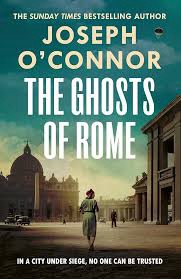
The Ghosts of Rome, by Joseph O’Connor

Summary: more Paddington 2 than Jaws 2

Sequels are a tricky thing. Some, like Margaret Atwood’s The Testaments add something to an earlier classic. More ill-judged ones, like Pat Barker’s The Women of Troy, can dent the lustre of their more accomplished predecessor, seeming to aim to cash in on a successful formula rather than say anything compelling or new.

So it was with some trepidation that I picked up the Ghosts of Rome, Joseph O’Connor’s follow up to his superb novel of European Resistance to Nazism, My Father’s House.

Time has moved on a few months from the first novel, the German occupation has become more brutal, and the pressure on the Choir – the escape line for Allied prisoners of war and Jews established by Monsignor Hugh O’Flaherty – more extreme.

The pattern that O’Connor uses for this book is similar to its prequel: It focuses on one operation, and one individual in the midst of the otherwise present and correct ensemble of the Choir, in this instance Contessa Giovanna Landini – Jo.

O’Connor admits that all of the novel, including the purported transcripts of BBC interviews, is his own invention. But many of the people involved including Jo and her Irish pals, Delia and her daughter Blon, were real. This accentuates the sense of awe regarding what these ordinary people endured and achieved in such extraordinary circumstances. And, even if we know they survived the war this does not diminish the tension.

The Ghosts of Rome is a gripping thriller. But like the best thrillers it is more than that. It explores and asserts the importance of morality and friendship in the face of monstrousness. These remain important ideals in a world in which the genocide of vulnerable people is again high on the agendas of many of the supposed liberal democracies of the West.

Standing Tall: living with motor neuron disease, by Samantha Whittaker

Summary: a poetry of courage

“Silence – like a Quaker meeting.”

And like a Quaker meeting, Samantha Whittaker breaks this silence with her deeply considered words. Standing Tall is her first book, a collection of her poetry. As she explains in the introduction poetry is something that she returned to writing after her diagnosis with motor neurone disease. “At 56 I was struck with this terrible disease… Nobody can understand me now… I used to chat and laugh so much… Standing tall is where you’ll find me/ When I die.”

Because of its subject matter, this is a desperately sad book. But it is also an awe-inspiring one. I have only been in the presence of true courage a couple of times in my life. This book reminded me of those times. Because in this book Whittaker unflinchingly confronts her disease and her life with it: “Reason, slobber, alive, decline/ Words that sum up…”

Standing Tall is an extraordinary book by an extraordinary woman.

Prague winter

Summary: Christmas in the Kafka’s city

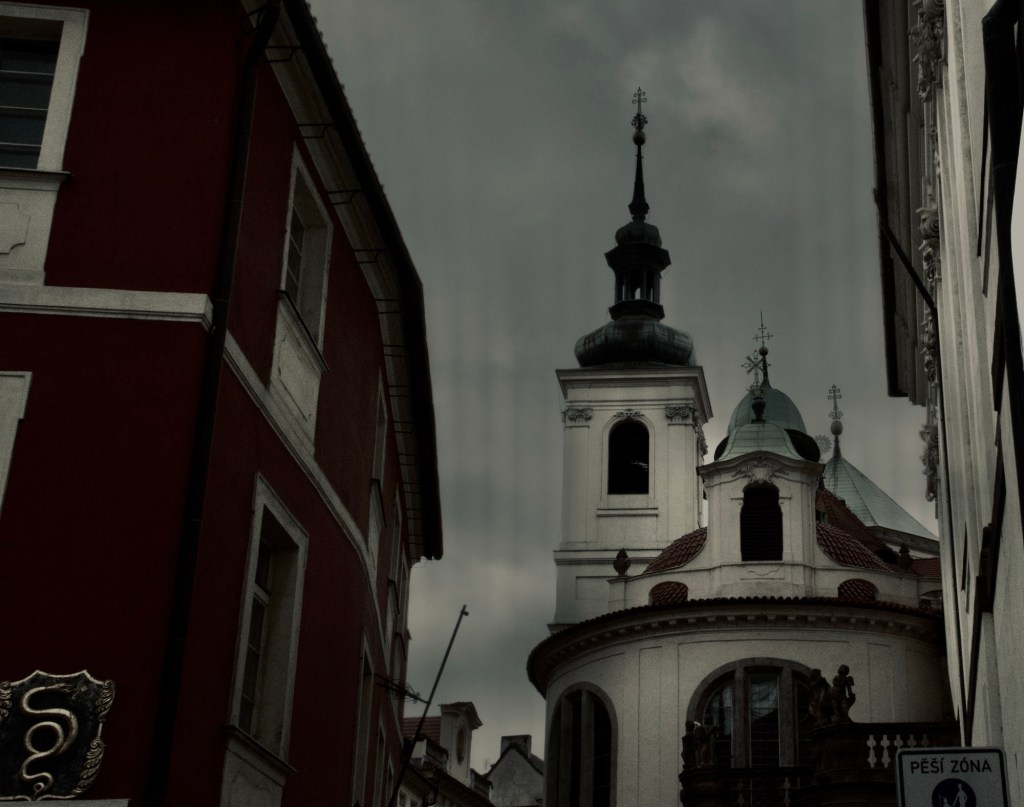
New Town street
Church of SS Cyril and Methodius
Where Gabcik and Kubis died.
Sculpture of a girl
Girl getting away from it all
Art! ART!!!
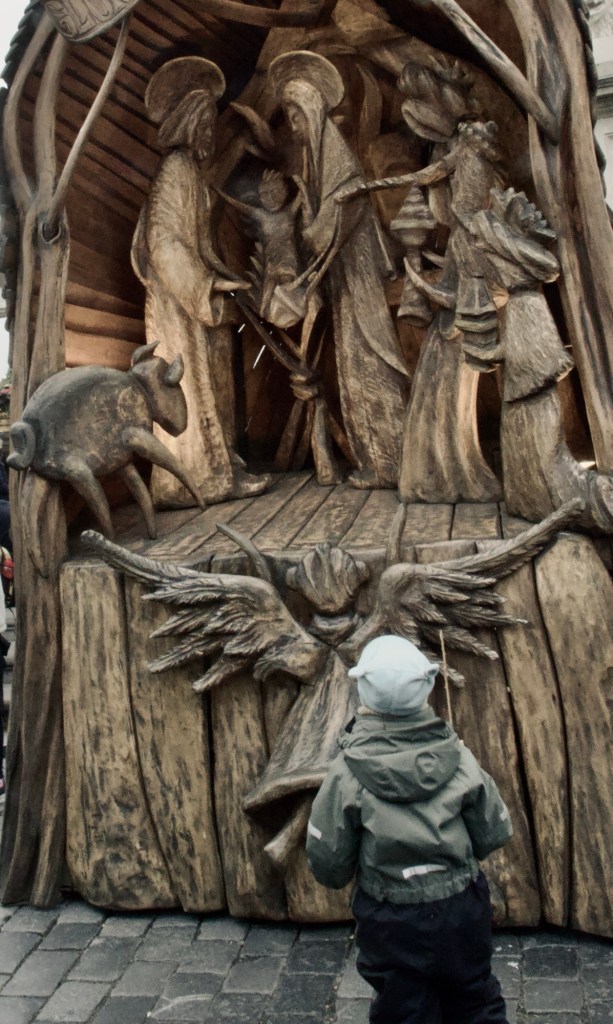
Crib in Old Town Square
Astronomical clock, Old Town Square
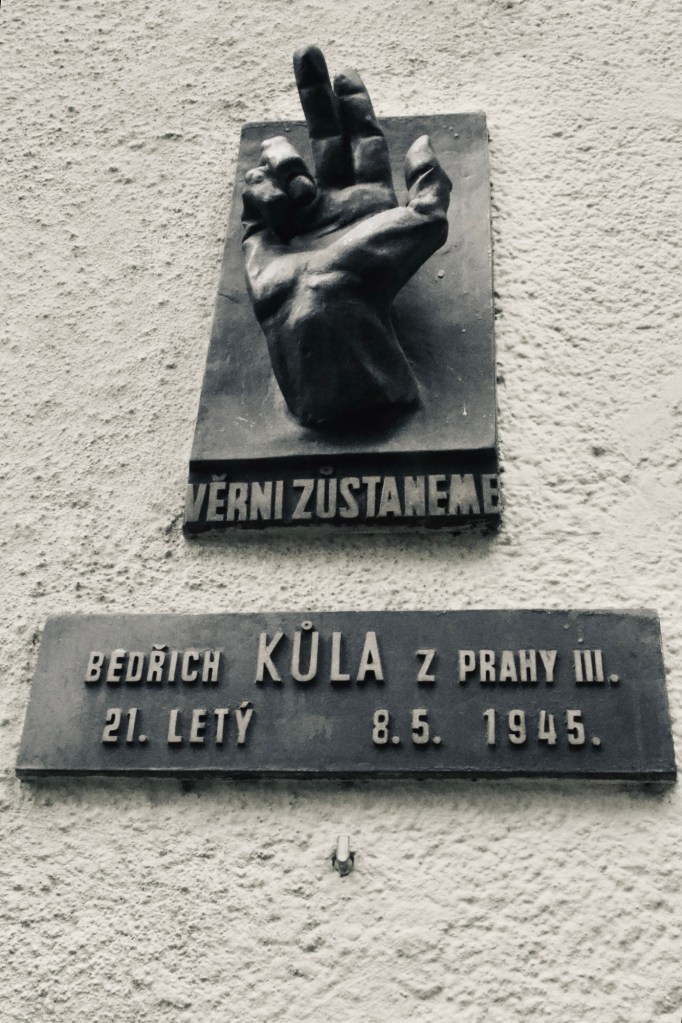
Resistance to fascism is an ongoing struggle
Approaching Charles Bridge
Karlovy Lazne
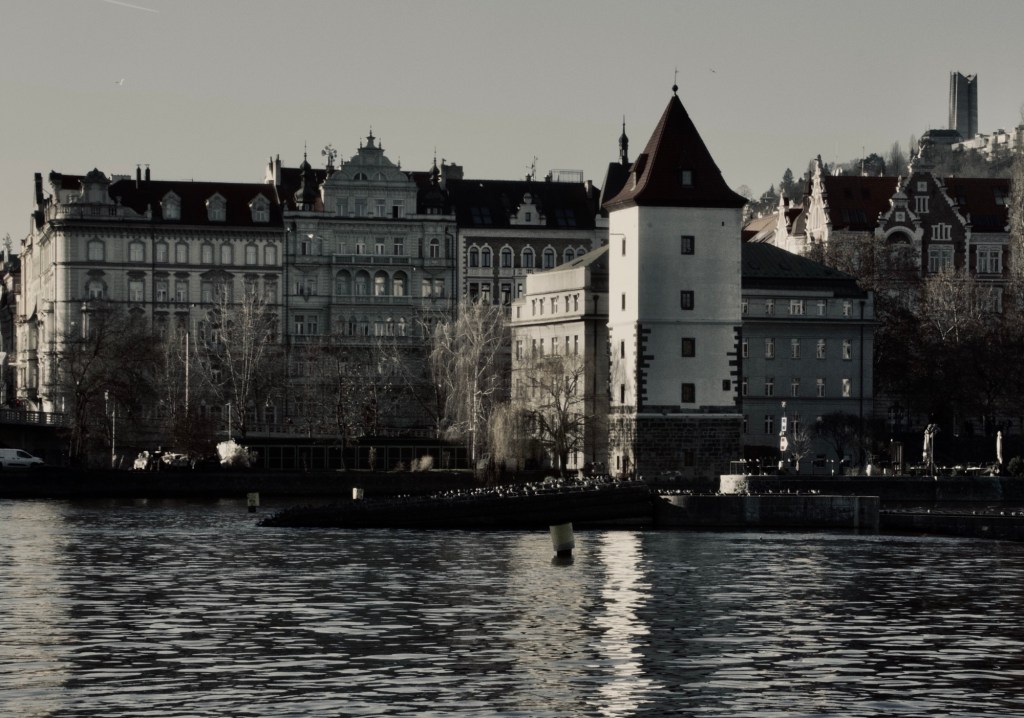
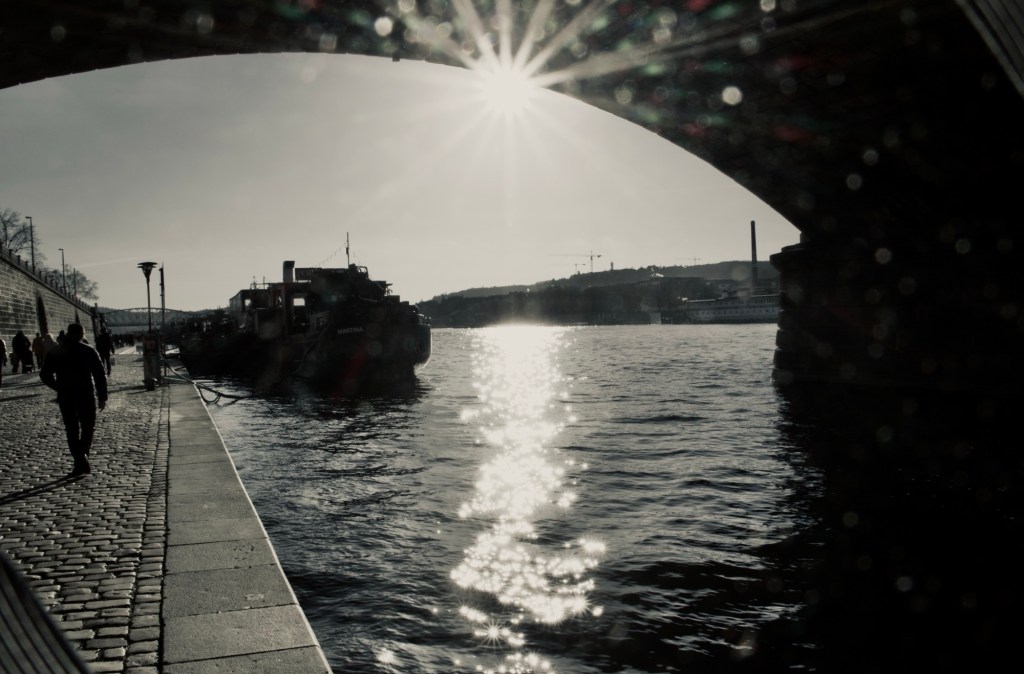
Sun on the Vltava
Art on the riverfront

My most read blogs for 2024

Summary: some things old, some things new, nothing borrowed, much of it blue.

In reverse order of popularity

10: In memory of my father, Gerry McQuade

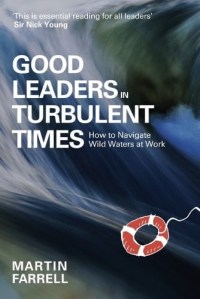
9. Leadership in the grey zone – drawing on my book Ethical Leadership to reflect on the contemporary world.

8. My review of Lara Pawson’s extraordinary book of everything, Spent Light.

7. My review of Martin Doyle’s history of the Troubles in his home place, Dirty Linen.

6. My review of The Kidnapping: a hostage, a desperate manhunt and a bloody rescue that shocked Ireland, by Tommy Conlon and Ronan McGreevy

5. Still stirring considerable interest, 10 years after its initially blogging: The Doctor and the Saint: Arndahati Roy’s introduction to B R Ambedkar’s Annihilation of Caste

4. My review of Ellen McWilliam’s sublime Resting Places: on wounds, war and the Irish revolution

3. A long read, but surprisingly popular reflecting, I think, the enduring interest in the man: The human rights Legacy of Roger Casement

2. On western double standards and complicity in the genocide in Gaza: Old habits, new protests: on the politics of Israel’s allies

1. Letter to British Prime Minister Rishi Sunak.

Leadership in the “grey-zone” 

Summary: Remarks to the conference “Leadership in Dialogue: Exploring the Spaces between Ideas, Communities, Worldviews”, Birmingham, 8 to 10 December 2024[1]

There are diverse perspectives on leadership. Mine is leadership as a responsibility to choose – particularly in choices that affects the lives of others, in organisations or in wider society.

That has been most the defining feature of my experience of leadership, and something you never really appreciate until you are in that role. Key aspects of leadership involve decisions on resource allocation. Such choices are always fraught because there are always winners and losers, upset and distress, and lingering resentments. 

Of course it can always be worse – I spend a good number of years leading humanitarian operations in, among other places, Angola during the civil war there. This led to some choices that were even more filled with anguish than the difficult but routine budget allocations that all leaders have to deal with. I write in my book, Ethical Leadership, about having to prioritize the lives of one group of people over another and how you have to learn to live with that after. That thought experiment with the runaway tram can get very real in some leadership roles. 

So given that these are leadership realities, ethical leadership is self-evidently important: by ethical leadership I mean the attempt to make the most life affirming choice possible, irrespective of the difficulty of the situation. A life affirming choice is one that optimizes the protection of the environment on one hand and the protection of human rights on the other.

Now, when we are making choices it is important for leaders to remember that those choices are made in, what I call in my book “a cruciform of agency”.

That is, there are aspects of the choice – whether that choice relates to a love affair, or work, or war – that are in the social world: those are the rules and resources associated with the choice:  the laws, polices, practice, finances or people who will be affected.

Then there are the personal aspects of the choice: the ones relating to the choice maker’s aspirations and experiences, and most fundamentally to their moral values.

The dialogue between these personal and social aspects of choice can be conceived of interacting orthogonally, hence the idea of a cruciform of agency emerges.

Now there is a 2002 paper by Craig and Greenbaum on a mining operation in South Africa. In that paper they recount how when they raised concerns with the mine management about issues such as health and safety, or labour terms and conditions, or the environmental damage that the operation caused, the managers they interviewed would express sympathy, but assert there was nothing they could do. The company they worked for caused the problems. Their responsibility was simply to get on with the job. They seemed to believe that they had no moral responsibility for the damage caused by the company despite the fact that it was they themselves who constituted the company. 

This denial of personal responsibility of policy makers and business executives for the consequences of their choices is a central constraint on obtaining progress on many of the world’s contemporary problems including slavery, something that affects an estimated 50 million people in the world today. 

I have rarely met anyone who has been in favour of slavery in principle. However, many in reality are in favour of slavery in practice. And if you doubt that, to take just one example, look at the hostile environments for migrants that many political leaders, from left to right in rich countries, take such pride in. This, despite the well documented fact that such hostile environments lead to the trafficking into forced labour and sexual exploitation of hundreds of thousands of vulnerable people. 

If the personal aspects of leadership, particularly the moral responsibility of the leader for the consequences of their choices is abandoned then ethical leadership becomes impossible, and indeed much worse may emerge. But this is not uncommon.

You all know the history: The Nazi’s used the idea of “just following orders” to try to evade personal moral responsibility for their atrocities.

Henry Kissinger infamously used the notion of “realpolitik” to justify his murderous foreign policy that devastated the lives of millions in Bangladesh, Cambodia and Vietnam.

Today, Joe Biden, Olaf Scholz, Keir Starmer and David Lammy use the formulation “Israel has the right to defend itself” to justify their craven complicity in war crimes and genocide.

While the words used in each of these examples are different, their purpose is the same. They are explicit attempts to disguise moral bankruptcy and evade basic leadership responsibilities for the catastrophic human consequences of their choices. For this they deserve utter condemnation in “history and eternity” as Abraham Lincoln once put it.

The evasion of personal responsibility in a choice is the anathema of ethical leadership, and it brings with it a loss of authority: what follower worth their salt is ever going to respect a moral coward.

And there is always something more moral that leaders can do, even in the most extreme of circumstances. At the very least they can protest.

The current British prime minister likes to boast that his is not a party of protest. Which of course is true. Because protest is leadership. Protest is a way in which a society can open dialogue with itself and change the ways it thinks about itself. 

Protest is sometimes the only way more formal dialogue with power can be obtained. Protest is how women’s rights and gay rights, minority rights and, indeed, all human rights have been advanced in the world. Protest matters nationally and internationally as the struggles to end apartheid in South Africa and bring some measure of justice to the north of Ireland have shown. 

It also matters internationally because the failure of the West to protest Israel’s atrocities in Gaza, Lebanon and now Syria, compared to our volubility on Ukraine exposes an ugly, frankly racist, double standard at the centre of Western policy. 

Much of the progress towards human dignity, including limiting contemporary forms of slavery, has been through advancing international rule of law. This avenue for progress has now been struck a grievous blow, because the profound undermining of the principle of the universality of human rights that Western policy towards Gaza has asserted. This has undermined in a fundamental way the ideal of an impartial system of international rule of law. 

Many European leaders are expressing concern at the threat that Donald Trump poses to international order. But the damage done to that system of rule of international law by Biden, Starmer and Scholz is already catastrophic. 

At the heart of ethical leadership is the ideal once set out by the Irish patriot and anti-slavery campaigner Roger Casement who said, “We all on earth have a commission and a right to defend the weak against the strong and to protest brutality in every shape and form.” 

That is a commission which we must all take up. Because, more than any other time in my life, the challenge for all of us to lead ethically is at its most urgent. We are all leading in the grey zone now. Indeed, it is almost night.


[1] In his essay collection, The Drowned and the Saved, Primo Levi wrote of the “grey zone” a morally ambiguous space where the ideas of right and wrong are no longer absolute and “good” decisions are impossible. 

My best reads of 2024

Summary: some humanitarian assistance for book shopping this Christmas

As Christmas approaches some of you may be pondering books for yourselves or the bibliophiles in your life.

So here, in (more or less) chronological order are my best books of the year. Four entries are Irish; three about aspects of the British empire and one is about an aspect of the American empire; two trace the roots of Israel’s genocide in Palestine; two are feminist dystopian thrillers and one is a bit of feminist literary criticism; and there is one that is about pretty much everything. And there is some stuff about the Roman Empire, because there sorta has to be.

Each item has a link to a longer review if you want to know more. Hopefully some will supply some of you with some inspiration. 

  1. The Kidnapping: A hostage, a desperate manhunt and a bloody rescue that shocked Ireland, by Tommy Conlon and Ronan McGreevy – a lucid and gripping account of an incident in the Troubles that illustrates just what an all-Ireland affair they were.
  2. Empireworld, by Sathnam Sanghera – an elegantly written exploration of the contemporary impact of the British Empire on the world.
  3. Brotherhood: when West Point rugby went to war, by Martin Pengelly – an important insight through the prism of rugby into American war-making amongst the post-9/11 generation of American officers.
  4. Dirty Linen: The Troubles in my home place, by Martin Doyle – An outstanding portrait of the pity of war in the North of Ireland, that also builds a picture of the pervasiveness of collusion between British state forces and loyalist paramilitaries.
  5. Resting places: On Wounds, War and the Irish Revolution, by Ellen McWilliams – an exceptional book in which the interplay of the most personal of histories with the political helps illuminate some of the most shameful aspects of Ireland’s past.
  6. Spent Light, by Lara Pawson – “It’s quite hard to describe really. To begin with, it’s about a toaster, but it ends up being about everything,” the Kirkdale Bookshop on Spent Light.
  7. Ghosts of the British Museum, by Noah Angell – a fascinating exploration of the dark side of British history and culture through the spooky stories of one museum
  8. Sweet Home, by Wendy Erskine  – a wonderful collection of short stories of contemporary Belfast
  9. (A twofer) The General’s Son, by Miko Peled; and The Ethnic Cleansing of Palestine, by Ilan Pappe – two outstanding works of personal and national history that amount to a searing protest against genocide and apartheid by two Israelis of conscience and exceptional moral courage.
  10. Another twofer: The Handmaid’s Tale, and the Testaments, by Margaret Atwood – two all too believable dystopian thrillers, set in a United States that has been transformed into a theocratic dictatorship of the sort imagined in the fevered dreams of the legions of Trump’s incel supporters
  11. The Flashman Papers, by George McDonald Fraser – not sure if this is a thoughtful rumination on Empire masquerading as a scurrilous romp or vice versa. A sort of Carry on British Colonialism with all the casual racism that entails.
  12. Of course, you may still be thinking about the Roman Empire – some of us are men after all. So there are these: Palatine, by Peter Stothard; Emperor of Rome, by Mary Beard; Pax: War and Peace in Rome’s Golden Age, by Tom Holland
  13. Finally there is Monsters: what do we do with great art by bad people? by Clare Dederer – a fascinating exploration of the relationship between the audience and the monstrous artist, included, not least, for having the chutzpah in recognising that Stephen Fry can be an awful eejit sometimes.

That makes 13. A lucky number.