Gerry McQuade

In memorium – February 2024

When we were discussing the funeral arrangements the other night, our Brian said to me, “You need to say something … something from Seamus Heaney.”

So, I suppose for my Da there can only be one Heaney poem, and that is “Whatever you say, say nothing.”

It’s not just that, as our Geraldine and Eilis will tell you, his mantra through life was “tell them nothing”, a habit developed, no doubt, growing up in mid-Armagh during some of the vilest years of this statelet, “besieged within the siege,” as Heaney put it. 

And, it’s not just because that poem is about the Troubles which overshadowed so many of our lives and shaped his politics. 

It is more that, I think, my father’s philosophy was to let your deeds, your life, speak for itself. 

We’ve gotten all sorts of very kind messages over the past couple of days from people my Da taught, telling us how much he affected their lives, how he gave them the confidence to become the people they are today. 

That was his politics: it was practical non-violence. In the face of state and paramilitary atrocities his response was not to meet like with like, but to teach kids to work hard, to do their sums and become in themselves the new Ireland for which we all hope and strive. 

Our father could barely speak English towards the end there. As the poem says, that voice of sanity really had grown hoarse. But it doesn’t matter now. Because we still have his life. 

His deeds live on in the kids he taught and in others who teach children to read even in these bleakest of days. 

And, no matter how little he would ever say about himself, or could say towards the end, those are things that truly do speak for themselves. 

Some stocktaking – 3

Summary: well, what have I been up to

About 12 months into lockdown, during the plague, I thought it would be a good idea to think about what if anything I had achieved during that period of enforced isolation. A year or so later I repeated the exercise and found it quite therapeutic. About 18 months later, I thought it was about time to have another reflect. So, what have I achieved?

  1. My father died in February 2024. I managed to deliver his eulogy – mostly – without crying.
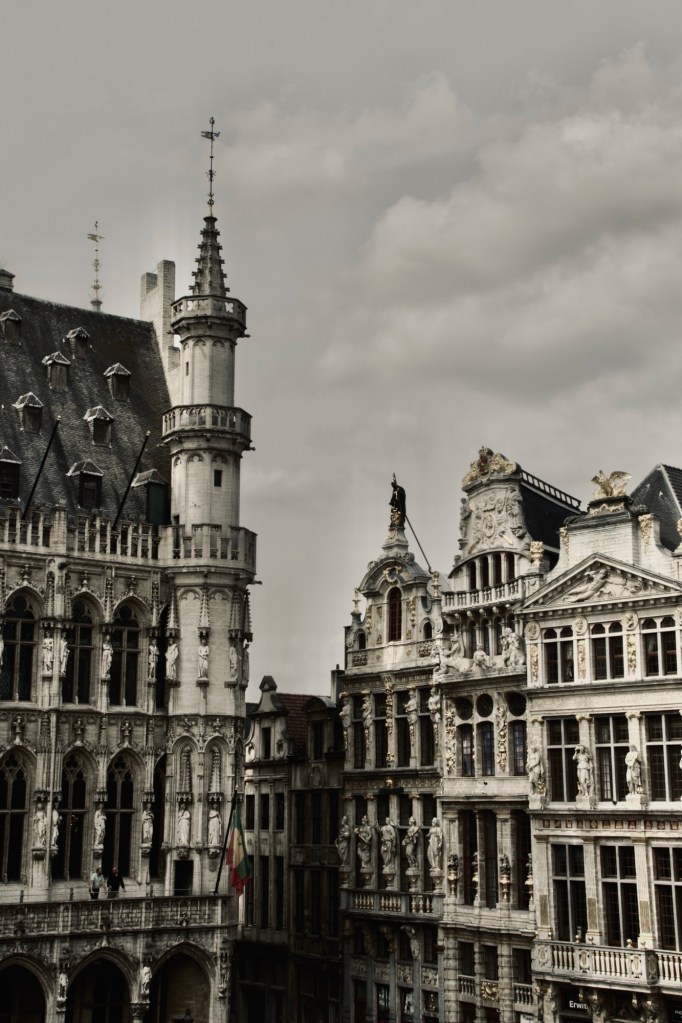
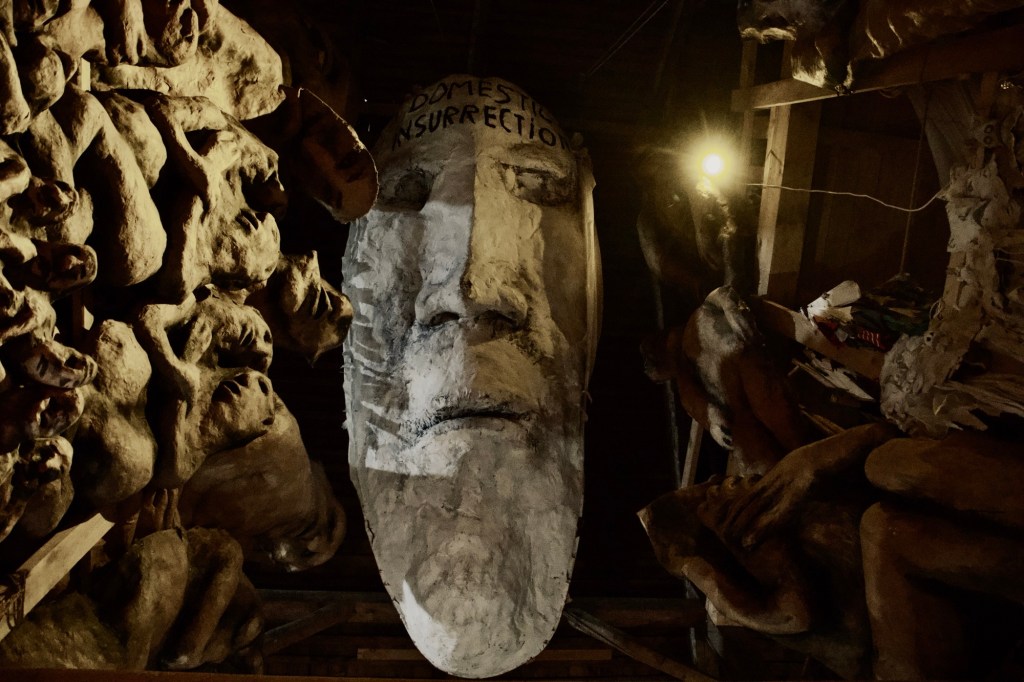
  2. Having read Susan Sontag’s On Photography (A LOT!!!) I think I worked out how to, occasionally, take a decent photograph
  3. I had received an honorary OBE in 2017 for services to the eradication of slavery. I sent it back in protest at the British government’s and Opposition’s clear repudiation of the ideals of the Universal Declaration of Human Rights, most notably for migrants and Palestinians. 
  4. Probably the British government paid no attention, I mean they have a state to plunder and a genocide to facilitate: those things don’t happen by themselves. But, at time of writing, no deportation flights to Rwanda have taken off. 
  5. Best books I read? Well, My Father’s House, by Joseph O’Connor is just outstanding. Evelyn Waugh’s Sword of Honour Trilogy is wonderful: it’s a classic for a reason. James Kestrel’s Five December’s is an empathetic and original take on the detective in war-time sub-genre. My pal Lara Pawson’s book, Spent Light, is an extraordinary and intimate examination of everything from toasters to love to war and atrocity, to the joys of a good broom.
  6. And then there is Ellen McWilliams’ Resting Places, an exquisite exploration of the author’s people and her place, the Bandon valley, where the blood of Protestant neighbours, murdered in 1922, still cries from the ground. A remarkably courageous work on how the political and personal interplay. 
  7. Roger Casement once said, “… we all on earth have a commission and a right to defend the weak against the strong, and to protest against brutality in any shape or form”. So I wrote on Gaza, in a vain attempt to prick the racist mindset of the war criminals.
  8. Published my second detective in war-time novel, Some Service to the State. It is about the repercussions arising from an enquiry into the fate of a missing girl in a newly partitioned Ireland.
  9. My pal, Fergus, said it was over-didactic. I said you mean political. He said, I mean over-didactic. 
  10. “Didactic” means “intended to teach, particularly in having moral instruction as an ulterior motive” Example, “a didactic novel that set out to expose social injustice”. Except he didn’t seem to mean it that positively. “Didactic” also means “in the manner of a teacher….” Or, sometimes, “patronising”. 
  11. Well, I didn’t mean to be patronising. But my father was a teacher. So, if being didactic means I’m a bit like him then that is okay. 

Resting places: On Wounds, War and the Irish Revolution, by Ellen McWilliams

Summary: trying to see “higher than the ditches that break up the canvas of the land”. 

There is an echo of Martin Doyle’s book, Dirty Linen, in Ellen McWilliams’ Resting Places. Like Doyle, McWilliams also uses the literature of Ireland and Britain, experiences from her professional career, and the local history of her home place, in County Cork rather than in County Down, to reflect on wider issues of Irish history and Anglo-Irish relations. 

But McWilliams doesn’t stop there. Resting Places is also a remarkably personal work. Her insights on the “big” themes are also prompted by the most domestic ones: by reflections on her relationships with family – both the Cork ones and the English lot – and from her experiences of her own body in her most private moments as a lover and as a mother.

This is apposite: Women and girls were, as McWilliams reminds us, the subject of institutionalised systems of abuse and enslavement, including the Magdalene Laundries and the Mother and Baby Homes, for much of the 20th Century in Ireland. In writing of her own body with such candour she reminds the reader of the strength and fragility of human flesh and how this can be so easily desecrated by bigotry masquerading as righteousness. 

By pondering these very intimate aspects of life McWilliams also comes to some of her most important historical insights, ones that can be lost or overlooked in more traditional narrative or political histories. Because so many of the dynamics of war, and particularly of war-crimes, in revolutionary and civil wars have their sources in the domestic sphere: around hearths and kitchen tables, in whispered conversations the memories of ancient ills – of land expropriations, of scorched earth and famine – are kept alive. 

And it is one atrocity that perhaps grew from such conversations, the Dunmanway massacre, that lurks at the heart of this book. The country was meant to be at Truce when these killings occurred. But there is no truce on bitter memories. 

Between 26 and 28 April 1922, fourteen Protestant men and boys were killed or disappeared around Dunmanway and the Bandon Valley, in the very roads and fields around which McWilliams grew up. These were the families of neighbours killed by the families of neighbours, and indeed the comrades of her own family, which was deeply involved in the struggle for Irish independence. 

The fate of two 16 year old boys, Robert Nagle and Alexander McKinley, are particularly difficult for McWilliams to contemplate. A new mother when writing this book, she writes of these boys with an agony of empathy, knowing what it is to carry a child for nine months, tend to him as he grows into his own little person, and to worry that something awful might happen to him. For these boys’ mothers, they awakened to that nightmare.

Perhaps there are still whispered conversations telling new generations why these murders “had to be done.” But McWilliams remembering how Greek tragedy reminds us that crimes that stay buried poison the water of the living, shows true patriotism in confronting this vile aspect of the Irish revolution.

McWilliams is an exquisite writer, warm and frequently very funny. At one point she muses if, in marrying an English scholar of the English civil war, she has actually ended up – at some psychic or metaphorical level – marrying Cromwell himself. 

On the evidence of her book, I think the answer is a resounding “NO”. I can’t imagine Cromwell ever fretting over the recipe for soda bread, which her lovely-sounding husband does. Feeding other people is antipathetic to genocide. Cromwell would have hated him. 

McWilliams book is an incredibly rich one, fizzing with more ideas that any review can do proper justice to. Read it!

Palatine, by Peter Stothard; Emperor of Rome, by Mary Beard; Pax: War and Peace in Rome’s Golden Age, by Tom Holland

Summary: not just fun and games

Perhaps we – well … men at least – are fascinated by ancient Rome because it seems so different to today’s world, a place where cruelty was often regarded as a virtue and so many human vices were given free rein, not least as entertainment: In answer to Maximus’ question to the circus audience, we are indeed entertained

But perhaps we are fascinated by it because, paradoxically, the Romans also remind us so much of ourselves in our contemporary world: we see echoes of Nero in buffoons like Boris Johnson and Donald Trump; the genocidal campaigns of the legions in Gaul and Germany echo with the depredations of the Israeli Defence Force in Gaza, and the Russians in Ukraine; the fanaticism of Hamas has resonance with that of the Sicarii defenders of Masada. 

For whatever reasons, historians of other eras must envy those who have stuck to Rome and the seemingly insatiable appetite of readers for new takes on these old stories.

Palatine, by Peter Stothard, Emperor of Rome, by Mary Beard, and Pax, by Tom Holland are amongst the most recent offerings of publishers to meet this ravening demand. 

Of these three highly enjoyable books, Holland’s is perhaps the most straightforward: a narrative chronicle from the downfall of Nero in 69 AD, “the Year of the Four Emperors”, through the Flavian dynasty to Trajan. This may be subtitled “Rome’s Golden Age,” but these things are relative. For example, the campaigns by Vespasian and his son Titus against the Jewish revolt in Palestine, which led to the destruction of the Temple and the mass crucifixion of much of the civilian population of Jerusalem, are a particularly chilling example of performative cruelty in the service of mass murder. 

Nevertheless, Vespasian and Titus are still remembered as “good” emperors. Which is to say they were good for Romans… in the same way as – that contemporary echo again – the British Conservative Party is “good” for rich people, and the British Labour Party wants to be “good” for some English ones. 

Palatine is something of a prequel to Holland’s book. It deals with the first Roman emperors from the perspective of the courtiers of the Palatine – the hill in Rome on which the emperor dwelt and which gives its name to the word “palace”.

The Pantheon

In particular Stothard focuses on the Vitellius family. Heard of them? Well one of them was one of the emperors whose brief reigns in 69 AD, and comic-dreadful ends, were prologue to Vespasian’s more enduring tenure. 

Stothard affects a highly entertaining gossipy style for this. In doing so he gives a sense of the court’s preoccupations through the reigns of Tiberius, Caligula, Claudius and Nero. These ranged from the apparently trivial – seating, décor, banqueting, rumoured love affairs – to the sinister – the growth of Sejanus’ power, the casual cruelties of Caligula. 

What all these subjects had in common were, like an ancient world Kremlinology, they indicated where power lay, who was in favour and who was out. These were questions of life and death on the Palatine. So, the creatures of court paid attention – much as today’s political correspondents claim to do to the gossip and self-serving off-the-record briefings of power-insiders.

Mary Beard covers similar ground to Stothard, but slightly differently. As with her book SPQR her subject is perhaps histography rather than history. That is, rather than delivering a simple narrative, she presents us with the evidence, discusses what it might mean, and hence what conclusions we may be able to draw.

In doing this Beard gives us intriguing factoids, such as that the first representation of the crucifixion of Jesus was in a piece of anti-Christian graffiti found in the slaves’ quarters on the Palatine. But, drawing on diverse sources, including grave inscriptions,  she also gives us some more insight on the way those denizens of the Palatine once thought when contemplating their place in the pecking order and what it might mean for their life prospects. 

In other words, Emperor of Rome is a fine work for anyone who wishes to develop their critical thinking skills, not just in relation to history, but in relation to life. 

Rome may still offer us circuses to distract from the awfulness of the present. But we can also learn from it how to recognise the ways that power corrupts fools and the cruelty that arrogance breeds. Those will remain important skills and responsibilities for citizens for as long as human society continues to exist.

Spent Light, by Lara Pawson

Summary: “It’s quite hard to describe really. To begin with, it’s about a toaster, but it ends up being about everything,” the Kirkdale Bookshop on Spent Light.

When, about 20 years ago, I first introduced my father to the televisual masterpiece that is The Wire, his stunned reaction to the first episode was, “I have never seen anything like that before.”

This memory came back to me, more than once, reading Lara Pawson’s extraordinary book, Spent Light, because I quite simply have never read anything like this before. 

From time to time it seemed to me almost like some other  things: Maybe the notebooks portions of Bruce Chatwin’s The Songlines? Or some of the (allegedly) imaginative passages in Anje Krog’s Country of My Skull? But in the end it is very much its own thing – intimate, funny, at times uncomfortable, occasionally horrific, wholly original. 

It is writing that has the intensity of poetry. And so perhaps the best way to describe Spent Light is as a series of linked autobiographical prose poems, starting with a toaster but in the end being about the whole world, as the Kirkdale Bookshop put it with such brilliant concision. Along the way, Lara touches upon love, war, squirrels, atrocities, and the joys of a good broom. 

I’ve known Lara since Angola where she was a journalist during that country’s brutal civil war. So, perhaps the only unsurprising thing about this book is that it is unsurprising that she wrote it. It is a work of genius. It should become recognised as a modern classic. 

Ghosts of the British Museum, by Noah Angell

Summary: a fascinating exploration of the dark side of British history and culture through the spooky stories of one museum

When I was a student in Belfast in the 1980s I used to feel a cold chill every time I walked past one spot, particularly at night-time. I mentioned this to a friend. “You would,” he said. “There was a young fella murdered there earlier in the Troubles.”

Noah Angell gets similar feelings in almost every gallery in the British Museum. But then, the whole place is essentially a crime scene. 

So much of the stuff there, from the Parthenon Marbles to the Benin Bronzes to much of the Egyptian collection was stolen in the course of Britain’s bloody colonial plunder of the planet. Angell wonders in this book if the murders that accompanied that pillage still echo in the trophies of conquest that the British Museum now houses. 

This fascinating book grew out of Angell, an American in London, noticing at a social gathering that former employees of the British Museum had a lot of freaky stories to tell. So, he began gathering them: diverse tales of the uneasy ghosts that still seem to lurk in every corner of the Museum. These include the moving mummies in some of the, frankly creepy, Egyptian galleries; the hauntings of the old reading room by the shades of forlorn former employees; the ongoing religious wars between the ghosts of Christian and Islamic warriors around rooms containing the Sutton Hoo hoard; the feelings of Museum staff that certain American and Asian artefacts emanate a sense of demonic possession. 

As Angell notes, the British Museum likes to present itself as one of the key places on the planet which protects and preserves world heritage for all humanity. However, only about 1 per cent of the Museum’s collection is ever on display. So, it really is a place in which much world heritage is disappeared rather than displayed.

Not that that makes these artifacts in any way safer: the British Museum did irreparable damage to the Parthenon Marbles in ignorant efforts at maintenance; in 2023 it emerged that thousands of artefacts, particularly from the Greek and Roman collections, had been pilfered, many sold on ebay.

At least the thieves were acting in the spirit of the Museum itself, which is fundamentally a repository of stolen goods. Angell wonders if the key lesson that hordes of schoolkids draw from their visits to the Museum is that stealing is really okay if you can just get away with it… which is, if truth be told, a very British idea.

In its refusal to return stolen artefacts to their rightful owners the UK, and hence the British Museum, stands at odds with most enlightened thinking about the ethical curation of world heritage. Angell does report that George Osbourne, chair of the Museum’s trustee board, proposed transferring the Parthenon Marbles back to Athens as a loan. This, understandably, the Greek government has rejected: how can you take a loan of something that is rightfully yours? But this did make me feel rather more sympathetic to Osbourne: British law forbids the British Museum from returning much of their stolen loot. So Osbourne, it seems, was trying to come up with some path towards resolving this historical injustice.

As anyone who has visited the British Museum will know, it can do fascinating work exploring and explaining aspects of history. But, even if you don’t believe in ghosts, this absorbing book provides a compelling insight into the dark side of the institution’s own history, a microcosm of the country in which it is based. It is a shameful past that the British Museum, and all of British society, must squarely face if they are ever going to rehabilitate themselves. 

Letter to British Prime Minister Rishi Sunak

Summary: on returning a honorary OBE

16 April 2024

Dear Prime Minister

In 2017 I was awarded an honorary OBE in recognition of my services to the eradication of slavery. I am now returning this as it is something which I can no longer, in good conscience, keep.

On 15 April 2024, your government refused to provide protections for the victims of modern slavery from your unconscionable “Rwanda scheme”. Over the past months you, as Prime Minister, have acquiesced in attacks on the European Convention on Human Rights by members of your parliamentary party. These, along with the UK’s bipartisan position on Gaza, have put into sharp focus how British policy now distinguishes between people whose lives it values, and those whose lives it disdains. 

These represent a fundamental repudiation by the UK of the principles of the Universal Declaration of Human Rights. They are a rejection also of an enduring British human rights tradition stretching back to Thomas Clarkson, William Wilberforce, and Mary Wollstonecraft, and a longer tradition of rule of law that stretches back to Magna Carta. 

As such they send to the whole world a message that the UK rejects the core bases of human rights and rule of law upon which progress in human dignity, including anti-slavery action has been based for hundreds of years. This can only impede the anti-slavery struggle and embolden other governments who seek to systematically abuse the rights of their subjects and citizens, including  by the facilitation of their enslavement. 

I hope that you will yet find it in your heart to alter course and embrace and defend these British traditions of human rights and rule of law rather than sacrifice them to some ill-judged populist crusade.

Yours faithfully

Dr Aidan McQuade 

Dirty Linen: The Troubles in my home place, by Martin Doyle

Summary: An outstanding portrait of the pity of war

Margaret Yeaman has never seen her grandchildren. She lost her sight on 15 March 1982 when a no-warning car bomb exploded close to her workplace in Banbridge, County Down, causing splintering glass to lacerate her face. 

Margaret’s story, of being in the “wrong place at the wrong time” is just one amongst many that Martin Doyle explores in his book, Dirty Linen. The book also takes exception to that “wrong place, wrong time,” line. So many of the people whose stories Doyle recounts were just doing their jobs, providing for family and community, or just trying to have a bit of craic. It was the paramilitaries who were in the wrong place at the wrong time for these ordinary people.

Some will still argue that atrocities such as the ones recounted in this book were necessary to advance justice in the North of Ireland. But as Margaret and people like her tell their stories of how their families were devastated by violence, these should bring shame to that notion: as if the British government was ever going to be moved to change policy by Paddies butchering Paddies on the country roads of Ireland. It’s why they introduced “Ulsterisation” to begin with.

Dirty Linen is, in part a memoir, and Doyle gives an honest accounting of his experiences coming of age amidst such carnage, including the miserable abuse he sometimes suffered as a young Catholic in that religiously mixed part of County Down. 

This book could also act as something of an introduction to the art of the North of Ireland. As literary editor of the Irish Times, Doyle is able to draw upon the work of so many writers and artists, from Seamus Heaney to F E McWilliams and Colin Davidson, to help him give voice to the depth of the human tragedy that the Troubles represented.

But, as a result of Doyle’s sensitive interviews with Margaret and people like her, his book is also an exemplary work of journalism and a deeply important contribution to understanding the history of the Troubles. It offers an unflinching portrait of the pity of war by exploring the trauma and courage of the victims of both loyalist and “republican” paramilitaries. 

Some of those victims whose stories Doyle explores also became perpetrators, or at least sympathetic to the idea of revenge. But so many more refused to become as twisted as those who mutilated them and their families. Instead. they often begged for no retaliation and strove for forgiveness, or at least toleration. Theirs are stories that are so much more heroic than anything that could ever be written about the paramilitaries who pressed the triggers or planted the bombs.  

If this was all that Doyle did, then the book would be a marvel. But his painstaking accumulation of detail across the book also builds a picture of the pervasiveness of collusion between British state forces and the loyalist Glenanne gang. Perhaps other writers and researchers have done similar work. But I have not read such a convincing indictment of the breadth of British collusion anywhere else. So, if you want to understand why the British government is so keen to stop Troubles era criminal investigations, read this book.

At a time when the Troubles seem to be giving rise to some exemplary non-fiction, Doyle’s book could well stand out as a classic.