Dictator, by Robert Harris

 Dictator is the final volume in Robert Harris’ fictionalised three-volume biography of Cicero, covering the years up to his death and with it that of the Roman Republic.

Cicero did have a biography written by his secretary Tiro, the inventor of one of the first systems of short-hand which still echoes into contemporary English, for example, e.g. Fortunately for Harris, that biography has been lost to history, so he has constructed his own trilogy as if it were Tiro’s biography of Cicero, with Tiro as narrator.

As with the previous two volumes of the trilogy, Imperium and Lustrum dealing with earlier phases in Cicero’s career, Dictator is a gripping political thriller, covering the period from Cicero’s exile to the downfall of the Republic with the establishment of the second triumvirate of Antony, Lepidus and Octavian.

 Contrary to Goldsworthy’s Caesar, or Massie’s fictionalised accounts of the period, with Harris Cicero is presented as a hero, albeit a flawed one, a proponent of rule of law against arbitrary and tyrannical rule in spite of personal threats and the moral cowardice of his contemporaries.

Unlike Goldsworthy who typically tries to explain his subjects in the contexts of their own time, Harris deliberately seeks parallels with the present. Here he presents a warning for a polity that disdains basic principles of rule of law.

But, Harris does not allow the vital political-philosophical points to interrupt the narrative, which is gripping, as Cicero with only logic and argument in the face of shocking violence seeks to maintain constitutional principles in the face of the vanity of warlords.

The result is a fine political thriller, with much to recommend it for the student of the ancient world.

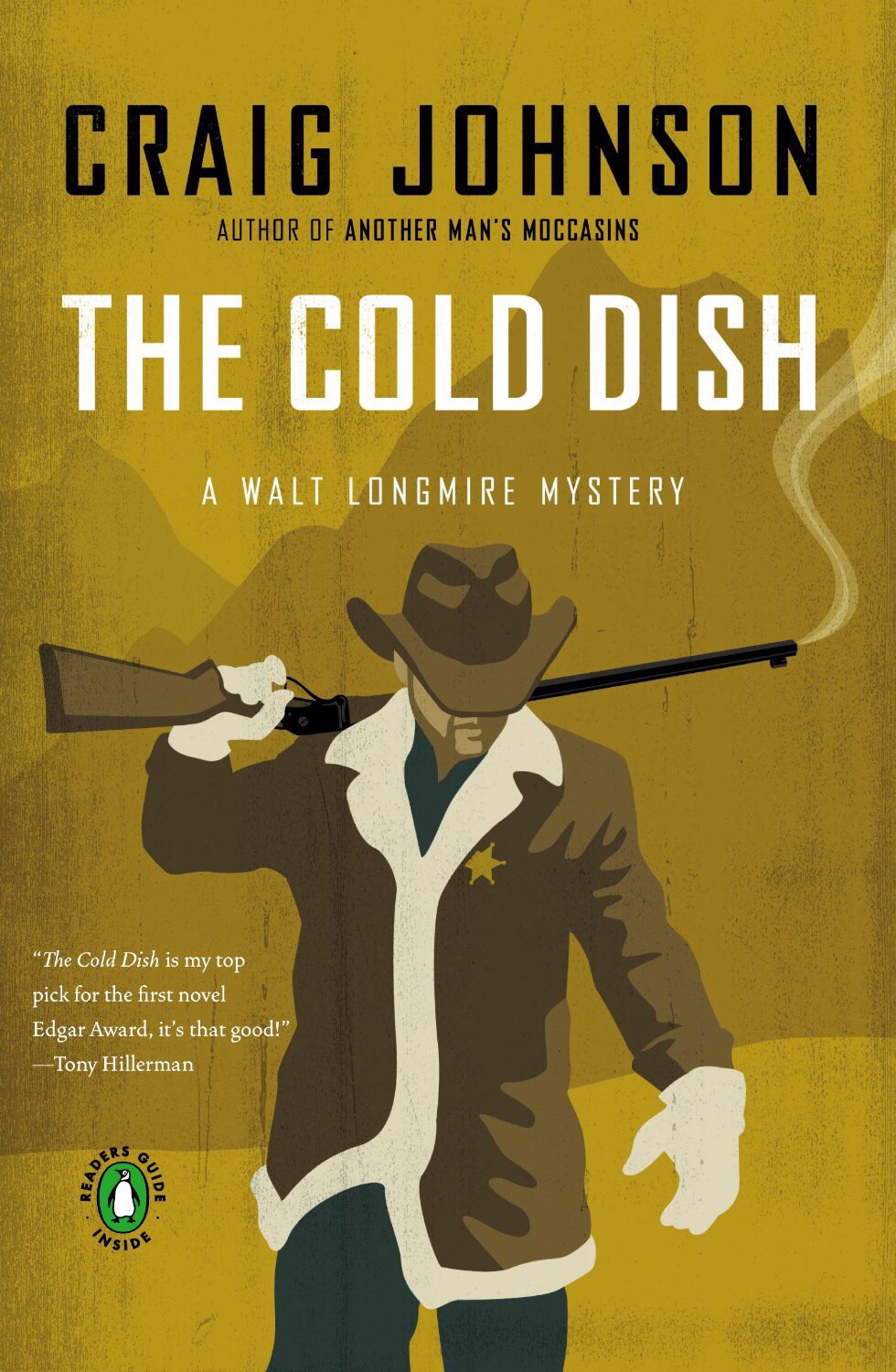
The Cold Dish, by Craig Johnston (Walt Longmire #1)

Walt Longmire is a mess. Three years widowed, he lives out of cardboard boxes in the house he half-completed with his wife. And he is marking time until his term finishes in his job, sheriff of Absaroka County in Wyoming, Cheyenne Country.  

Fortunately for Walt, his friend Henry Standing Bear decides to take him in hand and help him get his life back together. This happens just as the body of a kid, Cody Pritchard, shows up dead, killed by a gunshot that could, maybe, have been the result of a hunting accident. But when the death is recognised as no hunting accident a further problem arises: the abundance of folk who had a motive to kill the wastrel, a convicted and unrepentant rapist of a young Cheyenne girl, who got away without serving much time because of his youth. Furthermore, as the Cheyenne girl in question is Henry’s niece, and the gunshot in question was one that only maybe half a dozen folk in Absaroka County, including Henry, could manage, Walt has to start considering, reluctantly, just how well he knows his friend.

The Cold Dish is about a lot of things, not just murder and investigation. It is about depression and ageing. It’s about the relationships between the Native American and settler communities in the West. It’s about friendship and spirituality. It’s about the legacies of the conquest of the Cheyenne and their dogged resistance. And its about revenge, the dish best served cold, or not served at all maybe.

Along with Walt and Henry the cast of characters in the book are particularly well drawn and there is great warmth and humour in the midst of the bitter winter vistas in which much of the action takes place. It is a potent combination of narrative, reflection and character that has made the Longmire series such a success. Once visited, it is difficult to imagine not wanting to return to Absaroka County.

Jack Kennedy: Elusive Hero, by Chris Matthews

 Jack Kennedy said the reason that people read biography is to answer the question, “What was he like?” With this fine biography Chris Matthews tries to answer this basic question about JFK himself.

The result is an affectionate, though clear-sighted, biography of Kennedy charting his path from sickly second son of Joseph Kennedy Senior, to President of the United States. It is a short book, only 400 pages or so with equal weight to each chapter of his life, from his childhood to his presidency.

There are many bad things one can say about JFK, from his almost pathological womanising and frequently callous treatment of his wife, Jackie, to his stupid decision to support an invasion of Cuba at the Bay of Pigs, to his escalation of the US involvement in Vietnam and his acquiescence in the coup against, and assassination of, South Vietnamese President Diem.

 And yet… even when all this is considered there is a greatness about Kennedy which even the most damning assessments of him cannot deny. From his earliest days he displayed an extraordinary indomitability of spirit:  when his life was threatened by ill-health; when his PT boat was sunk by a Japanese ship and he displayed enormous fortitude in saving his crew; in his post war efforts in politics; and finally to his election to the Presidency. As President he showed himself on the right side of history and progress more often than not, introducing an economic stimulus to reduce unemployment, bringing the weight of the Presidency to bear in support of civil rights, and in a sustained focus on a nuclear test ban treaty as a first step in de-escalation of the arms race.

But Jack Kennedy’s historical greatness would be guaranteed by one thing: his comportment during the Cuban Missiles Crisis. As Bobby Kennedy noted, “if any one of half a dozen [others] were President the world would have been very likely plunged into catastrophic war,” a war that would have ended humanity.

 During this crisis, Kennedy faced down the hawks amongst his own advisers, rejecting their advice to immediately attack Cuba in favour of a more cautious naval blockade of the island. It has subsequently emerged that had he followed that advice it would have precipitated a nuclear war. As a result Jack Kennedy, the junior naval officer from the Pacific theatre of the Second World War, proved Clemenceau’s dictum, “War is too important to be left to the generals.”

Jack Kennedy saved the world. Shortly after the forces of reaction had him killed and then conspired to assassinate his character and historical achievements. But still there is this, as Chris Matthews puts it, “In the time of our greatest peril, at the moment of ultimate judgement, an American president kept us from the brink, saved us really, kept the smile from being stricken from the planet. He did that. He, Jack Kennedy.”

Sixkill, by Robert B Parker

IMG_0424 Ah Spenser! We have been too long apart!

This time he is corralled by his police captain buddy, Martin Quirk, to investigate a suspected rape-murder by a Hollywood actor, Jumbo Wilson. Quirk is worried that Jumbo is being unfairly railroaded for the killing, and constrained by police politics from investigating more properly he asks Spenser to have a look. In spite of the fact that Jumbo is an A-list arsehole, Quirk baulks at the thought to imprisoning an innocent man.

Okay! So the premise for this Spenser story is a mite implausible. But that is not why you pick up a Spenser novel. No: Spenser is one of that long tradition of gumshoes who owe more to La Morte d’Arthur than Serpico. He is an honourable man of violence fighting for justice in spite of the cost even though no one else particularly cares. And the ensuing events prompted by Spenser’s investigation provide a violently entertaining excursion through a nexus of Hollywood and criminal underworlds.

In this novel Hawk is off in Central Asia for no apparent reason (I presume his own series?) so Spenser picks up another side kick, Zebulon Sixkill of the title (“Call me Z!”), a young Cree at rock bottom in his life but looking to be better. The warmth of the ensuing friendship and their humorous philosophising are a particular pleasure: when warning about the risks associated with a confrontation with a notably homicidal gangster Spenser tells Sixkill “he may bring others.”

“So did Custer”.

Sixkill is another great chapter in the Spenser pantheon, one of the most addictive detective series I have ever come across.

Midnight’s Furies: The Deadly Legacy of India’s Partition, by Nisid Hajari

IMG_0420Famously the Indian sub-continent freed itself from British rule through a non-violent struggle led by Gandhi. However rather than this being a great triumph for passive resistance, the efforts by Congress, the Muslim League, and the Sikh leadership to carve up the spoils more than made up for it in terms of bloodshed: the Partition of India saw one of the most horrendous blood baths of the 20th Century, and the largest forced migration in human history. Sometimes these two things coincided with trains of refugees pulling into their destination stations dripping with the blood of the women, children and men passengers who had been hacked to death in ambushes.

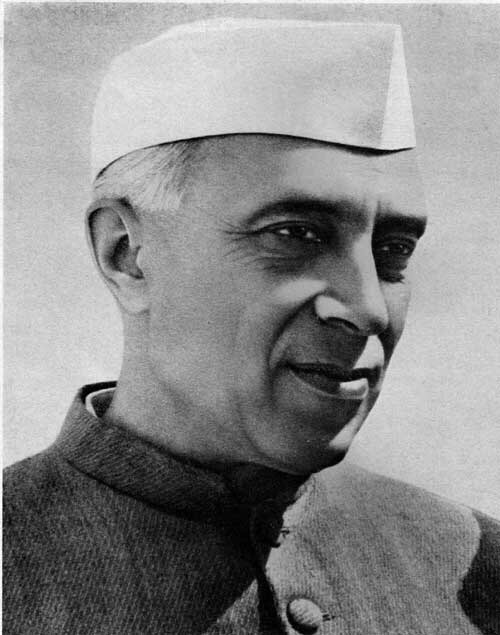
In Midnight’s Furies, Nishid Hajari details how the political calculations, petty jealousies, posturings, misjudgements and misunderstandings of the sub-continent’s political leaderships, in particular Jinnah and Nehru, led to the sectarian carnage that engulfed the creation of the modern states of India and Pakistan.

Nehru

Nehru

Hajari provides a much less sympathetic portrait of Nehru than Alex Von Tunzelman’s fine account of the same period, Indian Summer. For Hajari, Nehru failed in his responsibility as a statesman of obtaining some sort of rapprochement with Jinnah and the Muslim League, and hence undermined his vision of a secular India for all Indians. Hajari also portrays Nehru, at least in the early days of his premiership, as a man in office but not in control. His dream of a secular India uniting Hindu, Muslim and Sikh under a common citizenship bloodily undermined by the extraordinary violence of the period, which his administration seemed powerless to prevent.

Doubtless some of this was spontaneous communal violence drawing on obscure but profound local animosities and feuds. But much of it was not. Each community produced paramilitary forces, many of them highly professional as a result of the large numbers of former soldiers in their midst. These set to the butchery of their neighbours with a relish and ruthlessness that would not have been out of place in the Bloodlands of Eastern Europe a few years earlier.

This killing was frequently facilitated by the failures of Indian and Pakistani police and military to properly intervene to uphold the law. Sometimes the police and army stood idly by. Sometimes they became active participants in the slaughter.

In this regard they were echoing the equivocal leaderships of the two states: Jinnah appears to have missed the logical contradiction of wanting a secular republic for Muslims only. In India Hindus and Sikhs seemed to take their lead less from Nehru and more from Sadar Patel, the States minister in the Indian Union government. Patel regarded the ethnic cleansing of the Muslim population as a good thing, purging the state of potential fifth columnists. He also regarded the neo-fascist RSSS with considerable warmth despite their butchery of tens of thousands ordinary Indians.

Patel

Patel

With such equivocal leadership at the heart of government it is unsurprising that so many police and troops turned a blind eye to the atrocities. To his credit, when able to do little else, Nehru time and again sought out and faced down Hindu murder squads, striving to personally halt the killing which so much of his own administration was acquiescing in. Order only finally began to be restored by the intervention of Nepalese Gurkha and Southern Indian troops, who were less given to the sectarian passions of the northerners. The assassination of Gandhi by a right wing Hindu also caused some pause to the likes of Patel and the rest of the nation who perhaps only then began to glimpse the lunacy that their sectarianism was bringing.

Hajari is particularly interested in the origins of Pakistan’s current disfunction and sponsorship of terrorism, something which he shows very well. However the book also casts significant light on the current disfunctionalities of the Indian state.

Shortly before the victory for Prime Minister Modi’s BJP in the Indian general election I spoke to an Indian friend about the anticipated result. He argued that there were three strands in the Indian independence movement: the Nehruist/Ambedkarist republican tradition which has been dominant for much of Indian history; a communist/socialist strand which has enjoyed power in some of the Indian states; and finally the Hindu Nationalist tradition which Modi was now bringing to power.

However from Hajari’s account this Hindu Nationalist tradition was a very dominant one in the first Indian government, constantly undermining the visions of Nehru and Ambedkar. The caste-based apartheid, the rapes and murders of girls and young women, the enslavement of vulnerable workers that disfigure contemporary India, the world’s largest democracy, may, at least in part, be seen to derive directly from the Hindu-nationalist vision that so bloodily asserted itself in 1947 and asserts itself still to the present day.

Gandhi and Jinnah in happier days

Gandhi and Jinnah in happier days

Midnight’s Furies is a beautifully written but harrowing account of the origins of India and Pakistan. It is an important book about the origins of a contemporary Cold War, about human beings’ inhumanity to other human beings, about how magnaminty and empathy are so vital to diplomacy, and how their absence can lead to carnage.

Dark Fire, by C J Sansom

In the course of an apparently hopeless effort to defend a young woman on a charge of murdering her cousin, the lawyer Matthew Shardlake receives some unexpected help from Thomas Cromwell, King Henry VIII’s chief minister: a 12 day postponement on the case to allow him time to marshal a proper defence. In return Cromwell, requires Shardlake to undertake an investigation on his behalf: to locate the formula and means of making Greek Fire, the legendary incendiary weapon of the Byzantine empire. This is rumoured to have been discovered in the library of a monastery that Cromwell’s philistine policies have had vandalised in the course of the Dissolutions.

C J Sansom, the author, is both a historian and a lawyer, as well as a novelist. So this book, the second in his series about Shardlake, is rich in detail both of the political and religious controversies and the legal practices of the time. Shardlake, and so presumably Sansom himself, considers Cromwell as the lesser of evils that could befall the English state, but doesn’t skip over the atrocities the man was capable of: Shardlake’s memory of how Cromwell had a Catholic priest slow-roasted to death is a particularly chilling passage in the book.

In spite of the careful attention to historical detail Shardlake is the very model of a modern Londoner: humane and rational, his best friend, Guy, a Catholic physician and apothecary of Moorish origin, his side kick, Barak, a secular Jew. As such he is a companionable guide to the mad slaughterhouse that was Henry VIII’s London, a place more like a European Saudi Arabia, or Islamic State (DAESH), than the place we are familiar with in the 21st Century.

The result is a gripping and unusual crime novel, as Shardlake and Barak grapple with the parallel mysteries of a child murder and Greek Fire. I look forward to the rest of the series.

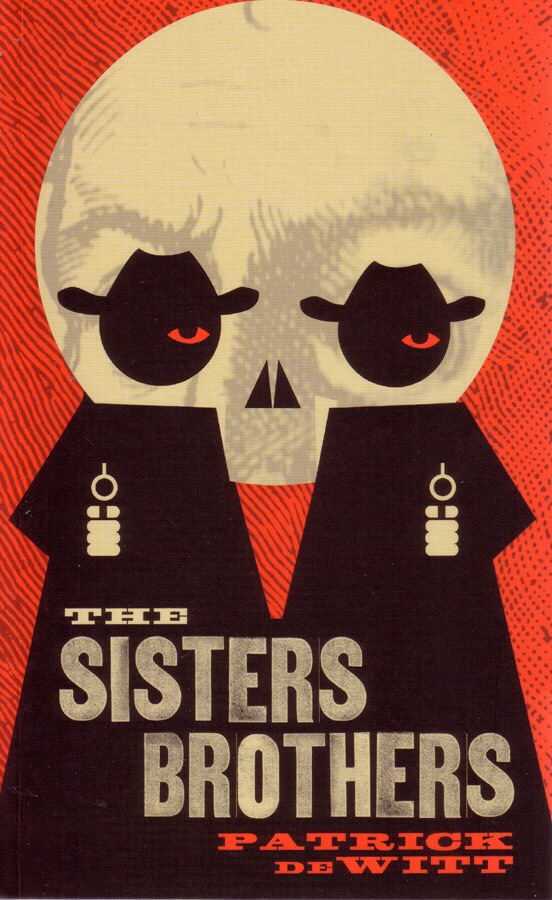
The Sisters Brothers, by Patrick de Witt

imageIn Oregon City, in the era of the California gold rush, Charlie and Eli Sisters are professional killers, though to be fair Charlie would be an enthusiastic amateur even if he wasn’t paid.

Their employer, known as the Commodore, instructs the brothers to head to San Francisco to kill a man called Hermann Kermit Warm, for unspecified infractions against the person of the Commodore.

The novel traces Charlie and Eli’s bloody odyssey in search of Warm, in the course of which they encounter a motley bunch of inhabitants of the Pacific North West. It is beautifully written and unsettling. But for the bloody violence this would be a novel of an amiable road trip.Eli, the narrator, gives the impression of wishing to be a decent man, but he is still ruthlessly violent when angry, or when he sees the logic of the situation demands it.

I am not sure there is a deeper message to the book, in spite of the entertaining philosophising that runs through the narrative. But it is still diverting ride through the old West.

The Last Battle, by Stephen Harding

imageOn 5 May 1945 arguably the last ground battle of World War 2 took place. It was a relatively small and very brief affair by the horrendous standards of that war, but it made up for that in terms of strangeness.

In the early hours of the morning of 5 May a force of Waffen SS attacked a castle in Austria, Schloss Itter, intent on massacring the prisoners there. The attack was resisted by a tiny ad hoc force of US tankers, Austrian resistants, anti-Nazi Wehrmacht and the prisoners themselves, who were a veritable who’s who of the French political and military elite, including Gamelin, Daladier, Reynaud, Weygand and the labour leaders Leon Jouhaux and Augusta Bruchelen.

It is the only known time in the war when Wehrmacht and Allied troops fought side by side.

imageimageThe Last Battle is a short but highly entertaining book, and very informative regarding the divisions and dissensions in French politics both before and after the fall of France. It is also a warm tribute to the American and German commanders during the battle, Jack Lee and Josef Gangl, both of whom could have ignored the threat to the prisoners in the castle but who instead risked their lives with the Austrian resistance to stop a blood bath.

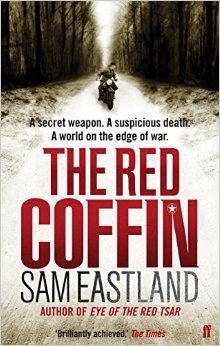
The Red Coffin, by Sam Eastland

imageInspector Pekkala is an honest cop in Stalin’s secret police, the NKVD. So Stalin gives him the job of finding the truth behind the grisly death of the head of the Soviet programme to develop a new tank, the T34, or, as the test drivers have begun to call it, the Red Coffin.

The idea of the honest investigator in a corrupt world is not a new one: Raymond Chandler’s Phillip Marlowe was conceived of as a knight errant updated to his contemporary Los Angeles. More recently Phillip Kerr’s Bernie Gunther, JK Rowling’s Commoran Strike, and Martin Cruz Smith’s great creation Arkady Renko walk similar paths.

What makes Pekkala different is his milieu, that of Stalinist Russia, and Eastland clearly knows this subject well: One comic-dreadful moment is when Stalin sends for an officer he desperately needs only to discover he has already forgotten that he has had the man liquidated.

The resulting book is highly entertaining, but I am not sure wholly convincing. The notion that Stalin would keep a few honest men about is not completely beyond the bounds of credibility: Stalin tolerated Zhukov, for example, because he knew he needed his genius to fight the Nazis.

So the idea underpinning this book is that in the increasing paranoia and terror of Stalin’s purges Pekkala, formerly a special investigator for the Tsar, is kept about for the moments when Stalin needs the truth, not just scapegoats. I am not sure that the relationship between the two would develop to such an extent that anyone would ever feel comfortable about carrying out a practical joke on the psychotic tyrant though.

The resolution of the mystery is also a bit disappointing, arriving in an series of unforced confessions. However a confrontation with a tank on the Polish border at the climax does redeem the book somewhat.

Overall it’s an entertaining book, and the characters of Pekkala and his sidekick Kirov are engaging enough to want to return to the series.

The Narrow Road to the Deep North, by Richard Flanagan

Summary: “Because courage, survival, love – all these things didn’t live in one man. They lived in them all or they died and every man with them; they had come to believe that to abandon one man was to abandon themselves.”

Dorrigo Evans doesn’t have a particularly high opinion of himself. He is an inveterate womaniser, a distant father, a disloyal husband, an excessive drinker, and a sometimes reckless surgeon. Yet, because of his time as a commanding officer of enslaved Australian prisoners of war on the Burma death railway, he is regarded as a national hero. This he regards as somewhat fraudulent, echoing the pretenses of leadership that he displayed in the camps. Dorrigo knows what he is: an officer who failed his men by allowing himself to become complicit in the war crimes of their Japanese captors.

The Narrow Road to the Deep North won the Booker prize in 2014 and trails behind it a mountain-load of praise. It deserves every accolade: it is an extraordinary meditation on war, death, heroism, trauma, love and loss. It is also one of the most difficult books I have ever read.

The centrepiece of the book is an extended account of a single day in the POW camp, echoing Solzhenitsyn’s novel of the gulag, One Day in the Life of Ivan Denisovich. I found this particularly gruelling, the pages suffused with dread for the atrocities that the author has already informed us will occur. Through this section we meet the doomed, struggling to maintain their dignity and decency in the face of the implacable brutality of Japanese militarism. Perhaps not all readers will find this such a difficult section but it took me weeks to read, unable to handle more than a few pages a day.image

I am particularly relieved that I stuck with this. The discomfort of reading about the death railway is as nothing to what those, including the author’s father, suffered on it.

And the novel is ultimately one of profound insight and devastating power: it made me cry more than once. It affirms a theme of Ian McEwan’s Atonement, that war obliterates not only life but love itself, and is unflinching in showing the reader that atrocities are committed by people as human as we are: Dorrigo’s captors go to their graves believing themselves good and patriotic people, more concerned with how they felt about killing than for the actual murders they inflicted on helpless prisoners.

But there are also more redemptive and hopeful notes. In contrast to his captors Dorrigo survives the war thinking himself a bad man, a failure and accomplice to war crimes, thinking that is a product, no doubt, of post-traumatic stress. But Flanagan shows us how, even at our most flawed, human beings may be better than we ever dare to imagine ourselves. Indeed, it may even be our flaws, sometimes, that compel us to heroism.

The Narrow Road to the Deep North is a masterpiece.