Saladin: the life, the legend, and the Islamic Empire, by John Man

Summary: An entertaining biography of the great Kurdish leader who, in the midst of war, introduced chivalry to the West

When a European army took Jerusalem in 1099 at the climax of the First Crusade, the slaughter of Muslim combatants and of Muslim and Jewish non-combatants, women, children and men, was so great that it was said the conquerors’ horses waded up to their bridles in blood. A century later when Saladin retook the city for Islam there was no such carnage. Instead Saladin allowed most of the city’s Christian population to depart in peace after paying a ransom.

Of course, as a man of his times, Saladin was not always so merciful. After inflicting a crushing defeat on Crusader forces at the battle of Hattin, Saladin had the Hospitaller and Templar survivors executed by inexperienced swordsmen whose clumsy hacking to death of the prisoners provided much sanguinary amusement for his more experienced troops.

John Man’s fast-paced, entertaining and informative biography of the great Muslim leader recounts the life and times of this legendary Kurd from relatively humble origins to enormous military and political power in spite of the the efforts of an obscure Islamic sect, the Assassins, to kill him. Over time Saladin managed to unite much of the hitherto squabbling Sunni Islamic world, welding them into a sufficient force to be able to confront the disparate Crusader states.

The peak of Saladin’s career, the battle of Hattin, opened the way to Jerusalem for him, but did not deliver him the prize. One of the few Crusader survivors of the battle was the knight Balian of Ibelin, who afterwards sought refuge in the city of Tyre while Saladin began his moves towards Jerusalem. This is where Balian’s wife resided.

Man recounts the story of how Balian sought a parole from Saladin to go and retrieve his wife, which Saladin granted. On entering Jerusalem the citizens begged Balian to remain and lead the defence of the city. Given their desperate state – most of Jerusalem’s garrison had been killed at Hattin – Balian sent a message to Saladin asking to be released from his parole, a request which Saladin again granted.

This story is one of many – alongside, for example, the one of how Saladin, in the midst of battle, sent two horses to King Richard to replace the one that had been just killed beneath him – that are frequently presented to demonstrate Saladin’s enormous chivalry. However it has always struck me as evidence of something perhaps more intriguing.

Man notes how Crusader and Muslim populations lived so close to each other that trade and even friendship often grew up. This story seems to suggest to me that what actually happened may have been less to do with abstract chivalry and more to do with a politically astute commitment to mercy. Perhaps what was really going on was an arrangement between Saladin and his friend Balian to mount a defence of Jerusalem that, after a decent show, could lead to a negotiated surrender of the city to the Muslim forces without the necessity of storm and the inevitable massacre that would result.

Whatever the underlying truth this is what ultimately happened. And the contrast between the atrocities of the Crusaders and the vastly more moderate approach of Saladin has helped to rightfully make the Muslim leader such an enduring legend in the hundreds of years since his death.

Gerry Adams: An Unauthorised Life, by Malachi O’Doherty

Summary: An impressive attempt to cut through Adam’s lies, obfuscations  and pseudo-intellectualism to understand more properly his role in war and peace-making
In her book, Every Secret Thing, Gillian Slovo’s magisterial memoir of her parents, Ruth First and Joe Slovo, she reflects on the nature of clandestine life, how deceit becomes an all pervasive thing, a way of existence and a habit of living rather than something that can be easily compartmentalised.

This phenomenon may go some way towards explaining the inscrutability of Gerry Adams, a man who has lived much of his life clandestinely: while he has always denied even membership of the organisation most observers of the North of Ireland, myself included, believe him to have been a long-time leader in the IRA, including a period up to the atrocious La Mon bombing as Chief of Staff.

Malachi O’Doherty makes a serious effort with this book to understand what makes Gerry Adams tick. While he follows a straightforward biographical narrative the book is also something of a philosophical and psychological reflection upon the man and his choices to make war and to make peace.

Throughout his entire career there seems to be one constant with Adams: his belief in the IRA as a moral absolute. Any individual who had committed themselves to this is therefore entitled to unquestioning respect irrespective of what they have done, whether it is murdering a young woman teacher like Mary Travers, or a single mother like Jean McConville, or burning civilians alive, such as at the La Mon Hotel. Anyone who criticises the perpetrators and their actions renders themselves politically suspect and morally indefensible in Adams’ eyes. It is as if Pope Urban’s promise of forgiveness of all sins for those who went on Crusade in the Eleventh Century has been purloined wholesale by Adams in his perspective on those who waged his armed struggle.

Other leaders and generals, Adams’ own description of himself, have similar perspectives on their troops. Theresa May’s stated intent to remove the British military from the scrutiny of the European Convention of Human Rights suggests a similar attitude to another group of professional killers.  Perhaps they share the understanding that, as Sherman pointed out, “war is cruelty”. So, having asked men and women to wage it, it is perhaps hypocritical to demand limits on their cruelty once it has been unleashed in what one regards as noble purpose.

I don’t agree that war should ever be unconstrained and believe that those who make war criminals of themselves should be held accountable. But this book does remind us how many of those who were caricatured as evil villains during the Troubles were enormously courageous and self-sacrificing. But courage is not the highest of human virtues – I would say compassion is. And a further thing that this book reminds us is that the dark side of courage is how it can facilitate atrocity.

I was never an admirer of Adams during the Troubles. I found his thinking at best shallow and at worst cock-eyed. I found his justifications for war glib. Adams never seems to have recognised that having claimed for his army a quasi-divine right to wage war that this may give rise to a culture in which individual members regarded their personal right to use violence as a logical continuation of that mystical claim. Nor yet does he seem to have recognised that such a culture might have some relationship to the “unauthorised” operations – murdering civilians and covering up those murders – and the sexual violence that some members indulged in, and in which the leadership seems to have acquiesced.

img_1326

John Hume and Gerry Adams

I know that Adams has the reputation of being an intellectual amongst the IRA. But true intellectualism resides in rigorous engagement and testing of your ideas with alternative concepts and perspectives. Adams never had this until he began to sit down with John Hume in a protracted dialogue that gave rise to the peace process.

O’Doherty shows that Adams was indispensable in making the peace. So in spite of all his sins and flaws he does indeed deserve the gratitude of the peoples of Ireland and Britain. Certainly when history judges him, it should be more favourable to him than to those self serving clowns in the British Establishment who, at time of publication of this gripping and elegantly written book, have put the peace at risk with their thoughtless blundering.

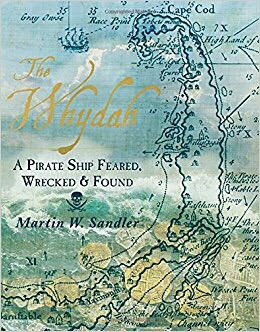
The Whydah: A Pirate Ship Feared, Wrecked and Found, by Martin W. Sandler

Summary: A fine young adult account of the heyday of piracy in the Americas, with plenty of interesting detail for the more jaded.
On the night of 26 April 1717 the pirate ship, the Whydah foundered off the coast of Cape Cod, Massachusetts, bringing to an end the short but spectacular career of Black Sam Bellemy and over 130 of his crew. They had spent the previous year raiding and looting with impressive efficiency honest merchant shipping from the Caribbean to Maine.

Of course the thing was that much of this legitimate commerce that Bellamy and his crew were so dangerously disrupting was based on the “triangular trade”, the genocidal system that captured, tortured and enslaved Africans to enrich the Western world.

The Whydah, is a narrative history for young adults focussing on the story of the ship from its launch to the discovery of its wreck. By way of full disclosure: the author, Marty Sandler, is one of my best friends in the entire world, so I was positively disposed to like this book even before I picked it up.

Having said that this is an important book. Because in focussing on this sliver of history, Marty illuminates a much wider society in a way that many, even today, would rather not contemplate.

Marty presents evidence to show pirate society, violent and avaricious as it was, to be in many ways vastly more admirable than the system of Western “civilisation” against which it rebelled and fought. For example the pirate ships were democracies, electing their officers, and amongst the very few places in the 18th Century where Blacks and Whites lived and worked as equals. Some of the pirate captains even had ethical objections to the slave trade.

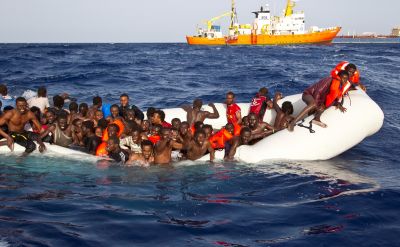
IMG_1266The Whydah is a book that will encourage young people to think and question the myths and fables their more powerful elders tell them. And for those of us who occasionally like to look out to sea, it reminds us how the horizon was once speckled with wooden boats, filled with desperate men and women, prepared to try to steal a better life from those who denied such a thing to them.
Somethings have changed since then.  Today the desperate have plastic boats.

PT 109: An American Epic of War, Survival, and the Destiny of John F Kennedy, by William Doyle

Summary: A gripping war story that gets to the heart of important truths about both war and Jack Kennedy

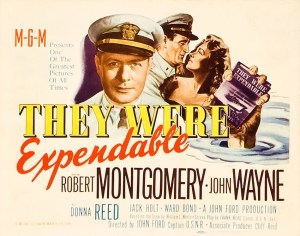
In 1945 John Ford made a cracking war movie called “They Were Expendable” about the exploits of a motor torpedo (PT) boat unit, including, of course, John Wayne, defending the Philippines against the Japanese onslaught.

The thing about the movie though, was that the capabilities of the PT boat therein portrayed were horseshit. The PT boat was a lousy weapon. Its torpedoes were close to useless as, due to technical flaws in their design, they rarely hit their targets let alone detonated. Few of the PT boats were equipped with radar though they were expected to fight in the darkest of nights. And these mahogany constructions were sent into conflict against much more heavily armed and steel armoured destroyers. This was only slightly more hopeful, in military terms, than sending a mime troupe to attack a panzer division, to borrow from Milan Kundera. Indeed in this book William Doyle notes that of the three confirmed sinkings of major ships by PT boats during the Second World War, one of them was American.

This was the branch of the Navy that Jack Kennedy, millionaire son of the former US ambassador to the Court of St James’s and best selling author of Why England Slept, joined in the Solomon Islands in 1943. It made him president.

Dave Powers, a friend and aide to Jack, once commented that, “Without PT 109 there would never have been a President John F Kennedy.” The legend of Jack’s fortitude and leadership following the sinking of his boat during a small battle in which 15 ill-equipped PT boats were sent to ineffectually attack a convoy of Japanese destroyers, was the foundation upon which Jack’s political career was built. But the story of this relatively brief episode in Jack’s relatively brief life is more important for a number of reasons, not least, after over half a century of muck raking and character assassination, it has proven pretty close to impossible to tarnish this truth of his heroism during those days.

Certainly it has been tried. Doyle notes the simmering accusation that it was Jack’s incompetence as a boat skipper that led to his boat being sunk, the only PT boat to have been sunk by ramming during the course of the war. However Doyle’s account of the ill-conceived battle in which the sinking occurs offers evidence that this is an unfair charge and that it was ill-luck on Jack’s part exploited by an imaginatively aggressive Japanese commander, Kohei Hanami, that led to the sinking. Later Kennedy, in a comment that gains enormous retrospective poignancy, noted his thoughts just before the moment of impact: “This is how it feels to be killed.”

He didn’t die then and went on to play a decisive role in saving the lives of his surviving crew. Doyle notes: “The longest Olympic swimming event staged before then, the men’s 4,000 metre freestyle race, was held only once, in 1900. Fourteen of the twenty-eight competitors… “did not finish” and the distance was promptly retired. On the afternoon of August 2, 1943, John F. Kennedy covered the same distance, plus a mile more, over open water, behind enemy lines in broad daylight…All the while he bit on a strap and towed a badly burned sailor along with him. Simultaneously … leading nine other men.. towards safety… it was an astonishing feat his crewmen never forgot.”
Once rescued with the crucial help of courageous Solomon Island scouts and an Australian Coastwatcher, he refused the option to return to the States but remained in the combat zone for months more. During that time he helped save the lives of 10 more Americans before ill-health forced him home.

For all his other flaws, these events, and those of the Cuban Missiles Crisis, more starkly than any others, show the greatness at the heart of Jack Kennedy. Indeed, it was almost certainly his experience of the chaos of warfare in the Solomons that stiffened Kennedy’s moral courage to face down the hawks in his administration and save the world from nuclear annihilation during that Crisis.

PT 109 is a gripping book about war, endurance and a young man leading in the most horrendous of circumstances.

Clausewitz On War, by Hew Strachan

Summary: A difficult introduction to a complex work

I was not very impressed by Hew Strachan’s book, The First World War: Strachan seemed to me much too enamoured with the grand strategy of that war to the exclusion of the human cost for either civilian populations, or for the ordinary soldiers who fought on the diverse battlefields of that war.

This, nevertheless, is an interesting introduction to Clausewitz’s tome, a famously difficult and unfinished work, beloved by professional soldiers and armchair militarists alike.

Some of Clausewitz’s more famous dictums are now well known, such as the idea that, “War is the continuation of politics by other means”. But this can belie the complexity of his thought which was still evolving as he wrote, based on his study and his experience of fighting in the Napoleonic wars,. His experiences with the Russian forces during Bonaparte’s 1812 invasion was particularly influential as he realised that he had participated in one of the most novel campaigns in history.

The complexity of Clausewitz’s thought means that, aside from a interesting biographical chapter, Strachan’s book is itself complex. I think I would need to read it at least twice to begin to grasp some of the ideas properly. So perhaps this is not a book meant for the casual reader but for one preparing to tackle Clausewitz’s On War itself as part of a serious programme of study.

However there is still something to be gleaned from this for the average citizen. Clausewitz remains enormously influential on policy makers and war planners, and as war continues to deface the contemporary world these are ideas which are important to understand. As Clemenceau said, and as Jack Kennedy proved during the Cuban Missiles Crisis, war is much too important to be left to the generals.

The First World War, by Hew Strachan

Summary: Forget about those working class oiks in the trenches

This is a history of the First World War from the perspective of the High Commands. There is little consideration of the experiences of the ordinary soldiers, or of the civilian populations, though the appalling depredations that they experienced in many places are noted.

Instead Strachan endeavours to show the war for the world struggle across multiple fronts that it was, rather than confine his consideration to the trenches of the Western Front. As far as these are concerned, he notes, the “horror of the trenches” was much less horrible than the horror of mobile warfare and open battle when the majority of the casualties occurred.

Amongst the themes that the book explores is the idea that this was a purposeful war in which the liberalism of the Entente – Britain, France, Russia, and latterly the USA – confronted the conservative militarism of the Central Powers – Germany, Austria-Hungary, and the Ottoman Empire. From this emerged the geo-politics of the Twentieth and now Twenty-First centuries.

He also argues that the legend of “lions led by donkeys” regarding the armies, particularly of the British, is unfair. Instead he argues that the generals when confronted with the new challenges of industrialised warfare learned to develop new and effective tactics and operational approaches.

And yet – when all is said and done even with Strachan’s cogent survey of the strategy and conduct of the war lords – the First World War continues to leave an impression of a war blundered into by a group of imperial leaders with little concern for the their people. Strachan notes that this perspective grew in popularity in the years after the war. But it was certainly present in some form during the war when the combatant poet Wilfred Owen noted how these “old men” were, content, individually and collectively, to watch “half the seed of Europe” slaughtered “one by one”.

Strachan’s erudition means that this book is not one that can be set aside lightly. But it’s sympathy for the high commanders and lack of attention to the plights of the ordinary soldiers and civilians does leave me with a niggling feeling that perhaps, as Dorothy Parker once suggested of another book, it should be flung aside with great force.

Reflections on St Patrick

For many, if they think of him as anything other than an excuse for a party, St Patrick, a Fifth Century priest, may seem a remote figure. But his life still has some powerful contemporary resonances.

Patrick was not born Irish. He was a Briton. Different parts of Britain claim him, but he came from a Romanised family somewhere on the west coast. As a young man he was kidnapped by an Irish raiding party and trafficked across the Irish Sea into slavery. After six years he escaped and returned to his family, and his studies, in Britain. Eventually, after study in other parts of Europe, he became a priest.  His story would probably not be one that is remembered by history but for the fact that after this, in a remarkable display of personal magnanimity, he decided to return to Ireland, the land that had enslaved him, as a missionary.

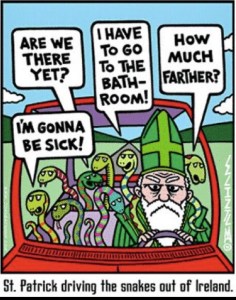
Are you all right in the back there lads?

There are many fanciful legends associated with Patrick, including how he rid the country of snakes. But he left two written documents: his Confessions, a spiritual auto-biography from which many of the details of his life are known; and his Letter to the Soldiers of Coroticus, a furious protest against the murder and enslavement of members of Patrick’s congregation by a raiding party of pirates, probably composed of Patrick’s fellow Britons. The anger of this protest was doubtless further sharpened by Patrick’s own bitter memory of the violence of slavery.

There are many powerful echoes from Patrick’s life with the contemporary world: For example, in a world where poisonous xenophobia seems to have taken hold in so many places the story of Patrick’s transformation from immigrant to an emblem of the country he adopted as his own stands in counterpoint. And in his protest against the war crimes of Coroticus and his men Patrick, the former slave, gave nascent voice to the ideals of human rights and anti-slavery in Western Europe.

Across the world today other immigrants work to make their adopted countries better places, other slaves and former slaves resist the systems of slavery that still persist. St Patrick’s Day is a good time to remember them, and remember that after the day’s parties a long struggle lies ahead of us to fulfil some of the ideals that they, and Patrick, represent.

Jefferson, Hamilton and moral courage in the struggle against slavery.

Excerpt from a lecture to Gresham College, London, 23 Feb 2017

To this day political figures across the globe covet the title “the new Wilberforce”, in recognition of the towering role that he played in efforts to bring the trans-Atlantic slave trade to an end. This, perhaps, shouldn’t be too surprising. In any given age there are no shortage of people who feel that slavery is wrong.

But, as Batman teaches us, it is not what we feel, but what we do, that defines us. So, anyone who dips their toe into the slavery debate today with dreams of future glory should be aware, that if they lack the necessary moral and political courage, they may become merely “a new Jefferson” rather than a “new Wilberforce”.

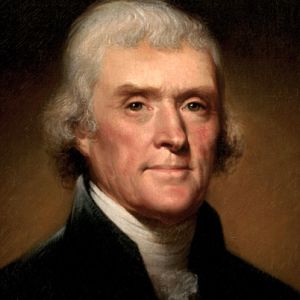
thomas-jefferson-9353715-1-402

Thomas Jefferson

Thomas Jefferson was one of the great geniuses of his age and a declared opponent of slavery. Some of his writings on the subject were described by contemporaries such as John Adams, the United States’ second president, as being more valuable than diamonds in the anti-slavery cause. And yet the vision of the American Republic that he offered was impossible without slavery, and as President he did nothing to end slavery save for a mealy mouthed assertion that it was a task for later generations.

That argument may have comforted him as he sat in his study on his Monticello plantation in Virginia overseeing his own enslaved children. But it was not an argument which impressed Jefferson’s contemporary Alexander Hamilton, who sought, as the United States’ first treasury secretary, to put his anti-slavery convictions into practice by establishing an economic system that would reward free labour over slavery in the hope that that would erode the slave economy and hence end the brutal system.

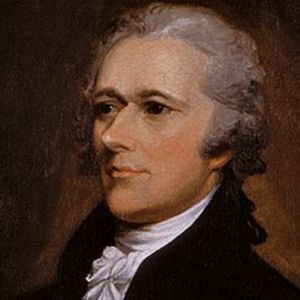
alexander-hamilton-9326481-1-401

Alexander Hamilton

While that did not directly bring an end to slavery in the United States the economic system Hamilton put in place did ultimately provide the North, under Lincoln, with the economic capacity to crush the South and obtain the legal abolition of slavery half a century after Hamilton’s own death: So if Lincoln is the Father of Emancipation in the United States, I would argue that Hamilton is its Grandfather.

And in spite of his incredible gifts Jefferson did not confront the fundamental systems and institutions of slavery when he had the most power to do so. And across the world we see that still.

It will perhaps be a matter for comment by some future historians that at this shameful period of European history some of the most vocal European leaders on the issue of slavery have been noticeably negative with regard to the formulation of an effective pan-European response to the refugee crisis.  It is the absence of this, more than anything else, which has contributed so much to increasing the risks of human trafficking to Europe from the wars of the Middle East. Furthermore the xenophobia and prejudice that have been allowed to poison the political environment against migrants have further betrayed the struggle against slavery by increasing the opportunities for violence and exploitation.

It is a hard lesson of history, that when the moral courage of political leaders fails in the face of prejudice and vested interests, it is almost always the vulnerable who are the ones to pay in the bloody routine of violence that ensues. And, as was true in the days of Jefferson, it is not rhetoric but moral courage that defines leadership and shapes the history of the times.

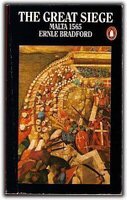
The Great Siege: Malta 1565, by Ernle Bradford

img_1080In 1564 the Ottoman Sultan, Suleiman the Magnificent, decided to try to put paid, once and for all, to the religious-fanaticism tinged piracy on Turkish shipping of the Knights of St John. To do this he aimed to capture their base on the island of Malta. By early summer 1565 he had put his plan in motion and managed to land a force of over 30,000 crack troops on the island to confront the ten thousand or so knights and men-at-arms under the command of the Order.

So began the first great siege of Malta, and it was an extraordinarily vicious and bloody affair.

Ernle Bradford (1922-86), the author, was a participant in the second great siege of Malta, during the Second World War, as a navigator on a Royal Navy destroyer. So he brings to this account of the battle a strong sense of what it means to wage war on this island.

Bradford is a generous and fair-minded chronicler of the battle, recognising the extraordinary courage of both Christian and Ottoman forces, and the extraordinary barbarism with which they fought each other. For example frequently the Ottomans would execute their prisoners by means of bastinado. Or, following the Turkish capture of one of the Knights’ forts, St Elmo, La Valletta, the Grand Master of the Knights, ordered the Ottoman positions to be bombarded with the heads of murdered Turkish prisoners of war. Such courage and barbarism had the same roots: a belief in the evil of their opponents and a conviction that death in the Holy War in which they fought was the noblest thing, and that it would lead to immediate transportation to paradise.

The outcome of the battle shaped decisively the course of European and Ottoman history. But more than that, the conduct of the battle remains vitally relevant. It gives an insight into the frightening violence that can emerge when human beings believe themselves in possession of so absolute a truth that it not only allows them, but requires them, to be the judge of others.

Free State of Jones: film review

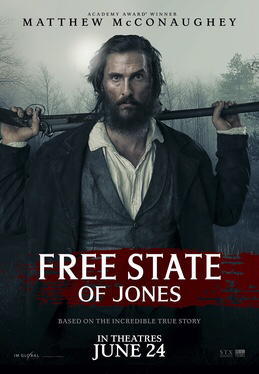
Free State of Jones, got rather mixed reviews when it was released. Having finally watched it I cannot really understand why that should be. Perhaps, paradoxically, because it is a serious movie which tells an important story that eschews many of the normal Hollywood cliches?

The movie focuses on a little known aspect of the American Civil War in which a guerrilla army of former slaves and deserters, drove the Confederacy out of a portion of Mississippi. Matthew McConaughey plays the guerrilla leader, Newton Knight, a Confederate deserter disgusted by the pointless brutality of the civil war who decides he is no longer going to fight for a system that he does not believe in. What begins initially as a flight from the authorities in which he finds refuge with a small group of runaway slaves slowly grows into a rebellion against the brutal and corrupt Confederacy as Knight begins to transform his small group of fugitives into an increasingly potent army.

The climax of their military campaign, as depicted in the film, was the capture of the town of Ellisville, after which they haul down the flag of the racist Confederacy that is flying over the Jones County courthouse, and raise the Stars and Stripes instead. That’s the bit that made me cry. I found it a particularly poignant moment given the intent of so many of Donald Trump’s acolytes to figuratively and literally replace the US flag with the Stars and Bars of the Confederacy instead.

One would normally expect the movie to end there on that triumphant note. But it does not. Instead it follows the characters through the post Civil War betrayals of their dreams of justice, and the resurgence, through Ku Klux Klan terrorism and federal government failures, of the systems of segregation which replaced the systems of slavery.

It might be the most honest movie yet about the Civil War and its aftermath. In short it is a sombre and downbeat movie about the betrayal of brave patriots who deserved much better from those they fought for.

But for all that the movie is not without hope: the love and friendship between the central characters played with great subtlety and conviction by McConaughey, the always sublime Gugu Mbatha-Raw, Mahershala Ali and Keri Russell, is something, the film asserts, that the world will finally recognise as shaming the the corrupt and the racist.

It is a fine movie that deserves to be recognised as an important one and seen by many more people. Whether that happens or not it will remain a rich credit to everyone involved in its making.