The First World War, by Hew Strachan

Summary: Forget about those working class oiks in the trenches

This is a history of the First World War from the perspective of the High Commands. There is little consideration of the experiences of the ordinary soldiers, or of the civilian populations, though the appalling depredations that they experienced in many places are noted.

Instead Strachan endeavours to show the war for the world struggle across multiple fronts that it was, rather than confine his consideration to the trenches of the Western Front. As far as these are concerned, he notes, the “horror of the trenches” was much less horrible than the horror of mobile warfare and open battle when the majority of the casualties occurred.

Amongst the themes that the book explores is the idea that this was a purposeful war in which the liberalism of the Entente – Britain, France, Russia, and latterly the USA – confronted the conservative militarism of the Central Powers – Germany, Austria-Hungary, and the Ottoman Empire. From this emerged the geo-politics of the Twentieth and now Twenty-First centuries.

He also argues that the legend of “lions led by donkeys” regarding the armies, particularly of the British, is unfair. Instead he argues that the generals when confronted with the new challenges of industrialised warfare learned to develop new and effective tactics and operational approaches.

And yet – when all is said and done even with Strachan’s cogent survey of the strategy and conduct of the war lords – the First World War continues to leave an impression of a war blundered into by a group of imperial leaders with little concern for the their people. Strachan notes that this perspective grew in popularity in the years after the war. But it was certainly present in some form during the war when the combatant poet Wilfred Owen noted how these “old men” were, content, individually and collectively, to watch “half the seed of Europe” slaughtered “one by one”.

Strachan’s erudition means that this book is not one that can be set aside lightly. But it’s sympathy for the high commanders and lack of attention to the plights of the ordinary soldiers and civilians does leave me with a niggling feeling that perhaps, as Dorothy Parker once suggested of another book, it should be flung aside with great force.

Reflections on St Patrick

For many, if they think of him as anything other than an excuse for a party, St Patrick, a Fifth Century priest, may seem a remote figure. But his life still has some powerful contemporary resonances.

Patrick was not born Irish. He was a Briton. Different parts of Britain claim him, but he came from a Romanised family somewhere on the west coast. As a young man he was kidnapped by an Irish raiding party and trafficked across the Irish Sea into slavery. After six years he escaped and returned to his family, and his studies, in Britain. Eventually, after study in other parts of Europe, he became a priest.  His story would probably not be one that is remembered by history but for the fact that after this, in a remarkable display of personal magnanimity, he decided to return to Ireland, the land that had enslaved him, as a missionary.

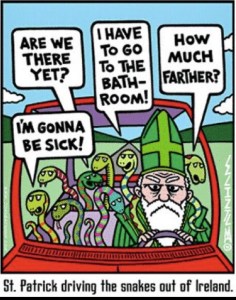
Are you all right in the back there lads?

There are many fanciful legends associated with Patrick, including how he rid the country of snakes. But he left two written documents: his Confessions, a spiritual auto-biography from which many of the details of his life are known; and his Letter to the Soldiers of Coroticus, a furious protest against the murder and enslavement of members of Patrick’s congregation by a raiding party of pirates, probably composed of Patrick’s fellow Britons. The anger of this protest was doubtless further sharpened by Patrick’s own bitter memory of the violence of slavery.

There are many powerful echoes from Patrick’s life with the contemporary world: For example, in a world where poisonous xenophobia seems to have taken hold in so many places the story of Patrick’s transformation from immigrant to an emblem of the country he adopted as his own stands in counterpoint. And in his protest against the war crimes of Coroticus and his men Patrick, the former slave, gave nascent voice to the ideals of human rights and anti-slavery in Western Europe.

Across the world today other immigrants work to make their adopted countries better places, other slaves and former slaves resist the systems of slavery that still persist. St Patrick’s Day is a good time to remember them, and remember that after the day’s parties a long struggle lies ahead of us to fulfil some of the ideals that they, and Patrick, represent.

Jefferson, Hamilton and moral courage in the struggle against slavery.

Excerpt from a lecture to Gresham College, London, 23 Feb 2017

To this day political figures across the globe covet the title “the new Wilberforce”, in recognition of the towering role that he played in efforts to bring the trans-Atlantic slave trade to an end. This, perhaps, shouldn’t be too surprising. In any given age there are no shortage of people who feel that slavery is wrong.

But, as Batman teaches us, it is not what we feel, but what we do, that defines us. So, anyone who dips their toe into the slavery debate today with dreams of future glory should be aware, that if they lack the necessary moral and political courage, they may become merely “a new Jefferson” rather than a “new Wilberforce”.

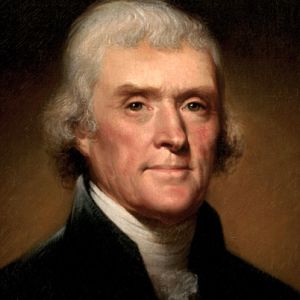
thomas-jefferson-9353715-1-402

Thomas Jefferson

Thomas Jefferson was one of the great geniuses of his age and a declared opponent of slavery. Some of his writings on the subject were described by contemporaries such as John Adams, the United States’ second president, as being more valuable than diamonds in the anti-slavery cause. And yet the vision of the American Republic that he offered was impossible without slavery, and as President he did nothing to end slavery save for a mealy mouthed assertion that it was a task for later generations.

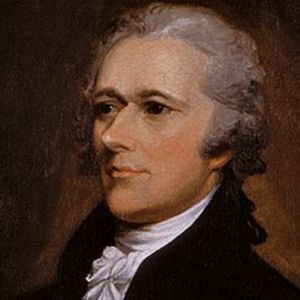
That argument may have comforted him as he sat in his study on his Monticello plantation in Virginia overseeing his own enslaved children. But it was not an argument which impressed Jefferson’s contemporary Alexander Hamilton, who sought, as the United States’ first treasury secretary, to put his anti-slavery convictions into practice by establishing an economic system that would reward free labour over slavery in the hope that that would erode the slave economy and hence end the brutal system.

alexander-hamilton-9326481-1-401

Alexander Hamilton

While that did not directly bring an end to slavery in the United States the economic system Hamilton put in place did ultimately provide the North, under Lincoln, with the economic capacity to crush the South and obtain the legal abolition of slavery half a century after Hamilton’s own death: So if Lincoln is the Father of Emancipation in the United States, I would argue that Hamilton is its Grandfather.

And in spite of his incredible gifts Jefferson did not confront the fundamental systems and institutions of slavery when he had the most power to do so. And across the world we see that still.

It will perhaps be a matter for comment by some future historians that at this shameful period of European history some of the most vocal European leaders on the issue of slavery have been noticeably negative with regard to the formulation of an effective pan-European response to the refugee crisis.  It is the absence of this, more than anything else, which has contributed so much to increasing the risks of human trafficking to Europe from the wars of the Middle East. Furthermore the xenophobia and prejudice that have been allowed to poison the political environment against migrants have further betrayed the struggle against slavery by increasing the opportunities for violence and exploitation.

It is a hard lesson of history, that when the moral courage of political leaders fails in the face of prejudice and vested interests, it is almost always the vulnerable who are the ones to pay in the bloody routine of violence that ensues. And, as was true in the days of Jefferson, it is not rhetoric but moral courage that defines leadership and shapes the history of the times.

The Great Siege: Malta 1565, by Ernle Bradford

img_1080In 1564 the Ottoman Sultan, Suleiman the Magnificent, decided to try to put paid, once and for all, to the religious-fanaticism tinged piracy on Turkish shipping of the Knights of St John. To do this he aimed to capture their base on the island of Malta. By early summer 1565 he had put his plan in motion and managed to land a force of over 30,000 crack troops on the island to confront the ten thousand or so knights and men-at-arms under the command of the Order.

So began the first great siege of Malta, and it was an extraordinarily vicious and bloody affair.

Ernle Bradford (1922-86), the author, was a participant in the second great siege of Malta, during the Second World War, as a navigator on a Royal Navy destroyer. So he brings to this account of the battle a strong sense of what it means to wage war on this island.

Bradford is a generous and fair-minded chronicler of the battle, recognising the extraordinary courage of both Christian and Ottoman forces, and the extraordinary barbarism with which they fought each other. For example frequently the Ottomans would execute their prisoners by means of bastinado. Or, following the Turkish capture of one of the Knights’ forts, St Elmo, La Valletta, the Grand Master of the Knights, ordered the Ottoman positions to be bombarded with the heads of murdered Turkish prisoners of war. Such courage and barbarism had the same roots: a belief in the evil of their opponents and a conviction that death in the Holy War in which they fought was the noblest thing, and that it would lead to immediate transportation to paradise.

The outcome of the battle shaped decisively the course of European and Ottoman history. But more than that, the conduct of the battle remains vitally relevant. It gives an insight into the frightening violence that can emerge when human beings believe themselves in possession of so absolute a truth that it not only allows them, but requires them, to be the judge of others.

Free State of Jones: film review

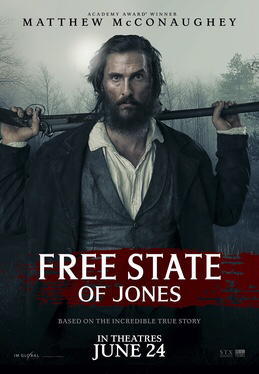
Free State of Jones, got rather mixed reviews when it was released. Having finally watched it I cannot really understand why that should be. Perhaps, paradoxically, because it is a serious movie which tells an important story that eschews many of the normal Hollywood cliches?

The movie focuses on a little known aspect of the American Civil War in which a guerrilla army of former slaves and deserters, drove the Confederacy out of a portion of Mississippi. Matthew McConaughey plays the guerrilla leader, Newton Knight, a Confederate deserter disgusted by the pointless brutality of the civil war who decides he is no longer going to fight for a system that he does not believe in. What begins initially as a flight from the authorities in which he finds refuge with a small group of runaway slaves slowly grows into a rebellion against the brutal and corrupt Confederacy as Knight begins to transform his small group of fugitives into an increasingly potent army.

The climax of their military campaign, as depicted in the film, was the capture of the town of Ellisville, after which they haul down the flag of the racist Confederacy that is flying over the Jones County courthouse, and raise the Stars and Stripes instead. That’s the bit that made me cry. I found it a particularly poignant moment given the intent of so many of Donald Trump’s acolytes to figuratively and literally replace the US flag with the Stars and Bars of the Confederacy instead.

One would normally expect the movie to end there on that triumphant note. But it does not. Instead it follows the characters through the post Civil War betrayals of their dreams of justice, and the resurgence, through Ku Klux Klan terrorism and federal government failures, of the systems of segregation which replaced the systems of slavery.

It might be the most honest movie yet about the Civil War and its aftermath. In short it is a sombre and downbeat movie about the betrayal of brave patriots who deserved much better from those they fought for.

But for all that the movie is not without hope: the love and friendship between the central characters played with great subtlety and conviction by McConaughey, the always sublime Gugu Mbatha-Raw, Mahershala Ali and Keri Russell, is something, the film asserts, that the world will finally recognise as shaming the the corrupt and the racist.

It is a fine movie that deserves to be recognised as an important one and seen by many more people. Whether that happens or not it will remain a rich credit to everyone involved in its making.

The Other Side of Silence, by Philip Kerr

It’s 1956 and Bernie Gunther, social democratic Berlin detective, and former whipping boy of Heydrich and Goebels, is living incognito on the French Rivera, working as a hotel consierge with only a regular bridge game by way of diversion. However, as usual, trouble, in the form of a former Gestapo acquaintance intent on blackmailing the English novelist, Somerset Maugham, finds Bernie.

While the main action in this novel relates to the Cold War, significant parts of what happens find their origin much deeper, in Nazi era Germany, and in particular the 1945 Battle of Königsberg that has featured in other novels of the series, in which Bernie was captured by the Soviets. For Bernie “the past is not dead, it is not even past,” as William Faulkner put it elsewhere.

The same can also be said for the character of Somerset Maugham in this novel, whose clandestine life as a British agent and as a homosexual comes back to haunt him.

The Bernie Gunther series is a particularly rich and wry meditation on history. This instalment is no exception, and as always Bernie remains an engaging guide though Europe’s shameful past. True he has become morally diminished by years of war and bloodshed, but he still struggles to hold on to a sense of humour and some modicum of basic human decency in the midst of it all. And that, sometimes, may be the best any of us can hope for.

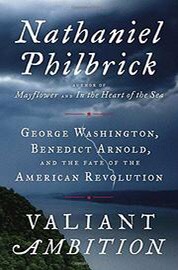
Valiant Ambition – George Washington, Benedict Arnold and the fate of the American Revolution, by Nathaniel Philbrick

Valiant Ambition is a sequel to Philbrick’s Bunker Hill. That prior book dealt with the origins of the American War of Independence in Boston, and covered key events including the Boston Massacre, the Tea Party, the initial clash of arms at Lexington and Concord, Bunker Hill, where the American’s didn’t shoot until they could see “the whites of their eyes”, and Washington assuming command on the death of General Warren and finally driving the British from the city.

This book takes up the story with Washington’s incompetent defence of New York, his retreat into New Jersey and crossing of the Delaware in a desperate attempt to maintain some cohesion to his army, before his extraordinarily courageous counter attack, re-crossing the Delaware in mid-winter.

img_1012

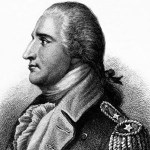
Benedict Arnold

In parallel with Washington misadventures Philbrick describes the altogether more effective military exploits of Benedict Arnold, whose extraordinary courage and aggressive instincts time and time again thwarted British stratagems to snuff out the rebellion.

Arnold’s name has become a byword for perfidy in the United States. But Philbrick reminds us just how vital his role was in securing American independence. Philbrick notes how it was American victory in the Saratoga campaign which convinced France to enter the war on the side of the United States, and that it was Arnold’s actions at those battles that, more than anyone else, secured the victory.

But Arnold was a particularly thin skinned soul, and his shoddy treatment by the Continental Congress stoked his alienation eventually leading him to explore the possibility not only of defecting to the British, but inflicting a devastating blow to American independence by surrendering the fortress at West Point.

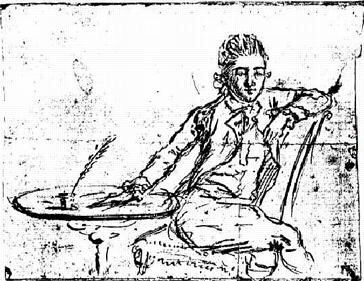
Self portrait of John Andre

Towards this end he established a line of communication with Major John Andre, a young British officer who had risen to the role of adjudant to Sir Henry Clinton, the British commander in New York. By Philbrick’s account Andre is not the honourable officer of legend, brought low also by Arnold’s treachery. Rather Philbrick notes that he was a hugely charming and erudite officer but a thoroughly ambitious one with a ruthless streak, previously demonstrated by is involvement in actions that verged on being war crimes.

Philbrick argues that it was Arnold’s treason that was decisive in uniting the nation behind the cause of independence: one could get only so far with the inspiration of the heroic Washington, he argues. What the young nation really needed was a villain and Arnold, previously the most effective battlefield general in the American army, filled that role to perfection.

It is an intriguing tale. Doubtless Philbrick is already working on a follow-up.

The Human Rights Legacy of Roger Casement

From a talk given as part of the New Perspectives on 1916 series, organised by the Sheehy Skeffington Language School, Castlewellan, Co. Down

Casement’s revolutionary nationalism often overshadows his considerably greater achievements as a human rights and anti-slavery activist. So I would like to take the opportunity to consider in greater detail this contribution before reflecting upon Casement’s continuing legacy as one to the Twentieth Centuries towering human rights figures.

The Congo Investigaton

Casement had considerable experience of various parts of Africa, from his work in commercial enterprises, before he joined the British Consular service. Adam Hochschild, in his extraordinary book King Leopold’s Ghost, notes how Casement’s reports frequently drew attention to the atrocities committed by colonial authorities against local Africans. But this was mere prologue to Casement’s first major contribution to the field of human rights: his official 1903 investigation into the abuses in the Congo by King Leopold of Belgium.

Leopold had been granted personal possession of the Congo at the 1885 Berlin conference, in which the European powers carved up Africa, and he proceeded to plunder it with ruthless abandon, all the while telling the world that he was undertaking a civilising mission to develop the country and protect its peoples.

Hochschild, notes how in 1907 an exhibition of Congalese art toured Europe, no doubt to show how Leopold’s patronage of the country was an enlightened one. To this day the Congalese art of Angola and Congo is very distinctive. I remember the first time I encountered it in the markets of Angola where I worked during the civil war, and the shock of familiarity that it brought. Because it was at this exhibition that Picasso and others first encountered Congalse art and were inspired to experiment with cubism, something I had previously presumed was a distinctly European art form, but which I discovered was in fact a very African one.

But the wealth that Leopold was interested in was not art but ivory and, most disastrously for the human beings who lived in Congo, rubber.

The end of the 19th Century saw a surge in demand for rubber and the catalyst for this demand was the 1890 invention, by John Dunlop in Belfast, of the pneumatic tire, the first of which Dunlop fitted to his son’s tricycle. This new technology contributed to an increased interest in cycling and with the advent of the automobile yet more demand for rubber.

This was a demand that Leopold was more than happy to try to satisfy. And, in order to satisfy it he oversaw a dramatic escalation of violence and slavery in Congo.

One common punishment for the failure to satisfy the quotas for rubber demanded by Leopold’s officials was the hacking off of hands. But this was by no means the worst of the depredations brought by Leopold’s reign in the Congo.

Casement recorded in 1887, before he became a British Consul, a conversation he had with a member of Leopold’s private army, the Force Publique, who told him how he paid his soldiers the equivalent of two and a half pence “per human head that they brought him in the course of any military operation he conducted. He said it was to stimulate their prowess in the face of the enemy.”

In 1899 another state officer told an American missionary, Ellsworth Faris, about the killing squads he had under his command, stating that each time his corporal “goes out to get rubber, cartridges are given to him. He must bring back all not used and for every one used he must bring back a right hand.” This officer told the missionary that in 6 months in one part of the Congo his men had used 6,000 cartridges. But, Faris noted, it must mean that more than 6,000 people had been killed or mutilated as he had been told repeatedly that the soldiers killed children with the butts of their guns.
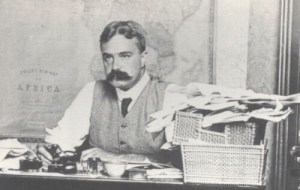
img_0978One of the first people to realise what was happening in the Congo was a young British shipping clerk called Edmund Morel. Morel, who was based in Antwerp, was involved in shipping cargo to Congo and also overseeing the cargos that returned loaded with what Leopold was telling the world was the results of a legitimate trade with the place. But while the cargos coming back were enormously rich, including rubber and ivory, the products going out were predominantly military stores, firearms, ammunition and whips.

Morel thought about this for some time and realised that the only explanation for such a lopsided trade could be that what was happening in the Congo was not fair trade but plunder. Indeed this was plunder that was being facilitated by enslavement and mass murder on almost industrial scales.

Casement’s 1903 report was one of the most high profile and damning indictments of Leopold’s reign in the Congo. It was commissioned following considerable pressure and agitation by Morel and his allies in parliament. Following the passage of a resolution in May that year in the House of Commons, “that the Congo natives [as the human residents were typically called in those days] should be governed with humanity”, the British government commissioned Casement, then its consul at Boma in the Congo Free State, to investigate the human rights situation.

Casement was already keenly aware from his years in Africa just what the nature of Leopold’s rule was. But this commission gave him the opportunity to do something about it.

In order to conduct his research Casement hired a steam boat from some missionaries and travelled for three and a half months through the upper Congo Basin. As he prepared to set out he knew that the trip was going to be a difficult one and noted an African proverb: “A man does not go through thorns unless a snake is after him, …or he is after a snake. I’m after a snake. And please God I’ll scotch it.”

In the course of these investigations he interviewed workers, overseers and mercenaries throughout the region, including 17 days at Lake Tumba where the state ran directly its rubber slavery operations. He described his expedition as “breaking into the thieves’ kitchen.”

The eyewitness report that Casement delivered in 1904 detailed the devastation that Leopold’s rule brought to individuals and communities. Large areas of the country had been depopulated. The use for forced labour was systemic and torture, mutilation and murder routine and practiced with impunity by state officials.

It was on his return to Britain and Ireland to present the report that Casement and Morel finally met for the first time. And, during a subsequent meeting in the Slieve Donard hotel in Newcastle they agreed to establish the Congo Reform Association to campaign for an end to Leopold’s atrocities. Morel was the public face and voice of this movement because Casement was still a civil servant. But Casement remained an key adviser and strategist in the agitation the followed the publication of the report.

The subsequent agitation by Morel and others, led to demands for action to relieve the situation of the Congolese. The international public and diplomatic pressure finally led to critics of Leopold’s Congolese policy in the Belgian Parliament to finally force Léopold to set up an independent commission of inquiry. In 1905, this confirmed the essentials of Casement’s report, and led in 1908 to the Belgian parliament taking over the administration of the Congo Free State.

It is estimated that Leopold’s rule in the Congo had brought about a halving of the population to around 10 million by 1924. Certainly that was not the end of the colonial tribulations of the Congo: Belgian rule never obtained a reputation for enlightenment. And to this day the wealth of the Congo is fought over by ruthless and blood-thirsty regional and international actors. But the efforts to which Morel and Casement contributed so decisively brought an end to a genocide, and that is an achievement of historical proportions.

The Peruvian Amazon Company

Casement’s second major human rights intervention also related to slavery atrocities associated with rubber, but this time in Peru in South America rather than in Congo.

The Peruvian Amazon Company (PAC) was registered in Britain in 1908 and had a British board of directors and numerous stockholders. However by as early as September 1909, a journalist, Sidney Paternoster, had published accounts of abuses against company workers. In addition, the British consul at Iquitos had said that Barbadians, considered British subjects as part of the empire, had been ill-treated while working for company. This gave the British government a reason to intervene.

So again Casement was commissioned to investigate. He made his first trip to the Putumayo District in the Amazon basin, where the rubber was harvested, in 1910. Like the upper Congo basin where he had helped uncover the abuses perpetrated by Leopold this area was very isolated. Casement found that for years, the indigenous people of this area had been forced into unpaid labor by the personnel of the Peruvian Amazon Company, who exerted absolute power over them and subjected them to near starvation, severe physical abuse, including branding and whipping, rape of women and girls by the managers and overseers, and casual murder.

Casement found conditions as inhumane as those in the Congo. As in the Congo he interviewed both the abused and the abusers in an effort to provide a thorough understanding of what was going on.

Casement’s report was described by Fintan O’Toole, the Irish Times journalist, as a “brilliant piece of journalism“, as he wove together first-person accounts by both “victims and perpetrators of atrocities“. Casement’s Congo report had been anonymised by the Foreign Office, but in this report, as O’Toole notes, “…distant colonial subjects [were] given… personal voices in an official document.”

The publication of the report provoked many expressions of shock and horror by the wealthy board members of the Peru Amazon Company and the Peruvian government. As we still see today when exposes of slavery in international supply chains are made, diverse commitments were made to make changes. So in 1911, the British government asked Casement to return to Peru to see if promised changes in treatment had occurred. In a report to the British foreign secretary, dated 17 March 1911, Casement detailed the rubber company’s continued abuses.

Little substantive had changed and, summing up to a parliamentary select committee the conditions of the indigenous people forced to gather rubber he said “These people have absolutely no human rights much less civil rights. They are hunted and chased like wild animals.”

After his return to Britain, Casement continued to work with others, including the Anti-Slavery Society, as Anti-Slavery International was then known, to bring change to the region.

Some of those Casement had exposed as killers in his 1910 report were charged by Peru. But most fled the region and were never captured.

Ultimately the growth of farmed rubber began to reduce the demand for the wild rubber that had contributed to these depredations. But the positions of indigenous peoples across South America are still poor and many are still exploited and enslaved to this day.

The human rights legacy of Casement

Now both these investigations were considerable achievements in their own rights and the impact of the Congo investigation in particular, which contributed significantly to the ending of a genocide, should be recognised as a major historical achievement. But it is not, predominantly, for these things that Casement is remembered in Ireland, though he fares better than Morel who is barely remembered at all in Britain.

Fintan O’Toole suggests that Casement has a good claim to be the father of twentieth-century human rights investigations. He described Casement as, “a one-man precursor of Human Rights Watch and Amnesty International.” But I think this is perhaps an over-egged assertion.

Casement was very much a part of an already well established tradition of human rights investigation that had been pioneered by Anti-Slavery International, beginning with the investigations undertaken by Thomas Clarkson into the trans-Atlantic Slave trade at the end of the eighteenth century. This tradition was exemplified also by Edmund Morel in Casement’s own day. It is a tradition that continues to this day with journalists like Pete Pattisson, and the staff and partner organisations of Anti-Slavery itself who continue to expose these sorts of abuses across the globe.

So if one is seeking a more distinctive legacy from Roger Casement I would suggest that his human rights legacy lies in two other areas.

First towards the end of his life Casement would draw direct analogies between the plight of the Irish people and the indigenous peoples of Peru or the Congo. At the historical remove of 21st Century Ireland, some may find such analogies strained, though I suspect they may have been found less strained at the turn of the 20th Century. But however one may view those analogies I think it is important to recognise that they express an understanding of the common humanity that we all share. And that is an important and politically potent legacy, because it brought with it a repudiation of racist strains of Irish nationalism that had been espoused by national disgraces such as John Mitchell, whose virulently racist and pro-slavery views Irish leaders as distinguished as Arthur Griffith were still defending in Casement’s own day.

And this legacy remains relevant today because it brings with it a repudiation of the ghoulish forces of extremity, from Donald Trump to Nigel Farage, and their pathetic fellow travellers, who seek to stoke fear and division amongst ordinary human beings in the dangerous and fragile times in which we live.

This universalist view of humanity was apparent in Casement’s speech from the dock when he argued that “whe[n] men must beg with bated breath for leave to subsist in their own land, to think their own thoughts, to sing their own songs, to garner the fruit of their own labours … then surely it is a braver, a saner, and a truer thing to be a rebel in act and deed against such circumstances as this than tamely to accept it as the natural lot of men.”

This commitment to an ideal of common humanity is one of the reasons why that speech was so resonant with Nehru and so many of the anti-imperialists of the early twentieth century. And it is that commitment to an ideal of common humanity that underpins and distinguishes true human rights struggles from sectarian or sectional agitations.

The other significant strand of Casement’s human rights legacy is, I think, tied up with the final portion of his life.

Casement’s conversion to revolutionary nationalism, to anti-imperialism, was not divorced from his human rights work, but rather, I think, an evolution of it. Now you can agree or disagree with some of the choices that he made, but what I think is undeniable was that what Casement properly discerned was that the systems of slavery and genocide which he did so much to expose were not aberrations from the colonial order but consequences of it.

Hochschild notes how Casement used to have arguments with Morel where he would take Morel to task for his assertion that the UK was less malevolent that other colonial powers. Now I think there may be a case that can be made for that if you are a historian and have nothing better to do.

But Casement’s point was more fundamental. It was that the entire system of colonialism was by its nature exploitative, and consequently violence and atrocity where intrinsic to it. Remember that the Famine, which halved the Irish population as a direct consequence of a combination of incompetent, racist and ideological British policy, was within living memory at the beginning of the Twentieth Century. And the British Empire visited similar carnage again on Bengal in 1943, something that the Conservative British historian Max Hastings, who is a sincere admirer of Winston Churchill, described as Churchill’s “unfinest hour” such was the level of Churchill’s culpability that he discerned for the carnage that engulfed that part of India during his premiership.

So the British Empire was not immune from comparable excesses to Leopold, or the Conquistadors, or the American Expansion into the West of North America, or the French in South East Asia, or the Zulu or Ethiopians as they sought to expand their empires in Africa. And this should not be surprising. Exploitation was fundamental to colonialism, and consequently violence and atrocity are intrinsic to that system.

Now the age of Empires has faded away, but I would argue that one of the key human rights legacies of Roger Casement is the insight that human rights abuses are a product of unjust political economic systems.

Just to define a term for a moment – by political economy I mean the laws, policies, customs and practices that we as a human society use to govern employment, production, trade and the ways we do business.

Colonialism was a particular system of political economy, but the sweeping away of colonialism has not seen its wholesale replacement with more just systems. Instead we see new systems of power established within which exploitation and slavery continue to thrive.

Casement may have, famously, been ‘hanged upon a comma’ given the ambiguities of the Treason Act under which he was prosecuted. But, let’s not quibble too much: he was a revolutionary and a committed anti-imperialist, captured in time of war under arms against the British Empire. He understood, as he said in his speech from the dock, that while others of his contemporaries had take paths that they hoped would lead to the Woolsack, the Lord Chancellorship, he had taken a path that he knew must lead to the dock. The British Empire never had a reputation for compassion and understanding to those who sought to rebel against the vested interests who profited so richly from colonialism.

But, perhaps, given this, it is apt to reflect for a moment on the aphorism: “Treason doth never prosper, what’s the reason? For if it prosper, none dare call it treason”.

Because the same is true for slavery. When it prospers none dare call it slavery. You may sometimes hear it said that slavery is today everywhere illegal. That is no more true today than it was in Casement’s own day. Slavery is sometimes perpetrated by criminal gangs breaking robust laws in spite of considerable efforts of law enforcement.

However it is vastly more common across the world for slavery to be, de facto, a legal enterprise.

For example it is not uncommon for states to establish systems of tied visas that facilitate unscrupulous employers to exploit up to the level of enslavement migrant workers. This is a particular feature of the political economies of Malaysia and the Gulf states. These systems deny migrant workers the rights to quit their jobs or even to return home without the explicit authority of the employers. The level of exploitation and contempt for human lives that emerges from such systems is going to mean that the 2022 World Cup in Qatar is likely to be the bloodiest sporting event since Julius Caesar’s funeral games.

Tied visas are also a feature of the system by which overseas domestic workers in the UK are trafficked for domestic servitude. Irrespective of what the British Government says about wishing to be a world leader in the struggle against slavery, the sordid truth remains that the UK government has de-facto legalised trafficking for forced domestic servitude within its own borders. Tied visas are also a feature of the exploitation of migrant fishermen working in Irish waters.

If you still doubt the effective legality of slavery in parts of the world consider the case of North Korea. The North Korean government finances is nuclear programme as well as its repressive security apparatus and the luxurious lifestyle of Kim through the trafficking of its own citizens to forced labour in China, Russia, Poland and Malta, a trade that the UN Special Rapporteur on Human Rights in North Korea estimates to be worth over USD 2 billion annually.

Or again, in Uzbekistan and Turkmenistan in Central Asia government-organised forced labour is the principle means by which these countries harvest one third of the world’s cotton.

In other parts of the world slavery is facilitated by the simple expedient of ignoring the law. India has much decent law against slavery. But the lack of capacity of the courts, the corruption of the police, the ingrained practices of caste- based apartheid across much of South Asia, and the refusal of the various Indian state and union legislatures to do anything about these systemic failures means that for tens of millions of the most vulnerable people, particularly those from the Dalit and Adavasi communities, these laws means nothing, provides no protection from abuses and fewer guarantees of decent work for themselves or their families.

A consequence of the routine use of slavery in Central and South Asia is that anyone who is reading this who is wearing cotton is probably wearing at least one garment that has been manufactured, at least in part, by people in slavery.

So, while the urgency of the twentieth century anti-imperial struggles may have diminished Casement’s human rights work resonates still, not simply because of the scale of the remaining challenges, but because of the ideals that he espoused, of fraternity in the struggle and clear sightedness about the causality, are still vital.

But before anyone despairs, remember that slavery, human exploitation and the abuse of human rights are political issues and hence they demand political solutions. And the shapes of those political solutions are already apparent.  

In 1894 Casement wrote an unsuccessful protest against the execution by Germany in Cameroon of 27 soldiers and their wives. The soldiers had mutinied in protest against their wives being whipped. In it he said, “… we all on earth have a commission and a right to defend the weak against the strong, and to protest against brutality in any shape or form”.

That remains I think a potent challenge to all of us to this very day. And if we have the courage to grasp it, we may find we are able to change the world, just a little bit, for the better.

Roger Casement: human rights and the morality of rebellion

Also published in Left Foot Forward https://leftfootforward.org/2016/08/sir-roger-casement-fought-slavery-and-imperialism-and-britain-executed-him/
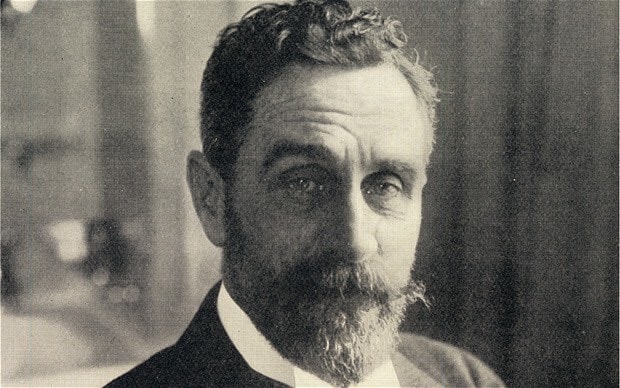
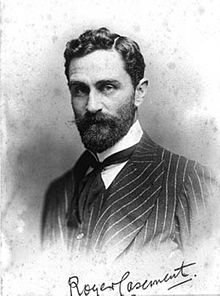
CasementOn 3rd August 1916 Roger Casement was executed for high treason in Pentonville Prison, London. He was the last knight of the realm to befall such a fate in the United Kingdom.
Casement had been a leader of the 1916 rebellion in Ireland. While his earlier capture meant that he had been absent from the fighting in Dublin during Easter Week, his collusion with the Germans, in an attempt to procure arms for the uprising, had been enough to seal his fate.

Casement’s revolutionary nationalism often overshadows his, arguably greater, contribution as a human rights and anti-slavery activist.

As British Consul in Congo, Casement had been a pivotal figure in exposing King Leopold’s genocidal exploitation of the peoples of the Congo in pursuit of rubber and ivory. Under Leopold, William Sheppard, a black American missionary, documented how a chief had shown him 81 severed hands which he was taking to a state official to prove that they had punished villagers who had not complied with demands that they collect rubber.

That was by no means the worst of the depredations brought by Leopold’s reign in the Congo. But as a result of work by Casement, Sheppard and others, such as the extraordinary British journalist, Edmund Morel, finally sufficient international pressure was brought to bear on Leopold and Belgium to end the atrocities.

Later, at the behest of the Anti-Slavery Society, as Anti-Slavery International was then known, Casement undertook investigations in the Putamayo region of the Amazon, to expose similar sorts of slavery in the rubber plantations of the Peruvian Amazon Company, which had been registered in Britain in 1908 and had a British board of directors and numerous stockholders. Summing up to a parliamentary select committee the conditions of the Indian’s forced to gather rubber he said “These people have absolutely no human rights much less civil rights. They are hunted and chased like wild animals.”

Casement’s years investigating human rights abuses in Africa and South America led him to a become a committed anti-imperialist. Consequently, following his retirement from the Foreign Service, he became heavily involved in the growing efforts towards independence of his native Ireland. As these efforts were increasingly resisted with threat of violence by anti-democratic elements in both Ireland and the British Establishment Casement became involved in the Irish Volunteers, a militia founded to guarantee Irish Home Rule.

With the coming of the First World War much of the Volunteer movement was induced to join the British Army with the promise of Home Rule after the war. Casement was deeply sceptical of such promises and, along with the clandestine movement, the Irish Republican Brotherhood, began to contemplate revolution as the only way to obtain Irish independence. As he said himself, while others of his contemporaries and political opponents took paths “which they felt would lead to the Woolsack… I went a road that I knew must lead to the dock.”

black

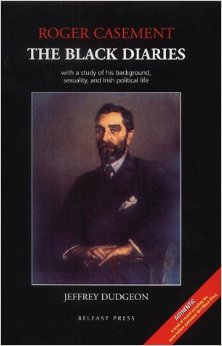
The leaking of Casement’s personal diaries by the British state, exposing his homosexuality, undermined a campaign for his death sentence to be commuted.

Following his conviction Casement made a celebrated speech from the dock in which he reflected, “whe[n] men must beg with bated breath for leave to subsist in their own land, to think their own thoughts, to sing their own songs, to garner the fruit of their own labours … then surely it is a braver, a saner, and a truer thing to be a rebel in act and deed against such circumstances as this than tamely to accept it as the natural lot of men.”

His speech was a considerable influence on the young Jawaharlal Nehru, the future Prime Minister of India, and many other anti-imperialists of the early twentieth century.

While the urgency of the anti-imperial struggle may have diminished Casement’s human rights work resonates still. In spite of the efforts of Casement and many like him millions of people are still enslaved across the world, just as they were in Casement’s day. Many of them are subject still to the same sorts of brutal violence Casement exposed in Africa and South America. Even in Nehru’s India, the world’s largest democracy, the severing of the hands of Dalits is still a sanction used to compel forced labour.

So, at the centenary of Casement’s death, the lesson of his life remains a vital one: when the status quo is injustice, the right thing to be is a rebel.

A New Europe Forum? Plotting a path to peace in a time of war

Also published in Left Foot Forward http://leftfootforward.org/2016/07/a-new-europe-forum-could-help-tackle-islamist-terrorism/ 

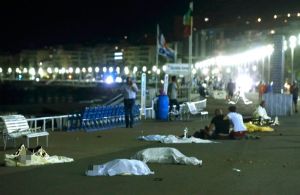
It is plain now that we are in the midst of a civil war in Europe. It has been going on for some time with Europeans butchering fellow Europeans in London, Paris, Brussels and most recently Nice.

Nice-Attack-1

Aftermath of the 14 July 2016 Nice attack

It is difficult for those of us who lack the murderous impulse of the deluded and inadequate perpetrators of such recent horrors to obtain any empathetic understanding of them. But perhaps one obvious but important truth is that those who aspire to mutilate their fellow human beings are alienated from the communities that they live among, and from the values of the societies that they seek to terrorise.

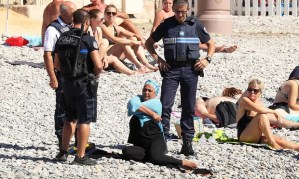
If this is indeed the case then the necessary security measures which the governments of Europe are scrambling to put in place will be inadequate in addressing the underlying causes of this alienation. Furthermore if clumsily managed, security measures can exacerbate the situation, accentuating the sense of alienation of some who come to the attention of the security services and driving them into the ranks of the fratricidists who live amongst us.

image

Not winning hearts and minds: French police force a burkini clad woman to strip

So what is needed, in addition to more police and intelligence operations to thwart aspiring killers, is a political response to the situation. It is difficult for an outsider to say specifically what measures would be necessary to counter the alienation of the communities from which the killers spring. But Europe could take a lesson from Irish history here.

In the dark days of the 1980s when the violence in the North of Ireland was taking on a permanent complexion in the absence of any credible political initiatives, the leader of the Social Democratic and Labour Party, John Hume, suggested the establishment of the New Ireland Forum as a means by which Irish leaders committed to non-violence could begin to plot a new political path towards a peaceful future. From these modest beginnings a new political process emerged which led, ultimately, to the Good Friday Agreement, and the first durable peace Ireland has seen in hundreds of years – at least until it has come under threat from the delusional aspirations of English nationalists to hack apart the European basis of this peace.

Following this lead the European Parliament should establish an inquiry into the causes of European jihadism and to propose political, economic and social responses to the alienation of the European communities from which this murderous jihadism springs. The inquiry should seek to take evidence not only from fellow politicians and academics, religious and community leaders, but also from ordinary people from all parts of Europe.

The evidence, as well as the analysis and conclusions from this inquiry should be published and European governments should be required to report on how they have responded to the recommendations.

Some measures to blunt the threat may be straightforward: people tend to be less likely to seek to destroy their society if they see plainly that the society is providing them with decent jobs and housing. Some measures may relate to addressing some of the chaos which certain European nations have helped create in the Middle East, such as establishing peace in Syria, Iraq, Palestine and Israel: Geography dictates that Europe simply cannot be at peace when the Middle East is in conflagration. Other initiatives may be more novel and unexpected.

The threat of violence that is posed is not yet an existential one for Europe. But it is a challenge to European values of pluralism, democracy, human rights and rule of law. If we cannot plot a political response to this violence that springs from and honours these values, then the arguments of the ideologues of bloodshed will be made a little stronger.