Summary: I read it so you don’t have to
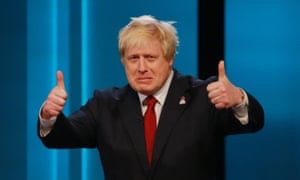 It would be unfair to say this book is not entertaining. But then it would be hard to write a dull book about Churchill so packed with incident was his life. However it’s hardly a book that offers any profound, or even shallow, insights on its subject or his times.
Typically each chapter begins with an anecdote upon which Johnson will reflect on its meaning to him and what he thinks it says about Churchill. Johnson has a simple thesis: that Churchill was the greatest human ever and it would have been catastrophic to British and European history if he had not existed. Johnson strains every ounce of lard in his being to convince the reader of what he clearly regards as a self-evident truth.
But the reason for reading this book now, if one must, is not to find out about Churchill – there are much better books for that. It is to find out about Johnson as he stands poised on acceding to the British premiership. On the basis of this book one can say that Johnson is an even more peculiar character than one might discern from his public persona of lazy buffoon and lying charlatan.
Certainly the laziness is here to see: I don’t think Johnson had much more knowledge of Churchill than I did – gleaned from Roy Jenkins’ and Max Hastings‘ biographies – when he sat down to write this book. Johnson also makes tiresome use of straw-man arguments – establishing positions that nobody really holds in order to knock them down. It’s a lazy approach to argumentation which I have found seems to be a bad habit particularly inculcated in the privileged students of parts of Oxbridge.
Superficially there are similarities between Johnson and Churchill. Both are portly. Both journalists turned politicians. Like Johnson, Churchill was, mostly, a Tory. Like Johnson he was a racist. Johnson also strains to emulate Churchill with witty turns of phrase, but on this front he could have done with a firm editor clearing out screeds of what one would presume passes for humour in the Bullingdon Club.
But, on almost every other aspect of his character that Johnson chooses to discuss, Churchill was the polar opposite of Johnson. Churchill was a, mostly, faithful husband. Churchill was a ferociously hard worker, managing in parallel with his hugely effective political career a literary output that won him a Nobel Prize. Churchill was a master of policy detail, the sort of politician who would have known what was said in Article 25, paragraph C before staking the entire credibility of his policy upon it. Churchill was beloved by colleagues and subordinates who worked with him. Churchill spoke truth to power rather than, by and large, pandering to the mob.
Perhaps most fundamentally of all, Churchill defined much of the latter part of his career as a ferocious opponent of the policy of appeasing the far-Right. In contrast Johnson has courted such extremists to the extent of subverting his own nation’s interests and pandered to a neo-fascist leader in the US in the hope of mitigating the damage brought by his signature cause, Brexit.
In other words Johnson utterly hero-worships a historical figure who represents the opposite of much that he espouses politically, and everything that he is personally. This is cognitive dissonance of almost mythic proportions.
At the outset of the book Johnson states he agrees with the ancient Greeks who said “Character is destiny.” If this book is anything to go by then the destiny of the United Kingdom is going to be a deeply troubled one.
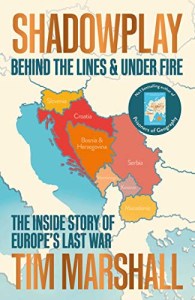 The war correspondent is something of a non-fiction counterpart to crime novels’ gumshoe: a guide through the dark and bloody places that most of us would never dream of personally approaching but still are fascinated by from a few steps removed. Journalistic accounts of war also provide even the most venial of hacks the opportunity to present themselves as heroes of their narratives.
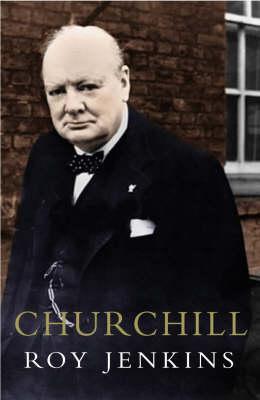 In Brexit Britain one’s attitude towards Churchill is something of a faux-patriotic touchstone. Recently shadow chancellor John McDonnell caused frothing indignation amongst the perpetually offended right-wing of British society when in response to a silly question, “Churchill: hero or villain?” he responded,
  Summary: a thorough, and thoroughly bleak, account of what happens when Europe is divided
 Summary: an elegant account of the cruelty of the Vietnam war
 This is a very short book. Doubtless a historian of the calibre of Diarmaid Ferriter could have written a considerably longer one. But with a short book there is the hope, however forlorn, that at least some English people might deign to read it.
 Summary: gripping account of a small portion of the Cold War that gives considerable insight into some of the wider issues
 Summary: the gripping interwoven tales of an architect and a murderer in 1890s Chicago
 Summary: up close to the raggedy edge of human exploration