
Summary: A prerequisite for Sinn Fein being permitted to join a coalition government in Dublin should simply be that they agree to the establishment of, and full cooperation with, a truth commission on the Troubles.
“The past is never dead. It’s not even past.” – William Faulkner
Writing 2,500 years ago about a civil war in Greece, Thucydides, the first great historian of that war between Athens and Sparta, made a vital observation: ‘The people make their recollections fit with their sufferings”.
Given the unchanging realities of war and human nature, what was true then is true now. Hence recollections of the Troubles reflect the sufferings of those recalling them. For example, Britons remember with justifiable grief and anger the civilians slaughtered in the Birmingham and Guildford bombings. But many still cherish the paratroopers who similarly slaughtered and injured so many unarmed civilians in Ballymurphy and Derry.
As with so many other things to do with their history, most Britons are blissfully unaware of their security forces subsequent collusion with Protestant, “Loyalist” paramilitaries who acted as proxies in the commission of later atrocities, such as the Miami Showband massacre.
Loyalist paramilitaries when they called their ceasefire did express “abject and true remorse” for the sufferings of the innocents that they had caused. But elements of their community still clearly cherish the memory of some of the worst perpetrators of that hurt, and still celebrate the pain caused.
Irish “Republicans” keep bright the memory of British and Loyalist atrocities but grow irritable at the mention of their own murderous attacks, particularly those on Irish civilians such as Kingsmill, Enniskillen, and La Mon. Their peevishness is perhaps at its greatest when reminded of the savagery of their post-ceasefire butchery of Robert McCartney and Paul Quinn.
Of course, war crimes such as these and brutality by those inured to war are as old as war itself. But when selective memory is practiced in relation to a civil war, then it impedes the possibility of reconciliation and reunification in its aftermath.
It is the very nature of a civil war that after the guns fall silent the belligerents have to continue living together with those they have so grievously injured. The Good Friday Agreement was an effort to establish a basis on which this could happen. With Brexit striking at the very foundations of this peace settlement new constitutional possibilities must be contemplated, including that of Irish reunification. But true Irish reunification depends on uniting people, not just political territories. Without honesty about not just what each side endured but also what they inflicted then such true reunification becomes impossible.
The ideal of Irish reunification has suffered some quite serious blows in recent weeks with the crass celebrations by some victorious Sinn Fein candidates in the recent Irish general election. Singing “Up the ‘RA” on such occasions demonstrates a spectacular insensitivity to a section of the Irish population who suffered at the hands of the IRA during the Troubles but who must now consent to reunification if a New Ireland is to become a reality.
Martin McGuinness, notably in a speech he gave at the peace centre in Warrington, did show considerable moral courage in confronting the pain caused by IRA operations. Implicitly in that speech he recognised that even a just war is an evil thing.
But, like those Brexiters whose only knowledge of the Second World War comes from watching The Dambusters, many of today’s Sinn Féin activists’ attitude to the Troubles is, appositely enough, troubling. They seem to regard their armed struggle not as a regrettable necessity, but rather as a moral good and those involved in it as beyond reproach. This is a similarity they have with the British Conservative party who resent the idea that British armed forces should be held to basic human rights standards.
The post-election negotiations to form a new Irish government may yet see Sinn Féin entering government, possibly even holding the office of Taoiseach. Former armed rebels entering the government of an Irish state which they hitherto opposed is hardly an unprecedented departure in history. Fianna Fáil did it. Clann na Poblachta did it. The Workers’ Party did it. Sinn Fein has already done it in Belfast.
But with a senior role in government comes responsibility. And one of the principle responsibilities of Irish government over the next decade is going to be exploring the possibility of Irish reunification and, hopefully, establishing a process by which such unification can happen.
This will be an impossible task for Sinn Féin to lead so long as they continue to refuse to face up to the full truth of their history including its most unpalatable aspects and the unremitting pain that they have inflicted on so many hundreds of their compatriots.
Many of the other parties elected to the Dail have refused to contemplate entering government alongside Sinn Fein such is the distaste that they feel at their history. But the logic of the peace process demands that Sinn Fein should have the opportunity to participate in government should the electorate so deem it.
This is a circle that can only be squared if Sinn Fein faces the truth of its history and ceases revelling in silly songs and slogans. In other words, a prerequisite for Sinn Fein entering government in Dublin should be its agreement that the government establish, and Sinn Fein cooperate fully with, a truth commission, modelled on the South African precedent.
Facing the truth about oneself is always a difficult thing. But, if nothing else, over the past decades Sinn Fein leaders and supporters have demonstrated considerable courage. However, it still remains to be seen whether they have the fortitude to move beyond their current posturing self-righteousness to help establish a process to properly remember our collective past and establish an agreed account of it that acknowledges all our sufferings and not just those of any particular partisan faction.
After all, a new and reunited Ireland needs a foundation of shared truths.

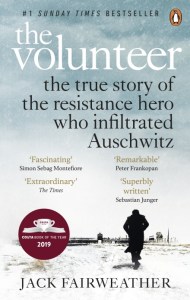 Witold eventually escaped to make a direct appeal to the Home Army for military support to an uprising in Auschwitz. But by this stage they too were preoccupied with other things, most particularly their plans for an uprising in Warsaw to reassert Polish independence at war’s end. So the courageous resistance network that Witold had built up in Auschwitz was left hanging, eventually to be liquidated by the SS.
 The Path to Power is volume one of Robert Caro’s celebrated, multi-volume biography of
 The History of Money covers similiar territory to
  Summary: an elegant and compelling account of the long bloody history of perhaps the most contentious and contended city in the world
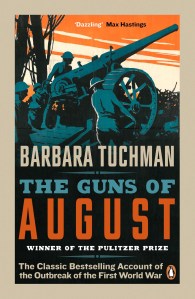 Summary: exquisitely written and utterly gripping account of the first weeks of the First World War
 Summary: a devastatingly powerful account of the impact of murder on its victims and perpetrators. One of the finest books ever about the Troubles in the North of Ireland.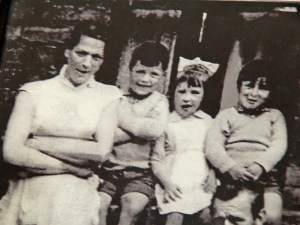
 Biography is a common enough form in political and military history often, when used well, providing telling insight into pivotal events. It is certainly a much less common approach in social history. But this is the approach that Hallie Rubenhold adopts in The Five. The result is stunning.
 Summary: a vast and sprawling account of the vast and sprawling realities of human life and debt
