
 Summary: an elegant and compelling account of the long bloody history of perhaps the most contentious and contended city in the world
Jerusalem is where Solomon built the Jewish Temple, where Jesus was crucified for teaching that people should love one another, and where Mohammed ended his mystical Night Journey. Hence it is a place that is sacred to three of the world’s great religions. And it is a place where all three of these religions have consistently and horrifically disgraced themselves for the much of the city’s history.
The Crusaders, for example, deciding to misinterpret Jesus’ teachings as meaning that you only have to love other Christians, claimed to have waded through blood up to the bridles of their horses from the massacre they instituted when they first took the city.
To be fair, they were following a long sanguinary tradition. When the future Roman emperor Titus took the city from Jewish rebels in 70 AD he butchered not just the rebels but the civilian population that the rebels had oppressed, and tortured other survivors to death for the entertainment of his troops and the citizens of Rome.
After the Romans and the Franks the Ottoman Empire also conquered the city before losing it to the British in the First World War. The French, Russians and Americans also intrigued over the place, before it was ceded to Jordan and then captured by the Israelis in 1967. Of course that has not settled anything: any peace settlement in the Palestinian-Israeli conflict must include some way to share the city between these two peoples with equally legitimate claims on it.
Many of the stories recounted in this book – of David and Solomon, of the Maccabees, of Jesus, of Titus and Josephus, of the Crusades and the great Kurdish leader Saladin, of Lawrence of Arabia, of Rabin and Dayan – will be familiar to the general reader. But by placing them in chronological order and in their international context Sebag Montefiore shows how the city has been at the centre of so many world changing political convulsions over the centuries, right up to the present day.
In Luke’s gospel there is the story of how the Devil led Jesus to a high place and “in an instant showed him all the kingdoms of the world.” In this history of Jerusalem Simon Sebag Montefiore manages a trick similar to the Devil’s: illuminating the history of the world from the perspective of the Temple Mount.
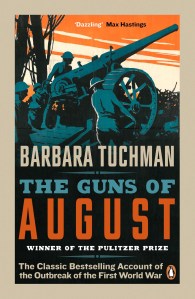 Summary: exquisitely written and utterly gripping account of the first weeks of the First World War
 Summary: a devastatingly powerful account of the impact of murder on its victims and perpetrators. One of the finest books ever about the Troubles in the North of Ireland.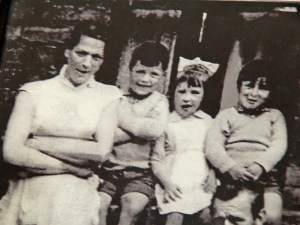
 Biography is a common enough form in political and military history often, when used well, providing telling insight into pivotal events. It is certainly a much less common approach in social history. But this is the approach that Hallie Rubenhold adopts in The Five. The result is stunning.
 Summary: a vast and sprawling account of the vast and sprawling realities of human life and debt
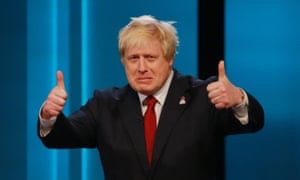 It would be unfair to say this book is not entertaining. But then it would be hard to write a dull book about Churchill so packed with incident was his life. However it’s hardly a book that offers any profound, or even shallow, insights on its subject or his times.
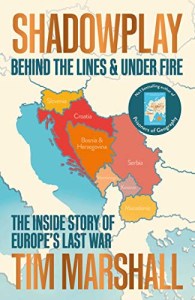 The war correspondent is something of a non-fiction counterpart to crime novels’ gumshoe: a guide through the dark and bloody places that most of us would never dream of personally approaching but still are fascinated by from a few steps removed. Journalistic accounts of war also provide even the most venial of hacks the opportunity to present themselves as heroes of their narratives.
 In Brexit Britain one’s attitude towards Churchill is something of a faux-patriotic touchstone. Recently shadow chancellor John McDonnell caused frothing indignation amongst the perpetually offended right-wing of British society when in response to a silly question, “Churchill: hero or villain?” he responded,
  Summary: a thorough, and thoroughly bleak, account of what happens when Europe is divided
 Summary: an elegant account of the cruelty of the Vietnam war
 aidanjmcquade