
Johnson
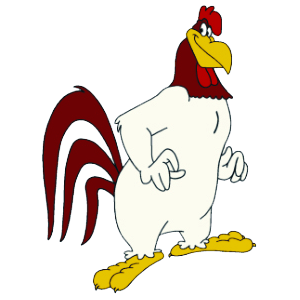
There’s a lot of things Boris Johnson doesn’t like: monogamy; consistency; telling the truth; Paddies… particularly smart Paddies; “picaninnies with watermelon smiles“. But since he became Prime Minister it has become clear that more than anything else Johnson detests scrutiny. Foghorn Leghorn is less chicken than Johnson faced with evidence of his lies, duplicities and stupidities.
Of course this would be fine in a totalitarian society. You know: one that does not have a parliamentary system like the one Johnson has just decided to shut down. There Johnson would make a passable Mussolini, or a Ceausescu at a pinch.
But it is a terrible problem in a society that is meant to be democratic: in such societies the executive are meant to be accountable to the citizenry through parliament, and citizens can only fulfil our responsibilities in the system if parliament is functioning and we know what is going on.
This is what Edmund Burke was getting at in 1787 during a parliamentary debate on opening up of press reporting of the House of Commons. Then he refered to the press as the “fourth estate“, thereby alluding to the vital role they had in ensuring that the people of a nation knew what was afoot with their government.

Cummings
So one can at least see consistency when, in addition to shutting down parliament, Johnson and his minion Dominic Cummings establish a policy of refusing Channel 4 News and BBC Newsnight requests for interviews. Just like House of Commons select committees, these are the few remaining places in the UK where Johnson and his spectacularly dim ministers might get asked hard questions. Like: It’s just that you really don’t care if bloodshed returns to the British border in Ireland, isn’t it? Or: How many ruined lives would you deem as too many for a proper British Brexit?
You might think that voters have a right to know Johnson’s answers to such questions. But understand it from his point of view. Honest answers would make him look bad. And, as Eddie Mair showed, he really isn’t a good enough liar to blag his way when faced by a competent interviewer.
No! It’s better for Johnson if he just bunkers in and avoids the nasty hard questions that make him look like the callous eejit that he really is.
Johnson’s hero Churchill may have eschewed the safety of the bunker during crises, but there’s no reason why Johnson should. After all, its not like Herman Goering gave interviews to to the Manchester Guardian when he was also trying to trash British democracy.
Given this, it would probably not cut much ice with Johnson or Cummings to remind them of what that smart Paddy President Jack Kennedy once said:
“there is a terrific disadvantage not having the abrasive quality of the press applied to you daily, to an administration, even though we never like it, and… even though we disapprove, there isn’t any doubt that we could not do the job at all in a free society without a very, very active press.“
Such ideals are not to be allowed in Johnson’s Airstrip One. Here “ignorance is strength”, and that is how the tinpot have always liked it.
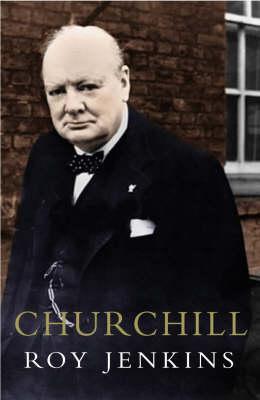 In Brexit Britain one’s attitude towards Churchill is something of a faux-patriotic touchstone. Recently shadow chancellor John McDonnell caused frothing indignation amongst the perpetually offended right-wing of British society when in response to a silly question, “Churchill: hero or villain?” he responded,
  The Social Democratic and Labour Party (SDLP) of the North of Ireland has always been a coalition. There are folk in the SDLP who, if they were living in Dublin or Cork or Galway, would be in Fianna Fáil, or Fine Gael, or Labour. But, faced with an existential challenge around the issues of civil rights and peace, they coalesced into a movement that sought to advance the ideals of social and liberal democracy in the face of horrific violence and sectarianism. Such coalitions are significant in history: Both the African National Congress in South Africa, and Congress in India drew together similar diverse elements in the common cause of liberation.
 Summary: a meditation on ethical leadership illustrated with war stories from Comey’s life as a prosecutor and his interactions with President Obama, and the moral and intellectual void that is Donald Trump.
 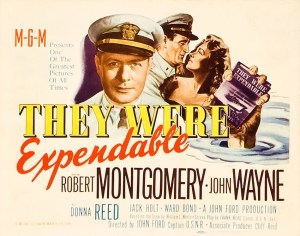 Summary: A gripping war story that gets to the heart of important truths about both war and Jack Kennedy
 Dave Powers, a friend and aide to Jack, once commented that, “Without PT 109 there would never have been a President John F Kennedy.” The legend of Jack’s fortitude and leadership following the sinking of his boat during a small battle in which 15 ill-equipped PT boats were sent to ineffectually attack a convoy of Japanese destroyers, was the foundation upon which Jack’s political career was built. But the story of this relatively brief episode in Jack’s relatively brief life is more important for a number of reasons, not least, after over half a century of muck raking and character assassination, it has proven pretty close to impossible to tarnish this truth of his heroism during those days.
 He didn’t die then and went on to play a decisive role in saving the lives of his surviving crew. Doyle notes: “The longest Olympic swimming event staged before then, the men’s 4,000 metre freestyle race, was held only once, in 1900. Fourteen of the twenty-eight competitors… “did not finish” and the distance was promptly retired. On the afternoon of August 2, 1943, John F. Kennedy covered the same distance, plus a mile more, over open water, behind enemy lines in broad daylight…All the while he bit on a strap and towed a badly burned sailor along with him. Simultaneously … leading nine other men.. towards safety… it was an astonishing feat his crewmen never forgot.”


 aidanjmcquade