Summary: bits of Bernie Sanders’ country








Summary: bits of Bernie Sanders’ country
Summary: a fascinating exploration of the relationship between the audience and the monstrous artist
As a reader, a viewer of movies, a “consumer” of art, Clare Dederer realized young a particular problem: some great artists whose work she loved, whose work helped her understand her own life, were utter arseholes… or as she, an American type of person, puts it, “Assholes!”

Picasso, Woody Allen, Polanski, Hemmingway – the authors of some of the finest art in the Western traditions had done dreadful things to other human beings. Polanski – survivor of the Holocaust, bereaved husband of a murdered wife, was also a child rapist. And yet the quality of their art was still so overwhelmingly seductive it was impossible to resist.
Do they make great art in spite of being arseholes or because of it?
Plainly you do not have to be a dreadful human being to be a great artist. That’s why God made Dolly Parton – so we don’t forget.
But Martha Gelhorn, Hemmingway’s third wife, herself a legendary war correspondent – way better than Hemingway at that profession – made an interesting observation: perhaps some of these arseholes might be working to produce great art in an effort to justify their otherwise mean and squalid existences. Even the arsehole can be self-aware.
In a world in which getting read is such a struggle, perhaps some of them have worked out that being a “bad boy” is a way of getting attention for their work. It is also of course possible that they are overindulged, and that is a bad thing to do to any man. I mean, most of us are still basically 14.
Robert Caro has observed that power does not corrupt, it reveals. Hence the power that comes with being a successful artist can truly reveal the nature of the personality.
So, it is also a percentages thing. There are a lot of arseholes about. Odds are some of them must be geniuses.
This book has been criticized for some lack of intellectual coherence – most of the female artists Dederer discusses are hardly in the same category of monstrousness as some of the men, and there is no evidence that Nabokov ever hurt a fly – though the monster he created is an outstanding literary exploration of the banality of the evil that some of her other subjects represent. It has also been criticized for limited research. But how much more research do you really have to do to demonstrate that Stephen Fry can be an awful eejit on frequent occasion? And it is still an entertaining introduction to some great art and artists: for example, I have never wanted to read Lolita, and now I feel don’t have to.
In the end, Dederer concludes, the problem of loving great art, great artists, is but a subset of the problem of loving other human beings: we are all flawed, some of us dreadfully. Yet we still undeservedly love and are loved.
And, even if I can still do without Manhattan, then, as Dederer rightly, I think, concludes, art such as Chinatown, Crimes and Misdemeanours, and Guernica all make our own flawed existences a little richer.
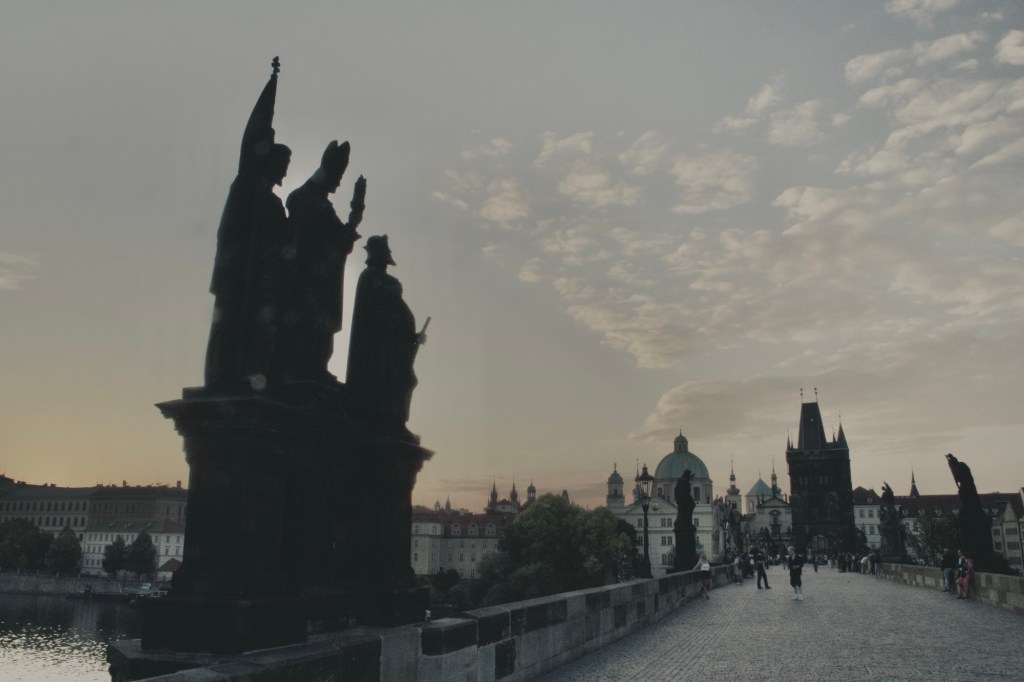
Summary: some say that a djinn is imprisoned for all eternity beneath the Charles Bridge, and troubled times might yet stir the Golem once more



Summary: a peaceful facade to a bloody conflict





In memorium – February 2024
When we were discussing the funeral arrangements the other night, our Brian said to me, “You need to say something … something from Seamus Heaney.”
So, I suppose for my Da there can only be one Heaney poem, and that is “Whatever you say, say nothing.”
It’s not just that, as our Geraldine and Eilis will tell you, his mantra through life was “tell them nothing”, a habit developed, no doubt, growing up in mid-Armagh during some of the vilest years of this statelet, “besieged within the siege,” as Heaney put it.
And, it’s not just because that poem is about the Troubles which overshadowed so many of our lives and shaped his politics.
It is more that, I think, my father’s philosophy was to let your deeds, your life, speak for itself.
We’ve gotten all sorts of very kind messages over the past couple of days from people my Da taught, telling us how much he affected their lives, how he gave them the confidence to become the people they are today.
That was his politics: it was practical non-violence. In the face of state and paramilitary atrocities his response was not to meet like with like, but to teach kids to work hard, to do their sums and become in themselves the new Ireland for which we all hope and strive.
Our father could barely speak English towards the end there. As the poem says, that voice of sanity really had grown hoarse. But it doesn’t matter now. Because we still have his life.
His deeds live on in the kids he taught and in others who teach children to read even in these bleakest of days.
And, no matter how little he would ever say about himself, or could say towards the end, those are things that truly do speak for themselves.

Summary: well, what have I been up to
About 12 months into lockdown, during the plague, I thought it would be a good idea to think about what if anything I had achieved during that period of enforced isolation. A year or so later I repeated the exercise and found it quite therapeutic. About 18 months later, I thought it was about time to have another reflect. So, what have I achieved?
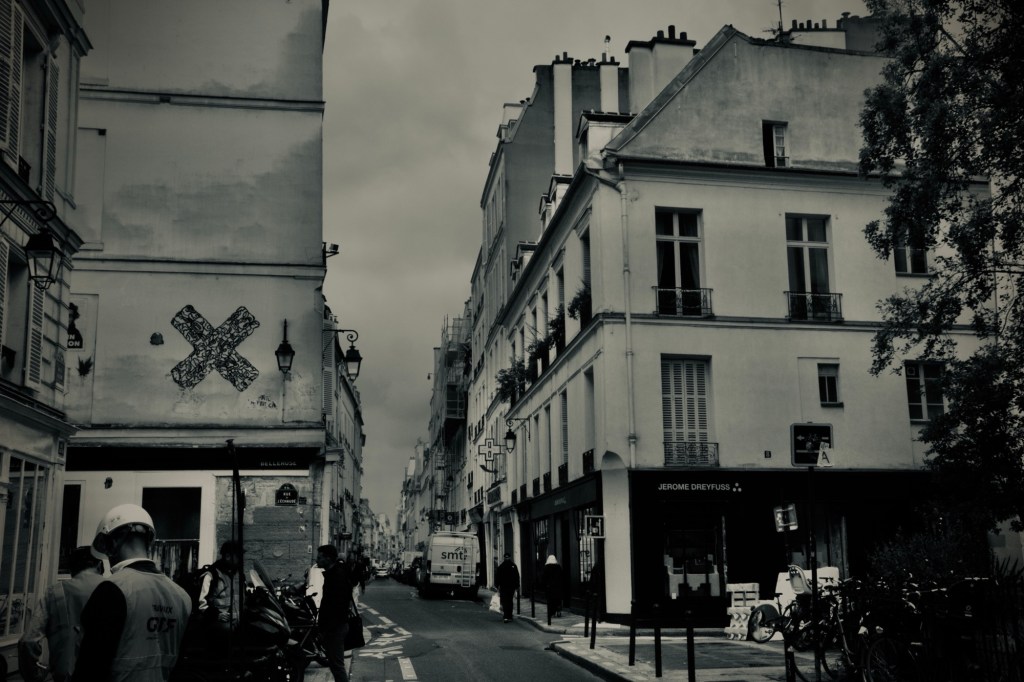
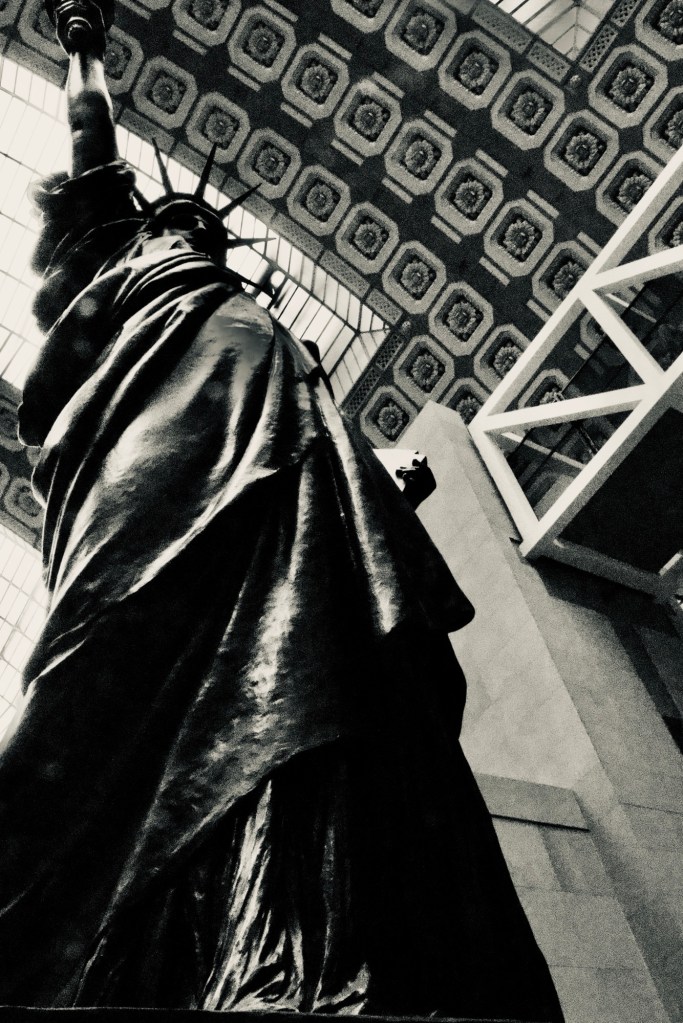
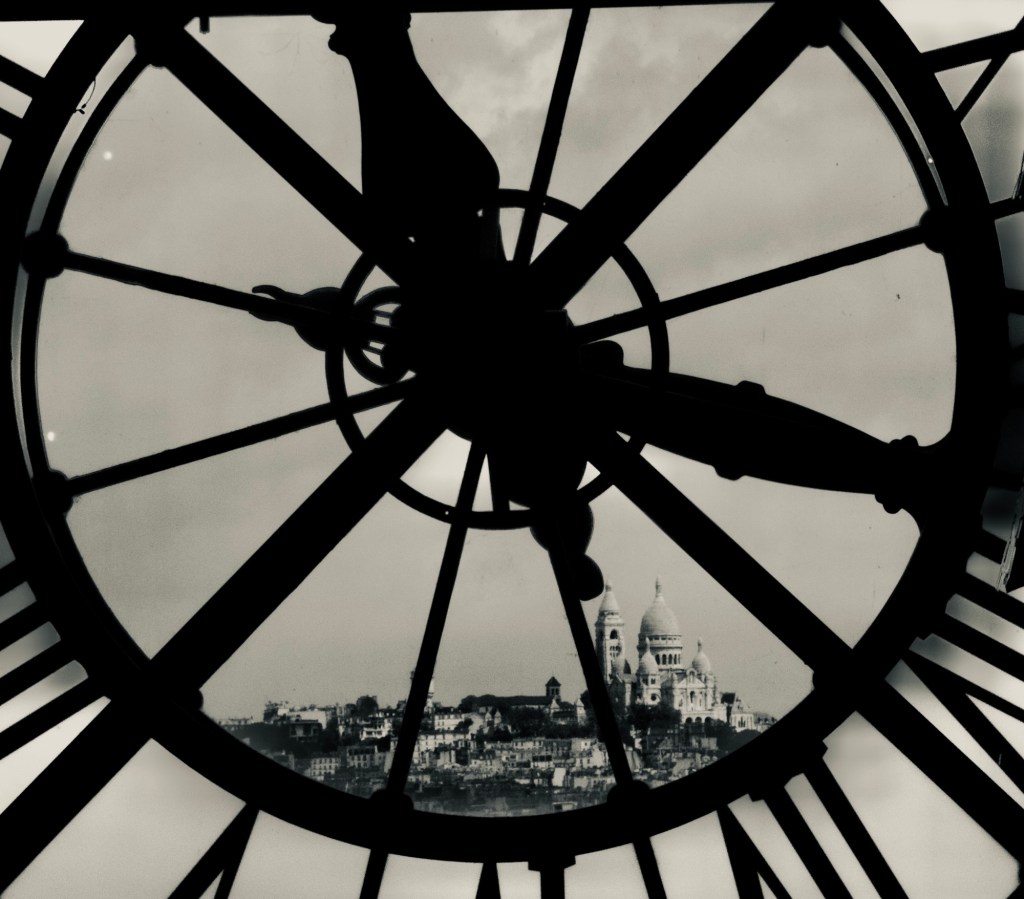
Summary: city of light and shadows



Summary: not just fun and games
Perhaps we – well … men at least – are fascinated by ancient Rome because it seems so different to today’s world, a place where cruelty was often regarded as a virtue and so many human vices were given free rein, not least as entertainment: In answer to Maximus’ question to the circus audience, we are indeed entertained.

But perhaps we are fascinated by it because, paradoxically, the Romans also remind us so much of ourselves in our contemporary world: we see echoes of Nero in buffoons like Boris Johnson and Donald Trump; the genocidal campaigns of the legions in Gaul and Germany echo with the depredations of the Israeli Defence Force in Gaza, and the Russians in Ukraine; the fanaticism of Hamas has resonance with that of the Sicarii defenders of Masada.
For whatever reasons, historians of other eras must envy those who have stuck to Rome and the seemingly insatiable appetite of readers for new takes on these old stories.
Palatine, by Peter Stothard, Emperor of Rome, by Mary Beard, and Pax, by Tom Holland are amongst the most recent offerings of publishers to meet this ravening demand.
Of these three highly enjoyable books, Holland’s is perhaps the most straightforward: a narrative chronicle from the downfall of Nero in 69 AD, “the Year of the Four Emperors”, through the Flavian dynasty to Trajan. This may be subtitled “Rome’s Golden Age,” but these things are relative. For example, the campaigns by Vespasian and his son Titus against the Jewish revolt in Palestine, which led to the destruction of the Temple and the mass crucifixion of much of the civilian population of Jerusalem, are a particularly chilling example of performative cruelty in the service of mass murder.
Nevertheless, Vespasian and Titus are still remembered as “good” emperors. Which is to say they were good for Romans… in the same way as – that contemporary echo again – the British Conservative Party is “good” for rich people, and the British Labour Party wants to be “good” for some English ones.
Palatine is something of a prequel to Holland’s book. It deals with the first Roman emperors from the perspective of the courtiers of the Palatine – the hill in Rome on which the emperor dwelt and which gives its name to the word “palace”.

In particular Stothard focuses on the Vitellius family. Heard of them? Well one of them was one of the emperors whose brief reigns in 69 AD, and comic-dreadful ends, were prologue to Vespasian’s more enduring tenure.
Stothard affects a highly entertaining gossipy style for this. In doing so he gives a sense of the court’s preoccupations through the reigns of Tiberius, Caligula, Claudius and Nero. These ranged from the apparently trivial – seating, décor, banqueting, rumoured love affairs – to the sinister – the growth of Sejanus’ power, the casual cruelties of Caligula.
What all these subjects had in common were, like an ancient world Kremlinology, they indicated where power lay, who was in favour and who was out. These were questions of life and death on the Palatine. So, the creatures of court paid attention – much as today’s political correspondents claim to do to the gossip and self-serving off-the-record briefings of power-insiders.
Mary Beard covers similar ground to Stothard, but slightly differently. As with her book SPQR her subject is perhaps histography rather than history. That is, rather than delivering a simple narrative, she presents us with the evidence, discusses what it might mean, and hence what conclusions we may be able to draw.
In doing this Beard gives us intriguing factoids, such as that the first representation of the crucifixion of Jesus was in a piece of anti-Christian graffiti found in the slaves’ quarters on the Palatine. But, drawing on diverse sources, including grave inscriptions, she also gives us some more insight on the way those denizens of the Palatine once thought when contemplating their place in the pecking order and what it might mean for their life prospects.
In other words, Emperor of Rome is a fine work for anyone who wishes to develop their critical thinking skills, not just in relation to history, but in relation to life.
Rome may still offer us circuses to distract from the awfulness of the present. But we can also learn from it how to recognise the ways that power corrupts fools and the cruelty that arrogance breeds. Those will remain important skills and responsibilities for citizens for as long as human society continues to exist.
Summary: “It’s quite hard to describe really. To begin with, it’s about a toaster, but it ends up being about everything,” the Kirkdale Bookshop on Spent Light.
When, about 20 years ago, I first introduced my father to the televisual masterpiece that is The Wire, his stunned reaction to the first episode was, “I have never seen anything like that before.”
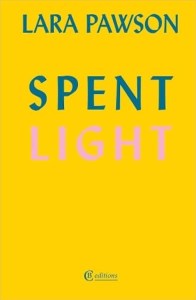
This memory came back to me, more than once, reading Lara Pawson’s extraordinary book, Spent Light, because I quite simply have never read anything like this before.
From time to time it seemed to me almost like some other things: Maybe the notebooks portions of Bruce Chatwin’s The Songlines? Or some of the (allegedly) imaginative passages in Anje Krog’s Country of My Skull? But in the end it is very much its own thing – intimate, funny, at times uncomfortable, occasionally horrific, wholly original.
It is writing that has the intensity of poetry. And so perhaps the best way to describe Spent Light is as a series of linked autobiographical prose poems, starting with a toaster but in the end being about the whole world, as the Kirkdale Bookshop put it with such brilliant concision. Along the way, Lara touches upon love, war, squirrels, atrocities, and the joys of a good broom.
I’ve known Lara since Angola where she was a journalist during that country’s brutal civil war. So, perhaps the only unsurprising thing about this book is that it is unsurprising that she wrote it. It is a work of genius. It should become recognised as a modern classic.
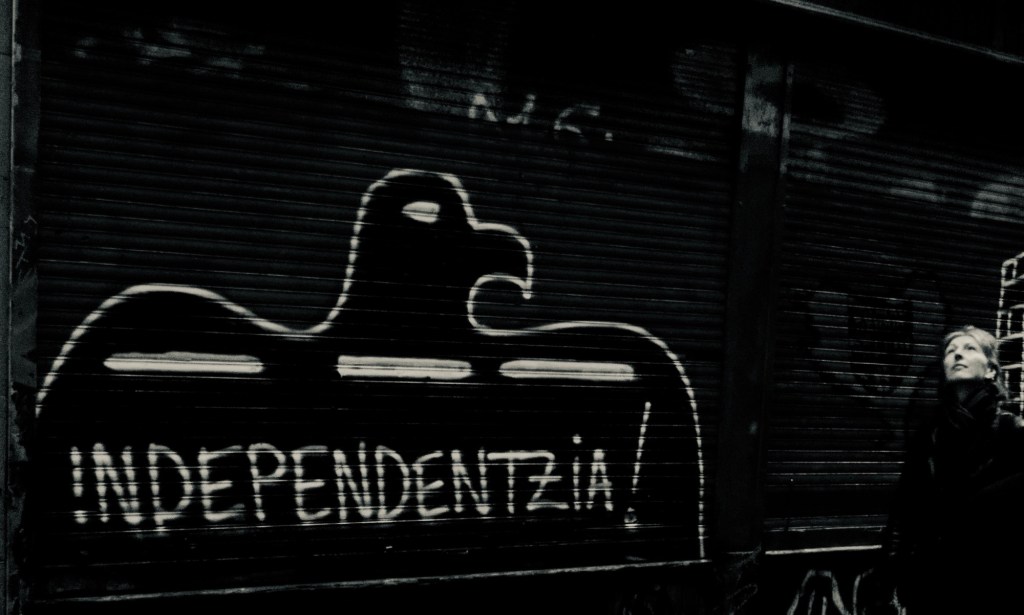
Summary: images of San Sebastián and Bilbao




 aidanjmcquade