Palatine, by Peter Stothard; Emperor of Rome, by Mary Beard; Pax: War and Peace in Rome’s Golden Age, by Tom Holland

Summary: not just fun and games

Perhaps we – well … men at least – are fascinated by ancient Rome because it seems so different to today’s world, a place where cruelty was often regarded as a virtue and so many human vices were given free rein, not least as entertainment: In answer to Maximus’ question to the circus audience, we are indeed entertained

But perhaps we are fascinated by it because, paradoxically, the Romans also remind us so much of ourselves in our contemporary world: we see echoes of Nero in buffoons like Boris Johnson and Donald Trump; the genocidal campaigns of the legions in Gaul and Germany echo with the depredations of the Israeli Defence Force in Gaza, and the Russians in Ukraine; the fanaticism of Hamas has resonance with that of the Sicarii defenders of Masada. 

For whatever reasons, historians of other eras must envy those who have stuck to Rome and the seemingly insatiable appetite of readers for new takes on these old stories.

Palatine, by Peter Stothard, Emperor of Rome, by Mary Beard, and Pax, by Tom Holland are amongst the most recent offerings of publishers to meet this ravening demand. 

Of these three highly enjoyable books, Holland’s is perhaps the most straightforward: a narrative chronicle from the downfall of Nero in 69 AD, “the Year of the Four Emperors”, through the Flavian dynasty to Trajan. This may be subtitled “Rome’s Golden Age,” but these things are relative. For example, the campaigns by Vespasian and his son Titus against the Jewish revolt in Palestine, which led to the destruction of the Temple and the mass crucifixion of much of the civilian population of Jerusalem, are a particularly chilling example of performative cruelty in the service of mass murder. 

Nevertheless, Vespasian and Titus are still remembered as “good” emperors. Which is to say they were good for Romans… in the same way as – that contemporary echo again – the British Conservative Party is “good” for rich people, and the British Labour Party wants to be “good” for some English ones. 

Palatine is something of a prequel to Holland’s book. It deals with the first Roman emperors from the perspective of the courtiers of the Palatine – the hill in Rome on which the emperor dwelt and which gives its name to the word “palace”.

The Pantheon

In particular Stothard focuses on the Vitellius family. Heard of them? Well one of them was one of the emperors whose brief reigns in 69 AD, and comic-dreadful ends, were prologue to Vespasian’s more enduring tenure. 

Stothard affects a highly entertaining gossipy style for this. In doing so he gives a sense of the court’s preoccupations through the reigns of Tiberius, Caligula, Claudius and Nero. These ranged from the apparently trivial – seating, décor, banqueting, rumoured love affairs – to the sinister – the growth of Sejanus’ power, the casual cruelties of Caligula. 

What all these subjects had in common were, like an ancient world Kremlinology, they indicated where power lay, who was in favour and who was out. These were questions of life and death on the Palatine. So, the creatures of court paid attention – much as today’s political correspondents claim to do to the gossip and self-serving off-the-record briefings of power-insiders.

Mary Beard covers similar ground to Stothard, but slightly differently. As with her book SPQR her subject is perhaps histography rather than history. That is, rather than delivering a simple narrative, she presents us with the evidence, discusses what it might mean, and hence what conclusions we may be able to draw.

In doing this Beard gives us intriguing factoids, such as that the first representation of the crucifixion of Jesus was in a piece of anti-Christian graffiti found in the slaves’ quarters on the Palatine. But, drawing on diverse sources, including grave inscriptions,  she also gives us some more insight on the way those denizens of the Palatine once thought when contemplating their place in the pecking order and what it might mean for their life prospects. 

In other words, Emperor of Rome is a fine work for anyone who wishes to develop their critical thinking skills, not just in relation to history, but in relation to life. 

Rome may still offer us circuses to distract from the awfulness of the present. But we can also learn from it how to recognise the ways that power corrupts fools and the cruelty that arrogance breeds. Those will remain important skills and responsibilities for citizens for as long as human society continues to exist.

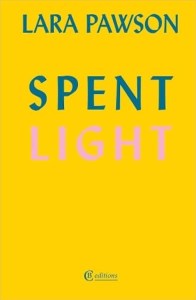
Spent Light, by Lara Pawson

Summary: “It’s quite hard to describe really. To begin with, it’s about a toaster, but it ends up being about everything,” the Kirkdale Bookshop on Spent Light.

When, about 20 years ago, I first introduced my father to the televisual masterpiece that is The Wire, his stunned reaction to the first episode was, “I have never seen anything like that before.”

This memory came back to me, more than once, reading Lara Pawson’s extraordinary book, Spent Light, because I quite simply have never read anything like this before. 

From time to time it seemed to me almost like some other  things: Maybe the notebooks portions of Bruce Chatwin’s The Songlines? Or some of the (allegedly) imaginative passages in Anje Krog’s Country of My Skull? But in the end it is very much its own thing – intimate, funny, at times uncomfortable, occasionally horrific, wholly original. 

It is writing that has the intensity of poetry. And so perhaps the best way to describe Spent Light is as a series of linked autobiographical prose poems, starting with a toaster but in the end being about the whole world, as the Kirkdale Bookshop put it with such brilliant concision. Along the way, Lara touches upon love, war, squirrels, atrocities, and the joys of a good broom. 

I’ve known Lara since Angola where she was a journalist during that country’s brutal civil war. So, perhaps the only unsurprising thing about this book is that it is unsurprising that she wrote it. It is a work of genius. It should become recognised as a modern classic. 

Letter to British Prime Minister Rishi Sunak

Summary: on returning a honorary OBE

16 April 2024

Dear Prime Minister

In 2017 I was awarded an honorary OBE in recognition of my services to the eradication of slavery. I am now returning this as it is something which I can no longer, in good conscience, keep.

On 15 April 2024, your government refused to provide protections for the victims of modern slavery from your unconscionable “Rwanda scheme”. Over the past months you, as Prime Minister, have acquiesced in attacks on the European Convention on Human Rights by members of your parliamentary party. These, along with the UK’s bipartisan position on Gaza, have put into sharp focus how British policy now distinguishes between people whose lives it values, and those whose lives it disdains. 

These represent a fundamental repudiation by the UK of the principles of the Universal Declaration of Human Rights. They are a rejection also of an enduring British human rights tradition stretching back to Thomas Clarkson, William Wilberforce, and Mary Wollstonecraft, and a longer tradition of rule of law that stretches back to Magna Carta. 

As such they send to the whole world a message that the UK rejects the core bases of human rights and rule of law upon which progress in human dignity, including anti-slavery action has been based for hundreds of years. This can only impede the anti-slavery struggle and embolden other governments who seek to systematically abuse the rights of their subjects and citizens, including  by the facilitation of their enslavement. 

I hope that you will yet find it in your heart to alter course and embrace and defend these British traditions of human rights and rule of law rather than sacrifice them to some ill-judged populist crusade.

Yours faithfully

Dr Aidan McQuade 

Dirty Linen: The Troubles in my home place, by Martin Doyle

Summary: An outstanding portrait of the pity of war

Margaret Yeaman has never seen her grandchildren. She lost her sight on 15 March 1982 when a no-warning car bomb exploded close to her workplace in Banbridge, County Down, causing splintering glass to lacerate her face. 

Margaret’s story, of being in the “wrong place at the wrong time” is just one amongst many that Martin Doyle explores in his book, Dirty Linen. The book also takes exception to that “wrong place, wrong time,” line. So many of the people whose stories Doyle recounts were just doing their jobs, providing for family and community, or just trying to have a bit of craic. It was the paramilitaries who were in the wrong place at the wrong time for these ordinary people.

Some will still argue that atrocities such as the ones recounted in this book were necessary to advance justice in the North of Ireland. But as Margaret and people like her tell their stories of how their families were devastated by violence, these should bring shame to that notion: as if the British government was ever going to be moved to change policy by Paddies butchering Paddies on the country roads of Ireland. It’s why they introduced “Ulsterisation” to begin with.

Dirty Linen is, in part a memoir, and Doyle gives an honest accounting of his experiences coming of age amidst such carnage, including the miserable abuse he sometimes suffered as a young Catholic in that religiously mixed part of County Down. 

This book could also act as something of an introduction to the art of the North of Ireland. As literary editor of the Irish Times, Doyle is able to draw upon the work of so many writers and artists, from Seamus Heaney to F E McWilliams and Colin Davidson, to help him give voice to the depth of the human tragedy that the Troubles represented.

But, as a result of Doyle’s sensitive interviews with Margaret and people like her, his book is also an exemplary work of journalism and a deeply important contribution to understanding the history of the Troubles. It offers an unflinching portrait of the pity of war by exploring the trauma and courage of the victims of both loyalist and “republican” paramilitaries. 

Some of those victims whose stories Doyle explores also became perpetrators, or at least sympathetic to the idea of revenge. But so many more refused to become as twisted as those who mutilated them and their families. Instead. they often begged for no retaliation and strove for forgiveness, or at least toleration. Theirs are stories that are so much more heroic than anything that could ever be written about the paramilitaries who pressed the triggers or planted the bombs.  

If this was all that Doyle did, then the book would be a marvel. But his painstaking accumulation of detail across the book also builds a picture of the pervasiveness of collusion between British state forces and the loyalist Glenanne gang. Perhaps other writers and researchers have done similar work. But I have not read such a convincing indictment of the breadth of British collusion anywhere else. So, if you want to understand why the British government is so keen to stop Troubles era criminal investigations, read this book.

At a time when the Troubles seem to be giving rise to some exemplary non-fiction, Doyle’s book could well stand out as a classic. 


My top ten reads for 2023

Summary: in case anyone is looking for reading or gift ideas

In chronological order of reading:

  1. Hitler, by Ian Kershaw: an exceptional work of historical biography and the definitive work on the pathetic monster who brought cataclysm to Europe.
  2. My Father’s House, by Joseph O’Connor: an outstanding historical thriller of Hugh O’Flaherty – “the Irish Schindler” – and Europeans united against the Nazis
  3. The Restless Republic, by Anna Keays: an elegantly written, though overwhelmingly Anglo-centric and bizarrely affectionate account of “Oliver’s” genocidal dictatorship
  4. Sword of Honour, by Evelyn Waugh (Men at Arms; Officers and Gentlemen; Unconditional Surrender): Waugh’s war, told with his trademark combination of high comedy and profound melancholy: classics for a reason.
  5. Empireland, by Sathnam Sanghera: a gripping and elegantly written survey of the bloody British empire and its echoes in the present day
  6. The Secret Hours, by Mick Herron: An superb prequel to the Slough House series: 1990s Spook Straße, Berlin, Moscow Rules very much apply
  7. Five Decembers, by James Kestrel:  a surprising and compelling crime story, with a strong echo of Vonnegut’s Slaughterhouse Five, to the backdrop of WW2 in the Pacific.
  8. The Sleepwalkers: how Europe went to war in 1914, by Christopher Clark: an extraordinarily adept and compelling elucidation of the complexities of European politics and alliances that led to the outbreak of World War 1. Basically, it was everyone’s fault… but mostly Serbia.
  9. A History of Water, by Edward Wilson-Lee:  a fascinating exploration of an aspect of Portuguese history and attitudes at the outset of Europe’s colonial plunder of the global South
  10. Killing Thatcher: the IRA, the manhunt, and the long war on the Crown, by Rory Carroll: insight on the Troubles through the prism of a gripping account of one bloody incident

Killing Thatcher: the IRA, the manhunt, and the long war on the Crown, by Rory Carroll

Summary: insight on the Troubles through the prism of a gripping account of one bloody incident

Patrick Magee did not kill Thatcher when the bomb he planted in the Grand Hotel, Brighton exploded. She emerged from the wreckage with her reputation burnished by an extraordinary display of courage and self-possession for one who had just survived an assassination attempt.

Magee did kill Jeanne Shattock, Anthony Berry, Eric Taylor, Muriel Maclean and Roberta Wakeham. Most were sleeping when the bomb exploded but were not killed instantly. Instead they suffocated, terrified and alone, in the rubble that scythed through the hotel, unleashed by the explosion. Others were grievously injured, including former nurse, Margaret Tebbitt, who was left quadriplegic. More would probably have died were it not for the startling courage of the firefighters who attended the scene and broke protocol by insisting on searching for survivors before the building was declared free of explosives.

Killing Thatcher is Rory Carroll’s gripping narrative of the events leading up to this 1984 bombing and the subsequent hunt for the bombers. Its principal focus is on Magee, but it is also an account of the others, from Magee’s victims to the bomb disposal experts and cops who he came into interaction with during the course of his involvement in the IRA’s often vicious campaign in England.

Magee is in many respects a hugely impressive individual. After release from prison, in which he earned a PhD, he showed considerable moral courage in meeting and subsequently working with Anthony Berry’s amazing daughter, Jo. This initial meeting, he admitted, was the first time he realised that he had been responsible for the death of a fine person. But in spite of his apparently genuine regrets, he continues to insist that the Brighton bombing was a legitimate act of war.

Following her callous handling of the 1981 hunger strikes, Thatcher was a hate figure in much of Ireland. So, the Brighton bombing was principally an act of revenge rather than a strategic move coolly calculated to advance war aims. Justice in Ireland was instead advanced by the diplomacy of Taoiseach Garret Fitzgerald, who convinced Thatcher to sign the Anglo-Irish agreement the year after the bombing. This laid the foundations for the Good Friday Agreement of 1998.

Reading this book as thousands of women, children and men are suffocating to death in the bombed out rubble of Gaza, I imagine that, like Magee before he met Jo Berry, Netanyahu, Hamas and their cheerleaders in the British parliament and American Congress do not trouble themselves to think of the dying as fine human beings. But I doubt that any of them would have the integrity of the likes of Patrick Magee to face their victims, or of Thatcher to put in the groundwork for a political solution, in spite of personal feelings.

So, for all that is repellent about British and IRA policy and actions during the Troubles, Magee and Thatcher appear now as moral paragons by comparison with many contemporary political figures with their weasel words in defence of war crimes.

The Sleepwalkers: how Europe went to war in 1914, by Christopher Clark

Summary: So… it was everyone’s fault… but mostly Serbia.

The historian AJP Taylor in his celebrated BBC lectures, How Wars Begin, stated that everyone knows why the Second World War began, but not when, and everyone knows when the First World War began, but not why.

The Sleepwalkers, Christopher Clark’s detailed examination of the origins of the First World War clears up some of that “why” question, but not in any simple way. He describes an interconnected system of “great” European powers – and Serbia – who all took for granted their right to interfere in the affairs of other nations and which developed enormously complex systems of alliances and interests to allow them to do so.

Bizarre imperial attitudes to other countries were not the only strange notions to infest the chancelleries of Europe pre-1914. Many of the denizens of these corridors of power talked seriously of the idea of “preventative war”, which remains, to put it crudely, as much a contradiction in terms as the idea of fucking for virginity.

Hence at the outset of the 20th Century, Europe represented not so much a house of cards destined to collapse sooner rather than later, but a tangle of explosive devices being randomly hit with hammers by supercilious poshos with Napoleonic delusions.

The spark that finally triggered to conflagration was, of course, the assassination of Archduke Franz Ferdinand and his wife, Sophie, in Sarajevo, by the young Serbian nationalist Gavrilo Principe. This was done at the behest of elements in the Serbian government which feared Franz Ferdinand’s intent to increase Slavic representation in the Austro-Hungarian empire. This, Belgrade felt, threatened their dream of a greater Serbia. Franz Ferdinand’s assassination also removed one of the most pacific members of the Austro-Hungarian government and made their impetus towards a war of vengeance all the more assured. From the rubble, of course, Yugoslavia was fashioned, so maybe some Serbs felt the price was worth paying. And didn’t that turn out well.

Some of the dangerously fanciful notions that sparked the cataclysm may have dissipated from Europe, particularly since the rise of the European Union, which was fashioned to make war “not only unthinkable but materially impossible.” However, Clark notes that other dangerous impulses are still at play. Referencing the Euro crisis of 2009/10, Clark describes how, just as in 1914, some countries were prepared in negotiations to use the risk of catastrophic failure for all to advance local interests for some. Similar short-term, selfish interests threaten progress on the climate crisis, which may yet dwarf the carnage of the First World War.

So, a bleak book, but an engaging and thought provoking one, snappily written and frequently gripping.

The Secret Hours, by Mick Herron

Summary: 1990s Spook Straße, Berlin: Moscow Rules very much apply

While not quite a Slough House book as readers have come to know them, The Secret Hours is something of a prequel. It tells the story of a questionable British operation in 90s Berlin undertaken by an experienced British intelligence officer known as “Myles”. Readers of the Slough House series will understand the importance of the detail that this particular officer is known to fart a lot.

The story of this operation is told in flashback to an enquiry into malpractices by the intelligence services. Naturally, of course, the ancient history related to this operation has its repercussions in the present. Just because some people are dead, does not mean the past is. As the story evolves, it becomes plain, as Faulkner well understood, that it is not even past.

To say too much more risks exposing some of the deeply satisfying plot twists and narrative sleights of hands that Herron employs in this book. Suffice to say, it is a glorious addition to the Slough House universe and one of the best, to date, in the series.

Finding the Telling Detail: Understanding a Photograph, by John Berger; On Photography, and Regarding the Pain of Others, by Susan Sontag.

Summary: on trying to learn how to take a photograph

In 2004, the Finnish-American photographer, Arno Minkkinen, presented to the world his Helsinki Bus Station Theory of Photography. In summary, he argued that just as all the buses from the Helsinki bus terminal stop at the same first three stops before going to wildly different places, that the work of any photographer, over the first three years of their career, is going to be derivative of the work of somebody else. This is irrespective of what genre the photographer chooses to specialise in, from nudes to landscape to war photography: somebody will have been there before. Originality only emerges after persistence and practice over years. Or, as Minkkinen put it, if you “stay on the fucking bus,” rather than give up as soon as you recognise who your work is aping.

That is all well and good if you know which bus you want to get on in the first place. That is why people read Susan Sontag and John Berger: to work out what sort of photographer they want to be.

For me, John Berger provided an initial inspiration with his observation that some photographers work with “emancipatory” intent. After half of my professional career in humanitarian response and development, and the other half in human rights and anti-slavery work, this idea struck a chord with me, but still left me short of ideas of how to proceed.

Sontag’s photography books, paradoxically lacking any photographs, are not short of ideas. She writes of the philosophy of photography and photographers. Both of her books are enormously rich and challenging affairs. In particular, I found that On Photography required more than one reading to come anywhere close to fully appreciating the depth of her thought on the subject. Regarding the Pain of Others, perhaps because I have some experience of living and working in war zones, perhaps because I had read On Photography first, I found much more accessible.

Photography, Sontag observes, like sex, cooking and dancing, is a democratic art form that anyone can participate in. But just because anyone can press a button does not mean that anyone can take a good photograph. So, Sontag explores why some photographers not only take good photographs but take photos that are sometimes deemed worthy of putting in a museum.

And, there appear to be as many answers to this question as there are such photographers. Nadar reckoned the best portraits he took were of people he knew. Avedon reckoned his best portraits were of people he did not know. Cartier-Bresson reckoned you should think before and after taking a photograph, but definitely not during.

That successful photographers work to such diverse, sometimes mutually exclusive, ideas is one of the paradoxes of good photography. Perhaps I found an explanation from Berger’s own reflections on Sontag, “The camera saves a set of appearances from the otherwise supersession of further appearances…before the invention of the camera nothing could do this, except in the mind’s eye, the faculty of memory.”

So, perhaps what makes a photographer good is when they learn to capture with the camera that which they would wish to remember, or perhaps wish others to remember.

That gave me an idea.

One of my first experiences working in Africa was a visit to a poor neighbourhood in Addis Ababa, Kebele 37. Amidst the open sewers and crumbling mud houses densely packed together amidst a warren of streets I saw that someone had planted a geranium outside their door, in a salvaged cooking oil tin from a food distribution. There was something about that telling detail which seemed to me to encapsulate the indomitability of humanity, even in the midst of such dire poverty.

As a student of photography, that is the sort of image – the telling detail – that I want to capture, to emancipatory purpose when I can.

The Oyster Shucker

With that thought in mind I went for a walk in Borough Market and took the first photo that I think begins to express the sort of photographer I want to be.

Of course, after looking at it a while I thought, “That’s rather derivative of Salgado.” But that’s okay. I think that is the bus I want to be on. Let’s see where it takes me now.