
Summary: Churchill – both a hero and a villain
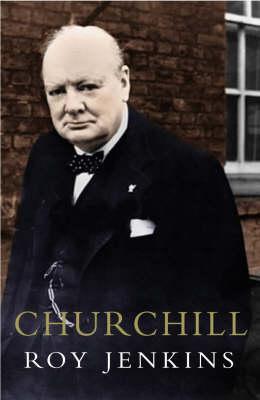 In Brexit Britain one’s attitude towards Churchill is something of a faux-patriotic touchstone. Recently shadow chancellor John McDonnell caused frothing indignation amongst the perpetually offended right-wing of British society when in response to a silly question, “Churchill: hero or villain?” he responded, “Villain,” citing Churchill’s behaviour, when Home Secretary, towards striking miners in Tonypandy.
Of course, one of the reasons that Churchill attracts so much biographical attention is that he is a complex figure.
Considerable portions of Churchill’s career, most notably his resistance to Nazism, are the epitome of heroism. At a human level he was also very funny and impressively magnanimous. For example, he formed a close friendship with Smuts, who he had fought against, and been imprisoned by, in South Africa. Jenkins also suggests, probably correctly, that Michael Collins would have become an enduring friend if he had lived, and one can only regret the consequences to Anglo-Irish relations that he did not.
But other aspects of Churchill’s character and leadership are markedly less attractive. For example his deep grained racism and his unreconstructed imperialism are manifestations of the very worst aspects of British history and society.
That these positive and negative elements resided in Churchill simultaneously, for example catastrophically worsening the Bengal Famine in 1943 while playing a central role in formulating strategy against Hitler, makes him an altogether more interesting and problematic personality than either his acolytes or his detractors might prefer.
Roy Jenkins’ biography of Churchill goes a considerable way towards exploring this complexity across the course of Churchill’s career from youthful imperial war-junkie, to young Conservative MP, to Leftish Liberal cabinet minister, to rancidly bigotted opponent of Indian independence, to prophetic voice against the rise of Hitlerism, to heroic war leader and after. Jenkins also details Churchill’s parallel career as a voluminous writer, a career that ultimately brought him a, somewhat controversial, Nobel Prize for Literature.
There are omissions – there is no discussion of the Bengal Famine – the gravest stain on Churchill’s record, dwarfing even his civilian bombing policy against Germany, his startlingly naïve fawning towards Stalin, and his complicity in the betrayal of Poland to Soviet tyranny, all issues which Jenkins discusses in some detail,
It is very much a political biography focusing on Westminster and Whitehall machinations, and the deliberations of high summitry amongst the “Great Powers.” So it would probably benefit a reader to have some extant knowledge of events in the wider world as they affected ordinary human beings, particularly the struggle for Indian independence, the course of the Second World War, and the Suez crisis.
The book is enriched by Jenkins’ insider knowledge: his early parliamentary career overlapped with that of Churchill; and before rising to the presidency of the European Commission Jenkins was also British Chancellor and Home Secretary, two posts Churchill also held.
Nicholas Soames, currently a Tory MP, tells the story of how, as an eight year old he once intruded on Churchill with the question, “Grandpapa, is it true you are the greatest man in the world?”
“Yes,” said Churchill. “Now bugger off.”
Ultimately Jenkins shares this conclusion, that Churchill was the greatest human being ever to hold the office of British Prime Minister. It is perhaps an easier assertion for a Briton to make than for any citizen of a nation that suffered the bloody consequences of his racism to accept. But Jenkins certainly provides a rich portrait of this compelling personality, one who did so much to shape the Twentieth Century, particularly in relation to the triumph of European democracy.
 This is a very short book. Doubtless a historian of the calibre of Diarmaid Ferriter could have written a considerably longer one. But with a short book there is the hope, however forlorn, that at least some English people might deign to read it.
 Summary: gripping account of a small portion of the Cold War that gives considerable insight into some of the wider issues
 The Social Democratic and Labour Party (SDLP) of the North of Ireland has always been a coalition. There are folk in the SDLP who, if they were living in Dublin or Cork or Galway, would be in Fianna Fáil, or Fine Gael, or Labour. But, faced with an existential challenge around the issues of civil rights and peace, they coalesced into a movement that sought to advance the ideals of social and liberal democracy in the face of horrific violence and sectarianism. Such coalitions are significant in history: Both the African National Congress in South Africa, and Congress in India drew together similar diverse elements in the common cause of liberation.


 Summary: A terrifying and convincing account of the assault of Russian fascists and their useful idiots upon Western democracy
 Summary: a meditation on ethical leadership illustrated with war stories from Comey’s life as a prosecutor and his interactions with President Obama, and the moral and intellectual void that is Donald Trump.
 That is a tradition that has continued across the centuries and across what is now the Commonwealth. From Caribbean leaders such as Mary Prince, to African leaders like Equiano and Cugano, to Asian leaders such as Dr Ambedkar, to contemporary organisations like Piler in Pakistan, OKUP in Bangladesh, Centre for Education and Communication in India, and the Global Alliance against Trafficking in Women. All these have asserted and continue to assert the principles of human rights in opposition to the way the world dehumanises and enslaves others.
 aidanjmcquade