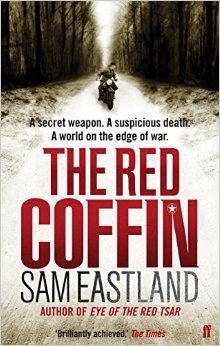
The Red Coffin, by Sam Eastland

imageInspector Pekkala is an honest cop in Stalin’s secret police, the NKVD. So Stalin gives him the job of finding the truth behind the grisly death of the head of the Soviet programme to develop a new tank, the T34, or, as the test drivers have begun to call it, the Red Coffin.

The idea of the honest investigator in a corrupt world is not a new one: Raymond Chandler’s Phillip Marlowe was conceived of as a knight errant updated to his contemporary Los Angeles. More recently Phillip Kerr’s Bernie Gunther, JK Rowling’s Commoran Strike, and Martin Cruz Smith’s great creation Arkady Renko walk similar paths.

What makes Pekkala different is his milieu, that of Stalinist Russia, and Eastland clearly knows this subject well: One comic-dreadful moment is when Stalin sends for an officer he desperately needs only to discover he has already forgotten that he has had the man liquidated.

The resulting book is highly entertaining, but I am not sure wholly convincing. The notion that Stalin would keep a few honest men about is not completely beyond the bounds of credibility: Stalin tolerated Zhukov, for example, because he knew he needed his genius to fight the Nazis.

So the idea underpinning this book is that in the increasing paranoia and terror of Stalin’s purges Pekkala, formerly a special investigator for the Tsar, is kept about for the moments when Stalin needs the truth, not just scapegoats. I am not sure that the relationship between the two would develop to such an extent that anyone would ever feel comfortable about carrying out a practical joke on the psychotic tyrant though.

The resolution of the mystery is also a bit disappointing, arriving in an series of unforced confessions. However a confrontation with a tank on the Polish border at the climax does redeem the book somewhat.

Overall it’s an entertaining book, and the characters of Pekkala and his sidekick Kirov are engaging enough to want to return to the series.

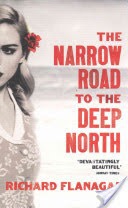
The Narrow Road to the Deep North, by Richard Flanagan

Summary: “Because courage, survival, love – all these things didn’t live in one man. They lived in them all or they died and every man with them; they had come to believe that to abandon one man was to abandon themselves.”

Dorrigo Evans doesn’t have a particularly high opinion of himself. He is an inveterate womaniser, a distant father, a disloyal husband, an excessive drinker, and a sometimes reckless surgeon. Yet, because of his time as a commanding officer of enslaved Australian prisoners of war on the Burma death railway, he is regarded as a national hero. This he regards as somewhat fraudulent, echoing the pretenses of leadership that he displayed in the camps. Dorrigo knows what he is: an officer who failed his men by allowing himself to become complicit in the war crimes of their Japanese captors.

The Narrow Road to the Deep North won the Booker prize in 2014 and trails behind it a mountain-load of praise. It deserves every accolade: it is an extraordinary meditation on war, death, heroism, trauma, love and loss. It is also one of the most difficult books I have ever read.

The centrepiece of the book is an extended account of a single day in the POW camp, echoing Solzhenitsyn’s novel of the gulag, One Day in the Life of Ivan Denisovich. I found this particularly gruelling, the pages suffused with dread for the atrocities that the author has already informed us will occur. Through this section we meet the doomed, struggling to maintain their dignity and decency in the face of the implacable brutality of Japanese militarism. Perhaps not all readers will find this such a difficult section but it took me weeks to read, unable to handle more than a few pages a day.image

I am particularly relieved that I stuck with this. The discomfort of reading about the death railway is as nothing to what those, including the author’s father, suffered on it.

And the novel is ultimately one of profound insight and devastating power: it made me cry more than once. It affirms a theme of Ian McEwan’s Atonement, that war obliterates not only life but love itself, and is unflinching in showing the reader that atrocities are committed by people as human as we are: Dorrigo’s captors go to their graves believing themselves good and patriotic people, more concerned with how they felt about killing than for the actual murders they inflicted on helpless prisoners.

But there are also more redemptive and hopeful notes. In contrast to his captors Dorrigo survives the war thinking himself a bad man, a failure and accomplice to war crimes, thinking that is a product, no doubt, of post-traumatic stress. But Flanagan shows us how, even at our most flawed, human beings may be better than we ever dare to imagine ourselves. Indeed, it may even be our flaws, sometimes, that compel us to heroism.

The Narrow Road to the Deep North is a masterpiece.

How to Speak Money: what the money people say – and what they really mean, by John Lanchester


 Sun Tzu, in the Art of War, argued that war was the most important issue in statecraft, because upon it rested the life and death of nations. But, John Lanchester suggests, economics, and economic policy, which affects the lives of every human being alive and those to come, must be a close second. In spite of this, economics is a remarkably inaccessible subject to most of the people who it so profoundly affects, its language so rarified as to be next to impossible for them to intellectually engage with.

Lanchester blames this on “reversification”, the complex and counter-intuitive nature of financial language. For example a “bailout” of the banks is pumping money into them; “credit” is actually debt; and so forth. So, Lanchester sets about reversing this reversification by providing a lexicon of some of the key economic and financial terms that are current in the contemporary political discourse.

Lanchester is an elegant and witty writer and this must rate amongst the most entertaining books on finance ever written.  Here, for example, is part of his explanation of “Nationalisation”: “[it] had entirely gone out of favour in most of the developed world until governments found they had to nationalise banks in order to save the financial system in 2008.” Or on “Student loans”: “A leading candidate for the next big thing to blow up the US, and perhaps the global, economy.” 

The importance of understanding the language of money is stressed in the book’s afterword. Here Lanchester outlines some of the challenges and dilemmas posed to social cohesion by the neo-liberal economics of much of the English speaking world. For example a neo-liberal approach appears to be the fastest way to create wealth at the expense of increasingly vast inequality. 

Amongst those who speak money and set financial policy in much of the world there is a consensus that this Thatcherite approach is the best model to follow and the growing inequality is the price that must be paid. That a recent study argued that inequality is a principle cause of the collapse of civilisations means that this should be a matter of considerably greater public and political discourse. It is not in significant part because the language of money excludes so many for entering the conversation. 

Lanchester himself expresses profound concern about the potential effects of inequality at the conclusion of the book. “When people say: ‘It can’t go on like this”, what usually happens is that it does go on like that, more extendedly and more painfully than anyone could possibly imagine; it happens in relationships, in jobs, in entire countries. It goes way past the point of bearability. And then things suddenly and abruptly change. I think that is where we are today.”

In providing a guide by which ordinary citizens can more readily engage in the politics of economics Lanchester has written an important book. Let’s hope enough people read it before the life and death of our current civilisation is decided by an elite who are too drunk on champagne and coked up to ever feel the effects of injustice or see the signs of crisis. 

The Silkworm, by Robert Galbraith (JK Rowling)

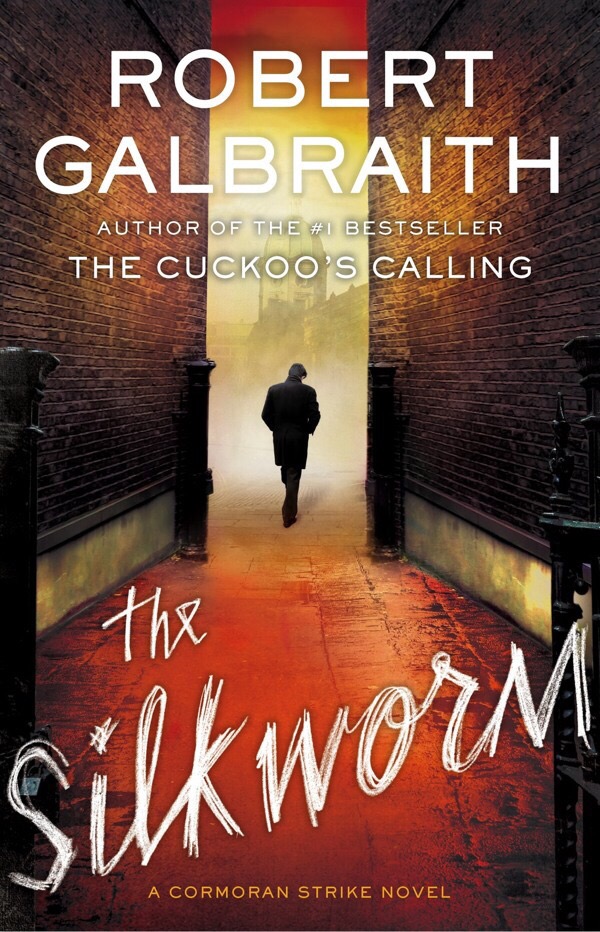
IMG_0259The Silkworm is the second in “Galbraith’s” Cormoran Strike series, following the investigations of the disabled ex-military police investigator as he establishes his private detective practice in central London.

In this book Strike is approached by the wife of an author who has gone missing. Having become somewhat jaded by his caseload of shadowing cheating spouses and corrupt city folk the challenge of a missing person case piques Strike’s interest. So, despite limited prospect of payment, he takes the case.

The milieu of literary London is clearly one that Rowling knows well and much of the plot of the book hinges on an unpublished roman-a-clef by the missing author who has decided to settle a few personal scores by taking swipes at those who have done him wrong over the years. One wonders if Rowling herself has included a few zingers at folk she has taken umbrage with in the past. Whether she has or not, as with her Harry Potter series, she doesn’t let anything get in the way a satisfyingly twisty plot with healthy dashes of humour and an elegant resolution.

It was good news when JK Rowling mentioned the other week that she has seven novels planned for the series. I look forward to seeing how it, and the relationship between Strike and his sidekick Robin develops. Strike, shopworn, world weary, grumpy and wry, is already threatening to become London’s answer to Moscow’s Arkady Renko, or Berlin’s Bernie Gunther

Antony and Cleopatra, by Adrian Goldsworthy

IMG_0239If, before reading Goldsworthy’s magisterial biography, the Caesar of my imagination was essentially Shakespeare’s construct, Antony and Cleopatra for me have always had the faces of Sid James and Amanda Barrie.

However, not that it will surprise anyone, Goldsworthy’s joint biography of the two does rather show that they were not nearly as nice as Carry On would have us believe.

Despite remaining something of a shadowy figure with apparently little of her own direct correspondence remaining, Cleopatra is by far the more impressive of the two. She parlayed, initially, little more than her intelligence and beauty into securing the throne of Egypt for herself by seducing in succession the two most powerful men in the world. Having secured her position she acted with considerable ruthlessness killing her rivals, including her own siblings. Subsequently she poured the resources and treasure of Egypt into the military schemes and political careers of her lovers as a means to secure her own position.

Goldsworthy argues that, in spite of the legends of Cleopatra’s sexual voraciousness, she probably only had two lovers in her life, Caesar and Antony. He presents evidence that there was genuine love from both sides in these relationships in spite of the political calculations that each of the three would also have been considering.

Unfortunately for Cleopatra, Antony was an inferior model of Roman to Caesar. Antony was a talented subordinate but he was a poor general given to heavy drinking, and in later life, particularly following his military reversals in Parthia, depression. His power came to him in considerable part through luck in the turbulent aftermath of Caesar’s assassination. Cleopatra’s grip on power was only as secure as Antony’s and in the end he was no match for Octavian, who, in spite of his apparent lack of physical courage, as he got older began to display a political genius that echoed his uncle’s military variety.

IMG_0238Goldsworthy’s book is a consistently interesting account of the lives of these two, in particular in the chaotic aftermath of Caesar’s assassination and the beginning of Octavian/Augustus’ reign as the first emperor. There is no mention of baths in asses’ milk but, nevertheless, it does entertain albeit in a very different way from Sid and Amanda’s gloriously silly portrayal of the relationship.

With Great Power Comes Great Responsibility: business and the struggle to end contemporary slavery

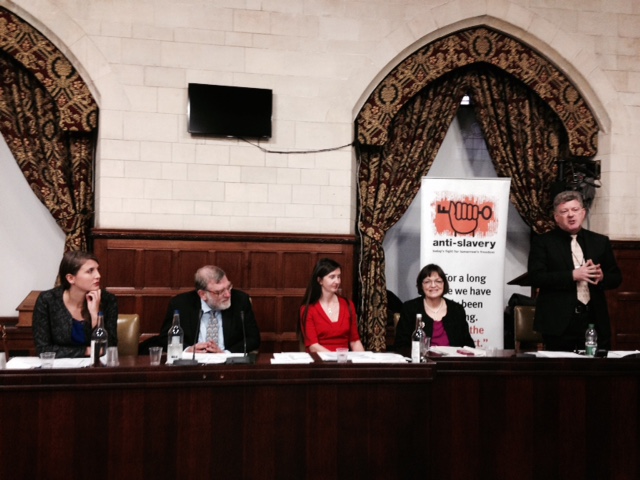
Speech to Westminster event on modern slavery bill and slavery in international supply chains
HoC3I would just like to say a few things:

First of all I think it is fair to say that the fact that there is a decent bill is a tribute to the work of all the parliamentarians involved who contributed considerable time and effort into moving this bill from its original and narrow law enforcement focus to something that gives greater recognition to the humanity of the victims of the crime and the need to look at what is happening in the supply chains of goods and labour both abroad and in the UK.

It’s a particular privilege to be beside Sir John Randall and Fiona McTaggart today and to have the opportunity to thank both of you for your efforts and those of many other people of moral courage and conviction in the Lords and the Commons who made this possible.

Anti-Slavery has been working on the challenges of ending forced labour in international supply chains for many years, and we have been working for over a year now with parliamentarians, civil society organisation, businesses and lawyers to improve many aspects of the Bill and I would also like to take the opportunity to recognise those involved in ensuring that there is a transparency in supply chains clause in this bill. That there is such a clause is a result of business, trade unions and NGO members of the Ethical Trading Initiative, putting pressure on the government to introduce such a measure to level the playing field of international trade between those who wish to trade more ethically and those who are not bothered.

In truth had businesses not added their voice to this demand there would still be nothing in the bill. Adam Smith believed that it was the duty of states to regulate businesses. Today I fear that too many politicians regard their responsibility towards business regulation as being to ask businesses how they wish to be regulated. Which is a more progressive position I suppose than that of the Department of Business which seems ideologically opposed to any sort of regulation.

So I think there is a hard truth in today’s world: that the voice of business carries vastly more weight with government than the voice of conscience.

As Spiderman teaches us: With that great power comes great responsibility. Because while slavery is sometimes an issue of organised crime it is more often an issue of the contemporary political economy. By that I mean it is an opportunistic crime practiced by unscrupulous people who see a chance to exploit others to their benefit as a result of constraints and enablements they discern in the law, regulation and custom by which we conduct employment, production and trade in the contemporary world.

One very real consequence of this political economy is that each of us in this room is probably wearing at least one garment tainted, at least in part, by slavery. Whether as a result of the use of state-sponsored forced labour of millions in the cotton harvests of Uzbekistan, or as a result of the enslavement of Dalit girls and young women in the spinning mills of Tamil Nadu in India, or some other aspect of forced labour, including child slavery, in the weaving, cutting, stitching or finishing of the garments that end up on our high streets.

Just to give one illustration of what that means in human terms: in the course of a piece of research into trafficking in garment manufacture in India Anti-Slavery spoke to the mother of one young 20 year old woman who worked in a cotton spinning mill there. She described visiting her daughter:

“I spoke to her in a room provided for visitors”, she said, “because visitors are not allowed to go inside the mill or hostel. My daughter told me that she was suffering with fever and vomiting often. …I met with the manager and requested him to give leave to my daughter because she was unwell. I told him that I would send my daughter back once she was better. But the manager refused saying that there was a shortage of workers therefore they cannot grant leave. He also assured me that they would take care of my daughter and asked me not to worry.”

A week later she received a message to say now she could collect her daughter. She was dead.

Now frequently when businesses are presented with evidence of slavery or other human rights abuses in supply chains their defence is “But we audit our supply chains!” Such ethical auditing has been going on for years now. So it is reasonable to come to some assessment of its effectiveness. And one of the things that is completely clear is that it has been wholly ineffectual in identification and protection of vulnerable workers, and wholly inadequate in bringing about any reform in the systems of production where forced labour and trafficking are so rife.

That should not be news to anyone because generally speaking the purpose of “ethical auditing” is to find nothing. And should some diligent journalist or non-governmental organisation ever expose the sort of exploitation that is routine in, for example, the supply of cheap garments to our high streets, there is no consequence for those businesses or for any business executives who have knowingly made decisions to source from slavery. Their goods are not excluded from European markets. The executives are not held criminally liable. I am not clear if the lack of extraterritoriality in clause 2 of the bill, the slavery offence, is deliberate in order to guard such executives further.

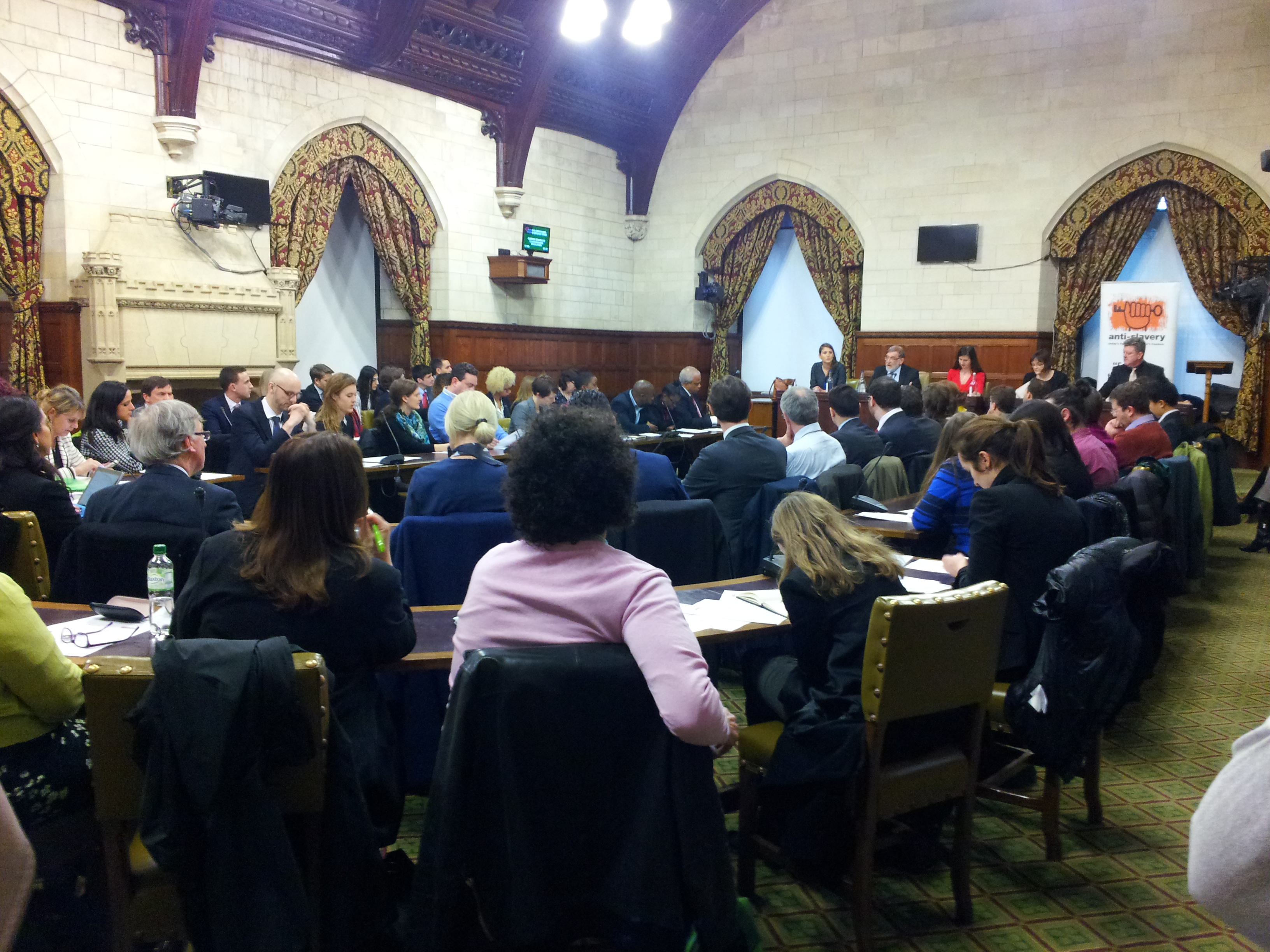
So the transparency in supply chain clause should not be seen as an end but as the beginning of a conversation on how we should seek anti-slavery reform of the contemporary political economy. But for such reform to happen will probably require business people such as yourselves to start the process. And I am encouraged to see a room full of businesses and investors – in fact, this may be the very first time such a large group of NGOs, businesses, investors and parliamentarians has come together to discuss modern slavery.

Investors in particular can begin to change the terms by which we conduct business by engaging on behalf of the ownership on how businesses are responding to the risks of forced labour and slavery in their supply chains. Business leaders can ask this question of themselves and of each other: Are you recognising the risks of slavery throughout supply chains and moving to credibly reduce those risks by ensuring basic protections of workers in those supply chains? Or do you find you are doing business with people who hide behind the comforting myths of ethical audits but in reality care little for the lives that are destroyed in far flung parts of the world because of their decisions?

Businesses must also, I think, begin to engage more systematically with government on these issues. John Ruggie, the author of the UN Guiding Principles on Business and Human Rights, pointed out that businesses have the duty to respect the rights of workers while governments have the duty to protect them. But I am sure that many folk who are in this room today will attest to the fact that it is very difficult to respect the rights of workers if the relevant governments are, either through incompetence or design, failing to protect those workers.

The expansion of globalisation means that the international law governing this new approach to doing business becomes increasingly vital.

The risks of forced labour in international supply chains are compounded because, to use a legal metaphor, there is a prima facie case, I believe, that a number of businesses, countries and regions of the world are basing their competitive advantage on the use of forced labour. Anti-Slavery International investigations in India have shown how the routinized used of the forced labour of girls and young women is now a central feature of garment production for northern hemisphere markets. Further investigations in Thailand have shown how forced labour is a significant feature of production for export markets, most notoriously perhaps in the fisheries that supply prawns to our supermarket shelves.

In both these countries the failure of international rule of law is compounded by a failure of national rule of law. For Dalits in India, for Lao, Burmese and Cambodian migrants in Thailand, the notion of equal protection before the law would be a laughable notion if the consequences of its absence were not so tragic. In India the courts are so overworked that it would take hundreds of years to clear the back log of cases in Delhi alone meaning that factories that use forced labour of vulnerable workers, such as those producing cotton garments in the southern Indian state of Tamil Nadu, can act with virtual impunity. In Thailand, police describe migrant workers as walking ATMs, people to be harassed and extorted from not to be protected.

These are not just national issues. They are issues that should be of concern of British aid and diplomacy if Britain truly wishes to be an international anti-slavery leader. And they should be of concern to all of you if you have the slightest interest in doing business in these parts of the world.

Business must once again take a central role in leadership of the anti-slavery struggle. Businesses can begin with more rigorous investigations of supply chains with the intent to identifying and remedying problems that affect the rights of workers and communities rather than focusing primarily on managing risks to reputation and brand. Where the causes of slavery or other human rights abuses lie beyond the control of businesses, they are very well placed to pressure governments to do their job of protecting human rights.

Many of you will be aware of the challenges of forced labour in Thai fisheries. Anti-Slavery International is currently working with a range of UK retailers, many of whom are in the room today, on a unique pilot project to identify and address the risks of forced labour in supply chains and empower workers to access remedies. This work is very much about partnership between business and civil society, risk assessment and due diligence, rather than the traditional “audit” approach. At the same time, the work in Thailand highlights how governments are failing to protect workers in a range of industries and business can play a vital role in putting pressure on governments to act properly.
committee meetingI regularly meet business and political leaders who are forthright in their opposition to the very principles of slavery. I am pleased to see that many of them have also recently begun to publicly show the depth of their moral courage by also seeking practical measures to end slavery. Many have added their voice to ours to send a strong message to the UK government on the importance of transparency in supply chains.

But all of us here have some measure of power to do more. As the Modern Slavery Bill reaches its very final stage next week, I would also like to encourage all of you in the room and especially those that represent business and investors to respond to the government consultation on supply chains. Your response will be key in ensuring that there is parity and coherence in reporting, that those businesses that lead the way will not be undermined by those who choose not to report or make minimal efforts to disclose.

I would also like to invite all of you to build on the collaboration across sectors and work further with civil society on addressing modern slavery.

We can turn away and hope somebody else we sort modern slavery out. Or instead we can grasp what opportunities present themselves to us and strive for reform and emancipation, and in the process help change a moment of history for vulnerable people across the world.

Comfort to the Enemy, and other Carl Webster stories, by Elmore Leonard

IMG_0183Comfort to the Enemy is a book of two short stories and a novella, all focussing on Leonard’s character Carlos Webster, United States Marshall, and star of another Leonard novel, The Hot Kid.

This book starts with a short story recounting Webster’s first encounter with hoodlums in his teens and ends with the novella, Comfort to the Enemy, in which he, sort of, investigates a killing at a German prisoner of war camp in Oklahoma.

Carl is a Western archetypal ideal: taciturn, polite, smart and extremely gifted in the art of violence. He is strikingly similar to another Leonard character of a later era, Raylan Givens, the marshall protagonist of the glorious television series Justified, though with an altogether more settled family life – one could never imagine Carl’s upright and sympathetic father Virgil ever trying to kill him – and a less fraught relationship with booze.

The two short stories, Showdown at Checotah, and Louly and Pretty Boy, and the novella Comfort to the Enemy, are lovely exemplars of Leonard’s spare and laconic storytelling style, gently compelling, funny and exciting by turns. Great stuff!

The Rise of Islamic State, by Patrick Cockburn

imageThe Rise of Islamic State is a short book but an extremely important one. Cockburn, a veteran Middle East correspondent, lucidly describes how Islamic State has arisen as a concrete legacy of Bush and Blair’s inept and illegal invasion of Iraq. He also unpicks the political and military quagmire currently extant in that region.

Cockburn identifies Saudi Arabia as the primary source of financial support for Islamic State (DAESH) and its predecessor Al Qaeda, and the origin of its barbaric “jurisprudence”. However in the aftermath of 9/11, or indeed at any time subsequently it seems, rather than confront Saudi Arabia, or Pakistan with its murky ties to international terrorism, the Bush administration instead invaded Iraq, a country that, for all the brutality of Saddam had nothing to do with the 9/11 attacks.

George W Bush, with his pal Prince Bandar bin Sultan,

George W Bush, with his pal Prince Bandar bin Sultan, “godfather” of DAESH (Islamic State)

One can only imagine how Prince Bandar bin Sultan, the Saudi ambassador to the US, an instigator of the Iraq invasion and frequent house guest of George Bush, must have giggled to himself at how easily led the US was towards advancing Saudi Arabia’s brutal foreign policy without Saudi ever having to get its hands dirty. As head of Saudi intelligence subsequently, from 2012 to 2014, Bandar was the key individual responsible for backing DAESH against Shia and minorities in the region and so helping them become the potent military force they currently are.

Cockburn points out that while DAESH may not be loved by the Sunni population of Iraq, they are tolerated by them because the alternative, perhaps unbelievably to some, would be much worse for them. The bigoted, pro-Sunni extremism of DAESH Wahhabism is mirrored by the brutality and sectarianism of the Shia militias that the US and UK supported Iraqi government have been sponsoring.

Which brings us to the present: the Obama administration’s efforts seemed to be towards a detente with Iran as an element in not only a nuclear non-proliferation strategy but as one, along with support for the Kurds, against DAESH.

The desire of the US Congressional Republicans in collusion with Netanyahu to undermine a deal with Iran seems peculiar. However this is in keeping with the ineptitude and dysfunctionality of US Middle Eastern policy over the past 15 years, something made altogether more terrifying when the shallow but fevered imaginings of Donald Trump are brought to bear on the situation.

However one should also recognise that US policy towards the region now appears to have much in common with that of the UK. Both seem to value the possibility of profiting from the sales of arms to Saudi Arabia rather than actual regional security. In the end perhaps the US and UK will gain the same comfort as the gun store owner who at least has the satisfaction of knowing he sold the gun to the psychopath who murders him.

All too human: war and terrorism in the contemporary world

Picasso's Guernica

Picasso’s Guernica

In the aftermath of the recent spate of atrocities by Islamic fundamentalists it is probably worth focussing on a couple of points that have been obscured in the rush to condemnation.

First this sort of atrocity is nothing new in modern history. Ordinary Germans routinely massacred civilians in Eastern Poland during the Second World War. Much of the RAF bombing campaign on Germany during the same war was indiscriminate and killed thousands of old people, women and children. American troops in Vietnam regularly butchered Vietnamese civilians. Irish paramilitaries slaughtered both compatriots and British civilians alike. The last vestiges of the notion of Israeli “purity of arms” died in the slaughterhouse Prime Minister Netanyahu created in Gaza in the summer of 2014. In fact in the sweep of human history the idea of refraining from making war on civilians has been rather unpopular, and the wars emanating from, and waged in the contemporary Middle East are no exception.

The notion that Muslim atrocities are somehow qualitatively different and beyond the moral pale of what the Western world would contemplate is laughable, and must be even more laughable to those who, in recent years, have been on the receiving end of the violence of the West and its allies.

However it does seem plain that at this point in history there is a significant sub-culture within the European Muslim community which is alienated from the democratic ideals of wider European society, and within that, a smaller minority which is prepared to resort to violence and terrorism both in Europe and abroad as an expression of this alienation.

A lot of the focus in the aftermath of the most recent attacks has been on the need for European Muslim community leadership to combat this alienation. Such leadership has and will continue to have considerable potential to lead young people away from violence and towards more constructive roles for their community and wider society. But it is disingenuous to presume that the reason that young people are engaged in violence to the current extent is because of failures in the leadership of the Muslim community.

To presume this may be comforting to non-Muslims, as it implies that we have no responsibility for Muslim alienation. But it is not a response to the violence that will leave a single individual anywhere in the world any safer or more protected from random and brutal terrorism.

Goya's Shootings of the third of May

Goya’s Shootings of the third of May

Because, of course, alienation and terror on this scale never occurs in a vacuum. Just because the wider society is unaware of the narrative that is justifying that terrorism to its perpetrators does not mean that such a narrative does not exist. And just because the narrative may be filled with distortions and logical inconsistencies does not mean that it is any less compelling to its adherents.

What should be apparent to even the most myopic of observers is that the fundamentalist violence that we have witnessed in Europe over the past 10 years comes in the context of a much wider system of violence. And, as Patrick Cockburn has put it, “It is inevitable that sparks from these conflicts land in Western Europe and other parts of the world.”

For many in the West this cycle of violence started with the attacks on the World Trade Centre. However Muslim grievances predate that. For example the West’s acquiesce in an emerging system of Israeli imposed apartheid in Palestine or the horrific brutality of the wars in Algeria are both capable of providing alternative points of origin for a narrative in which 9/11 seems no less and no more justifiable than Dresden or Nagasaki. And the brutal conduct of the bloody fiasco in Iraq has sustained the flow of grievance.

European Muslims are likely to have similar reactions to injustices against Muslims in Gaza or elsewhere as Irish Americans had against British injustice in the North of Ireland. However the danger, from a contemporary point of view, is that the US wasn’t seen as being complicit in British injustice. Today Europe, in particular the UK, may be closely and ignominiously identified as being complicit in the bloody mess of Iraq and Israel’s violence against Palestinians.

In other words, distasteful as it may seem to some, the current spate of Islamic fundamentalist terror is a political problem. It is not an Islamic versus Western ‘clash of civilisations’, though some would like it to be portrayed as such: Netanyahu’s cynical elbowing to the front of a Parisian photocall with international leaders in the aftermath of the Charlie Hebdo attack was a physical assertion of this idea. He intended to convey to Europe and beyond that it has no choice but to stand alongside his militarism. Rather what we see is a set of wars of varying sizes and asymmetries that are born from fundamental human and therefore political issues of injustice, violence, alienation, cruelty and stupidity.

But if we can accept that this fundamentalist violence is the consequence of a more mundane set of political problems then we can recognise that it requires political solutions, or at least a political process, to address the causes of alienation alongside the security response necessary to attempt to fend off future attacks.

Picasso's Rape of the Sabine Women

Picasso’s Rape of the Sabine Women

The full extent of the political agenda that should be followed will be considerable and international in scope. It may necessarily include consideration of the question of reconciliation between French and Algerian peoples. It should probably include confrontation of Pakistan and in particular Saudi Arabia as countries that have been the ideological reservoirs, financiers and facilitators of much of the terror that is currently plaguing the Middle East and the world. Unquestionably one element must be the robust pursuit of a just peace between Israel and Palestine, instead of the international acceptance of the quasi-apartheid that currently pertains. This will require the Jewish community bearing a heavy burden of leadership comparably to that required of non-violent Muslim leaders: the one thing the current Israeli government and its apologists seem afraid of is ordinary Jews publicly repudiating the Israeli government’s extremist policies and racist attitudes. Such sanction carries with it a credibility that non-Jews, lacking links to the appalling tragedy of Jewish history, could never hope to attain.

An international political process that openly seeks to deal justly with grievances would provide political weight and credibility to those leaders and citizens, particularly Muslims, who wish to pursue the path of non-violence. Without it, those same advocates for peace will be rendered much less effective, twisting in the wind as the West blunders on repeating the patterns of the past 10 years with brutal and inept military responses to problems emerging from countries and societies that we barely begin to understand.

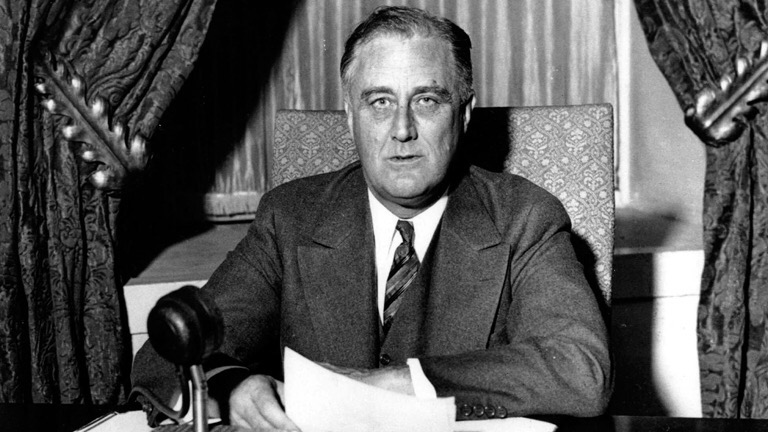
Traitor to his Class: The Privileged Life and Radical Presidency of Franklin Delano Roosevelt, by HW Brands

IMG_0172Franklin Roosevelt, the only US president elected more than twice, is generally viewed alongside Lincoln and Washington as the greatest of American presidents. This biography is an elegantly written survey of his life, times and accomplishments.

At the outset of his life it seemed the world was his oyster. He was born into considerable wealth and a prominent family – cousin Theodore was a Republican president. As was typical of his class much of Roosevelt’s upbringing was left to nannies and servants. Peculiarly Brands suggests that two of these servants, Helen McRorie and Elspeth McEachern, because they were from the North of Ireland, cemented his anglophilia. For those familiar with the politics of Ireland, the Catholic name of Helen McRorie would rather suggest that she may have been a significant source of his radicalism: It is more than probable that she was from the nationalist community and brought with her deeply felt memories of marginalisation and discrimination at the hands of the British and Unionist establishments in Ireland. Indeed this awareness of the nature of British colonialism may have added conviction to Roosevelt’s advocacy of Indian independence during the war.

Roosevelt’s privileged youth led him to Harvard and then a political apprenticeship in New York politics, thence to a spell, including the duration of the US involvement in the First World War, in the federal government as Under-Secretary of the Navy in the Wilson administration.
eleanor-rooseveltBut the seeming gilded path was somewhat illusory. His wife, an extraordinary person in her own right, Eleanor, was almost certainly gay, and so, as their marriage progressed it became less a loving relationship and more a political alliance of close friends. Roosevelt’s life was further cruelly marred by a bout of polio which deprived him of the use of his legs. Following a period of rehabilitation however he found his way back to electoral politics eventually becoming governor of New York and then, in 1932, president.

His accomplishments in this role were considerable: the “New Deal”, a rearrangement of the political economy of the United States, helped bring an end to the Depression, introducing banking regulation, promoting labour rights, founding social security and ending child labour in the process. His leadership of his country in the Second World War was decisive in the defeat of the Axis, and the United Nations remains one of his most enduring international legacies.

Part of Roosevelt’s success derived from his legendary charm, but beneath this there was unquestionable steel, tempered by his personal travails, but constantly under control. The strain that this placed on him was not inconsiderable: observers noted his exhaustion at Yalta from trying, perhaps a little naively, to charm Stalin away from his murderous, imperialist ways. And the pressure of the presidency through the crises of war and peace contributed to Roosevelt’s relatively early death.

Traitor to his Class is a fine introduction to one of the pivotal figures of the twentieth century and his times. Still, in spite of this, at the end Roosevelt seems a rather remote figure. It is as if the restraint and reserve he showed through life still renders him somewhat unknowable today. Nevertheless, as Eleanor noted at his death, “If at the end one can say: “This man used to the limit the powers that God granted him: he was worthy of love and respect and of the sacrifices of many people, made in order that he might achieve what he deemed to be his task,” then that life has been lived well and there are no regrets.” And in Roosevelt’s case, the liberty of western Europe emerged from his life, and those of us who live here must always remain grateful for that.