From a talk given as part of the New Perspectives on 1916 series, organised by the Sheehy Skeffington Language School, Castlewellan, Co. Down
 Casement’s revolutionary nationalism often overshadows his considerably greater achievements as a human rights and anti-slavery activist. So I would like to take the opportunity to consider in greater detail this contribution before reflecting upon Casement’s continuing legacy as one to the Twentieth Centuries towering human rights figures.
The Congo Investigaton
Casement had considerable experience of various parts of Africa, from his work in commercial enterprises, before he joined the British Consular service. Adam Hochschild, in his extraordinary book King Leopold’s Ghost, notes how Casement’s reports frequently drew attention to the atrocities committed by colonial authorities against local Africans. But this was mere prologue to Casement’s first major contribution to the field of human rights: his official 1903 investigation into the abuses in the Congo by King Leopold of Belgium.
Leopold had been granted personal possession of the Congo at the 1885 Berlin conference, in which the European powers carved up Africa, and he proceeded to plunder it with ruthless abandon, all the while telling the world that he was undertaking a civilising mission to develop the country and protect its peoples.
Hochschild, notes how in 1907 an exhibition of Congalese art toured Europe, no doubt to show how Leopold’s patronage of the country was an enlightened one. To this day the Congalese art of Angola and Congo is very distinctive. I remember the first time I encountered it in the markets of Angola where I worked during the civil war, and the shock of familiarity that it brought. Because it was at this exhibition that Picasso and others first encountered Congalse art and were inspired to experiment with cubism, something I had previously presumed was a distinctly European art form, but which I discovered was in fact a very African one.
But the wealth that Leopold was interested in was not art but ivory and, most disastrously for the human beings who lived in Congo, rubber.
The end of the 19th Century saw a surge in demand for rubber and the catalyst for this demand was the 1890 invention, by John Dunlop in Belfast, of the pneumatic tire, the first of which Dunlop fitted to his son’s tricycle. This new technology contributed to an increased interest in cycling and with the advent of the automobile yet more demand for rubber.
This was a demand that Leopold was more than happy to try to satisfy. And, in order to satisfy it he oversaw a dramatic escalation of violence and slavery in Congo.
One common punishment for the failure to satisfy the quotas for rubber demanded by Leopold’s officials was the hacking off of hands. But this was by no means the worst of the depredations brought by Leopold’s reign in the Congo.
Casement recorded in 1887, before he became a British Consul, a conversation he had with a member of Leopold’s private army, the Force Publique, who told him how he paid his soldiers the equivalent of two and a half pence “per human head that they brought him in the course of any military operation he conducted. He said it was to stimulate their prowess in the face of the enemy.”
In 1899 another state officer told an American missionary, Ellsworth Faris, about the killing squads he had under his command, stating that each time his corporal “goes out to get rubber, cartridges are given to him. He must bring back all not used and for every one used he must bring back a right hand.” This officer told the missionary that in 6 months in one part of the Congo his men had used 6,000 cartridges. But, Faris noted, it must mean that more than 6,000 people had been killed or mutilated as he had been told repeatedly that the soldiers killed children with the butts of their guns.
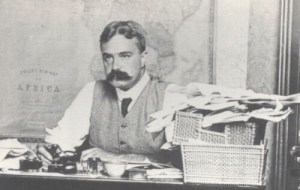 One of the first people to realise what was happening in the Congo was a young British shipping clerk called Edmund Morel. Morel, who was based in Antwerp, was involved in shipping cargo to Congo and also overseeing the cargos that returned loaded with what Leopold was telling the world was the results of a legitimate trade with the place. But while the cargos coming back were enormously rich, including rubber and ivory, the products going out were predominantly military stores, firearms, ammunition and whips.
Morel thought about this for some time and realised that the only explanation for such a lopsided trade could be that what was happening in the Congo was not fair trade but plunder. Indeed this was plunder that was being facilitated by enslavement and mass murder on almost industrial scales.
Casement’s 1903 report was one of the most high profile and damning indictments of Leopold’s reign in the Congo. It was commissioned following considerable pressure and agitation by Morel and his allies in parliament. Following the passage of a resolution in May that year in the House of Commons, “that the Congo natives [as the human residents were typically called in those days] should be governed with humanity”, the British government commissioned Casement, then its consul at Boma in the Congo Free State, to investigate the human rights situation.
Casement was already keenly aware from his years in Africa just what the nature of Leopold’s rule was. But this commission gave him the opportunity to do something about it.
In order to conduct his research Casement hired a steam boat from some missionaries and travelled for three and a half months through the upper Congo Basin. As he prepared to set out he knew that the trip was going to be a difficult one and noted an African proverb: “A man does not go through thorns unless a snake is after him, …or he is after a snake. I’m after a snake. And please God I’ll scotch it.”
In the course of these investigations he interviewed workers, overseers and mercenaries throughout the region, including 17 days at Lake Tumba where the state ran directly its rubber slavery operations. He described his expedition as “breaking into the thieves’ kitchen.”
The eyewitness report that Casement delivered in 1904 detailed the devastation that Leopold’s rule brought to individuals and communities. Large areas of the country had been depopulated. The use for forced labour was systemic and torture, mutilation and murder routine and practiced with impunity by state officials.
It was on his return to Britain and Ireland to present the report that Casement and Morel finally met for the first time. And, during a subsequent meeting in the Slieve Donard hotel in Newcastle they agreed to establish the Congo Reform Association to campaign for an end to Leopold’s atrocities. Morel was the public face and voice of this movement because Casement was still a civil servant. But Casement remained an key adviser and strategist in the agitation the followed the publication of the report.
The subsequent agitation by Morel and others, led to demands for action to relieve the situation of the Congolese. The international public and diplomatic pressure finally led to critics of Leopold’s Congolese policy in the Belgian Parliament to finally force Léopold to set up an independent commission of inquiry. In 1905, this confirmed the essentials of Casement’s report, and led in 1908 to the Belgian parliament taking over the administration of the Congo Free State.
It is estimated that Leopold’s rule in the Congo had brought about a halving of the population to around 10 million by 1924. Certainly that was not the end of the colonial tribulations of the Congo: Belgian rule never obtained a reputation for enlightenment. And to this day the wealth of the Congo is fought over by ruthless and blood-thirsty regional and international actors. But the efforts to which Morel and Casement contributed so decisively brought an end to a genocide, and that is an achievement of historical proportions.
The Peruvian Amazon Company
Casement’s second major human rights intervention also related to slavery atrocities associated with rubber, but this time in Peru in South America rather than in Congo.
The Peruvian Amazon Company (PAC) was registered in Britain in 1908 and had a British board of directors and numerous stockholders. However by as early as September 1909, a journalist, Sidney Paternoster, had published accounts of abuses against company workers. In addition, the British consul at Iquitos had said that Barbadians, considered British subjects as part of the empire, had been ill-treated while working for company. This gave the British government a reason to intervene.
So again Casement was commissioned to investigate. He made his first trip to the Putumayo District in the Amazon basin, where the rubber was harvested, in 1910. Like the upper Congo basin where he had helped uncover the abuses perpetrated by Leopold this area was very isolated. Casement found that for years, the indigenous people of this area had been forced into unpaid labor by the personnel of the Peruvian Amazon Company, who exerted absolute power over them and subjected them to near starvation, severe physical abuse, including branding and whipping, rape of women and girls by the managers and overseers, and casual murder.
Casement found conditions as inhumane as those in the Congo. As in the Congo he interviewed both the abused and the abusers in an effort to provide a thorough understanding of what was going on.
Casement’s report was described by Fintan O’Toole, the Irish Times journalist, as a “brilliant piece of journalism“, as he wove together first-person accounts by both “victims and perpetrators of atrocities“. Casement’s Congo report had been anonymised by the Foreign Office, but in this report, as O’Toole notes, “…distant colonial subjects [were] given… personal voices in an official document.”
The publication of the report provoked many expressions of shock and horror by the wealthy board members of the Peru Amazon Company and the Peruvian government. As we still see today when exposes of slavery in international supply chains are made, diverse commitments were made to make changes. So in 1911, the British government asked Casement to return to Peru to see if promised changes in treatment had occurred. In a report to the British foreign secretary, dated 17 March 1911, Casement detailed the rubber company’s continued abuses.
Little substantive had changed and, summing up to a parliamentary select committee the conditions of the indigenous people forced to gather rubber he said “These people have absolutely no human rights much less civil rights. They are hunted and chased like wild animals.”
After his return to Britain, Casement continued to work with others, including the Anti-Slavery Society, as Anti-Slavery International was then known, to bring change to the region.
Some of those Casement had exposed as killers in his 1910 report were charged by Peru. But most fled the region and were never captured.
Ultimately the growth of farmed rubber began to reduce the demand for the wild rubber that had contributed to these depredations. But the positions of indigenous peoples across South America are still poor and many are still exploited and enslaved to this day.
The human rights legacy of Casement
Now both these investigations were considerable achievements in their own rights and the impact of the Congo investigation in particular, which contributed significantly to the ending of a genocide, should be recognised as a major historical achievement. But it is not, predominantly, for these things that Casement is remembered in Ireland, though he fares better than Morel who is barely remembered at all in Britain.
Fintan O’Toole suggests that Casement has a good claim to be the father of twentieth-century human rights investigations. He described Casement as, “a one-man precursor of Human Rights Watch and Amnesty International.” But I think this is perhaps an over-egged assertion.
Casement was very much a part of an already well established tradition of human rights investigation that had been pioneered by Anti-Slavery International, beginning with the investigations undertaken by Thomas Clarkson into the trans-Atlantic Slave trade at the end of the eighteenth century. This tradition was exemplified also by Edmund Morel in Casement’s own day. It is a tradition that continues to this day with journalists like Pete Pattisson, and the staff and partner organisations of Anti-Slavery itself who continue to expose these sorts of abuses across the globe.
So if one is seeking a more distinctive legacy from Roger Casement I would suggest that his human rights legacy lies in two other areas.
First towards the end of his life Casement would draw direct analogies between the plight of the Irish people and the indigenous peoples of Peru or the Congo. At the historical remove of 21st Century Ireland, some may find such analogies strained, though I suspect they may have been found less strained at the turn of the 20th Century. But however one may view those analogies I think it is important to recognise that they express an understanding of the common humanity that we all share. And that is an important and politically potent legacy, because it brought with it a repudiation of racist strains of Irish nationalism that had been espoused by national disgraces such as John Mitchell, whose virulently racist and pro-slavery views Irish leaders as distinguished as Arthur Griffith were still defending in Casement’s own day.
And this legacy remains relevant today because it brings with it a repudiation of the ghoulish forces of extremity, from Donald Trump to Nigel Farage, and their pathetic fellow travellers, who seek to stoke fear and division amongst ordinary human beings in the dangerous and fragile times in which we live.
This universalist view of humanity was apparent in Casement’s speech from the dock when he argued that “whe[n] men must beg with bated breath for leave to subsist in their own land, to think their own thoughts, to sing their own songs, to garner the fruit of their own labours … then surely it is a braver, a saner, and a truer thing to be a rebel in act and deed against such circumstances as this than tamely to accept it as the natural lot of men.”
This commitment to an ideal of common humanity is one of the reasons why that speech was so resonant with Nehru and so many of the anti-imperialists of the early twentieth century. And it is that commitment to an ideal of common humanity that underpins and distinguishes true human rights struggles from sectarian or sectional agitations.
The other significant strand of Casement’s human rights legacy is, I think, tied up with the final portion of his life.
Casement’s conversion to revolutionary nationalism, to anti-imperialism, was not divorced from his human rights work, but rather, I think, an evolution of it. Now you can agree or disagree with some of the choices that he made, but what I think is undeniable was that what Casement properly discerned was that the systems of slavery and genocide which he did so much to expose were not aberrations from the colonial order but consequences of it.
Hochschild notes how Casement used to have arguments with Morel where he would take Morel to task for his assertion that the UK was less malevolent that other colonial powers. Now I think there may be a case that can be made for that if you are a historian and have nothing better to do.
But Casement’s point was more fundamental. It was that the entire system of colonialism was by its nature exploitative, and consequently violence and atrocity where intrinsic to it. Remember that the Famine, which halved the Irish population as a direct consequence of a combination of incompetent, racist and ideological British policy, was within living memory at the beginning of the Twentieth Century. And the British Empire visited similar carnage again on Bengal in 1943, something that the Conservative British historian Max Hastings, who is a sincere admirer of Winston Churchill, described as Churchill’s “unfinest hour” such was the level of Churchill’s culpability that he discerned for the carnage that engulfed that part of India during his premiership.
So the British Empire was not immune from comparable excesses to Leopold, or the Conquistadors, or the American Expansion into the West of North America, or the French in South East Asia, or the Zulu or Ethiopians as they sought to expand their empires in Africa. And this should not be surprising. Exploitation was fundamental to colonialism, and consequently violence and atrocity are intrinsic to that system.
Now the age of Empires has faded away, but I would argue that one of the key human rights legacies of Roger Casement is the insight that human rights abuses are a product of unjust political economic systems.
Just to define a term for a moment – by political economy I mean the laws, policies, customs and practices that we as a human society use to govern employment, production, trade and the ways we do business.
Colonialism was a particular system of political economy, but the sweeping away of colonialism has not seen its wholesale replacement with more just systems. Instead we see new systems of power established within which exploitation and slavery continue to thrive.
Casement may have, famously, been ‘hanged upon a comma’ given the ambiguities of the Treason Act under which he was prosecuted. But, let’s not quibble too much: he was a revolutionary and a committed anti-imperialist, captured in time of war under arms against the British Empire. He understood, as he said in his speech from the dock, that while others of his contemporaries had take paths that they hoped would lead to the Woolsack, the Lord Chancellorship, he had taken a path that he knew must lead to the dock. The British Empire never had a reputation for compassion and understanding to those who sought to rebel against the vested interests who profited so richly from colonialism.
But, perhaps, given this, it is apt to reflect for a moment on the aphorism: “Treason doth never prosper, what’s the reason? For if it prosper, none dare call it treason”.
Because the same is true for slavery. When it prospers none dare call it slavery. You may sometimes hear it said that slavery is today everywhere illegal. That is no more true today than it was in Casement’s own day. Slavery is sometimes perpetrated by criminal gangs breaking robust laws in spite of considerable efforts of law enforcement.
However it is vastly more common across the world for slavery to be, de facto, a legal enterprise.
For example it is not uncommon for states to establish systems of tied visas that facilitate unscrupulous employers to exploit up to the level of enslavement migrant workers. This is a particular feature of the political economies of Malaysia and the Gulf states. These systems deny migrant workers the rights to quit their jobs or even to return home without the explicit authority of the employers. The level of exploitation and contempt for human lives that emerges from such systems is going to mean that the 2022 World Cup in Qatar is likely to be the bloodiest sporting event since Julius Caesar’s funeral games.
Tied visas are also a feature of the system by which overseas domestic workers in the UK are trafficked for domestic servitude. Irrespective of what the British Government says about wishing to be a world leader in the struggle against slavery, the sordid truth remains that the UK government has de-facto legalised trafficking for forced domestic servitude within its own borders. Tied visas are also a feature of the exploitation of migrant fishermen working in Irish waters.
If you still doubt the effective legality of slavery in parts of the world consider the case of North Korea. The North Korean government finances is nuclear programme as well as its repressive security apparatus and the luxurious lifestyle of Kim through the trafficking of its own citizens to forced labour in China, Russia, Poland and Malta, a trade that the UN Special Rapporteur on Human Rights in North Korea estimates to be worth over USD 2 billion annually.
Or again, in Uzbekistan and Turkmenistan in Central Asia government-organised forced labour is the principle means by which these countries harvest one third of the world’s cotton.
In other parts of the world slavery is facilitated by the simple expedient of ignoring the law. India has much decent law against slavery. But the lack of capacity of the courts, the corruption of the police, the ingrained practices of caste- based apartheid across much of South Asia, and the refusal of the various Indian state and union legislatures to do anything about these systemic failures means that for tens of millions of the most vulnerable people, particularly those from the Dalit and Adavasi communities, these laws means nothing, provides no protection from abuses and fewer guarantees of decent work for themselves or their families.
A consequence of the routine use of slavery in Central and South Asia is that anyone who is reading this who is wearing cotton is probably wearing at least one garment that has been manufactured, at least in part, by people in slavery.
So, while the urgency of the twentieth century anti-imperial struggles may have diminished Casement’s human rights work resonates still, not simply because of the scale of the remaining challenges, but because of the ideals that he espoused, of fraternity in the struggle and clear sightedness about the causality, are still vital.
But before anyone despairs, remember that slavery, human exploitation and the abuse of human rights are political issues and hence they demand political solutions. And the shapes of those political solutions are already apparent.
In 1894 Casement wrote an unsuccessful protest against the execution by Germany in Cameroon of 27 soldiers and their wives. The soldiers had mutinied in protest against their wives being whipped. In it he said, “… we all on earth have a commission and a right to defend the weak against the strong, and to protest against brutality in any shape or form”.
That remains I think a potent challenge to all of us to this very day. And if we have the courage to grasp it, we may find we are able to change the world, just a little bit, for the better.

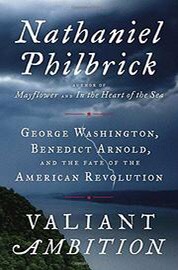 Valiant Ambition is a sequel to Philbrick’s Bunker Hill. That prior book dealt with the origins of the American War of Independence in Boston, and covered key events including the Boston Massacre, the Tea Party, the initial clash of arms at Lexington and Concord, Bunker Hill, where the American’s didn’t shoot until they could see “the whites of their eyes”, and Washington assuming command on the death of General Warren and finally driving the British from the city.
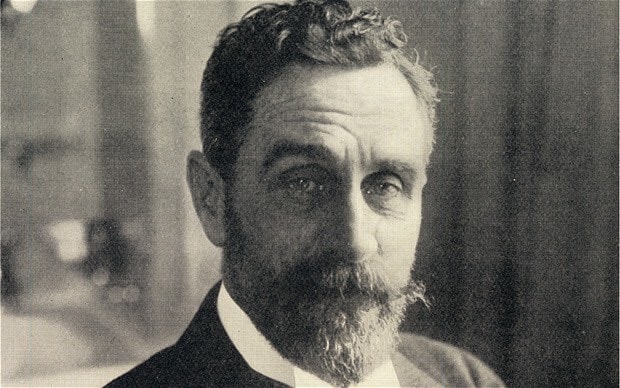


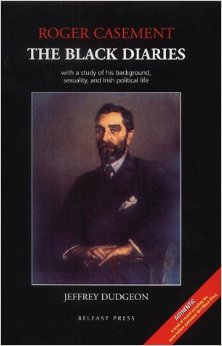
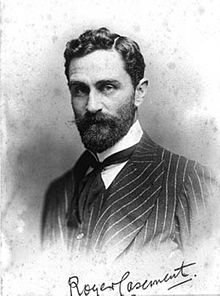 On 3rd August 1916 Roger Casement was executed for high treason in Pentonville Prison, London. He was the last knight of the realm to befall such a fate in the United Kingdom.