
 Summary: A terrifying and convincing account of the assault of Russian fascists and their useful idiots upon Western democracy
Timothy Snyder’s Bloodlands, like Ron Chernow’s biography of Alexander Hamilton, is a book that makes you fundamentally rethink your understanding of history. With The Road to Unfreedom Snyder makes us fundamentally rethink our understanding of the present.
The recent political success of far Right elements in the UK, Poland, Hungary and the US are not mere fluctuations in normal politics, Snyder argues. Nor are they solely a product of domestic political turmoil. They are also a consequence of a deliberate and aggressive foreign policy pursued by Vladimir Putin in order to undermine the systems of rule of law that underpin the democracies of the US and the European Union.
Synder argues that since 2010 Vladimir Putin has embraced a particularly Russian brand of fascism, with its pronounced homophobia, as a way in which to entrench in Russian society the kleptocracy over which he presides. Richard Evans, the distinguished British historian takes some issue with this, noting that Putin’s favorite thinker, Ivan Illyin, was a conservative ultra-nationalist rather than a fascist. However the authoritarianism that Putin has established, like fascist regimes of the past, defines itself by its enemies, and for enemies Putin has chosen the European Union and the United States. Snyder notes that this is not because of anything that these have done, but rather because of what they are. The EU in particular stands as a telling contrast to the Russian Federation. Russia’s thieving oligarchs have made it the most unequal country on earth. On the other hand the EU has provided a better standard of living for its people within the frameworks of human rights and the rule of law, ideas anathema to Russian fascism.
Authoritarianism arrives, Synder notes, “not because people say that they want it, but because they lose the ability to distinguish between facts and desires.” Hence much of Putin’s assault has been in the realm of cyber-space: weaponising systems like Facebook to direct focused, usually fictional, racist, homophobic and anti-democratic propaganda to the users in a way that distorts their perceptions and bolsters their prejudices; or surreptitiously hacking vital information systems, such as those underpinning the US and Ukrainian electoral systems. These cyber-warfare processes are assisted by an array of corrupt “assets” and “useful idiots” who publicly advocate Russia’s desired outcomes even while Putin is attacking their own countries. These include former Ukrainian President Viktor Yanukovych, the Czech President Milos Zeman, former Polish Defence minister Antonio Macierewicz, Marin le Pen, the French Far Right leader, Nigel Farage, the disgusting former leader of the UKIP, Seumus Milne, Jeremy Corbyn’s current communications and strategy director, and, of course, Donald Trump and many of his inner circle.

Putin and his boy
The success of Russian disinformation can be seen in the pages of even the Guardian, which has published puff-pieces for Putin by supposedly Left-wing journalists such as Milne and John Pilger, whose opinions have been untroubled by actual reporting. It is enabled further by the refusal of British and US Republican political leaders to acknowledge the effectiveness of Putin’s undermining of their democracy.
Carol Cadwalladr’s investigations for the Guardian have turned up probable corrupt links between, in particular, the Brexit establishment and Russia. Robert Mueller‘ s investigation in the US hints at exposing further, perhaps treasonous, criminality. But, Synder notes, much of the information about Putin’s web of influence, and his destructive intent is publicly available. Putin has not made his embrace of fascism a secret, frequently citing Ilyin in his speeches, passing aggressive homophobic laws, trampling roughshod over rule of international law with this invasion of Ukraine, and his sneering attitude toward the corruption of the US election.
The invasion of Ukraine is something of a pivotal event in this book. The Russian processes of disinformation and cyber warfare that corrupted both the Brexit vote and the 2016 US elections, bringing the neo-fascist Trump to power in spite of the popular vote against him, may have come into sharp focus with Mueller’s and Cadwalladr’s investigations. But the warning signs were there to be seen with the Russian invasion of Ukraine – a warning that most of Europe and the US failed to heed.
That so much of this has been missed and mis-reported must arise from a lack of proper journalism commissioned by editors with sufficient international awareness to understand emergent trends and geo-politics, and conducted on the ground by investigative journalists fluent in the languages of the countries they are reporting on. Synder dedicates this book to reporters, and it is the investigative journalists of Russia, Ukraine, Poland and elsewhere who have provided much of the raw material upon which Synder constructs this vital history of our times.
 Summary: A spectre is haunting Europe and it is the spectre of Prussia
 Summary: a meditation on ethical leadership illustrated with war stories from Comey’s life as a prosecutor and his interactions with President Obama, and the moral and intellectual void that is Donald Trump.
 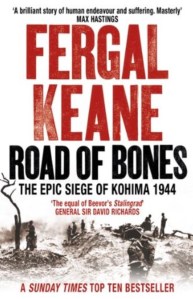 I was reminded of that film about half way through this book, which has, as its centrepiece, an account of the siege of Kohima, a bloody portion of a wider battle on the borders of India and Myanmar in 1944. At Kohima the Japanese sought to break through Allied defences and cut loose into North Eastern India. Meanwhile a combined forced of British and South Asian troops, with limited supplies of ammunition and water attempted to thwart these plans from hastily constructed defences.
 Summary: the title is the best bit.
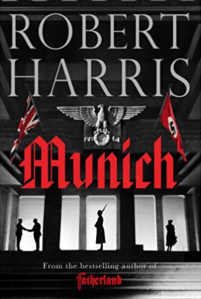 Summary: a tense journey to the heart of banal darkness
 Summary: An entertaining biography of the great Kurdish leader who, in the midst of war, introduced chivalry to the West
 Summary: An impressive attempt to cut through Adam’s lies, obfuscations and pseudo-intellectualism to understand more properly his role in war and peace-making
 Summary: Dreams of a better world
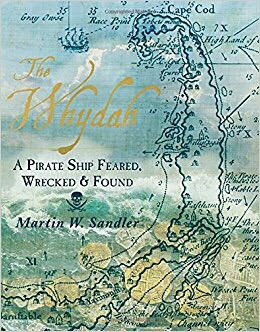 Summary: A fine young adult account of the heyday of piracy in the Americas, with plenty of interesting detail for the more jaded.
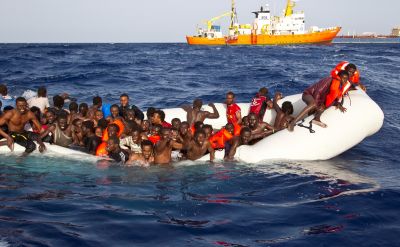 The Whydah is a book that will encourage young people to think and question the myths and fables their more powerful elders tell them. And for those of us who occasionally like to look out to sea, it reminds us how the horizon was once speckled with wooden boats, filled with desperate men and women, prepared to try to steal a better life from those who denied such a thing to them.
 aidanjmcquade