
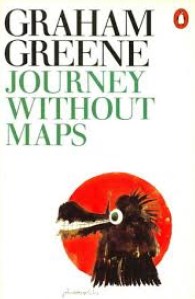
 Summary: the title is the best bit.
Journey Without Maps is Graham Greene’s account of a hike he took through West Africa in the mid 1930s. Some, notably the writer Tim Butcher, have suggested that his purpose was “espionage”, investigating reports of forced labour in Liberia by the Firestone Rubber Company on behalf of the Anti-Slavery Society. So as a former Director of Anti-Slavery International, the current name of the Anti-Slavery Society, I was curious about the account.
Greene’s report on any atrocities he encountered, if ever there was one, appears to have disappeared. There is a story in Anti-Slavery’s journal of a presentation that Greene gave to an Annual General Meeting on his return to the UK, but I could find little else when I searched the archives of the organization. Still, whatever he communicated on his return was sufficient to get him declared persona non grata by Liberia, and hence posted to Freetown, Sierra Leone, instead of Monrovia, as an MI6 officer during the war.
The depredations of Firestone are alluded to in this text, but not addressed directly. Instead Greene provides an episodic account of his journey, with frequent reflections on life, religion, colonialism, and “native girls’ breasts,” possibly his favourite theme in the entire book.
I came to the book as a great admirer of Greene’s writing: The Quite American, Monsignor Quixote, The Comedians and The Honorary Consul are amongst my favourite novels. Even Stamboul Train, which Greene heartily dismisses in the pages of Journey Without Maps as a potboiler dashed off for money, is an interesting, and barely disguised, meditation on the Passion of Christ.
But this book I found tiresome and uninteresting. The blurb on the cover describes it as one of the greatest travel books of the 20th Century, which rather puts me off all travel books for the rest of my life.
Greene was generally a political progressive – though not in relation to women: he was a notorious connoisseur of brothels his entire life, and one wonders if the description here of a London acquaintance who liked to order women from a Piccadilly bordello as one would a “joint of meat” betrays something of his own attitude. But in spite of his leftish and anti-colonial tendencies the language he uses in this book and the attitudes he displays to local people are tainted by the poisonous and supercilious racism of British colonialism.
I think he probably grew out of much of this: his later work is marked by much greater subtly and maturity. Perhaps the visit to West Africa ultimately helped him find this: an introduction by Paul Theroux notes that Greene himself in later life described this journey as life changing. But while, as a text, it may be important for biographers, I find little to recommend it.
 Summary: a tense journey to the heart of banal darkness
 Summary: An entertaining biography of the great Kurdish leader who, in the midst of war, introduced chivalry to the West
 Summary: An impressive attempt to cut through Adam’s lies, obfuscations and pseudo-intellectualism to understand more properly his role in war and peace-making
 Summary: Dreams of a better world
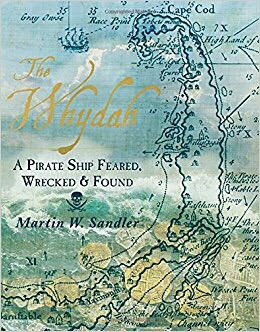 Summary: A fine young adult account of the heyday of piracy in the Americas, with plenty of interesting detail for the more jaded.
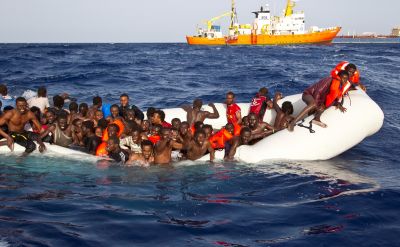 The Whydah is a book that will encourage young people to think and question the myths and fables their more powerful elders tell them. And for those of us who occasionally like to look out to sea, it reminds us how the horizon was once speckled with wooden boats, filled with desperate men and women, prepared to try to steal a better life from those who denied such a thing to them.
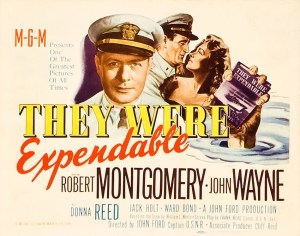 Summary: A gripping war story that gets to the heart of important truths about both war and Jack Kennedy
 Dave Powers, a friend and aide to Jack, once commented that, “Without PT 109 there would never have been a President John F Kennedy.” The legend of Jack’s fortitude and leadership following the sinking of his boat during a small battle in which 15 ill-equipped PT boats were sent to ineffectually attack a convoy of Japanese destroyers, was the foundation upon which Jack’s political career was built. But the story of this relatively brief episode in Jack’s relatively brief life is more important for a number of reasons, not least, after over half a century of muck raking and character assassination, it has proven pretty close to impossible to tarnish this truth of his heroism during those days.
 He didn’t die then and went on to play a decisive role in saving the lives of his surviving crew. Doyle notes: “The longest Olympic swimming event staged before then, the men’s 4,000 metre freestyle race, was held only once, in 1900. Fourteen of the twenty-eight competitors… “did not finish” and the distance was promptly retired. On the afternoon of August 2, 1943, John F. Kennedy covered the same distance, plus a mile more, over open water, behind enemy lines in broad daylight…All the while he bit on a strap and towed a badly burned sailor along with him. Simultaneously … leading nine other men.. towards safety… it was an astonishing feat his crewmen never forgot.”
 Summary: Spenser on sparkling form


