Comfort to the Enemy, and other Carl Webster stories, by Elmore Leonard

IMG_0183Comfort to the Enemy is a book of two short stories and a novella, all focussing on Leonard’s character Carlos Webster, United States Marshall, and star of another Leonard novel, The Hot Kid.

This book starts with a short story recounting Webster’s first encounter with hoodlums in his teens and ends with the novella, Comfort to the Enemy, in which he, sort of, investigates a killing at a German prisoner of war camp in Oklahoma.

Carl is a Western archetypal ideal: taciturn, polite, smart and extremely gifted in the art of violence. He is strikingly similar to another Leonard character of a later era, Raylan Givens, the marshall protagonist of the glorious television series Justified, though with an altogether more settled family life – one could never imagine Carl’s upright and sympathetic father Virgil ever trying to kill him – and a less fraught relationship with booze.

The two short stories, Showdown at Checotah, and Louly and Pretty Boy, and the novella Comfort to the Enemy, are lovely exemplars of Leonard’s spare and laconic storytelling style, gently compelling, funny and exciting by turns. Great stuff!

The Rise of Islamic State, by Patrick Cockburn

imageThe Rise of Islamic State is a short book but an extremely important one. Cockburn, a veteran Middle East correspondent, lucidly describes how Islamic State has arisen as a concrete legacy of Bush and Blair’s inept and illegal invasion of Iraq. He also unpicks the political and military quagmire currently extant in that region.

Cockburn identifies Saudi Arabia as the primary source of financial support for Islamic State (DAESH) and its predecessor Al Qaeda, and the origin of its barbaric “jurisprudence”. However in the aftermath of 9/11, or indeed at any time subsequently it seems, rather than confront Saudi Arabia, or Pakistan with its murky ties to international terrorism, the Bush administration instead invaded Iraq, a country that, for all the brutality of Saddam had nothing to do with the 9/11 attacks.

George W Bush, with his pal Prince Bandar bin Sultan,

George W Bush, with his pal Prince Bandar bin Sultan, “godfather” of DAESH (Islamic State)

One can only imagine how Prince Bandar bin Sultan, the Saudi ambassador to the US, an instigator of the Iraq invasion and frequent house guest of George Bush, must have giggled to himself at how easily led the US was towards advancing Saudi Arabia’s brutal foreign policy without Saudi ever having to get its hands dirty. As head of Saudi intelligence subsequently, from 2012 to 2014, Bandar was the key individual responsible for backing DAESH against Shia and minorities in the region and so helping them become the potent military force they currently are.

Cockburn points out that while DAESH may not be loved by the Sunni population of Iraq, they are tolerated by them because the alternative, perhaps unbelievably to some, would be much worse for them. The bigoted, pro-Sunni extremism of DAESH Wahhabism is mirrored by the brutality and sectarianism of the Shia militias that the US and UK supported Iraqi government have been sponsoring.

Which brings us to the present: the Obama administration’s efforts seemed to be towards a detente with Iran as an element in not only a nuclear non-proliferation strategy but as one, along with support for the Kurds, against DAESH.

The desire of the US Congressional Republicans in collusion with Netanyahu to undermine a deal with Iran seems peculiar. However this is in keeping with the ineptitude and dysfunctionality of US Middle Eastern policy over the past 15 years, something made altogether more terrifying when the shallow but fevered imaginings of Donald Trump are brought to bear on the situation.

However one should also recognise that US policy towards the region now appears to have much in common with that of the UK. Both seem to value the possibility of profiting from the sales of arms to Saudi Arabia rather than actual regional security. In the end perhaps the US and UK will gain the same comfort as the gun store owner who at least has the satisfaction of knowing he sold the gun to the psychopath who murders him.

Manhunt: The 12 day chase for Abraham Lincoln’s killer, by James L. Swanson

Sympathy for the Devil

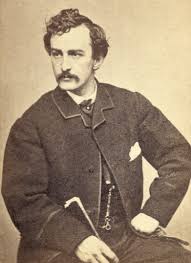
John Wilkes Booth

John Wilkes Booth

Manhunt, as the subtitle indicates, is an account of the hunt for John Wilkes Booth and the cabal of bitter, reactionary racists who murdered the United States’ greatest president, Lincoln, and tried to kill his Vice President, Andrew Johnson, and his Secretary of State, William Seward.

Swanson succeeds well in his apparent objective of writing a non-fiction thriller based on the hunt for these assassins, and appears to have developed some sympathy for his subjects, presenting in detail their considerable bravery and endurance in the aftermath of the murder. Among the conspirators was Dr Samuel Mudd, who treated Booth when he was on the run. Mudd was imprisoned as a conspirator but he and his family subsequently worked for his exoneration, saying he was only doing his duty as a doctor and had no knowledge of Booth or the conspiracy. John Ford, a Lincolnphile, even immortalised this story in one of his films, The Prisoner of Shark Island.

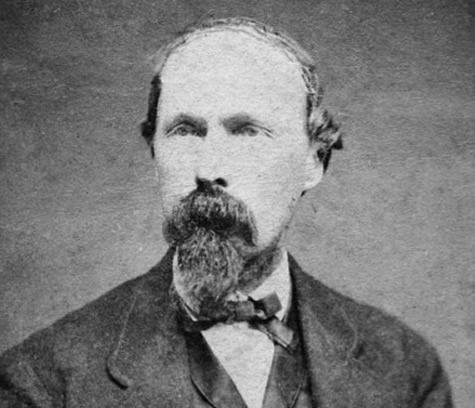
His name is still ...

His name is still …

Swanson argues however that Mudd was indeed part of the conspiracy and Booth’s encounter with him was no accident, but rather a rendezvous with a known sympathiser. The moral of this part of the story is that you can still say “his name is Mudd” with a clear conscience.

The book illuminates this aspect of the Civil War, often passed over or obscured in other texts by the monumental tragedy of Lincoln’s assassination. Amongst the startling details that Swanson reveals is that Booth obtained access to Lincoln’s presence merely by presenting his card: his brother was a friend of Lincoln and strong supporter of the Union so Booth was also welcomed as a friend.

Overall the book is a sobering reminder to the contemporary world that courage is not the highest of virtues but rather often facilitates some of the worst of human behaviour and can lead to some of the greatest pain and loss.

Lincoln and his Generals, by T. Harry Williams

Lincoln and his commandersThis is a fine and concise introduction to Lincoln and the course of the American Civil war. The focus, as the title indicates clearly, is on one of the major themes of the war – Lincoln’s efforts to obtain an effective commander for the Union armies, and Lincoln’s own role as chief Union strategist and Commander in Chief.

In the course of this there is some notable insight into the necessary qualities of good generals, and generalship and war-making in the context of a democratic state. Many of the wider issues of the war including the experience of slaves, emancipation, and the actual experiences of the the fighting for the ordinary soldiers are only lightly touched upon. Nevertheless this remains a fine overview of the war and a good introduction to some of its key controversies.

The Keeper of Lost Causes, by Jussi Adler-Olsen

keeperIn 2007 Copenhagen a post-traumatically stressed cop who is getting on the nerves of his colleagues is kicked upstairs (actually to an office in the basement) to head a new cold-case unit for all of Denmark. The unit is comprised of himself, a car and an assistant, a refugee Arab, ostensibly from Syria, called Assad.

So as to be seen to be doing something the cop, Carl, with the encouragement of Assad, who begins to display remarkable initiative as well as unexplained investigative talents, start looking into the disappearance in 2002 of a young female politician. Their motivation is that of all the cases they could look into this is the only one they vaguely remember.

The book alternates between this apparently hopeless 2007 investigation, and the experiences, beginning in 2002 of the politician, Merete, and her efforts to survive and stay sane in the face of an apparently senseless kidnapping.

The three central characters of Merete, Carl and Assad are well drawn and hugely likeable. And so as the two stories converge in 2007 worry for how things will turn out for them builds considerable tension.

The Keeper of Lost Causes is a gripping and hugely satisfying piece of work, the start of a series featuring the cold case unit, nicknamed Department Q. It is a series I look forward to reading more of.

A Spy Among Friends: Kim Philby and the Great Betrayal, by Ben MacIntyre

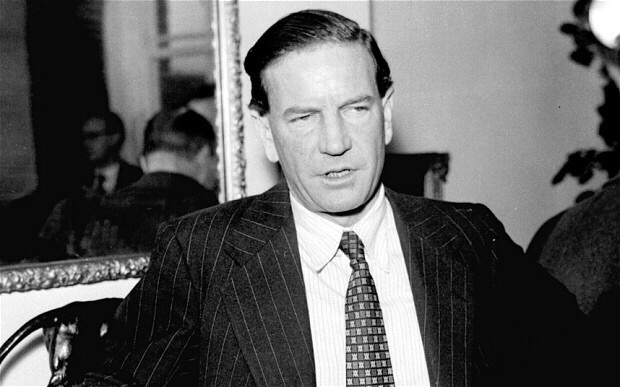
Kim Philby

Kim Philby

A Spy Among Friends is a study of the overlapping careers of three spies from the 1930s to the 60s: the MI6/KGB double agent, Kim Philby; his friend and fellow MI6 officer, Nicholas Elliot, and James Jesus Angelton, the CIA officer who befriended of Philby during the Second World War.

It is an elegantly written narrative, generally compelling, filled with anecdote (not least on some of Pope John XXIII’s resistance activities), and at times chilling, particularly regarding Philby’s betrayals to the KGB, including of German anti-Nazi resistance and of agents that he was personally running. Almost without exception these people were liquidated.

The psychology that could enable a person to commit such casual bloodshed is examined through the frame of Philby’s friendships with, and (less lethal) betrayals of Elliot, Angelton and his wives, all of whom fell for his charm, but never knew the real man.

I found Elliot, Philby’s friend, defender, and ultimately his accuser, though charming, not much more sympathetic than Philby. While loyal to his country and service his complacent class-ridden arrogance was a central feature in his presumption that his close friend Philby must be above suspicion merely because of his class and upbringing. MacIntyre’s research and a brief afterword by John le Carre, who met Elliot on a number of occasions, suggests that, while not treacherous, Elliot’s role in the final unmasking of Philby may not have been quite as honourable as he always maintained.

Overall the book is an entertaining excursion into a slice of Cold War history and a reminder of the perils of unquestioningly accepting the crass arrogance and privilege of the ruling classes.

With Malice toward None: The Life of Abraham Lincoln, by Stephen B. Oates

Abraham_Lincoln_O-116_by_Gardner,_1865-cropFor many this was the definitive biography of Lincoln until Doris Kearns Goodwin’s magisterial Team of Rivals.

It is still a fine introduction to the life and times of America’s greatest president, though the comparative lack of attention on the Lincoln’s cabinet relationships leads to a much less rich discussion of his presidency than Kearns Goodwin so brilliantly achieved. In particular the warmth of the friendship with Seward is not fully explored and there is no discussion of the attempt on Seward’s life that parallelled the killing of Lincoln.

But there is still much to recommend this. It has a more detailed focus than Kearns Goodwin on Lincoln’s youth and career before his achievement of a national profile with his opposition to the Kansas-Nebraska Act that led him to the presidency. And it is written in an engaging and laconic style that echoes Lincoln’s own voice.

The Rule of Law, by Tom Bingham

IMG_0027Tom Bingham was one of the most distinguished British jurists of the last 50 years and this book provides a lucid explication of his conception of rule of law.

“Rule of Law” is a term that is frequently unthinkingly used in contemporary political discourse, and which in fact represents different things to different users: when some on the Nationalist Right of politics use if, for example, they actually mean unfettered “rule of parliament”; others mean simple unconstrained, majority rule. But of course it is neither of those things.

“Rule of law” is the idea that it is the law, properly administered by a professional judiciary, that governs a people, not the whims of any monarch or minister, and that no one is above the law. It’s an idea that is said to go back as far as Aristotle, who said “It is better for the law to rule than one of the citizens.” But the idea is at least a hundred years older. Sophocles dramatised  it in Oedipus the King, in which, as a result of his own investigation, the King finds himself responsible for the plague on Thebes and realises that he must be held accountable to his own judgement just as anyone else would be.

Bingham develops the idea of rule of law by setting out eight key principles: that the law should be accessible and intelligible; that it should depend on law and not discretion; that it should apply equally; that public officers should not exceed their legal powers; that it should protect fundamental human rights; that legal remedy should be affordable; that adjudicative processes should be fair; and that states should comply with international obligations.

daily-mailThe only failing I found was that Lord Bingham does not consider how the evolution of trans-national corporations challenges the comprehensiveness of the concept he outlines. How can they effectively be held legally accountable? Given the proliferation of these entities and the way in which the political economy of the world is globalising this is a critical omission. But I suppose one can’t have everything. Aside from this it is an exemplary piece of writing and it includes, for good measure, a brutal demolition of the legal case for the 2003 Iraq war.

Particularly as elements of the Right in the UK, including senior politicians and the press, are beginning an assault on the independence of the judiciary this is a vitally important book not just for lawyers but for all citizens.

Why Socrates died? Dispelling the myths, by Robin Waterfield

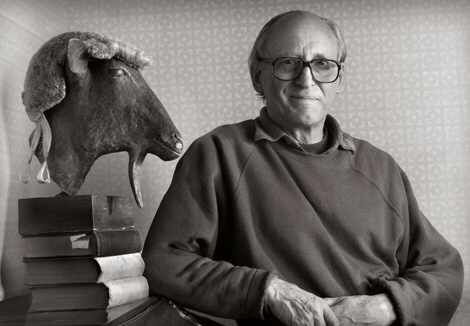
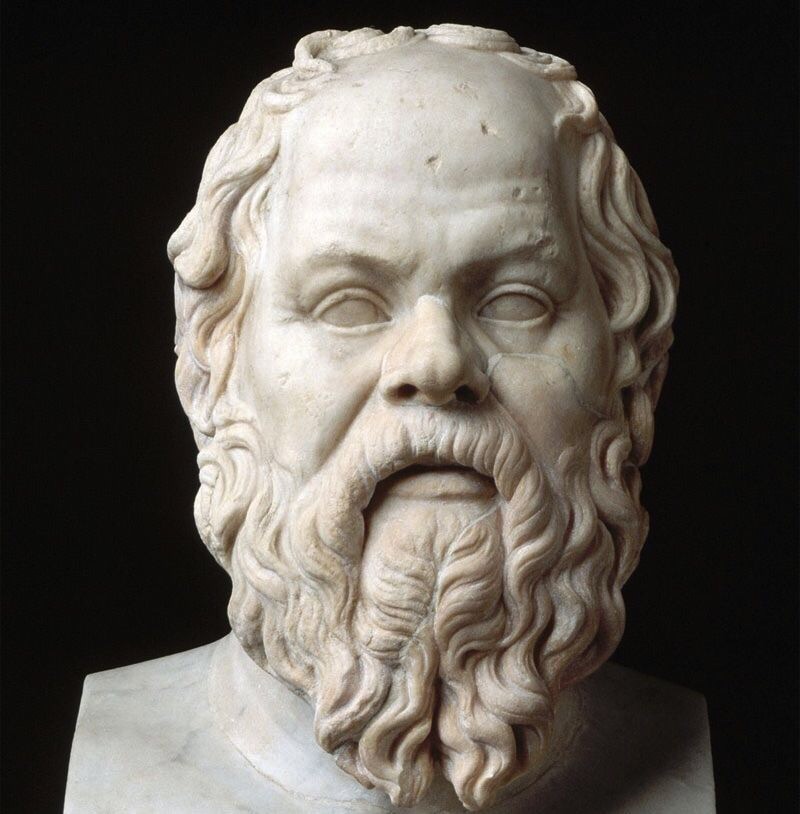
Socrates

Socrates

Why Socrates died? is an entertaining and convincing exploration of the military and political milieu of 5th century Athens and its implications for understanding the trial and execution of Socrates.

It benefits from being refreshingly clear sighted about Socrates, portraying him as a more ambiguous character than the unimpeachably innocent victim of Plato’s accounts.

Plato

Plato

Plato, it should be remembered, had as his ideal state, as portrayed in The Republic, something we would regard in the contemporary world as fascist. Even in his own day Plato’s Republic would have represented a regression from democratic Athens. Hence Plato was a Spartan sympathiser, and he had a family member amongst the Thirty Tyrants. Socrates, Plato’s teacher and ideal, was tainted by his association with this oligarchic and tyrannical Athenian faction, and so in the context of civil strife in Athens and more general war with Sparta, could have been regarded as a politically threatening figure.

Waterfield’s thesis is doubtless controversial but no less entertaining or informative for all that.

A Good German, by Giles MacDonogh

Adam von Trott on trial for his life after failure of 20 July plot

Adam von Trott on trial for his life after failure of 20 July plot

A Good German is Giles MacDonogh’s biography of Adam von Trott zu Solz, a key figure in the 1944 plot against Hitler, providing it with much of its foreign policy and diplomatic leadership while Stauffenberg organised the military aspects of the attempted coup.

Trott was well qualified for this role. He had been a Rhodes scholar to Oxford and as a result was well acquainted with leading British figures of the time including Stafford Cripps and Richard Crossman. He had also travelled extensively in the United States and China. But with only a few honourable exceptions, most of these contacts, some who had been friends, interpreted his decision to return to Germany with the rise of Nazism as a betrayal of democratic principles rather than the fundamental commitment to a democratic Germany that it was.

As Trott discovered during the war the Allies showed considerable distrust for his overtures. In part the distrust that the British had for this was because of a stunning German intelligence success early in the war, known as the Venlo incident, which resulted in the capture of a number of senior British intelligence officers who had been lured to a purported meeting with a Resistance group. But the origins of this distrust appear, in fact, deeper than the enormity of war. The first half of the book, which contains some of the chapters I found most difficult, deals in significant part with the relative alienness of British and German cultures in the 1930s which gave rise to diverse cultural and political misunderstandings between Trott and his British contemporaries. These misunderstandings contributed to the misinterpretation by many of Trott’s decision to return. Hence, in particular Crossman in British government during the war, denigrated his bona fides and undermined his attempts to establish contacts between the German Resistance and the Allies. This misinterpretation still echoes down the years with, for example, Tom Cruise’s Stauffenberg movie, Valkyrie, provoking an article in the Guardian by Justin Cartwright, which 60 years on raised the question that the German resisters may not have been the democratic allies that they are now generally accepted to be.
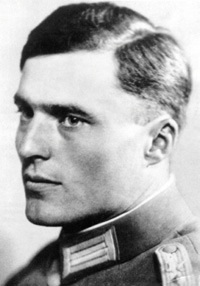
Claus von Stauffenberg

Claus von Stauffenberg

The issues that MacDonogh raises here are still relevant in our world at 21st Century war. Today even more alien cultures than the European powers of 1939 are finding themselves in confrontation and conflict. For there ever to be peace there must eventually be understanding, and an important starting point for such a process must be a realisation that the narratives of conflict, identity and responsibility may be wildly divergent.

Trott’s decision to work within for the undermining of Hitler was was not an unambiguous one. Trott, and many of his Resistance colleagues, questioned how their roles within the Nazi state may have contributed to advancing the ideology that they actually wished to destroy. One particularly interesting chapter highlighting this ambiguity deals with Trott’s foreign ministry responsibilities towards India and his relationship with Bose, the leader of the Axis aligned Indian National Army, and the Axis efforts to undermine one of his few true British friends, Stafford Cripps, efforts to come to a settlement in India during the war.

The final half of the book deals in considerable, sometimes dizzying, detail with the organisation of the 20 July coup. I found a parallel in the description of Trott’s efforts in this with that of Jean Moulin in the French Resistance at the same time as set out in Mathew Cobb’s book on the subject. Both expended considerable energy not just in removing the Nazis but thinking about what the post Nazi future would look like for their countries.

In spite of the knowledge of how things are going to turn out the final portions of this book are filled with dread. The courage of the 20 July conspirators is still an awe inspiring thing. This book shows the depth of their intellectual, administrative and philosophical efforts too. As such it is an important contribution to the literature of the Second World War.