The Battle of the Atlantic, by Jonathan Dimbleby

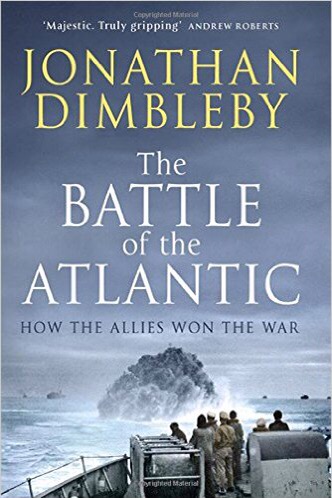
 There was no “phony war” at sea. The Battle of the Atlantic started on the first day of the Second World War, 3 Sept 1939, with the sinking of SS Athenia by a German U-boat. It continued until the last day of the war and so was the longest campaign of the Second World War and the most destructive naval conflict in history.
Dimbleby’s account of this campaign is an elegantly written horror story, alternating between accounts of the ghastly fighting at sea, and the operational and strategic planning of the Allies and the Axis that guided the slaughter.

Churchill famously said that the U-boat menace was the one thing that gave him sleepless nights during the war. However it would be fair to say he brought many of the nightmares that afflicted him on himself. Most damningly Churchill prioritised the militarily pointless and morally indefensible bombing of German cities by the psychopathic head of Bomber Command, Arthur Harris, over the vital defence of the convoys across the North Atlantic. Hence Coastal Command was denied the relatively few aircraft that could have turned the tide of the battle months earlier.

Dimbleby asserts that Churchill was possessed of a great strategic vision. But this seems rather at odds with the account presented which suggests a certain strategic fickleness on Churchill’s part. It is true he did have a vast and complex set of problems on his mind. But one does get the impression of a man easily given to temporary military enthusiasms to little useful purpose but to the detriment of some truly vital endeavours. Dimbleby puts this into sharpest focus on some of Churchill’s choices around the Battle of the Atlantic. But one sees this in many other places such as his failure to finish the defeat of the Italians in North Africa before, wholly ineffectually, attempting to arrest the invasion of Greece.

Rather than military strategy Churchill’s genius was of the political variety. His forging of the trans-Atlantic alliance with Roosevelt was perhaps his finest hour. This resulted ultimately in the Allied victory, not least by bringing the true strategic genius of the US General George Marshall to bear on the situation. This inexorably refashioned Allied strategy away from Churchill’s fanciful Mediterranean focus – which arose more from his desire to keep some semblance of unity on the British Empire rather than to pose a lethal threat to the Axis – and towards an altogether more effective intent to mount an invasion of France to swiftly strike at the heart of Nazi Germany.

In spite of these strategic failings a combination of increasing effectiveness of convoy tactics, and improved technology ultimately, and with dramatic suddenness in May 1943, turned the tide of the Battle in the Allies’ favour. Thereafter, with victory in the North Atlantic, victory in the overall war was assured. Convincingly Dimbleby argues that the code-breaking of Bletchley Park was only marginally a factor in this victory, not least because the Germans had also cracked the Royal Navy code and the advantages that Bletchley provided were somewhat cancelled out in the war at sea.

The Battle of the Atlantic was to any imagining horrendous and Dimbleby conveys this well – from the account of Italian prisoners weeping in terror as they drowned imprisoned in the holds of the torpedoed Laconia, to the massacre of the Arctic Convoy PQ 17, condemned to its doom by incompetence in the Admiralty for which, of course, no one was ever held to account: That the lives and heroism of merchant seamen were held cheap by the Establishment is a recurring theme in this book.

The Battle of the Atlantic is a gripping and generous-spirited book, drawing on the accounts of German as well as Allied participants recognising the courage and humanity of all the participants in the Battle, while also recognising the horrendous things that many of these ordinary human beings did to each other.

Abducting a General: The Kreipe Operation and SOE in Crete, by Patrick Leigh Fermor

 Patrick Leigh Fermor, legendary travel writer and Special Operations Executive officer, never published during his own lifetime this, his full account of the kidnap of General Kreipe in Crete in 1944. His junior SOE colleague Billy Moss did, with Leigh Fermor’s help. Ill Met by Moonlight was published in 1950 and made into a famous movie with Dirk Bogarde as Leigh Fermor.

However as Roderick Bailey points out in his foreword to this book, Billy Moss did not speak Greek and the Kriepe kidnapping was his first clandestine operation. So his account lacked understanding and appreciation of the Greek partisans with whom he fought.

Leigh Fermor’s account is therefore something of an apologia to pay proper tribute to the people upon whom he depended for his life during his years undercover in Crete. He notes towards the end of his account that, “There has been more than a hint in these pages of [the kindness and generosity of the Cretan people] and of that aspect of Cretan life which suddenly gives the phrase ‘Brotherhood in arms’ such meaning”.

It is this, rather than a desire to convey a “boy’s-own” adventure, which seems at the heart of this account. It is an account that is marked by a remarkable joie de vivre in spite of the harsh circumstances he describes, and the constant threat of death under which he lived. As such it contrasts interestingly with Eric Newby’s similarly themed, but altogether more melancholic, account of his time being sheltered by an impoverished Italian rural population while on the run from the Germans: Love and War in the Appenines.

Leigh-Fermor conceived of the kidnapping of the German commander in Crete as a bloodless operation, to prevent German reprisals against Cretan civilians. Originally he aimed to kidnap the brutal General Muller, but this plan was thwarted with Muller’s transfer and replacement with General Kreipe.

Leigh-Fermor went ahead with the plan anyway as a morale boosting exercise for the Cretan resistance, and to keep them distracted from shedding German blood and hence provoking fierce reprisals.

He almost achieved his bloodless coup, though his Cretan comrades were at one point compelled to leave the poor driver who had been captured with the General in an unmarked grave. And some months after the operation the Germans conducted a series of brutal reprisals anyway, which may, or may not have been linked to the kidnapping.

Given this, and the undertaking of the operation late in the war when Germany’s fate was all but decided the strategic value of the operation is open to question. But the courage and fortitude that it entailed is not, as Leigh Fermor’s account amply demonstrates. Abducting a General gives a fine insight into a little-known corner of the Second World War, prosecuted, in the main, by ordinary people at terrible cost.

The Grand Slave Emporium: Cape Coast Castle and the British Slave Trade, by William St Clair

Summary: an elegant and distressing exploration of a storehouse for a genocide 

A few months ago I visited Elmina Castle, a centre of Dutch slave trade on Ghana’s Atlantic coast. The tour of the castle started in the women slaves’ dungeons, overlooked by a balcony of the castle governor’s apartment, from which he would periodically select women to rape as they were paraded below.

From the stifling heat of the dungeons the tour eventually proceeds up to the wonderfully airy governor’s apartment and the officers’s quarters at the top of the castle, with spectacular views of the sea and the surrounding coast. The thought of such horrors in the midst of such beauty is profoundly unsettling.

The narrative journey that William St Clair follows in his book The Grand Slave Emporium goes in the opposite direction to the path tourists, pilgrims and penitents tread touring such castles. Starting with a consideration of the establishment of Cape Coast Castle, the centre of the British slave trade on the Ghana coast a few miles from Elmina, he proceeds to describe the lives of the various denizens of the slave castles, from the governors, through the officers to the soldiers and the women – wives, “wenches” and the Castle’s sexual slaves – to the human beings – the slaves for export – who provided the entire rationale for the existence of the hundreds of such castles along the African coast.

The picture he describes is one of banal evil as the pretentious functionaries of the Castle, dreaming of lives like that of that idealised slave trader, Robinson Crusoe, dehumanise and process their human livestock through the Door of No Return and onto the waiting slave ships.

The Door of No Return, Elmina Castle, Ghana

Over hundreds of years slavery devastated the African interior as wars and raids encouraged by the European powers kidnapped millions of people, many of them children, to feed the demand from the Americas for human beings who could and would be worked to death to produce cash crops, mostly for European markets.

It is one of the bleakest episodes in human history, echoing the holocausts of the 20th Century in the level of industialized organisation that was brought to bear on such an atrocity.

In spite of this compassionless bureaucracy of enslavement, moments of humanity and heroism do shine through: one person who had been enslaved through Cape Coast Castle, Quobna Ottobah Cogoano, eventually escaped and became a major anti-slavery campaigner at the end of the 18th Century. And David Richardson, an economic historian, estimated that the extra costs that slave ship owners incurred in order to discourage or defeat insurrections on the slave ships saved many hundreds of thousands of other Africans from having been enslaved.

The Grand Slave Emporium is an elegantly written, but profoundly bleak book. Nevertheless it is a necessary one. It shows humanity in its squalid complexity, and reminds us of how easily societies can, wholesale, descend into savagery while believing themselves to be the epitomes of refinement.

Torture, mass surveillance, and Dr Sheila Cassidy


Audacity to Believe, is Sheila Cassidy’s fine and moving memoir of her time as a young doctor working in Chile. During that time the US organised a bloody coup against the democratically elected president, Salvador Allende, which brought to power the despotism of Margaret Thatcher’s close friend, General Augusto Pinochet.

Cassidy was herself caught up in the terror that Pinochet unleashed upon his own country. After having treated a wounded rebel she was betrayed, arrested and tortured.

Cassidy is forensic in detailing what happened next, and her descriptions are chilling. She describes two sessions of electric shock torture to the most sensitive areas of her body. In the first session she made up a story about who put her in contact with the rebel she treated. Having wrung this story from her she was dressed and put in a car with the secret police who took her to check out her story. Having found it a farrago of lies they brought her back, stripped her naked again and resumed the torture. This time she broke and told her torturers everything they wanted to know.

There is a common practical, as opposed to moral, objection to torture, which is that, as Cassidy attested, a person being tortured will tell their torturer anything to get the torture to stop. So it is difficult to know what is true, and what is false. However as Pinochet was under no existential threat after he seized power the cowards and rapists of his secret police had plenty of time to check the stories of their thousands of victims and bring them back to the torture chambers if the original stories proved false.

In war, or under the proverbial ticking bomb situation where time is of the essence, it is considerably less likely that torturers would have the luxury to test the accounts of each of their victims. At least until now.

In his book The Finish, about the assassination of Osama Bin Laden, Mark Bowden provides some detail of how the information technology of US defence and intelligence services has advanced in the years since the slaughter of the 11th September attacks on the Twin Towers. The result of this is increased capacity for rapid analysis of data from mass surveillance and cross-checking of interrogations, including those obtained under torture. In other words we are moving into a world in which the intelligence and defence communities of the US, and much of NATO presumably, can render obsolete the practical objections to mass surveillance and torture.

 This is a distressing prospect for a number of reasons. As Mark Bowden has shown elsewhere, in his book Roadwork, the permitting of even limited provision for torture can lead to much wider acquiescence in it as a routine practice. This inevitably comes to ensnare the manifold innocent along with the fewer guilty, and can become a deep source of alienation from and resentment of the perpetrators. As the lessons of Abu Ghraib prison showed the violence of torture will inevitably give rise to the violence of insurrection, as torture not only corrodes the souls of the perpetrators and erodes any of their claims to moral superiority, but instills in its victims a burning desire for revenge.

We seem to be moving into a time when Orwell’s prediction of a permanent state of war is becoming true. In part this has arisen from a glib attitude amongst Western leaders towards war, an ignorance of the political contexts in which they have meddled and an abject failure to understand the political implications of the violence they have unleashed, which has included the incarceration, mistreatment and torture of thousands who have been swept up in these wars.

The erosion of practical constraints on torture increases the risk that in some future conflagration military and political leaders will be enticed by the promise of it delivering some easy tactical advantage. It is vital that they remember that one of the political implications of this form of violence is that it will sow dragon’s teeth that may blossom as armed men in years to come.

Jack Kennedy: Elusive Hero, by Chris Matthews

 Jack Kennedy said the reason that people read biography is to answer the question, “What was he like?” With this fine biography Chris Matthews tries to answer this basic question about JFK himself.

The result is an affectionate, though clear-sighted, biography of Kennedy charting his path from sickly second son of Joseph Kennedy Senior, to President of the United States. It is a short book, only 400 pages or so with equal weight to each chapter of his life, from his childhood to his presidency.

There are many bad things one can say about JFK, from his almost pathological womanising and frequently callous treatment of his wife, Jackie, to his stupid decision to support an invasion of Cuba at the Bay of Pigs, to his escalation of the US involvement in Vietnam and his acquiescence in the coup against, and assassination of, South Vietnamese President Diem.

 And yet… even when all this is considered there is a greatness about Kennedy which even the most damning assessments of him cannot deny. From his earliest days he displayed an extraordinary indomitability of spirit:  when his life was threatened by ill-health; when his PT boat was sunk by a Japanese ship and he displayed enormous fortitude in saving his crew; in his post war efforts in politics; and finally to his election to the Presidency. As President he showed himself on the right side of history and progress more often than not, introducing an economic stimulus to reduce unemployment, bringing the weight of the Presidency to bear in support of civil rights, and in a sustained focus on a nuclear test ban treaty as a first step in de-escalation of the arms race.

But Jack Kennedy’s historical greatness would be guaranteed by one thing: his comportment during the Cuban Missiles Crisis. As Bobby Kennedy noted, “if any one of half a dozen [others] were President the world would have been very likely plunged into catastrophic war,” a war that would have ended humanity.

 During this crisis, Kennedy faced down the hawks amongst his own advisers, rejecting their advice to immediately attack Cuba in favour of a more cautious naval blockade of the island. It has subsequently emerged that had he followed that advice it would have precipitated a nuclear war. As a result Jack Kennedy, the junior naval officer from the Pacific theatre of the Second World War, proved Clemenceau’s dictum, “War is too important to be left to the generals.”

Jack Kennedy saved the world. Shortly after the forces of reaction had him killed and then conspired to assassinate his character and historical achievements. But still there is this, as Chris Matthews puts it, “In the time of our greatest peril, at the moment of ultimate judgement, an American president kept us from the brink, saved us really, kept the smile from being stricken from the planet. He did that. He, Jack Kennedy.”

Midnight’s Furies: The Deadly Legacy of India’s Partition, by Nisid Hajari

IMG_0420Famously the Indian sub-continent freed itself from British rule through a non-violent struggle led by Gandhi. However rather than this being a great triumph for passive resistance, the efforts by Congress, the Muslim League, and the Sikh leadership to carve up the spoils more than made up for it in terms of bloodshed: the Partition of India saw one of the most horrendous blood baths of the 20th Century, and the largest forced migration in human history. Sometimes these two things coincided with trains of refugees pulling into their destination stations dripping with the blood of the women, children and men passengers who had been hacked to death in ambushes.

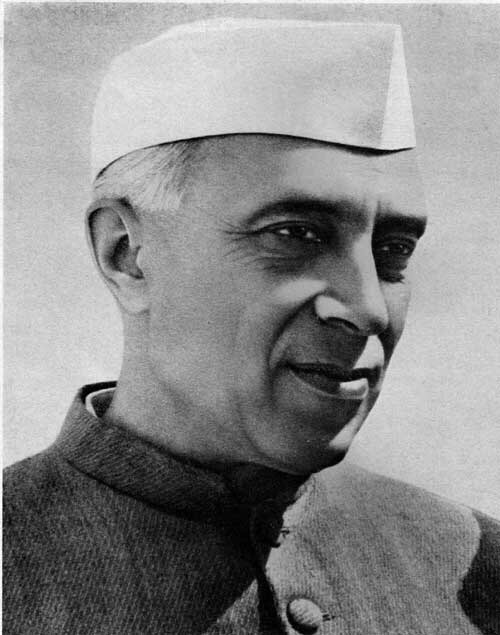
In Midnight’s Furies, Nishid Hajari details how the political calculations, petty jealousies, posturings, misjudgements and misunderstandings of the sub-continent’s political leaderships, in particular Jinnah and Nehru, led to the sectarian carnage that engulfed the creation of the modern states of India and Pakistan.

Nehru

Nehru

Hajari provides a much less sympathetic portrait of Nehru than Alex Von Tunzelman’s fine account of the same period, Indian Summer. For Hajari, Nehru failed in his responsibility as a statesman of obtaining some sort of rapprochement with Jinnah and the Muslim League, and hence undermined his vision of a secular India for all Indians. Hajari also portrays Nehru, at least in the early days of his premiership, as a man in office but not in control. His dream of a secular India uniting Hindu, Muslim and Sikh under a common citizenship bloodily undermined by the extraordinary violence of the period, which his administration seemed powerless to prevent.

Doubtless some of this was spontaneous communal violence drawing on obscure but profound local animosities and feuds. But much of it was not. Each community produced paramilitary forces, many of them highly professional as a result of the large numbers of former soldiers in their midst. These set to the butchery of their neighbours with a relish and ruthlessness that would not have been out of place in the Bloodlands of Eastern Europe a few years earlier.

This killing was frequently facilitated by the failures of Indian and Pakistani police and military to properly intervene to uphold the law. Sometimes the police and army stood idly by. Sometimes they became active participants in the slaughter.

In this regard they were echoing the equivocal leaderships of the two states: Jinnah appears to have missed the logical contradiction of wanting a secular republic for Muslims only. In India Hindus and Sikhs seemed to take their lead less from Nehru and more from Sadar Patel, the States minister in the Indian Union government. Patel regarded the ethnic cleansing of the Muslim population as a good thing, purging the state of potential fifth columnists. He also regarded the neo-fascist RSSS with considerable warmth despite their butchery of tens of thousands ordinary Indians.

Patel

Patel

With such equivocal leadership at the heart of government it is unsurprising that so many police and troops turned a blind eye to the atrocities. To his credit, when able to do little else, Nehru time and again sought out and faced down Hindu murder squads, striving to personally halt the killing which so much of his own administration was acquiescing in. Order only finally began to be restored by the intervention of Nepalese Gurkha and Southern Indian troops, who were less given to the sectarian passions of the northerners. The assassination of Gandhi by a right wing Hindu also caused some pause to the likes of Patel and the rest of the nation who perhaps only then began to glimpse the lunacy that their sectarianism was bringing.

Hajari is particularly interested in the origins of Pakistan’s current disfunction and sponsorship of terrorism, something which he shows very well. However the book also casts significant light on the current disfunctionalities of the Indian state.

Shortly before the victory for Prime Minister Modi’s BJP in the Indian general election I spoke to an Indian friend about the anticipated result. He argued that there were three strands in the Indian independence movement: the Nehruist/Ambedkarist republican tradition which has been dominant for much of Indian history; a communist/socialist strand which has enjoyed power in some of the Indian states; and finally the Hindu Nationalist tradition which Modi was now bringing to power.

However from Hajari’s account this Hindu Nationalist tradition was a very dominant one in the first Indian government, constantly undermining the visions of Nehru and Ambedkar. The caste-based apartheid, the rapes and murders of girls and young women, the enslavement of vulnerable workers that disfigure contemporary India, the world’s largest democracy, may, at least in part, be seen to derive directly from the Hindu-nationalist vision that so bloodily asserted itself in 1947 and asserts itself still to the present day.

Gandhi and Jinnah in happier days

Gandhi and Jinnah in happier days

Midnight’s Furies is a beautifully written but harrowing account of the origins of India and Pakistan. It is an important book about the origins of a contemporary Cold War, about human beings’ inhumanity to other human beings, about how magnaminty and empathy are so vital to diplomacy, and how their absence can lead to carnage.

The Last Battle, by Stephen Harding

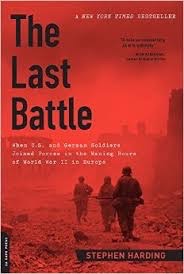
imageOn 5 May 1945 arguably the last ground battle of World War 2 took place. It was a relatively small and very brief affair by the horrendous standards of that war, but it made up for that in terms of strangeness.

In the early hours of the morning of 5 May a force of Waffen SS attacked a castle in Austria, Schloss Itter, intent on massacring the prisoners there. The attack was resisted by a tiny ad hoc force of US tankers, Austrian resistants, anti-Nazi Wehrmacht and the prisoners themselves, who were a veritable who’s who of the French political and military elite, including Gamelin, Daladier, Reynaud, Weygand and the labour leaders Leon Jouhaux and Augusta Bruchelen.

It is the only known time in the war when Wehrmacht and Allied troops fought side by side.

imageimageThe Last Battle is a short but highly entertaining book, and very informative regarding the divisions and dissensions in French politics both before and after the fall of France. It is also a warm tribute to the American and German commanders during the battle, Jack Lee and Josef Gangl, both of whom could have ignored the threat to the prisoners in the castle but who instead risked their lives with the Austrian resistance to stop a blood bath.

Antony and Cleopatra, by Adrian Goldsworthy

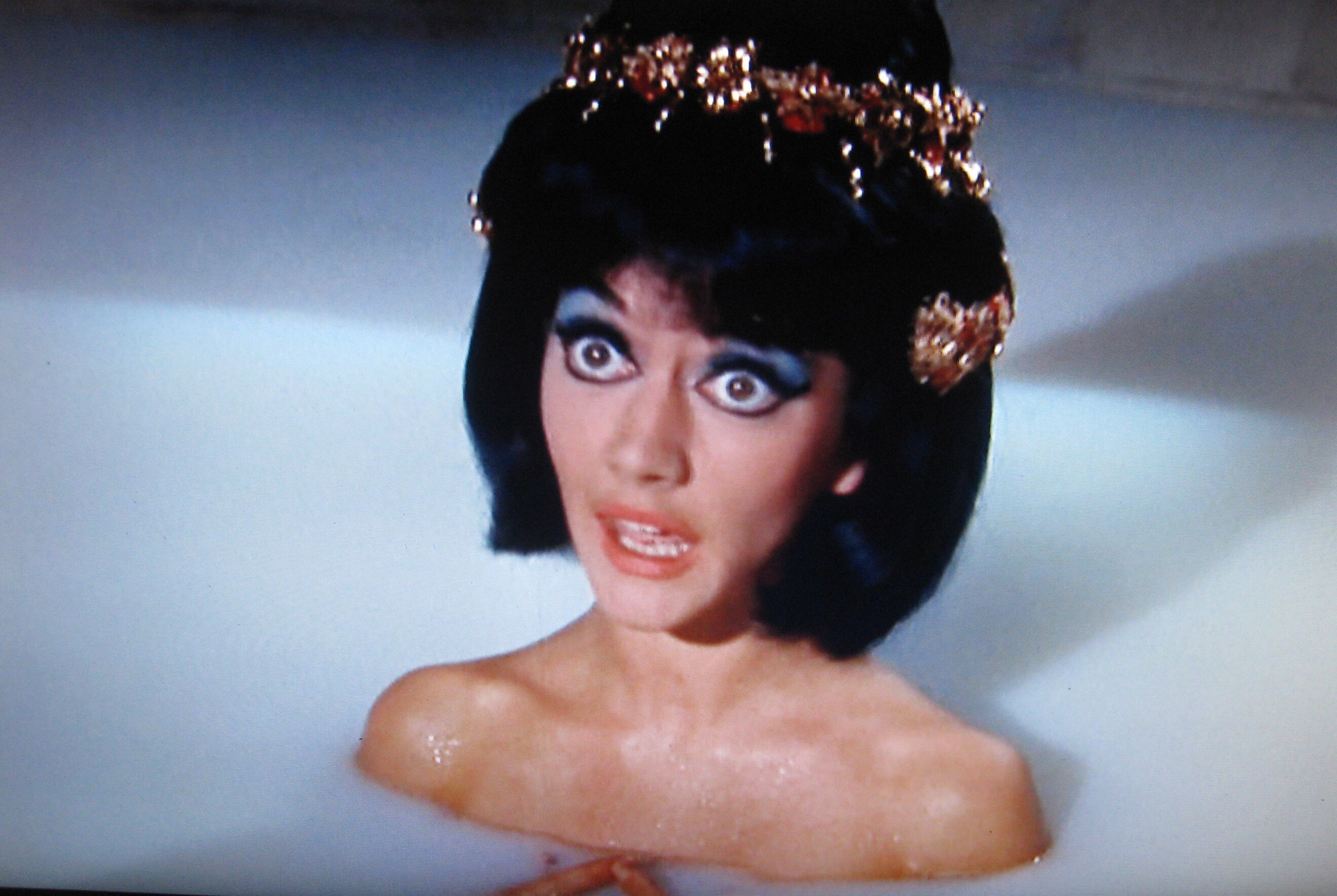
IMG_0239If, before reading Goldsworthy’s magisterial biography, the Caesar of my imagination was essentially Shakespeare’s construct, Antony and Cleopatra for me have always had the faces of Sid James and Amanda Barrie.

However, not that it will surprise anyone, Goldsworthy’s joint biography of the two does rather show that they were not nearly as nice as Carry On would have us believe.

Despite remaining something of a shadowy figure with apparently little of her own direct correspondence remaining, Cleopatra is by far the more impressive of the two. She parlayed, initially, little more than her intelligence and beauty into securing the throne of Egypt for herself by seducing in succession the two most powerful men in the world. Having secured her position she acted with considerable ruthlessness killing her rivals, including her own siblings. Subsequently she poured the resources and treasure of Egypt into the military schemes and political careers of her lovers as a means to secure her own position.

Goldsworthy argues that, in spite of the legends of Cleopatra’s sexual voraciousness, she probably only had two lovers in her life, Caesar and Antony. He presents evidence that there was genuine love from both sides in these relationships in spite of the political calculations that each of the three would also have been considering.

Unfortunately for Cleopatra, Antony was an inferior model of Roman to Caesar. Antony was a talented subordinate but he was a poor general given to heavy drinking, and in later life, particularly following his military reversals in Parthia, depression. His power came to him in considerable part through luck in the turbulent aftermath of Caesar’s assassination. Cleopatra’s grip on power was only as secure as Antony’s and in the end he was no match for Octavian, who, in spite of his apparent lack of physical courage, as he got older began to display a political genius that echoed his uncle’s military variety.

IMG_0238Goldsworthy’s book is a consistently interesting account of the lives of these two, in particular in the chaotic aftermath of Caesar’s assassination and the beginning of Octavian/Augustus’ reign as the first emperor. There is no mention of baths in asses’ milk but, nevertheless, it does entertain albeit in a very different way from Sid and Amanda’s gloriously silly portrayal of the relationship.

The Rise of Islamic State, by Patrick Cockburn

imageThe Rise of Islamic State is a short book but an extremely important one. Cockburn, a veteran Middle East correspondent, lucidly describes how Islamic State has arisen as a concrete legacy of Bush and Blair’s inept and illegal invasion of Iraq. He also unpicks the political and military quagmire currently extant in that region.

Cockburn identifies Saudi Arabia as the primary source of financial support for Islamic State (DAESH) and its predecessor Al Qaeda, and the origin of its barbaric “jurisprudence”. However in the aftermath of 9/11, or indeed at any time subsequently it seems, rather than confront Saudi Arabia, or Pakistan with its murky ties to international terrorism, the Bush administration instead invaded Iraq, a country that, for all the brutality of Saddam had nothing to do with the 9/11 attacks.

George W Bush, with his pal Prince Bandar bin Sultan,

George W Bush, with his pal Prince Bandar bin Sultan, “godfather” of DAESH (Islamic State)

One can only imagine how Prince Bandar bin Sultan, the Saudi ambassador to the US, an instigator of the Iraq invasion and frequent house guest of George Bush, must have giggled to himself at how easily led the US was towards advancing Saudi Arabia’s brutal foreign policy without Saudi ever having to get its hands dirty. As head of Saudi intelligence subsequently, from 2012 to 2014, Bandar was the key individual responsible for backing DAESH against Shia and minorities in the region and so helping them become the potent military force they currently are.

Cockburn points out that while DAESH may not be loved by the Sunni population of Iraq, they are tolerated by them because the alternative, perhaps unbelievably to some, would be much worse for them. The bigoted, pro-Sunni extremism of DAESH Wahhabism is mirrored by the brutality and sectarianism of the Shia militias that the US and UK supported Iraqi government have been sponsoring.

Which brings us to the present: the Obama administration’s efforts seemed to be towards a detente with Iran as an element in not only a nuclear non-proliferation strategy but as one, along with support for the Kurds, against DAESH.

The desire of the US Congressional Republicans in collusion with Netanyahu to undermine a deal with Iran seems peculiar. However this is in keeping with the ineptitude and dysfunctionality of US Middle Eastern policy over the past 15 years, something made altogether more terrifying when the shallow but fevered imaginings of Donald Trump are brought to bear on the situation.

However one should also recognise that US policy towards the region now appears to have much in common with that of the UK. Both seem to value the possibility of profiting from the sales of arms to Saudi Arabia rather than actual regional security. In the end perhaps the US and UK will gain the same comfort as the gun store owner who at least has the satisfaction of knowing he sold the gun to the psychopath who murders him.

All too human: war and terrorism in the contemporary world

Picasso's Guernica

Picasso’s Guernica

In the aftermath of the recent spate of atrocities by Islamic fundamentalists it is probably worth focussing on a couple of points that have been obscured in the rush to condemnation.

First this sort of atrocity is nothing new in modern history. Ordinary Germans routinely massacred civilians in Eastern Poland during the Second World War. Much of the RAF bombing campaign on Germany during the same war was indiscriminate and killed thousands of old people, women and children. American troops in Vietnam regularly butchered Vietnamese civilians. Irish paramilitaries slaughtered both compatriots and British civilians alike. The last vestiges of the notion of Israeli “purity of arms” died in the slaughterhouse Prime Minister Netanyahu created in Gaza in the summer of 2014. In fact in the sweep of human history the idea of refraining from making war on civilians has been rather unpopular, and the wars emanating from, and waged in the contemporary Middle East are no exception.

The notion that Muslim atrocities are somehow qualitatively different and beyond the moral pale of what the Western world would contemplate is laughable, and must be even more laughable to those who, in recent years, have been on the receiving end of the violence of the West and its allies.

However it does seem plain that at this point in history there is a significant sub-culture within the European Muslim community which is alienated from the democratic ideals of wider European society, and within that, a smaller minority which is prepared to resort to violence and terrorism both in Europe and abroad as an expression of this alienation.

A lot of the focus in the aftermath of the most recent attacks has been on the need for European Muslim community leadership to combat this alienation. Such leadership has and will continue to have considerable potential to lead young people away from violence and towards more constructive roles for their community and wider society. But it is disingenuous to presume that the reason that young people are engaged in violence to the current extent is because of failures in the leadership of the Muslim community.

To presume this may be comforting to non-Muslims, as it implies that we have no responsibility for Muslim alienation. But it is not a response to the violence that will leave a single individual anywhere in the world any safer or more protected from random and brutal terrorism.

Goya's Shootings of the third of May

Goya’s Shootings of the third of May

Because, of course, alienation and terror on this scale never occurs in a vacuum. Just because the wider society is unaware of the narrative that is justifying that terrorism to its perpetrators does not mean that such a narrative does not exist. And just because the narrative may be filled with distortions and logical inconsistencies does not mean that it is any less compelling to its adherents.

What should be apparent to even the most myopic of observers is that the fundamentalist violence that we have witnessed in Europe over the past 10 years comes in the context of a much wider system of violence. And, as Patrick Cockburn has put it, “It is inevitable that sparks from these conflicts land in Western Europe and other parts of the world.”

For many in the West this cycle of violence started with the attacks on the World Trade Centre. However Muslim grievances predate that. For example the West’s acquiesce in an emerging system of Israeli imposed apartheid in Palestine or the horrific brutality of the wars in Algeria are both capable of providing alternative points of origin for a narrative in which 9/11 seems no less and no more justifiable than Dresden or Nagasaki. And the brutal conduct of the bloody fiasco in Iraq has sustained the flow of grievance.

European Muslims are likely to have similar reactions to injustices against Muslims in Gaza or elsewhere as Irish Americans had against British injustice in the North of Ireland. However the danger, from a contemporary point of view, is that the US wasn’t seen as being complicit in British injustice. Today Europe, in particular the UK, may be closely and ignominiously identified as being complicit in the bloody mess of Iraq and Israel’s violence against Palestinians.

In other words, distasteful as it may seem to some, the current spate of Islamic fundamentalist terror is a political problem. It is not an Islamic versus Western ‘clash of civilisations’, though some would like it to be portrayed as such: Netanyahu’s cynical elbowing to the front of a Parisian photocall with international leaders in the aftermath of the Charlie Hebdo attack was a physical assertion of this idea. He intended to convey to Europe and beyond that it has no choice but to stand alongside his militarism. Rather what we see is a set of wars of varying sizes and asymmetries that are born from fundamental human and therefore political issues of injustice, violence, alienation, cruelty and stupidity.

But if we can accept that this fundamentalist violence is the consequence of a more mundane set of political problems then we can recognise that it requires political solutions, or at least a political process, to address the causes of alienation alongside the security response necessary to attempt to fend off future attacks.

Picasso's Rape of the Sabine Women

Picasso’s Rape of the Sabine Women

The full extent of the political agenda that should be followed will be considerable and international in scope. It may necessarily include consideration of the question of reconciliation between French and Algerian peoples. It should probably include confrontation of Pakistan and in particular Saudi Arabia as countries that have been the ideological reservoirs, financiers and facilitators of much of the terror that is currently plaguing the Middle East and the world. Unquestionably one element must be the robust pursuit of a just peace between Israel and Palestine, instead of the international acceptance of the quasi-apartheid that currently pertains. This will require the Jewish community bearing a heavy burden of leadership comparably to that required of non-violent Muslim leaders: the one thing the current Israeli government and its apologists seem afraid of is ordinary Jews publicly repudiating the Israeli government’s extremist policies and racist attitudes. Such sanction carries with it a credibility that non-Jews, lacking links to the appalling tragedy of Jewish history, could never hope to attain.

An international political process that openly seeks to deal justly with grievances would provide political weight and credibility to those leaders and citizens, particularly Muslims, who wish to pursue the path of non-violence. Without it, those same advocates for peace will be rendered much less effective, twisting in the wind as the West blunders on repeating the patterns of the past 10 years with brutal and inept military responses to problems emerging from countries and societies that we barely begin to understand.